
New year(2026), newer resolutions. Dreaming of entrepreneurship? E-commerce(Amazon) is where it begins.
One question: Do you know how to sell on Amazon? If it’s new to you, relax. You landed at the right place to learn the current trends that matter.
At first, startups, beginners, and new sellers in eCommerce find the Amazon selling process a bit challenging.
But it’s not.
We know, it’s obvious that no one can ignore the goldmine with tons of revenue opportunities.
To make your learning simpler and more effective, we crafted an Amazon seller guide with end-to-end information that speaks about what, when, why, and how to sell on it.
Let’s make 2026 the best year for you. Continue reading.
What does this Amazon selling guide speak about?
This guide serves as your comprehensive roadmap for selling on Amazon in 2026. It explains the major changes Amazon has introduced, what they mean for sellers, and how you can use them to build a profitable business.
From setting up your first account and earning your first $10,000 a month, to scaling internationally and building a brand worth millions, every step is laid out in sequence. You will not only learn the strategies but also see the exact path to follow, the pitfalls to avoid, and the systems that now make Amazon sell faster, smarter, and more profitable than ever. For sellers considering print-on-demand as part of that path, choosing the right provider is one of those practical decisions. A Printful vs Printify comparison can help sellers evaluate differences in pricing, product selection, fulfillment, quality, and branding before choosing the platform that best fits their business.
What you will learn from this “how to sell on Amazon” guide?
This guide is designed to walk you step by step through building a successful Amazon business. It breaks down complex processes into clear, actionable stages, ensuring you understand not just what to do, but why each step matters.
By following this structure, you’ll gain a complete view of selling on Amazon—from choosing a business model to scaling operations efficiently.
- Step-by-Step Framework: Each section covers a specific part of the Amazon selling journey.
- Practical Examples: Real-world scenarios and case studies illustrate key concepts.
- Actionable Insights: Clear instructions, tools, and metrics help you make informed decisions.
- Scalable Strategies: Learn methods that work for small launches as well as full-scale operations.
- Continuous Optimization: Guidance on refining listings, ads, supply chains, and customer experience such as packaging improvements or thoughtful gift card writing, for sustained growth.
We’re covering absolutely everything you need to know about Amazon selling in 2026:
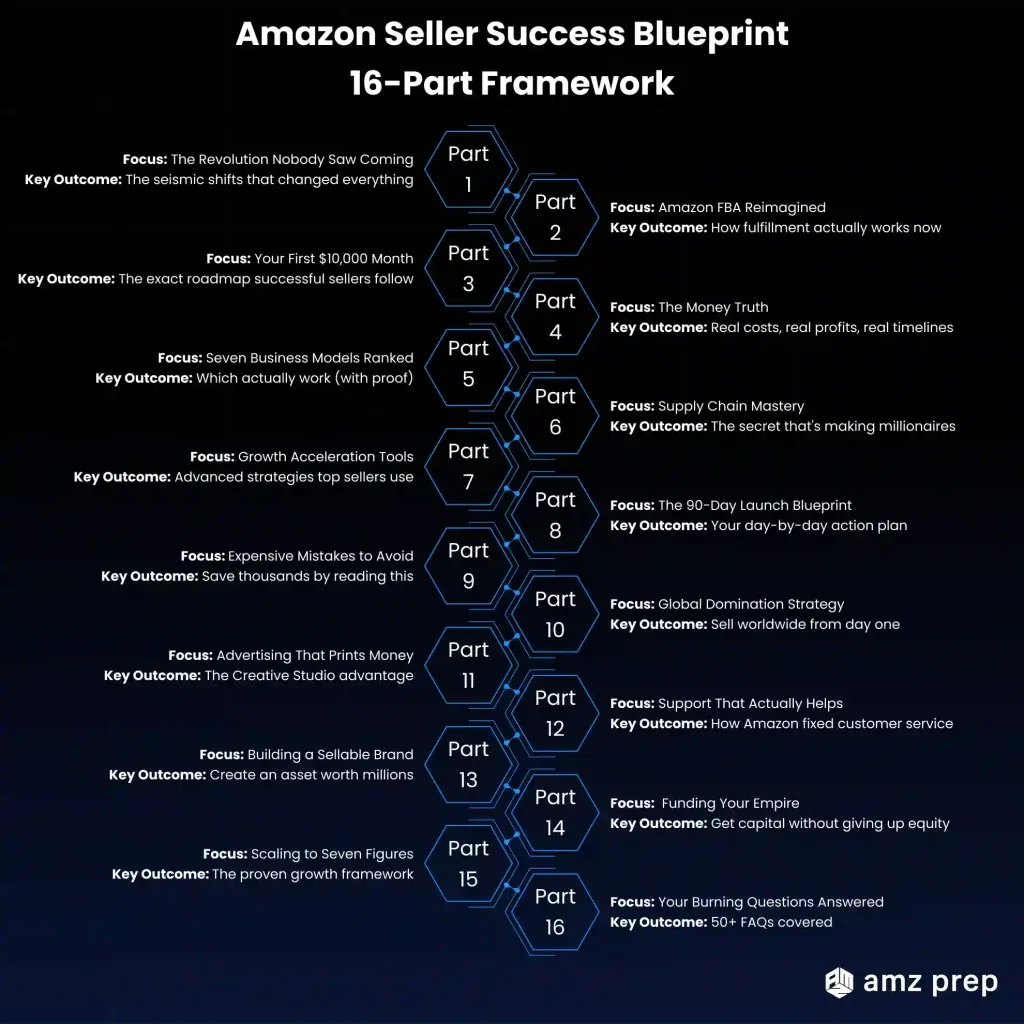
Let’s dive into the details that will transform your understanding of what’s possible.
Chapter 1
Complete 2025 Amazon Seller Playbook
- Step-by-step guide
- Practical strategies and operational tips
- Insights from AMZ Prep’s perspective

This guide is your end-to-end roadmap for understanding and succeeding on Amazon in 2026. It’s divided into four clear parts, each building on the last:
- Part 1: Amazon Accelerate 2026 announcements and what they mean for sellers.
- Part 2: Updated FBA operations and the new fee structure.
- Part 3: A step-by-step, 12-stage roadmap to launch your first profitable Amazon business.
- Part 4: Realistic investment requirements and profit analysis, with timelines and margins.
Together, these sections give you the strategies, tools, and financial clarity to turn Amazon into a sustainable, profitable business.
Part 1: What are the major changes made by Amazon in selling?
This section explains the important updates from Amazon Accelerate 2026. You will learn how changes like ending commingling, using one inventory for all platforms, and global warehousing can save you time and money as a seller.
What are the news and announcements on the Amazon Accelerate program?
September 2025. Seattle. Amazon CEO Andy Jassy walks onto the Accelerate stage and drops a bombshell that would save sellers $600 million annually. But that was just the appetizer.
Over the next two days, Amazon unveiled innovations that make previous “game-changers” look like minor updates. We’re not talking about incremental improvements. We’re talking about a fundamental reimagination of how commerce works.
Consider what Dharmesh Mehta, VP of Worldwide Selling Partner Services, revealed: “Over the last 25 years, sellers have generated $2.5 trillion in sales in Amazon stores.” Then he added the kicker: “I believe our biggest accomplishments are still ahead of us.”
| Innovation | Annual Impact | Direct Benefit |
|---|---|---|
| Commingling Elimination | $600M savings | No stickering required |
| Seller Assistant | 24/7 automation | Automated compliance & optimization |
| Creative Studio | Free content | $0 professional marketing |
| Global Warehousing | 40% cost reduction | Single inventory for worldwide sales |
| Multi-Channel Fulfillment | Walmart integration | Fulfill all platforms from FBA |
What is the automation feature on Amazon for Business Management?
Managing an Amazon business traditionally required constant attention to multiple operational aspects. Sellers needed to monitor account health, track inventory, and optimize listings regularly to maintain competitiveness.
- Account Health Monitoring: Regularly review performance metrics to avoid warnings or suspensions.
- Inventory Management: Maintain optimal stock levels to prevent shortages or excess storage costs.
- Listing Optimization: Continuously refine product titles, descriptions, and images to enhance visibility and conversion.
- Pricing Strategy: Adjust pricing based on market trends and competitor activity.
- Record Keeping: Maintain accurate records of sales, expenses, and projections for informed decision-making.
- Customer Service Management: Respond promptly to inquiries, reviews, and returns to ensure customer satisfaction.
That era just ended.
Amazon’s new Seller Assistant isn’t just another chatbot or help feature. Think of it as having a Harvard MBA, a compliance lawyer, a data scientist, and a marketing genius working for you around the clock. And they never sleep, never take breaks, and never ask for a raise.
Here’s a real example that illustrates the power:
Alpineverse, an outdoor gear company, listed a tent with mesh that “eliminates mosquitoes.” Seems innocent enough, right? Wrong. That’s technically a pesticide claim requiring EPA registration. In the old world, this would lead to listing suppression, lost sales, and weeks of back-and-forth with support.
In the new world? The Seller Assistant caught it instantly, suggested changing the wording to “keeps bugs out” (which isn’t a pesticide claim), and updated the listing automatically. Crisis averted before it even started.
But that’s just the beginning. This same assistant:
- Predicts inventory needs three months in advance
- Creates promotional strategies with ROI projections
- Identifies expansion opportunities you’re missing
- Handles documentation for international selling
- Optimizes your listings based on real-time search trends
Related: Learn more about Amazon’s seller tools and features
What are the latest initiatives of Amazon on eliminating costs?
Remember commingling? That practice where Amazon mixed inventory from different sellers of the same product? It’s dead. Gone. Finished.
For context: When you sent products to Amazon, you had to apply special stickers to prevent your inventory from being mixed with other sellers’. This seemingly simple requirement cost sellers $600 million annually in labor and materials.
Starting in late 2025, if your products have manufacturer barcodes, you’re done with stickering. Your inventory stays yours. Your returns come back to you. And that $600 million? It’s now available for growing your business instead of buying labels.
This change came after Amazon stopped offering prep services at their fulfillment centers.
But the cost savings don’t stop there:
Warehousing Improvements
New AWD (Amazon Warehousing and Distribution) facilities offer 25% discounts on inbound processing fees when you ship pallets. That’s not a typo. 25% off, just for shipping the way that’s most efficient for everyone.
Global Inventory Management
Store products in one location, sell everywhere. The new Global Warehousing and Distribution system cuts storage costs by 20-40% while maintaining Prime delivery speeds worldwide.
Professional Content Creation
Remember paying $5,000 for product photography? $10,000 for video ads? Those days are over. Amazon Creative Studio generates unlimited professional content at zero cost. Not “low cost.” Zero.
What platforms can you integrate on Amazon under the Accelerate program?
Here’s what made jaws drop at Accelerate: Amazon will now fulfill orders for the Walmart marketplace.
Read that again.
Amazon is fulfilling Walmart orders.
But it goes beyond Walmart. Your Amazon FBA inventory can now fulfill orders from:
- Your Shopify store
- TikTok Shop
- eBay
- Instagram Shopping
- Even brick-and-mortar retail (coming in 2026)
One inventory pool. Multiple sales channels. Amazon’s world-class logistics handles everything.
JLAB Audio tested this system. They went from fulfilling a few hundred multi-channel orders monthly to thousands. Shipping time dropped from five days to two. Overall sales increased 19%.
This isn’t just convenience. It’s a fundamental shift in how e-commerce works. You’re no longer choosing between channels. You’re leveraging all of them simultaneously.
Note: These platform changes create the foundation for a completely new approach to e-commerce. But understanding the announcements is only the beginning. The real transformation happens when you see how these changes affect the actual mechanics of storing, shipping, and managing inventory through Amazon’s fulfillment network.
Related: Multi-channel fulfillment strategies
Part 2: What are the FBA fees involved in Amazon selling?
Here, you will understand how FBA works today. We cover how Amazon manages inventory, predicts demand, and the updated fees so you can plan your business effectively.
What’s the new era in Amazon FBA?
Asking “What is Amazon FBA?” in 2026 is like asking “What is the internet?” in 1995. The basic answer hasn’t changed – Fulfillment by Amazon means they store, pack, and ship your products. But the implications have transformed completely.
Modern FBA isn’t just about warehousing and shipping. It’s an integrated intelligence system that:
To maximize efficiency, many sellers partner with3PL fulfillment providers who specialize in Amazon prep and logistics.
- Predicts demand before customers know they want something
- Automatically redistributes inventory to prevent stockouts
- Adjusts pricing based on 47 different market signals
- Creates marketing campaigns while you sleep
- Handles international expansion without you lifting a finger
The system processes millions of data points every second. Weather patterns that might affect buying behavior. Social media trends indicate emerging demand. Competitor stockouts are creating opportunities. Economic indicators suggest price sensitivity changes.
Learn more about Amazon’s latest platform updates that are transforming seller operations
All of this happens automatically, continuously, invisibly.
How to sell on Amazon with the latest fee structure?
Before you start selling on Amazon, it’s essential to understand the fees involved. Amazon charges different fees depending on your selling plan, product category, and fulfillment method. Knowing these costs upfront helps you price products correctly, maintain healthy profit margins, and avoid surprises that can eat into your earnings.
In this section, we break down the key fees you’ll encounter, explain how they are calculated, and provide practical tips for managing them effectively so your business stays profitable from the start.
| Product Size | Fulfillment Fee | Storage (Jan-Sep) | Storage (Oct-Dec) |
|---|---|---|---|
| Small Standard | $3.22 | $0.87/cubic ft | $2.40/cubic ft |
| Large Standard | $5.42 | $0.87/cubic ft | $2.40/cubic ft |
| Extra-Large | $6.92+ | $0.87/cubic ft | $2.40/cubic ft |
| Small Oversize | $9.73 | $0.87/cubic ft | $2.40/cubic ft |
| Medium Oversize | $11.61 | $0.87/cubic ft | $2.40/cubic ft |
| Large Oversize | $23.42 | $0.87/cubic ft | $2.40/cubic ft |
| Special Oversize | $89.54+ | $0.87/cubic ft | $2.40/cubic ft |
What is the FBA Process followed by Amazon
The traditional FBA process involved 15+ manual steps, multiple systems, and constant decision-making. The 2026 version has been streamlined to five intelligent phases:
Phase 1: Strategic Planning
The Seller Assistant analyzes your products, market conditions, and growth goals. It then recommends optimal inventory levels, suggests which fulfillment centers need stock, and even predicts seasonal variations you might miss.
Phase 2: Intelligent Inbound
Choose between Regional Launch (test in specific markets) or National Distribution (go big immediately). The system calculates the most cost-effective shipping method, often qualifying you for no-fee inbound shipping that wasn’t possible before.
For detailed requirements, review our comprehensive guide to shipping to Amazon FBA.
Phase 3: Smart Distribution
Your products don’t just sit in warehouses. They’re dynamically positioned based on predictive analytics. If the system detects increasing demand in Texas, inventory automatically shifts there before sales spike.
Phase 4: Delivery Operations
We’ve moved beyond “fast” shipping. We’re talking same-day and sub-same-day delivery in major markets. Some products reach customers within hours of ordering. This isn’t premium service – it’s becoming standard.
Phase 5: Continuous Optimization
Every transaction generates learning. The system continuously refines its predictions, getting smarter about your specific business patterns. It’s like having a fulfillment network that evolves specifically for your products.
Can you sell your products on Amazon, specifically to the targeted location?
This might be the most underappreciated innovation from Accelerate 2025. Instead of the traditional all-or-nothing approach to FBA, you can now test products regionally with minimal investment.
Here’s how it works:
You want to test a new camping chair. Instead of sending 1,000 units distributed nationally (tying up $15,000 in inventory), you send 200 units to California only. The product maintains fast shipping speeds in that region while you validate demand.
If it sells well, expand to more regions. If it doesn’t, you’ve limited your risk by 80%.
One outdoor brand tested three products this way. Two failed quickly with minimal losses. The third exploded, and they scaled nationally within 60 days. Total investment saved: $40,000.
Many sellers also evaluate FBA vs FBM to determine the best fulfillment strategy for their business model.
Understanding these operational improvements and fee structures provides the foundation you need to build a successful business. But knowing how the system works is only valuable when you can apply it strategically to generate consistent revenue. The next section walks through the specific steps to build your first profitable month.
Part 3: How to build a profitable business by selling on Amazon
This part shows you the step-by-step process to start selling on Amazon. From setting up your business and finding products to creating listings and running ads, you’ll get a clear guide to make your first profit.
Selling on Amazon is a real business, not a shortcut to quick profits. Success requires proper setup, careful research, and systematic execution.
This step-by-step guide walks you from the basic foundations to advanced growth strategies, ensuring each stage builds a solid and profitable Amazon business.
Below is the clean, actionable sequence. Each step shows what to do, why, and the exact output you should have before moving on.
Step 1: What are the legal and bank documents needed to sell on Amazon
What to do:
- Form an LLC in your state (recommended).
- Get an EIN from the IRS (free).
- Open a business checking account under your LLC.
Documents needed for Amazon:
- Business bank account info (or personal temporarily).
- Tax info (SSN or EIN).
- Government ID, credit card, and phone for verification.
Why: Keeps business finances separate from personal. Required for Brand Registry, wholesale, and banking.
Output: LLC documents, EIN letter, and business bank account ready.
Step 2: Create Seller Account
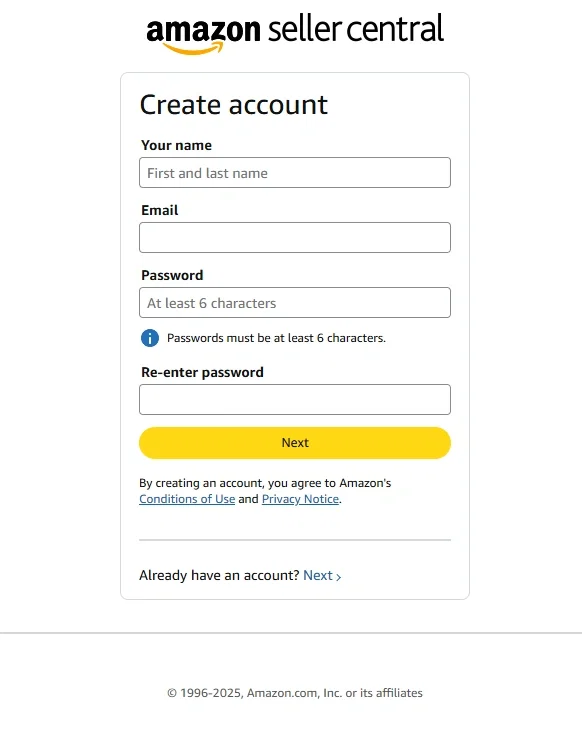
What to do:
- Sign up for an Amazon seller account.
- Choose Professional ($39.99/month) if you expect >40 sales, want ads, or access bulk tools. Individual = $0.99/sale.
- Upload verification documents (bank, tax, ID, phone).
Why: Professional account unlocks tools to scale. Verification prevents account holds.
Note: New sellers can take advantage of Amazon’s New Seller Incentives (NSI) program to reduce initial costs.
Output: Active Seller Central account.
Step 3: Why market research is essential to sell a product on Amazon?
What to do:
- Use Product Opportunity Explorer → Identify Market Demand.
- Enter categories of interest (e.g., “home gym equipment”).
- Capture demand trend, price band, competition, features, seasonality, and profit potential.
Check numbers:
- Net = Retail price − Referral fee − FBA fee − COGS − Shipping − Ads per unit.
Why: Avoids guessing; finds products with demand and good margins.
Learn our proven framework for choosing the right products for Amazon FBA.
Output: Shortlist 1–3 product candidates with solid unit economics.
Step 4: How to calculate landed cost
What to do:
- Contact suppliers (Alibaba, Global Sources, domestic). Order samples.
- Confirm MOQ, lead time, packaging, and quality.
- Calculate landed cost = COGS + freight + duties + brokerage + domestic shipping.
Why: Accurate costs help set profitable pricing.
Output: Chosen supplier, approved sample, landed cost per unit.
Step 5: What fulfillment methods are available for an Amazon seller
What to do:
- Decide FBA (Amazon ships, Prime eligible) or FBM (you handle shipping).
- Plan prep and labeling (in-house or 3PL).
- Review Amazon FBA packaging requirements and guidelines to ensure compliance from day one.
Why: Fulfillment method affects fees, speed, and customer experience.
Output: Fulfillment plan ready.
Step 6: The Best way of listing creation for Amazon selling
What to do:
- Prepare images: main on white background (1000×1000+), lifestyle, and infographics.
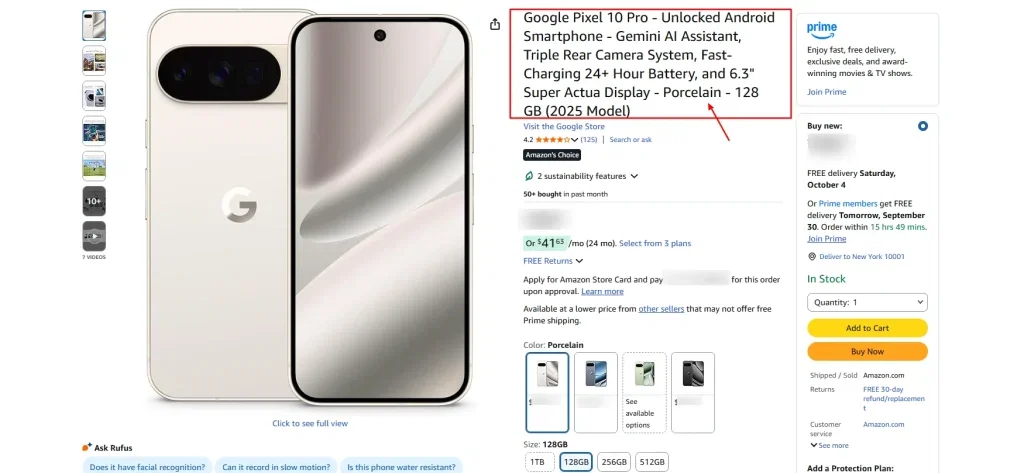
- Use the Amazon listing tool or Brand tools to generate title, bullets, description, and backend keywords.
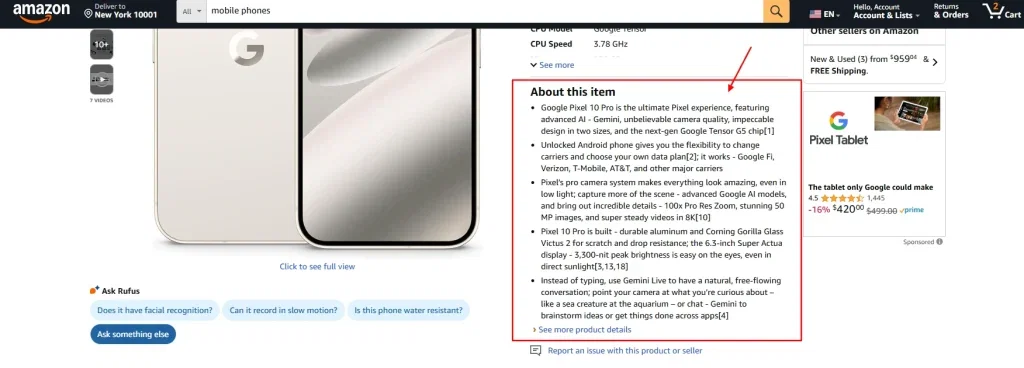
- Edit copy with specifics (size, weight, materials).
- Add backend keywords (no stuffing).
- If Brand Registered, create A+ Content.
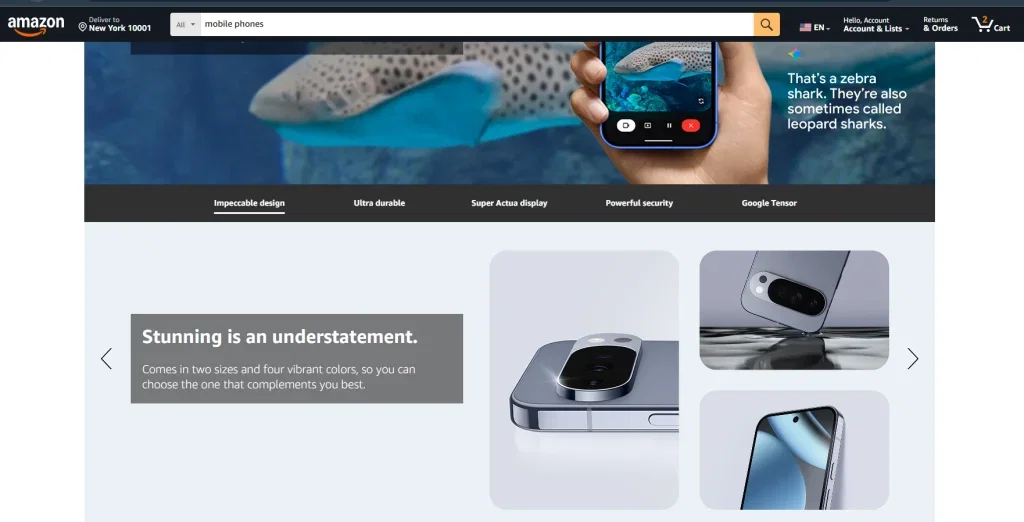
Why: High-quality listings build trust and increase conversion.
Note: Master the art of creating optimized Amazon product listings that convert browsers into buyers.
Output: Complete product page with title, bullets, description, images, backend keywords, and A+ content if available.
Step 7: How to prepare product pre-launch on Amazon
What to do:
- Enroll in Amazon Vine (up to 30 units recommended).
- Prepare customer support templates, FAQs, and return policy.
Why: Early verified reviews improve conversion; templates reduce support time.
Output: Vine stock allocated, support templates ready.
Step 8: How should you plan promotion on Amazon for successful selling
Soft Launch: List product at slightly higher price, monitor early performance.
Price Test: Adjust price to balance conversion and margin.
Ads On: Start small-budget Sponsored Products campaigns (auto + manual). Track ACoS.
Scale: Increase spend on performing ads, pause low-performing ones.
Notes: Test one or two products first, then scale.
Output: Profitable listing with initial reviews and ad data.
Step 9: How the Creative studio helps you in upscaling through sponsored ads
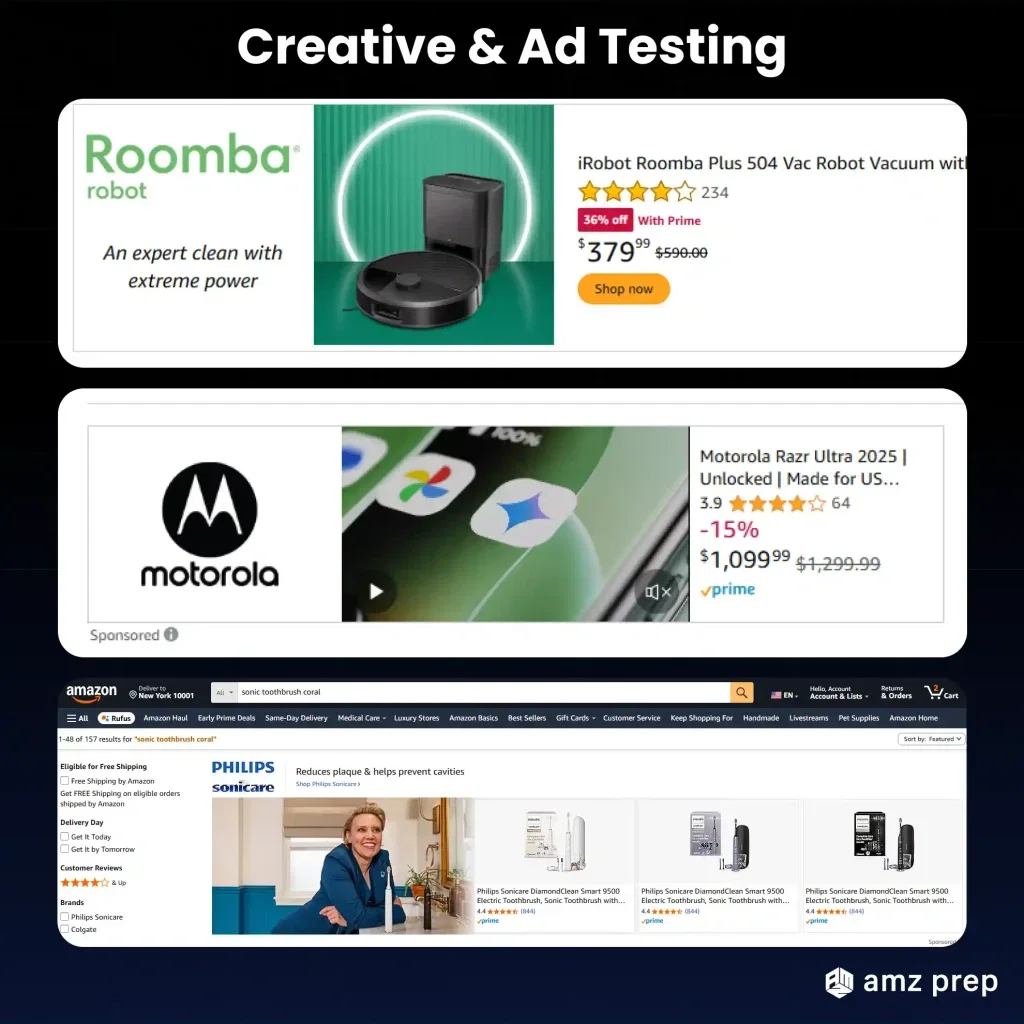
What to do:
- Use Creative Studio to make 15–25 ad creatives (images, headlines, short videos).
- Run small tests to identify the top 3–5 performing creatives.
- Track clicks → conversion → ACoS.
Deep dive into Amazon PPC advertising optimization to maximize your ad spend ROI.
Why: Only a few creatives drive strong results; testing finds winners.
Output: 3–5 high-performing creatives and scaled ad campaigns.
Step 10: How to take care of inventory when selling on Amazon
What to do:
- Forecast reorder point = (daily sales × lead time) + safety stock.
- Use alerts or a simple tool to avoid stockouts.
- Use prep 3PL if needed for labeling, polybagging, or bundling.
Why: Stockouts hurt ranking; overstock increases costs.
Output: Reorder schedule, logistics SOP, 3PL plan.
Find the best Amazon FBA prep centers to handle your product preparation needs.
Step 11: Ways of scaling your selling on Amazon
What to do:
- Expand winning SKUs (variations, bundles).
- Consider multi-market expansion (Canada, EU, AU) after US stability.
- Use reprices, PPC automation, and analytics tools.
- Hire support staff if needed (VA, PPC specialist, operations manager).
Why: Automation and delegation allow growth without operational bottlenecks.
Output: Expanded catalog, automation in place, small support team.
Step 12: Best method to optimize your Amazon selling
Track & frequency:
- Daily: units sold, inventory, ad spend.
- Weekly: conversion rate, sessions, ACoS, top keywords.
- Monthly: P&L, ROI by SKU, reorder adjustments.
Actions:
- Improve packaging, inserts, or listing copy.
- Relaunch underperformers with new creatives.
Output: Data-driven growth and sustainable profits.
You’ve now seen the step-by-step process to set up and grow your first product on Amazon. The next part looks at the money side of things, how much you need to invest, the costs you’ll face, and the profits you can expect. Understanding these numbers will help you plan smartly and make sure all your hard work turns into a real, sustainable business.
Part 4: Investment Requirements and Profit Analysis
This section focuses on the money side of selling on Amazon. You’ll see how much you need to invest, what costs to expect, and the typical profits so you can plan realistically.
How much investment is required for startups for Amazon selling
Let’s cut through the hype and talk real numbers. Everyone promises you’ll be rich overnight. Here’s what it actually costs to build a profitable Amazon business in 2026.
When people ask “how much does it cost to sell on Amazon,” the answer depends entirely on your approach:
| Approach | Investment Range | What’s Included | Success Rate |
|---|---|---|---|
| Absolute Minimum | $640 + monthly fees | Account + basic inventory | Like racing in first gear |
| Realistic Investment | $5,500-7,500 | Business formation + inventory + advertising | Recommended for genuine business |
| Accelerated Growth | $15,000-20,000 | Multiple products + aggressive marketing | Fast track to success |
Investment breakdown to sell on Amazon
If you’re starting with almost nothing:
- $39.99: Professional seller account (monthly)
- $500: Initial inventory (bare minimum)
- $100: Shipping to Amazon
- $0: Product photos (Creative Studio)
- $0: Listing optimization (automated tools)
Total: ~$640 + monthly fees
This ultra-lean approach can work, but it’s like trying to win a race in first gear. You’ll move forward, but slowly.
What is the recommended investment split for selling
For genuine business building:
- $3,000-5,000: Initial inventory
- $39.99/month: Professional account
- $500: Business formation and licenses
- $1,000: Shipping and logistics
- $500: Initial advertising budget
- $200: Vine program enrollment
- $300: Product samples and testing
Total: $5,500-7,500
This gives you room to test, fail, and find winners without running out of capital.
What is the fee structure of Amazon
Amazon fees confuse everyone initially. Here’s the simple breakdown:
How much is the referral fee for products on Amazon
| Category | Fee Percentage | Notes |
|---|---|---|
| Most categories | 15% | Standard rate |
| Some categories | 8-12% | Books, electronics |
| Jewelry | 20% | For portions over $250 |
| Amazon Devices | 45% | Don’t sell these |
What are the common hidden costs to sell on Amazon
- Returns: 20% average in some categories
- Damaged inventory: 2-3% typical
- Removal fees: $0.32-$0.75 per item
- Disposal fees: $0.18-$0.34 per item
- Currency conversion: 2-3% for international
How much profit margin can you make on Amazon
Here’s what sellers actually make after all costs:
By Business Model:
| Model | Net Margin | Investment Required | Time to Profit |
|---|---|---|---|
| Private Label | 15-30% | $10,000 | 4-6 months |
| Wholesale | 10-20% | $15,000 | 2-3 months |
| Arbitrage | 10-15% | $2,000 | Immediate |
| Handmade | 30-50% | $3,000 | 2-4 months |
| Books/Media | 20-30% | $1,000 | Immediate |
By Experience Level
| Experience | Typical Profit | Timeline |
|---|---|---|
| Year 1 | Often break-even to 10% | Learning phase |
| Year 2 | 10-20% typical | Systems development |
| Year 3+ | 15-30% for optimized operations | Mature business |
| Top 10% | 30-40% margins | Elite performers |
What is the average income that Amazon sellers earn from selling
Based on recent surveys and data:
- Median seller: $2,000/month profit
- Average seller: $8,000/month (skewed by top performers)
- Top 20%: $20,000+/month
- Top 5%: $100,000+/month
- Top 1%: $500,000+/month
Important: 38% of sellers aren’t profitable in their first year. However, 62% of those who stick with it become profitable by year two.
Learn advanced strategies for increasing your Amazon profit margin as you scale.
How much time it takes for sellers to make a profit on Amazon
| Phase | Timeframe | Typical Result | Focus |
|---|---|---|---|
| Months 1-3: Investment Phase | Learning period | -$2,000 to -$5,000 | Spending more than earning |
| Months 4-6: Break-Even Phase | Finding balance | -$500 to +$500/month | Revenue covers most costs |
| Months 7-12: Profit Phase | Consistent growth | $1,000-5,000/month | Positive cash flow |
| Year 2: Scale Phase | Multiple products | $5,000-20,000/month | Efficient operations |
This guide shows you exactly how Amazon selling works in today’s transformed marketplace. The tools are more powerful, the opportunities are bigger, but success still requires real investment, genuine effort, and treating it like the serious business it is.
Whether you’re just starting to explore Amazon as a business opportunity or looking to scale your existing operations, these strategies and insights will help you navigate the new landscape and build a profitable, sustainable business.
Before committing to a product, run the numbers through our FBA profit margin calculator. It factors in FBA fees, prep costs, and referral fees in one view.
Precap: What You Will Learn
This guide covers everything you need to know to build and scale a profitable Amazon business in 2026:
- Seven Business Models Ranked – Understand the pros, cons, and real-world performance of private label, wholesale, arbitrage, handmade, print-on-demand, books/media, and digital products.
- Supply Chain Mastery – Learn how top sellers optimize inventory, reduce costs, and expand globally using advanced logistics and fulfillment strategies.
- Growth Acceleration Tools – Discover the technology stack and analytics systems that help seven-figure sellers track performance, automate decisions, and improve profitability.
- The 90-Day Launch Blueprint – Follow a detailed, day-by-day action plan to launch, optimize, and scale your Amazon business efficiently.
By the end of this guide, you will have the knowledge, systems, and actionable plan to execute a successful Amazon business from day one.
Chapter 2
2025 Amazon Seller: Models, Supply Chain, Tools & 90-Day Launch (How to Sell on Amazon Series)
- Roadmap for Amazon sellers
- Tools and strategies
- Ways to scale and cut costs

Recap of Part 1 to Part 4:
So far, you’ve seen how many Amazon sellers lose time, money, and opportunities by making predictable mistakes at key stages. The good news is that these errors are avoidable.
Understanding what to watch for, why these mistakes happen, and how to prevent them is what separates successful sellers from those who struggle. Up next, you’ll get a clear breakdown of the seven most common pitfalls and practical strategies to avoid them.
What You’ll Learn in Chapter 1 of the How to Sell on Amazon Guide?
We’re covering absolutely everything you need to know about selling on Amazon in 2026:
| Section | Focus | Key Outcome |
|---|---|---|
| Part 5 | Seven Business Models Ranked | Which actually works (with proof) |
| Part 6 | Supply Chain Mastery | The secret that’s making millionaires |
| Part 7 | Growth Acceleration Tools | Advanced strategies top sellers use |
| Part 8 | The 90-Day Launch Blueprint | Your day-by-day action plan |
Let’s dive into the details that will transform your understanding of what’s possible.
Part 5: What is the best Amazon business model for success and profitability
When starting your Amazon business journey, choosing the right model determines everything from your startup costs to long-term profitability. After analyzing thousands of seller accounts and interviewing top performers, here are seven proven approaches ranked by real-world success rates and scalability potential.
1. The business model for unique brand positioning – Strategic Brand Ownership for Maximum Profit

What It Really Is
You find existing products, improve them slightly, add your branding, and sell as your own. This isn’t about inventing something new—it’s about executing better than competitors in the Amazon marketplace.
Sarah’s Story
Sarah was a yoga instructor making $40,000/year. She noticed students complaining about yoga mats sliding during hot yoga. Using Opportunity Explorer, she found demand for extra-grip mats specifically for heated classes.
She sourced mats with better grip material from Alibaba, added alignment lines that students loved, and created premium packaging. Investment: $3,000. Year one revenue: $78,000. Year two: $340,000. This transformation shows how strategic product selection can build a real business.
Private Label Performance Metrics
| Metric | Details |
|---|---|
| Initial investment needed | $5,000-10,000 is typically required for quality products, samples, inventory, and branding |
| Time to profitability | 4-6 months on average due to product development, shipping, and market penetration time |
| Success rate | 35% achieve consistent monthly profits over $5,000 within 18 months |
| Average profit margin | 20-30% after all fees, with top performers reaching 40%+ through premium positioning |
| Scalability potential | Unlimited growth is possible with strong brand building and expansion into product lines |
Explore our complete guide to Amazon FBA private label for detailed launch strategies.
Why It Works
You control everything: pricing, quality, marketing, brand story. The new AI tools handle complex optimization tasks, letting you focus on product selection and customer experience. Brand equity builds over time, creating sustainable competitive advantages.
Why It Fails
Most failures stem from poor product research or insufficient capital. Sellers choose products they personally like instead of validating market demand. Others underestimate the $8,000-15,000 needed to properly launch and sustain a product through its first year.
2. Reasonable profit margin with higher sales velocity – Consistent Cash Flow Through Established Brands
What It Really Is
Purchase branded products in bulk directly from manufacturers or authorized distributors, then resell on Amazon. You’re providing distribution services for established brands seeking marketplace presence.
Marcus’s Method
Marcus had B2B sales experience and $10,000 to invest. He cold-called 50 brands, secured approval from 12, and started with 5 product lines. His competitive edge? Focusing on brands with MAP (minimum advertised price) policies, which protected his profit margins.
Year one: $400,000 revenue, $60,000 profit. Year three: $1.2M revenue, $180,000 profit. Now maintains exclusive Amazon distribution agreements with three major brands.
Wholesale Performance Metrics
| Metric | Details |
|---|---|
| Initial investment needed | $10,000-20,000 minimum for meaningful inventory across multiple products |
| Time to profitability | 2-3 months once approved, as you’re selling proven products with existing demand |
| Success rate | 45% achieve sustainable profits, but success heavily depends on relationship management |
| Average profit margin | 15-20% typical, with experienced sellers achieving 25% through strategic brand partnerships |
| Scalability potential | Growth is limited by available capital and the ability to secure new brand relationships |
Learn how to start selling wholesale on Amazon and secure profitable brand partnerships.
Why It Works
Faster path to profitability than private label. Established brands mean proven demand and existing customer awareness. Professional relationships often lead to exclusive territory rights and better wholesale pricing.
Why It Fail
Increasing competition drives margins down on popular products. Brands increasingly sell direct or choose exclusive distributors. Amazon’s own-brand expansion threatens many categories. Success requires continuous prospecting and relationship maintenance.
3. Best for product testing and short-term ROI – Entry-Level Market Education and Short-Term Profits
What It Really Is
Purchase discounted products from retail stores or online clearances, then resell on Amazon at market prices. Think of it as professional bargain hunting with profit margins.
Jake’s Journey
Jake started with $500, systematically visiting Walmart, Target, and CVS clearance sections. Month one profit: $400. Month six: $2,000. He then discovered online arbitrage—purchasing from retailer websites during sales events. Now generates $5,000/month profit working 20 hours weekly.
Arbitrage Performance Metrics
| Metric | Details |
|---|---|
| Initial investment needed | $500-2,000 is sufficient to start, with profits reinvested for inventory growth |
| Time to profitability | Immediate profits are possible from the first successful purchase and sale |
| Success rate | 60% generate some profit, though most remain part-time due to scaling challenges |
| Average profit margin | 10-20% per item, but high-margin finds can yield 100%+ returns |
| Scalability potential | Limited by time constraints and physical sourcing requirements |
Why It Works
Lowest barrier to entry for learning Amazon’s systems. Immediate cash flow helps fund future business models. Excellent education in market pricing, customer behavior, and platform mechanics.
Why It Fails
Difficult to scale beyond personal time investment. Inconsistent inventory sources create unpredictable income. Many retailers now limit quantities or ban resellers. Better viewed as Amazon education than long-term wealth building.
4. Niche segment with high-margin income channel – Premium, High-Margin Craft Products
What It Really Is
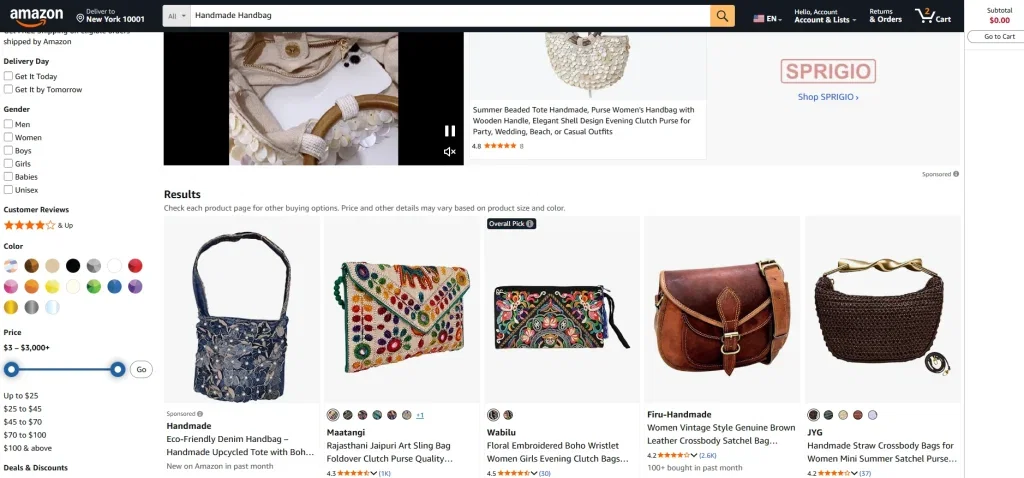
Create products yourself and sell through Amazon Handmade. This model leverages craftsmanship, unique designs, and personal stories to command premium pricing.
Lily and Josiah’s Success
This couple started making soap in their kitchen while expecting their first child. They focused on organic, locally-sourced ingredients and sustainable packaging. Starting at farmers’ markets, they transitioned to Amazon Handmade for a broader reach.
Handmade Performance Metrics
| Metric | Details |
|---|---|
| Initial investment needed | $1,000-5,000 for quality materials, tools, and initial inventory creation |
| Time to profitability | 2-4 months as quality handmade products typically command premium pricing |
| Success rate | 40% reach sustainable profitability, with success tied directly to craft quality and uniqueness |
| Average profit margin | 40-60% due to premium positioning and direct-to-consumer pricing |
| Scalability potential | Limited by personal production capacity unless transitioning to manufacturing |
Why It Works
Highest profit margins of any model due to premium positioning. Lower competition in specialized niches. Customers pay significantly more for authentic, handmade products. Strong emotional connection drives customer loyalty and repeat purchases.
Why It Fails
Scaling requires either hiring help (reducing margins) or transitioning to manufacturing (losing “handmade” status). Time-intensive production limits inventory growth. Craftspeople often struggle with business and marketing aspects.
5. Passive income through custom designs – Passive Income Through Custom Designs
What It Really Is
Design graphics applied to products (t-shirts, mugs, books) are manufactured only after customer orders. Zero inventory risk with unlimited design potential.
Emma’s Empire
Emma, a graphic designer, created funny nurse-themed t-shirt designs. Using Merch by Amazon required zero upfront investment. First month: $100. Year one: $30,000. She now manages 500+ active designs generating $8,000 monthly in mostly passive income.
Print on Demand Performance Metrics
| Metric | Details |
|---|---|
| Initial investment needed | $0-500 primarily for design software and outsourced artwork if needed |
| Time to profitability | 3-6 months to build a sufficient design portfolio for meaningful sales volume |
| Success rate | Only 20% achieve significant income due to extreme competition and platform limitations |
| Average profit margin | 15-25% with Amazon taking a larger percentage than traditional FBA |
| Scalability potential | Unlimited design creation, but individual design performance is unpredictable |
Why It Works
Zero inventory risk makes testing cost-free. Successful designs generate passive income for years. Trending topics can create overnight windfalls. Holiday and event-based designs provide seasonal income spikes.
Why It Fails
An extremely saturated marketplace with millions of designs. Copyright and trademark violations are common and costly. Success requires hundreds of designs to generate meaningful income. Platform algorithm changes can eliminate income overnight.
6. Profitability depends on market trends – Steady Side Income from Resale
What It Really Is
Sourcing and reselling used books, textbooks, DVDs, and video games. This unsexy business consistently generates profits for dedicated practitioners.
Robert’s Routine
Robert systematically visits library sales, estate sales, and thrift stores. He scans ISBNs with the Amazon Seller app, purchasing books for $0.50-2 and selling for $10-50. Working just 15 hours weekly, he maintains $3,000 monthly profit and has done so consistently for five years.
Books/Media Performance Metrics
| Metric | Details |
|---|---|
| Initial investment needed | $500-1,000 for initial inventory and scanning tools |
| Time to profitability | Immediate profits from the first successful purchases |
| Success rate | 70% generate consistent profits due to a straightforward buy-low, sell-high model |
| Average profit margin | 50-70% on successful finds, with textbooks and specialty books offering the highest returns |
| Scalability potential | Limited by physical sourcing time and storage space constraints |
Why It Works
High profit margins on successful finds. Consistent demand for books and media. Low shipping costs through Media Mail rates. Predictable seasonal patterns help optimize sourcing efforts.
Why It Fails
Physically demanding work, carrying heavy boxes. Limited scalability due to sourcing constraints. Increasingly competitive at popular book sales. Best seasonal sources occur from spring through fall, creating income fluctuations.
7. Digital Products – Intellectual Property and Knowledge Monetization
What It Really Is
Creating and selling digital downloads, including ebooks, courses, templates, and audio files. Pure intellectual property monetization without physical constraints.
Michael’s Method
Michael wrote a comprehensive guide for passing the CPA exam, published through Kindle Direct Publishing at $39.99. First year revenue: $15,000. He expanded with practice tests and video tutorials, now generating $60,000 annually with 95% passive maintenance.
Digital Products Performance Metrics
| Metric | Details |
|---|---|
| Initial investment needed | $0-1,000, mainly time investment for content creation and basic marketing |
| Time to profitability | 3-12 months, depending on content quality and marketing effectiveness |
| Success rate | Only 15% achieve significant income due to extreme competition and marketing requirements |
| Average profit margin | 70-90% asthe highest margins possible with no physical fulfillment costs |
| Scalability potential | Unlimited global reach with no inventory or shipping constraints |
Why It Works
Highest possible profit margins with no fulfillment costs. True passive income once content is created. Global distribution without international complications. Expertise-based content can command premium pricing.
Why It Fails
An extremely competitive marketplace requires excellent marketing. Success typically requires an existing audience or expertise. Piracy can reduce income significantly. Platform algorithm changes affect discoverability dramatically.
Understanding these seven models provides the foundation for choosing your Amazon business approach. However, selecting the right model is just the beginning—successful implementation requires mastering the advanced supply chain strategies that separate profitable sellers from the struggling masses. The next section reveals the behind-the-scenes systems that top sellers use to minimize costs while maximizing global reach.
Part 6: How to optimize your supply chain for hassle-free Amazon selling
The difference between a struggling Amazon seller and a million-dollar business often isn’t the products they choose, it’s how efficiently they move those products around the world. While most sellers focus on finding winning products, the real money lies in mastering supply chain optimization and leveraging Amazon’s newest fulfillment innovations.
Need for setting up your global warehousing network
Picture storing your entire inventory in one strategic location while selling seamlessly across 20+ countries. No duplicate inventory. No regional stockouts while other markets have excess. No trapped capital in slow-moving international inventory.
This isn’t theoretical; it’s Amazon’s Global Warehousing and Distribution system, and it’s fundamentally changing international commerce economics.
Traditional Multi-Country Model:
- US inventory: $20,000
- UK inventory: $10,000
- Germany inventory: $10,000
- Japan inventory: $10,000
- Total capital required: $50,000
- Result: Constant stockouts in hot markets, overstock in slow ones
Global Warehousing Model:
- Single location inventory: $25,000
- Amazon’s AI handles global distribution
- Inventory automatically flows to demand
- Total capital required: $25,000
- Result: 50% less capital, 30% better availability
One electronics seller tested this transformation with phone accessories. The previous approach required $100,000 spread across five countries with constant availability issues. New approach: $60,000 in global warehousing, achieving 99.5% availability and a 30% sales increase.
The real breakthrough isn’t just capital efficiency—it’s demand intelligence. When your inventory pool serves global markets, you gain unprecedented insights into regional preferences, seasonal patterns, and emerging trends across continents.
Master freight forwarding to move inventory efficiently across international borders.
How to make use of MCF for selling beyond Amazon
Amazon’s recent announcement that Multi-Channel Fulfillment (MCF) now serves Walmart Marketplace orders represents a seismic shift in e-commerce strategy. Your Amazon inventory can now fulfill orders from virtually any sales channel.
Jennifer’s Evolution
Started with a single product at her dining room table. Now manages thousands of SKUs shipping 40 containers monthly. Her secret? She maintains one inventory pool serving six sales channels:
- Amazon orders
- Her Shopify website
- Walmart Marketplace
- eBay listings
- TikTok Shop
- Instagram Shopping
Results: 19% sales increase, 12% faster inventory turnover, 50% operational complexity reduction.
The Hidden Competitive Advantage
Beyond convenience lies the true power: unified data intelligence. When all fulfillment flows through one system, you gain complete visibility into:
- Which channels drive the highest profit margins
- Which products perform best on each platform
- Customer lifetime value patterns across channels
- Cross-channel marketing attribution
This intelligence compounds monthly, creating increasingly sophisticated competitive advantages that standalone channel sellers cannot match.
How Amazon helps your global selling in customs compliance
International expansion traditionally required expertise in customs regulations, harmonization codes, and complex documentation. Amazon’s new AI-driven customs system handles 70% of this complexity automatically.
Intelligent Documentation Evolution:
- First shipment: Manual form completion (2-3 hours)
- Second identical shipment: 50% automated (1 hour)
- Tenth shipment: 95% automated (5 minutes)
Automated Classification Intelligence
The system recognizes products across 10,000+ customs codes, eliminating guesswork about whether your camping chair classifies as “furniture” or “sporting goods.”
Real-World Impact
Sarah’s yoga mat expansion to Europe. The previous attempt failed due to customs complexity, costing $3,000 in delays and errors. New system: one-day setup, 48-hour customs clearance, now generating $30,000 monthly European revenue.
How Amazon helps your brand to sell products to rural customers
Amazon’s $4 billion investment in rural delivery networks added 13,000 ZIP codes covering 1.2 million square miles. This expansion creates unique opportunities for sellers who understand rural customer behavior patterns.
Rural customers demonstrate 40% higher repeat purchase rates due to limited local retail options. They’re more likely to become brand loyal and generate higher lifetime values. One outdoor gear brand discovered rural customers averaged $180 annual purchases versus $120 for urban customers.
Delivery Speed Psychology:
| Delivery Option | Conversion Rate Impact | Customer Lifetime Value | Repeat Purchase Probability |
|---|---|---|---|
| Standard (3-5 days) | Baseline | Baseline | Baseline |
| Same-Day | 0.2 | 0.35 | 0.45 |
| Sub-Same-Day (under 4 hours) | 0.4 | 0.6 | 0.8 |
Sub-same-day delivery in major metropolitan areas is changing purchasing behavior fundamentally. Customers replace planned shopping trips with immediate need fulfillment. One household essentials seller saw 300% sales growth when same-day delivery became available in their category.
Implement proven ecommerce warehouse management strategies to optimize your operations.
These supply chain advantages create the foundation for sustainable competitive moats. However, leveraging these systems effectively requires sophisticated analytics and optimization tools that most sellers don’t even know exist. The following section reveals the growth acceleration technologies that separate amateur operations from professional enterprises.
Part 7: How tools help you to improve selling products on Amazon
Building a successful Amazon business today requires more than good products and basic listing optimization. The sellers generating seven-figure revenues leverage sophisticated technology stacks that automate complex decisions, identify hidden opportunities, and optimize every aspect of their operations in real-time.
The benefits you get from using the profit analytics tool on Amazon selling
Traditional accounting shows you what happened last month. Profit Analytics shows you what’s happening right now and what will happen next quarter. This system aggregates data from eight critical sources:
Implement inventory optimization strategies based on your analytics data.
- Real-time sales revenue tracking
- Dynamic Amazon fee calculations
- Live advertising spend monitoring
- Return and refund cost analysis
- Storage fee projections
- Shipping cost optimization
- Currency conversion impact
- Tax liability estimates
Scenario Planning That Changes Everything
Riley from Alpineverse struggled with declining margins on camping stoves. Profit Analytics ran continuous scenario modeling:
| Strategy Option | Projected Profit Change | Sales Volume Impact | Risk Assessment |
|---|---|---|---|
| Current approach | 8% margin declining | Stable but competitive | High long-term risk |
| Price increased by 10% | 18% margin improvement | 15% volume reduction | Medium risk |
| Reduce ad spend by 50% | 14% margin improvement | 5% volume reduction | Low risk |
| Bundle with fuel canisters | 22% margin improvement | 10% volume increase | Lowest risk |
Riley implemented the bundling strategy, achieving his best quarter ever with 22% margins and 10% growth.
The system continuously runs thousands of scenarios, alerting sellers to optimization opportunities most would never discover manually. One seller received a midnight alert that winter gloves were selling 300% faster than projected.
The system recommended an immediate reorder of 500 units. By acting on this insight, they avoided stockouts during peak season and captured an additional $15,000 in profit.
The advantage you get from customizing the Amazon analytics dashboard
Within three weeks of launch, 35,000 sellers built custom dashboards because every successful Amazon business has unique optimization requirements.
The Velocity Dashboard Revolution
One seller discovered 40% of daily sales occurred between 8-10 PM through hourly pattern analysis. By shifting advertising schedules to match customer behavior, they reduced ad spend by 20% while maintaining sales volume.
Choose from the top catalog management software to manage multiple products efficiently.
Profitability Heat Mapping
Visual profit analysis by product, time, and geography revealed that Tuesday mornings consistently showed the highest profit margins due to reduced advertising competition. Strategic promotional calendar adjustments followed these patterns.
Customer Journey Intelligence
Tracking revealed 60% of customers started product research on Google rather than Amazon. This insight drove a Google Shopping campaign launch that doubled revenue within six months.
Building Your Intelligence System:
- Identify your primary constraint (typically inventory, cash flow, or market share)
- Build monitoring dashboards for constraint indicators
- Add leading predictive indicators
- Configure automated alerts for deviations
- Implement weekly optimization reviews
This approach transforms data from overwhelming noise into actionable business intelligence.
How tools help you understand the pattern of customer journey
Understanding how customers actually shop reveals optimization opportunities invisible through traditional metrics.
The Beach Blanket Breakthrough
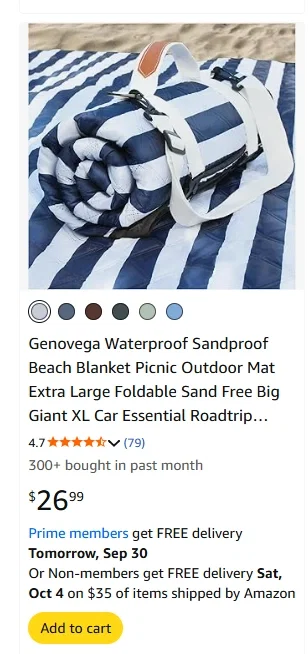
A seller with excellent reviews but poor conversion rates used Customer Journey Analytics to discover the invisible problem:
- Customers searched “waterproof beach blanket”
- Clicked on the listing
- Didn’t see “waterproof” prominently in the main image
- Abandoned by competitors with visible waterproof badges
Solution: Added a waterproof certification badge to the main image. Result: 40% conversion improvement in one week.
Pattern Recognition Beyond Human Capability
The system identifies purchasing patterns humans cannot detect:
- Competitor product viewing sequences before purchase decisions
- Search term progression from research to buying intent
- Feature priorities that drive category purchase decisions
- Price sensitivity timing throughout purchase cycles
One electronics seller discovered that customers viewing products between 2-4 AM converted at 3x higher rates, night shift workers with disposable income and immediate need fulfillment. Targeted campaigns for these hours increased ROI 250%.
Creative Studio – Efficient, Cost-Free Marketing and Content Creation
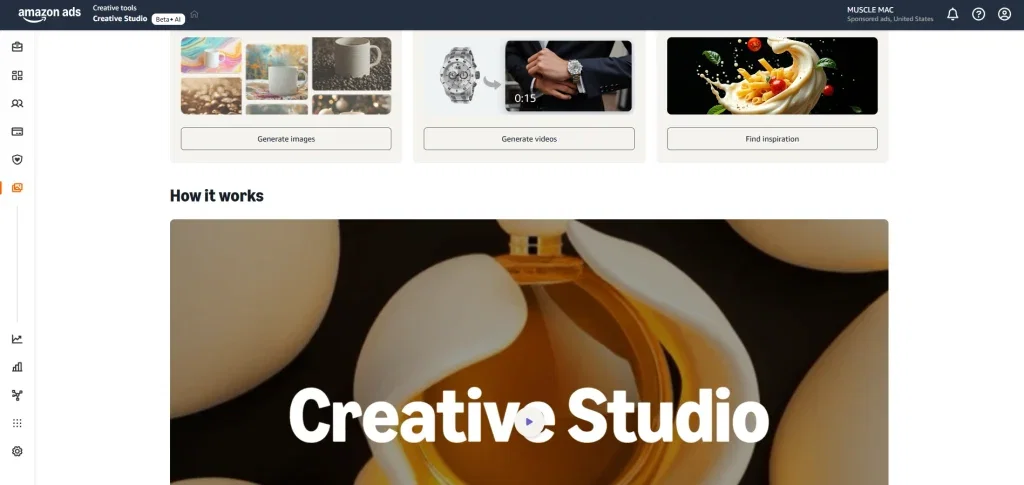
Marketing agencies typically charge $15,000-25,000 for comprehensive campaign development. Creative Studio delivers equivalent results in hours rather than weeks.
Traditional Agency Process vs Creative Studio:
| Campaign Element | Agency Cost | Agency Timeline | Creative Studio Cost | Creative Studio Timeline |
|---|---|---|---|---|
| Market research | $2,000 | 1 week | $0 | 30 minutes |
| Creative ideation | $3,000 | 2 weeks | $0 | 15 minutes |
| Storyboard development | $2,000 | 1 week | $0 | 10 minutes |
| Video production | $10,000 | 3-4 weeks | $0 | 2 hours |
| Testing and optimization | $3,000 | 1 week | $0 | Automatic |
| Total Investment | $20,000 | 8-9 weeks | $0 | 3-4 hours |
Bird Buddy’s Father’s Day Success
Yougin from Bird Buddy needed Father’s Day campaign assets with no production budget. Creative Studio input: “Father’s Day campaign for bird watching camera.” Output: Complete video campaign with multiple variations. Results: 3x click-through rate improvement, zero cost, 2-hour turnaround.
Advanced Creative Strategy Framework
Rather than creating one “perfect” advertisement, successful sellers create 50 effective variations, testing:
- Emotional appeals versus practical benefits
- Time-saving versus money-saving value propositions
- Professional versus hobbyist audience targeting
- Lifestyle versus product-focused visual approaches
Data determines winning combinations rather than subjective preferences, removing guesswork from creative decisions.
These advanced tools provide the competitive intelligence and operational efficiency that separate professional Amazon businesses from amateur attempts.
However, having the right tools means nothing without a systematic implementation plan. The final section provides a day-by-day blueprint for transforming these insights into a profitable Amazon business within 90 days.
Part 8: How to create your launch plan to sell products on Amazon

Theory without execution produces no results. This detailed blueprint transforms everything you’ve learned into a systematic 90-day plan for launching a profitable Amazon business. Every successful seller who generated significant revenue followed a similar structured approach.
Major considerations when setting up the first phase of Amazon selling
Legal and Financial Infrastructure
Establish a proper business structure immediately. Form an LLC in your state ($50-$500 depending on location). Obtain your EIN from the IRS (free, 5-minute online process). Open a dedicated business checking account—never mix personal and business finances. Set up QuickBooks, FreshBooks, or similar accounting software. Create your Amazon Professional Seller account ($39.99/month).
Market Research Deep Dive
Dedicate a minimum of 20 hours to Opportunity Explorer analysis. Identify 20 potential products across different categories.
Analyze two full years of historical data for each candidate. Apply strict filtering criteria: demand trajectory growing 20%+ annually, competition under 500 reviews on top listings, price points between $20-75 for beginners, minimum 30% profit margins after all costs, and clear differentiation opportunities.
Narrow your list to the top 5 products meeting all criteria. These become your testing candidates.
Supplier Sourcing and Evaluation
Request detailed quotes from a minimum of 10 suppliers per product using Alibaba, ThomasNet, and domestic sources. Order samples from your top 5 suppliers for each product. Negotiate payment terms, a 30% deposit maximum is ideal for new relationships. Verify all certifications and compliance requirements. Check references from other Amazon sellers when possible.
Product Validation Testing
Test every sample personally for at least one week of actual use. Collect feedback from target customers through relevant Facebook groups, Reddit communities, and personal networks. Verify quality meets Amazon’s standards and customer expectations. Confirm packaging survives shipping stress tests. Validate all legal compliance requirements for your target markets.
First Inventory Investment
Start conservatively with 200-500 units to minimize risk while ensuring adequate inventory for momentum building. Use the Regional Launch strategy to limit geographic exposure initially. Negotiate shipping terms carefully—understand FOB versus DDP pricing structures. Arrange pre-shipment inspection services for international orders. Set up freight forwarding relationships if sourcing internationally.
Check the to-do list when launching marketing activities
Brand Development Foundation
Design a professional logo using Canva templates or invest in a 99designs contest. Develop your brand story focusing on customer benefits rather than product features. Create packaging inserts that encourage reviews and repeat purchases. Consider trademark registration if planning long-term brand building. Establish a basic brand website using Shopify or WordPress for credibility and future multi-channel opportunities.
Listing Optimization Mastery
Generate initial listing content using AI optimization tools. Enhance with specific customer benefits and unique features. Research and implement backend search terms strategically. Optimize all content for mobile viewing since 60% of Amazon shoppers use mobile devices. Prepare A+ Content templates for immediate deployment after launch.
Pre-Launch System Setup
Enroll in the Amazon Vine program for early reviews if eligible. Create detailed FBA shipment plans, including proper labeling and packaging requirements. Configure accounting categories for accurate profit tracking. Set up inventory level alerts to prevent stockouts. Develop a launch promotion strategy, including potential lightning deals or promotional pricing.
Visual Content Creation
Generate professional lifestyle images using Creative Studio tools. Create informative infographics highlighting key product benefits. Develop video content, including unboxing experiences and usage demonstrations. Design comparison chart,s positioning your product against competitors. Build a comprehensive image testing stack for optimization opportunities.
Final Launch Preparations
Ship inventory to Amazon fulfillment centers, allowing adequate processing time. Configure automated pricing rules based on competition monitoring. Set up PPC campaigns without activation for immediate launch capability. Create customer service email templates for common inquiries. Join relevant Facebook groups and Discord communities for ongoing seller support and networking.
When is the right time to scale and generate more revenue
Launch Timeline and Performance Expectations
| Week Range | Revenue Target | Primary Focus | Success Metrics |
|---|---|---|---|
| Weeks 1-2 | 5-10 daily sales | Platform learning and optimization | 2-3 authentic reviews |
| Weeks 3-4 | 25-50 daily sales | Conversion optimization | ACoS under 35% |
| Weeks 5-8 | 100-200 daily sales | Advertising scale and efficiency | Consistent daily profitability |
| Weeks 9-12 | 300+ daily sales | Product line expansion planning | 40+ total reviews |
Soft Launch Strategy
Launch with conservative pricing 10% above your target to test price sensitivity. Activate Vine program for early review generation. Monitor listing health metrics hourly during the first week. Respond immediately to customer questions and concerns. Document every issue and solution for future product launches.
PPC Campaign Activation
Start with automatic campaigns at $20 daily budget for keyword discovery. Launch exact match campaigns for your top 10 researched keywords. Implement negative keywords identified from automatic campaign search terms. Create brand defense campaigns protecting your product name. Monitor ACoS hourly initially, adjusting bids based on performance data.
Optimization Sprint Period
Adjust pricing based on actual conversion data rather than assumptions. Refine PPC bids using performance metrics from the first week. Update listing content based on customer questions and feedback patterns. Test different main images to improve click-through rates. Implement improvements suggested by Vine reviewers.
Scaling Test Phase
Increase PPC budgets on keywords demonstrating profitability. Test sponsored brand advertisements for increased visibility. Launch lightning deals if inventory levels and metrics qualify. Explore micro-influencer partnerships in your product category. Begin building an email list for future marketing opportunities.
Performance Analysis Period
Conduct deep analysis using Profit Analytics to understand true unit economics. Calculate accurate customer acquisition costs across all marketing channels. Determine customer lifetime value potential from repeat purchase data. Identify your most profitable keywords, time periods, and customer segments. Make strategic decisions about scaling or pivoting based on data.
Future Planning and Expansion
If achieving target metrics: Order larger inventory quantities and plan a second product launch. If struggling with performance: Identify specific failure points and develop solutions. Document all lessons learned for future reference and team training. Set realistic 6-month goals based on actual performance data. Begin research for complementary products or category expansion.
What are the critical factors involved in successful selling on Amazon
- Execution beats perfection every time
Most sellers fail because they over-research and under-execute their strategies. Follow this timeline strictly, making decisions based on available information rather than waiting for perfect clarity.
- Data drives all optimization decisions
Your opinions about what customers want matter less than what they actually buy. Let metrics guide every pricing, advertising, and product decision.
- Cash flow management determines survival
Monitor your cash conversion cycle carefully. Most failures result from running out of money during the learning phase rather than fundamental business model problems.
- Customer feedback provides your product roadmap
Pay attention to every review, question, and return reason. Your next product improvements come directly from current customer experiences.
Following this systematic approach transforms Amazon’s business building from overwhelming confusion into manageable daily actions. The difference between successful and struggling sellers isn’t intelligence or luck, it’s consistent execution of proven systems combined with continuous optimization based on real market feedback.
Your 90-day journey to Amazon success starts with taking the first action today. The blueprint is complete; now begins the implementation that separates dreamers from achievers.
Quick Precap on the next Parts:
These sections focus on avoiding costly mistakes, expanding globally, advertising effectively, and using modern support systems.
Key Points:
- Avoid Mistakes: Launch quickly, manage inventory wisely, compete on value, stay compliant, and track cash flow and advertising expenses.
- Go Global: Sell worldwide from day one using Amazon’s global network and phased expansion strategies.
- Advertising: Creative Studio enables fast, low-cost ad creation, testing, and scaling for maximum ROI.
- Support: AI-driven automation and dedicated specialists resolve issues quickly, saving time and preventing disruptions.
Together, these strategies help sellers protect profits, grow internationally, and scale efficiently.
Chapter 3
The Smart Growth Path for Amazon Sellers
- Achieved 25–30% Savings on Shipping Costs
- Enabled 24-Hour Coast-to-Coast Delivery
- Streamlined Fulfillment Operations

Recap of Part 5 to Part 8:
In the last sections, we covered seven proven Amazon business models with real examples of what works, examined how supply chain efficiency is helping sellers reach million-dollar levels, looked at the tools successful sellers rely on to manage growth, and laid out a clear 90-day launch plan that breaks the process into practical steps.
These parts together explain how to choose the right model, set up reliable systems, use the right tools, and follow a structured path from launch to profitability.
What You’ll Learn in Chapter 2 of the How to Sell on Amazon Guide?
We’re covering absolutely everything you need to know about selling on Amazon in 2026:
| Section | Focus | Key Outcome |
|---|---|---|
| Part 9 | Expensive Mistakes to Avoid | Save thousands by reading this |
| Part 10 | Global Domination Strategy | Sell worldwide from day one |
| Part 11 | Advertising That Prints Money | The Creative Studio advantage |
| Part 12 | Support That Actually Helps | How Amazon fixed customer service |
Let’s dive into the details that will transform your understanding of what’s possible.
Part 9: What are the common mistakes sellers make when selling on Amazon
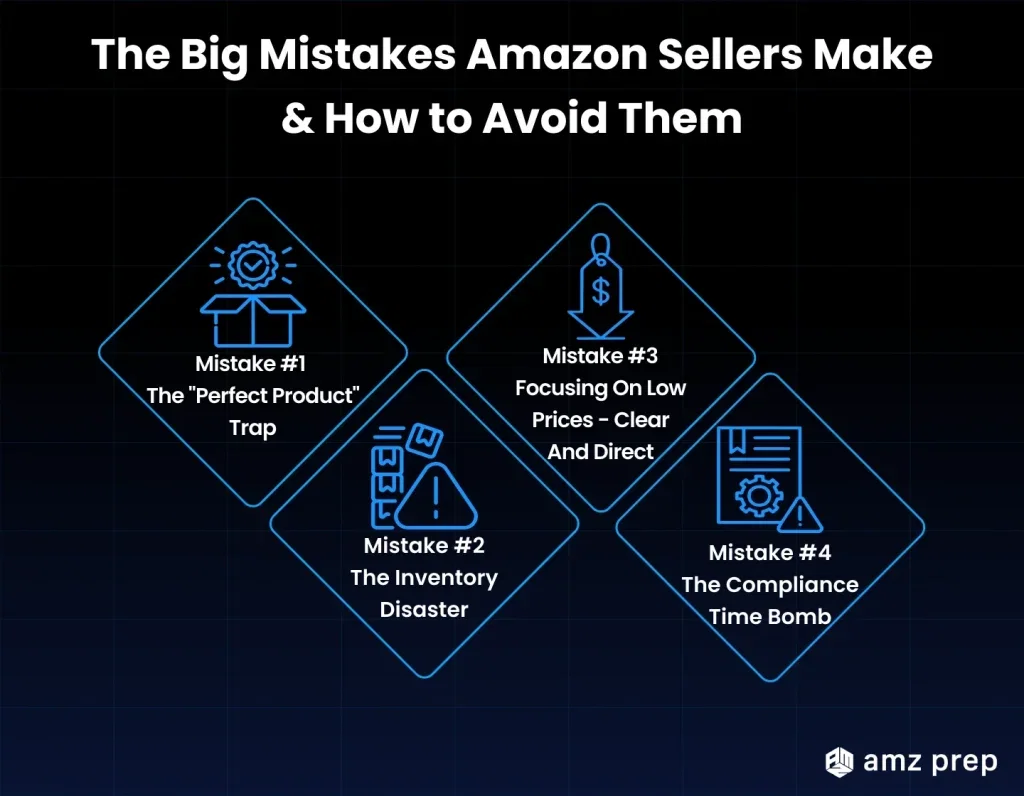
Every year, many Amazon sellers lose their life savings by making the same avoidable mistakes at different stages of growth. These aren’t complex problems, they’re simple errors that experienced sellers have learned to avoid, yet new sellers often fall into them because they don’t know what to watch for.
Review the most common Amazon FBA seller mistakes before they cost you money.
The difference between building a successful Amazon business and becoming a cautionary tale comes down to spotting these risks early and putting systems in place to prevent them. In the next section, you’ll see what these mistakes are, why they happen, and how to avoid them using real examples and practical strategies.
Mistake #1: Making the product so perfect (ahead of time and evolution)
The Mistake
Spending months perfecting a product before launching. Adding every feature. Creating perfect packaging. Waiting for ideal timing.
The Reality
Tom spent eight months perfecting his fitness tracker band before launching it on Amazon. By the time he went live, three competitors had entered the market, demand had shifted, and his “perfect” features were now standard offerings.
The Solution
Launch with “good enough” and iterate based on customer feedback. Amazon’s modern tools make updates seamless:
- Enhance My Listing updates product information automatically
- Creative Studio generates new marketing materials instantly
- Customer reviews drive meaningful improvements
- The Vine program provides early feedback from verified reviewers
It’s better to launch at 80% perfect and improve continuously than wait for 100% perfection while opportunities slip away.
Mistake #2: Inconsistent inventory management
The Mistake
Either ordering too much inventory (cash tied up in storage fees) or too little (stockouts that kill momentum).
The Reality
Lisa ordered 5,000 units of what seemed like a “guaranteed winner” based on online course advice. She sold only 200 units in six months. Storage fees consumed all her profits, forcing her to liquidate the remaining inventory at a significant loss.
The Solution
Use Amazon’s Regional Launch option for smarter inventory management:
- Start with 200-500 units maximum for initial testing
- Test demand in one geographic region first
- Leverage the Seller Assistant’s demand predictions
- Scale only after proving market demand
- Maintain a 30-60 day supply maximum during the testing phase
Proven Formula: (Average daily sales × 45 days) + 20% safety buffer
Avoid These Common Mistakes on Amazon
Understanding these critical errors can mean the difference between building a thriving business and watching your investment evaporate. Each mistake has cost sellers thousands of dollars and months of progress.
Perfect Product Trap
Delays of six months or more while competitors capture market share. Prevention: Launch with core functionality and iterate based on real customer feedback.
Inventory Disasters
$20,000+ tied up in slow-moving stock. Prevention: Use Regional Launch testing and maintain conservative initial order quantities.
Race to Bottom Pricing
Negative profit margins that destroy business viability. Prevention: Compete on value proposition rather than on the lowest price.
Compliance Issues
Business-ending regulatory violations. Prevention: Implement automated compliance checking through Seller Assistant.
Support Nightmares
70% sales drop due to poor customer service. Prevention: Establish proactive customer communication systems.
Cash Flow Gaps
Lost momentum when unable to restock inventory. Prevention: Maintain 2-3 months’ operating expense reserves.
Advertising Money Pit
$10,000+ wasted on ineffective campaigns. Prevention: Track customer lifetime value, not just immediate returns.
Mistake #3: Low-priced products always win
The Mistake: Competing solely on price, believing that the lowest price always wins on Amazon.
The Reality
Mike continuously lowered his prices to match competitors. His profit margin dropped from 30% to 10% to negative territory. While his sales volume increased, he was losing money on every transaction.
The Solution: Build competitive advantages beyond price:
- Professional product photography using Creative Studio tools
- Optimized listings with AI-enhanced copy
- Unique product bundles that competitors don’t offer
- Superior customer service experiences
- Faster delivery options through Regional FBA
- Strong social proof through verified reviews
Market Research Shows
Only 32% of Amazon customers choose products based solely on the lowest price. The remaining 68% make decisions based on reviews, product images, and perceived value.
Mistake #4: Ignoring Amazon compliance requirements
The Mistake: Ignoring regulatory requirements until enforcement action occurs.
The Reality
David built a supplement business to $100,000 monthly revenue. An FDA inspection revealed serious labeling violations. His entire inventory was destroyed, resulting in a $250,000 loss and permanent business closure.
The Solution
Implement proactive compliance management using Seller Assistant:
- Automated compliance verification for your product category
- Pre-launch requirement checking and documentation
- Real-time monitoring for regulatory changes
- Immediate alerts when issues are detected
- Automatic documentation generation and storage
The cost of compliance prevention ranges from $500 – $1,000 upfront. The cost of violation can be business-ending. While this foundation protects your business, the next challenge is scaling it internationally to maximize growth potential.
By understanding these common but costly mistakes, you now know what to watch for and how to prevent financial and operational setbacks. With these pitfalls avoided, the next step is to think bigger, expanding your business beyond your home market. Part 10 will show you how to sell worldwide from day one, using modern global strategies that maximize reach and revenue.
Part 10: How to sell your products on Amazon in international marketplaces
The Evolution of International Expansion
Traditional International Expansion Process:
- Achieve domestic market success (12-18 months)
- Conduct international market research (3 months)
- Establish foreign business entities (expensive and complex)
- Secure local fulfillment partnerships (high risk)
- Navigate currency, tax, and customs regulations (nightmare complexity)
- Launch and hope for positive results
Total timeline: 2+ years | Historical success rate: Under 20%
Modern Amazon Global Expansion in 2026:
- Store inventory in Amazon’s global fulfillment network
- Enable international marketplaces with one click
- Let AI handle customs, tax, and currency conversion
- Start selling in multiple countries immediately
Total timeline: 1 day | Current success rate: Over 60%
Which is the best global market to consider for Amazon selling
North America: Your Foundation Market
United States
Over 200 million Prime members have the highest global spending power per customer. This should be your primary testing ground for product viability.
Canada
10 million Prime members with similar cultural preferences and shopping behaviors to the US market. Expansion typically adds 15% additional revenue with minimal extra effort.
Mexico
Rapidly growing marketplace with less competition and a strong preference for US brands. Spanish language capability provides additional advantages.
Sarah launched her yoga mat business in the US market first. After achieving consistent profitability, she expanded to Canada in month two, adding 15% to her revenue.
Six months later, she entered Mexico, which contributed an additional 25% to her total sales. All three markets shared the same inventory pool with minimal additional operational complexity.
Europe: The High-Value Opportunity
United Kingdom
15+ million Prime members in an English-speaking market, making it the easiest European entry point.
UK sellers can optimize logistics by shipping from China to UK directly.
Germany
Europe’s largest economy has consumers who prioritize quality and are willing to pay premium prices for superior products.
France
Brand-conscious consumers who provide high profit margins for well-positioned products.
Italy and Spain
Fast-growing markets with less saturation than Germany and France, offering opportunities for early market entry advantages.
One electronics seller expanded to Europe using Amazon’s global tools without any additional inventory investment. By simply enabling these marketplaces, they generated an additional $30,000 monthly revenue within 90 days.
Identify the best Amazon European expansion countries for your specific product category.
Asia Pacific: The Future Growth Engine
Japan
Offers the highest per-customer value globally but requires significant localization investment. Success in Japan typically returns 2-3x the initial investment.
Australia
English-speaking market with high profit margins and straightforward entry requirements.
Singapore
Serves as a strategic gateway to Southeast Asian markets and functions as an effective regional distribution hub.
India
Represents massive long-term growth potential but requires patience and sustained investment for market development.
How to Expand Your Amazon Brand Globally?
Phase 1: Establish Home Base (Months 1-6)
Investment: $5,000-10,000.
Focus on dominating your primary market, achieving consistent profitability, building operational systems, and developing deep customer understanding.
Phase 2: English-Speaking Expansion (Months 7-12)
Investment: $0 additional.
Add the UK, Canada, and Australia simultaneously. The shared language simplifies customer service, and similar cultures require less product adaptation.
Phase 3: European Integration (Year 2)
Investment: $1,000-2,000
Leverage the EU’s unified market structure. Start with Germany for maximum opportunity, then add France, Italy, and Spain together using local Creative Studio capabilities.
Ensure VAT compliance for Amazon across all EU markets you enter.
Phase 4: Asian Market Entry (Year 2+)
Investment: $5,000+
Begin with Japan due to the highest customer value. Consider exclusive distributor partnerships initially, as success requires local expertise or deep cultural research.
How expensive is it to expand your global selling on Amazon
Most discussions focus on opportunities while ignoring the real financial implications of international expansion.
Direct Costs:
- VAT registration: €500-1,000 per European country
- Professional translation: €0.10 per word for listings
- Currency conversion: 2-3% per transaction
- International returns: Double the domestic rate
Hidden Operational Costs:
- Increased customer service complexity across time zones
- More complex inventory planning and allocation
- Regulatory compliance burden for multiple jurisdictions
- Time zone management for real-time support
Risk Mitigation Strategy
Utilize Amazon’s managed services for maximum efficiency. While fees apply, they eliminate operational complexity. One seller attempted self-managed European expansion, spending $50,000 and failing. Their second attempt using Amazon’s integrated tools achieved profitability within 60 days.
As your global presence expands, the complexity of reaching customers across different markets increases dramatically. This is where mastering Amazon’s advertising ecosystem becomes crucial for sustainable international growth.
Having established a roadmap for international expansion, you now have the framework to scale your business globally. But reaching new markets is only part of the puzzle—driving traffic and converting that audience into paying customers requires smart, efficient advertising. Part 11 explains how to leverage Creative Studio to create campaigns that maximize sales while minimizing cost.
Part 11: How to Use Creative Studio to Boost Sales
The Creative Studio Revolution
Creative Studio has fundamentally transformed Amazon advertising by eliminating traditional barriers of cost, time, and creative limitations.
Traditional Advertising Process vs. Creative Studio
Traditional Agency Approach:
- Initial investment: $5,000-10,000
- Concept development: 3-4 weeks
- Revision costs: $2,000+ per round
- Timeline for changes: 1-2 weeks
- Campaign options: Usually, one final concept
Creative Studio Approach:
- Initial investment: $0
- Concept generation: Minutes
- Unlimited revisions: $0
- Change implementation: Instant
- Campaign options: 20+ simultaneous tests
The transformation isn’t just about cost savings—it’s about the speed and scale of testing possibilities that drive superior results.
Professional Amazon Advertising Architecture
Layer 1: Automatic Campaigns (Discovery Engine)
Purpose: Identify profitable keywords and customer search patterns
Budget Allocation: $10-20 per day initially
Duration: Continuous operation
Key Actions: Mine search term reports for high-performing keywords, and continuously add negative keywords to improve efficiency
Layer 2: Exact Match Campaigns (Profit Center)
Purpose: Drive profitable sales on proven keywords
Budget Allocation: 50% of total advertising spend
Targeting: Only keywords validated through automatic campaigns
Bid Strategy: Target ACoS equal to or below profit margin
Layer 3: Sponsored Brands (Brand Building)
Purpose: Build brand recognition and capture top-of-search visibility
Budget Allocation: 20% of total advertising spend
Creative Testing: Launch 10+ variations simultaneously via Creative Studio
Key Metric: New-to-brand customer percentage
Layer 4: Display and DSP (Remarketing Engine)
Purpose: Recapture potential customers who viewed but didn’t purchase
Budget Allocation: 15% of total advertising spend
Audience Targeting: Users who viewed your products in the last 30 days
Creative Focus: Urgency-driven messaging with strong social proof
The Four-Week Testing and Scaling Framework
Week 1: Broad Market Testing
Launch 20+ creative variations with $5 daily budgets each. Test all major targeting types simultaneously while documenting performance metrics for every campaign.
Week 2: Performance-Based Elimination
Cut the bottom 50% of performers and double the budget allocation for the top 50%. Create similar variations of winning concepts and test new creative angles.
Week 3: Focus and Scale Winning Concepts
Maintain only profitable campaigns while increasing budgets 5x on top performers. Expand successful concepts to the Sponsored Brands format and create variations of your best-performing variations.
Week 4: Advanced Optimization
Implement dayparting schedules, adjust placement bids based on performance, apply bid modifiers for different audience segments, and harvest negative keywords from automatic campaigns.
Month 2 and Beyond: Scale and Defend Strategy
Allocate 70% of the budget to proven winners, 20% to testing new creative angles, and 10% to brand defense campaigns. Continue Creative Studio testing for seasonal opportunities and competitor responses.
Real Performance Example
An electronics seller tested 50 different creatives in their first month. They identified three campaigns with conversion rates exceeding 15%. By scaling only these proven winners, they achieved a 7:1 return on ad spend with $3,000 invested, generating $21,000 in attributable revenue.
Advanced Tactics for Competitive Advantage
Competition Hijacking Strategy
Target competitor ASINs with comparison-focused creative content that highlights your advantages. Visual comparisons often achieve double the category average conversion rates.
Complement your Amazon ads with proven ways to drive external traffic to your Amazon listing.
Bundle Upselling Technique
Advertise individual products but showcase bundle options on your product listings. Approximately 40% of customers upgrade to higher-margin bundle purchases.
Review Momentum Amplification
Increase advertising intensity on products that have received recent positive reviews. Fresh five-star reviews typically boost conversion rates by 30%.
Seasonal Campaign Automation
Creative Studio enables instant seasonal campaign creation for Halloween, Christmas, Valentine’s Day, and other occasions without traditional agency delays and costs.
While effective advertising drives traffic and sales, the foundation of long-term success depends on having reliable support systems that resolve issues quickly and keep your business operations running smoothly.
With the power of Creative Studio, you can now launch high-performing campaigns and scale your advertising efficiently. But even the best advertising is only effective if your support systems are reliable. Part 12 will reveal how Amazon’s improved customer service infrastructure ensures smooth operations and keeps your business running without costly disruptions.
Part 12: Support That Actually Helps – How Amazon Fixed Customer Service
The 25 Million Problem Solution
Amazon eliminated, not reduced, but eliminated 25 million annual reasons for sellers to contact support in 2026 through systematic automation and process redesign.
Problems That No Longer Exist:
Title and Listing Issues
Previously required 3-5 day “delete and relist” processes. Brand owners now edit titles and key product information directly through their seller dashboard.
Documentation Requirements
Manual documentation previously took 2-3 hours per issue. Now, 70% of common documentation is generated automatically through AI systems.
Inventory Receipt Delays
One to two-day delays for inventory acknowledgment have been replaced with real-time tracking and automatic confirmation systems.
Reimbursement Claims
Previously required 1-2 weeks for processing. Now processed automatically with immediate notification and payment scheduling.
Category Approvals
Days or weeks of waiting for category access approvals now happen instantly for most standard product categories.
International Documentation
Hours of manual paperwork for international requirements are now handled automatically by AI systems for the majority of cases.
The Modern Support Experience
Seller Assistant Resolution Process:
- Describe your problem in natural language
- AI diagnoses the issue and identifies root causes
- The system proposes a specific solution with implementation steps
- You approve the recommended solution
- Issue resolved automatically within minutes
Practical Example: When you report “My listing isn’t showing up in search results,” the old system required a 3-day email chain with multiple support representatives. The new system diagnoses indexing issues, identifies specific problems, and fixes them within 30 seconds of your approval.
Connect with a Specialist Program:
Complex issues that require human intervention are now handled through dedicated expert assignment. Instead of traditional escalation chains or department transfers, one specialist owns your problem from initial contact through complete resolution.
Average resolution time has dropped to 4 hours, with customer satisfaction ratings consistently above 4.5 out of 5 stars. This represents a dramatic improvement from the previous multi-day resolution timelines.
Proactive Support Intervention:
The support system now contacts sellers before problems occur rather than waiting for issues to develop:
- “Your trademark registration expires in 30 days – renewal process initiated.”
- “This listing may face compliance issues based on recent regulatory change.”
- “Your inventory levels appear low for projected demand – restock recommendations attached.”
This proactive approach prevents problems rather than simply reacting to them after business impact occurs.
The Business Impact of Improved Support
Sellers report that improved support systems have eliminated an average of 8-12 hours per month previously spent on administrative issues. This time savings translates directly to increased focus on business growth activities like product development, marketing optimization, and international expansion.
More importantly, faster issue resolution means fewer disruptions to sales momentum. When listing problems, inventory issues, or account concerns are resolved in hours rather than days or weeks, sellers maintain consistent revenue streams and avoid the compounding negative effects of extended problem periods.
The combination of automated solutions, dedicated specialist support, and proactive intervention creates a support ecosystem that actually enables business growth rather than merely addressing problems after they impact operations.
This comprehensive guide provides the foundation for avoiding costly mistakes, expanding internationally, mastering advertising systems, and leveraging improved support infrastructure to build a successful Amazon business that scales profitably across global markets.
Now that you understand how to avoid mistakes, expand globally, advertise effectively, and rely on strong support systems, you have all the tools to run a thriving Amazon business in 2026. The next part will build on these foundations, showing advanced strategies and insider tips for continuous growth, long-term profitability, and sustainable business success.
Precap – Where We Are So Far
In the last sections, we’ve walked through the real-world journey of building a successful Amazon business in 2026. You’ve seen how easily sellers can stumble into costly mistakes — and more importantly, how to avoid them.
We explored global expansion strategies that let you sell worldwide almost instantly, discovered how Creative Studio makes advertising faster, smarter, and more profitable, and saw how Amazon’s new support systems protect your business while saving hours of work.
We also dug into the art of creating a brand that lasts, securing funding without giving up equity, and scaling step by step to seven figures. Along the way, we answered the most pressing questions that new and experienced sellers face, from product selection to operations, financing, and growth.
Basically, you now have the blueprint, the map, the tools, and the strategies to build a business that’s not only profitable but sustainable. In the next part, we’ll take all of this and show you how to turn it into long-term success that keeps your Amazon business strong no matter what.
Chapter-4
How to Sell and Scale on Amazon in 2025
- AMZ Prep & eShipper Partnership
- Enhanced Customer Experience
- Global & Operational Readiness

How to Sell and Scale on Amazon in 2026
Recap of Part 9 to Part 12:
In previous parts, you have seen how easily sellers fall into avoidable mistakes and how you can prevent them with smarter systems. You explored how Amazon now makes global expansion faster and more accessible, how Creative Studio empowers you to advertise with scale and precision, and how the upgraded support systems save you time while protecting your business from costly setbacks.
Together, these lessons prepare you to grow with confidence and avoid the pitfalls that have ended so many Amazon businesses. In the next part, you will learn how to take this foundation and create long-term sustainability that keeps your business strong in any market condition.
What You’ll Learn in Chapter 3 of the How to Sell on Amazon Guide?
We’re covering absolutely everything you need to know about selling on Amazon in 2026:
| Section | Focus | Key Outcome |
|---|---|---|
| Part 13 | Creating a Sellable Brand | Create an asset worth millions |
| Part 14 | Funding Your Empire | Get capital without giving up equity |
| Part 15 | Scaling to Seven Figures | The proven growth framework |
| Part 16 | Your Burning Questions Answered | 50+ FAQs covered |
Let’s dive into the details that will transform your understanding of what’s possible
Part 13: How to create a brand that generates million-dollar revenue on Amazon Selling
Okay, let’s get real about something. When you decide to sell on Amazon, most people think they’re just throwing products online and waiting for money to roll in. That’s… not how this works. At all.
What is the difference between sellers who make decent money and those who create something actually valuable? It’s not about finding some “secret product” (spoiler alert: there isn’t one). It’s about understanding that you’re creating a brand from day one, whether you realize it or not.
And yeah, I get it. “Brand creating” sounds like corporate buzzword nonsense. But Brand Registry? That’s where things get interesting.
Why you must enrol in Brand Registry to upsell products on Amazon
Look, Brand Registry used to be this optional thing you’d maybe do later. Now? It’s basically required if you want to compete. Not because Amazon says so, but because the tools you get are just better than what everyone else has.
Here’s what actually happens when you get Brand Registry:
A+ Content
Your product pages stop looking like everyone else’s boring bullet points. You get these enhanced pages that can tell your story properly. We’re talking 5-10% conversion increases just from better-looking pages. That might not sound like much, but when you’re doing $50K a month, that’s real money.
Brand Store
This is basically your own little website inside Amazon. Instead of sending people to individual product pages where they see your competitors’ ads, you send them to YOUR store. Smart sellers are driving all their external traffic here now.
Sponsored Brand ads
These are the ads with your logo at the top. They cost more than regular ads, but they work differently. People see your brand name multiple times before they buy anything.
The analytics
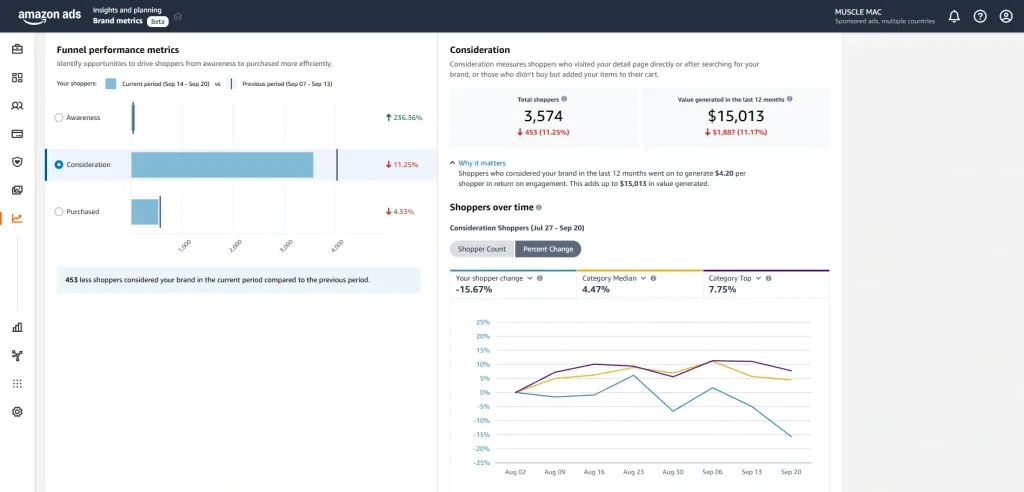
This is where it gets fun. You can see what your competitors are ranking for, what customers search for after looking at your stuff, it’s like having insider information.
The whole process costs about $250-350 for the trademark filing. Most people see a 10x return in the first year just from the tools you unlock.
| Feature | What It Actually Does | Why It Matters |
|---|---|---|
| A+ Content | Makes your pages look professional | 5-10% more conversions |
| Brand Store | Your own Amazon corner | Control where traffic goes |
| Sponsored Brands | Ads with your logo | Better brand recognition |
| Brand Analytics | Competitor data | Know what’s working |
| Counterfeit Protection | Stops fakes automatically | Protects your reputation |
But here’s where most people mess up. They think Brand Registry is just about protection and prettier pages. It’s actually about creating something people remember and come back to buy from again.
Creating Customer Loyalty (The Right Way)
Amazon customers aren’t loyal to Amazon – they’re loyal to brands that don’t disappoint them. This is important because it completely changes how you think about your business.
Most sellers focus on getting the sale. Smart sellers focus on getting the second sale.
There’s this supplement company I know that built a Facebook group with 10,000 customers. When Amazon temporarily suspended its main listing because of some competitor complaint nonsense, guess what happened? Their community kept buying directly from their website. That Facebook group literally saved their business.
Here’s how you actually create loyalty (and it’s not what most “gurus” tell you):
Give people an amazing first experience with your product. Sounds obvious, but you’d be shocked how many people skip this part.
Include something valuable in your package. Not a “please review us” card – everyone’s doing that and it’s annoying. Include something actually helpful related to your product.
Consider investing in custom packaging to create memorable unboxing experiences.
Capture emails through warranty registration. “Register your product for extended warranty” works way better than discounting people to get their email.
Give your repeat customers exclusive deals and early access to new products.
Get them onto Subscribe & Save if it makes sense for your product type.
Create a community somewhere off Amazon. Facebook groups, Discord servers, email lists – somewhere you control the conversation.
When you start thinking this way, you realize that customer relationships are what make amazon selling businesses actually valuable long-term. Which brings up something most people don’t think about until it’s too late.
When is the right time to stop selling and exit Amazon
Amazon businesses typically sell for 3-5 times their annual profit. But only the ones built right. I’ve seen sellers doing $500K yearly who couldn’t find buyers because their business was basically just them manually managing product listings.
Start planning early with our guide on how to prepare to exit your Amazon FBA business.
Buyers want specific things, and if you don’t have them, your business isn’t really sellable:
- Brand Registry enrollment – Shows you have legal protection and aren’t just drop-shipping random stuff. Adds about 20% to your valuation.
- Multiple related products – Having 5+ successful products that make sense together gets you 4-6x multipliers instead of 3x.
- Growing revenue year-over-year – Buyers pay premiums for businesses that are trending up, not flat or declining.
- Clean operations – No account health issues, no trademark disputes, no supplier drama. This is baseline stuff.
- Documented systems – Everything is written down so the business can run without you. Most sellers skip this and wonder why buyers aren’t interested.
What can go wrong with your business value?
Being dependent on one product drops your valuation by half. Amazon changes algorithms, competitors show up, stuff happens.
If more than 40% of your sales come from PPC ads, buyers get nervous about sustainability. They want organic rankings and repeat customers.
Account health problems make your business basically unsellable. Amazon suspensions, policy violations, trademark issues – clean this stuff up immediately.
No real brand assets means you’re selling listings, not a business. That’s worth maybe 60% of what a real brand sells for.
If only the owner can run the business, you’ve created a job, not an asset. Buyers want systems they can hand off to their team.
The smart move? Create like you’re going to sell from day one. Document everything, create systems, and focus on creating actual brand value. Even if you never sell, you’ll have a better business.
But creating all this takes money, and that’s where most people get stuck…
Part 14: When you should look for financial assistance as an Amazon seller
Traditional banks look at Amazon businesses like we’re selling drugs or something. They just don’t get e-commerce. Fortunately, there are new funding options that actually understand how Amazon selling works.
The New Funding Landscape
QuickBooks Capital
These guys integrate directly with your accounting, so approval is based on actual cash flow, not just credit scores. 10-15% APR, $5K-100k amounts, same-day approval when it works. Perfect for inventory purchases when you need cash fast.
Uncapped
Revenue-based financing, where you pay back a percentage of sales instead of fixed monthly payments. Up to $5M, no personal guarantee. Good for aggressive expansion when cash flow varies.
Amazon Lending
Still invitation-only, but they’re expanding. If you get invited, take it – usually the best rates available because it’s based on your actual Amazon performance.
SBA Loans
They are Traditional but slow. 30-60 days for approval, but 6-10% rates for bigger expansions once you’ve proven the business works.
| Source | Amount | APR | Speed | Best For |
|---|---|---|---|---|
| QuickBooks Capital | $5K-100K | 10-15% | Same day | Inventory |
| Uncapped | Up to $5M | Variable | 1 week | Expansion |
| Amazon Lending | Invite only | Best rates | 3-5 days | Proven sellers |
| SBA Loans | $50K+ | 6-10% | 30-60 days | Major growth |
What is the best strategy to get ROI from capital loans
Phase 1 (Starting)
Use 0% credit cards strategically. Get the intro offers, earn points on business purchases, but never carry balances past the promotional period. This is temporary funding while you prove the concept.
Phase 2 (Growing)
Small loans through QuickBooks Capital for inventory. This creates your business credit history and shows you can handle borrowed money responsibly.
Phase 3 (Scaling)
Revenue-based financing for aggressive expansion. Launch multiple products, expand internationally, take bigger risks with someone else’s money.
Phase 4 (Established)
Traditional business lines of credit and SBA loans for major expansion or acquisitions.
The golden rule: never give up equity unless the partner brings way more than just money to the table. You’re creating an asset, don’t give pieces away at a low price.
Understanding how to fund growth naturally leads to questions about systematic scaling…
Part 15: How to achieve seven-figure revenue through selling on Amazon
Most people who want to sell products on Amazon dream about seven-figure revenues, but they have no clue what that actually looks like or how to get there systematically.
Here’s the truth: getting to seven figures isn’t about getting lucky or finding some secret product. It’s about hitting specific milestones in the right order and not skipping steps.
What are the stages of revenue growth in selling a product
Stage 1: Foundation ($0-10K/month)
Your only job is to find one product that works and not screwing up the basics. Maintain 20%+ profit margins, perfect your operations, and resist the urge to expand too fast. Most people fail here because they get distracted by shiny objects instead of mastering fundamentals.
Stage 2: Systematic Expansion ($10-50K/month)
Now you add one new product monthly using proven systems. Hire virtual assistants for routine stuff, document all your processes, and create solid supplier relationships. The keyword is “systematic”, not random product launches.
Stage 3: Operational Excellence ($50-100K/month)
Create product lines that make sense together instead of random individual products. Expand internationally using Amazon’s global programs. Develop exclusive products with your suppliers. Focus on creating systems that run without you.
Focus on increasing customer lifetime value to maximize long-term profitability.
Stage 4: Strategic Growth ($100K+/month)
Think about multiple brands, acquisition opportunities, and exit planning. You’re creating sellable assets now, not just cash flow.
What is the timeline to achieve 7-figure revenue on Amazon, selling
| Year | Revenue Target | Products | Markets | Team |
|---|---|---|---|---|
| Year 1 | $10-30K/month | 1-3 products | US only | Just you |
| Year 2 | $50-100K/month | 10-20 products | 2-3 countries | VA help |
| Year 3 | $100-250K/month | 30+ products | Global | 3-5 people |
Jennifer from Gorilla Commerce followed this exact path. Started at her dining room table, now ships 40 containers monthly and does multiple seven figures annually. The difference? She followed the system instead of trying to skip stages.
But following any system means dealing with the same questions and challenges everyone faces…
Part 16:The Final Word
After covering every aspect of modern Amazon selling, from initial investment through seven-figure scaling, the basic question isn’t whether this business model works. 55,000+ sellers prove it does with seven-figure revenues.
The real question is whether you’re actually going to execute consistently.
The Three Types of People Reading This
Type 1: The Research Addict
You’ll bookmark this guide, share it with friends, then spend the next six months reading five more guides just like it. Meanwhile, someone who started today will be generating $5,000/month while you’re still “gathering information.”
Type 2: The Half-Hearted Dabbler
You’ll start with $500, give it three weeks of minimal effort, hit your first obstacle, then quit. You’ll tell people “Amazon selling is saturated” while ignoring that the market grew 15% this year.
Type 3: The Consistent Executor
You’ll finish this guide, open Seller Central today, and start with imperfect action. You’ll make mistakes, learn, adjust, and within 12 months wonder why you waited so long.
The Real Truth About Success
Success in Amazon selling isn’t about discovering secrets or shortcuts. It’s about boring fundamentals:
- Having enough money to survive the learning curve ($5,000 minimum)
- Working 15-20 hours weekly for six months minimum
- Following data instead of emotions and gut feelings
- Persisting through the inevitable challenges and setbacks
- Actually, using the comprehensive tools Amazon gives you for free
The sellers making millions aren’t smarter than you. They started earlier and kept going when others quit.
Your 7-Day Action Plan
| Day | Task | Time |
|---|---|---|
| Day 1 | Create a Professional Amazon Seller account | 30 min |
| Day 2 | Spend time in Opportunity Explorer researching | 4 hours |
| Day 3 | Request quotes from 20+ suppliers for the top 3 products | 2 hours |
| Day 4 | Set up business banking and LLC formation | 1 hour |
| Day 5 | Order samples from the 5 most promising suppliers | 1 hour |
| Day 6 | Join Facebook groups and Discord communities | 30 min |
| Day 7 | Create a detailed 90-day launch timeline | 2 hours |
The Resources You Actually Need
Free in Seller Central:
- Opportunity Explorer for product research
- Creative Studio for unlimited marketing content
- Profit Analytics for financial tracking
- Custom Analytics for data visualization
- Seller Assistant for 24/7 automation
- Enhance My Listing for continuous optimization
Essential External Tools:
- Business bank account: $0-25/month
- LLC formation: $50-500 one-time
- QuickBooks accounting: $15-30/month
- Keepa browser extension: Free or $19/month
Learning Resources:
- Seller Central University (free training)
- r/FulfillmentByAmazon community
- YouTube channels (avoid obvious sales pitches)
- Local seller meetups when available
Investment Reality Check
Stop looking for ways to start with no money. This is a real business, not a lottery ticket:
- Bare minimum: $3,000 (high failure risk)
- Comfortable start: $5,000-7,500 (reasonable odds)
- Optimal beginning: $10,000-15,000 (strong success probability)
Can’t afford proper capitalization? Start with retail arbitrage to create capital over six months, get temporary additional income, or liquidate unnecessary stuff. Don’t start undercapitalized – it’s the #1 reason for failure.
Success Metrics That Matter
Months 1-3: Learning Phase
- Goal: Don’t lose money while learning
- Success: Any sales activity at all
- Focus: Master basic processes
Months 4-6: Growth Phase
- Goal: $1,000-3,000 monthly revenue
- Success: Consistent daily sales
- Focus: Optimization and efficiency
Months 7-12: Scale Phase
- Goal: $5,000-10,000 monthly revenue
- Success: 20%+ profit margins
- Focus: Add products and expand reach
Year 2: Expansion Phase
- Goal: $20,000+ monthly revenue
- Success: International market entry
- Focus: create a sellable business asset
The Competitive Advantage Window
The advanced tools from Amazon’s recent Accelerate conference aren’t widely understood yet. Most sellers are still paying for product photography, manually managing inventory, stickering products unnecessarily, creating listings from scratch, managing compliance reactively, and hiring agencies for basic creative work.
You know better. You have a 6-12 month window where this knowledge creates real competitive advantages. Use it strategically.
The Final Decision Framework
Ask yourself four critical questions:
- Do I have $5,000 to invest without financial hardship?
- No: create capital first through arbitrage
- Yes: Continue
- Can I commit 15-20 hours weekly for six months?
- No: Wait until the schedule allows proper commitment
- Yes: Continue
- Can I afford to lose my entire investment?
- No: Reduce to a comfortable loss level
- Yes: Continue
- Will I follow data over emotions?
- No: Save money for a different opportunity
- Yes: Start today
The Opportunity Clock
Every day you wait, someone else claims your potential opportunity. The camping chair you’re considering? Three people started selling variations while you read this. The yoga mat improvement you identified? Someone just ordered samples.
But here’s what matters: opportunities are essentially infinite. The market is massive and growing. New products emerge daily. New Prime members join hourly. The pie keeps expanding.
The only real scarcity is your time to create something before you desperately need it
What is your takeaway on Amazon selling?
Choice 1: Start Now
- Open Seller Central today with imperfect action
- Learn by doing with manageable risk
- create momentum through small, consistent steps
- Potentially transform your financial future
- Join thousands who started exactly this way
Choice 2: Wait for Perfect Conditions
- Research for six more months seeking certainty
- Watch others succeed while you plan
- Face higher competition and costs later
- Regret not acting when the opportunity was clear
- Stay in the same financial position
The Support System
You’re not doing this alone. When you start:
- Join active seller communities for peer support
- Use Amazon’s Connect with Specialist program for complex issues
- Access the Seller Assistant for 24/7 help
- Learn from thousands who’ve navigated this path
- Connect with other beginners facing identical challenges
The Bottom Line
The Amazon selling opportunity in 2026 is fundamentally different from previous years. Traditional barriers preventing normal people from competing with big businesses have been systematically eliminated. The tools exist, the playbook is proven, and the market keeps growing.
What’s missing is your decision to take action.
Not a perfect action with complete information. Not risk-free action with guaranteed outcomes. Just purposeful action based on solid evidence and logical planning.
The sellers earning millions aren’t exceptional people. They’re not smarter, luckier, or more talented. They started, stayed consistent through challenges, used available tools effectively, followed data-driven strategies, and persisted through difficult periods.
That’s the entire “secret.”
The revolution in Amazon selling isn’t coming – it’s happening now. The question isn’t whether success is possible – thousands prove daily it absolutely is.
The only question left is whether you’ll be sharing success stories next year or still reading about other people’s achievements.
Your move.
Get started with your Amazon selling
Take Action Now:
- Open your Amazon Seller account (do it while motivated)
- Bookmark this guide for reference
- Explore professional fulfillment services when ready to scale
- Take imperfect action today rather than perfect action someday
Remember: The best time to plant a tree was 20 years ago. The second-best time is now.
Additional Resources:
- Amazon FBA Fees Complete Guide
- Smart Fulfillment Program Options
- Multi-Channel Fulfillment Strategies
- Amazon PPC Management Best Practices
- Advanced Amazon Advertising Tools
This comprehensive guide represents the current analysis of Amazon’s selling opportunities in 2026. Information is based on official Amazon announcements, seller performance data, and documented real-world examples. Success requires execution, not just knowledge.
FAQs
Can I really start with just $500?
Technically yes, but it's like trying to drive cross-country with half a tank of gas. Possible? Sure. Smart? Not really. $3,000-5,000 gives you a realistic shot. Less than that, and you're probably setting yourself up to fail and get discouraged.
Do I need an LLC right away?
Amazon doesn't require it, but get one ASAP for liability protection and proper business banking. Costs $50-500, depending on your state. Delaware and Wyoming are popular for privacy and tax benefits, but your home state is usually fine.
What about sales ta tax?
More complicated than people realize. You owe sales tax wherever you have "nexus" (business presence). Amazon FBA creates nexus in every state where your inventory sits. Use TaxJar or similar services to automate this - budget about 3-8% of revenue for sales tax.
Can I sell from outside the US?
Yeah, but you need a US bank account (Payoneer works) and a US address (virtual mailbox services work fine). Lots of successful international sellers, but customer service gets trickier with time zones.
How do I know if a product will sell?
You don't "know", you validate with data. Use Amazon's Opportunity Explorer tool instead of trusting your gut. Look for consistent demand, growing trends, and ways to differentiate. When data conflicts with intuition, trust the data.
Should I create new products or improve existing ones?
Always start by improving existing products. Faster to market, easier to execute, and demand is already proven. True innovation is rare and risky. Better mousetraps consistently outsell revolutionary concepts nobody understands.
What categories should beginners avoid?
Supplements (heavy regulations), electronics (high return rates), clothing (sizing nightmares), anything people consume or put on their skin (liability), and restricted categories requiring approval. Start with simple, durable products.
Is private label still viable?
More viable than ever, but just slapping your logo on generic products is dead. You need real differentiation, better features, superior quality, unique bundles, or exceptional branding. The tools available today make this easier than before.
What should I realistically expect to earn in year one?
Median seller makes $1,000-2,000/month profit after six months. With serious effort and proper funding, $5,000-10,000/month is possible by month 12. But 40% of sellers make nothing or lose money. Success isn't guaranteed.
When can I quit my day job?
When your Amazon selling income equals 2x your living expenses for six consecutive months. You need a buffer for volatility. Most successful sellers kept their jobs for 18-24 months while creating.
Is it still worth it in 2025?
With the new tools eliminating traditional pain points, the ROI potential is better than ever. But competition is fierce. Success requires proper capital, real commitment, and continuous learning. This isn't get-rich-quick.
How much should I spend on courses?
Max $500-1,000, and only after trying yourself first. Everything you need is free in Seller Central, YouTube, and forums. Courses can speed up learning, but aren't required for success.
When should I hire help?
When routine tasks take 20+ hours weekly, or you're consistently profitable. Start with part-time VA for customer service and inventory management. Budget $500-1,500/month for quality help.
How do I find reliable suppliers?
Alibaba for private label (verify everything), ThomasNet for US manufacturers, trade shows for relationships. Always order samples, check references, and verify certifications. Visit factories for major orders when possible.
What software do I actually need?
Year 1: Just Seller Central tools, they're comprehensive and free now.
Year 2+: Maybe Helium 10 or Jungle Scout for advanced research, Keepa for price history. Avoid software overload initially.
How do I handle returns?
Amazon's new automated features handle most returns without seller involvement. For direct contact, offer replacement parts for minor issues, partial refunds for cosmetic problems. Focus on preventing returns - each one costs $10-20 beyond the refund.
When should I launch my second product?
After your first product consistently generates $5,000+ monthly profit. Use those profits to fund expansion. Never launch multiple products simultaneously as a beginner, too many variables.
Should I sell on other platforms?
Master Amazon first (12-18 months minimum). Then use Multi-Channel Fulfillment to serve other platforms from the same inventory. Walmart Marketplace is growing fast and is worth considering in year two.
How do I protect against copycats?
Brand Registry, trademarks, and design patents, when applicable. But the best protection is continuous improvement and customer loyalty. Copycats usually copy your version 1.0 while you're developing version 3.0.
When should I expand internationally?
After hitting consistent $20,000+ monthly revenue domestically. Use Amazon's global inventory features to test with minimal risk. Start with English-speaking countries. International typically adds 15-25% to revenue.
What if my product stops selling?
Diagnose fast and systematically. New competition? Listing issues? Seasonal factors? Bad reviews? Use Amazon's liquidation options if unfixable, Outlet deals, automated markdowns, and removal. Cut losses quickly.
How do I recover from an account suspension?
Stay calm and systematic. Identify the exact violation, create a Plan of Action addressing root cause, immediate fixes, and future prevention. Use Seller Support resources. 80%+ success rate for legitimate business errors.
How do I compete with Chinese sellers?
They have cost advantages, but you have speed, quality, and local customer service advantages. Focus on products requiring certifications, fast delivery, or ongoing support. Create brands, not just listings.
Is it too late to start?
People asked this in 2015, 2020, and will ask in 2030. The market grows faster than seller growth. New tools keep leveling the playing field. But tomorrow will be harder than today. Start now if you're going to start.
When should new sellers start using an Amazon BSR sales estimator?
From day one, during product research, before purchasing inventory. The BSR estimator validates product ideas by showing estimated sales volumes, helping you avoid common mistakes like choosing products with insufficient demand or excessive competition, enabling data-driven decisions from the start.

Arishekar N is a Vice President (VP) of Marketing at AMZ Prep, specializing in ecommerce fulfillment and Amazon logistics strategies with a proven track record of driving growth for e-commerce businesses. He is a strategic leader with extensive expertise in marketing, e-commerce operations, SEO & advertising, and branding.
Stay updated on his latest insights by following him
















The detail on global expansion and Amazon’s new inventory model really stood out. This will help me plan my first international launch.
This guide cuts through the noise. The emphasis on fundamentals over hype is refreshing and so necessary for long-term success.
The section on product research using Amazon’s own data is a game-changer.
Really glad you included the updated 2025 tools and platform changes.
Great reminder that success isn’t a shortcut it’s consistent execution.
Loved the breakdown of the 12-stage launch plan very helpful.
Fantastic roadmap clear and actionable from beginner to scale.
Useful to see the clarity around cost, investment, and realistic timelines.
Short, sharp, and loaded with real-world advice for Amazon sellers.
The ‘what you’ll learn’ table at the end ties everything together nicely.
Appreciation for the incredible blog posts you’ve been sharing.
Your ability to convey complex ideas in such an accessible and engaging manner is truly commendable.
I am really impressed along with your writing abilities as well
as with the format in your weblog. Is this a paid theme or did you modify
it your self? Either way keep up the excellent high quality writing,
it is uncommon to peer a great blog like this one today.
I like what you guys tend to be up too. This
sort of clever work and coverage! Keep up the wonderful works guys I’ve included
you guys to my personal blogroll.
You have made some decent points there. I looked on the internet to learn more about the issue and found most people will
go along with your views on this web site.
I was able to find good advice from your blog articles.
Its like you read my mind! You seem to know
a lot about this, like you wrote the book in it or something.
I think that you could do with some pics to drive the message
home a little bit, but other than that, this is magnificent blog.
A fantastic read. I’ll definitely be back.
Greetings! Very useful advice within this post!
It is the little changes that will make the most significant changes.
Thanks a lot for sharing!
Good article. I certainly love this website.
Keep it up!
Aw, this was an exceptionally nice post. Taking a few minutes and actual effort to
generate a great article… but what can I say… I put things off a whole lot and don’t manage
to get anything done.
Great blog here! Additionally your website loads up very fast!
What host are you the use of? Can I get your affiliate hyperlink on your host?
I wish my web site loaded up as fast as yours lol
This text is worth everyone’s attention. Where can I find out more?
It’s actually a cool and helpful piece of information. I’m happy that you shared this helpful info with us.
Please stay us informed like this. Thank you for sharing.
Gosh This has been an incredibly wonderful post. Many thanks for supplying these details.
Like!! Thank you for publishing this awesome article.
Find a supplier. Once you know what products you re going to be selling, start building a working relationship with a reliable supplier. Ask for a sample, work out the lead time and calculate what kind of margin you have on your products.