
The General Session at Amazon Accelerate 2025 was not just another annual update. It was a marker in time. Twenty-five years ago, Amazon opened its doors to third-party sellers. What started as an experiment is now the backbone of the marketplace. In 2024 alone, more than 60 percent of units sold on Amazon came from independent sellers, generating over $2.5 trillion in cumulative sales and supporting more than two million U.S. jobs.
That legacy set the tone for Amazon Accelerate 2025. It was both a celebration and a blueprint for what comes next. The dominant theme was clear: the seller experience of the next decade will be powered by agentic AI, smoother operations, and deeper personalization. As someone who has seen how operational details make or break growth, I found these announcements not just exciting but practical.
The Power of Partnership
The first major takeaway is that Amazon continues to frame its relationship with sellers as a partnership. This may sound like positioning, but it has real implications. Sellers are not just “participants” in the marketplace; they are the growth engine.
The data tells the story:
- Over 55,000 U.S. sellers surpassed $1 million in annual sales last year.
- Millions of smaller businesses use Amazon as their primary path to market.
- Seller jobs now contribute significantly to local economies.
For sellers, this emphasis means that Amazon is unlikely to roll out innovations in a vacuum. Instead, the focus is on tools that scale with sellers and reduce friction in their operations. That is the lens through which every new announcement should be evaluated.
Agentic AI
The headline announcement was the evolution of Amazon’s Seller Assistant into a fully “agentic” AI. This is more than a rebrand. It shifts the AI from a reactive support tool to an active partner.
What does that look like in practice?
- Proactive compliance checks before issues become account suspensions.
- Inventory optimization suggestions tailored to seasonality, demand, and storage fees.
- Sales performance analysis that not only explains a dip but offers a strategy to recover.
For sellers, the impact is clear. Every year, I see how small lapses in compliance or forecasting can balloon into costly problems. An AI that prevents these issues before they occur is worth its weight in gold. It gives sellers not only time back, but also peace of mind.
Generative AI Integration as the New Seller Assistant
One of the standout announcements concerning AI as well as in the pervasive integration of generative AI throughout the selling lifecycle. This isn’t just automation; it’s an intelligent, proactive, and agentic assistant that can:
- Understand your business and products deeply.
- Suggest actionable steps to improve sales and performance.
- Execute certain tasks on your behalf, like optimizing listings or monitoring account health.
- Alert you to opportunities or risks before they become problems.
The promise here is that sellers no longer have to manually troubleshoot or analyze datathey have a smart partner anticipating needs and recommending decisions in near real-time. More importantly, generative AI is becoming an operational layer that helps businesses turn data into decisions. A generative AI development company can help bring these capabilities into real-world products and workflows. From my perspective in fulfillment and operations, this could be a game-changer in streamlining the workflow between inventory management, advertising, and overall account strategy.
Creative Studio

Advertising has become essential on Amazon, but not all sellers have equal resources. The new Creative Studio levels the field by using generative AI to produce ad concepts, storyboards, and copy in minutes.
During the session, Bird Buddy shared results from its pilot campaign. By using Creative Studio, they increased click-through rates by 30 percent and conversions by 20 percent.
From a fulfillment perspective, this matters more than it seems. When ads work better, inventory moves faster. That reduces warehouse congestion, minimizes storage costs, and smooths out cash flow. For sellers balancing lean margins, stronger creative is not just a marketing win, it is an operational one.
The session made it clear that Amazon wants sellers to launch products faster, cheaper, and with less risk. There were three main tools and approaches highlighted:
Opportunity Explorer (AI-Powered)
Amazon’s AI-enhanced Opportunity Explorer digs through billions of data points, searches, reviews, and purchases, to recommend new product ideas tailored to your business. It identifies:
- Emerging market niches.
- Gaps in product categories.
- Specific product features customers are seeking.
In practice, this could help sellers avoid costly trial-and-error launches by validating concepts with actual demand signals. For anyone handling product flows and fulfillment, having visibility into potential hits before production or stock allocation is invaluable.
FBA New Selection and Regional Launch Programs
Amazon is actively lowering upfront costs for new products. Programs like FBA New Selection waive storage fees for initial launches and offer no-cost liquidation for underperforming inventory. The Regional Launch program allows sellers to test products in specific areas before committing nationwide.
From a fulfillment perspective, this approach reduces overstock, minimizes storage costs, and allows teams to focus on scaling winners instead of managing excess inventory.
Amazon Vine Enhancements
Getting early reviews has always been crucial, and Vine is now smarter than ever. AI-driven reviewer matching and richer multimedia reviews mean products can generate momentum faster. Early insights from these reviews allow sellers to pivot and optimize without costly marketing guesswork.
Profit Analytics: Clarity at the SKU Level
Another highlight was Amazon’s introduction of Profit Analytics and Custom Analytics. Sellers can now see SKU-level profitability in real time, including the impact of advertising, fees, and promotions.
This is transformational. Too often, sellers rely on aggregated reports or third-party spreadsheets that hide the true cost of a product. With SKU-level visibility, decisions become sharper:
- Forecasting profit outcomes of a promotion before launching it.
- Knowing when to adjust prices without eroding margin.
- Identifying SKUs that drain resources despite strong sales.
The operational insight here is that profitability is not about top-line sales but about aligning demand with fulfillment efficiency. Better data means better balance, and better balance means stronger growth.
Data, Analytics, and Feedback Loops
Amazon is embedding data intelligence into seller tools like never before:
- Product Performance Spotlight: Offers granular insights into ad-driven vs. organic sales and benchmarks performance against top competitors.
- Customer Journey Analytics (ASIN-Level): Tracks the exact path a customer takes from discovery to purchase, highlighting where listings might be losing conversions.
As someone who has seen firsthand how small errors in listing details or inventory allocation can derail sales, these tools feel like they are finally bridging operational execution with data-driven decision-making.
Ending Commingling
For years, commingling has been a mixed blessing. On one hand, it improved Amazon’s fulfillment speed. On the other, it forced sellers into stickering, created accountability concerns, and reduced flexibility.
The announcement that Amazon will end commingling for brand owners is one of the most practical changes of the year. Sellers can now rely on manufacturer barcodes without the need for FNSKU labels. The estimated ecosystem savings? More than $600 million annually.
But the value goes beyond cost savings. Ending commingling strengthens brand protection, improves traceability, and allows sellers to integrate Amazon fulfillment with other channels more seamlessly. For anyone managing multi-channel logistics, this change removes a long-standing obstacle.
Funding and Business Growth
Amazon is not just talking about tools, it’s addressing one of the biggest bottlenecks for sellers: access to capital. Through partnerships with QuickBooks Capital and Uncapped, sellers can now access funding in days, enabling faster inventory purchases and marketing investments.
Additionally, for sellers entering the B2B space, Amazon is offering discounts for bulk orders and dedicated advertising campaigns for business customers. These programs directly tie into operational planning: knowing that larger orders can come in reliably allows fulfillment teams to forecast inventory needs more accurately.
Smarter Returns and Customer Support
Returns remain one of the biggest challenges in e-commerce. Amazon is addressing this by offering replacement parts, cosmetic damage refunds, and expanded direct product support. Already, these changes have prevented over four million unnecessary returns in 2025.
The impact on sellers is immediate:
- Lower reverse logistics costs.
- Reduced inventory write-offs.
- Higher customer satisfaction scores.
Support improvements go further. Amazon is working to eliminate millions of routine seller contact reasons by simplifying reimbursement claims, product title edits, and account workflows. For sellers, this shift means fewer hours wasted in support tickets and more focus on scaling operations.
Seller Central Redesign
A massive focus was on Supply Chain by Amazon, which aims to manage the product journey from factory to doorstep:
- Global Warehousing and Distribution: Store products near manufacturing hubs and position inventory strategically across the Amazon RDC network to cut storage costs and improve delivery speed.
- Automated Customs Clearance: AI automates up to 70% of customs documentation, dramatically reducing delays and errors.
- Domestic AWD Expansion: New facilities in California and Arizona provide 12 million cubic feet of storage, along with discounted processing fees.
- Multi-Channel Fulfillment (MCF): Use FBA inventory to fulfill orders on Shopify, Walmart, and even Shein.
From my experience, having this kind of integration and automation reduces both operational headaches and hidden costs, allowing sellers to focus on strategic growth instead of chasing shipments or worrying about compliance.
Supply Chain by Amazon: Full Lifecycle Control
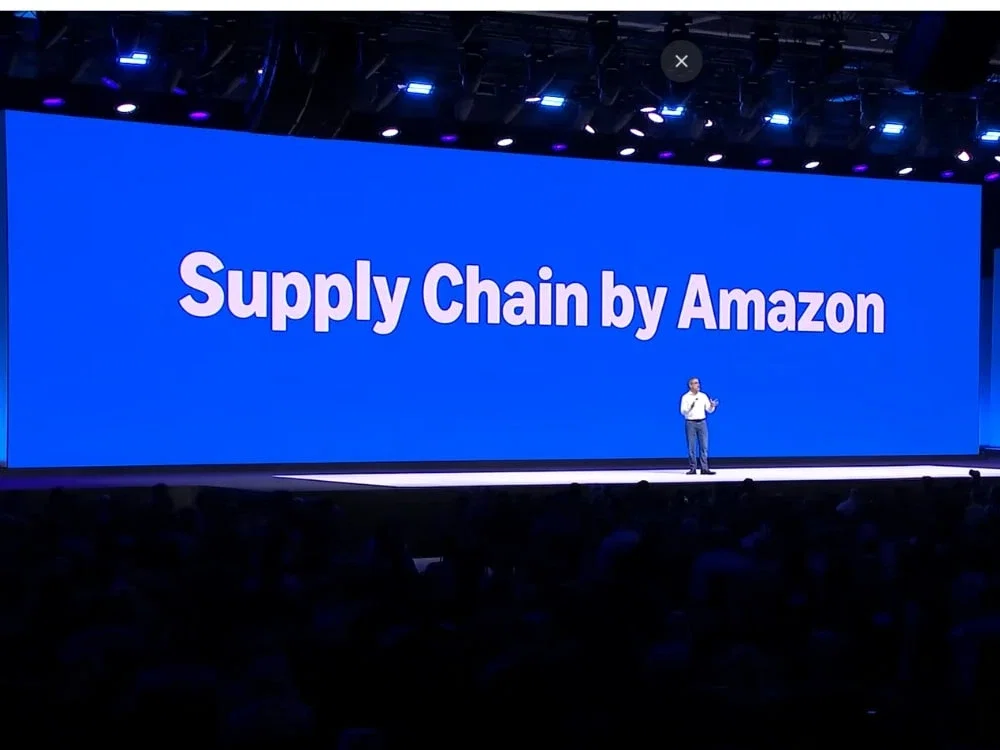
A massive focus was on Supply Chain by Amazon, which aims to manage the product journey from factory to doorstep:
- Global Warehousing and Distribution: Store products near manufacturing hubs to cut storage costs and improve international delivery speed.
- Automated Customs Clearance: AI automates up to 70% of customs documentation, dramatically reducing delays and errors.
- Domestic AWD Expansion: New facilities in California and Arizona provide 12 million cubic feet of storage, along with discounted processing fees.
- Multi-Channel Fulfillment (MCF): Use FBA inventory to fulfill orders on Shopify, Walmart, and even Shein.
From my experience, having this kind of integration and automation reduces both operational headaches and hidden costs, allowing sellers to focus on strategic growth instead of chasing shipments or worrying about compliance.
Key Takeaways
AI is Moving From Reactive to Proactive
Agentic AI is no longer just answering questions it’s anticipating problems before they arise. From compliance checks to inventory forecasting, sellers who adopt these tools now will save both time and costly mistakes. Waiting will only mean playing catch-up later.
Profitability Lives in the Details
Top-line revenue growth is meaningless without margin clarity. The introduction of SKU-level Profit Analytics means sellers can finally see the true cost and profit contribution of every product. Those who make decisions based on this data daily, not quarterly will be the ones protecting margins and scaling efficiently.
Operations Are Marketing-Dependent
Better advertising isn’t just about higher click-through rates. When inventory turns faster thanks to stronger creative and targeted ads, storage fees drop, fulfillment flows improve, and cash cycles shorten. Marketing and operations are now inseparable.
Flexibility Outweighs Short-Term Cost Savings
Ending commingling, smarter returns, and simplified customer support all point to the same principle: flexibility and customer trust are worth more than shaving a few cents per unit. Sellers who lean into these changes will be able to integrate more seamlessly across channels and build stronger brands.
Seller Central Is Becoming a True Operating System
With AI-driven dashboards, natural-language queries, and proactive task surfacing, Seller Central is no longer just a portal. It’s evolving into the backbone of seller operations. Those who engage with it as a growth platform not just a reporting tool will reap compounding benefits.
Andy Jassy at Amazon Accelerate 2025: What Sellers Should Take Away
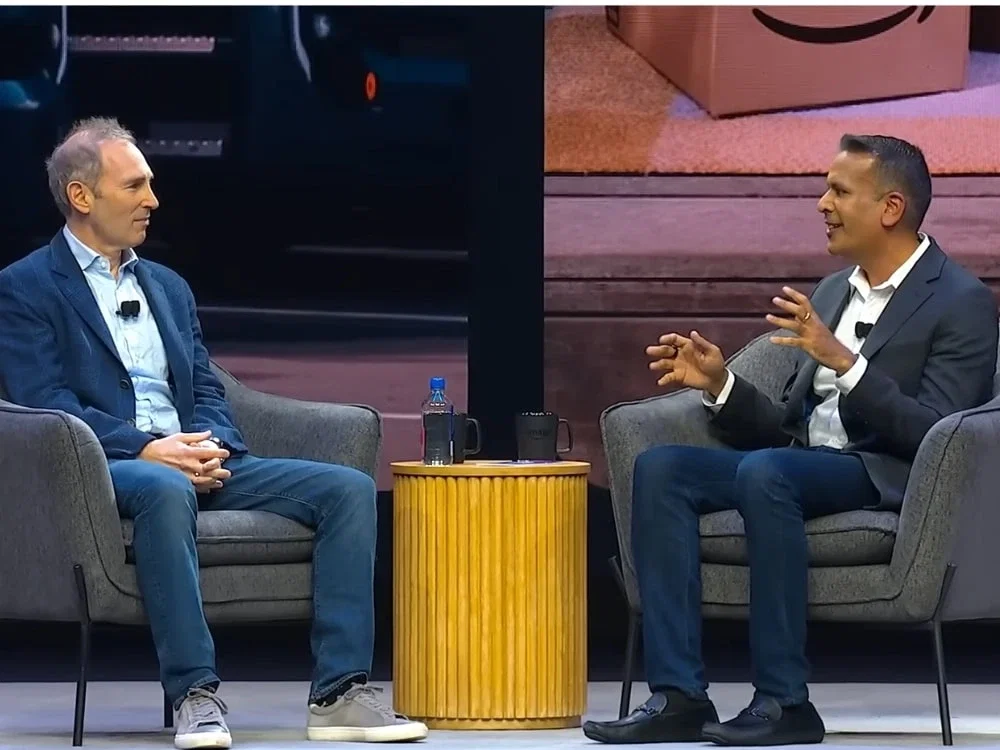
Amazon Accelerate has always been the place where you catch a glimpse of where e-commerce is headed. This year, Andy Jassy’s fireside chat stood out. It wasn’t just corporate storytelling, it was a roadmap for how Amazon plans to grow and how sellers can position themselves for success.
Some parts of his talk reinforced what many of us have already felt in the day-to-day grind of online retail. Other parts hinted at what’s next, and why the next chapter of e-commerce might look different than the last.
Independent Sellers at the Center
Jassy was clear: independent sellers aren’t just part of Amazon’s success, they are the success.
Over 60% of all units sold on Amazon now come from third-party sellers. In the past 25 years, sellers have generated more than $2.5 trillion in sales. On average, they gross around $295,000 annually, and over 55,000 sellers now do more than $1 million a year.
These numbers aren’t trivia. They underline something many already know intuitively: the real energy in e-commerce comes from entrepreneurs. Amazon built the stage, but it’s sellers who bring the show to life.
Amazon has every incentive to keep doubling down on tools and infrastructure that make sellers successful. When sellers thrive, Amazon thrives.
Building Blocks That Last
One of the strongest themes from Jassy’s talk was the idea of “primitives”, simple but powerful building blocks that scale.
Take Fulfillment by Amazon (FBA). It was created to fix Amazon’s own challenge of storing, picking, and shipping millions of items efficiently. Once the model worked, they opened it to sellers. The same playbook followed with Buy with Prime, Multi-Channel Fulfillment, and upstream warehousing.
What makes these “primitives” effective is that they aren’t rigid. They’re built to do one thing exceptionally well, and sellers can plug them into their businesses however they need.
When Amazon introduces a new service, it’s worth asking: what pain point did this solve internally? If that problem looks familiar, the solution is probably worth your attention.
The Culture
Jassy also leaned into culture. At the heart of Amazon’s way of working is the “Why Culture.” Employees are expected to keep asking why — not to be difficult, but to peel back layers until they reach the root cause of a problem.
Then there’s the ambition to operate as the “world’s largest startup.” Jassy described how Amazon actively pushes back against bureaucracy. They even set up a “no bureaucracy” email where employees flag needless red tape, which led to hundreds of process changes in a single year.
AI as a Practical Tool, Not Just Hype
If 2023 was about AI hype, 2025 is about AI at work. Jassy called it “the most transformative technology of our lifetime,” and Amazon is treating it that way.
Some of the new AI tools rolling out for sellers include:
- Bulk AI Listings: Upload and optimize entire catalogs at once.
- Enhance My Listings: Improve copy, imagery, and SEO automatically.
- AI-Generated A+ Content and Video: Create professional-level content that once required agencies or in-house teams.
- Seller Assistant (Project Amelia): An always-on guide for navigating Amazon’s complexities.
These features cut down hours of manual effort. For anyone who has felt the pain of building and maintaining product detail pages, the appeal is obvious.
Don’t wait. Start weaving AI into workflows now. Those who adopt early will spend more time on strategy and less on tedious admin, while late adopters risk falling behind.
That attitude matters. Anyone who has ever watched a project stall under too many meetings or approvals knows how costly bureaucracy can be. Speed isn’t just a nice-to-have; it’s a competitive edge.
Rural Logistics
One of the most striking announcements was Amazon’s $4 billion investment in rural logistics. New delivery stations and last-mile routes are shrinking delivery times in areas where customers have traditionally waited the longest.
Early results are promising: in just a few months, 60% more rural customers are now getting one-to-two-day delivery.
It’s easy to underestimate this shift. Urban customers already expect speed. Rural customers, until now, often didn’t. If delivery windows shrink for them too, it reshapes their buying habits. Suddenly, categories they avoided buying online — because of delays — become fair game.
Sellers should start factoring rural customers into growth plans. Faster delivery to these communities unlocks demand that was previously out of reach.
Project Kuiper
Jassy connected logistics to Project Kuiper, Amazon’s satellite network designed to bring broadband to 500 million households.
At first glance, that may feel like a tech experiment. But zoom out: connectivity creates customers. When more households come online, especially in regions underserved by traditional infrastructure, Amazon is positioning itself to be the first platform they interact with.
Growth isn’t just about squeezing more from existing markets. It’s also about being ready to serve the customers who aren’t even online yet.
What Sellers Can Do Today
It’s easy to listen to a talk like Jassy’s and think it’s all big-picture strategy. But there are practical steps sellers can take right now:
- Adopt Amazon’s tools early. Services like Buy with Prime and Multi-Channel Fulfillment are proven solutions to real bottlenecks. Don’t wait until competitors are already ahead.
- Move faster. Apply the two-way door framework. Most decisions aren’t permanent. Test, measure, and iterate quickly.
- Build AI into the workflow. Start with listings and content. AI won’t just save time — it will raise the bar for what “good” looks like in your category.
- Rethink your customer map. Include rural customers. Amazon is investing where others pull back, and that’s an opportunity to expand your reach.
- Watch where Amazon invests. Their infrastructure bets often signal where the next growth opportunities will be.
Final Thoughts
Amazon Accelerate 2025 was both a celebration and a pivot. After 25 years of building an ecosystem with sellers, Amazon is letting AI do the hard work for clarity, and efficiency.
Agentic AI will handle the tedious but critical tasks that often trip sellers up. Creative Studio will democratize advertising. Profit Analytics will put clarity back into decision-making. Ending commingling and smarter returns will strip out friction that has long weighed down operations. And the redesigned Seller Central will shift from being a portal to being a true partner.
For sellers, the opportunity is to embrace these changes now, not later. The future of selling on Amazon is no longer about who can simply keep up, it is about who can leverage the tools that anticipate needs, reduce errors, and amplify growth. Those who lean in will not just survive the next decade of e-commerce. They will set the pace.
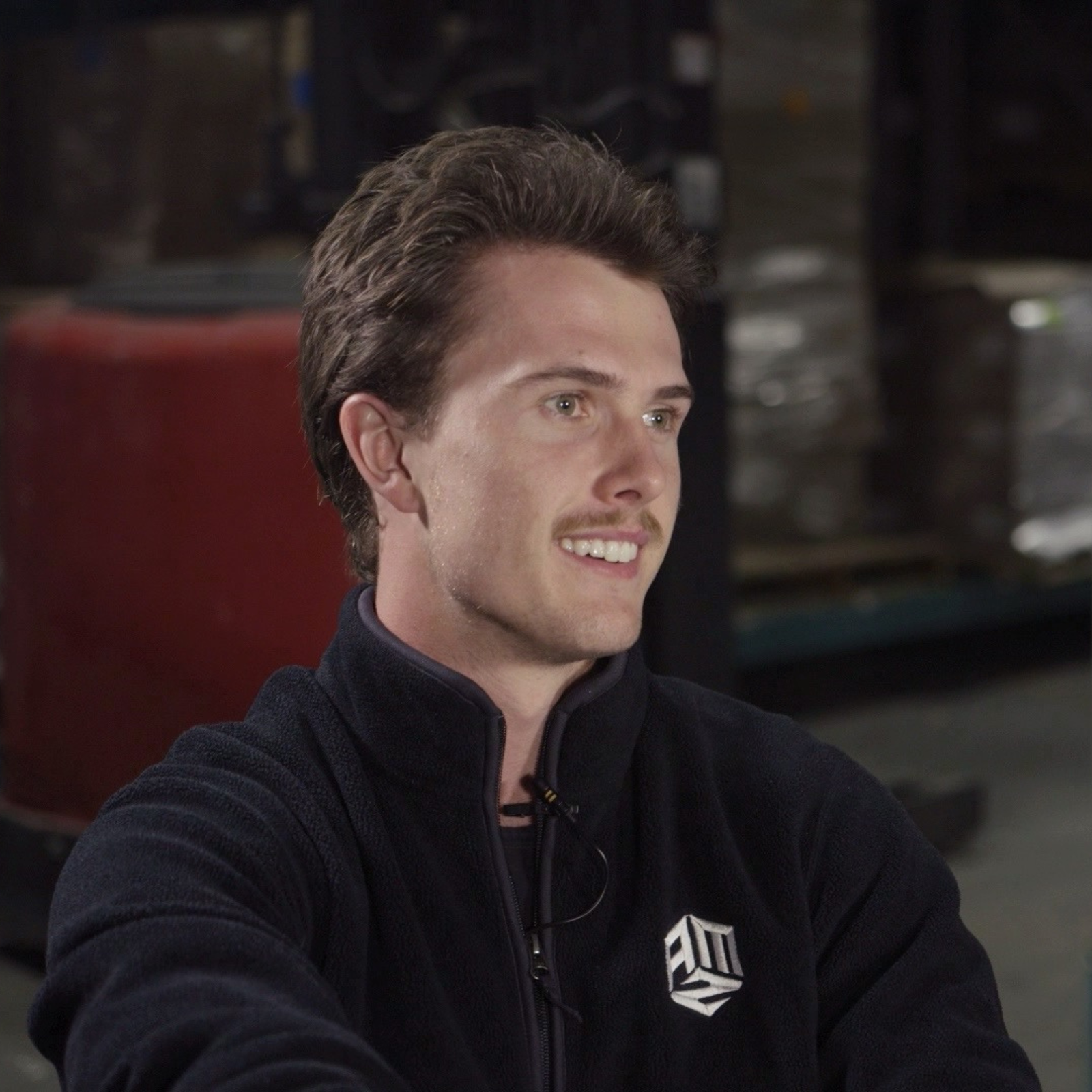
Blair Forrest is the Founder of AMZ Prep, one of North America’s fastest-growing third-party logistics and fulfillment networks, built entirely without outside capital since 2016. Under his leadership, AMZ Prep has scaled to 50+ fulfillment centers across 6 countries, processing over 10 million plus units monthly and powering $2 billion+ in annual GMV for more than 5,000 brands worldwide including 437, Silverts, Saltyface, Unilever, Duracell, and JBL. A recognized authority in eCommerce logistics, Amazon FBA strategy, and supply chain optimization, Blair has helped thousands of sellers and brands master their fulfillment operations from first shipment to enterprise scale. He regularly consults on FBA prep, multi-channel fulfillment, last mile delivery, international expansion, and cost reduction strategies that save brands 20–40% compared to traditional 3PL providers. Blair’s insights on Amazon logistics, 3PL operations, and eCommerce growth are widely cited across the industry. Through AMZ Prep’s content, guides, and resources, he continues to share battle-tested strategies drawn from managing one of the largest independently owned fulfillment networks in North America.
















Comments