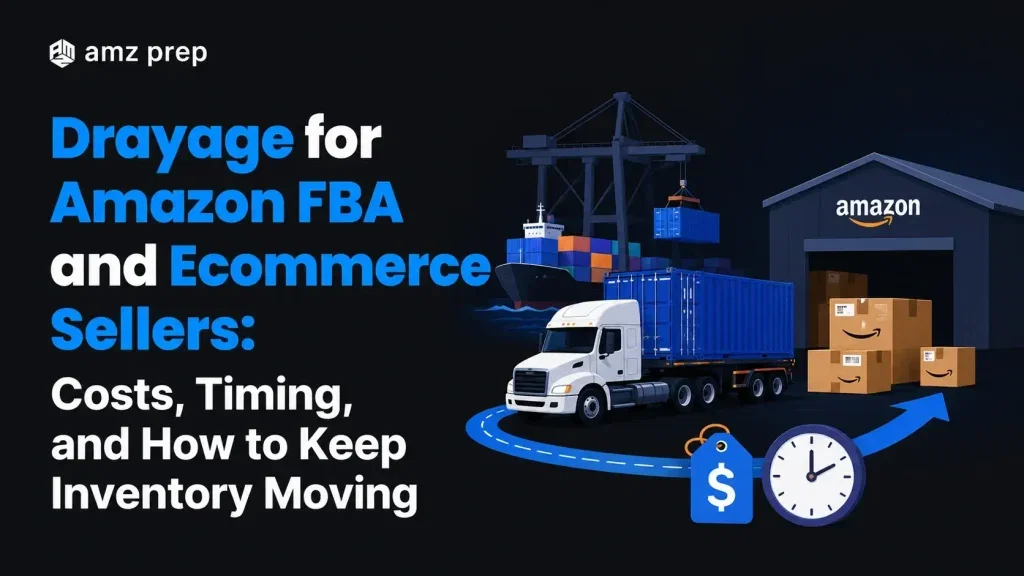
Drayage is the transport of shipping containers between ports, rail terminals, warehouses, and fulfillment centers. It is the final 10 to 50 miles after ocean or rail transit. Like the final mile but for inventory as a whole.
For Amazon FBA sellers, drayage is the link between the port and the prep center. That short leg often decides how fast your stock reaches Amazon.
I talk to ecommerce brands that do everything right on the front end. They negotiate factory pricing. They book ocean freight. They prep their Amazon shipments and build clean forecasts.
Then the container lands, and a new stack of invoices shows up. Port storage. Demurrage. Detention. Appointment fees. Container waiting charges.
Most of those costs are the final mile often ignored. Here is how drayage works, what it really costs, and how to keep your containers moving.
What Is Drayage
If you have searched ‘what is drayage,’ you have probably found definitions packed with logistics jargon. The idea is simpler than that.
Picture your products made in Vietnam. Your supplier loads them into a 40-foot container/ 20-foot container. That container journeys three to four weeks crossing the Pacific and lands at the Port of Los Angeles. Well, the ship’s job is done. But, your inventory is nowhere near Amazon. Put it simply, the inventory arrived in the country, but you might be at the opposite end of where the container arrived.
Someone has to move that container from the port to its next stop. That short move is drayage. Without it, the container sits at the terminal while storage charges climb.
What Does the Word Drayage Mean
The drayage meaning goes back centuries. Ports once used horse-drawn carts called ‘drays’ to haul cargo from the docks to nearby warehouses.
The technology changed. Containers replaced wooden crates. Diesel trucks replaced horses. The purpose stayed the same.
Today, container drayage means truck transport of shipping containers between ocean ports, rail yards, container freight stations, customs exam sites, warehouses, Amazon prep centers, and distribution centers. The trip is short. It is also one of the most time-sensitive parts of your supply chain.
If your warehouse doesn’t have a loading dock, our Amazon liftgate delivery guide explains when liftgate service is required and how to avoid delivery delays.
Why Drayage Matters More Than It Used To
Ten years ago, most importers barely thought about drayage. Today it is one of the first things I check on an inbound shipment.
The reason is that the ground shifted. Ports move far more containers than before. Warehouses run on tighter appointment windows. Amazon expects inventory to arrive when the plan says. Ocean carriers enforce stricter free-time rules. Drivers hit equipment shortages every peak season.
Each of those changes raised the stakes on drayage planning. I have watched brands spend weeks shaving down an ocean rate, then lose the savings because the container waited four extra days at the port.
The longest leg of the trip often costs less than the shortest one when delays hit. Drayage is not only trucking. It is coordination. The ocean carrier, customs broker, freight forwarders, drayage carrier, warehouse, prep center, and Amazon schedule all have to stay aligned. When one falls out of sync, the charges usually start right away.
What Happens to a Container From Factory to Amazon
Many sellers think the shipment ends when the vessel reaches port. That is where the most operationally complex phase begins. Here is the real path.
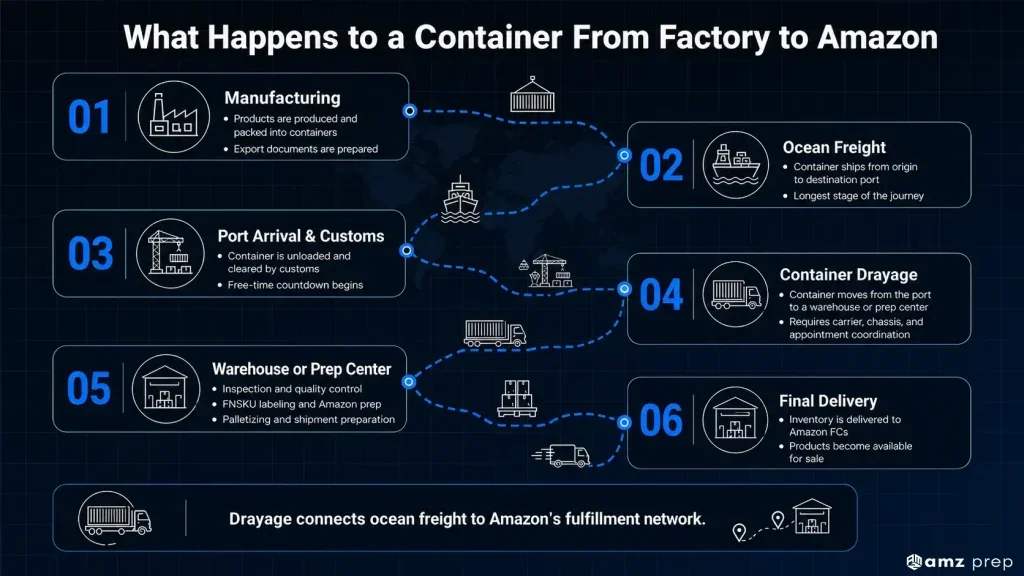
- Manufacturing — Your supplier finishes production, packs cartons into a container, and finalizes the export docs.
- Ocean freight — The container loads onto a vessel. For a few weeks the shipment stays predictable. This is the longest leg and often the easiest to manage.
- Port arrival — The vessel docks and containers move onto the terminal. Timing starts to matter here. Most shipments get a set number of free days. After that, storage charges begin.
- Customs clearance — Customs has to clear the shipment before it leaves. Sometimes that is fast. Sometimes an inspection slows it. Even after release, you still need the drayage appointment, which can be as tight as customs in busy months.
- Container drayage — A licensed carrier checks in, secures a chassis, retrieves the container, and leaves the port. The move might be 20 or 30 miles. The coordination behind it is heavy. I have seen a 15-mile move eat a full day because one appointment shifted.
- Warehouse or prep center — The container arrives and the work continues. Products may need inspection, FNSKU labeling, poly bagging, bundling, palletizing, carton relabeling, and quality control. A good prep center catches issues before Amazon does.
- Final delivery — Only after prep does inventory move to Amazon fulfillment centers, retail DCs, wholesale buyers, or DTC warehouses.
The customer sees a product ready to buy. They never see the decisions that got it there. When a supply chain runs well, it stays invisible.
What Are the Types of Drayage Services
One misconception I hear often is that drayage is a single service. It is not. There are several types of drayage services, and the right one depends on your products, your fulfillment strategy, and how fast you need inventory to live.
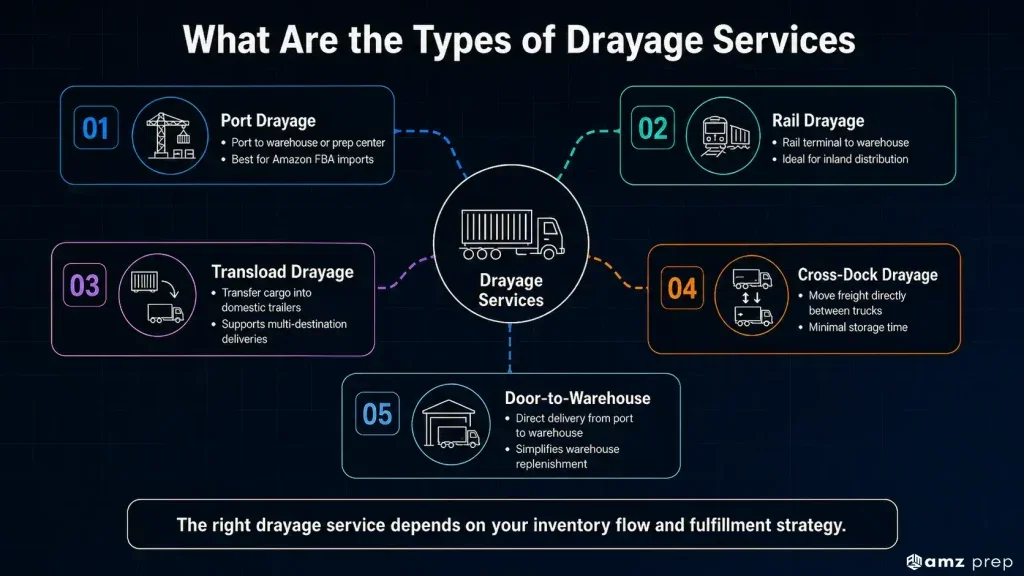
Port drayage is the most common move for Amazon sellers. A container leaves the marine terminal and goes to a nearby warehouse or prep center. This is where scheduling gets critical. Your truck needs an appointment. Your warehouse needs an appointment. Your paperwork needs to be clear and your container released. Miss one piece and the container waits while storage builds.
Rail drayage covers containers that travel inland by rail before a truck collects them.
Transload drayage transfers cargo into domestic trailers for delivery to multiple destinations.
Cross-dock drayage moves freight directly between trucks with minimal storage.
Door-to-warehouse drayage delivers containers directly from the port to your warehouse or prep.
| Type | Description | Best For |
|---|---|---|
| Port Drayage | Moves containers from the port to a nearby warehouse or prep center. | Amazon FBA imports |
| Rail Drayage | Moves containers from a rail terminal to a warehouse. | Inland distribution |
| Transload Drayage | Transfers cargo from a container into a domestic trailer. | Multi-destination shipments |
| Cross-Dock Drayage | Transfers freight directly between trucks with little storage. | Fast-moving inventory |
| Door-to-Warehouse | Delivers containers directly from the port to a warehouse. | Direct warehouse replenishment |
What Does Drayage Cost
This is the most common question I get, and there is no universal answer. Two containers from the same vessel can have very different costs. Instead of asking, ‘What does drayage cost?’ ask, ‘What will it cost to move my container from the port to my warehouse?’ That’s where the real
Why Distance Is Not the Main Cost Driver
Most people assume a 20-mile move beats a 50-mile move on price. Distance is only one factor in drayage pricing. A short trip through a congested port can cost more than a longer route due to traffic, terminal delays, equipment shortages, and appointment availability. Always compare the total service, not just the mileage.
How Port Congestion Affects Drayage Cost
Congestion touches every part of drayage shipping. Drivers wait longer. Appointments get harder to book. Equipment stays tied up. Containers sit inside terminals. Every delay opens the door to another charge.
Why Equipment Availability Matters
A container cannot move without the right gear. This means a chassis, specialized trailers, overweight equipment, or refrigerated support. Shortages do more than delay a shipment. They push costs up as carriers compete for limited equipment.
How Fuel and Region Change the Rate
Fuel is the variable importers forget. Drayage carriers apply fuel surcharges that move with diesel prices. The final rate can change even when the route stays identical.
What Accessorial Charges Should You Plan For
The base drayage quote is one line on the invoice. The bigger numbers usually come from charges you can plan around with better coordination. Two of them account for most of the surprises.
Demurrage vs Detention: What Is the Difference
| Charge | When it applies | Where the container is | What triggers it |
|---|---|---|---|
| Demurrage | Container stays past its free days at the port | Inside the terminal | Container not picked up in time |
| Detention | Carrier equipment not returned on time | Outside the terminal | Warehouse not ready or unload runs long |
| Bottom line | Charged for space you are holding | Port side | Book pickup early to avoid it |
Demurrage is charged when your container stays at the port past the free time the terminal or line allows. Every port sets its own policy and every carrier sets its own free days. Once that window closes, charges accrue daily and often rise the longer the box sits. It is one of the fastest ways for costs to run.
Detention starts after the container leaves the port. Now you are paying because the carrier’s equipment did not come back fast enough. Maybe the warehouse was not ready. Maybe unloading ran long. Maybe the empty could not go back on schedule. Either way, the daily charges stack.
Two more show up often. Chassis charges apply because the container rides on a chassis that some ports and carriers bill separately. In peak season, chassis shortages become a real bottleneck. Driver waiting time applies when a warehouse cannot unload right away. A three-hour hold can turn a routine move into a costly one.
Unexpected accessorial charges are common, which is why many businesses use freight bill audit and payment services to verify invoices.
How Do Good Drayage Companies Control Cost
A capable drayage company does far more than move a box. The right partner coordinates port appointments, container tracking, customs timing, warehouse scheduling, chassis availability, driver dispatch, and equipment returns. That coordination usually saves more than shaving a few dollars off the base rate.
If you’re shipping directly to customers, find out does UPS deliver on Sunday before setting delivery expectations.
Why Amazon FBA Drayage Needs Extra Planning
Amazon does not take ocean containers directly from most sellers. Inventory moves from the port to a drayage carrier, then to a prep center or warehouse, then into Amazon fulfillment centers.
That extra step is an advantage when you plan for it. Routing containers through a prep center lets you inspect products, replace damaged packaging, label inventory, build compliant shipments, split stock across multiple Amazon destinations, hold overflow, and fulfill DTC orders from the same place.
That flexibility trims Amazon storage fees and tightens your control over inventory. It is the reason many brands pair Amazon FBA drayage with a prep partner and a fast inbound program. At AMZ Prep, we run prep across 50+ fulfillment centers, and a fast Middle Mile network gets stock into Amazon in 2 to 4 days once a container is unloaded.Which Drayage Mistakes Cost Brands the Most
Most expensive drayage problems don’t start when the truck arrives. They start days earlier with missed communication, delayed planning, or assumptions that someone else is handling the next step. While the transportation itself is usually straightforward, poor coordination can quickly lead to unnecessary costs.
Here are three of the most common mistakes and how you can avoid them.
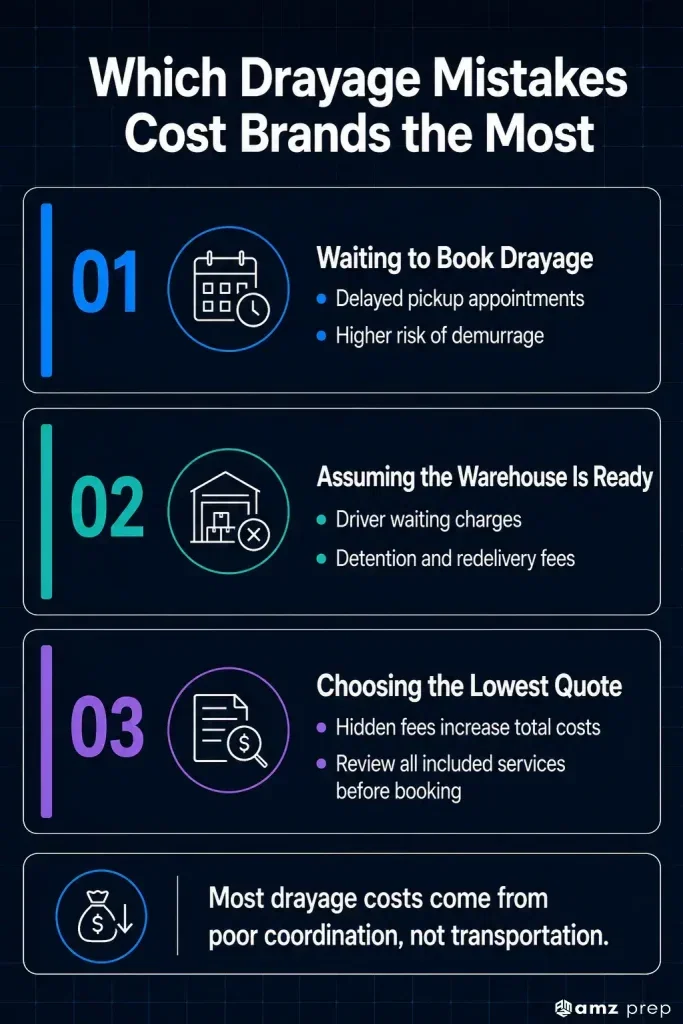
1. Waiting Until the Vessel Arrives to Book Drayage
If you wait until your container reaches the port to arrange drayage, you’re already behind. During busy periods, pickup appointments can fill up quickly, leaving your container at the terminal past its free time. The result is demurrage charges and delivery delays.
How to avoid it: Book your drayage carrier before your vessel arrives, and coordinate your delivery order, warehouse appointment, and pickup schedule well before the Last Free Day.
2. Assuming Your Warehouse Is Ready
Your drayage carrier may arrive on time, but if your warehouse isn’t ready to receive the container, you’ll likely incur driver waiting time, redelivery fees, or detention charges.
How to avoid it: Confirm receiving appointments with your warehouse or prep center before scheduling container pickup from the port.
3. Choosing the Lowest Quote Without Reviewing What’s Included
The cheapest drayage quote isn’t always the lowest total cost. Some providers exclude items like chassis fees, fuel surcharges, waiting time, appointment fees, yard storage, or pre-pull services. These costs often appear later as unexpected charges.
How to avoid it: Compare quotes based on the services included, not just the base price. Understanding the full cost upfront can help you avoid expensive surprises later.
How to Choose a Drayage Company
The best providers do not only move containers. They manage risk. Before you pick one, ask:
- Do you specialize in port drayage, and which ports do you run regularly?
- Do you own your equipment or broker the moves?
- How do you communicate shipment updates?
- What exactly is included in the quote?
- How do you handle customs delays?
- Can you coordinate with my warehouse or prep center?
- What happens if my container misses its appointment?
- How do you keep demurrage and detention down?
- Do you offer transloading or cross-docking if I need it?
The answers tell you more than the rate ever will.
Best Practices That Keep Costs Down
- Book drayage before the vessel arrives.
- Confirm warehouse receiving appointments early.
- Share customs documents as soon as they are ready.
- Watch your Last Free Day closely.
- Prep Amazon shipments before the container reaches the warehouse.
- Work with partners that communicate before you have to chase them.
- Review invoices so one-off accessorial charges do not become recurring ones.
None of these are complicated. Together they prevent most of the common, avoidable costs in container logistics.
Final Thoughts
The difference between profitable imports and expensive mistakes often comes down to the decisions made after your container reaches the port. Drayage may cover only a few miles, but it has a direct impact on your costs, delivery timelines, and inventory availability. By planning ahead, working with experienced logistics partners, and understanding the fees that matter, you can keep your supply chain moving efficiently while protecting your margins.
Frequently Asked Questions
What is drayage?
Drayage is the short-distance truck transport of shipping containers between ports, rail terminals, warehouses, distribution centers, and other intermodal facilities. It moves inventory across the final short leg of the supply chain, usually 10 to 50 miles, after ocean or rail transit is complete.
What is container drayage?
Container drayage is the movement of ocean shipping containers by truck after they leave a port or rail terminal. It covers the trip to a nearby warehouse, prep center, or distribution facility, and it sits between long-haul transit and final delivery.
What is port drayage?
Port drayage is the movement of containers from a seaport to a nearby warehouse, prep center, rail terminal, or distribution facility. It is the first truck movement after a vessel unloads, and it is the most common drayage type Amazon sellers use.
Is drayage included in ocean freight?
Not always. Many shipments price ocean freight separately from inland transport, so read your quote closely. Confirm whether accessorial fees like chassis, fuel surcharge, and waiting time are covered before you compare providers or assume the number is complete.
What is the difference between drayage and trucking?
Drayage refers to short-distance container moves inside an intermodal supply chain, usually near ports and rail terminals. Trucking is the broader term for freight transport over any distance. All drayage is trucking, but not all trucking is drayage.
What is the difference between demurrage and detention?
Demurrage applies when your container stays inside the port past its free days. Detention applies after the container leaves, when the carrier’s equipment is not returned on time. Both accrue daily, and both are usually avoidable with early appointment planning.
How can I reduce drayage costs?
The biggest savings come from planning, not negotiating. Book transport early, confirm warehouse appointments, share customs documents fast, and track your Last Free Day. Avoiding demurrage and detention often saves more than trimming the base transportation rate ever will.
Depending on your shipments, you may be able to recover import duties through the duty drawback program.

Arishekar N is a Vice President (VP) of Marketing at AMZ Prep, specializing in ecommerce fulfillment and Amazon logistics strategies with a proven track record of driving growth for e-commerce businesses. He is a strategic leader with extensive expertise in marketing, e-commerce operations, SEO & advertising, and branding.
Stay updated on his latest insights by following him
















Comments