
Starting January 1, 2026, Amazon discontinued all prep and labeling services for FBA in the United States. Yeah, that’s a big deal.
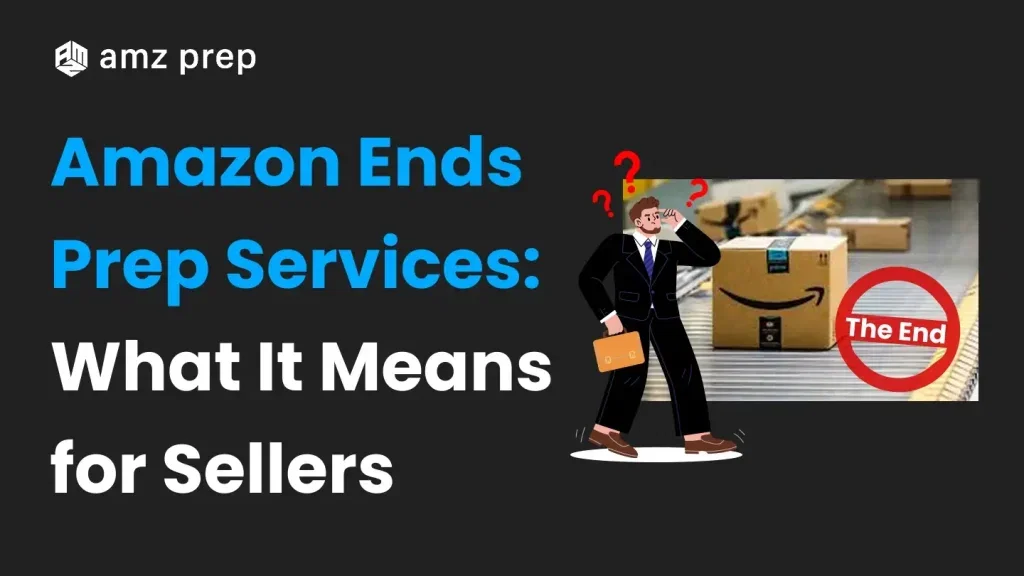
If you’ve been relying on Amazon to handle the bagging, labeling, and packaging of your inventory, this is more than just an inconvenience. It’s a fundamental reset of your supply chain. The choices you make in the next few months will directly affect your margins, your fulfillment speed, and frankly, whether you stay competitive.
Let’s break down what’s happening, why Amazon made this decision, and most importantly, what actions you should take next.
Why Amazon’s actually ending their prep services now (2026)
Here’s the thing: this isn’t random. And it’s not Amazon trying to punish sellers.
When FBA first launched back in the early 2010s, Amazon faced a real problem. The entire concept of item level prep including bagging, labeling, and bubble wrapping did not exist in traditional retail. Sellers had no idea how to do it. Third-party logistics companies hadn’t emerged yet. So Amazon built it themselves. Made sense at the time.
But that was more than a decade ago. The landscape has completely transformed.
Today? There’s a massive ecosystem of 3PLs specifically built around Amazon prep. Enterprise brands have brought prep in-house.
The infrastructure that didn’t exist in 2007 is now mature and spread across hundreds of companies. Amazon is no longer filling a gap. It is now managing massive warehouse operations.
So their thinking has shifted. Here’s what’s actually driving this:
Warehouse space is everything
Every square foot of Amazon’s fulfillment centers is optimized for one thing: moving inventory fast. Prep takes space. It takes labor. It takes equipment. By cutting in-house prep, Amazon recaptures dock space and staging areas that can go toward receiving, storing, and shipping inventory quicker. That’s how they improve delivery times and cut operational costs.
Free Resource for Amazon Sellers
Amazon is ending FBA prep services soon. Learn how top sellers are adapting and cutting prep costs while staying compliant.
Download the Amazon Prep Transition Playbook (Free PDF)
Most sellers are already handling it themselves
Amazon’s data makes it clear that most sellers either handle their own prep or rely on external partners. Rather than continue supporting a shrinking minority who still depend on Amazon’s service, they’re standardizing the market.
Enforcement is easier than support
When Amazon offered prep, they were also teaching sellers compliance. Now that knowledge is everywhere, Amazon can shift from “we’ll help you get this right” to “if it’s not right, we’re rejecting it.” Cleaner for them. Clearer for the marketplace.
This isn’t about punishment. It’s about optimization at scale. This is significant because it signals that the change is permanent, as outlined in Amazon’s broader January 2026 FBA policy updates affecting prep, placement, and inbound compliance.
.
Does Amazon’s Discontinuation of Prep Services Affect Your Selling
Yes. Let’s talk specifics. This affects you in three concrete ways.
1. Compliance risk just got a lot steeper
Before January 1st, Amazon’s prep service was like a safety net. Mislabel something? They’d fix it. Packaging wasn’t quite right? They’d redo it. Items got dinged up? They’d rewrap them.
That’s gone.
Starting in 2026, every single item that arrives at an Amazon fulfillment center has to be perfect. Labels need to scan on the first try. Packaging has to be intact. Fragile items need real cushioning. Liquids need to be sealed properly.
Miss the mark? Amazon rejects your shipment. They send it back at your expense or dispose of it and charge a fee. There is no second chance and no option to fix the issue.
This means your prep quality directly impacts your cash flow. Bad prep equals lost inventory equals immediate financial pain.
2. Your operations just got more complex
Whether you bring prep in-house, partner with a 3PL, or work with your suppliers, you’re taking on something you might not have managed before. And there’s no one-size-fits-all answer.
If you do it yourself:
You need workspace. Equipment. Staff who actually know what they’re doing. Quality control processes. And you need to keep up with Amazon’s constantly evolving requirements. Plus, seasonal volume spikes? Labor costs spike with them. That’s hard to manage and even harder to scale.
If you partner with a 3PL:
You’re offloading the operational headache, but now you’re dependent on someone else’s performance. A mistake from your 3PL is still your problem with Amazon. You have to vet partners carefully, set clear expectations, and stay in the loop on their processes.
If your suppliers handle it:
You’re shifting responsibility overseas, but you lose direct visibility. Quality control becomes harder. And when something goes wrong, the lead times to fix it are brutal.
Each path has tradeoffs. The point: you can’t just ignore this. It requires real planning.
3. Your per-unit economics are changing
Amazon’s prep service was never free. It was included in your FBA fees. Now you’re unbundling those costs. You’ll pay separately. Either through internal labor, 3PL fees, or supplier expenses.
Small volume sellers might think in-house looks cheap. But the real cost includes your time, equipment, storage space, and the risk of compliance errors.
For larger volumes, a 3PL partnership becomes cost-effective pretty quickly. Expect to pay $0.30–$0.80 per unit depending on how complex your products are.
Supplier prep can be the cheapest option at scale, but quality control becomes a real challenge. And lead times get longer.
The bottom line: your math is changing. Figure it out now, not in Q2 2026 when your margins surprise you.
What are the Amazon compliant in prep service that you must care
Here’s what Amazon requires. And more importantly, here’s why each requirement matters.
Labels need to be scannable
Each unit gets a machine-readable FNSKU label in a specific spot (usually the lower-right corner of the front). Straight. Centered. Scannable on the first scan. No second attempts.
Why? Amazon’s fulfillment centers run thousands of items per hour through automated scanning. A label that doesn’t scan stops the line. Causes manual sorting. Costs Amazon time and money.
Packaging protects your inventory
Electronics go in anti-static bags. Fragile items need bubble wrap. Books need moisture protection. Apparel needs bagging.
Why? Damaged items on arrival get returned or marked unsellable. You lose the sale. Amazon loses the sale. The goal here is simple: your inventory needs to survive the inbound process intact.
Some items require polybagging
Apparel. Small electronics. Anything with sharp edges. Hygiene products. They all go in clear plastic bags and get sealed.
Why? It protects items during storage and handling. It also signals to Amazon’s warehouse staff that the item is individually sealed and ready to go.
Perishables need dates
Expiration dates get labeled clearly. Items follow FIFO rotation (first in, first out).
Why? Amazon tracks expiration dates automatically and destroys expired inventory. Without proper dating, your stock gets destroyed as “expired.”
Special categories have special rules:
Liquids and hazmat need to be double-sealed and clearly labeled. One mistake here and your entire shipment gets rejected.
Glass and fragile items need FRAGILE labels on multiple sides and full protective wrapping. Corner crushing during transit is the number one damage cause.
Electronics require anti-static protection. Static damage is not always visible when items arrive but becomes apparent when customers receive them, often resulting in returns.
Apparel has hanging vs. folding requirements depending on the garment. Wrinkles on arrival? Customers notice. Return rates go up.
Here’s the pattern: every requirement ties directly to either Amazon’s warehouse efficiency or customer satisfaction. This isn’t bureaucratic busywork. It’s operational necessity.
What can you do to protect your brand as Amazon stopped prep services (and how to pick)
You’ve got three strategic paths forward. Each has different costs, different risks, and different scalability.
Option 1: Handle it in-house
You manage prep entirely in-house.
What you actually need:
A minimum of 200 to 400 square feet of dedicated workspace is needed depending on volume. Could be a spare room. Could be an outbuilding. But it needs to exist.
Equipment: label printer, scales, packaging supplies, work tables.
Staff. Full-time, part-time, or just your own time. Depends on volume.
Quality control processes. This isn’t optional. You need checklists. Verification steps. Consistency.
Software to track inventory and generate labels.
Best for: Sellers moving under 500 units monthly with simple products. Nothing fragile. Nothing liquid. Nothing complicated.
Costs:
Startup runs $2,000–$5,000. Equipment, workspace setup, software.
Ongoing is $0.20–$0.50 per unit. Supplies plus labor.
At 200 units a month? You’re looking at roughly $40–$100 monthly in materials and labor.
Real advantages:
Complete control over quality. You see every item.
No third-party dependencies. You’re not waiting on anyone.
Faster feedback loops. You catch compliance issues immediately.
Real disadvantages:
Seasonal spikes destroy your labor model. Holiday season hits and suddenly you need way more hands.
Staff turnover is annoying. People leave. New people need training. Consistency suffers.
Error rates increase as you grow. Without process discipline, mistakes compound fast.
Time investment from you or your team. That’s the biggest hidden cost. If you’re doing this work, you’re not growing your business.The honest truth: Most sellers wildly underestimate the labor component. If you’re doing the work yourself, you’re burning hours you could spend on marketing, product development, or strategy. If you’re hiring staff, seasonal labor is expensive and inconsistent.
Option 2: Partner with a 3PL
You work with a third-party logistics provider that specializes in Amazon prep.
How it actually works:
You ship your inventory (unprepared or pre-sorted) to their facility.
They receive the inventory, inspect it, label it, bag it, and bubble wrap it according to your product requirements.
They create FBA shipments and handle the inbound transport to Amazon’s fulfillment centers.
You see everything through their software dashboard.
Best for: Sellers moving 500+ units monthly. Brands with complex products. Anyone who’d rather focus on product and sales than logistics.
Cost structure:
Receiving and intake: $0.10–$0.20 per unit.
Labeling and prep: $0.30–$0.60 per unit depending on complexity.
Inbound freight: Often separate or bundled. Varies by provider.
Total: $0.50–$0.80+ per unit.
Real advantages:
Scales seamlessly as you grow. No labor headaches when volume spikes.
Quality control is handled by people who do this every day. Specialists.
Visibility through technology. You’re not flying blind.
No staffing problems. No turnover. No training new people.
Many 3PLs have optimized routes to Amazon FCs. Your inventory gets there faster. Faster sales. This becomes especially important under FBA inventory capacity restrictions, where smarter routing and faster inbound processing help protect sell-through.
Real disadvantages:
You’re dependent on their performance. If they mess up, you suffer.
A prep error from the 3PL is still your problem with Amazon. You take the hit.
Less direct day-to-day control. You’re trusting someone else’s processes.
Finding the right partner matters. A lot.
The critical decision: Not all 3PLs are created equal.
You need one with:
Proven experience with Amazon. Years of this. Real client references.
Technology for transparency. Real-time dashboards. Error tracking. Visibility.
Clear, predictable pricing. No surprise fees. No nickel-and-diming.
Geographic proximity to your suppliers and Amazon FCs. Shorter transit times. Faster sales.
Expertise in your specific categories. Fragile items, liquids, and specialty products need specialized knowledge.
Option 3: Supplier Prep
Your manufacturers or suppliers handle the prep before items ship to you or to Amazon.
How it works:
You provide your suppliers with FNSKU labels and detailed prep specifications.
They apply labels and prep items during manufacturing.
Items ship directly to Amazon or to a consolidation point.
Quality control happens overseas before items leave.
Best for: Sellers working with overseas manufacturers at scale. High-volume brands with established supplier relationships. Simple, non-fragile products.
Cost structure:
Supplier prep typically gets bundled into your product cost or charged separately—$0.10–$0.30 per unit.
This is the lowest per-unit cost at high volumes.
Shipping costs might increase (prepacked in compliant packaging takes more space).
Real advantages:
Lowest cost per unit at scale.
Simplifies your inbound logistics significantly.
Reduces inventory handling on your end.
Real disadvantages:
Quality control is really difficult when it’s happening on the other side of the world.
Lead times get longer. Finding prep errors after items have shipped is expensive and painful.
Less flexibility if Amazon changes requirements. You’re locked into what your supplier’s already set up.
Communication across time zones is annoying.
If something goes wrong mid-shipment, fixing it is financially brutal.
On what basis you must choose for outsourcing prep service
Here’s a simple framework:
Pick in-house prep if:
You’re consistently moving under 500 units monthly.
You have physical space and can dedicate staff time.
Your products are simple. No liquids. No fragile items. No hazmat.
You want maximum control and direct visibility.
Pick a 3PL if:
You’re scaling (or planning to scale) to 500+ units monthly.
You want operational leverage that frees time to focus on product rather than logistics.
Your products are complex. Fragile items. Liquids. Specialty categories.
You want visibility, predictability, and someone else managing compliance.
Pick supplier prep if:
You’re working with overseas manufacturers at meaningful scale.
Your products are simple and non-fragile.
You have established supplier relationships you trust.
You can accept longer lead times and less direct quality control.
Real talk: For most sellers who are actually growing, a 3PL makes sense. Yeah, it costs more per unit than doing it yourself. But it removes an operational bottleneck that gets increasingly painful as you scale. The tradeoff of paying $0.50 per unit to a 3PL versus spending your time managing prep is almost always worthwhile once you reach meaningful volume.
What you must do now?
January 1, 2026 is the deadline. Yes. It’s already passed.
Right now (January 2026): Audit your current state. How much of your inventory currently uses Amazon’s prep service? Are you actually tracking this?
February through April: If you’re considering a 3PL, start evaluating partners. Request demos. Check their references. Understand pricing and SLAs. Don’t just pick based on price.
May and June: Pilot your chosen solution with some of your inventory. Test quality. See how they respond. Work out the kinks while Amazon’s still offering prep as a backup option.
July through September: Scale gradually. Move more volume through your solution. Refine your process. Build confidence before the deadline hits.
October through December: Go all-in. By November, you should be 100% on your new process. Use December to test and verify everything before January 1.
This timeline prevents panic decisions. It gives you room to course-correct if your first choice doesn’t work out.
What can you expect after Jan 1, 2026?
Amazon’s ending prep services isn’t happening in isolation. It’s part of a larger strategic shift toward efficiency, automation, and pushing operational responsibility out to the marketplace.
Other changes already happening:
Placement overhauls requiring sellers to ship to multiple fulfillment centers.
Cross-dock networks adding complexity to inbound logistics.
Stricter enforcement on packaging, labeling, and compliance across the board.
The pattern here: Amazon optimizing for their efficiency. Sellers who adapt quickly get competitive advantages. Those who don’t? Higher costs. Slower fulfillment. Lower sales velocity.
Getting your prep strategy right isn’t just about surviving January 2026. It’s about building a supply chain that can adapt to whatever Amazon changes next.
Get started: Your actual next steps
1. Audit your current state
How many units are you shipping to Amazon monthly?
What percentage currently use Amazon’s prep service?
What’s your current all-in cost per unit (including prep fees)?
2. Map your products
Which ones are complex? Fragile? Liquids? Hazmat?
Which are straightforward?
Do you have seasonal volume spikes?
3. Evaluate your options
Calculate the true cost of in-house (including your time and what it costs you to not focus on growth).
Research 3PL partners with Amazon expertise in your category.
Assess whether supplier prep is realistic for your operation.
4. Run the numbers
Project your 2026 volume.
Calculate costs for each scenario.
Factor in the financial risk of compliance errors.
5. Pilot before committing fully
Test your chosen solution with real inventory.
Measure quality, cost, and speed.
Adjust before the January deadline.
It sounds like a lot. But breaking it into steps makes it manageable. Sellers who move proactively now will have smooth transitions. Those who wait will make rushed decisions and pay for it.
How we can help
At AMZ Prep, we’ve spent over a decade handling FBA prep for hundreds of ecommerce brands—from bootstrapped sellers to enterprises like Duracell, Unilever, and JBL. We process over 100 million items annually across 50+ fulfillment centers in North America, Europe, and the UK.
We live in this world. We understand Amazon’s evolving requirements because we navigate them every single day.
Our prep solution includes:
Receiving and inventory intake with real-time tracking.
Item and carton-level FNSKU labeling at 99.9% accuracy.
Category-specific prep (fragile, liquids, hazmat, apparel—you name it).
Quality control verification before every shipment.
Inbound transportation direct to Amazon FCs.
Full visibility through our platform.
What sets us apart:
Deep operational expertise. We’ve processed millions of items. We’ve seen every edge case.
Proven track record navigating Amazon’s changes.
Transparent, engineered pricing. No surprise fees.
Geographic proximity to your suppliers and Amazon’s FCs. Fastest transit times.
Specialized expertise in complex categories (cold storage, hazmat, oversized items).
If you want to figure out your prep readiness or talk through your specific situation, we’re here. Schedule a consultation or get a custom quote. Let’s talk about how we can support your transition.
Frequently Asked Questions
When does Amazon stop offering FBA prep services?
Amazon will stop all FBA prep and labeling services on January 1, 2026. This applies to all shipments in the United States, including items going through AWD, AGL, SEND, and Supply Chain Portal that end up in FBA warehouses.
What happens if I send improperly prepped items to Amazon after 2026?
Amazon will reject improperly prepped items and return them at your expense or dispose of them with no reimbursement. There will be no option to pay for prep corrections once items reach Amazon warehouses after the cutoff date.
Can my supplier prep items for Amazon FBA instead of using a 3PL?
Yes, suppliers can handle prep, but most lack Amazon expertise and make costly mistakes. You’ll need to provide detailed instructions, FNSKU labels, and quality control processes. Many sellers find 3PLs more reliable for consistent Amazon compliance.
What prep requirements will Amazon enforce more strictly after 2026?
Amazon will enforce all existing prep standards with zero tolerance. This includes proper FNSKU labeling, polybagging requirements, fragile item protection, expiration date labeling, and category-specific packaging standards. Any deviation results in automatic rejection.
Do I need to find a new prep solution immediately?
While the change takes effect January 1, 2026, you should secure your prep solution within the next 6-12 months. 3PL capacity will become limited as millions of sellers seek alternatives, and you’ll want time to test your new process before peak season.
How much will FBA prep cost after Amazon stops their services?
Costs vary by option: in-house prep runs $0.20-$0.50 per unit plus setup costs, supplier prep varies widely, and professional 3PLs typically charge $0.40-$1.50 per unit depending on complexity and volume.
Will this change affect my Amazon seller fees or FBA costs?
No, your standard FBA fulfillment fees won’t change. However, you’ll now pay for prep services separately rather than having them included in your FBA costs.
Does Amazon USA stop prep services in the USA?
Yes, Amazon will stop providing prep and item labeling services for FBA shipments in the US starting January 1, 2026. This affects all inventory sent to US fulfillment centers.
What should sellers do after Amazon FBA stops prep services?
Sellers can either prepare products themselves following Amazon’s guidelines, or hire a third-party prep company like AMZ Prep or other FBA prep services, or use products eligible for Ships in Own Container (SIOC) packaging.
Will Amazon charge fees for unprepared products after 2026?
Yes, products that arrive without proper preparation after January 1, 2026, may be rejected or face additional processing fees. Amazon recommends sellers start planning their prep strategy now.

Arishekar N is a Vice President (VP) of Marketing at AMZ Prep, specializing in ecommerce fulfillment and Amazon logistics strategies with a proven track record of driving growth for e-commerce businesses. He is a strategic leader with extensive expertise in marketing, e-commerce operations, SEO & advertising, and branding.
Stay updated on his latest insights by following him
















The comprehensive approach to pick and pack warehousing in this guide has provided me with the tools to scale my operations effectively.
The guide’s insights into optimizing warehouse layout for efficient picking and packing have been invaluable.
Leveraging AMZ Prep’s advanced technology has enhanced the accuracy and speed of my fulfillment operations.
The detailed breakdown of pick and pack methods, including piece picking and batch picking, has helped me choose the right strategy for my business.
Implementing best practices from this guide has significantly reduced my order processing time and improved customer satisfaction.
Great write-up. I’ve been on the fence about moving to a 3PL, but the 0.1% error rate compared to 5% in-house really sealed the deal for me. Errors are way too costly now.
I had no idea Amazon was ending ALL prep and labeling by 2026. This could crush smaller sellers who don’t have a system in place yet. Appreciate the section comparing in-house, supplier, and 3PL, really helpful.
Wow, this is a game-changer. I’ve been relying on Amazon’s labeling service for years, especially during Q4. Looks like I’ll need to find a 3PL partner ASAP. Thanks for breaking down the options so clearly!
This might be the most detailed guide I’ve read on Amazon’s prep changes. Honestly, without something like this, most sellers would be blindsided in 2026. Subscribed for future updates!
I’ve already started training my team on in-house prep, but after reading this, I think I’ll at least test a 3PL. The peak season guarantee is huge.
The guide’s comparison of standard vs. low-price FBA rates helped me optimize my product pricing.
It makes sense why Amazon is doing this, faster warehouse processing. But man, the timing is rough. Appreciate how this article lays out exactly what we need to prepare for.
International sellers like me will definitely feel this change harder. The point about regional prep partnerships really hit home. Thanks for calling that out.
The flat-rate pricing model for FBA prep services offered by AMZ Prep simplifies budgeting and planning.
Understanding the cost implications of different pick and pack methods has allowed me to make more informed decisions for my business.
The strict enforcement part honestly scares me the most. One missed label and my shipment could get rejected? That’s crazy. Glad you included all the prep requirements in detail.
With Amazon ceasing prep services in 2026, partnering with a reliable 3PL like AMZ Prep is crucial for seamless fulfillment.
Super useful breakdown. I’m a newer seller and didn’t even know supplier prep was an option. Definitely need to weigh the pros/cons, but 3PL sounds like the safest path.
Understanding the seasonal storage fee changes in the UK market was crucial for my planning.
The advanced quality assurance and 24-hour processing from AMZ Prep sound impressive. Do you guys also handle bundled sets or just individual units?