
Amazon provides opportunities to sellers who want to sell without inventory. Selling on Amazon can’t get any better with this option of holding no inventory at all.
What if you can minimize the inventory management and maximize your profits? Read through to learn more about how you can become an amazon seller without the need to manage inventory.
Build a profitable e-commerce business without purchasing a single product upfront. Get to sell on the world’s largest online marketplace, without the hassle of traditional inventory management.
Amazon Dropshipping
- Weighing the pros and cons of Amazon Dropshipping
- How much profit you can make on Amazon Dropshipping
Amazon FBA (Fulfillment by Amazon)
- Weighing the pros and cons of Amazon FBA
- How much profit you can make on Amazon FBA
Print on Demand
- Weighing the pros and cons of Print on Demand
- How much profit you can make on Print on Demand
Learn more about Print-on-Demand on Amazon via our full Merch-on-Demand guide.
Affiliate Marketing
- Weighing the pros and cons of Affiliate Marketing
- How much profit you can make on Affiliate Marketing
Kindle Direct Publishing (KDP)
- Weighing the pros and cons of KDP
- How much profit you can make on KDP
4.Lastly, to summarize it all
Why Sell on Amazon Without Inventory
This medium offers an extraordinary business model that leverages the power of ecommerce without the hassle of traditional selling on Amazon and inventory management. By understanding its pros and cons, one can effectively run a profitable business through this platform.
Now, if you want to sell products on Amazon, what to really consider here and lay focus on, is planning strategically, doing a thorough market research, and understanding how many Amazon sellers are there worldwide before entering a competitive marketplace and optimizing your operations as required along the way in order to become an amazon seller without inventory! And by the end of this read, you’ll be itching to start your own inventory-free Amazon adventure!
Benefits of Selling on Amazon With No Inventory

Low Start-Up Costs
Selling on Amazon without inventory eliminates the need for upfront investments, making it accessible for anybody irrespective of the size.
Reduced Risk
Without inventory, your business is more resilient as you omit the risks of unsold stock or storage costs and sell products without worrying.
Scalability
Without the hassle of managing stock, you can easily scale your business by adding new products or targeting new marketplaces.
Flexibility
It avoids the need to commit to a particular category when it comes to selling. Working without inventory allows you to test different products and niches and make a calculated decision of what you want to sell that’s profitable.
Choose How to Become an Amazon Seller Without Inventory
There are 5 working models to choose from when it comes to start selling on Amazon without inventory for a successful Amazon Business:
- Amazon Dropshipping
- Amazon FBA (Fulfillment by Amazon)
- Print on Demand
- Affiliate Marketing
- Kindle Direct Publishing (KDP)
This is simply when a manufacturer both creates and ships a product directly to a consumer on behalf of you. You, the seller, only have to decide the product you want to sell, find the manufacturer that sells that particular product and list it on Amazon. Once you see an order being placed, you will place the order with the manufacturer for the same product, send the customer’s shipping address to the manufacturer and send the customer the tracking details. The manufacturer directly ships the product to the customer and you act like the middleman. The profit you make here is the difference between what the customer paid on Amazon and what you paid the manufacturer.
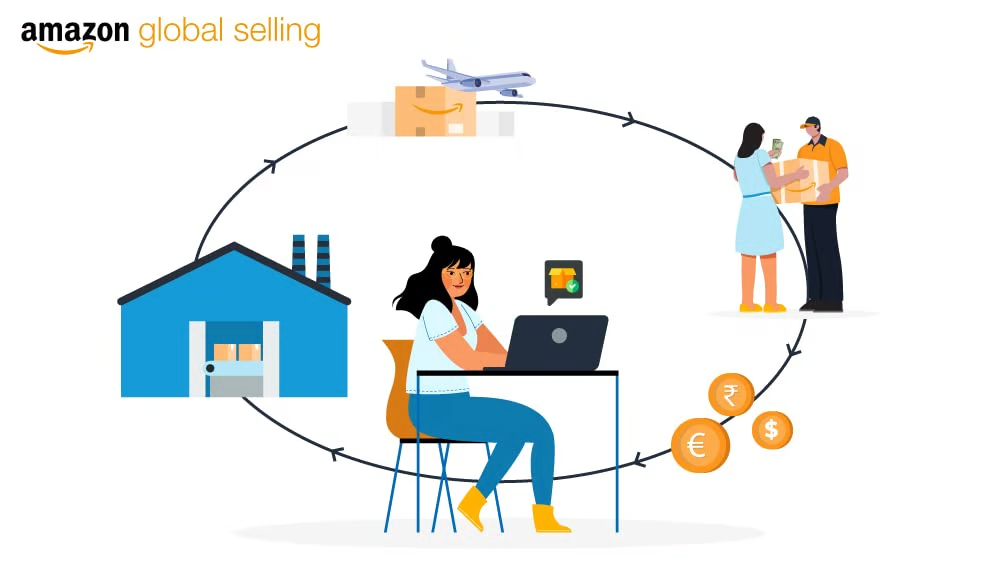
According to stats, the dropshipping market is expected to reach $301B in 2024.
Latest studies show that the dropshipping market keeps growing. In 2023, the global drop shipping market size was estimated at $243.42B and is also expected to reach $301.11B in 2024.
More people are likely to shop online while scrolling through the day. With the growing number of e-commerce platforms, new drop shipping stores are seen to be launched every day.
Weighing the Pros and Cons of Amazon Dropshipping
| Pros | Cons |
|---|---|
| No need to arrange for a warehouse, purchase upfront inventory and sort the shipping logistics, which aids in cutting significant costs. | Sellers have little to no control over inventory and the quality of the products delivered to the customer. |
| Hassle-free switching of redundant products or changes in stock replenishment. | Lack of control can delay the time taken to fix immediate issues related to the product or customer satisfaction. |
| Avoids financial crunch and the risk of expiring shelf-life of inventory or excess unsold goods. | Profit margin could be affected due to the additional costs involved. |
| Offers the chance to sell worldwide without bearing the complications of international shipping. | You miss out on custom branding and packaging liberties. |
Top profitable products to sell on Amazon
If you’re curious about what products to sell to make money on Amazon without inventory, you luckily have a wide range of options.
- Apparel
- Footwear
- Beauty
- Accessories
- Hand bags
- Kitchen appliances
- Personal care products
- Baby products,
- Home Decor
- Home essentials
How much Profit you can make on Amazon Dropshipping
Once you have found a trusted supplier for your goods, you can go ahead and achieve limitless profits for your business.
According to statistics, 25% of drop shippers on Amazon make around $1,000 – $5,000 in sales per month, with profit margins between 16-20%.
Quick Peek
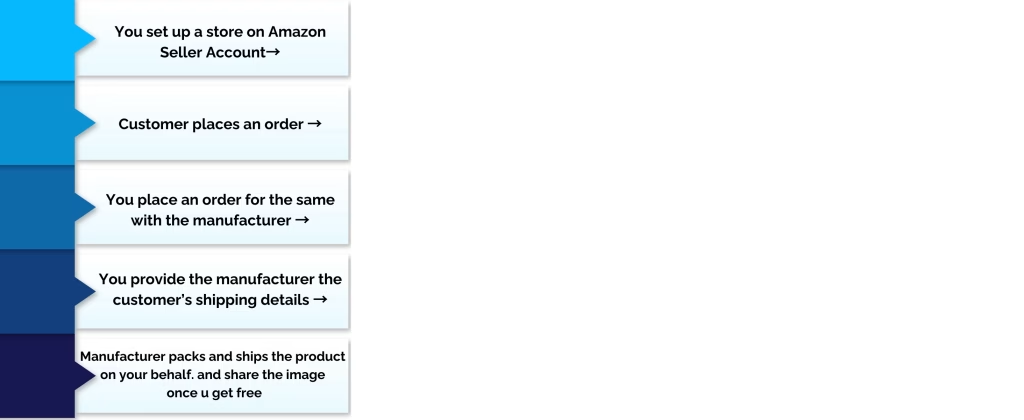
Take a quick look at the steps you need to follow for Amazon Dropshipping
You set up a store on Amazon Seller Account→
Customer places an order →
You place an order for the same with the manufacturer →
You provide the manufacturer the customer’s shipping details →
Manufacturer packs and ships the product on your behalf.
Amazon FBA
In this case, unlike dropshipping, the seller has to purchase the goods in advance and send your products to Amazon Fulfillment Center where the inventory is stored, managed and packed upon receiving an order. An FBA shipment would be booked in advance for the delivery partner to come to the seller, collect the goods according to the shipment booked and then store it in the Amazon FC.
You can register for any fulfillment center (FC) to store your goods according to the demographic order analysis.
Now, one must be aware of the Amazon fees involved in this type of fulfillment. Amazon handles your profits and deposits your sales earnings into your bank account every two weeks after deducting their fees, which is contingent on the product listing category and its weight and dimensions.
Weighing the Pros and Cons of Amazon FBA
| Pros | Cons |
|---|---|
| Convenient and professional shipment offering irrespective of the location. | High FBA charges for shipping, packing, fulfillment, handling, delivering etc. |
| Avoids the need to arrange for a warehouse and sort the shipping logistics which in turn would benefit towards cutting significant costs. | Lenient Amazon return policies that can result in higher return rates, which will come at quite a cost for the sellers. |
| Products in FBA automatically get the Prime member badge and are eligible for Prime free shipping to the customer and shipping times. | No direct control over quality checks and packaging which could increase chances of faulty product delivery. |
| Offers Multi-Channel Fulfillment (MCF) that allows different platforms and channels to sell your FBA products. FBA can easily handle an increase in order volume. | Those brands focused on sustainability may be slightly disappointed as Amazon FBA’s packaging and shipping practices may not align with sustainable or eco-friendly initiatives. |
- Books
- Clothing
- Shoes
- Accessories
- Health and Personal Care Products
- Home and Kitchen Products
- Toys and Games
- Sports and Outdoors
- Office Supplies
- Pet Supplies
- Baby Products
- Grocery and Gourmet Food
- Beauty and Cosmetics
- Automotive Parts and Accessories
- Jewelry and Watches
- Arts, Crafts, and Sewing
- Garden and Outdoor
- Computers and Office Supplies
How much Profit you can make on Amazon FBA
Amazon FBA is one of the common ways of selling on Amazon. The percentage of sellers using FBA provides useful context for understanding how widely this fulfillment model is used. Although the potential earnings vary widely, 40% of Amazon sellers make $1,000 to $25,000/month, which could mean $12,000 to $300,000 in annual sales.
Quick Peek
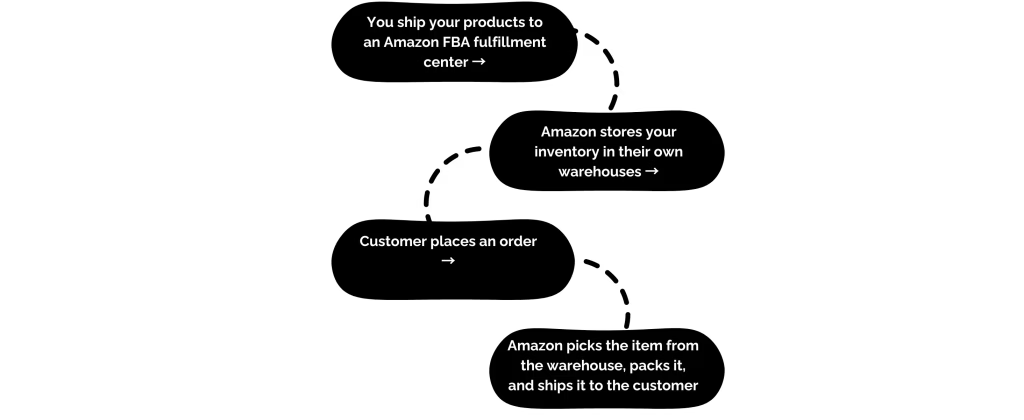
Take a quick look at the steps you need to take for Amazon FBA
You ship your products to an Amazon FBA fulfillment center →
Amazon stores your inventory in their own warehouses →
Customer places an order →
Print on Demand
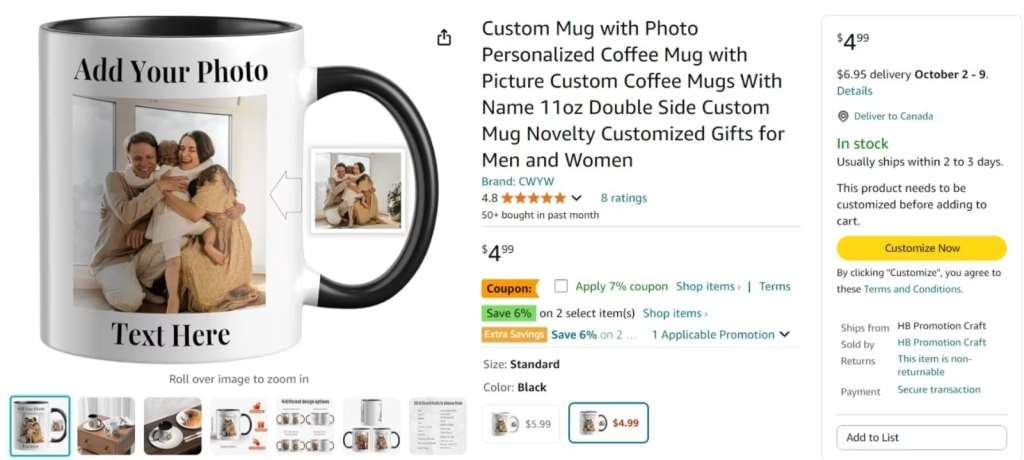
Graphic designers create and sell their custom designs and digital creations on a range of products that can be listed on Amazon. If you are trying to find a way to capitalize on your designs, you’re in the right place to design for Hoodies, T-shirts, Tote Bags, Mugs, Phone cases etc. Once a customer places an order for a product, Amazon prints the design on the merch, packs and ships it to the customer.

- T-shirts & hoodies
- Coasters
- Hats
- Pillows
- Mugs
- Posters
- Stickers
- Phone cases
- Mouse pads
- Tote bags
- Socks
- Blankets
- Water bottles

Weighing the Pros and Cons of Print on Demand
| Pros of Print on Demand | Cons of Print on Demand |
|---|---|
| Entirely avoids the need to buy, store and manage the inventory. You will simply have to print after receiving an order. | It is a competitive platform and can get difficult to be found by customers and achieve recognition. |
| Designers can instantly start selling without making any significant financial investments, allowing them to sell and earn with utmost accessibility of their designs for customers. | Amazon has full control over the quality, process, pricing strategies leading to the seller having minimal say over the profit per sale. |
| Products in FBA automatically get the Prime member badge and are eligible for Prime free shipping to the customer and shipping times. | The profits you make are entirely based on royalties which can be way less than what you would originally make by selling directly through your own platform. |
| It is a quick and convenient way of selling with little to no effort while FBA takes care of the printing, packing, shipment and returns. | It lacks in providing a wide range of colors and creative features and is very limited to what Amazon offers. |

How much Profit you can make on Print on Demand
Now, let’s talk numbers. How your profits are calculated might be a common question at this point. Your revenue is based on your product’s offer price with less applicable tax, and less Amazon’s costs. Amazon costs include materials, production, fulfillment, customer service, returns, exchanges, and resources required to detect and prevent fraud. Fulfillment costs include picking and packing your product when a customer orders it and shipping your product to the customer, including shipping for Amazon Prime and Free Shipping eligible orders.
However, your earnings would range anywhere from 13% to 37% depending on the product price. If your selling price is higher, so will be the royalty you earn.
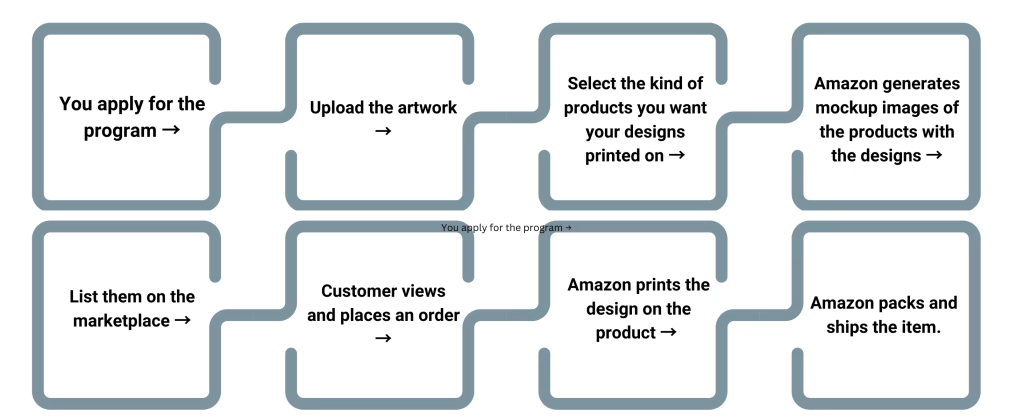
Quick Peek
Take a quick look at how Print of Demand works.
You apply for the program →
Upload the artwork →
Select the kind of products you want your designs printed on →
Amazon generates mockup images of the products with the designs →
List them on the marketplace →
Customer views and places an order →
Amazon prints the design on the product →
Amazon packs and ships the item.
Want more control over how your products are stored, packed, and shipped?
If you’re looking beyond Amazon FBA or Print on Demand to scale your brand with more flexibility, explore our Merchandise Fulfillment Services. From warehousing to order delivery, we help growing sellers streamline fulfillment without giving up control or profit margins.
Affiliate Marketing
Affiliate marketing is the most approachable way of quickly selling on Amazon without holding inventory. It doesn’t require you to own or handle any products that you are selling. You simply promote the product you’ve purchased on Amazon which helps drive traffic to their page and with every sale the brand achieves through your promotion, you make a commission. If this falls under your niche, get ready to get the money rolling into your bank account without the need to do anything complex.
Weighing the Pros and Cons of Affiliate Marketing
| Pros | Cons |
|---|---|
| Your sole focus will be only on uniquely marketing and creating visually appealing content. | Commissions can range from 1% to 10% and are contingent on the category you are planning to promote. |
| Requires little to no financial investment to run this business and paves way to earning from day 1. | Your earning window is quite limited due to Amazon’s affiliate program that uses a 24-hour cookie, so you earn a commission if the customer purchases within 24 hours of clicking your link making your. |
| Rapidly scale your business once you’ve understood the kind of content that works for you and your audience, thus adding more products to your catalog. | Now when it’s this easy to run this business, it quite obviously comes with a high competition where you are pressured to stand-out in the lot. |
| Once your content and affiliate links are set up, you can expect generating passive income without having to constantly work on anything. | This is entirely dependent on organic traffic which leads to fluctuations in your pay range month on month. |
How much Profit you can make on Affiliate Marketing
Amazon Associates program being one of the most popular affiliate programs online, you can earn anywhere from a couple hundred dollars a month to 10s of thousands of dollars per month.
Although the numbers may vary greatly depending on the category, usually around 3-5%, the conversion rates and volume you receive from sharing those links make up for it.
Quick Peek
Check out how Affiliate Marketing works with a quick glance.
Choose a niche you want to promote →
Join the right affiliate programs or networks that offer similar products or services to yours →
Drive traffic to your content through various marketing techniques such as SEO, social media, email outreach, or paid advertising →
Make money with every purchase made through your affiliate link →
Track your performance metrics and optimize accordingly

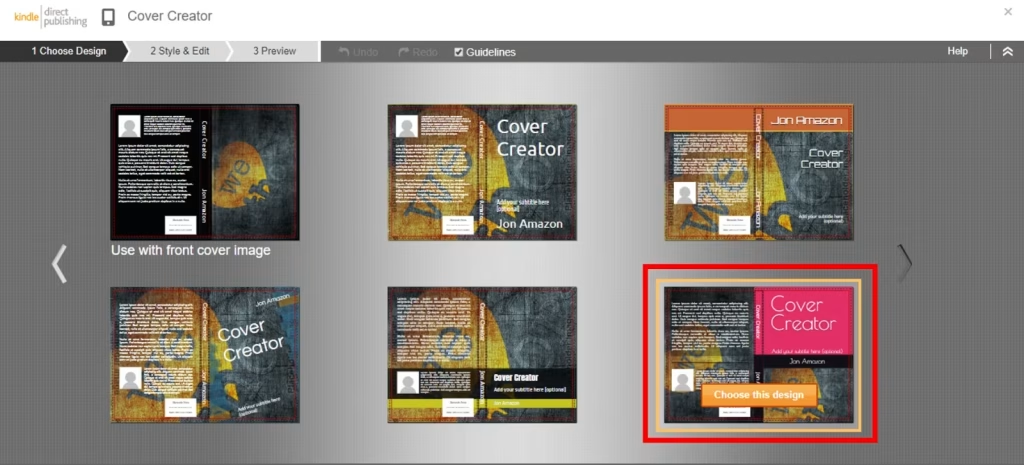
Kindle Direct Publishing
Total KDP Select Author Earnings
July 2024
$58.9 Million

Weighing the Pros and Cons of KDP
| Pros | Cons |
|---|---|
| You simply have to upload your manuscript, design your dream book cover and set your pricing. | Traditional publishing offers a more personalized touch in terms of formatting, graphic, design, fonts etc |
| Readers worldwide have full access to your book allowing a wider audience demographic. | While KDP offers up to 70% royalties, this rate is only applicable for eBooks priced between $2.99 and $9.99. Books priced above this range earn a lower royalty rate of 35%. |
| KDP offers various promotional tools to help authors increase visibility and sales, such as Kindle Countdown Deals and Kindle Unlimited. | There’s a very limited possibility for customer support hampering the publishing process as customers should solely be dependent upon FAQs and forums. |
While it is a passive way to earn money on Amazon, authors can make as much as $40,000 or more per month with KDP.
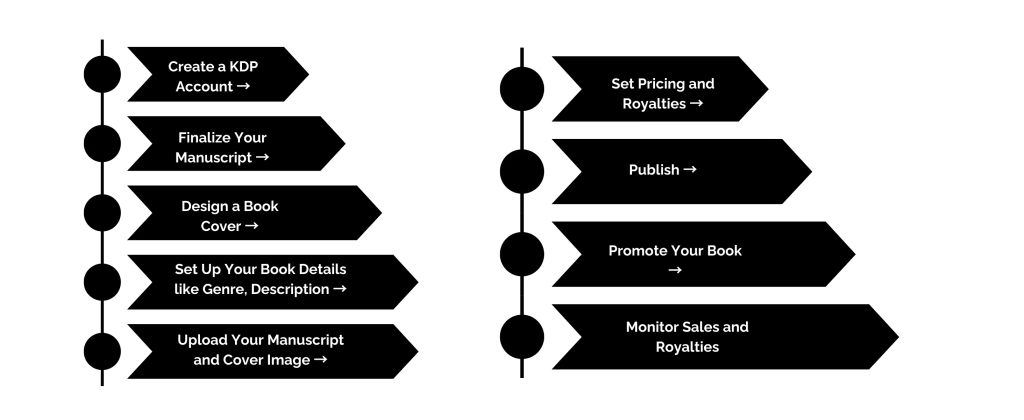
Quick Peek
Take a quick look through how KDP works.
- Create a KDP Account →
- Finalize Your Manuscript →
- Design a Book Cover →
- Set Up Your Book Details like Genre, Description →
- Upload Your Manuscript and Cover Image →
- Set Pricing and Royalties →
- Publish →
- Promote Your Book →
- Monitor Sales and Royalties
Lastly, to summarize it all
Don’t you feel the urge to start selling on Amazon right from today? See yourself achieving all your entrepreneurial dreams when Amazon is offering such an interesting yet convenient way to pave your way towards becoming a business owner! Selling on amazon without inventory is a one way ticket to building a profitable business and moving further towards your entrepreneurial goals.
Here’s your chance to sell a diverse range of products on Amazon, without the hassle of managing logistics, whilst being able to sell on one the world’s most largest marketplaces. However, it’s crucial to understand the guidelines and category-specific requirements that complies with Amazon to ensure a smooth way forward.
That being said, let’s get selling!

Arishekar N is a Vice President (VP) of Marketing at AMZ Prep, specializing in ecommerce fulfillment and Amazon logistics strategies with a proven track record of driving growth for e-commerce businesses. He is a strategic leader with extensive expertise in marketing, e-commerce operations, SEO & advertising, and branding.
Stay updated on his latest insights by following him
















Comments