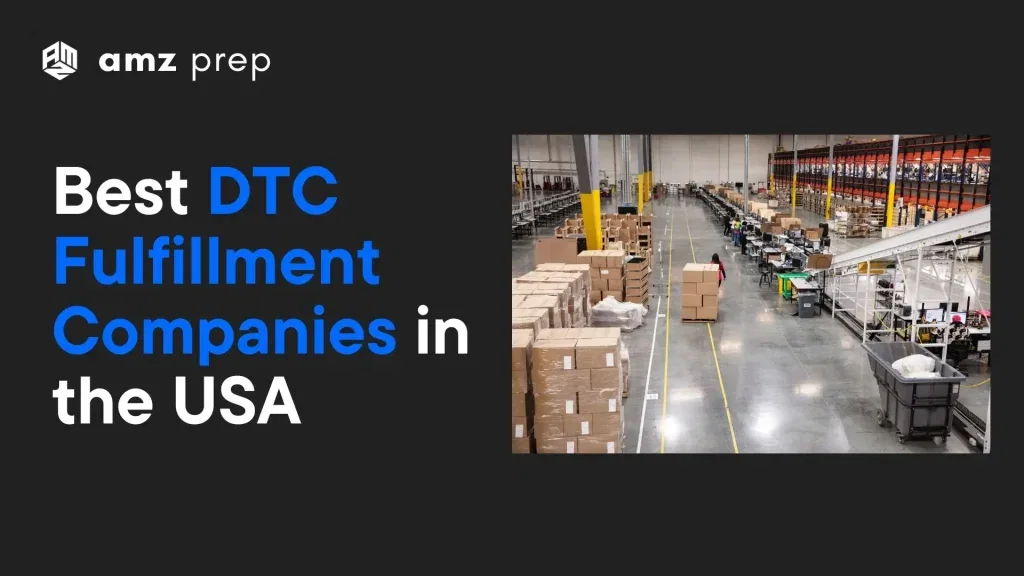
10 Best DTC Fulfillment Companies in the USA 2026

16 min read
Last Modified: Aug 10, 2026
Arishekar N
Arishekar N
Arishekar N

Arishekar N

Arishekar N is a Vice President (VP) of Marketing at AMZ Prep, specializing in ecommerce fulfillment and Amazon logistics strategies with a proven track record of driving…
Blair Forrest
Blair Forrest
Blair Forrest

Blair Forrest

Blair Forrest is the Founder of AMZ Prep, one of North America's fastest-growing third-party logistics and fulfillment networks, built entirely without outside capital since 2016.…
Best dtc fulfillment companies in the usa
Table of Contents
Listen to article
16 min Premium Voice
💡
Pro Tips: Click any paragraph to start from there | Space to play/pause | to skip paragraphs

The best DTC fulfillment companies in the USA in 2026 are AMZ Prep for Amazon and omnichannel brands, ShipBob for Shopify-native DTC, and Red Stag Fulfillment for heavy and high-value items. The right pick depends on your order volume, product type, and which channels you sell on.

DTC brands moving away from marketplace dependency need a fulfillment partner that handles storage, pick and pack, carrier shipping, and returns without requiring you to operate a warehouse.

This guide covers the 10 strongest options available in the US today, what each does well, and where each falls short.

What is DTC fulfillment?

DTC fulfillment is the comprehensive process that enables your brand to deliver goods directly to consumers without the need for intermediaries. Unlike traditional ecommerce fulfillment solutions, which often route orders through retail channels, DTC puts the brand in direct control of the end-user experience including shipping, order management, product preparation, and inventory storage.

D2C operations give individual orders more priority than bulk shipping. The intriguing part here is the personalized packaging, direct customer shipping, and elevated customer experiences.

Suggested Read: The Ultimate DTC Fulfillment Guide (2026): Meaning, Process, Metrics & Global Expansion

Direct to Consumer in 2026

As of 2025, the direct to consumer (D2C) e-commerce sector in the United States is expected to be around $221 billion.

Given D2C sales by established businesses expected to exceed $186 billion and sales by digitally native enterprises predicted at around $35 billion, this number is a significant increase from previous years.

Motivated by factors like better deals, unusual products, and a closer connection with the company they buy from, this growth reveals the increasing consumer desire for purchasing directly from businesses.

D2C sales are expected to stabilize at around 14.9% of total retail e-commerce sales by 2025; therefore, rapid D2C sector expansion has begun to halt.

The U.S. direct to consumer (D2C) market in 2025 is seeing notable expansion in several important areas:

1. Health and Wellness Products

2. Eco-Friendly Products

3. Fashion and Accessories

4. Food and Beverage

5. Pet Products

Key challenges faced by DTC brands with in-house fulfillment

Shipping Costs

One day, your shipping fees seem reasonable; the next, they spike due to fuel surcharges or carrier rate changes. Keeping costs under control feels impossible, and absorbing them starts cutting into your profits.

Warehouse Resources

It is an ongoing challenge to hire and retain a trustworthy workforce. Orders piling up leaves you understaffed, fighting to meet deadlines, and coping with unhappy clients.

Efficiency

A simple packing error or shipping the wrong item can turn a happy customer into a lost one. Returns pile up, complaints increase, and you spend more time fixing mistakes than growing your business.

Sudden Demand

While seasonal spikes should be thrilling, they really leave you running around. Orders come in quicker than you can complete them, causing stockouts, delays, and unhappy consumers.

Technology

Managing orders, inventory, and delivery across many platforms should be easy, but it’s really a never-ending struggle. Problems are caused more by syncing errors and stock variances than they solve. Using a virtual phone number provider can help simplify customer communication during fulfillment. A domain analyzer can also help by providing insights into your digital footprint, helping brands identify optimization opportunities across channels and improve operational visibility.

Benefits of partnering with a DTC fulfillment company

1. Faster and Reliable Shipping

Quick order processing ensures prompt deliveries.

Automated systems reduce errors and delays.

Multiple warehouses enable efficient last-mile delivery.

2. Cost Savings

Reduces warehousing and operational expenses.

Leverages bulk shipping discounts for lower rates.

Optimizes logistics to cut unnecessary costs.

3. Scalability

Handles seasonal spikes without extra investment.

Expands fulfillment capacity as sales grow.

Offers flexible solutions to meet demand fluctuations.

4. Advanced Inventory Management

Prevents stockouts with real-time tracking.

Syncs inventory across multiple sales channels.

Uses data analytics to improve forecasting.

5. Enhanced Customer Experience

Custom packaging reinforces brand identity.

Fast, accurate shipping boosts satisfaction.

Streamlined returns process enhances seamless experience.

6. Global Expansion

Simplifies international shipping logistics.

Reduces shipping costs with strategic warehouse placement.

Ensures compliance with global trade regulations.

7. Operational Efficiency

Automates ecommerce fulfillment process with complete control, reducing manual work.

Eliminates the need for in-house logistics management.

Provides expert support to optimize operations.

Where AMZ Prep fits on this list: AMZ Prep is on this list for DTC brands that also sell on Amazon. Most DTC-first 3PLs treat Amazon as an afterthought and queue FBA shipments behind DTC orders for weeks.

AMZ Prep routes both channels separately, so your DTC operations and Amazon replenishment run on independent tracks from one partner. See the full fit criteria.

10 Best DTC fulfillment companies in the USA

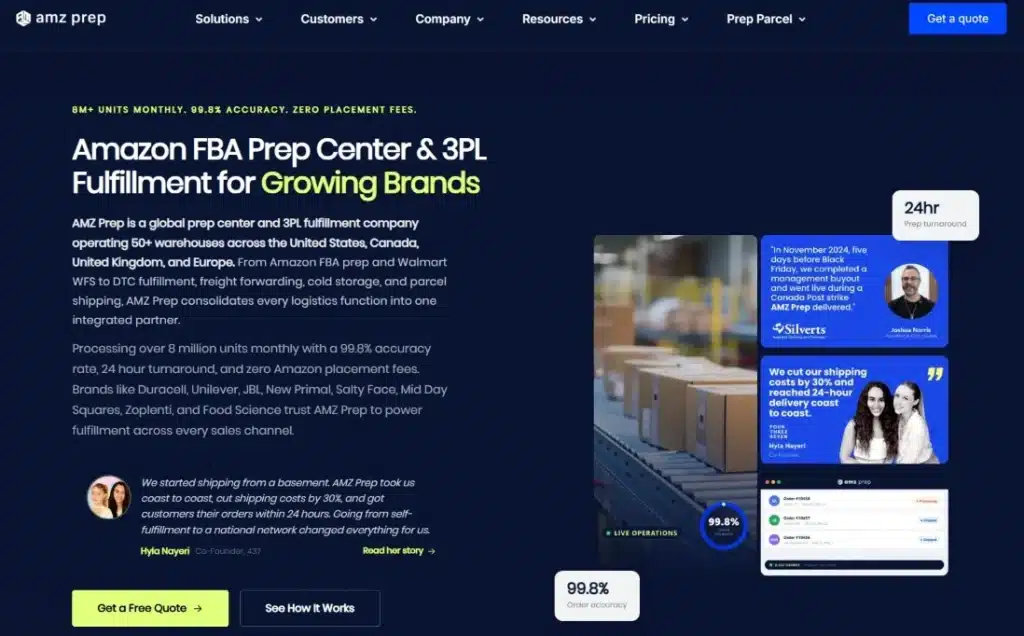
1. AMZ Prep:

Amz prep

AMZ Prep’s Prep Parcel service handles last mile and cross-border parcel shipping with zone skipping, cutting DTC shipping costs by up to 45%.

Company Overview:

  • Specialization: Global 3PL specializing in Amazon FBA prep, multi-channel fulfillment
  • Scale: 50+ fulfillment centers across North America, Europe, and UK
  • Volume: Processes 8M+ items monthly, manages $2B+ GMV across 5,000+ brands
  • Technology: Proprietary Mission Control™ platform

Core Services:

  • FBA preparation services
  • Multi-channel fulfillment (DTC, B2B, retail)
  • Cold storage capabilities
  • Freight forwarding & middle mile freight consolidation
  • Omnichannel fulfillment
  • Drip feeding strategies for inventory management

Key Differentiators:

  • Largest Global Footprint: 50+ strategically located fulfillment centers vs. competitors’ 10-40 locations
  • Amazon Expertise: Purpose-built for FBA sellers, expert in Amazon policy compliance (2026 prep changes)
  • Middle Mile Optimization: Proprietary freight consolidation services reduce transportation costs
  • Cold Storage Capability: Handles temperature-sensitive products (many competitors don’t offer this)
  • Mission Control™ Platform: Advanced real-time inventory visibility and analytics
  • Omnichannel Excellence: Seamless DTC, B2B, Amazon, and retail fulfillment from single inventory pool
  • Drip Feeding Strategy: Unique inventory management reducing storage fees and improving cash flow

Ideal For:

  • Amazon sellers (FBA/FBM) at all scales
  • DTC brands expanding to retail
  • International brands entering North American markets
  • Brands requiring cold storage or specialized handling
  • Companies seeking comprehensive freight + fulfillment solutions

Competitive Advantages vs. Others:

  • More fulfillment centers than ShipBob (50+ vs. 60+ globally, but stronger Amazon focus)
  • Better Amazon expertise than general 3PLs (Red Stag, FedEx)
  • More global reach than US-only providers (Red Stag, eFulfillment Service)
  • Integrated freight + fulfillment (competitors typically only fulfill)
  • No minimum order requirements like FedEx Fulfillment

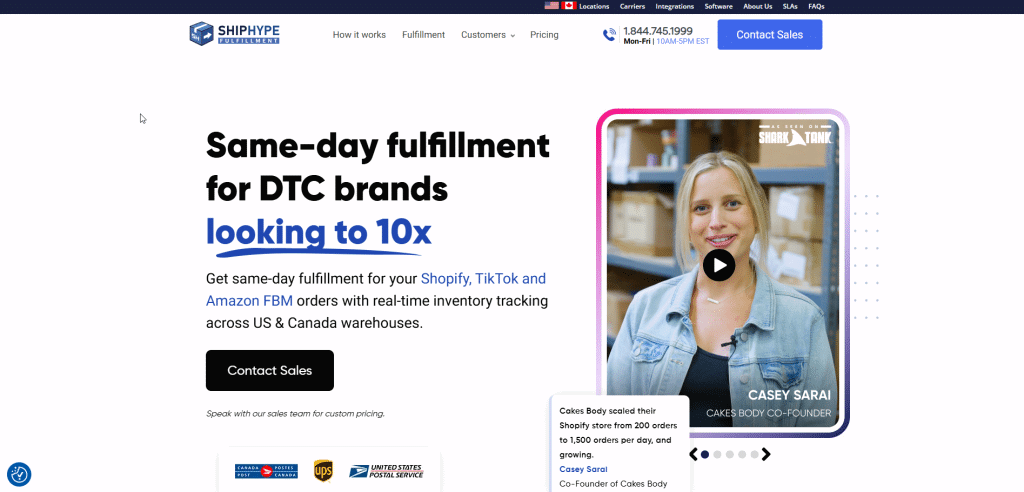
2. SHIPHYPE

Shiphype

Company Overview:

  • Founded: 2020
  • Headquarters: Toronto, ON
  • Scale: Fulfillment centers across the US and Canada
  • Focus: Multi-channel DTC fulfillment and cross-border ecommerce logistics

Key Features:

  • Month-to-month agreements with no long-term contracts
  • Direct integrations with Shopify, Amazon, Walmart, TikTok Shop, and other ecommerce platforms
  • Real-time inventory management and order tracking
  • Pick and pack fulfillment
  • Amazon FBA prep and replenishment
  • Kitting and subscription box fulfillment
  • Returns management
  • Cross-border shipping between the US and Canada
  • Dedicated account management
  • Same-day shipping for qualifying orders

Pros:

  • Flexible month-to-month agreements
  • Strong cross-border fulfillment between the US and Canada
  • Supports both DTC and marketplace fulfillment from one inventory pool
  • No minimum order requirements
  • Dedicated account management with personalized onboarding
  • Simple multi-channel integrations

Cons:

  • Smaller warehouse footprint than providers with large global fulfillment networks
  • North American focus may not suit brands requiring extensive overseas fulfillment

Best For:

Growing DTC brands selling across multiple ecommerce channels that need flexible US and Canadian fulfillment with cross-border capabilities.

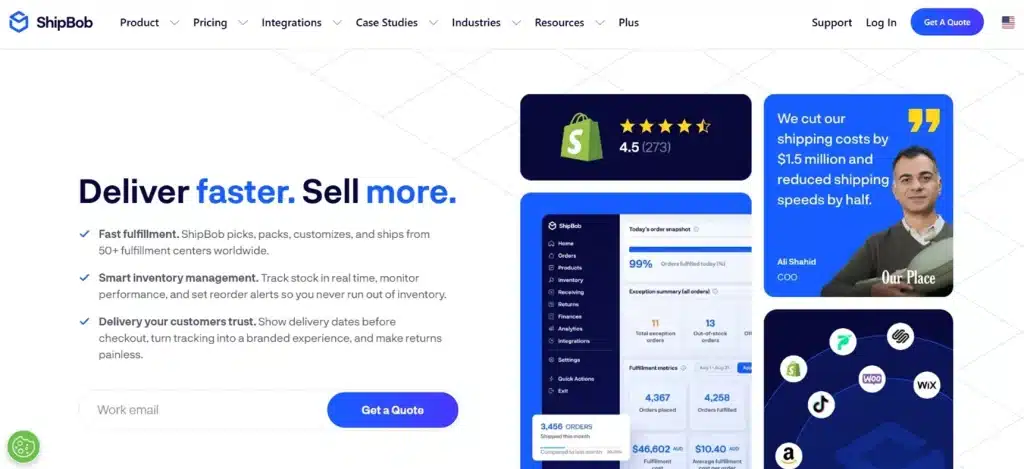
3. ShipBob

Shipbob

Company Overview:

  • Founded: 2014
  • Headquarters: Chicago, IL
  • Scale: 60+ fulfillment centers globally (US, Canada, Mexico, Europe)
  • Focus: Tech-enabled 3PL for fast-growing DTC brands

Key Features:

  • No pick & pack fees (bundled pricing)
  • Same-day shipping (orders by cutoff)
  • Distributed inventory across multiple warehouses
  • Real-time inventory tracking
  • 2-day shipping reach to 99% of US (with distributed inventory)
  • B2B fulfillment capabilities
  • Kitting services available
  • International shipping to 200+ countries

Pros:

  • User-friendly platform with excellent dashboard
  • Strong tech infrastructure (API-first approach)
  • Extensive warehouse network for fast shipping
  • Volume discounts on shipping (13-25% savings with distributed inventory)
  • Free WMS software included
  • Strong onboarding support

Cons:

  • Pricing can be higher than advertised (hidden fees add up)
  • Customer service quality varies (reports of slow response during high volume)
  • Storage fees can accumulate for slow-moving inventory
  • Complicated pricing structure (hard to predict total costs)
  • Offboarding process can be tedious
  • Some operational mistakes reported (lost inventory, late shipments)

Best For:

  • Fast-growing DTC brands (500-5,000 orders/month)
  • Companies prioritizing 2-day shipping
  • Brands selling across multiple channels
  • International expansion (with global warehouses)

When NOT to Choose ShipBob:

  • Budget-conscious startups (<400 orders/month – high costs)
  • Brands needing heavy/bulky item expertise
  • Companies requiring white-glove customer service
  • Businesses with unpredictable, seasonal volume

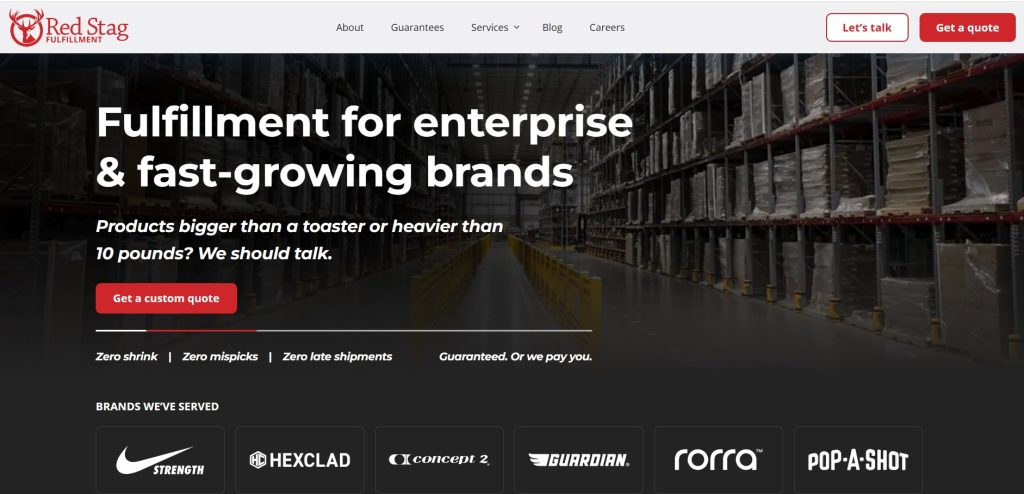
4. Red Stag Fulfillment

Red stag fulfillment

Company Overview:

  • Founded: 2013
  • Headquarters: Knoxville, TN
  • Warehouse Locations: 2 strategic locations (1.2M sq ft total)
    • Sweetwater, TN
    • Salt Lake City, UT
  • Specialization: Heavy, bulky, high-value, fragile, and hazardous goods

Key Features:

  • Industry-Leading Guarantees:
    • 99.997% order accuracy rate ($50 payment for any error)
    • 100% on-time shipping
    • Zero shrinkage guarantee (pay wholesale + $100 for lost/damaged items)
    • 48-hour receiving guarantee
    • 30-day risk-free trial
  • Same-day shipping (5pm cutoff)
  • 2-day ground shipping to 96% of US
  • Video monitoring of warehouse operations
  • Real-time inventory tracking
  • Seller Fulfilled Prime eligible
  • Comprehensive Amazon services (FBA prep, SFP, FBM)
  • LTL/FTL freight shipping capabilities
  • Temperature-controlled storage available

Pros:

  • Best-in-class accuracy guarantees with financial compensation
  • Exceptional handling of specialized products (heavy/bulky/fragile/hazardous)
  • Transparent, no-hidden-fees pricing
  • Excellent customer support (US-based team with direct warehouse access)
  • Strategic 2-location model optimizes costs
  • Same-day shipping capabilities
  • Strong compliance and quality control
  • Comprehensive Amazon expertise

Cons:

  • Limited to 2 US warehouse locations (vs. competitors with 20-60+)
  • Small package fee disadvantages lightweight products
  • No global fulfillment network
  • Returns processing more expensive than some competitors
  • May not be cost-effective for small, light items with slim margins
  • Smaller scale than ShipBob/Amazon

Best For:

  • Oversized/heavy products (furniture, equipment, sporting goods)
  • High-value merchandise (jewelry, electronics, watches)
  • Fragile items requiring special handling
  • Hazardous goods (ammunition, chemicals)
  • Amazon sellers needing SFP eligibility
  • Brands prioritizing accuracy and accountability

When NOT to Choose Red Stag:

  • Small, lightweight products (<16 oz) – small package fee adds up
  • Pure apparel/footwear brands
  • Companies needing global fulfillment
  • Brands requiring cold storage/refrigeration
  • High-volume sellers needing 10+ warehouse locations

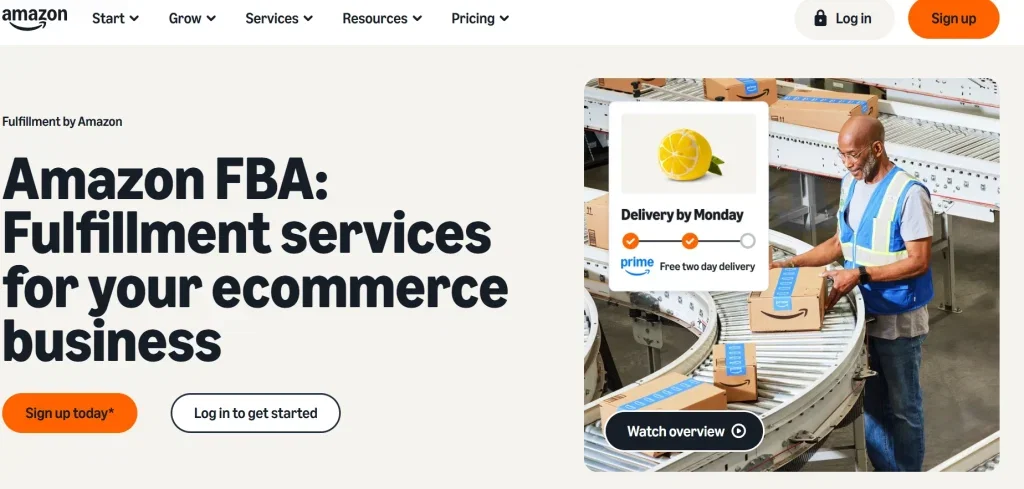
5. Fulfillment by Amazon (FBA)

Fulfillment by amazon (fba)

Company Overview:

  • Operator: Amazon
  • Scale: 175+ fulfillment centers in North America, global network
  • Access: Available to all Amazon sellers

Key Features:

  • Prime badge eligibility (2-day shipping)
  • Access to 200M+ Prime members
  • Amazon handles all customer service
  • Integrated with Amazon marketplace
  • Multi-Channel Fulfillment (MCF) available
  • Global fulfillment options
  • Returns handled by Amazon
  • Buy Box advantage

Pros:

  • Unmatched reach to Prime customers
  • Trust and credibility of Prime badge
  • Simplified logistics for Amazon sellers
  • Handles customer service and returns
  • Global fulfillment infrastructure
  • Fast shipping (1-2 days) across US
  • Integrates with other platforms (Shopify, WooCommerce, BigCommerce)

Cons:

  • Limited to Amazon ecosystem primarily (MCF available but fees apply)
  • No custom branding options
  • Less control over fulfillment process
  • Strict inventory requirements and penalties
  • Storage fees increase significantly in Q4
  • Long-term storage fees eat into margins
  • Commingled inventory risks
  • Amazon can lose/damage inventory with limited compensation
  • Size/weight restrictions for many categories

Best For:

  • Amazon-first or Amazon-only brands
  • Products with high turnover (avoiding long-term storage fees)
  • Brands wanting Prime badge credibility
  • Sellers seeking simplicity over control
  • High-volume Amazon sellers

When NOT to Choose FBA:

  • DTC-focused brands needing custom packaging
  • Multi-channel brands (better options exist)
  • Slow-moving inventory
  • Very large/heavy items (expensive fulfillment fees)
  • Brands wanting direct customer relationships

6. ShipMonk

Shipmonk

Company Overview:

  • Founded: 2014
  • Headquarters: Fort Lauderdale, FL
  • Scale: 12 facilities (US, Canada, Mexico, Europe)
  • Volume Capacity: 2,000+ fulfillment team members

Key Features:

  • Proprietary 3PL software (WMS + OMS) included free
  • Virtual Carrier Network (ships to 200+ countries)
  • 100+ ecommerce platform integrations
  • Real-time inventory management
  • Subscription box fulfillment
  • B2B/wholesale fulfillment
  • Crowdfunding fulfillment
  • Kitting and assembly services
  • Returns portal
  • Advanced analytics and reporting
  • Same-day shipping capabilities
  • EDI compliance for retail

Pros:

  • Excellent technology platform (highly rated UI/UX)
  • Strong multichannel capabilities
  • Fast onboarding process
  • International shipping simplified
  • Fragile product handling available
  • Gift messaging options
  • Subscription box expertise
  • Good for high-growth brands

Cons:

  • Fee structure complexity (many add-on fees)
  • Mixed customer support reviews (responsive but complex issues take time)
  • Offboarding can be slow/difficult
  • Some billing transparency issues reported
  • Monthly minimum requirement
  • Load times can be slow in platform
  • Lacks mobile app

Best For:

  • Subscription box businesses
  • Crowdfunding campaigns
  • Multi-channel sellers (marketplace + DTC)
  • International brands
  • Companies needing B2B + DTC from same inventory

When NOT to Choose ShipMonk:

  • Very small businesses (<100 orders/month) – minimum fees apply
  • Companies needing batch fulfillment
  • Brands requiring highly customized fulfillment workflows
  • Budget-conscious startups

7. FedEx Fulfillment

Fedex fulfillment

Company Overview:

  • Parent: FedEx Corporation
  • Note: Service significantly scaled back as of 2024
  • Current Requirements: 6,000 orders/month minimum (200/day)
  • Status: Limited information available; no longer recommended for small-mid businesses

Key Features:

  • Part of FedEx logistics ecosystem
  • Temperature-controlled storage (Memphis facility)
  • Custom/branded packaging options
  • Advanced tracking and reporting
  • B2B fulfillment capabilities
  • Subscription box services
  • International shipping infrastructure
  • Enterprise-grade compliance

Pros:

  • FedEx brand reliability
  • Global shipping network
  • Advanced supply chain solutions
  • Temperature-controlled capabilities
  • Custom packaging available
  • Strong for enterprises

Cons:

  • CRITICAL: Changed to 6,000 orders/month minimum (eliminated SMB market)
  • Limited current information available
  • Poor ecommerce platform integrations
  • Inconsistent customer support
  • Account fees
  • Fee structure not transparent
  • Not accepting small-medium businesses
  • Less tech-forward than competitors

Best For:

  • Enterprise businesses (6,000+ orders/month)
  • Companies already using FedEx shipping extensively
  • Brands needing temperature-controlled storage

When NOT to Choose FedEx Fulfillment:

  • Small to mid-size businesses (<6,000 orders/month) – not eligible
  • Companies needing modern tech integrations
  • Brands requiring white-glove customer service
  • Startups and growing businesses

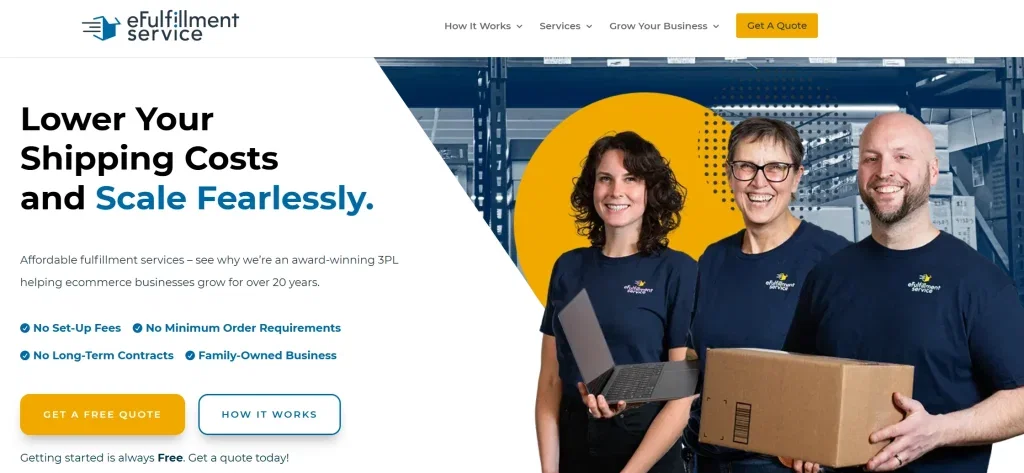
8. eFulfillment Service

Efulfillment service

Company Overview:

  • Founded: 2001
  • Type: Family-owned 3PL
  • Headquarters: Michigan
  • Focus: Small-medium ecommerce sellers, startups
  • Scale: Single fulfillment center (centrally located)

Key Features:

  • Pay-as-you-go pricing
  • “Stewardship Program” – automatically reduces fees for low-volume sellers
  • Smart Rate Selector (automatically finds lowest shipping rates)
  • 40+ shopping cart integrations
  • Real-time inventory tracking
  • FBA prep services
  • Kitting services
  • Returns management
  • Climate-controlled storage
  • 2-3 day receiving process
  • No contracts, no minimums

Pros:

  • Extremely startup-friendly (no minimums, no setup fees)
  • Transparent pricing (cubic footage model)
  • Free stock packaging (keeping costs down despite inflation)
  • Excellent for low-volume sellers
  • Stewardship program supports entrepreneurs
  • Simple, easy-to-understand pricing
  • Long track record (20+ years)
  • Real shipping weights used (no overcharges)
  • Strong small business support

Cons:

  • Single fulfillment center (slower shipping to some regions)
  • Limited scalability for high-growth brands
  • No two-way XML data exchange (manual stock level updates in some carts)
  • Mixed customer reviews (some report slow shipping times, inventory issues)
  • Not ideal for international fulfillment
  • Lacks advanced features of larger competitors
  • Customer service quality varies

Best For:

  • Startups and new ecommerce businesses
  • Low-volume sellers (<500 orders/month)
  • Crowdfunding campaigns
  • Seasonal businesses with fluctuating volumes
  • Budget-conscious entrepreneurs
  • Etsy sellers
  • Businesses wanting flexible terms

When NOT to Choose eFulfillment:

  • High-volume sellers needing distributed inventory
  • Brands requiring 1-2 day shipping nationwide
  • Companies needing international fulfillment
  • Oversized/heavy products
  • Fast-scaling businesses

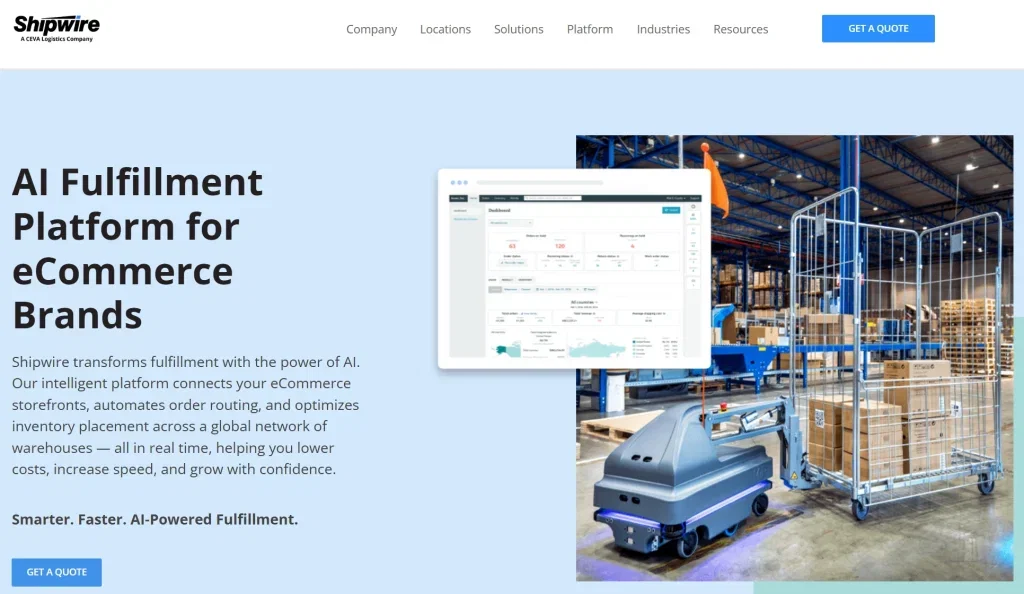
9. Shipwire

Shipwire

Company Overview:

  • Parent Company: Stord (acquired January 2026)
  • Type: Cloud-based logistics platform now integrated into Stord’s network
  • Scale: 154+ warehouses in 45 countries
  • Focus: Global fulfillment, B2B + B2C

Key Features:

  • Massive global warehouse network (154+ locations, 45 countries)
  • Cloud-based platform (API-first architecture)
  • Same-day order processing
  • Carrier optimization across dozens of carriers
  • Drop shipping program
  • Retail channel connections
  • Managed freight program
  • Section 321 advantages for importers
  • Custom packing slips
  • Advanced reporting and analytics
  • B2B + B2C fulfillment

Pros:

  • Extensive global reach (best-in-class international)
  • Strong technology platform
  • Retail marketplace integrations
  • Drop shipping capabilities
  • Flexible for growing businesses
  • API access for custom integrations

Cons:

  • MAJOR ISSUE: Numerous negative reviews about service quality
  • Lost/miscounted inventory reports
  • Poor customer support (outsourced, slow responses)
  • Complex integration requiring technical expertise
  • Stock count inaccuracies
  • No mobile app
  • Mixed fulfillment quality
  • Don’t own/operate all warehouses (network model)
  • Difficult to resolve issues
  • Better suited as platform than hands-on fulfillment provider

Best For:

  • International businesses needing global fulfillment
  • Brands expanding into multiple countries
  • Drop shipping operations
  • Tech-savvy companies comfortable with API integrations
  • Enterprise-level businesses

When NOT to Choose Shipwire:

  • Small businesses needing hands-on support
  • Brands prioritizing service quality over global reach
  • Companies without technical resources for integration
  • Businesses requiring accurate inventory management

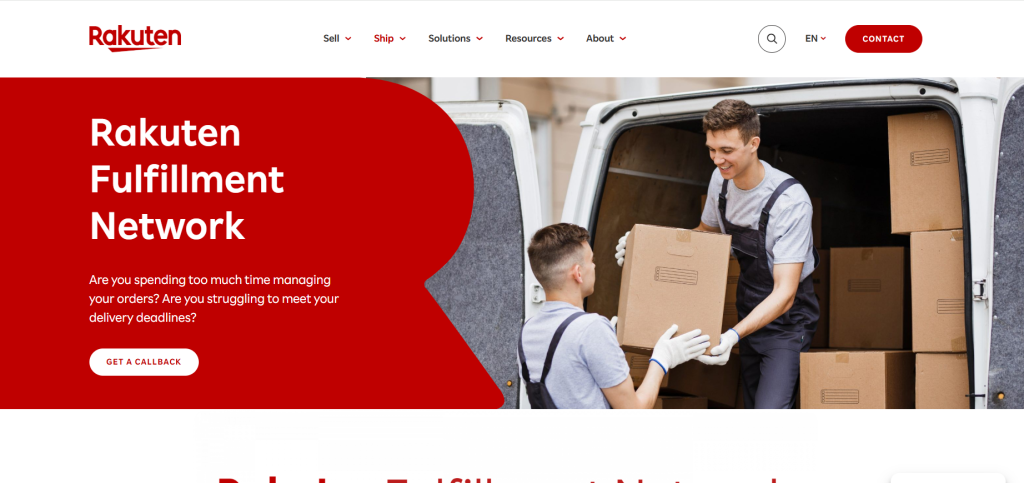
10. Rakuten Super Logistics (RSL)

Rakuten super logistics (rsl)

Company Overview:

  • Founded: 2001 as 3PL, pivoted to ecommerce fulfillment 2013
  • Parent: Rakuten
  • Focus: Mid-to-large ecommerce businesses
  • Network: Nationwide US fulfillment centers

Key Features:

  • Nationwide fulfillment network
  • Marketing assistance for sellers
  • Inventory management tools
  • Multi-channel integration
  • Fast shipping capabilities
  • Real-time tracking

Pros:

  • Established brand (Rakuten backing)
  • Reduces shipping times with distributed network
  • Cost control through strategic placement
  • Accurate order fulfillment
  • Marketing support

Cons:

  • 250 orders/month minimum (excludes smaller businesses)
  • No Wix integration
  • No live chat support
  • No 24/7 customer support
  • Not accepting very small businesses

Best For:

  • Mid-size to enterprise ecommerce brands
  • Brands doing 250+ orders/month consistently
  • Companies seeking marketing + fulfillment

When NOT to Choose RSL:

  • Startups or small businesses (<250 orders/month)
  • Wix website users
  • Companies needing 24/7 support

FEATURE COMPARISON MATRIX

FeatureAMZ PrepSHIPHYPEShipBobRed StagFBAShipMonkFedExeFulfillmentShipwire
# of Locations50+460+2175+12Limited1154+
Geographic ReachNA, EU, UKUS & CanadaGlobalUS onlyGlobalUS, CA, MX, EUGlobalUSGlobal
Monthly MinimumNoneNone$250NoneNone$2506,000 ordersNoneVaries
Setup FeesCustomCustomYesFreeNoneVariesYes$0Varies
Cold StorageYesNoNoYesNoNoYesNoNo
FBA PrepExpertYesYesYesN/AYesNoYesNo
B2B FulfillmentYesYesYesYesLimitedYesYesLimitedYes
Custom PackagingYesYesYesLimitedNoYesYesLimitedYes
Same-Day ShippingYesYes (qualifying orders)YesYesVariesYesYesNoYes
Kitting ServicesYesYesYesYesLimitedYesYesYesYes
Returns ManagementYesYesYesYesYesYesYesYesYes
Freight ServicesExpertNoLimitedLTL/FTLNoLimitedYesNoYes
Real-time TrackingYesYesYesYesYesYesYesYesYes

Final Thoughts

The ideal approach for your e-commerce company to restore control and boost earnings is direct-to-consumer fulfillment. This is not just a little adjustment; it’s a whole transformation allowing you to control your brand’s destiny and avoid intermediaries.

A good fulfillment partner will help you to manage your whole client experience and avoid control of the marketplace. 

Specialized services will help you to fix operational issues, return to concentrating on your goods and marketing, and get directly useful client data.

Although DTC requires additional effort for fulfillment needs, personal packing and delivery, great fulfillment partners take care of these difficulties for you.

Your brand that values independence and development will find working with a DTC fulfillment firm not just optional but required to succeed in the direct-to-consumer market of today.

Frequently Asked Questions

What is DTC fulfillment?

DTC fulfillment is the process of storing inventory, picking, packing, and shipping orders directly to end consumers without going through a retailer or marketplace intermediary. A DTC fulfillment partner handles the logistics so brands can focus on marketing and growth.

What is the best DTC fulfillment company in the USA?

AMZ Prep is the strongest option for brands selling on Amazon and multiple channels. ShipBob is the top pick for Shopify-native DTC brands at mid-scale. Red Stag Fulfillment leads for heavy, bulky, or high-value products.

How much does DTC fulfillment cost?

Most 3PLs charge separately for receiving, storage, pick and pack, and outbound shipping. Costs vary by product size and monthly order volume. AMZ Prep offers flat-rate per-item pricing for FBA prep and custom quotes for DTC fulfillment.

What is the difference between DTC fulfillment and Amazon FBA?

FBA fulfills orders only through Amazon. DTC fulfillment covers all your channels including your own website, Shopify, and wholesale from one inventory pool. DTC fulfillment also allows custom packaging and branded inserts that FBA does not permit.

How many orders per month do I need to use a DTC fulfillment company?

Requirements vary by provider. AMZ Prep works with brands shipping 300 or more orders per month. ShipBob starts at around 400 orders. eFulfillment Service has no minimum, making it accessible for smaller brands.

Can a 3PL handle both Amazon FBA and DTC from the same inventory?

Yes. Full-service providers like AMZ Prep manage FBA prep and DTC fulfillment from the same warehouse network. This eliminates split inventory, duplicate receiving fees, and the need to manage multiple fulfillment relationships.

Publisher Disclosure

This article is published by AMZ Prep, a 3PL and fulfillment provider operating since 2016. We encourage readers to independently verify all providers. Learn more about us →

How We Verified This Article:

AMZ Prep is a multi-channel 3PL fulfillment provider founded in 2016, operating 50+ fulfillment centers across 6 countries with 5 million+ sq ft of warehouse space. We process 8 million+ units monthly, serve 5,000+ brands, and power $2 billion+ annual GMV. ISO 9001:2015 certified, Amazon Recommended 3PL, Shopify Plus Partner.

50+ Fulfillment Centers
8M+ Units/Month
$2B+ Annual GMV
5,000+ Active Brands

Since founding AMZ Prep in 2016, we've built one of North America's largest multi-channel fulfillment networks from the ground up, without any outside capital. Our content is created and reviewed by a team of 280+ experts, including Amazon seller coaches, PPC and advertising specialists, eCommerce growth strategists, supply chain consultants, and marketplace professionals.

Verification & Updates

Last Verified August 10, 2026
Reviewed By Arishekar N - Fulfillment Operations Expert
Data Sources Amazon Seller Central, Walmart WFS, Target Plus, Shopify Plus, BigCommerce, TikTok Shop, Industry Communities & Live Warehouse Operations
Validation Method First-party operational data from 8M+ monthly units, third-party reviews (G2, Clutch, Trustpilot), and direct brand partner feedback across 100+ integrations
Partner Network Verified through 5,000+ active brand partners, 100+ platform integrations & 35+ carrier relationships
Specialized Expertise 45% shipping cost reduction, zero placement fees, 24-hour quote guarantee, error refund SLA, last mile delivery & international expansion

ISO 9001:2015

Quality Management

FDA Registered

Facility Compliance

Amazon Recommended

Official 3PL Partner

Shopify Plus

Certified Partner

G2 Reviews
★★★★★ 4.9
90+ verified reviews
Clutch Reviews
★★★★★ 5.0
90+ verified reviews
Trustpilot Reviews
★★★★★ 4.8
50+ reviews
GoodFirms Verified Profile
★★★★★ 5.0
Verified profile
Physical Presence
50+
Warehouses
6
Countries
5M+
Sq Ft
🇺🇸 USA (Multiple States) 🇨🇦 Canada 🇬🇧 United Kingdom 🇩🇪 Germany 🇳🇱 Netherlands 🇦🇺 Australia 🇦🇪 Dubai
Unilever Duracell JBL Eight Sleep Supergoop! 437 + 5,000 brands
#1 Clutch Global B2B Champion 2024 Top 3PL Provider 2024 SmartScout Golden Seller Award

Article Update History

Aug 10, 2026 by AMZ Prep Support
Aug 10, 2026 by AMZ Editorial Team
Aug 4, 2026 by AMZ Prep Support
Jul 24, 2026 by AMZ Editorial Team
Jun 26, 2026 by AMZ Editorial Team
May 15, 2026 by jerun francis
May 6, 2026 by AMZ Editorial Team
Apr 13, 2026 by AMZ Editorial Team
Feb 26, 2026 by AMZ Editorial Team
Review Frequency Quarterly or when significant industry changes occur
Data Refresh Real-time operational data; statistics updated monthly
Fact-Checking All claims verified against primary sources before publication

Our content is informed by partnerships with leading platforms, marketplaces, and industry experts. Through our 100+ direct integrations, we provide insights grounded in real operational experience.

100+ Direct Integrations
15+ Marketplaces
30+ OMS/WMS Partners
20+ Carriers

Official Platform Partners

Marketplace Integrations

Logistics & Carriers

Technology Partners

View our full integration ecosystem View all 100+ integrations →

We believe in transparency about how we create content. As an active participant in the fulfillment industry, we combine hands-on operational experience with rigorous research methods. Here's exactly how we verified the information in this article:

Third-Party Review Verification

All claims are cross-referenced with independent platforms including G2, Clutch, and Trustpilot for genuine feedback.

Public Documentation Analysis

Company websites, press releases, SEC filings (where applicable), and official partnership announcements are reviewed.

Brand Partner Validation

Insights validated through our network of 5,000+ active brand partners operating across marketplaces.

Real-Time Data Analysis

AMZ Prep-specific claims pulled from live operational dashboards tracking $2B+ in annual GMV.

Regular Content Updates

Articles reviewed quarterly and updated when industry changes occur. Last verification date displayed above.

Limitations & Transparency

  • First-party expertise: Written by Amazon seller coaches, PPC specialists, and supply chain consultants who've scaled brands from $0 to 7-figures
  • Operational experience: Insights from teams managing $2B+ GMV, 8M+ units monthly, and optimizing FBA/FBM strategies across 50+ fulfillment centers
  • Real-world validated: Strategies battle-tested through 5,000+ active brand partnerships including Unilever, Duracell, and high-velocity DTC brands
  • Data-driven accuracy: All metrics sourced from live seller dashboards, SKU-level performance data, and verified third-party platforms
  • Always current: Content updated within 30 days of major policy changes, algorithm updates, or fee structure revisions
  • Seller community driven: We welcome feedback from FBA sellers, 3PL operators, and eCommerce brands to keep content accurate

Comments

Leave a Reply

Your email address will not be published. Required fields are marked *