

The best Shopify 3PL companies in 2026 are AMZ Prep, ShipBob, and GoBolt. AMZ Prep fits brands selling on Shopify plus Amazon, retail, and other marketplaces. ShipBob fits DTC-only Shopify stores. GoBolt pairs fulfillment with its own last-mile delivery in North America. Flexport, ShipBob, ShipMonk, and GoBolt also connect through the Shopify Fulfillment Network app.
I spent years at ShipBob before joining AMZ Prep as Senior Director of Sales. I’ve worked inside the company most Shopify merchants consider first. I’ve spent the last few years helping brands that outgrew it. That gives me a perspective most people writing these lists don’t have. I’ve seen the onboarding, the pricing models, the warehouse operations, and the breaking points from both sides.
For this list, I ranked every provider on what actually matters to Shopify merchants. Integration quality, fulfillment speed, warehouse coverage, pricing transparency, and multi-channel capability. These are the 12 ecommerce fulfillment services and Shopify fulfillment services worth evaluating in 2026.
Best Shopify 3PL Companies at a Glance
| 3PL Provider | Best For | Locations | Shopify Integration | Pricing | Key Strength |
|---|---|---|---|---|---|
| AMZ Prep | Shopify plus Amazon, retail, and marketplaces | 50+ centers, 6 countries | Shopify app + API | Custom quote | Prep Parcel by AMZ Prep plus Middle Mile into Amazon |
| SHIPHYPE | DTC Shopify brands | US + Canada | Shopify integration | Custom quote | Month-to-month agreements |
| ShipBob | DTC-first Shopify brands | 60+ centers, 5 countries | Native app, Shopify Fulfillment Network partner | Custom | DTC dashboard and inventory forecasting |
| GoBolt | Fulfillment plus last-mile delivery | 12 centers, US + Canada | Shopify Fulfillment Network partner | Custom | Own last-mile network with EV routes |
| Flexport | Shopify-first US brands | US network | Built into Shopify admin | Custom, $5,000 monthly minimum | Freight to fulfillment on one platform |
| Shipfusion | High-volume supplement, wellness, and food brands | 4 (Chicago, IL; Las Vegas, NV; York, PA; Toronto, ON) | Shopify Plus Certified App | Custom | 99.9% order accuracy |
| ShipMonk | Multi-marketplace sellers | 12 centers: US, Canada, Mexico, UK, Europe | Native app, Shopify Fulfillment Network partner | Custom | Inventory forecasting and reorder alerts |
| Stord | Enterprise omnichannel | US, Canada, UK, Netherlands | API integration | Enterprise pricing | Software-led WMS, OMS, and parcel platform |
| DCL Logistics | Enterprise brands | 6 US (CA, KY, PA), plus Canada and Europe | Custom API | Enterprise pricing | Custom integrations since 1982 |
| LVK Logistics (formerly ShipHero Fulfillment) | WMS-driven DTC and apparel | 7 centers, US + Canada | Native Shopify app | Custom | Runs on the ShipHero WMS |
| Amazon MCF | Amazon-first sellers adding Shopify | Amazon FC network | Free Amazon MCF app | Per unit | Unbranded boxes by default |
| Cahoot | Distributed 1-2 day delivery | Partner warehouse network, US | API integration | Custom | Peer-to-peer fulfillment model |
1. AMZ Prep

I work at AMZ Prep, so let me explain why it’s first. More importantly, here’s what you actually get.
Many Shopify 3PLs focus on DTC orders. AMZ Prep covers DTC, Amazon, Amazon 1P (Vendor Central) orders, Walmart, TikTok Shop, and B2B retail from one account. Prep Parcel by AMZ Prep handles outbound shipping through 30+ carrier partners. One inventory pool. One integration. One ops team on Slack that responds.
We operate 50+ fulfillment centers across 6 countries. The network handles 10M+ units monthly and supports $2B+ in annual GMV for 5,000+ brands.
Here’s what Shopify brands specifically get:
Shopify Plus certified partner. Our integration syncs orders, inventory, and tracking in real time. No CSV uploads. No manual workarounds. Orders flow straight from your Shopify store to the nearest warehouse.
Middle Mile into Amazon. Shopify brands that also sell on Amazon move stock into Amazon FCs through our Middle Mile program in 2 to 4 days, with zero placement fees. You can see where each truck is and when stock will land.
Prep Parcel by AMZ Prep for outbound shipping. This is our own shipping platform, not a reseller agreement. It connects 30+ carriers, including FedEx, DHL, UPS, USPS, Purolator, and regional carriers. Zone skipping saves the most money: we consolidate shipments and skip transit hubs. Your Shopify store gets live rates at checkout. When one carrier maxes out at peak, orders shift to another.
Brands we fulfill across every category. 437 is a Canadian apparel brand on Shopify. After switching to AMZ Prep, it cut shipping costs by 30% and reached 2-day delivery across North America.
We handle food and CPG for Mid-Day Squares and New Primal, toys and games for SCS Direct, and pet care for Woof. Our cold storage facilities cover temperature-controlled products. Our oversized program handles mattresses and other big and bulky SKUs.
That’s 5,000+ brands across these verticals. Cold chain, oversized, and high-value products run through the same network as standard pick and pack.
Order accuracy: 99.8%. We’re an Amazon Recommended 3PL Partner and a Shopify Plus Partner.
Where it doesn’t fit: Shopify-only brands at early volume may not need a multichannel network yet. ShipBob is often the better fit there.
Trust signals: Shopify Plus Partner. Clutch Global B2B Champion, rated 4.9/5 across 90+ reviews. ISO 9001:2015. FDA Registered.
2. SHIPHYPE
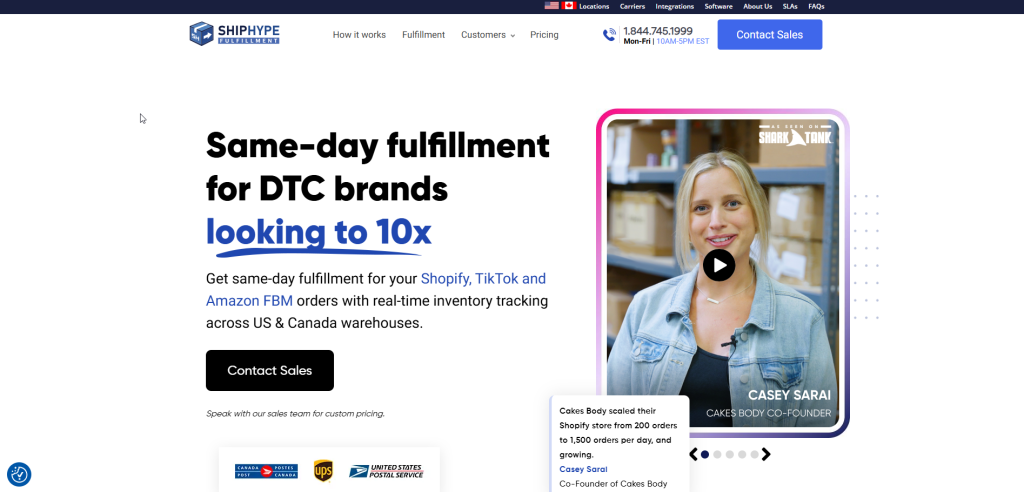
SHIPHYPE is a strong choice for brands looking for a reliable Shopify fulfillment partner with operations across the US and Canada, supporting direct-to-consumer, B2B, and marketplace fulfillment from a single inventory pool. Its native integrations with Shopify, Amazon, Walmart, WooCommerce, and other ecommerce platforms allow merchants to centralize inventory while fulfilling orders across multiple sales channels.
The provider is well suited for growing Shopify brands that value operational flexibility over long-term contracts. With month-to-month agreements, dedicated account management, FBA prep services, kitting, returns management, and 99.8%+ scan verification, SHIPHYPE offers a practical solution for businesses that need accurate fulfillment, cross-border shipping capabilities, and the ability to scale as order volumes increase.
SHIPHYPE follows a custom pricing model based on factors such as order volume, storage requirements, product dimensions, and the fulfillment services a business needs. Rather than offering fixed-rate plans, the company provides tailored quotes that allow merchants to pay for the services they use while avoiding long-term commitments. This flexible approach makes it suitable for both emerging Shopify brands and established ecommerce businesses looking to scale fulfillment without locking into rigid pricing structures.
3. GoBolt
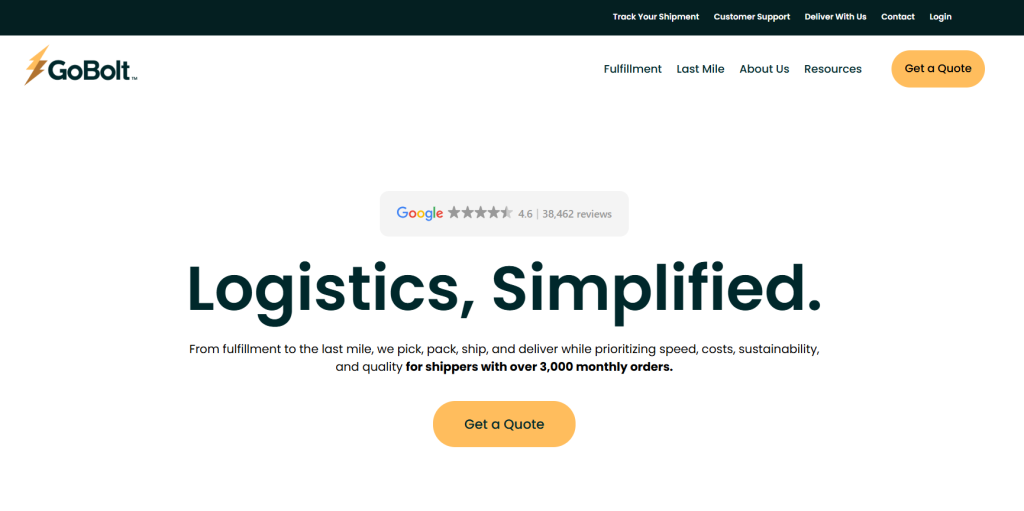
GoBolt pairs fulfillment with its own last-mile delivery network, so Shopify brands aren’t stitching together a warehouse partner and a separate carrier. The company runs 12 first-party fulfillment centers across the US and Canada, including Toronto, Vancouver, Calgary, Los Angeles, New York, and Houston, with real-time inventory visibility across every location.
GoBolt joined the Shopify Fulfillment Network in September 2025. Merchants get self-serve setup and two-way sync on orders, inventory, and tracking. Merchants get granular controls like Order Tagging, Fulfillment Holds, and Merged Orders, plus a Merchant Portal that shows exact order status (Pending, Accepted, In Progress, In Transit) instead of a generic “Fulfilled.”
Where GoBolt stands out is the combined fulfillment-and-last-mile model. Its network prioritizes EVs on last-mile routes, which matters for Shopify brands with sustainability commitments.
Where it doesn’t fit: Below that volume threshold, or if you need coverage well beyond North America, other providers on this list will be a better match.
4. ShipBob

I’ll be direct about ShipBob because I worked there. They’re the best 3PL for Shopify if you’re DTC-first and don’t sell heavily on Amazon or need B2B retail support.
Their Shopify integration is the most polished in the industry. Native app. One-click install. Orders, returns, and inventory sync automatically. The dashboard shows real-time fulfillment status, and the analytics give you inventory forecasting that most 3PLs don’t even attempt.
ShipBob runs 60+ fulfillment centers globally. Their 2-day Express shipping program covers most of the US. The Hub and Spoke distribution model lets you split inventory across regions to reduce transit times and shipping costs.
Here’s what I saw from the inside that most comparison articles won’t tell you. ShipBob is built around DTC. It’s excellent at picking, packing, and shipping individual Shopify orders. Where it gets complicated is when you add Amazon. FBA prep is an add-on, not a core competency. Inbound speed to Amazon FCs runs slower than dedicated prep providers. And B2B retail fulfillment with EDI compliance isn’t something ShipBob was designed for.
Pricing is custom and volume-based. Expect per-order pick and pack fees plus storage fees per cubic foot. The rates are competitive at mid-volume but the per-order model can get expensive for high-volume multi-pick orders.
If Shopify DTC is 80%+ of your business and Amazon is a side channel, ShipBob is hard to beat. If omnichannel is the reality, you’ll outgrow it.
Top ShipBob Alternatives
Brands comparing ShipBob can also review the top ShipBob alternatives.
Read the Article →5. Flexport (Shopify Fulfillment Network Partner)
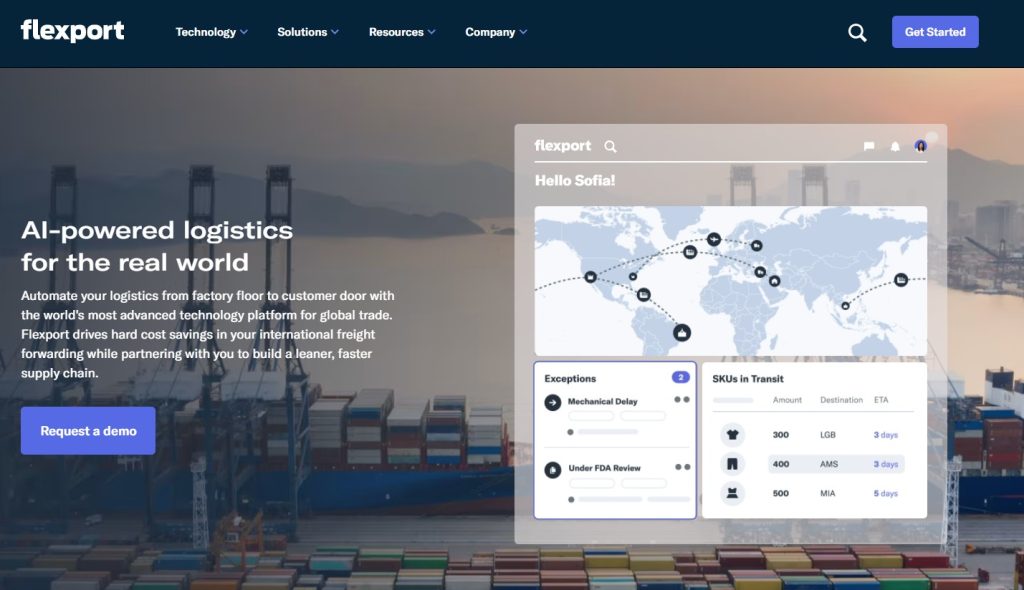
Flexport is the 3PL built directly into the Shopify Fulfillment Network app. Flexport bought Shopify’s logistics business, including Deliverr, in 2023. Inventory levels and shipping status show inside the Shopify admin.
Flexport brings serious logistics infrastructure to the partnership. They’ve built freight forwarding, warehouse management, and last-mile delivery into one platform. For Shopify merchants who want everything managed inside one platform without connecting third-party apps, the appeal is obvious.
The Shopify Fulfillment Network app is available to stores fulfilling from the United States. Flexport places inventory based on order patterns and supports 2-day and 3-day delivery promises.
Flexport also connects to Amazon, Walmart, and other channels. The limit is scale: since January 2026, its fulfillment accounts carry a $5,000 minimum monthly spend.
Pricing is custom and set by Flexport.
6. Shipfusion
Shipfusion is built for high-volume Shopify 3PL brands in supplements, wellness, and food. It owns and runs four fulfillment centers: Chicago, Las Vegas, and York, Pennsylvania in the US, plus Toronto in Canada. It says it reaches 95% of US and Canadian customers in 1 to 2 days.
The Shopify connection is a strength. Shipfusion is in Shopify’s Plus Certified App Program, so orders, inventory, and tracking sync natively. Amazon, Walmart, TikTok Shop, and BigCommerce connect too.
Every facility is SQF certified and FDA registered, and temperature-controlled storage is available per pallet. FBA prep is handled in-house. Shipfusion states 99.9% order accuracy.
The limitation is product size. Shipfusion says its warehouses are not optimized for large, bulky, or heavy items. A fifth site in Dallas is listed as coming soon.
Custom pricing, typically for brands shipping 2,000+ orders a month. Best for Shopify brands selling consumables across the US and Canada.
7. ShipMonk
ShipMonk runs 12 owned and operated fulfillment centers across the US, Canada, Mexico, the UK, and mainland Europe. It is a Shopify Fulfillment Network partner and handles Shopify, Amazon FBA prep, and Walmart orders under one contract.
The native Shopify app works well. Orders sync, tracking pushes automatically, and the inventory dashboard covers all channels from one login. Their inventory forecasting tool with automated reorder alerts is actually useful. If you’re running multiple channels and struggling with stockout timing, it helps.
Having prep capacity across multiple US locations also helps with placement fees if you’re also selling on Amazon. Prep at the nearest ShipMonk facility to your target Amazon FC and you reduce transit time on the back end.
Rates vary by service tier and volume commitment. Ask for a full fee schedule so you can compare it line by line with other quotes.
Good for mid-market Shopify sellers on several marketplaces. Request a full rate card before signing if pricing predictability matters to your finance team.
8. Stord
Stord positions itself as a cloud supply chain platform, not a traditional 3PL. Stord bought Ware2Go from UPS in 2025, adding 21 fulfillment centers and about 2.5 million square feet. In January 2026, it added Shipwire’s 12 locations across the US, UK, and Europe.
Their technology connects warehouse management, order management, and transportation into one system. For enterprise Shopify brands running complex supply chains across DTC, B2B wholesale, and marketplace channels, that consolidation is the draw.
Shopify fulfillment is one piece of a bigger suite. Stord handles DTC, B2B distribution, and freight management from the same platform. You’re not hiring a 3PL. You’re buying into an enterprise supply chain operating system.
That scope suits mid-market and enterprise brands best. Expect a longer onboarding than a plug-in Shopify app. Pricing is custom, with no published rates.
9. DCL Logistics
DCL was founded in 1982 in Fremont, California. That tenure is rare among Shopify 3PLs.
Six US fulfillment centers in California, Kentucky, and Pennsylvania, plus locations in Canada and Europe. Its Shopify integration runs through custom API connections built by its in-house team.
Where DCL stands out is complex integration work. Custom ERP or a marketplace tool that doesn’t fit standard templates? DCL’s team has probably solved it before. They connect with basically every major ecommerce platform.
What DCL isn’t: a Shopify fulfillment specialist. Shopify is one platform among many they support. If you want app-store simplicity, DCL’s custom API approach will feel more technical than ShipBob’s native app. Enterprise pricing. Custom quotes only.
10. LVK Logistics (formerly ShipHero Fulfillment)
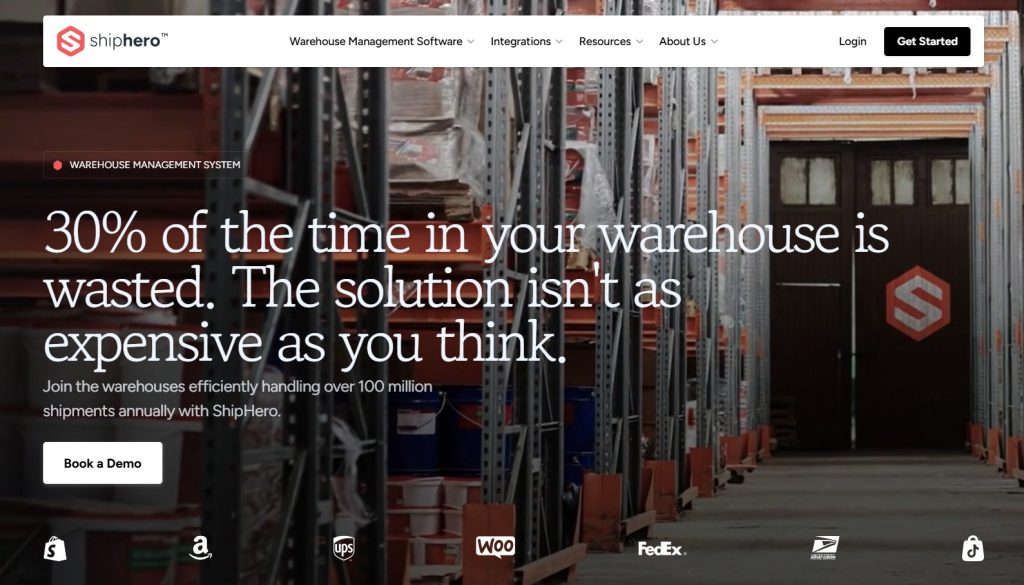
ShipHero spun off its fulfillment business as LVK Logistics in August 2024, and ShipHero now sells warehouse software only. LVK runs seven owned fulfillment centers across the US and Canada on the ShipHero WMS.
The Shopify integration is native. The WMS manages inventory allocation, order routing, and demand-based distribution automatically. If you want warehouse management software included with your Shopify third party logistics contract, that’s the differentiator.
LVK also added TikTok Shop fulfillment support. For Shopify brands expanding into social commerce, having one provider cover both channels reduces integration complexity.
The network is smaller than ShipBob or AMZ Prep. Seven locations compared to 50+. That limits geographic coverage and your ability to reduce transit times through distributed inventory. Custom pricing.
11. Amazon Multi-Channel Fulfillment
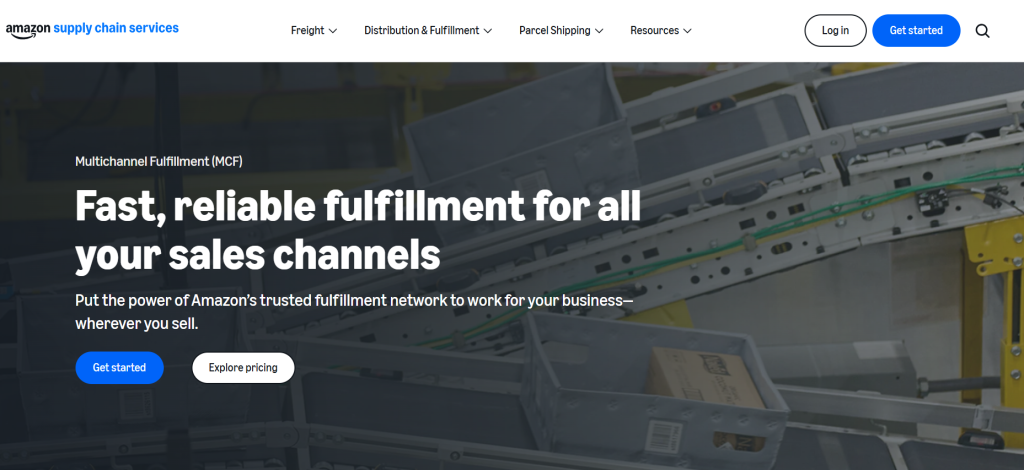
Amazon Multi-Channel Fulfillment lets you use Amazon’s pick-pack-ship infrastructure to fulfill Shopify orders. If you already store inventory at Amazon FCs for FBA, MCF ships those same units for Shopify orders.
Amazon’s free MCF app for Shopify connects your store. Orders route through Amazon’s network with 2-day delivery available across the US.
MCF ships in plain, unbranded boxes by default at no extra cost. It does not offer custom branded packaging, inserts, or gift notes. That matters for DTC brands that invest in unboxing.
MCF pricing is per unit and per shipment. Amazon raised MCF fees on January 15, 2026, and added a 3.5% fuel and logistics surcharge from May 2, 2026. It works for Amazon-first sellers who treat Shopify as a secondary channel. It doesn’t work for brands where the Shopify store IS the brand.
The 2026 increase hit single-unit orders hardest, while orders of three or more standard units were unchanged. MCF does not support B2B retail compliance. Apparel, footwear, and oversized items are not eligible for unbranded packaging.
12. Cahoot
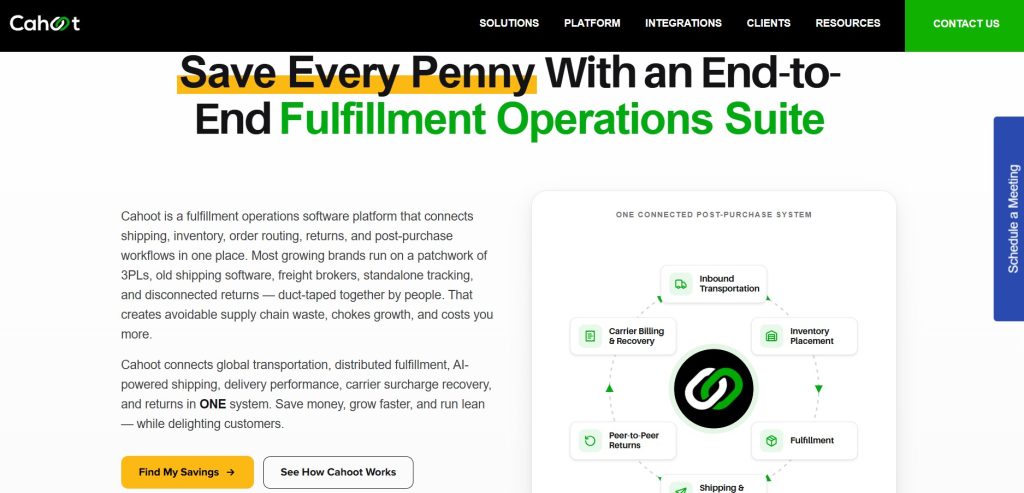
Cahoot does something different from every other provider on this list. Instead of owning warehouses, they run a peer-to-peer fulfillment network. Vetted fulfillment partners across the US handle your orders based on proximity to the delivery address.
The result: 1-day and 2-day delivery coverage nationwide without centralizing inventory in one or two buildings. For Shopify fulfillment, Cahoot routes each order to the nearest qualified partner. Their algorithm picks the partner with the fastest transit to the buyer’s zip code.
Cahoot is a Connecticut-based company founded in 2018. It now pairs the network with a fulfillment operations software suite. Pricing is quote-based, and the model suits brands with consistent volume and simple SKUs.
The concern is consistency. You’re not working with one team in one warehouse. Quality depends on whichever partner handles your order. If your products need custom kitting, branded packaging, or fragile handling, a distributed model adds risk. Cahoot works best for sellers who care more about speed than control. API integration with Shopify.
Shopify Fulfillment Network Explained
The Shopify Fulfillment Network is a free Shopify app that connects your store to vetted 3PLs. Shopify sold its own logistics business to Flexport in 2023 and kept the app.
Flexport is built into the Shopify admin. Other partners, including ShipBob, ShipMonk, and GoBolt, connect through their own apps.
The app is free to install. Each 3PL sets its own storage and fulfillment fees. It is available only to stores fulfilling from the United States.
The network suits Shopify-first brands that want to manage fulfillment inside Shopify. Brands selling on Amazon, retail, and other marketplaces often add an independent 3PL that ships every channel from one inventory pool.
How We Ranked These Shopify 3PL Providers
No provider paid for placement. I put AMZ Prep first because I work here, and I laid out the reasoning in that section. The remaining 11 are ranked on their strength as Shopify 3PL fulfillment providers in 2026.
I evaluated every provider against 6 criteria:
Shopify integration depth. Does the 3PL have a native Shopify app, or just a basic API connection? Native apps with real-time sync scored higher than CSV-based workflows or manual order routing.
Fulfillment speed. How fast orders ship after a Shopify customer clicks “buy.” Same-day cutoff times and 2-day delivery coverage matter more than vague promises.
Warehouse network. More locations in the right regions means faster delivery and lower shipping costs. Single-facility providers can’t compete on transit time with distributed networks.
Pricing transparency. Published rates scored higher than “request a quote.” Shopify merchants deserve to know costs before signing a contract.
Multi-channel capability. Most Shopify brands eventually add Amazon, Walmart, TikTok Shop, or B2B retail. A 3PL that only handles DTC creates an ops headache when you expand.
Client feedback. Third-party reviews on Clutch, G2, Trustpilot, and the Shopify App Store. Verified reviews tell you more than sales decks.
What to Look for in a Shopify 3PL
Check the integration type first. A native Shopify app with real-time order sync is different from a basic API that pulls orders every 15 minutes. That delay matters when customers expect same-day shipping confirmations. Ask whether inventory updates are real-time or batched.
Multi-channel matters sooner than you think. Many Shopify brands add Amazon, Walmart, or retail as they scale. If your 3PL can’t handle FBA prep or marketplace fulfillment, you’ll be managing two providers before year’s end.
Ask about returns handling. Apparel and accessories see some of the highest return rates in ecommerce. Per-return processing fees and inspection costs on top of fulfillment fees change your unit economics fast.
Don’t ignore carrier diversity. A 3PL locked into a single carrier contract limits your options during peak season. Regional carriers reduce zone costs. Multiple carrier options protect against surcharges and capacity crunches. Ask how many carrier partners your 3PL uses.
Test communication before you sign. Ask about response time SLAs. Ask if you get a dedicated contact or a shared ticket queue. Providers that work directly with your ops team will outperform ticket-queue 3PLs every time.
Where are Shopify fulfillment centers located?
Shopify doesn’t run its own fulfillment centers anymore. It sold its logistics business to Flexport in 2023. Today, a “Shopify fulfillment center” is a warehouse run by a 3PL that connects to Shopify. Some connect through the Shopify Fulfillment Network app. Others plug into Shopify directly.
Flexport is the partner built into the Shopify admin. It runs five US hubs near Newark, Atlanta, Chicago, Dallas, and Los Angeles, with more than five million square feet between them. Flexport says 87% of US consumers live within two days of one of these sites. In September 2026, it opened its first sites outside the US, in Mississauga, Canada and Manchester, England.
One catch. The Shopify Fulfillment Network app is only available to stores fulfilling from the United States. Canadian brands usually connect a 3PL to Shopify directly instead.
| Provider | Fulfillment center locations | How it connects to Shopify |
|---|---|---|
| Flexport | 5 US hubs (NJ, GA, IL, TX, CA), plus Mississauga and Manchester | Built into the Shopify admin |
| ShipBob | 60+ centers across 5 countries | Shopify Fulfillment Network partner |
| ShipMonk | 12 centers in the US, Canada, Mexico, the UK, and Europe | Shopify Fulfillment Network partner |
| GoBolt | 12 centers in the US and Canada, including Toronto, Vancouver, Calgary, Los Angeles, New York, and Houston | Shopify Fulfillment Network partner |
| AMZ Prep | 50+ centers across 6 countries | Shopify app and API |
Count matters less than placement. A 3PL with 60 sites only helps if your stock sits in the ones closest to your buyers. Ask any provider which buildings will hold your inventory and how much of the US each one reaches in two days by ground.
Frequently Asked Questions
When should a Shopify brand switch from self-fulfillment to a 3PL?
Most brands outgrow self-fulfillment around 100 to 300 orders a month. Past that point, packing orders yourself takes time you should spend growing the business. That’s when a Shopify 3PL saves you real money.
What’s the difference between a 3PL and dropshipping?
With a 3PL, you own the inventory and the 3PL ships it. With dropshipping, a supplier ships directly to customers and you never touch the product. 3PLs give you more control over quality and speed.
Can a 3PL handle Shopify Plus stores?
Yes. AMZ Prep is a certified Shopify Plus partner, and ShipBob and ShipMonk support Plus too. Make sure your 3PL has experience with high-volume stores and custom checkout flows.
What’s the best 3PL for high-volume Shopify stores?
AMZ Prep and ShipBob are the two strongest options. AMZ Prep gives you Amazon and B2B on top of Shopify. ShipBob is the better pick if you’re DTC-only at scale.
What is the best order fulfillment company for Shopify?
AMZ Prep, ShipBob, and GoBolt are the top Shopify order fulfillment companies in 2026. AMZ Prep suits multichannel brands, ShipBob suits DTC-only stores, and GoBolt pairs fulfillment with its own last-mile delivery.
How do I connect my Shopify store to a 3PL?
Install your 3PL’s Shopify app or connect through API. Authorize access, and orders, inventory, and tracking sync on their own. Takes 1 to 3 days to get running.
Does Shopify have its own fulfillment network?
Shopify offers the Shopify Fulfillment Network app, which connects stores to partner 3PLs like Flexport, ShipBob, and ShipMonk. It is available to stores fulfilling from the United States. Shopify no longer runs its own warehouses.
How much does Shopify 3PL fulfillment cost?
Most Shopify 3PLs charge a pick and pack fee per order, a storage fee by pallet, bin, or cubic foot, and receiving fees. Total cost per order depends on item size, picks per order, and shipping zone.
What is a Shopify 3PL?
It’s a logistics company that plugs into your Shopify store and handles warehousing, picking, packing, and shipping. A good Shopify 3PL replaces your in-house fulfillment team entirely.

Rich Pearl is a Head of U.S Enterprise at AMZ Prep, drawing from his proven experience in the fulfillment industry gained at ShipBob. Rich helps provide strategic guidance and consultation to growing e-commerce businesses looking to master their logistics and achieve operational success.


Shopify boosted ecommerce industry but without proper 3pl services, the industry wouldn’t grow at this pace. Have been following AMZ Prep for years now, and these guys are doing great work on ground. Such insightful articles also add knowledge to the new sellers on ecommerce platforms.
I genuinely savor the work! Amazingly presented with easy-to-read format.
Well written and perfectly crafted each section! Looking forward for more such pieces.
Good one to read! I liked your simple writing with detailed information on each section.
Shopify services require fulfillment services that’s quite obvious, but it could improvise and accelerate the business growth too is so well explained in this article. Even the list of companies mentioned are all among the best 3pls. Keep up the good work!
I loved the article for it has listed down some unique 3pl companies. You can take up the company as per your requirement. Appreciate your hard work on research!
Visited your page while looking for Amazon FBA, it was a great read for sure. Was surprised to see few names on the list of companies serving fulfillment services for shopify….well written piece for sure.
What if taking a 3pl service for Shopify impacts my brand name, how can I be sure on the authenticity and reliability factor of 3pl companies?
Doesn’t a 3pl adds on to seller’s cost?
Being a seller on the ecommerce platform for a while, now I am looking for fulfillment services but not sure on the cost saving benefit of taking a 3pl service.
Great piece of work! Well-crafted and simple explanation, amazing article.
Enjoyed reading this piece! It is a good read, if someone wants to gain knowledge on 3pl and how it supports platforms like Shopify, this is their place.
Very well-balanced article! You have rightly presented the companies with adequate information and other details on how 3pl improvises Shopify services. Good one!
Have been looking for some good 3pl services for a while, this article helped me with an insightful explanation. List of companies for Shopify fulfilment was easy to find but the way you guys have justified the need for fulfillment under is so unique. Business size, with and without 3pl services, impact on business, all these sections really made a difference for me to get hold on to this article. This helped me to take a better decision on my fulfillment search.
Ecommerce and 3pl needs to grow hand in hand. You guys are serving the ecommerce businesses with required and necessary information. Sellers like us appreciate you for such detailed information.
Amazin article! Can you help me with the best Inbound companies list too?
Good to read if someone is looking for best 3pl services for Shopify. I enjoyed every bit of it.
Nicely presented and well written article!
I’m surprised by the number of companies that offer Shopify fulfillment! I’m glad that my AMZ 3PL provider also supports Shopify and fulfillment for other channels
It’s great to see so many options for Shopify fulfillment
This is great line up guys!