The best Amazon AWD alternatives in 2026 are AMZ Prep ARP, ZonPrep, Pattern Marketplace Prep, ShipBob, ShipMonk, Stord, Flexport with Deliverr, ShipNetwork, Red Stag Fulfillment, and Ware2Go. These providers handle bulk storage, FBA prep, and case-level replenishment into Amazon. Most check in inventory within 2 to 7 days.
Amazon AWD averages 15 to 30 days and, since July 31, 2026, only accepts sortable items under 18 x 14 x 8 inches and 20 pounds. Independent 3PLs also cover Shopify, Walmart, and TikTok Shop from the same warehouse. AWD only feeds FBA.
I run enterprise sales at AMZ Prep. I have spent the last two months rebuilding inbound plans for brands who lost AWD access on part of their catalog overnight. This guide covers what I keep hearing, what changed, and the ten providers worth a real conversation.
What Amazon Warehousing And Distribution Actually Does
Amazon Warehousing and Distribution is Amazon’s own bulk storage layer. It sits upstream of FBA. You send pallets in, Amazon holds them at a lower storage rate, then auto-replenishes your FBA stock as it sells.
Amazon revised the AWD fee structure on January 15, 2026 and introduced regional pricing for the first time. Storage now runs $0.57 per cubic foot per month in the West region and $0.48 elsewhere. Outbound processing is $1.40 per box plus $1.40 per cubic foot in transportation. Inbound is $1.40 per box, or $1.05 in the West Coast Palletizable region.
AWD sits inside the broader Supply Chain by Amazon suite, alongside Amazon Global Logistics and the Partnered Carrier Program. That looks cheap on paper. The real cost shows up later, in check-in times, placement fee exposure, and stockouts.
Why Sellers Are Looking for Amazon Warehousing and Distribution Alternatives in 2026
Four things changed the AWD picture in the last twelve months. Any one of them is enough to trigger a switch. Together they closed the door on AWD for a large slice of the seller base.
The July 31, 2026 sortable-only rule
This is the biggest one. Amazon updated its AWD product eligibility page in July 2026. AWD now accepts sortable units only. A unit qualifies if it measures under 18 x 14 x 8 inches and weighs under 20 pounds.
Anything above that threshold, including small bulky, large bulky, and extra-large SKUs, ships directly to Amazon fulfillment centers through Send to Amazon. The upstream storage step is closed for those units.
Amazon runs this check at the ASIN level when you build a shipment. If your catalog includes anything oversize or heavy, part of it just lost the cheap storage tier eight weeks before Q4 peak.
Amazon ended US FBA prep services on January 1, 2026
Sellers who used to lean on Amazon for FNSKU labeling, poly-bagging, and bundling now need a third-party prep partner before inventory reaches AWD or FBA. Prep responsibility sits entirely upstream.
The January 15, 2026 fee update
Amazon introduced regional storage pricing for the first time. AWD storage now runs $0.57 per cubic foot per month in the West region and $0.48 elsewhere. AWD, MCF, and Buy with Prime all saw fee increases in the same update.
Q4 2025 West Coast rejections
Multiple West Coast AWD facilities stopped accepting inbound shipments during peak. Sellers got rejection notices with no backup routing. Some lost weeks of sellable inventory.
Add the structural gaps to that. AWD only ships into FBA. It does not fulfill Shopify, Walmart, TikTok Shop, or B2B. It does not handle kitting or bundling. It has no return support. Reimbursement for lost inventory typically pays out at manufacturing cost, not sell-through value.
For sellers outside the US: Amazon launched AWD in Europe on August 20, 2026, covering Germany, France, Italy, Spain, and the UK. Same model, same fee structure risks, and the same sortable-only rule applies from launch.
What the New AWD Sortable-Only Rule Means for Sellers
This is the update that reshapes the alternatives conversation. Worth spelling out because half the sellers I talk to still think it applies to their master carton.
What Amazon changed
From July 31, 2026, AWD accepted sortable items only. Amazon defines sortable as any unit under 18 inches long, under 14 inches wide, under 8 inches high, and under 20 pounds. Miss any single threshold and the ASIN drops out.
Which size tiers still qualify
Small standard and large standard, yes. Small bulky, large bulky, and extra-large, no.
Does the rule apply to your unit or your carton?
Your sellable unit. Retail packaging counts. Your master carton follows separate AWD carton rules (up to 25 inches per side, up to 50 pounds) and did not change. Note: FBA raised its max carton length to 36 inches in June 2025, AWD did not. Two spec sheets, not one.
What happens to bulky stock already in AWD?
It keeps replenishing normally and keeps accruing AWD storage fees. The change hits when you go to restock. That inbound has to run through Send to Amazon.
The Q4 cost problem
AWD storage runs $0.48 to $0.57 per cubic foot. FBA peak storage runs $2.40 per cubic foot in Q4. For a brand storing bulky seasonal stock, losing the cheap layer eight weeks before peak is a real planning problem, not a rounding error. Send to Amazon also puts inbound placement fee exposure back on the table for those units.
The practical read for anyone with a mixed catalog: audit your ASINs against the new threshold now, plan a separate path for the bulky ones, and do not wait for a rejected shipment plan to find out which SKUs moved out of eligibility.
What to Look for in an AWD Alternative
Use these six criteria. They come from every enterprise conversation I have.
Inbound speed into FBA
Any serious AWD alternative should get inventory checked into FBA within 2 to 7 days. AWD’s current baseline sits at 15 to 30 days after the Q4 disruption. Inbound speed protects your Best Seller Rank and keeps ad spend efficient.
Placement fee handling
Amazon charges inbound placement fees when you consolidate to one destination. A good provider uses split routing across four to five Amazon regions to reduce or eliminate that fee. Ask exactly how they split shipments.
SKU size and category flexibility
The July 31 sortable-only rule cut bulky and oversize SKUs from AWD. AWD also restricts meltables, jewelry, watches, and select CPG. Any real AWD alternative needs to accept these units and prep them for FBA or SFP without exclusions.
Prep, kitting, bundling, and returns
Since Amazon exited US prep on January 1, 2026, prep is non-negotiable. Confirm the provider handles FNSKU labels, poly-bagging, multi-packs, bundles, insert cards, and full reverse logistics on Amazon returns.
Multi-channel support
Most brands sell on more than Amazon. A real alternative to Amazon AWD should fulfill Shopify, Walmart, TikTok Shop, and retail EDI from the same inventory pool. Otherwise you carry safety stock twice.
Communication and SLA
AWD support is ticket-only. Enterprise operators need a dedicated point of contact, a shared Slack channel, and a two-hour response window during business hours. Ask what the SLA looks like in writing.
10 Amazon AWD Alternatives Worth Considering in 2026
1. AMZ Prep ARP
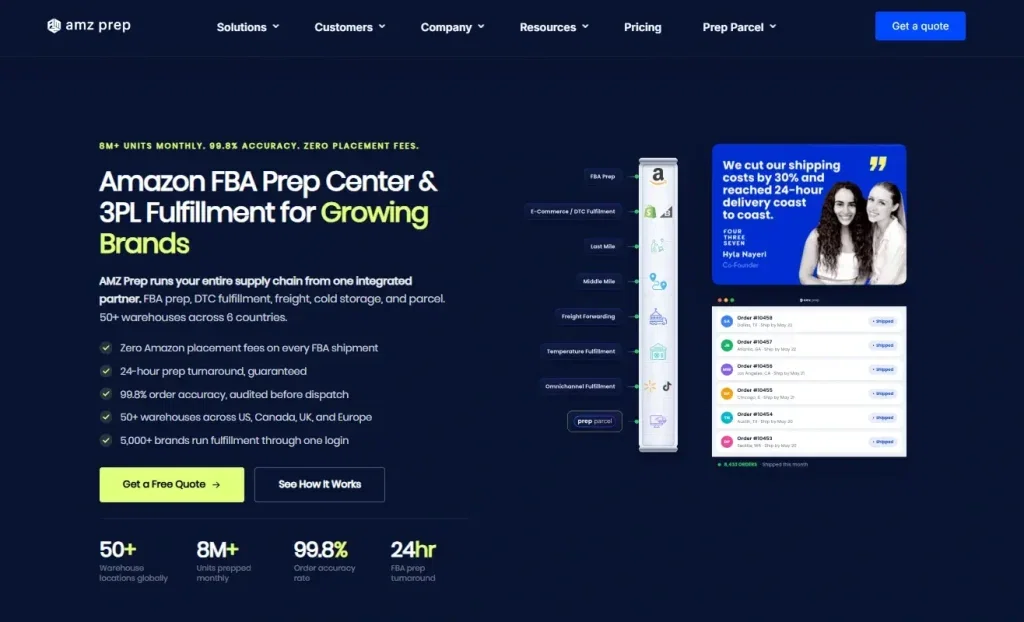
What it is: The Amazon Replenishment Program is AMZ Prep’s direct alternative to AWD. Bulk storage at regional distribution centers in KY, NV, TX, PA, SC, AB, and CA, plus case-level forwarding into Amazon FCs through the Middle Mile network. Shipping plans build automatically inside Navigate, our proprietary WMS.
Best for: Omnichannel brands doing $5M to $50M+ per year, with a mix of Amazon, Shopify, Walmart, TikTok Shop, and B2B, and any seller with bulky or oversize SKUs cut from AWD on July 31.
Standout: No size tier restrictions. Big and bulky, and extra-large units move through the program the same way sortable ones do. Inbound speed of 2 to 4 days into FBA. Zero placement fees through 5-way split routing. Under $1.50 per case in processing fees.
One limitation: Not built for sellers under $2,500 per month in prep volume.
2. ZonPrep
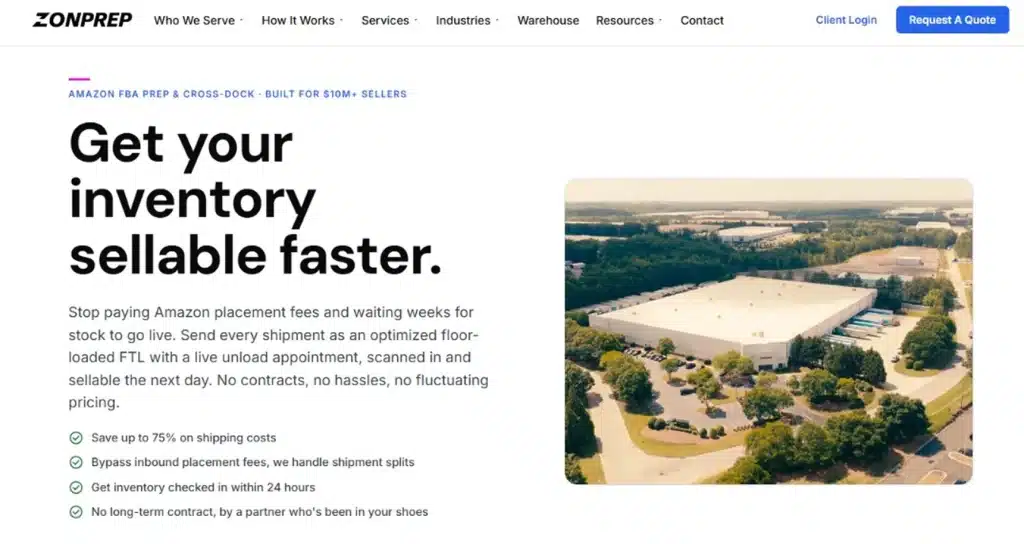
What it is: A high-velocity FBA cross-dock operation out of Atlanta, Georgia, with facilities in New Jersey and California. ZonPrep consolidates client volume into full-truckload floor-loaded shipments direct to regional Amazon FCs, bypassing Amazon’s National Cross Dock.
Best for: $10M+ Amazon-first sellers who need aggressive placement fee elimination and 24 to 48 hour Amazon check-ins.
Standout: Amazon lists ZonPrep as a carrier in Carrier Central, so it secures live unload appointments. Clients saved a reported $15 million in placement fees in 2025.
One limitation: Cross-dock model, not long-term storage. Best when your inventory is moving.
3. Pattern Marketplace Prep
What it is: Pattern operates its own prep centers, Middle Mile service, and DTC fulfillment. Its Hebron, KY warehouse feeds FBA in under 2 days on average, 4.3 days during peak.
Best for: Amazon-focused brands that want the same 3PL running prep, replenishment, and DTC under one roof, with heavy automation.
Standout: Pattern is one of the top three third-party sellers on Amazon. That operational scale funds automation most independent 3PLs cannot match.
One limitation: Best fit when Pattern’s broader ecommerce accelerator model appeals. Prep-only relationships are possible but not the sweet spot.
4. ShipBob
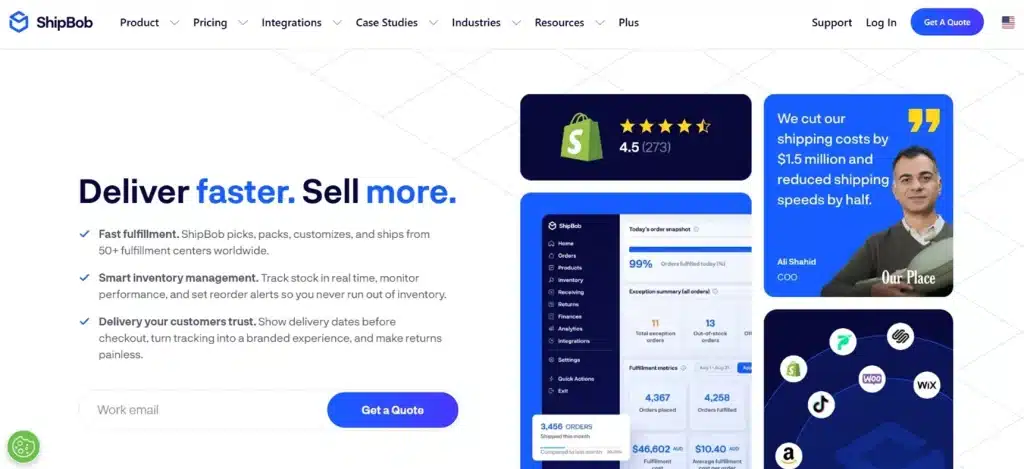
What it is: A DTC-first 3PL network with 30+ US fulfillment centers, plus Amazon FBA prep, FBM, and MCF-style multi-channel routing.
Best for: DTC brands that started on Shopify and are adding Amazon as a secondary channel.
Standout: Strong Shopify integration, wide US warehouse coverage, real technology stack.
One limitation: Amazon replenishment is not the design center. Placement fee handling and FBA check-in speed lag Amazon-first providers. This is the switch conversation I have most often.
5. ShipMonk
What it is: A DTC 3PL with FBA prep and forwarding services layered on top. US, Canada, UK, and Europe coverage.
Best for: Smaller SKU-count brands under $10M with a DTC-heavy revenue mix and a light FBA program.
Standout: User-friendly platform, good subscription-box handling, straightforward pricing tiers.
One limitation: Storage rates climb quickly at scale. Not the best fit for high-volume FBA replenishment.
6. Stord
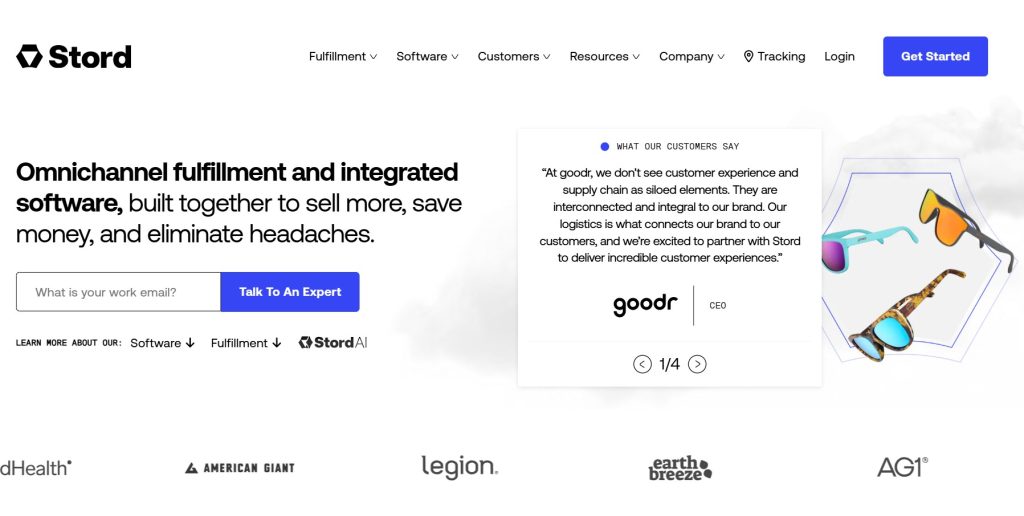
What it is: A network 3PL with a strong software layer. Handles warehousing, transportation, and parcel through one platform.
Best for: Enterprise brands that already run their own TMS or OMS and want a 3PL that plugs into it.
Standout: Deep software integration, national warehouse coverage, and freight brokerage under the same roof.
One limitation: Amazon-specific expertise sits below the top Amazon-first providers on this list. Best when your operation needs multi-channel breadth more than FBA depth.
7. Flexport (with Deliverr)
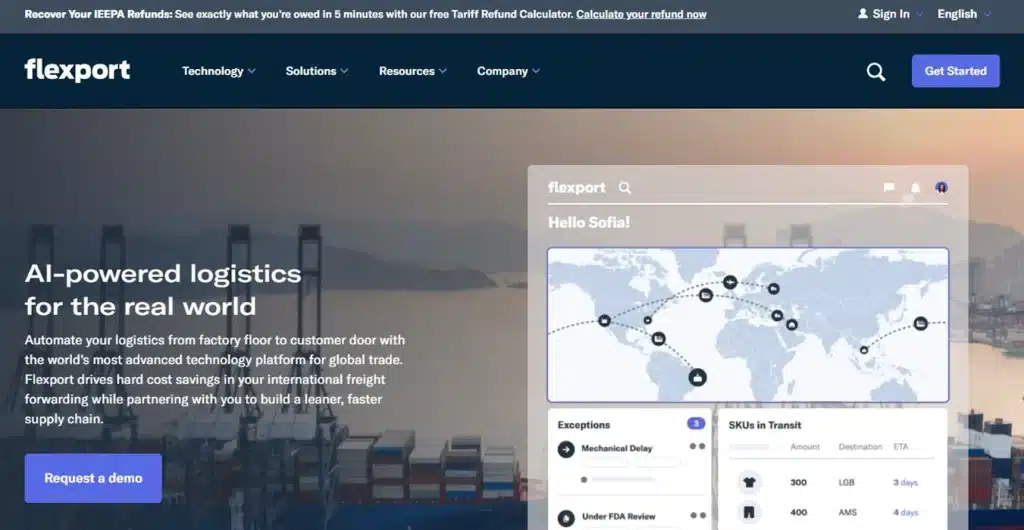
What it is: Flexport bought Deliverr and now offers freight forwarding, customs, and last-mile fulfillment under one roof. Deliverr handles FBA prep and forwarding.
Best for: Import-heavy brands moving 20+ containers a year who want freight and fulfillment consolidated.
Standout: End-to-end from factory to Amazon receiving dock. Strong for sellers who spend as much time on freight as on prep.
One limitation: The Deliverr integration is still maturing. Amazon replenishment speed varies by lane.
8. ShipNetwork (formerly Rakuten Super Logistics)
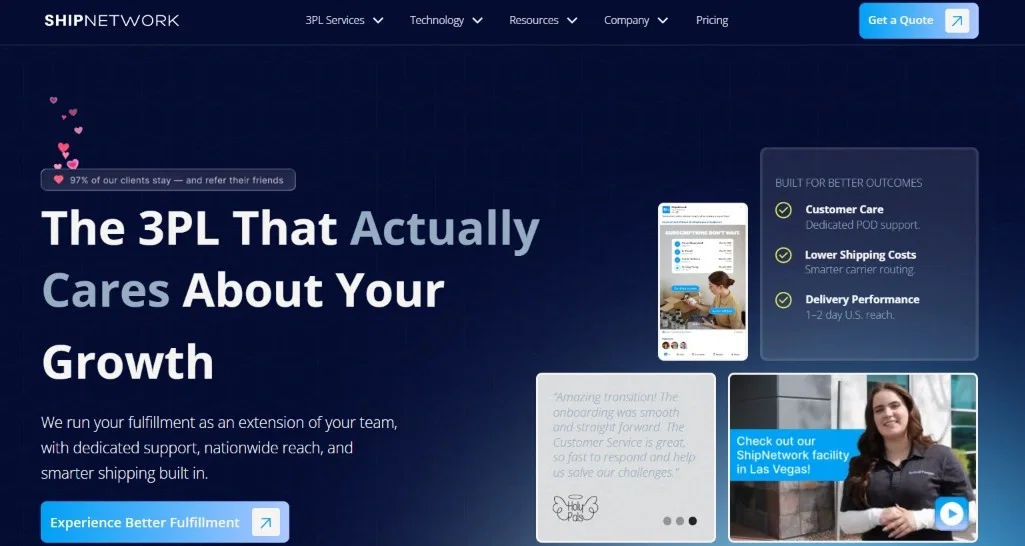
What it is: A US 3PL network with 15 warehouses and a focus on 1 to 2 day ground coverage.
Best for: Smaller-volume Amazon-focused brands under $5M that want reliable prep and forwarding without enterprise complexity.
Standout: Dense US warehouse footprint helps hit 2-day ground rates for FBM and DTC without Amazon MCF.
One limitation: Less multi-channel breadth than larger 3PLs. B2B EDI support is basic.
9. Red Stag Fulfillment
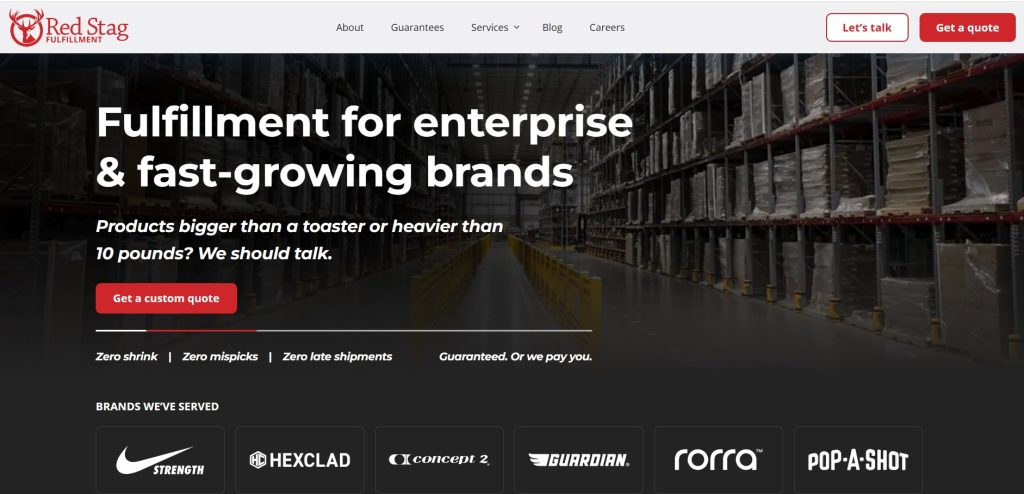
What it is: A specialist 3PL built for oversized, high-value, and fragile goods. Two US warehouses.
Best for: Brands with big and bulky, high-MSRP, or fragile SKUs that AWD and mainstream 3PLs reject or mishandle. Especially relevant after the July 31 sortable-only rule.
Standout: Zero-shrinkage and same-day accuracy guarantees. Real reimbursement for lost inventory, not manufacturing cost.
One limitation: Only two warehouses. Zone-based DTC costs run higher than larger networks.
10. Ware2Go (UPS)
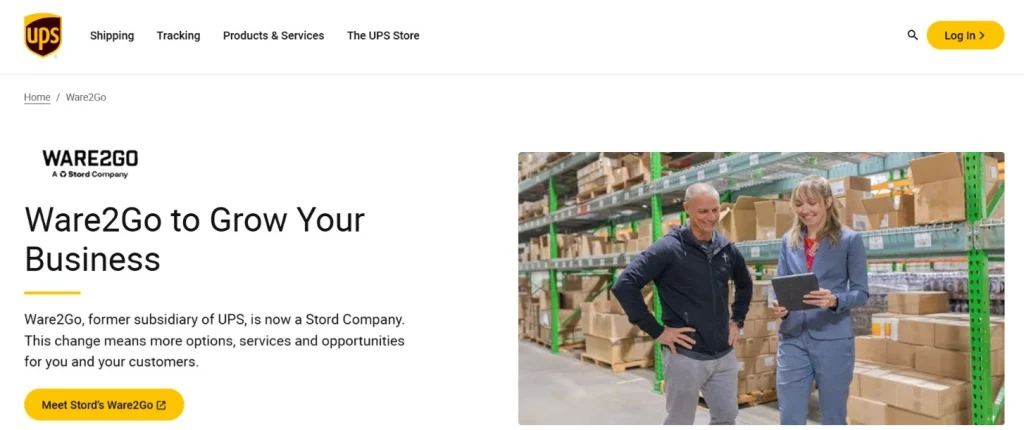
What it is: UPS’s on-demand 3PL network, with FBA prep, forwarding, and DTC fulfillment inside the UPS parcel ecosystem.
Best for: Brands that already ship heavy UPS parcel volume and want fulfillment tied to that carrier relationship.
Standout: UPS Ground rates baked in. Wide US coverage. Good for 2-day ground fulfillment.
One limitation: Not built around Amazon replenishment depth. FBA check-in speed is average.
Amazon AWD Alternatives: Side-By-Side Comparison
| Provider | Inbound to FBA | Placement fees | Bulky and oversize accepted | Multi-channel | Best for |
|---|---|---|---|---|---|
| AMZ Prep ARP | 2 to 4 days | $0 (5-way split) | Yes | Amazon, Shopify, Walmart, TikTok, B2B | Omnichannel $5M to $50M+ |
| ZonPrep | 24 to 48 hours check-in | Eliminated via FTL cross-dock | Standard focus | Amazon-first | $10M+ Amazon sellers |
| Pattern | Under 2 days average | Reduced via Middle Mile | Yes | Amazon, DTC, TikTok | Amazon-first with automation focus |
| ShipBob | 5 to 10 days | Partial | Yes | Shopify-first, Amazon added | DTC brands adding Amazon |
| ShipMonk | 5 to 10 days | Partial | Yes | Multi-channel | Smaller-SKU DTC |
| Stord | 5 to 10 days | Partial | Yes | Multi-channel | Enterprise with own OMS |
| Flexport / Deliverr | 5 to 15 days | Partial | Limited | Amazon-first | Import-heavy sellers |
| ShipNetwork | 5 to 10 days | Limited | Yes | Multi-channel | Sub-$5M Amazon-focused |
| Red Stag | 5 to 10 days | Limited | Yes (specialist) | DTC and FBA | Big and bulky, high-value |
| Ware2Go | 7 to 14 days | Limited | Yes | Amazon and DTC | UPS-tied brands |
| Amazon AWD | 15 to 30 days | Placement bundled into rate | No (sortable only after July 31, 2026) | FBA only | Amazon-only, sortable-size, simple SKUs |
How to Choose the Right AWD Alternative
Start with your channel mix.
If Amazon is 70% or more of revenue and your SKU catalog is simple and sortable, an Amazon-first provider like AMZ Prep ARP, ZonPrep, or Pattern will pay back the switch inside a quarter through faster check-ins and lower placement fees.
If you sell across Amazon, Shopify, Walmart, and TikTok Shop, prioritize a provider that runs all channels from one inventory pool. AMZ Prep’s omnichannel fulfillment and Stord are the strongest fits at enterprise scale. ShipBob and ShipMonk fit under $10M.
If your SKUs are bulky, oversize, high-value, or meltable, Red Stag and AMZ Prep are the two providers that will actually accept and prep the catalog without exclusions. This is the biggest post-July 31 conversation on my desk.
If you already run a large freight program from Asia, Flexport plus Deliverr consolidates the vendor list, though FBA speed varies.
Then check three operational things before signing:
- Written SLA on inbound-to-FBA speed
- Written policy on placement fee handling
- Written reimbursement policy on lost inventory, at sell-through value, not manufacturing cost
Making the Switch From AWD Without Stockouts
The transition off AWD is a five-step process. Most brands finish it in 4 to 6 weeks.
- Sign with the new provider and set up your account. Two to five business days.
- Stop sending new inventory into AWD. Redirect incoming supplier POs to the new warehouse.
- Let existing AWD inventory drain into FBA on the normal replenishment cadence. Or request removal to your new provider.
- Set up drip-feed replenishment at the new 3PL. Weekly volume prevents FBA overstock and stabilizes IPI.
- Monitor inbound speed, placement fees, and stockouts for two full replenishment cycles. Adjust routing as needed.
The brands I see stumble skip step 3. They cut AWD off cold and hit a two-week gap. Let the pipeline drain.
Conclusion
Two years ago, brands sent inventory to FBA in one large drop and hoped it would last a quarter. That model is done. The winning replenishment pattern in 2026 is weekly drip feeding out of a regional buffer, with placement fees managed by the provider and full multi-channel coverage sitting on top.
The July 31 sortable-only rule pushed a large slice of the market off AWD without warning. The alternatives on this list all move in the drip-feed direction to some degree. In the full Middle Mile vs AWD cost mechanics, we cover the math side by side. The right one for your brand depends on channel mix, SKU profile, volume, and how much of the operation you want under one roof.
If you want to compare AMZ Prep ARP to your current AWD setup side by side, my team can build a cost and check-in analysis against your last 90 days of FBA data. That is the fastest way to see whether the switch pays back for your specific volume.
Frequently Asked Questions
Is Amazon AWD still worth using in 2026?
AWD still fits Amazon-only sellers with simple, sortable, low-value SKUs and low urgency. It falls short for omnichannel brands, bulky and oversize catalogs (blocked since July 31), high-value goods, meltables, and sellers who cannot absorb a 15 to 30 day check-in window.
What is the fastest AWD alternative for FBA replenishment?
AMZ Prep ARP, ZonPrep, and Pattern Marketplace Prep all move inventory into FBA within 2 to 4 days on average. ZonPrep reports 24 to 48 hour Amazon check-ins through its Carrier Central status.
Do AWD alternatives handle Amazon placement fees?
Yes. Independent providers like AMZ Prep, ZonPrep, and Pattern use split routing or full-truckload cross-dock consolidation to reduce or eliminate placement fees. AWD bundles placement into its outbound rate.
Can an AWD alternative fulfill Shopify, Walmart, and TikTok Shop orders?
Most independent 3PLs on this list do, from one inventory pool. AMZ Prep, ShipBob, ShipMonk, Stord, ShipNetwork, and Red Stag all handle multi-channel. AWD only ships into FBA.
What is the average inbound speed for AWD versus alternatives?
AWD averages 15 to 30 days into FBA in 2026, longer after West Coast rejections. Top independent alternatives average 2 to 7 days. That gap decides most switch conversations I run.
Which AWD alternatives accept bulky and oversize units after July 31, 2026?
AMZ Prep ARP, Red Stag Fulfillment, ShipBob, ShipMonk, Stord, and Ware2Go all accept oversize and bulky SKUs that AWD no longer takes. AMZ Prep ARP and Red Stag are the two most experienced with big and bulky drip-feed into FBA.
Did Amazon launch AWD in Europe?
Yes. Amazon launched AWD in Germany, France, Italy, Spain, and the UK on August 20, 2026. Same fee structure and the same sortable-only eligibility rule applies from launch. European sellers face the same alternatives question as US sellers.
Do I still need FBA prep with an AWD alternative?
Yes. Since Amazon ended US FBA prep on January 1, 2026, every seller needs a prep partner. All ten providers above handle FBA prep in-house.

Rich Pearl is a Head of U.S Enterprise at AMZ Prep, drawing from his proven experience in the fulfillment industry gained at ShipBob. Rich helps provide strategic guidance and consultation to growing e-commerce businesses looking to master their logistics and achieve operational success.























Comments