
November 2025 was one of the thosel months you know the middle of Q4. It felt like every few days, another policy, AI feature, advertising tool, or infrastructure announcement dropped-and each one carried real operational implications for sellers. Between the holiday surge, the beginning of Amazon’s extended return season, the fee updates for 2026, and a wave of AI rollouts across Seller Central and Amazon Ads, the entire month demanded attention and adaptation.
Below, I walk you through the month exactly as I experienced it-one after the other, -so you can understand not just what changed, but how each update affects my workflow, my inventory planning, my advertising strategy, and my seller operations.
Nov 1, 2025 – Extended Holiday Return Policy Goes Live
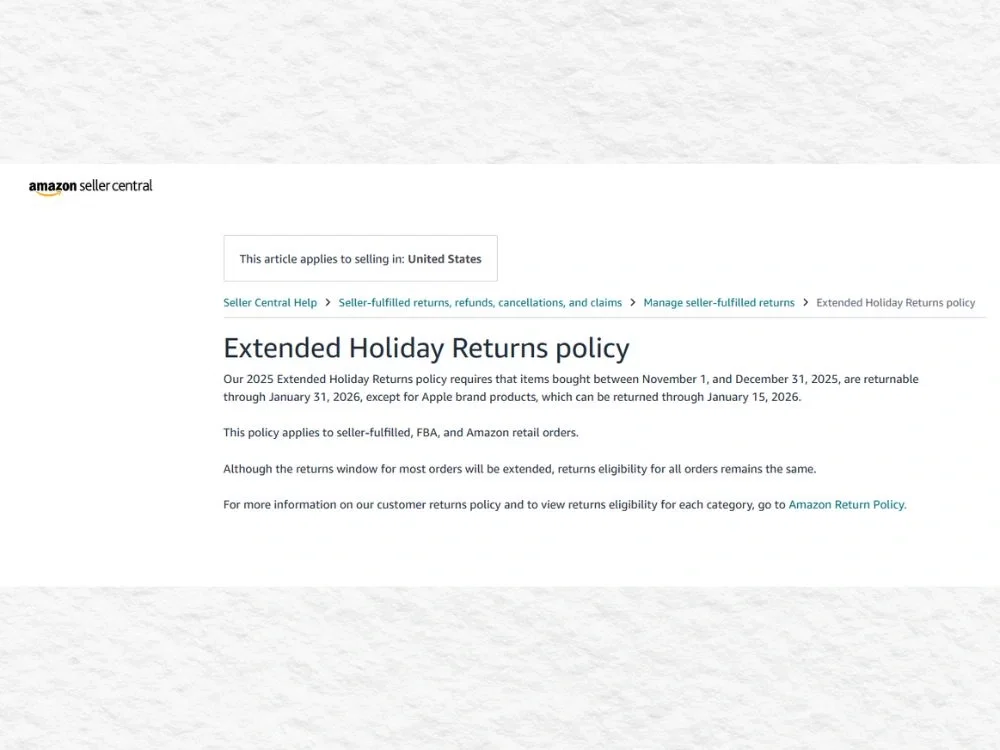
The very first day of November set the tone for the entire month. On November 1, Amazon activated the annual Extended Holiday Return Policy-and, as someone who works closely with sellers and fulfillment operations, I immediately felt the cascade of implications.
Here’s how I explain it in simple terms:
- Any order placed between November 1 and December 31, 2025 now qualifies for a return all the way through January 31, 2026.
- The only exception is Apple products, which remain returnable until January 15, 2026.
- This applied universally across FBA, FBM, and Amazon Retail orders.
- No change in return eligibility rules themselves-only the window changed.
- And importantly: Collectibles and trading cards remain Final Sale (for FBA), a restriction Amazon implemented back on October 1, 2025.
As soon as this policy goes live every year, sellers often panic. “Does this increase my return risk?” “Do I need to adjust pricing?” “Will this affect my margins in Q4?” But from what I’ve learned managing seller accounts and fulfillment operations, the biggest takeaway is this:
The extended return window doesn’t increase returns-it simply delays them.
Most customers who are going to return something would do it anyway. Now it simply happens in January instead of November or December. I recommend sellers mentally (and financially) prepare for a return spike in the first week of January and to have a workflow in place-whether that means staffing, Grade & Resell participation, or simply updating forecasting models.
Early November – 2026 FBA & Referral Fee Structure Announced (Effective Jan 15, 2026)
Shortly after return season kicked off, Amazon followed up with something every seller watches closely: the next year’s FBA and referral fee changes.
Amazon clarified several important points that shaped how I planned for clients:
- The average change is an increase of about $0.08 per unit, effective January 15, 2026.
- This increase is surprisingly modest-less than half of one percent of an average item’s selling price.
- Importantly, no new fee types were introduced.
- Amazon committed to giving sellers at least 90 days’ notice for future fee changes.
- They are shifting toward a more granular fee structure, which means:
- Lower fees where Amazon’s costs are low.
- Higher fees where more complex services are involved.
- Lower fees where Amazon’s costs are low.
- Lightweight item removal fees are decreasing, which is actually helpful when clearing out unprofitable or stranded inventory.
The big message Amazon delivered here is that they are trying to align fees more closely with actual fulfillment complexity. From my side, whenever Amazon pushes toward granularity, it’s usually a sign that sellers should:
- Revisit exact dimensions and weights of SKUs.
- Recalculate margins with a fee simulator using the updated 2026 tables.
- Reconsider whether borderline SKUs should remain FBA or shift to MFN or 3PL.
Granularity always helps sellers with efficient packaging and penalizes those who ignore it. So the sellers who tighten up operations will be the biggest winners in 2026.
You can read the official rules in Amazon’s Extended Holiday Return Policy documentation
Nov 12, 2025 – Major Update: FBA Grade & Resell Expansion
On November 12, Amazon dropped what I believe was the most seller-impactful change of the entire month: a massive expansion of the FBA Grade & Resell program.
Here’s what changed:
- The ASIN limit per account increased from 2,000 to 10,000.
- The program became opt-in rather than forced enrollment.
- Sellers gained far more control over what gets graded and resold.
- Amazon continues to handle grading and relisting returned units as “Used.”
- Processing fees remain in the $1–$4 range depending on size/price.
- Sellers still pay normal referral fees when those graded units resell.
This program is valuable for one major reason:
It turns return write-offs into recoverable revenue.
Before Grade & Resell existed, most returned items (especially opened or lightly used ones) ended up in removal orders, liquidations, or disposal-leading to significant losses.
Now, I tell sellers to think of Grade & Resell as a “returns profit recovery engine.”
If the SKU has:
- strong demand
- a good used-price market
- and low risk of high-defect returns
it should almost always be opted in.
The new 10,000-ASIN limit finally makes this viable for multi-brand portfolios or large catalog sellers.
For sellers looking to streamline costs beyond fees, check out How to Avoid Amazon Placement Fees — some of the strategies I use for margin preservation.
Nov 12–27 – Thanksgiving Meal Deal Program
During the same window, Amazon ran one of its most interesting seasonal experiments: a $25 Thanksgiving meal package.
This was a bundle that included:
- A Butterball frozen turkey
- A curated set of sides
- Availability both online and in physical channels (Fresh + Whole Foods)
- Same-day delivery in select regions
This wasn’t directly a seller-facing update, but the significance was clear to me:
Amazon is continuing to push into seasonal grocery bundling and convenience-driven perishables. It signals that Amazon wants to shape holiday behaviors-not just react to them.
Mid-November – Amazon Marketing Cloud (AMC) & Advertising Updates
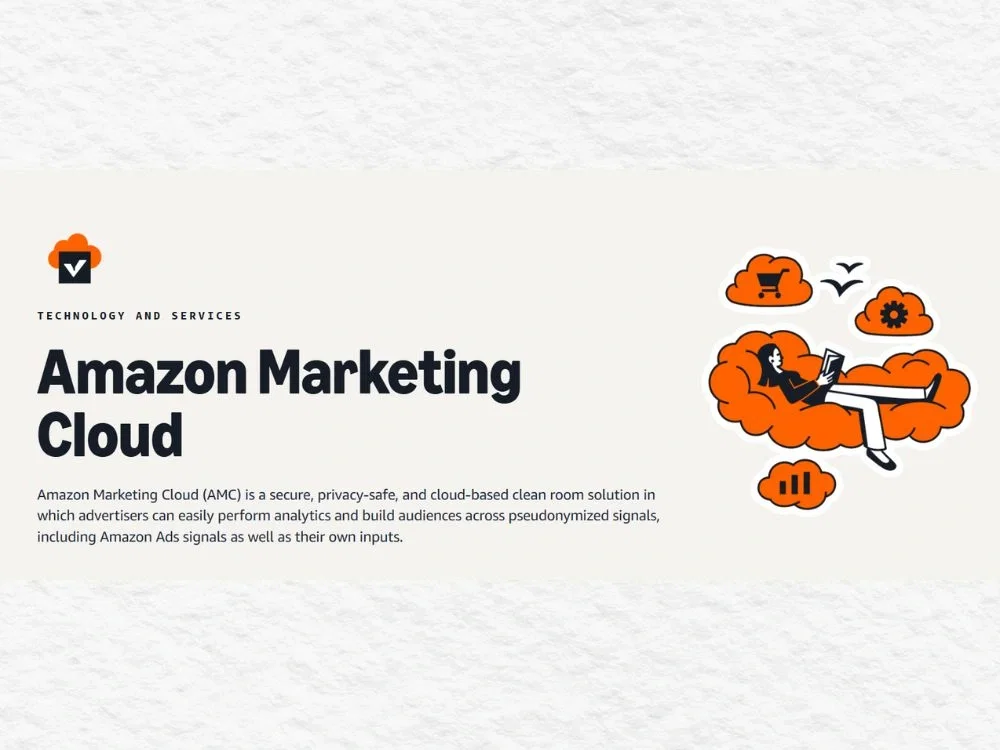
Mid-month, Amazon reinforced several upgrades to the Amazon Marketing Cloud (AMC) that had originally launched in September.
Here’s what stood out to me:
1. Direct access through the Ads Console
No more requirement for external partners or complex onboarding. Anyone can access AMC immediately.
2. New no-code templates
These templates let me pull advanced insights-path-to-purchase, cross-retail media attribution, new-to-brand metrics-with zero SQL.
3. Lookback window expansion
It doubled from 13 months to 25 months, which massively enhances long-term, multi-seasonal analysis.
4. Ads Agent AI
This agentic tool lets me ask natural-language questions like:
- “Which campaign drove the most new-to-brand purchases last quarter?”
- “What is the impact of my Sponsored Brand ads on repeat purchases?”
…and it interprets, analyzes, and visualizes data automatically.
5. New-to-Brand metrics added
Inside AMC, I can now access:
- New-to-Brand Purchases
- New-to-Brand Product Sales
These are gold for acquisition campaign measurement.
Overall, these AMC updates lower the barrier dramatically, making advanced incrementality testing and enterprise-level measurement accessible to small and mid-size brands without needing dedicated data teams.
Mid-Month – Sponsored & Performance Ad Enhancements
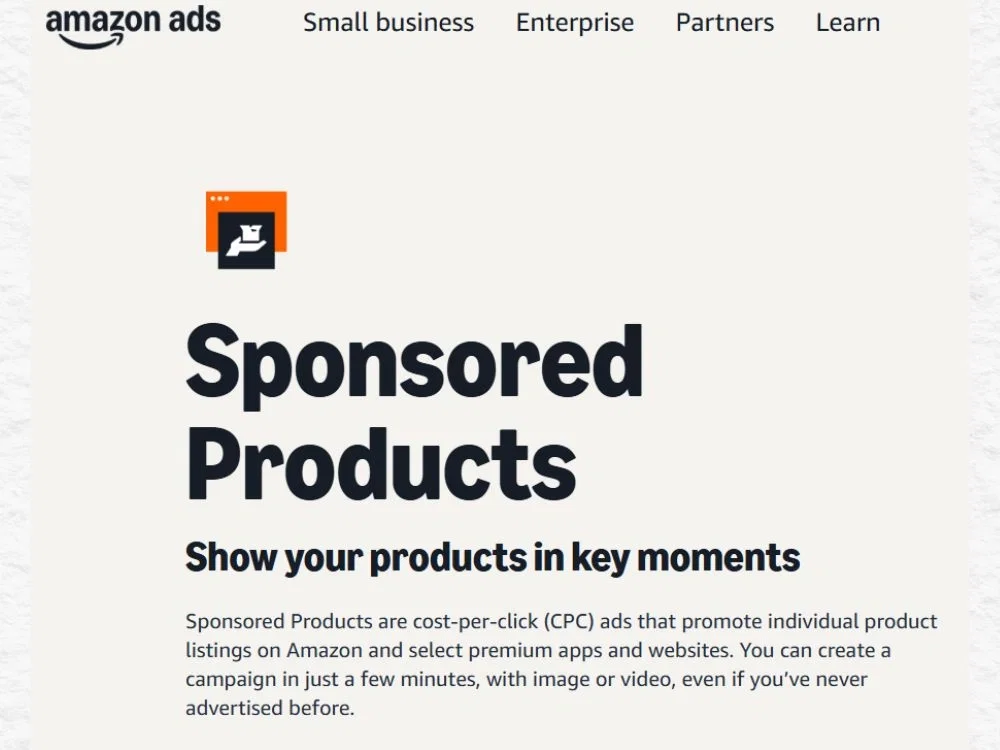
Around the same time, Amazon pushed significant updates to Sponsored Products, Sponsored Brands, and the broader Ads ecosystem:
Sponsored Products Video activation
Shortform videos embedded directly inside Sponsored Products placements.
This is huge. Video has consistently outperformed static images in CTR and conversion, and now it lives directly in the most impactful ad placement on Amazon.
Performance+ and Brand+ model upgrades
The AI behind targeting, creative optimization, and consideration tactics received a major upgrade. Campaigns automatically adjust for:
- better targeting
- dynamic relevance scoring
- improved retargeting
- creative reshuffling
Haul targeting introduction
This new placement focuses on value-driven shoppers who browse the “Amazon Haul” section. For budget-minded categories-beauty, home, apparel-it’s a strong new lever.
Self-serve benchmarking tool
For Brand Registry sellers in the U.S., Amazon rolled out category-level benchmarks accessible directly through the Ads Console.
This helps me evaluate:
- competitiveness
- impression share
- ROAS trends
- creative performance relative to peers
These ad updates collectively represent a major shift toward AI-led advertising. The manual work is shrinking. Strategy is becoming more about oversight, creative guidance, and profitability modeling.
If you’re exploring branded merchandise strategies, I also cover the power of AMZ Prep on-demand merchandise offering as a flexible, low-risk product expansion.
Throughout November – AI-Powered Seller Tools Surged
Amazon didn’t stop with ads-Seller Central itself saw AI revamps everywhere. This was the month where AI moved from “helpful feature” to “core engine.”
Here’s what stood out to me:
1. Seller Assistant (now agentic)
Seller Assistant became a proactive AI agent capable of:
- spotting account health issues
- flagging policy compliance risks
- diagnosing listing problems
- recommending price/inventory adjustments
- even suggesting actions I can choose to approve or auto-execute
This is a big step toward Amazon’s vision of “hands-off-the-wheel” selling.
2. Opportunity Explorer upgrades
Opportunity Explorer now uses AI to:
- forecast demand
- detect price gaps
- score trends by confidence
- flag profitable niches
This is especially useful for new product development and category expansion.
3. Enhance My Listing expansion
Enhance My Listing now handles:
- title generation
- bullet point creation
- product descriptions
- recommended image sets
- compliance scanning for claims & restricted phrases
With over 900,000 sellers adopting it globally, it’s clear the future of listing creation is AI-assisted.
4. Creative Studio AI
Amazon expanded Creative Studio so sellers can now generate:
- lifestyle images
- product photos
- videos
- scripts
- voiceovers
…using conversational prompts.
This is a full creative pipeline built inside Amazon-something unheard of before 2024.
5. Custom Analytics Dashboard
This was one of my favorite additions.
Now I can customize dashboards with drag-and-drop elements, creating:
- SKU scorecards
- cross-campaign views
- profitability trackers
- seasonality charts
This eliminates the need for external BI tools for many sellers.
As Amazon keeps rolling out AI across Seller Central and Ads, I recommend keeping up with the Top AI Tools for Amazon Sellers — many are now part of my regular workflow
Nov 20 – Black Friday Week Begins

By November 20, Black Friday Week kicked off with thousands of deals across every major category-home, electronics, beauty, apparel, kitchen, toys, and more.
From my operational point of view:
- Inventory needed to be in FBA by early November.
- Deals needed approval weeks earlier.
- Ad creatives needed to be scheduled and tested ahead of time.
- Pricing and margin models had to account for promotional dips.
For sellers, Black Friday Week always represents both an opportunity and a risk: you can gain massive visibility and velocity, but only if you’ve prepared properly.
Nov 29–Dec 1 – Cyber Monday Event
Cyber Monday ran from November 29 through December 1. This year, Amazon leaned heavily into AI-driven shopper experiences:
- Rufus, Amazon’s AI shopping assistant
- Amazon Lens Live, a camera-based visual shopping tool
- Hear the Highlights, AI-generated audio product explanations for shoppers
Cyber Monday was less about discounts and more about guided, personalized discovery. That’s where Amazon is taking e-commerce-toward interactive, AI-mediated shopping journeys.
Throughout November – AWS Infrastructure Announcements
While all of the seller-facing updates were happening, AWS (which powers Amazon’s entire backend ecosystem) rolled out eight major updates in November.
A few highlights:
- AWS Backup added support for EKS + cross-region DR.
- Lambda GA launched for Rust and Java 25 with sub-10ms processing.
- Site-to-Site VPN bandwidth increased to 5 Gbps.
- RDS Blue/Green hit GA for Aurora Global Database.
- S3 gained IPv6 VPC endpoint support.
- SageMaker now supports direct S3 access without intermediate transfer.
- AWS Transform automated Landing Zone networking.
And the biggest announcement:
Project Rainier went live globally
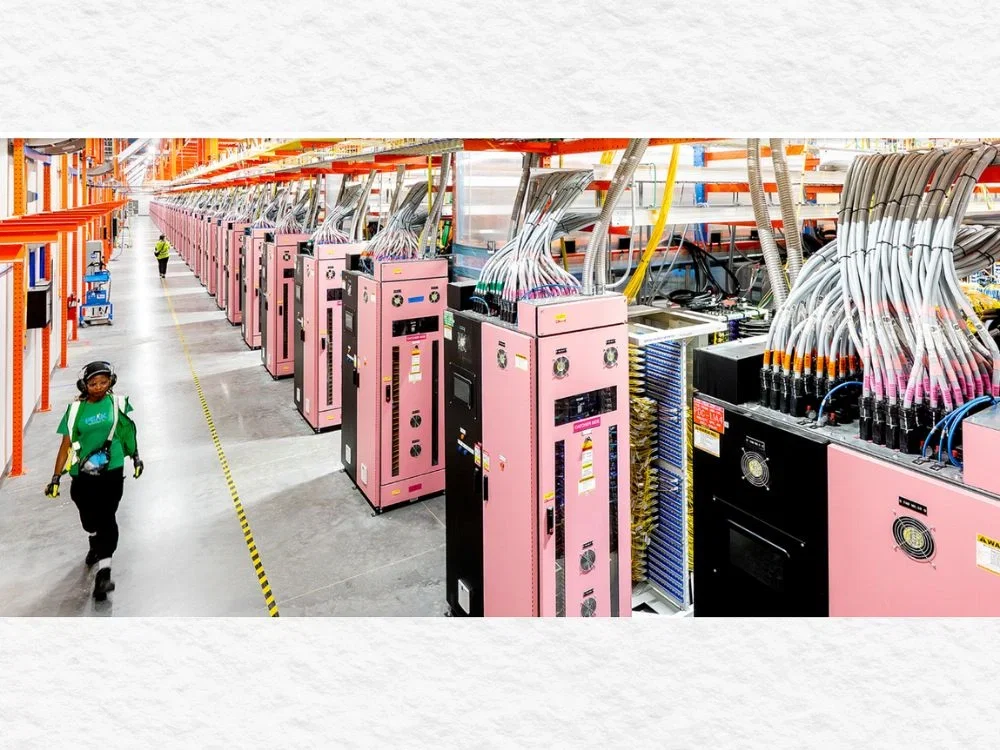
A massive AI supercomputer with nearly 500,000 Trainium2 chips.
Amazon also announced:
- a $15 billion data-center investment in Northern Indiana
- up to $50 billion in planned AI infrastructure for U.S. government AWS clients
These investments matter because they directly influence:
- AI systems inside Seller Central
- ad automation
- listing quality tools
- retail analytics
- fraud detection
Basically, the better AWS becomes, the more Amazon can automate for sellers.
Nov 12 – Alexa+ and New Echo Devices

On November 12, Amazon shipped its new Echo devices built for Alexa+, including the new Echo Show 8 with upgraded cameras, better audio, and new AZ-series chips with local AI processing.
This wasn’t seller-specific, but smart home expansion always influences Amazon’s broader retail and voice-commerce ecosystem.
Nov 15 – North America & Regional Updates
By mid-month, Amazon emphasized several regional updates:
North America
- The U.S. 2026 fee structure (announced earlier in November) will affect sellers beginning January 15.
- Sellers should model:
- storage costs
- FBA fees
- removal fee decreases
- more granular item-based fees
- storage costs
Europe & Other Marketplaces
Several updates rolled out across the UK, Germany, France, Italy, and Spain:
- partial refunds without returns
- AMC enhancements
- advertising feature expansions
If I oversee clients selling globally, I always recommend enabling partial refunds where available-it cuts reverse logistics costs dramatically.
Nov 15 – Worldwide / Global Updates
Many updates announced this month had worldwide reach:
- AWS infrastructure
- Project Rainier
- Echo devices
- AMC enhancements
- Creative Studio capabilities
- Seller AI automation
For global brands operating in multiple marketplaces, consolidating campaign strategy and analytics across regions just became much easier.
What All This Means: Practical Takeaways (First-Person)
After digesting everything that happened this month, here’s how I translate it into actionable advice for sellers.
I now have a stronger pathway to recover value from returns
The Grade & Resell expansion is a major win. I’m recommending:
- opting in SKUs with high return rates
- focusing on categories with strong used-item demand
- monitoring resale velocity and adjusting participation quarterly
This gives me a way to monetize returns instead of paying removal or disposal fees.
The 2026 fees aren’t huge, but I need to model them correctly
$0.08 doesn’t sound like much-but granular fees can shift margins meaningfully.
I’m:
- running margin simulations
- updating case-pack weights
- adjusting packaging to avoid dimensional weight penalties
- reviewing long-term storage strategies
Small changes add up.
I’m refining my returns strategy – partial refunds help
Partial refunds without returns are a powerful tool to:
- keep customers happy
- avoid expensive return shipping
- reduce processing costs
I’m enabling them where Amazon allows it.
Advertising is becoming easier – but more strategic
With AMC templates, AI agents, and benchmarking tools, I can:
- understand performance better
- identify wasted spend
- adjust budgets faster
- optimize creatives without agencies
2026 will be the year where small brands can finally use enterprise-level advertising tools.
AI tools save time – but I still need to vet everything
Enhance My Listing and Creative Studio are huge time-savers, but I always:
- review brand tone
- check compliance
- verify accuracy
- adjust titles/bullets manually
AI accelerates, but I am still the final editor.
Seasonality planning must start earlier now
With Black Friday starting November 20 and Cyber Monday following immediately:
- inventory must be inbound weeks earlier
- deals must be locked early
- ads need pre-testing
- pricing models must be pre-approved
Peak season prep is no longer a November activity-it’s September/October work.
Regional fee impacts require tailored strategies
U.S. sellers should model 2026 fees carefully.
Global sellers should monitor:
- EU return fee adjustments
- India storage changes
- local advertising costs
Regional differences matter more than ever.
AWS upgrades mean a more automated Amazon in 2026
As Amazon’s infrastructure grows:
- more AI tools will launch
- Seller Central will become more automated
- retail systems will become more predictive
This affects everything from recommendations to repricing to listing quality.
And for insights on broader trends, don’t miss my coverage of Key Takeaways from Amazon Accelerate 2025 — helpful context for 2026 planning.
Final Thoughts
November 2025 was one of the richest months of updates I’ve ever seen from Amazon. Nearly every part of the seller ecosystem evolved: fees, returns, advertising, analytics, AI agents, creative generation, operational workflows, AWS infrastructure, and even voice-commerce hardware.
What I take away from this month is simple:
Amazon is pushing us-quickly-into an AI-augmented era of selling

Arishekar N is a Vice President (VP) of Marketing at AMZ Prep, specializing in ecommerce fulfillment and Amazon logistics strategies with a proven track record of driving growth for e-commerce businesses. He is a strategic leader with extensive expertise in marketing, e-commerce operations, SEO & advertising, and branding.
Stay updated on his latest insights by following him

















Comments