
Most supplement brands begin their Amazon journey focused on marketing.
Ads, keywords, and product pages usually get the most attention first. That makes sense because marketing is the visible part of the business.
But after working with a wide range of supplement brands preparing inventory for Amazon, one pattern becomes clear.
Not every growth problem on Amazon starts with marketing.
Very often, the root cause begins in the supply chain.
One area that quietly causes trouble is freight shipping for nutraceuticals.
At first glance, supplements appear simple to ship. Bottles are sealed. Products are shelf stable. Nothing looks fragile.
But once you have seen summer shipments of gummy vitamins arrive melted or powders harden into clumps before reaching an Amazon fulfillment center, logistics start to look very different.
Shipping supplements sit somewhere between food logistics and pharmaceutical logistics. It requires more care than most brands expect. When shipping issues occur, the problems often show up where it matters most.
Customer reviews.
Why Shipping Problems Show Up in Amazon Reviews
Amazon operates on a simple feedback loop.
Happy customers push products upward. Unhappy customers push them downward.
That is why logistics plays a much larger role in performance than many supplement brands expect.
Over time, we have seen strong products lose momentum on Amazon because customers were not receiving them in the condition intended.
Early warning signs usually appear in reviews:
- Capsules arriving stuck together
- Powder forming hard clumps
- Gummies melting or deforming
- Bottles leaking or cracking
Individually, these issues may seem minor. But when they appear repeatedly, conversion rates begin to decline. Advertising becomes less efficient. Rankings slowly drop.
At that point, many brands attempt to adjust listings or ad campaigns.
But in many cases, the actual issue exists further upstream in freight shipping.
Supplements Are More Sensitive Than Most People Think
Many supplements appear stable under normal storage conditions. The challenges typically begin during transportation.
Heat is one of the most common risks.
A freight container parked in warm conditions can easily exceed 100°F, sometimes much higher.
That level of heat does not always destroy a product immediately. But it often begins to alter physical or chemical properties.
Some common examples include:
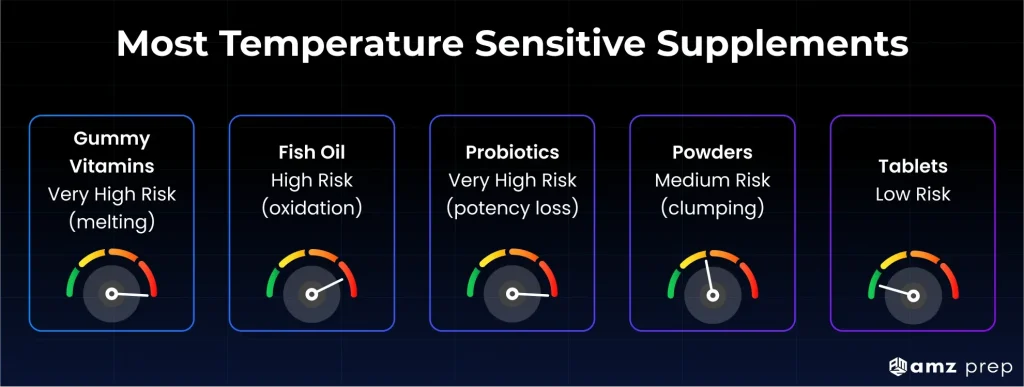
- Gummy vitamins softening or melting
- Fish oil capsules oxidizing faster under heat exposure
- Powder supplements absorbing moisture and clumping
- Probiotics losing potency due to live culture degradation
In many cases, the goal is not to keep products cold, but to keep them stable.
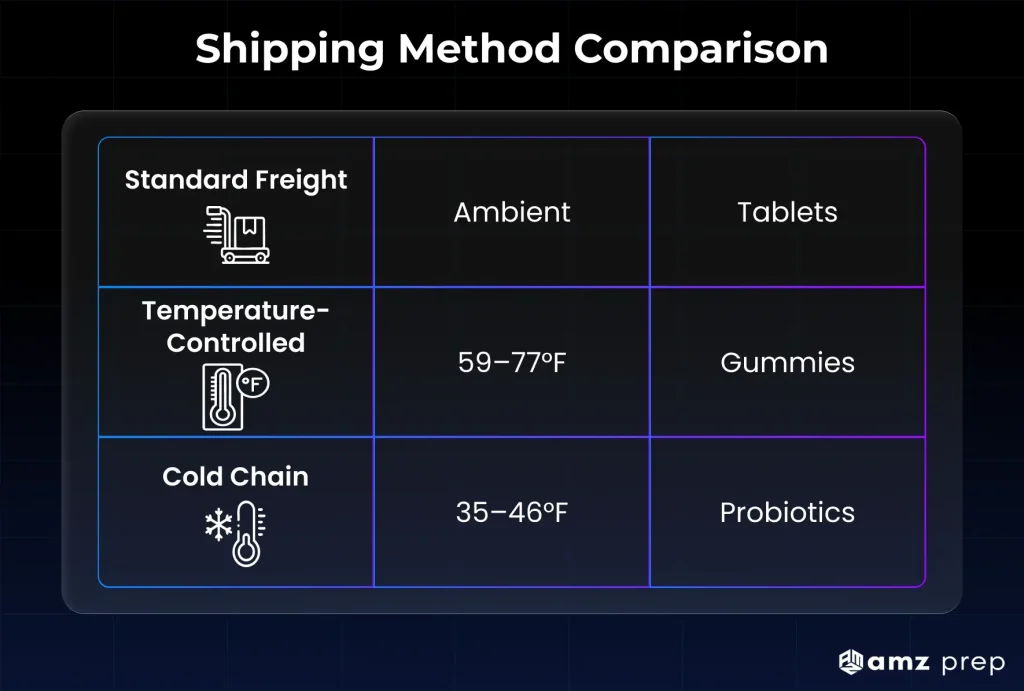
Most nutraceutical products perform best between 59°F and 77°F during shipping and storage.
When shipments move outside this range for extended periods, the likelihood of product degradation increases quickly.
This is why many brands now rely on temperature-controlled shipping for supplements. The goal is not to make everything cold. The goal is to keep the product within a stable range.
When the supply chain swings far outside that range, the risk of product damage rises quickly.
What Really Happens During Nutraceutical Freight Shipping
A lot of people imagine shipping as a straight line.
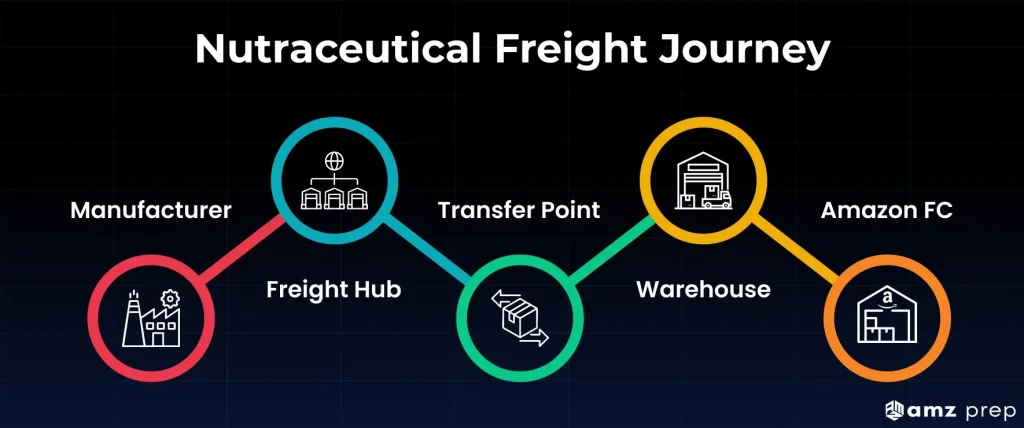
Factory to truck. Truck to warehouse. Warehouse to Amazon.
In reality the journey is rarely that clean.
A pallet might leave a manufacturer and sit at a freight consolidation point. Then it moves to a regional hub. From there it may be transferred again before heading to an Amazon fulfillment center.
Each stop introduces another opportunity for temperature changes.
The pallet might sit on a loading dock for a few hours.
A trailer might wait overnight before departure.
A shipment might pause during a transfer between carriers.
None of these steps seem dramatic on their own. But together they create the conditions where supplement quality can slowly decline.
That is why transit time and temperature stability matter more than most brands expect going into their first nutraceutical shipment.
A pallet may leave a manufacturer and move through multiple transfer points before reaching its final destination. Understanding the freight forwarding process can help brands anticipate these touchpoints and reduce delays.
When Temperature Control Becomes Necessary
Supplements can handle normal shipping conditions with the right packaging.
Others need more protection.
This is where temperature-controlled shipping for supplements becomes important.
Temperature control does not always mean full refrigeration. In many cases it simply means protecting products from extreme heat. For supplements that do require refrigerated transport, reefer shipping provides a controlled environment designed to maintain temperature sensitive products during transit.
Companies may use insulated cartons or thermal liners inside shipping boxes.
They may adjust shipping routes during summer months.
They may move inventory closer to Amazon fulfillment centers to shorten transit time.
Small adjustments like these make a real difference in protecting supplements during transportation.
Cold Chain Shipping for Nutraceuticals
Some supplements do not handle heat well. They need a tighter level of protection.
Probiotics are a good example.
These products contain live cultures. Those cultures stay active only within a small temperature range. When things get too warm, they start to weaken. If the heat continues, they die off.
The bottle may still look perfect when it arrives. But the strength of the supplement may not be the same.
That is why some brands use cold chain shipping for nutraceuticals.
Cold chain shipping simply means the product stays within a controlled temperature range during the entire trip. From the factory. To the truck. To the warehouse. No big swings in temperature.
To make this work, companies use a few different tools.
- Refrigerated storage keeps inventory cool before shipping.
- Temperature-controlled trucks move the products between locations.
- Insulated packaging protects the product during transit.
- Small monitoring devices record the temperature during the trip.
Those monitors are important. They show whether the shipment stayed within the safe range.
Cold chain shipping costs more than normal freight. But when a supplement depends on living ingredients, protecting potency matters.
Customers buy supplements because they expect results. Keeping the product stable during shipping helps make sure they get what they paid for.
Below is a simple look at how regular supplement shipping compares with cold chain logistics.
| Shipping Type | Temperature Range | Typical Products | Protection Level |
|---|---|---|---|
| Standard supplement freight | Ambient conditions | Capsules, tablets, powders | Basic protection |
| Temperature-controlled shipping for supplements | Usually 59°F–77°F | Gummies, fish oil, sensitive blends | Moderate protection |
| Cold chain shipping for nutraceuticals | Usually 35°F–46°F | Probiotics, liquid supplements, enzymes | Highest protection |
Nutraceutical Shipping Regulations
Rules matter here. They protect the product. They also protect your brand.
Supplements fall under the Dietary Supplement Health and Education Act (DSHEA) In the United States. The FDA is the authority. but they still must be safe and properly labeled.
Manufacturers must also follow Current Good Manufacturing Practices, often called GMP. These rules are written in 21 CFR Part 111. They cover how supplements are made, stored, and tracked.
In simple terms, GMP requires a few things.
- Clean facilities.
- Clear records.
- Lot tracking.
- Ingredient testing.
- Proper storage conditions.
Every batch should be traceable. If something goes wrong, the company must know exactly where that batch went.Shipping partners play a role too.
A warehouse or carrier may not make the supplement, but they still handle it. If products sit in extreme heat or high humidity, quality can drop. Temperature matters. Moisture matters. Storage practices matter.
Things get more complicated when supplements cross borders.
Nutraceutical shipping regulations vary from country to country. A product that sells easily in the United States may face extra checks elsewhere.
For example:
| Country / Region | Key Requirement | What Brands Should Know |
|---|---|---|
| United States | DSHEA + GMP rules | Proper labeling and lot traceability required |
| Canada | Natural Health Product Regulations | Products usually need an NPN number. See the full Canada supplement shipping guide. |
| European Union | Food Supplements Directive | Ingredient approvals and strict labeling rules |
Because of these differences, documentation becomes critical.
Brands often need:
• Certificates of Analysis
• Commercial invoices
• Ingredient documentation
• Batch and lot records
This is one reason documentation and storage practices matter as much as the shipment itself. Supplement brands navigating multiple markets need to know what records are required at each stage and how long they need to be kept.
Brands using nutraceutical fulfillment services need to know what records are required at each stage and how long they need to be kept.
In the supplement world, compliance is not just paperwork. It is part of protecting the product. And protecting the brand.
Packaging Makes a Bigger Difference
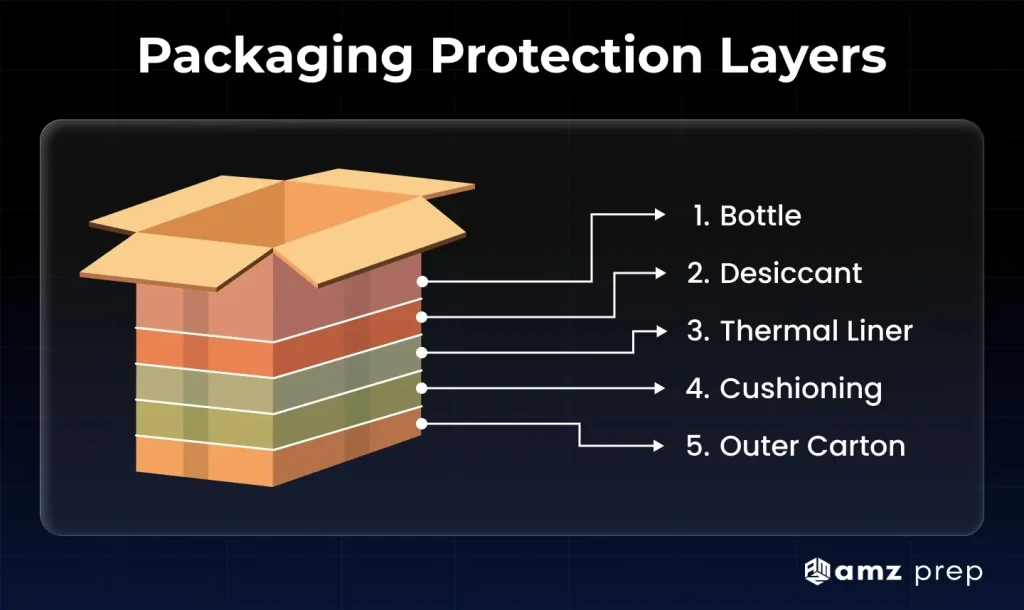
Over the years one lesson keeps repeating itself. Good packaging prevents a lot of shipping problems. Effective supplement packaging usually involves multiple layers of protection.
Moisture control is the first step. Desiccant packs prevent capsules and powders absorbing humidity.
Thermal insulation helps limit heat exposure during transit. Protective cushioning prevents bottles from cracking or breaking inside cartons. Learn more about palletizing fragile items for bulk supplement shipments.
Tamper evident seals provide another layer of safety that customers appreciate.
So when all these elements come together properly, supplements arrive looking the way customers expect them to.
For bulk shipments or palletized inventory, understanding packaging requirements for freight shipments alongside oversized freight shipping best practices can help prevent breakage and reduce handling damage.
Final Thoughts
Working with supplement brands over the years teaches you something important. Success on Amazon does not depend only on marketing.
That is why freight shipping for nutraceuticals deserves your attention. If you need a partner who handles temperature-controlled storage, lot tracking, and FDA-compliant fulfillment under one roof, see how AMZ Prep handles nutraceutical fulfillment end to end.
When logistics are handled carefully, customers receive a product that is as you intended. The trust turns into better reviews, stronger conversion rates, and steady growth. Brands that treat logistics as part of the product consistently outperform those that treat it as an afterthought.
Frequently Asked Questions
What is freight shipping for nutraceuticals?
Freight shipping for nutraceuticals covers the transport of supplements from manufacturer to warehouse or fulfillment center. It often includes temperature monitoring, compliant packaging, and lot tracking to protect product quality in transit.
Does temperature control matter for all supplements?
Not all supplements require refrigeration. Most perform best between 59°F and 77°F. Gummies, fish oil, and probiotics are most vulnerable to heat. Standard freight with proper packaging is enough for tablets and most capsules.
What is cold chain shipping for nutraceuticals?
Cold chain shipping maintains a controlled temperature range throughout the entire journey. It uses refrigerated trucks, insulated packaging, and monitoring devices. Probiotics and liquid supplements typically require this to preserve potency from origin to fulfillment center.
What nutraceutical shipping regulations apply to Amazon sellers?
US supplement brands must comply with DSHEA and GMP rules under 21 CFR Part 111. International shipments face additional requirements. Canada requires an NPN number. The EU enforces strict ingredient approvals and labeling standards under its Food Supplements Directive.
What packaging is recommended for supplement freight?
Effective supplement packaging uses multiple layers: desiccant packs for moisture control, thermal liners for heat protection, cushioning to prevent breakage, and tamper-evident seals. For palletized shipments, correct carton strength and stretch wrapping reduce handling damage during transit.

Arishekar N is a Vice President (VP) of Marketing at AMZ Prep, specializing in ecommerce fulfillment and Amazon logistics strategies with a proven track record of driving growth for e-commerce businesses. He is a strategic leader with extensive expertise in marketing, e-commerce operations, SEO & advertising, and branding.
Stay updated on his latest insights by following him

















Comments