
Have you ever wondered how frozen meat or life-saving vaccines reach your customer in perfect condition? The answer lies in the cold supply chain.
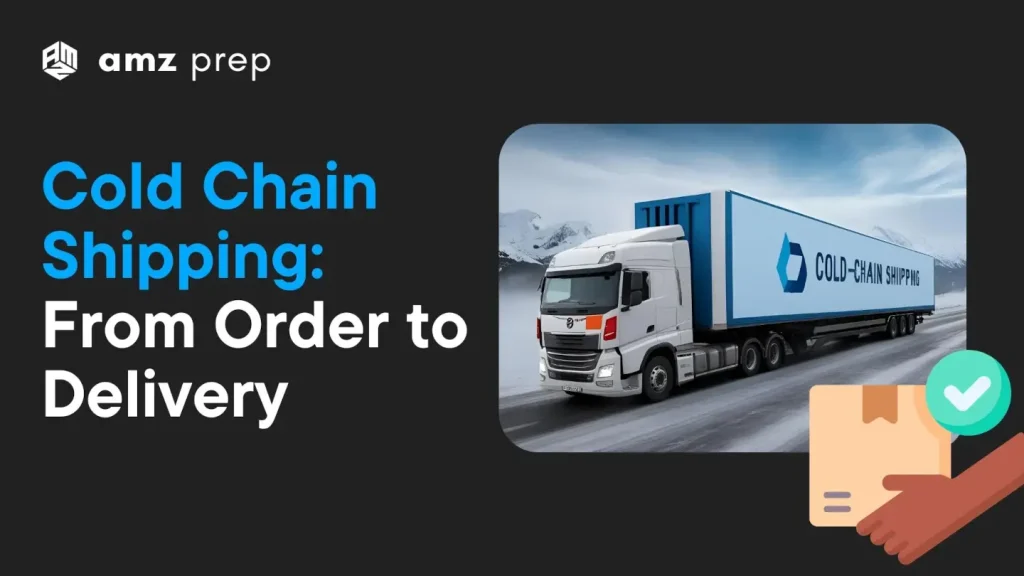
This logistics process goes beyond simple refrigeration. It requires precise temperature control, compliant packaging, and real-time monitoring from warehouse to doorstep.
And it’s growing fast.
The cold chain logistics market is experiencing explosive growth. The global market reached $436 billion in 2025 and is projected to surge to $1.36 trillion by 2034, growing at a remarkable 13.5% annually.
Whether you’re shipping seafood, pharmaceuticals, or direct-to-consumer meal kits, understanding how cold chain shipping and cold storage distribution work together is critical to protecting your product quality and bottom line.
This guide walks you through how cold chain shipping works – from order placement and cold storage distribution to final-mile delivery – so your products arrive safely and your customers keep coming back.
What is Cold Chain Shipping and Why It is Important?
Cold chain shipping is a logistics process which is specifically designed to ship temperature-sensitive perishable products. The products include frozen meals and vaccines to beauty items, supplements, and even gourmet pet food.
The logistics and distribution team will keep your perishable products in specific temperatures like refrigerated (2°C to 8°C), frozen (-18°C), or ultra-low (-80°C). This way your products will remain in perfect condition and the customers getting the quality product will return back to purchase more which will lead to more revenue.
By integrating cold chain strategies into your supply chain and leveraging temperature-controlled warehouse infrastructure, you reduce spoilage, extend shelf life, and increase customer trust. you reduce spoilage, extend shelf life, and increase customer trust. For brands, effective DTC Prep for Cold Storage means better retention, fewer returns, and a stronger bottom line. That’s why the cold chain is considered the backbone of modern supply chain operations, especially in the eCommerce industry.
An important part of this system is cold storage distribution, the process of moving temperature-sensitive goods from climate-controlled warehouses through regional distribution networks and on to the final customer.
Unlike standard distribution, cold storage distribution requires coordinated handoffs between refrigerated warehousing, compliant packaging, and temperature-controlled transport at every leg of the journey.
Cold Chain Logistics in 2026: Technology Driving the Future
The cold chain industry is undergoing a technology revolution that’s reducing waste, improving compliance, and protecting product integrity like never before.
AI and Predictive Analytics
Cold chain providers now deploy AI-driven systems that predict temperature excursions before they occur. Fleets using smart temperature monitoring and AI-powered reefer diagnostics are cutting spoilage losses by up to 30% compared to traditional manual monitoring methods.
Real-Time IoT Monitoring
IoT sensors transmit temperature, humidity, and location data every few minutes throughout the journey. These systems provide instant alerts when conditions drift outside acceptable ranges, allowing logistics teams to take corrective action in real-time rather than discovering failures after delivery. Building this kind of industrial iot monitoring takes connected sensors, secure data pipelines, and a platform that turns raw readings into alerts teams can act on.
The Cost of Failure
The industry loses $35 billion annually to temperature excursions. Approximately 14% of food spoils before reaching retailers, and up to 50% of vaccines are wasted due to inadequate temperature control. Modern cold chain technology is designed specifically to prevent these predictable, costly breakdowns.
Micro-Fulfillment for Last-Mile
Online grocery now commands 21.5% of total U.S. grocery sales. To meet demand, providers are building micro-fulfillment hubs within urban cores, shortening last-mile delivery times while maintaining strict temperature control from warehouse to doorstep.
How Cold Chain Shipping Works from Order to Delivery?
Cold chain shipping starts with storing, picking, packing and shipping your products in a temperature-controlled facility. Orders are shipped using insulated packaging and refrigerated transport to maintain product integrity until delivery. We’ll further look into the process:

1. Order Placement
Cold chain shipping begins with accurate order placement and inventory management. As a seller, your responsibility begins by dispatching the correct batch and quantity of products to the cold chain facility. Always remember, overstocking will lead you to high energy costs and increase spoilage risk. On the other hand, stockouts will lead to delays in fulfillment and customer dissatisfaction.
Most of the cold chain providers will track the arriving shipments using integrated order management systems. Additionally they will be able to manage SKUs across several sales channels including Amazon, Walmart, and direct-to-consumer platforms.
Your products will be quality tested and scanned under unique barcodes when customers place an order. If there is an error during scanning or labelling, it can end up in incorrect deliveries and an increase in return rates.
Accurate order placement ensures that the right products get stored, tracked, and processed quickly throughout the cold supply chain.
2. Inventory Management
The next part is managing your inventory. Unlike standard warehousing, cold chain logistics follows the FEFO (First Expired, First Out) method instead of the typical FIFO approach. This process means the products that are soon to expire will be shipped first. This will also reduce the waste and save your inventory value.
Peak seasons like Valentine’s Week or the holidays create surges in demand for perishable items including vaccinations, frozen meals, or flowers. Timely planning ensures fast-moving SKUs remain in stock and ready to ship, hence increasing customer satisfaction and repeat business.
To manage this, you have to monitor inventory and distribute resources such that it never runs out. These technologies allow you to collect real-time data from all of your eCommerce channels, including Amazon, Walmart, and DTC stores.
Cold storage facilities help your business maintain the product freshness, lower returns, and improve overall customer happiness by matching inventory with demand patterns, shelf life specific to each product, and sales channel behavior.
3. Storage
Most cold storage warehouse companies operate across three core temperature zones: climate-controlled (15–25°C) for chocolates and cosmetics, refrigerated (2–8°C) for dairy and probiotics, which often require refrigerated probiotic fulfillment to preserve active cultures and ensure product effectiveness, and frozen (-18°C and below) for ice cream and frozen meals. Knowing which zone your product needs is the first step in choosing the right 3PL partner.
Inventory is specifically positioned based on SKU velocity: fast-moving products are kept near pick zones, whereas slow-moving products are kept in high-density locations. Restocking is automated using WMS, making sure you maintain the stock levels without delays.
Insulated totes are used inside the facility to keep temperatures stable, and some products are pre-packed with cold packing and stored in staging zones for quick fulfillment.
4. Cold Storage Distribution Cost
Cold storage distribution cost depends on temperature zone, pallet volume, and transit distance. Here’s a general benchmark to help you plan:
| Temperature Zone | Avg. Storage Cost (Per Pallet / Month) | Best For |
|---|---|---|
| Climate-Controlled (15–25°C) | $18–$28 | Chocolates, cosmetics, wine |
| Refrigerated (2–8°C) | $25–$40 | Dairy, probiotics, fresh produce |
| Frozen (-18°C and below) | $35–$55 | Ice cream, frozen meals, biologics |
| Ultra-Low (-80°C) | $60–$100+ | Vaccines, clinical samples |
Additional costs include insulated packaging materials, pick and pack fees, and refrigerated carrier surcharges. Use AMZ Prep’s cold storage cost calculator to get a number specific to your SKUs.
5. Packaging
Cold storage distribution centers use dry ice, gel packs, and phase-change materials (PCMs) depending on the product type, temperature zone, and transit time. PCMs are particularly effective for maintaining the 2–8°C range because they absorb and release thermal energy at a specific transition point, keeping temperatures stable even as ambient conditions fluctuate.
Beyond insulation, the way you pack must meet strict compliance standards. Especially for drugs, food, biologics, and peptide fulfillment service operations, this includes correct labelling, batch-level barcoding, temperature-sensitive stickers, and regulatory paperwork. Missing documentation or incorrect labelling could cause shipments to be delayed or result in compliance issues.
For DTC cold storage brands, kitting and prep processes are customized per SKU. For example, a smoothie kit may require gel packs, foil-sealed bowls, and a certified shipper. Prior to shipping, fulfillment teams conduct thermal testing to ensure your package can maintain required temperatures until delivery.
Failure in prep, not just insulation can cause temperature excursions, spoilage, and non-compliance, all of which raise return rates and reduce customer satisfaction.
In the U.S., cold chain shippers must comply with the FDA’s Food Safety Modernization Act (FSMA) Sanitary Transportation Rule, which mandates that shippers and carriers implement practices preventing temperature-related contamination.
For pharmaceutical products, Good Distribution Practices (GDP) require documented handling procedures and temperature records at every stage.
Brands shipping food products should also understand HACCP (Hazard Analysis and Critical Control Points) protocols, which require identifying and mitigating critical control points throughout the cold storage distribution chain.
A 3PL that is FDA-registered and operates HACCP-compliant processes protects your brand from costly compliance failures.
6. Transportation
Transportation has the highest risk and operational impact in the cold supply chain. Every shipment must remain within strict temperature ranges from warehouse dispatch to final delivery. This requires you to choose the right carrier network, vehicle type, and real-time tracking systems.
Modern cold chain providers layer technology across every transport leg to prevent temperature excursions. IoT-enabled sensors embedded in refrigerated trailers continuously track temperature, humidity, shock, and door activity – transmitting real-time alerts if conditions deviate from the required range.
GPS telematics systems combine location tracking with cargo condition data, giving logistics teams full visibility without waiting for delivery confirmation. Digital data loggers travel with each shipment, producing audit-ready temperature records that satisfy FDA and Good Distribution Practice (GDP) compliance requirements.
Cold chain providers use a mix of refrigerated vans for local delivery, partitioned trucks for regional distribution, and insulated containers or reefers for shipping. Carrier selection is based on product type, transit time, and delivery zone. For example, if you’re selling dairy products, it may often require mixed-load trucks with separate temperature zones for milk, yogurt, and ice cream.
Shipping schedules are optimized using route planning tools that factor in weather patterns, traffic data, and delivery time windows. During extreme temperatures like peak summer routes, it must be adjusted to minimize exposure, with deliveries scheduled during cooler hours and reinforced with extra coolant packs.
Fulfillment partners also implement tracking technology to monitor location, temperature, and delivery milestones. If excursions or delays occur, the system triggers alerts so logistics teams can take corrective action in real time.
Backup protocols are essential. With contingency routes, mobile refrigerated units, and emergency response support, carriers have to be ready for vehicle failures, power loss, or weather disturbances.
Cold chain transportation is ultimately about an endless cycle of partnership between logistics, technology, and compliance to assure speed, safety, and temperature integrity across the final mile and not only about delivering products.
7. Delivery and Receiving
In cold chain logistics, the last-mile is the most challenging and crucial leg of delivery. It’s where your product integrity, customer satisfaction, and operational scalability increase.
Fulfillment providers rely on time-definite delivery slots, photo-proof drop-offs, and real-time tracking to monitor shipment progress and confirm handoff. Temperature-sensitive shipments include digital QR codes or NFC tags that show thermal exposure history, and thermal indicators to validate cold integrity upon arrival.
To maintain scale across regions, cold fulfillment centers partner with multiple last-mile carriers, each optimized for specific geographies and delivery speeds. Urban zones may use micro-fulfillment hubs with same-day refrigerated couriers, while rural deliveries require cooled line-haul networks with coordinated drop windows.
Scalability also requires dynamic capacity planning, especially during peak seasons. Systems must auto-adjust for volume surges, reallocate inventory closer to end-users, and use smart batching to consolidate temperature-compatible SKUs.
Despite all safeguards, cold shipments can still face issues. Efficient reverse logistics protocols are vital. Returns must be processed quickly, and with temperature data logs verified. Improper return handling risks product contamination and non-compliance.
Conclusion
Cold chain shipping and cold storage distribution are not just logistics functions, they are the infrastructure your product quality and brand reputation are built on. From the moment an order is placed to the final-mile handoff, every link in the chain – compliant packaging, temperature-controlled storage, real-time monitoring, and coordinated distribution, must perform without failure.
Understanding cold storage distribution cost upfront, choosing the right cold storage warehouse companies, and working with a 3PL that has the technology, compliance certifications, and multi-zone capabilities to match your product’s needs is what separates brands that scale from those that absorb spoilage losses and customer complaints.
AMZ Prep operates FDA-registered, temperature-controlled fulfillment centers across North America with climate-controlled, refrigerated, and frozen zones, built for eCommerce brands that can’t afford a break in the cold chain.
3PL like AMZ Prep pick and pack your products and they use real-time monitoring technology to deliver temperature-sensitive products in the perfect condition. Choosing third-party logistics like AMZ Prep, brands can stay confident knowing their products will reach customers in perfect condition.
FAQs
What are the common challenges in cold chain logistics
The common challenges in cold chain logistics includes:
Coordinating time-sensitive deliveries.
Maintaining uninterrupted temperature control,
Preventing product spoilage,
Ensuring regulatory compliance,
Handling equipment failures,
Training specialized staff, and
Implementing effective monitoring systems.
What is the difference between refrigerated and frozen?
A refrigerator’s temperature falls between 0 – 4 degrees Celsius, but a freezer’s temperature falls within another range. To keep food in its natural state, a freezer needs a far lower temperature, between 0 degrees and -18 degrees.
What are the main components of an effective cold chain system?
The main components of an effective cold chain system are;
Documents to pen down temperature deviations.
Refrigerated storage facilities,
Temperature-controlled transportation vehicles,
Trained Team,
Documents to pen down temperature deviations.
What is the difference between cold chain shipping and cold storage distribution?
Cold chain shipping covers the full journey. Cold storage distribution is the warehouse-to-distribution-network leg within that journey.
What does cold storage distribution cost on average?
Refrigerated pallet storage runs $25–$40/month. Frozen zones cost $35–$55/month. Costs vary by volume, zone, and 3PL partner.

Arishekar N is a Vice President (VP) of Marketing at AMZ Prep, specializing in ecommerce fulfillment and Amazon logistics strategies with a proven track record of driving growth for e-commerce businesses. He is a strategic leader with extensive expertise in marketing, e-commerce operations, SEO & advertising, and branding.
Stay updated on his latest insights by following him
















Comments