Freight packaging decides whether goods arrive clean or arrive as a claim. It is the protective system that prepares bulk shipments for air, sea, or road transport. Good packaging matches the material to the handling stress of each mode.
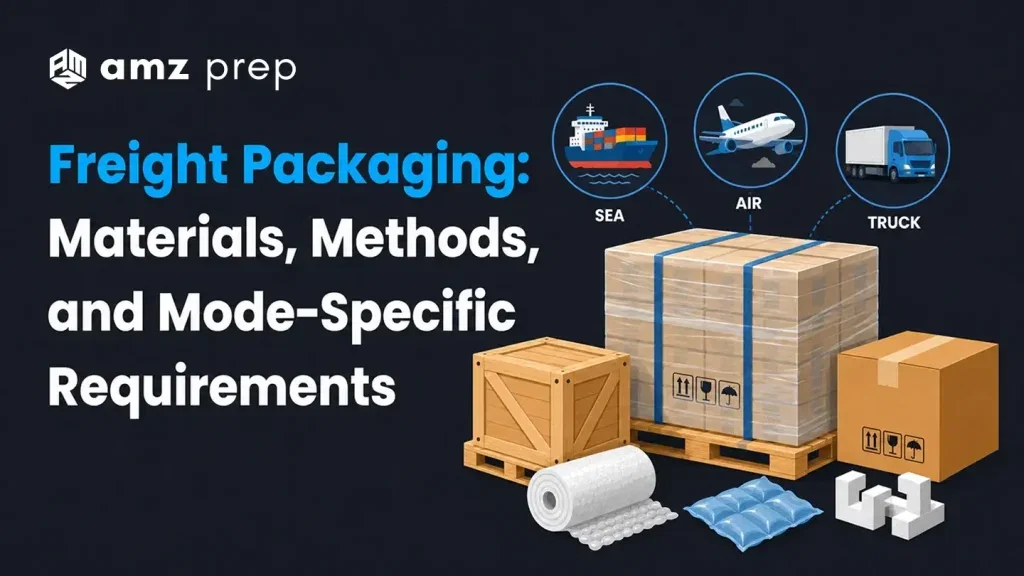
Air freight is about weight. Sea freight is about moisture. Road freight is unforgiving about vibration and stacking.
Across the freight lanes we run at AMZ Prep, I have watched the same product survive one lane and fail another because the packaging was built for the wrong trip.
This guide covers materials, mode-specific requirements, and the equipment that holds a load together.
What Freight Packaging Is
Freight packaging is the full set of materials and methods used to protect goods moving in bulk. It is different from retail or parcel packaging.
Parcel packaging protects a single item through a few handling touches. Freight packaging protects palletized or containerized loads through forklifts, terminals, and long transit.
The core job across every mode
The goal stays the same no matter how freight travels. Keep the product still. Absorb shock. Block moisture. Spread weight evenly. What changes is the priority, and that depends on the mode.
| Freight mode | Top packaging priority | Common materials |
|---|---|---|
| Air | Low weight, rigid protection | Molded fiber, lightweight corrugated, foam |
| Sea | Moisture and long-transit protection | VCI film, desiccants, heat-treated crates |
| Road and LTL | Stacking and vibration resistance | Pallets, stretch wrap, corner boards |
Freight Packaging Materials That Survive Transit
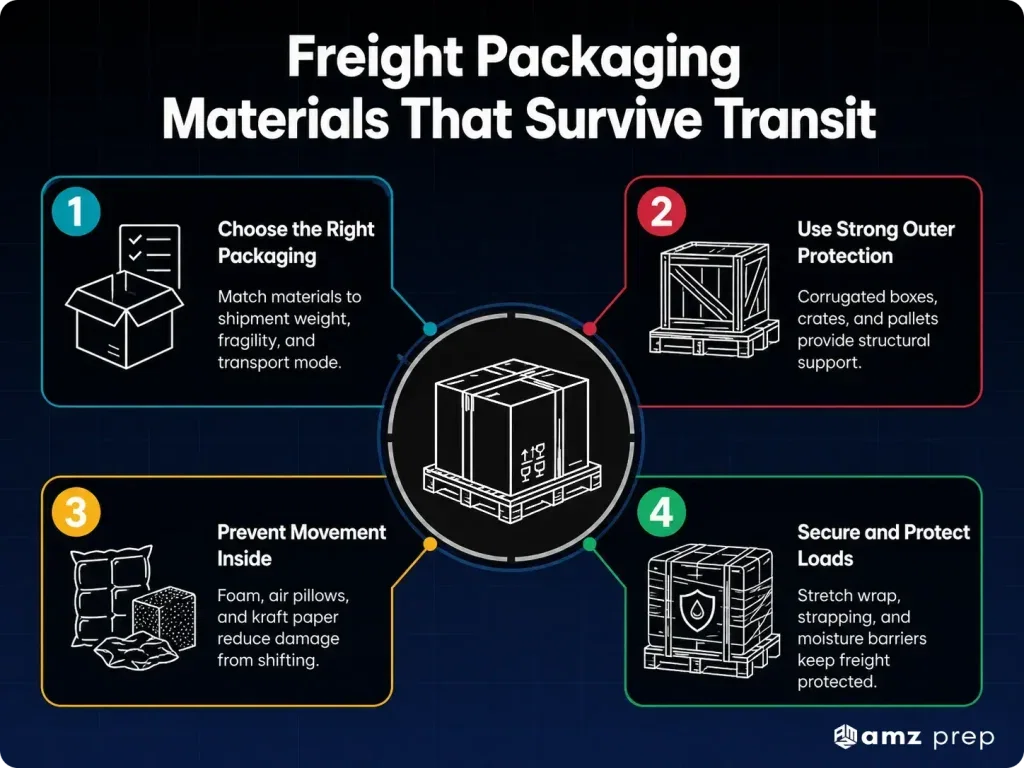
The right material depends on weight, fragility, and the mode. These are the freight packaging materials I see used most across enterprise lanes.
Boxes, crates, and pallets
Corrugated boxes handle most lighter freight. A single wall works for low-weight goods. Double and triple walls hold up under stacking and rough handling. Wood crates and pallets carry heavy or high-value items. They give forklifts a clean lift point and protect the base.
Cushioning and void fill
Foam inserts, air pillows, and kraft paper fill the empty space inside a container. Empty space is where damage starts. Right-sizing the package matters too. Oversized boxes waste material and raise cost, which ties directly into reducing freight spend on oversized loads.
Securing and load protection
Stretch wrap unitizes a pallet so it moves as one block. Steel and polyester strapping lock the load down. Edge and corner boards protect carton corners from crushing. Desiccants and moisture barriers protect goods on long or humid routes.
Choosing the right pallet
The pallet under a load matters as much as the box on top. Block pallets give four-way forklift access and handle heavier weight. Stringer pallets cost less and suit lighter loads. Plastic pallets resist moisture and meet hygiene needs. Wood is cheaper and easy to repair. Match the pallet to the weight and the mode.
Labeling and marking
Labeling is part of the packaging, not an afterthought. Every freight load needs clear shipper and receiver details, handling marks like “this side up,” and orientation arrows. Fragile and hazard marks go where handlers can see them. Clear marking cuts mishandling across every mode.
How to Package Freight in Five Steps
A repeatable process keeps quality steady across shipments. This is the sequence we follow on the floor.
- Size the container to the goods so there is little empty space to fill.
- Wrap or cushion each item and fill all voids so nothing shifts.
- Seal every seam with proper tape or banding to lock moisture and handling damage out.
- Build the load onto the right pallet with even weight and no overhang.
- Label and mark the package clearly, then weigh it before it ships.
Air Freight Packaging Requirements
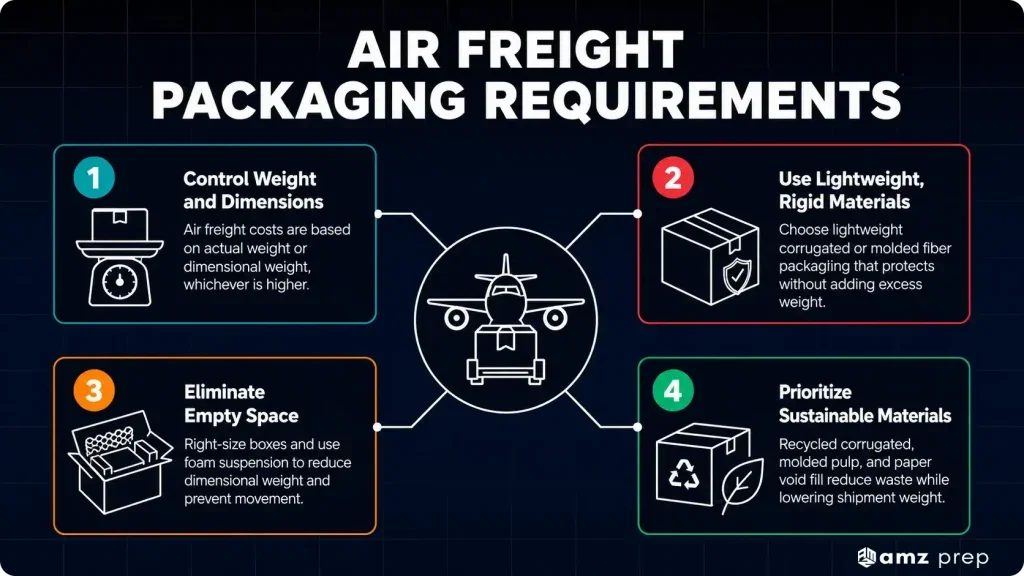
Air freight charges by weight or dimensional weight, whichever is higher. That single fact drives every decision. The air freight packaging requirements that matter most are weight control, rigidity, and clear labeling.
Cargo also sees pressure and temperature swings. Loads get stacked and moved fast across the apron. Packaging has to stay rigid through all of it without adding bulk.
Packing light without losing protection
Use lightweight rigid materials instead of heavy wood where the weight allows. Molded fiber and lightweight corrugated protect well at a fraction of the weight. Right-size the box to the product. Every inch of empty space adds billable dimensional weight. Foam suspension holds fragile items in place without filling the box with heavy material.
Sustainable options for air freight
Weight reduction and sustainability point the same direction in the air. Sustainable air freight packaging uses recycled-content corrugated, molded pulp, and paper-based void fill. These cut weight and waste at the same time. Lighter loads also lower fuel burn per shipment. This approach fits inside broader sustainability practices across fulfillment networks.
Sea Freight Packaging
Ocean transit is long and wet. Containers can sit for weeks. Temperature shifts cause condensation inside the box, sometimes called container rain. Sea freight packaging is built around moisture control and long-haul stability.
Moisture control for long transit
Use VCI film and desiccants to protect metal and moisture-sensitive goods. Seal cartons fully so humidity stays out. Heavy ocean loads usually need wood crates or pallets. Any wood crossing borders must meet ISPM 15 heat-treatment rules, so confirm the stamp before booking.
Securing loads against vibration
Vibration is constant at sea. Strap and brace the load so nothing shifts inside the container. We see this most on long ocean lanes, where a carton that passed every drop test still arrives soft because moisture got in.
Block and brace heavy items against the container walls. The longer the journey, the more this matters — and for brands shipping across borders, proper bracing is only half the job; the other half is choosing a forwarder who handles the route, the handoffs, and customs without your cartons sitting on a hot dock for a week.
Packaging for Hazmat and Temperature-Sensitive Freight
Some freight needs more than a strong box. Hazardous goods and temperature-sensitive products carry their own packaging rules, and getting them wrong stops a shipment cold.
Dangerous goods packaging
Hazmat freight needs UN-rated packaging built and tested for the specific class of goods. Use the correct inner and outer containers, approved absorbents where required, and clear hazard labels and placards. Documentation has to match the markings. Carriers reject loads where the packaging and paperwork do not line up.
Cold chain and temperature control
Temperature-sensitive freight needs insulated containers, gel packs or dry ice, and sometimes active reefer transport. Pack to hold the target range for the full transit time, not just the first leg. Label the load as temperature-sensitive so handlers route and store it correctly.
Freight Packaging Equipment
The right tools turn good materials into a secure load. Freight packaging equipment ranges from simple hand tools to floor machines, depending on volume.
Hand tools for lower volume
Strapping tools and tensioners pull steel or polyester banding tight by hand. Banding carts keep strapping and tools at the packing station. For lower-volume shippers, hand tools cover most needs.
Machines and scales for higher volume
Stretch wrap machines unitize pallets faster and tighter than hand wrapping, which matters at volume. Dunnage bags fill the gaps between pallets to stop shifting. Floor scales confirm weight before a load ships, which protects against billing surprises and overweight rejections. Planning the load itself starts with calculating the best pallet configuration before anything is wrapped.
Common Freight Packaging Mistakes
Most freight damage traces back to a few repeat errors. Catching them early keeps claims low.
- Leaving voids unfilled lets items shift and collide in transit.
- Stacking heavy cartons on weak ones crushes the load from inside.
- Skipping corner boards leaves carton edges exposed to clamp and strap pressure.
- Letting boxes overhang the pallet edge invites crushing at every handling point.
- Under-wrapping a pallet lets the stack lean and topple.
Each one is preventable with the right material and a steady process.
Matching Packaging to Ground and LTL Freight
Ground and LTL freight carry their own rules, since shared trailers mean more handling touches and stacking pressure from other shipments. The palletizing standards for LTL shipments cover shrink wrap, corner boards, and even stacking in depth.
For breakable goods, palletizing fragile items against compression and shock walks through cushioning and load layering.
Brands sending steady volume into Amazon also gain from consolidation, where packaged loads ride existing FBA truck routes through our Middle Mile network. Consistent pallet build and labeling keep that flow moving without rework at the dock.
Documentation that travels with the load
Good packaging includes the paperwork. A packing list, an accurate weight declaration, and the right compliance marks travel with the freight. A DOT number lookup can also help shippers verify a motor carrier’s identification details when arranging ground freight. International wood needs the ISPM 15 heat-treatment stamp. Missing or mismatched documents cause holds and rejections, even when the packaging itself is sound.
Conclusion
Freight packaging is not one decision. It is a different decision for every mode a brand ships through. Air rewards weight discipline. The sea rewards moisture defense. Ground rewards stacking strength.
The teams that audit packaging lane by lane, rather than reusing one spec everywhere, are the ones who watch damage rates fall and freight bills shrink over time.
As shipping volumes grow and modes multiply, packaging becomes a standing part of the freight strategy, reviewed each time a new lane opens or a product line changes.
Frequently Asked Questions
What is freight packaging?
Freight packaging is the protective system used to prepare goods for bulk transport by air, sea, or road. It includes outer containers, cushioning, sealing, and securing materials chosen to match the handling stress of each freight mode.
How do you package freight for shipping?
Start with a rigid outer container sized to the goods. Add cushioning to fill voids and absorb shock. Seal seams, then secure the load with strapping or stretch wrap. Match material strength to the freight mode and handling.
What materials are used for freight packaging?
Common freight packaging materials include corrugated boxes, wood crates and pallets, foam inserts, air pillows, kraft paper, stretch wrap, steel and polyester strapping, edge protectors, and desiccants. Material choice depends on weight, fragility, and the freight mode.
What is the best packaging for fragile freight?
Fragile freight needs a double-wall box or crate, full void fill, and foam suspension around the item. Corner boards and careful palletizing protect against stacking pressure and vibration during multi-touch handling.
What is pallet packaging in logistics?
Pallet packaging means securing goods onto a pallet as one stable unit for forklift and freight handling. It uses stretch wrap, strapping, corner boards, and slip sheets so the load moves as a single block.
How do you prevent damage in freight shipping?
Prevent damage by sizing the container to the goods, filling all voids, and sealing seams fully. Secure the load with strapping and stretch wrap. Label orientation clearly and palletize evenly so weight stays balanced across the base.

Chadwick Collins is an Enterprise Fulfillment Consultant at AMZ Prep, where he partners with high growth ecommerce brands to design and scale Amazon first logistics strategies. He brings extensive experience in freight, supporting brands across domestic and cross border transportation, routing optimization, and cost control.
At AMZ Prep, Chadwick works closely with enterprise clients to improve inventory flow, reduce landed costs, and accelerate delivery performance across North America. His expertise spans FBA, DTC, and B2B fulfillment, with a strong focus on aligning freight strategy with overall supply chain efficiency. He helps brands navigate complex logistics challenges while turning operations into a competitive advantage.
















Comments