
The platform decision that will make or break your online business
You’re standing at a crossroads of your entire e-commerce journey. The Etsy vs Shopify debate has consumed your countless hours of time. Meanwhile your competitors have already started building their empires.
The truth? There’s no perfect online store platform. The right platform for your specific business depends on goals, budget, and growth ambitions.
We have crafted a tailored blog which isn’t about features and pricing tables of Etsy and Shopify. It’s about understanding which platform aligns with your vision.
Few questions to ask yourself,
Do you want the built-in marketplace traffic of an Etsy store, or the complete brand control of Shopify? Do you know how to sell on Etsy?
Are you a creative seller who needs immediate access to buyers, or an ambitious entrepreneur ready to build from the ground up?
Stop second-guessing yourself. Your competitors aren’t waiting, and neither should you. AMZ Prep is a 3PL company, engineered with ecommerce order fulfillment services that satisfies your omnichannel requirements. Get the best custom quote for your brand.
Continue reading to explore the comparison that you’re looking for.
Etsy vs Shopify: What’s the Real Difference
Etsy – The Fast Track to Revenue (But at What Cost?)
Etsy is a marketplace that offers a great opportunity for new sellers like you.
You have access to 96.6 million active buyers and 400 million monthly visitors, creating a comprehensive marketplace ecosystem. You find Etsy to be highly engaging and profitable.
Your Reality Check:
- You’ll never own your customers—Etsy does
- One algorithm change can destroy your business overnight
- You’re fighting over a shrinking pie in a saturated market
- But you’ll make money faster than any other platform
Shopify – The Billionaire’s Playground (If You Have What It Takes)
This is where fortunes are built. Shopify has achieved a benchmark of $235.9 billion in gross merchandise volume. Yes, that’s 19X more than Etsy’s entire marketplace.
Your Wake-Up Call:
- Unlimited growth potential
- You have control over customers, data, and destiny
- Initial shoot-up of driving traffic takes time
Etsy vs Shopify: The Numbers that Matter
Discover the compare chart incorporated with sales volume, user base, and revenue potential.
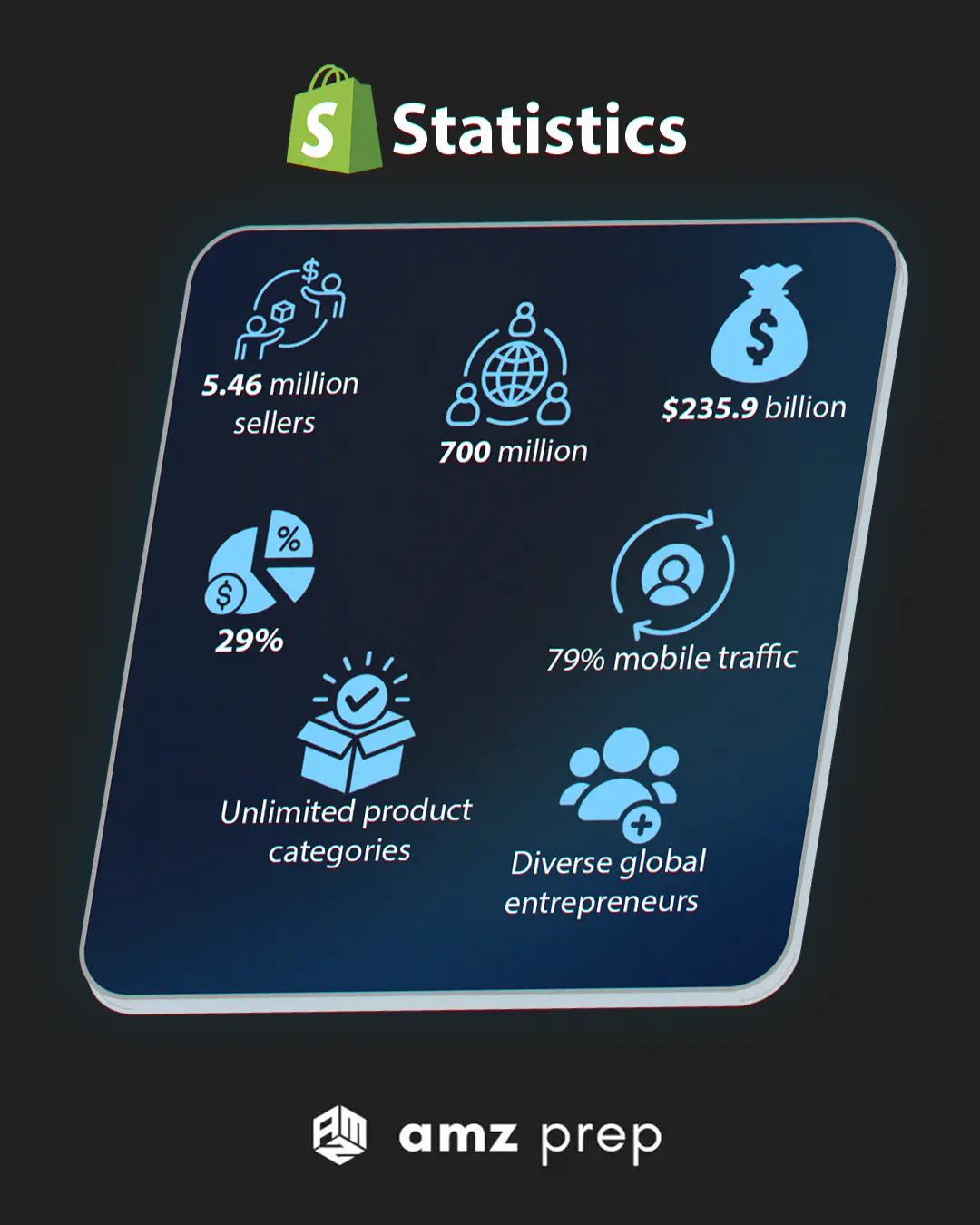
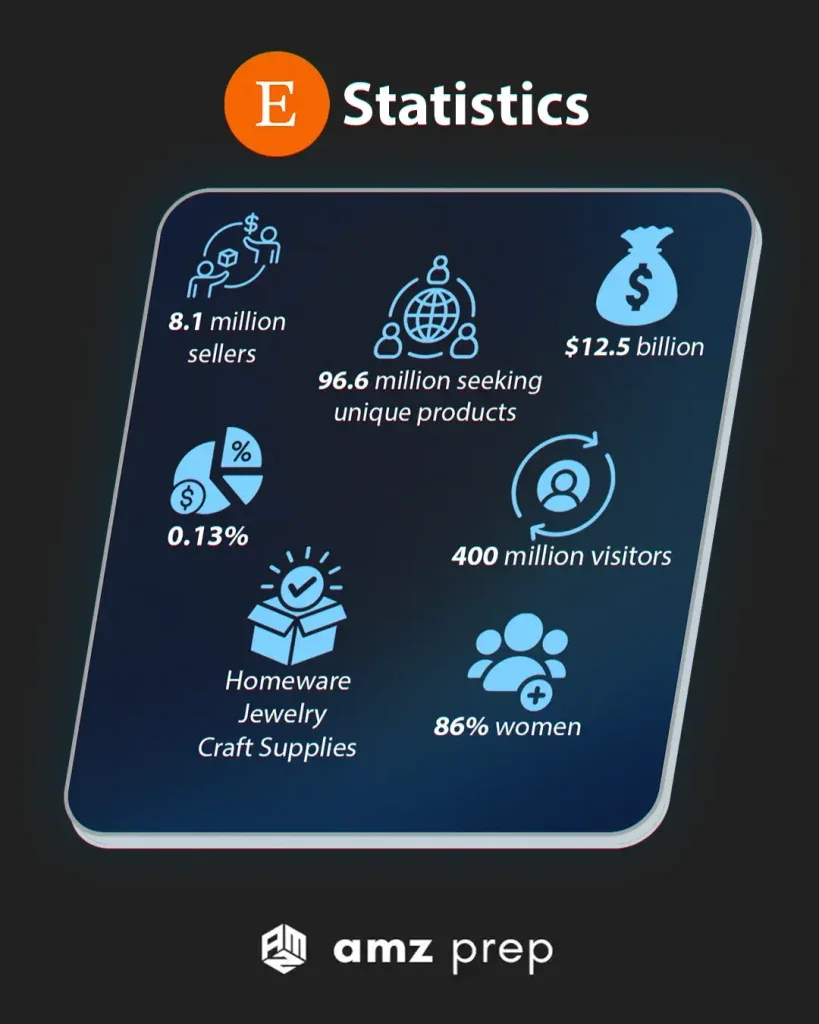
| Platform Metrics | Etsy | Shopify |
|---|---|---|
| Active Sellers/Stores | 8.1 million sellers clawing for attention | 5.46 million stores across 175+ countries |
| Active Buyers | 96.6 million seeking unique products | 700 million global customers |
| Gross Merchandise Volume | $12.5 billion (DECLINING for 3 years) | $235.9 billion (19X larger than Etsy) |
| Platform Revenue | $2.8 billion | $7.1 billion (unstoppable growth) |
| U.S. Market Share | 0.13% (tiny slice) | 29% (market domination) |
| Monthly Traffic | 400 million visitors (platform dependent) | 79% mobile traffic (owner driven) |
| Seller Demographics | 86% women, 97% home-based | Diverse global entrepreneurs |
| Top Categories | Homeware, Jewelry, Craft Supplies | Unlimited product possibilities |
Etsy vs Shopify Pricing: What You Really Pay
It’s so cheap to start!” they say. Here’s the financial prison they’re building around you. Before you scale, learn how to calculate Etsy profit properly, including fees, margins, and all:
| Cost Breakdown | Etsy: The Hidden Wealth Transfer | Shopify: Transparent Business Investment |
|---|---|---|
| Listing Fees | Etsy charges $0.20 per item (4-month duration) | None – unlimited product listings |
| Transaction Fees | 6.5% of every sale (permanent tax) | None – you keep what you earn |
| Payment Processing Fee | 3% + $0.25 per transaction | 2.9% + $0.30 (Basic plan) |
| Monthly Platform Fee | $0 (but 15.7% total fees) | $29-$299 (but 4.2% total costs) |
| Advertising Costs | $0.50-$2.00+ per click (expensive) | Full control over ad spend and platforms |
| Annual Cost at $36K Revenue | $5,640 (15.7% of revenue) | $1,500 (4.2% of revenue) |
| Break-Even Point | Never – fees increase with success | $800/month sales (then Shopify cheaper) |
| Cost Trajectory | Rises with every sale forever | Decreases as percentage of revenue |
You’re paying premium prices to rent a corner in someone else’s shopping mall(Etsy).
“It’s so expensive!” they whine (Shopify). Here’s your real investment in freedom.
Once you hit $800/month in sales, Shopify is cheaper and you own your entire business infrastructure.
Etsy vs Shopify: Which Platform is Easier?
Explore setup, user interface, and management tools to find out which platform saves you time and hassle.
| Factor | Etsy | Shopify |
|---|---|---|
| Setup Time | Minutes – list products immediately | Hours/Days – comprehensive store setup |
| Technical Knowledge | Zero required – platform handles everything | Moderate – learn business systems |
| Learning Curve | Minimal – stay in comfort zone | Steep – develop real skills |
| Skill Development | None – become platform dependent | Extensive – marketing, SEO, business ops |
| Business Control | None – Etsy controls your destiny | Complete – you control everything |
| Scalability | Limited by platform constraints | Unlimited based on your capabilities |
| Long-term Value | Expensive hobby with no transferable skills | Valuable business education and assets |
Etsy vs Shopify Marketing: Who Owns Your Success?
Learn how each platform handles marketing reach—and whether you’re building your brand or just renting space.
| Marketing Aspect | Etsy: The Illusion of Support | Shopify: Empire Building Arsenal |
|---|---|---|
| SEO Control | Algorithm dependent, compete with thousands | Complete control, own your domain |
| Email Marketing | Cannot email your customers directly | Unlimited customer communication |
| Customer Data | Etsy owns all relationships | You own every interaction forever |
| Advertising | Limited to Etsy Ads, expensive clicks | Any platform, unlimited strategies |
| Brand Building | Build Etsy’s brand, not yours | Every effort builds your empire |
| Marketing Flexibility | Constrained by platform policies | Implement any strategy you want |
| Traffic Ownership | Platform dependent, can disappear overnight | Multi-channel, compound growth |
| Time Investment | 2-3 hours/week optimizing in someone else’s system | 10-20 hours/week building your empire |
| Long-term Value | Zero – you own nothing | Exponential – every effort compounds |
Etsy vs Shopify Branding: Building Your Identity
Understand how much control you have over your storefront’s look and feel, and how each platform supports brand growth.
| Branding Element | Etsy: The Straightjacket | Shopify: Complete Creative Freedom |
|---|---|---|
| Design Control | Limited to Etsy’s framework templates | Hundreds of themes, unlimited customization |
| Domain Ownership | etsy.com/shop/yourbrand (renting) | YourBrand.com (you own it forever) |
| Brand Experience | Looks like every other Etsy shop | Million-dollar brand appearance from day one |
| Customer Perception | Another Etsy seller | Professional business I trust |
| Customization Options | Banner, logo, limited colors | Every pixel under your control |
| Professional Features | Basic shop policies using templates | Multi-page website, blog, custom functionality |
| Email Addresses | Use your personal email | sales@yourbrand.com builds credibility |
| Brand Value Creation | Zero – exists only in Etsy’s ecosystem | Valuable business asset you can sell |
Etsy vs Shopify Product Freedom: What Can You Sell?
Check the restrictions and flexibility on both platforms to ensure your product line fits without limits.
| Product Category | Etsy: The Categorization Prison | Shopify: Universal Commerce Platform |
|---|---|---|
| Handmade Items | Must personally create/alter | Any handmade products |
| Vintage Goods | 20+ years old with provenance | Any vintage items |
| Digital Products | Printables, patterns, templates only | Software, courses, subscriptions, any digital goods |
| Physical Products | No mass-produced items | Any legal physical product |
| Services | Very limited consulting | Consulting, coaching, appointments, bookings |
| Dropshipping | Strictly prohibited | Full dropshipping capabilities |
| B2B Sales | Individual consumer focus only | Wholesale, bulk selling, B2B functionality |
| Business Model Flexibility | Locked into creative marketplace | Subscriptions, marketplaces, any model |
| Innovation Potential | Limited by platform rules forever | Unlimited expansion as markets change |
Comparison of Etsy and Shopify Fulfillment
What Etsy handles for you:
- In-built shipment price calculation
- Offers tax collection management services for U.S. and international marketplaces
- Discounted shipping rates with USPS and other carriers
- Order management system with built-in customer messaging
- Etsy’s support team handles customer disputes
- Etsy process your payment within 3-5 business days after delivery confirmation
Perfect for craft-focused sellers:
- Suitable for boutique product creation and categories
- Hassle-free logistics management
- Platform handles backend technical requirements
The scalability ceiling:
- Limited to Etsy’s shipping partners and rates
- Very limited access to select integration with advanced fulfillment services
- Cannot scale your fulfillment beyond platform capabilities
- Time to use the profit share depends on Etsy’s payment processing schedule
Shopify’s comprehensive fulfillment:
- Multiple shipping carrier integration: You can partner with 3PL Shopify fulfilment companies, USPS, UPS, FedEx, DHL, and regional carriers to fulfill your shipping needs
- Complex shipping: Weight-based, location-based, product-based pricing
- Diverse inventory management: You can track stock across warehouses and retail locations
- Integration: Your online store can be connected with third-party logistics providers for Shopify fulfillment
- Advanced inventory tracking: You can set customized low stock alerts, automatic reordering, SKU management
- Flexible payment processing: You have the choice to select the available different fee structures and payout schedules
The scaling advantages:
- Negotiated shipping rates: Increase your order volume for better carrier rate
- Dropshipping capabilities: Sell products with customized inventory level
- Subscription fulfillment: Automate recurring product deliveries to customers
- B2B fulfillment: Handle wholesale orders with your pricing and terms
The responsibility reality:
- Involves more initial setup complexity
- Requires ongoing management of your ecommerce store operation
- Customer service becomes your responsibility
- Operational optimization and cost savings depends on your business model
Shopify and Etsy: Who Owns Your Customers?
See who controls the customer relationship—and how that impacts your ability to build loyalty and repeat sales.
| Relationship Aspect | Etsy: Mediated Relationships | Shopify: Direct Customer Ownership |
|---|---|---|
| Customer Data Access | Restricted – Etsy controls information | Complete access – every detail belongs to you |
| Direct Communication | Cannot email customers for marketing | Unlimited email marketing permissions |
| Brand Association | Customers think “I bought this on Etsy” | I bought this from your company |
| Trust Building | Etsy’s reputation provides instant credibility | Must build credibility through professional presentation |
| Customer Service | Etsy mediates disputes and issues | You handle everything – more work, more control |
| Loyalty Programs | Limited platform-controlled options | Custom rewards and retention strategies |
| Repeat Business | Customers may find competitors easily | Direct relationships increase lifetime value |
| Marketing Restrictions | Platform-approved communications only | Any communication strategy you choose |
| Long-term Value | Relationships disappear if you leave platform | Customer base becomes valuable business asset |
Pros and Cons of Etsy and Shopify
Etsy’s Advantage
Marketing Powerhouses:
- SEO automation: Your listed products get indexed automatically for search engines
- Email marketing: Etsy provides you the access to reach millions of subscribers through seasonal campaigns
- Advertising platform: Simple ad creation to market your products to targeted audience
- Social proof integration: You can gather customer reviews and favorites
- Gift guide opportunities: You are allowed to custom inserts in Etsy’s curated collections
Operational Simplifications:
- Simplified shipping management: Rate calculations and discounted label printing can be automated
- Streamlined order processing: Integrated system to manage your sales orders, including how to cancel an Etsy order, and share real time order processing information with customers
- Payment processing security: Etsy handles all financial transactions and fraud protection
Fulfillment Conveniences:
- Discounted shipping rates: Get lower postal rates with Etsy’s volume agreements
- Integrated label printing: Print shipping labels directly from order management
- International shipping support: Simplified global shipping with customs documentation
Customer Trust Benefits:
- Established platform credibility: Buyers trust Etsy’s reputation and policies on product purchases
- Built-in dispute resolution: Platform mediates customer service issues
- Automatic trust signals: Etsy’s brand provides immediate seller credibility
- Community support: Access to seller forums and platform guidance
Low Barrier Entry:
- Minimal upfront costs: Only pay listing and transaction fees
- Strong community support: Active seller communities and educational resources
- Perfect demand testing: Use Etsy to validate high demand low competition products to sell before committing to major inventory investment, reducing your risk while confirming real market appetite.
Etsy’s Limitation Breakdown
Marketing Restrictions:
- Algorithm dependency: Stay updated with platform’s evolving search algorithms
- Limited customer data ownership: Restricted access to buyer information and marketing permissions
- Competitive keyword environment: High competition due to thousands of sellers competing for same search terms
- Platform-controlled visibility: Etsy controls your marketing reach
Operational Constraints:
- Restricted shipping partners: You can partner with Etsy’s approved carriers and services
- Payment processing dependency: Must use Etsy’s payment system with their timeline
- Limited international expansion: Your scalability is constrained by platform’s global capabilities
- Inventory management limitations: You have only access to basic configuration compared to other e-commerce systems
Fulfillment Restrictions:
- Limited customization: You cannot optimize shipping and handling processes beyond platform capabilities
- Restricted packaging options: Your ability to create custom unboxing experiences is limited
- No advanced fulfillment integration: You cannot partner with external sophisticated logistics providers
Customer Relationship Barriers:
- No direct marketing access: You cannot email customers for retention or upselling campaigns
- Etsy-branded experience: Customers associate purchases with platform, not your brand
- Limited loyalty program options: Cannot implement sophisticated customer retention strategies
- Competitive discovery: Platform shows customers with similar seller offerings
Growth Limitations:
- High competition saturation: 8.1 million sellers in declining growth market
- Restricted product categories: Selling beyond handmade, vintage, and craft supplies is constrained
- Limited branding control: Your store has the similar appearance and framework as like your competitors
Shopify’s Advantage
Marketing Supremacy:
- You can optimize your entire e-store for search engines with unlimited content creation, or even integrate professional SEO services to accelerate visibility.
- Email marketing ownership: You can create customized email lists for unlimited communication. With strong email marketing, you can nurture customers through personalized campaigns.
- Social media integration: You can create sophisticated funnels across all platforms
- Advanced analytics access: Get comprehensive data for optimizing marketing performance
- Multi-channel selling: Expand to Facebook, Instagram, Amazon while maintaining control
Operational Excellence:
- Multiple payment processor options: Choose processors that offer you with best rates and features for business
- Advanced shipping configurations: You are allowed to partner with any carriers
- A Shopify shipping calculator helps you compare rates instantly and make smarter fulfillment decisions. If you haven’t yet configured your carriers, our guide on how to add shipping carriers in Shopify walks you through the full setup process.
- Comprehensive business tool integration: You can connect your store with external accounting, inventory, and CRM systems
- International expansion capabilities: Easy to configure for global selling with localized experiences
Fulfillment Mastery:
- Advanced inventory management: Multi-location tracking, automated reordering, and SKU optimization
- Third-party logistics integration: Connect with 3PL fulfillment services for scaling
- Dropshipping capabilities: Sell products without inventory investment and stocking
- Custom packaging solutions: Offer unboxing experiences to customers that build brand loyalty
Customer Ownership Advantages:
- Direct customer relationships: Maintain all customer data and communication channels
- Unlimited marketing permissions: You can email customers anytime for any business promotions
- Brand-focused experience: Every interaction helps you create USP
Scaling Infrastructure:
- Complete branding control: Customize every aspect of customer experience through Shopify selling.
- Multi-channel capabilities: Sell across platforms in addition to your eCommerce store
- Professional business appearance: You can customize your storefront to create design and functionality
Shopify’s Challenge Breakdown
Marketing Responsibilities:
- Zero guaranteed traffic: You must build customer base from scratch through your own marketing efforts
- Complex customer acquisition: Requires personalized strategy to and significant advertising budget to pull customers.
- Competitive landscape: Your store must differentiate with the established brands and platforms in the marketplace
- Learning curve intensity: You have to promote and study multiple marketing channels and tools to sell the products
Operational Complexities:
- More complex initial setup: It takes much time to configure payment, shipping, and tax systems as per the guidelines
- Ongoing management requirements: Responsible for all technical aspects of e-commerce operations
- Customer service ownership: You have to be available to handle all support inquiries and dispute resolution
- Security responsibility: You must create a set of privacy policy to maintain website security and customer information
- Email security: Order and shipping emails are easy to fake, so make sure you implement DMARC for an ecommerce store before customers start getting scam messages in your name
Fulfillment Challenges:
- Complete logistics responsibility: You have to manage end-to-end order fulfillment process
- International complexity: You find it challenging to satisfy the guidelines involved in global shipping, taxes, and regulations independently
- Quality control ownership: You’re responsible for entire customer experience from order to delivery
Customer Trust Building:
- Credibility establishment requirement: Building customer trust without marketplace backing involves more effort
- Professional presentation necessity: Your Shopify’s design and user experience is decision maker of sales conversions
- Review and testimonial generation: You have to make strategy to actively collect and display customer reviews
Investment Requirements:
- Higher upfront costs: Monthly fees plus additional costs for themes, apps, and marketing
- Technical knowledge needs: More sophisticated understanding of e-commerce operations
- Time investment intensity: Significant hours required for setup, marketing, and management
- Financial risk exposure: Must invest in business infrastructure before generating sales
Shopify vs Etsy: How to Choose the Right Platform
Sell on Etsy if You:
Prioritize immediate revenue with minimal investment
- You have to test market demand for your product with limited budget
- You should do unique product creation to standout
- Need income quickly and accept platform dependency trade-offs
- You brand should sell handmade, vintage, or creative items that fit Etsy’s ecosystem
- You must allocate minimum of 10 hours/week for business development
- Want simplified operations without technical learning curve
- You are satisfied with the present saturated marketplace for built-in traffic
Use Shopify Store if You:
Prioritize long-term wealth building through business ownership
- You must be committed to building brand value and aim to scale business asset
- You should hold the expertise in marketing and budget strategy for customer acquisition
- You aim to have complete control over customer relationships and data
- You brand sell products beyond Etsy’s restricted categories
- You value customer ownership and interest over immediate platform traffic
- Plan for significant business scaling and potential exit value
Consider the Hybrid Strategy if You:
Prioritize risk mitigation with growth potential
- You should test products on Etsy when building your Shopify store infrastructure for selling
- You brand should offer products that fit Etsy categories but plan expansion beyond them
- You must be capable to manage inventory and operations across multiple platforms
- You have a plan to maximize market reach during business development phase
- You must have capacity to execute dual-platform strategy effectively.
Etsy vs Shopify: Your Strategic Action Plan
Turn insights into action with a step-by-step guide tailored to your chosen platform for maximum impact.
| Week | Focus Area | Key Actions | Success Metrics |
|---|---|---|---|
| Week 1 | Market Research | Research 20 competitors, identify gaps, set up seller account, and list your products | Competitive analysis complete, shop policies configured |
| Week 2 | Product Launch | Create 10-20 listings with SEO optimization and professional photos | 10+ products live, competitive pricing set |
| Week 3 | Traffic Generation | Launch Etsy Ads ($5-10/day), join seller communities, create social media | Ad campaigns running, external traffic sources established |
| Week 4 | Optimization | Analyze performance data, scale winners, eliminate losers | Top performers identified, budget reallocated to winners |
The Shopify Empire Building Strategy
Shopify empowers you to scale independently and design a store that grows with your business.
| Week | Focus Area | Key Actions | Success Metrics |
|---|---|---|---|
| Week 1 | Foundation Setup | Choose niche, customize theme, set up essential pages and systems | Professional store live, payment/shipping configured |
| Week 2 | Product & Content | Add 10-25 products, create marketing plan, set up email automation | Product catalog complete, content strategy launched |
| Week 3 | Marketing Launch | Launch social media, begin SEO, set up tracking, start paid ads | Marketing channels active, data tracking implemented |
| Week 4 | Scale & Optimize | Analyze performance, scale successful campaigns, plan expansion | Conversion optimization complete, growth plan established |
The Strategic Hybrid Approach
Combine Etsy’s marketplace visibility with Shopify’s brand control for the best of both worlds. This dual-platform strategy expands reach while building long-term brand equity and customer loyalty.
| Timeline | Primary Focus | Key Activities | Success Indicators |
|---|---|---|---|
| Month 1 | Etsy Validation | Launch 15-20 products, build email list, research brand strategy | Product validation, initial revenue, customer feedback |
| Month 2 | Shopify Development | Invest Etsy profits in store setup, create brand identity, build social presence | Professional store live, brand assets created, content plan active |
| Month 3 | Multi-Platform Launch | Launch Shopify with proven products, drive traffic to owned website, sync inventory | Shopify revenue started, traffic diversification, operational efficiency |
| Month 4-6 | Independence Transition | Reduce Etsy dependency, scale Shopify operations, build direct relationships | Platform independence, higher profit margins, owned customer base |
Etsy vs Shopify: Measuring Your Success
Etsy Performance Indicators
Search and Visibility Metrics:
- Search ranking position: Your product listing appearing on page 1 for your product’s primary keywords
- Shop views: Your store must increase the monthly visitors to your shop product offerings
- Listing views: Each of your SKUS must gain traction such as traffic and engagement
Conversion and Sales Metrics:
- Conversion rate: 2-5% is typical for established shops, 1-3% for new sellers
- Average order value: You have to track customer spending patterns and optimize for higher value product range that give you maximum profitability
- Repeat customer rate: 15-30% return rate of your product indicates increased customer satisfaction
- Seasonal performance: Adjust your strategy during peak selling periods and optimize inventory level for fulfillment
Customer Relationship Metrics:
- Review score: Maintain 4.8+ stars with 50+ reviews for credibility
- Response time: Quick customer message responses improve search ranking
- Customer satisfaction: Monitor feedback themes for product and service improvements
Shopify Performance Indicators
Traffic and Acquisition Metrics:
- Website traffic growth: You should keep track of monthly visitors from diverse traffic sources
- Traffic source diversification: Create marketing strategies to balance a mix of organic, paid, social, and direct traffic
- Mobile optimization performance: Your store should be adaptable to gather 70%+ mobile traffic
- Page load speed: You must ensure that your Shopify store should load within 3 seconds for optimal conversion rates
Conversion and Revenue Metrics:
- Conversion rate: 1-3% typical for new stores, 3-5% for optimized experienced stores
- Average order value: Track and optimize through upselling and cross-selling strategies
- Customer lifetime value: Measure long-term customer worth for marketing budget allocation for products that drive repetitive purchases
- Revenue per visitor: You must analyze the gross revenue data against overall efficiency metric combining traffic and conversion optimization
Customer Relationship and Retention Metrics:
- Email list growth rate: You must do email marketing and use the email finder tool to build subscribers to execute future marketing campaigns.
- Email open and click rates: Optimize your campaign with respect to engagement quality of your customer communications
- Repeat purchase rate: Customer retention indicator and lifetime value driver
- Net Promoter Score: Customer satisfaction and word-of-mouth marketing potential. Focusing on ecommerce customer retention gives companies a competitive edge, as loyal customers tend to spend more and refer others
Etsy vs Shopify: 5-Year Financial Comparison
See how long-term costs, earnings, and scalability stack up over five years to guide smarter investment choices.
| Financial Metric | Etsy | Shopify |
|---|---|---|
| Year 1 Revenue | $6,000-$24,000 | $12,000-$48,000 |
| Year 1 Platform Costs | $900-$3,600 (15% fees) | $1,500-$15,000 (platform + marketing) |
| Year 1 Net Income | $5,100-$20,400 | $7,500-$33,000 |
| Year 5 Revenue | $36,000-$60,000 (plateaued) | $240,000-$1,200,000 (exponential) |
| Year 5 Net Profit | $30,600-$51,000 | $36,000-$300,000 |
| Business Asset Value | $0 (cannot sell platform shop) | $500,000-$3,000,000 (2-5x revenue) |
| Time Investment | 5-10 hours/week (forever) | 15+ hours/week (builds systems) |
| Growth Limitations | Market saturation, algorithm dependency | Unlimited scaling through optimization |
| Exit Strategy | None – income stops when you stop | Valuable business you can sell |
Etsy vs Shopify: Making Your Final Decision
Every successful entrepreneur knows this secret. The platform doesn’t determine your success—your execution does. But the wrong platform can cap your potential forever.
The Uncomfortable Answer:
For Etsy Consideration:
- Willing to start on Etsy and build your business on rented land that someone else controls.
- Algorithm changes might destroy your income overnight
- Comfortable with never owning your customer relationships.
- Satisfied with middle-class income and zero business equity.
For Shopify Consideration:
- Prepared to invest significant time learning marketing and business operations.
- Shopify is great if you can handle the responsibility of driving all your own traffic and customers.
- Commit to building long-term even when short-term results are slow.
- Discipline to reinvest profits into growth rather than lifestyle inflation.
The Success Patterns in Marketing Strategy:
Etsy Success Formula:
- Product excellence: Create items people can’t find elsewhere
- SEO mastery: Become an expert in Etsy search algorithm
- Customer service obsession: Build stellar reviews and repeat customers
- Trend awareness: Stay ahead of seasonal and cultural trends
- Platform optimization: Master Etsy’s advertising and promotional tools
Shopify Success Formula:
- Marketing expertise: Develop sophisticated customer acquisition systems
- Brand building: Shopify offer you to create memorable customer experiences that drive loyalty
- Data-driven optimization: Continuously improve based on performance metrics
- Customer lifetime value focus: Build long-term relationships over quick transactions and customer support
- Scaling systems: Implement processes that support exponential growth and unlimited number of products
- Shopify community blog: Get recent updates on the tips and strategies to scale your business.
- Shopify partner: Use 3PL like Amzprep and agencies to create your store and to fulfill customer orders.
Your Decision: Stop Researching, Start Selling
The harsh reality: While you’re reading this guide, your future competitors are already building their businesses. They’re not smarter or more talented—they just decided and took action.
If You Choose Etsy:
Accept that you’re building a revenue stream, not a business asset. Focus obsessively on product quality and Etsy SEO mastery. Complementing these efforts with shoppable YouTube content allows you to widen your reach and create engaging visual experiences for your audience. Plan your eventual transition to business ownership, using Etsy as a stepping stone rather than a destination.
If You Prefer Shopify:
Commit to becoming a real entrepreneur. Invest in learning marketing, embrace the challenges of customer acquisition, and build something valuable that you own completely. Unlike Etsy, your first year will be harder, but your fifth year will be transformational.
If You Choose Both:
Execute the hybrid strategy with clear timelines and graduation criteria. Use Etsy to validate and fund your Shopify empire, but never lose sight of the ultimate goal to run your business and to lower fees. Partnering with the best 3PL company like AMZ Prep helps you to achieve the primary goal in fulfilling your customer orders on Etsy and Shopify.
The Final Word
In 10 years, you’ll be somewhere. The question is whether you’ll be in the same place you are today, slightly better off from platform income, or significantly wealthier from building a real business.
Your platform choice today determines your entrepreneurial legacy tomorrow.
The clock is ticking. Your future customers are buying from someone else right now. Your competitors are gaining market share while you hesitate.
Choose your platform. Build your empire. Start today.
Because in business, as in life, the biggest risk is not taking one.
FAQs
Etsy vs. Shopify—what’s the difference?
Etsy offers immediate exposure in a shared marketplace. Shopify gives you the tools to build a brand that’s all your own. If you’re serious about branding, Shopify puts you in control.
What about pricing? Who wins?
Etsy’s pay-as-you-go model works well at first. But for growing businesses, Shopify’s predictable monthly fee and lower sales costs help protect your margins and scale sustainably.
Which brings more buyers?
Etsy connects you to millions of ready-to-buy shoppers. Shopify requires effort. But you own the customer relationship, data, and marketing.
Which platform is better for long-term growth?
Shopify wins when it comes to scaling. With access to advanced tools, flexible customization, and full control over customer interactions, it’s designed to grow with you.
Is using both a smart move?
Many sellers start on Etsy for fast traction, then build their Shopify store to gain independence and expand their business. It’s a powerful growth path.

Arishekar N is a Vice President (VP) of Marketing at AMZ Prep, specializing in ecommerce fulfillment and Amazon logistics strategies with a proven track record of driving growth for e-commerce businesses. He is a strategic leader with extensive expertise in marketing, e-commerce operations, SEO & advertising, and branding.
Stay updated on his latest insights by following him







The comparison of fees and long-term costs made it much easier to understand which platform fits different business goals.
The marketing differences between the two platforms were explained really well.
The cost comparison helped me understand when switching platforms makes sense.
I liked how customer ownership and branding control were explained for Shopify.
A clear and balanced comparison that makes choosing between Etsy and Shopify easier.
The scalability comparison really stood out and helped me think long term.
Using both platforms together is a smart suggestion that I hadn’t considered before.
Simple and informative, the setup difficulty section was especially useful.
This article clearly shows why Etsy works for beginners and Shopify for growing brands.
Very helpful breakdown of Etsy vs Shopify — the pros and cons are explained clearly.