
As of January 1, 2026, Amazon no longer offers prep and labeling services for FBA shipments in the U.S.
If you’ve been relying on Amazon to wrap, label, and prep your products, that option is about to disappear. This means sellers are now fully responsible for making sure every product is retail-ready before it reaches Amazon’s fulfillment centers.
For many sellers, this is the final call to rethink your FBA strategy. So here’s the question: why wait until you’re forced out?
Amazon fulfillment isn’t as straightforward as it sounds. Significant FBA storage fees, frequent rule changes, long-term inventory penalties, and limited branding control exist. Most concerning of all? No direct connection with your own customers.
Here are the best Amazon FBA alternatives to help you regain control, reduce costs, and grow your brand effectively.
Types of Amazon FBA Alternatives
There are five main ways to fulfill orders without relying fully on FBA. Most brands combine two of them.
Fulfilled by Merchant (FBM)
FBM means you or a 3PL store, pack, and ship Amazon orders. You avoid FBA storage and fulfillment fees. You lose the Prime badge unless you qualify for SFP.
Seller Fulfilled Prime (SFP)
SFP lets you or a 3PL ship Prime orders from your own warehouse. You must meet Amazon’s delivery speed and on-time standards to keep the badge.
Ecommerce Fulfillment Providers (3PLs)
An ecommerce fulfillment provider stores your inventory and ships orders from every sales channel. Many also prep and send inventory into FBA. One partner can cover Amazon, Shopify, Walmart, and retail.
Walmart Fulfillment Services (WFS)
WFS works like FBA for Walmart.com orders. It suits brands growing a second marketplace, but it is built mainly for Walmart orders.
Hybrid FBA Plus 3PL
Many brands keep fast sellers in FBA and route other orders through a 3PL. The 3PL also preps and replenishes FBA inventory, which keeps stock steady.
| Option | Who stores inventory | Prime badge | Branded packaging | Best for |
|---|---|---|---|---|
| Amazon FBA | Amazon | Yes | No | Amazon-first sellers with steady volume |
| FBM | You or your 3PL | No | Yes | Oversized, slow-moving, or high-margin SKUs |
| Seller Fulfilled Prime | You or your 3PL | Yes | Yes | Brands that can meet Amazon’s delivery standards |
| Ecommerce fulfillment provider | 3PL | Through SFP or FBA replenishment | Yes | Brands selling on several channels |
| Walmart Fulfillment Services | Walmart | Walmart 2-day tag | No | Brands growing on Walmart.com |
What to Look for in an Amazon FBA Alternative
Use these six criteria to compare fulfillment partners before you switch.
Skip to the list of top Amazon FBA alternatives to see all 9 options.
Transparent Pricing Structure
Amazon’s fee structure changes often. Storage rates shift by season, and aged inventory surcharges add up fast. Margins can shrink before you notice.
When comparing fulfillment alternatives, it’s smart to ask for a clear pricing breakdown from the start. Make sure storage fees, pick and pack costs, shipping rates, and any extra charges are explained upfront.
Inventory Control and Operational Flexibility
Amazon maintains complete authority over inventory once it arrives at their facilities. Products that fail to meet specific prep requirements face delays or rejection.
Better fulfillment partners provide more control over storage methods, packing procedures, and shipping protocols. They also accommodate seasonal fluctuations like expanding capacity during peak periods and adjusting during slower months as business needs change.
Custom Branding Opportunities
Every Amazon shipment goes out in Amazon’s boxes with Amazon’s branding. There is no mention of your brand on the package you send to customers.
Third-party logistics providers let you use your own packaging. You can design boxes with your logo, add branded inserts, and control the unboxing experience.
Responsive Customer Support
Amazon’s Seller Support runs on a ticket system. Replies can take days, and complex issues often need several tickets.
Quality fulfillment providers give you a dedicated contact who knows your account. When issues come up, you can reach someone directly. Problems get resolved faster because you’re not starting from scratch each time you need help.
Infrastructure That Scales
FBA works when order volume is predictable. But when growth accelerates or seasonal demand hits, fulfillment can become a constraint on your business.
The right partner has infrastructure already built out. Multiple warehouses are operational, orders get routed based on where they’re going, and extra capacity exists for growth. When your business expands, you won’t be switching providers or renegotiating terms.
Accessible Performance Data
Amazon spreads operational data across many Seller Central reports. Tracking costs, inventory, and errors means pulling several of them.
Better fulfillment providers give you a dashboard where everything is visible. Check inventory counts, track orders in transit, review fulfillment costs, and monitor performance without requesting special reports. The data you need is already there when you log in.
9 Best Amazon FBA Alternatives
These 9 ecommerce fulfillment providers are the strongest Amazon FBA alternatives in 2026.
Before you look at alternatives, understand how selling with Amazon FBA actually works. This confirms whether it genuinely doesn’t fit your business model.
1. AMZ Prep: Best for Amazon and Multichannel Brands
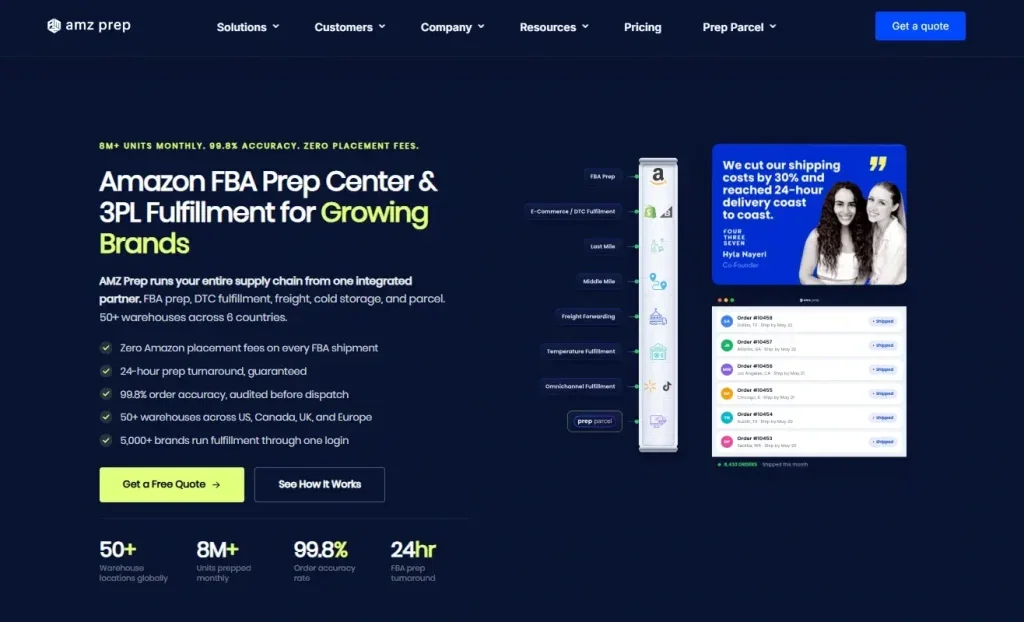
AMZ Prep is an ecommerce fulfillment provider with 50+ fulfillment centers across the US, Canada, the UK, and Europe. It preps and ships inventory into FBA and fulfills DTC, B2B, and marketplace orders from the same network.
Since Amazon stopped prepping FBA shipments, AMZ Prep handles labeling, bagging, bundling, and carton compliance before inventory ships. Its Middle Mile program moves stock into Amazon FCs in 2 to 4 days with zero placement fees. AMZ Prep’s solutions include FBA Prep, DTC Fulfillment, B2B Retail, Seller Fulfilled Prime (SFP), Cold Storage, Pick and Pack Fulfillment, Merchandise Fulfillment Services, Beauty Products Fulfillment, Freight Forwarding, Omnichannel, and Returns.
Key Features:
- Supports 2-day shipping and Seller Fulfilled Prime. The guide on how to pass the Seller Fulfilled Prime trial covers what Amazon checks.
- he FBA Prep App automates shipping plans, labeling, kitting, and bulk shipments, with 24-hour prep turnaround.
- Easily connect with popular platforms, including Shopify, WooCommerce, and eBay.
- Itemized pricing covering storage, per-order fees, and onboarding.
- Rated 4.9 out of 5 on Clutch across 90+ verified client reviews.
- They use environmentally responsible practices including sustainable packaging and initiatives to reduce carbon footprint.
- Runs Prep Parcel by AMZ Prep, a parcel service with zone skipping and US-Canada cross-border routing for DTC orders.
Amazon FBA vs 3PL
The breakdown of Amazon FBA vs 3PL shows when each model costs less.
Read the Comparison →2. SHIPHYPE – Best for Amazon FBA Prep and Cross-Border Fulfillment
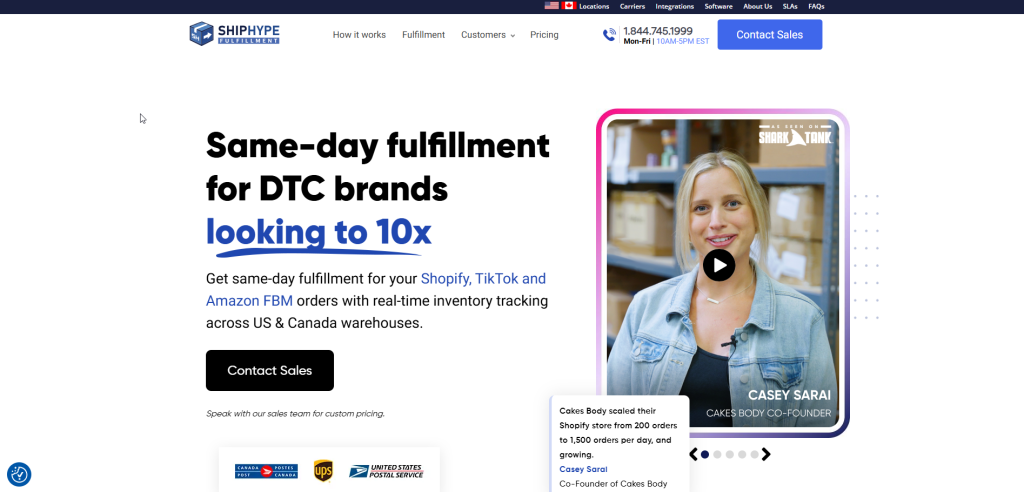
SHIPHYPE is an alternative to Amazon FBA for ecommerce brands looking for a fulfillment partner that supports both marketplace and direct-to-consumer operations. With fulfillment centers across the United States and Canada, SHIPHYPE helps businesses prepare inventory for Amazon FBA while managing orders from Shopify, Walmart, TikTok Shop, and other sales channels through the same fulfillment network.
Their fulfillment solutions are designed to give brands greater operational flexibility without long-term commitments. Amazon FBA prep, kitting, bundling, custom packaging, and returns management are all handled within the same warehouse network, while real-time inventory visibility and dedicated account managers help businesses maintain control as order volumes grow.
Key Features:
- Amazon FBA prep services including inspection, labeling, kitting, bundling, and inventory preparation.
- Fulfillment centers throughout the United States and Canada supporting cross-border ecommerce.
- Integrations with Amazon, Shopify, Walmart, TikTok Shop, WooCommerce, and other leading ecommerce platforms.
- Real-time inventory tracking and order visibility through a centralized fulfillment platform.
- Flexible month-to-month agreements backed by dedicated account management.
- Custom packaging, returns management, and multi-channel fulfillment from a single inventory pool.
3. ShipMonk: Best for Fast, Flexible Fulfillment
ShipMonk runs 12 owned and operated fulfillment centers across the US, Canada, Mexico, the UK, and mainland Europe. It serves growing and enterprise ecommerce brands with 2-day shipping and custom packaging.
Their automated system manages complex logistics tasks, including real-time order updates and accurate tracking. ShipMonk integrates with major eCommerce platforms to increase operational efficiency and uses eco-friendly packaging solutions as part of their sustainability commitment.
Key Features:
- Provides live shipment tracking for sellers and buyers.
- Offers a centralized inventory management platform for monitoring stock levels, reordering, and processing returns.
- Manages order routing that automatically picks the best fulfillment center for speed and cost efficiency.
- Supports businesses from startups to enterprise-level operations.
- Has a dedicated customer support team with fast response times for quick solutions.
4. ShipBob: Best for Omnichannel and Global Expansion
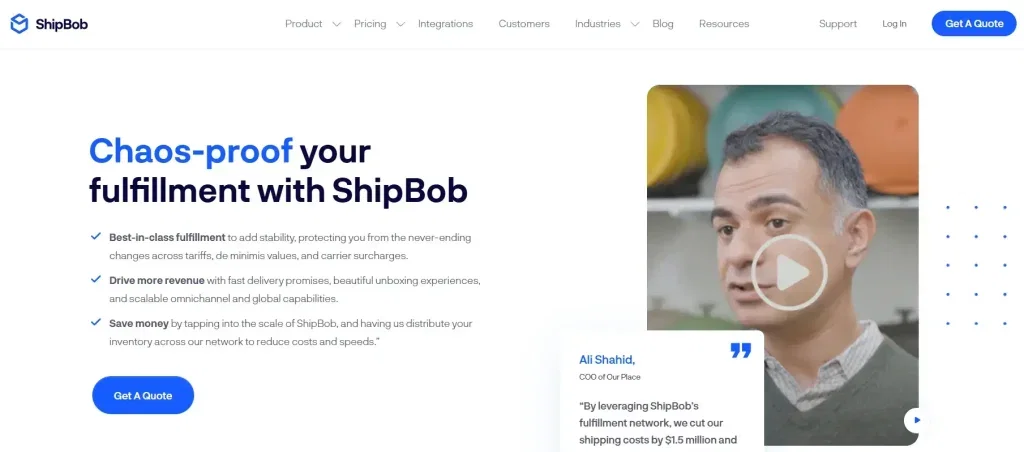
ShipBob runs 60+ fulfillment centers across 5 countries, using a mix of owned and partner-run sites. It focuses on DTC brands that want branded packaging and multichannel fulfillment outside Amazon.
ShipBob also improves the post-purchase experience with fast shipping, branded packaging options, and support across multiple sales channels.
Key Features:
- Helps brands with changing regulations like tariffs and de minimis limits through reliable fulfillment operations.
- Supports fast delivery promises and branded unboxing experiences to enhance customer satisfaction.
- Provides omnichannel and global fulfillment across multiple platforms and countries.
- Distributing inventory across their network cuts shipping costs and improves delivery times.
- Scalable infrastructure works for both growing brands and enterprise-level operations.
Top ShipBob Alternatives
Brands comparing ShipBob can also review the top ShipBob alternatives.
Read the Article →5. Flexport: Best for Freight and Fulfillment Under One Provider
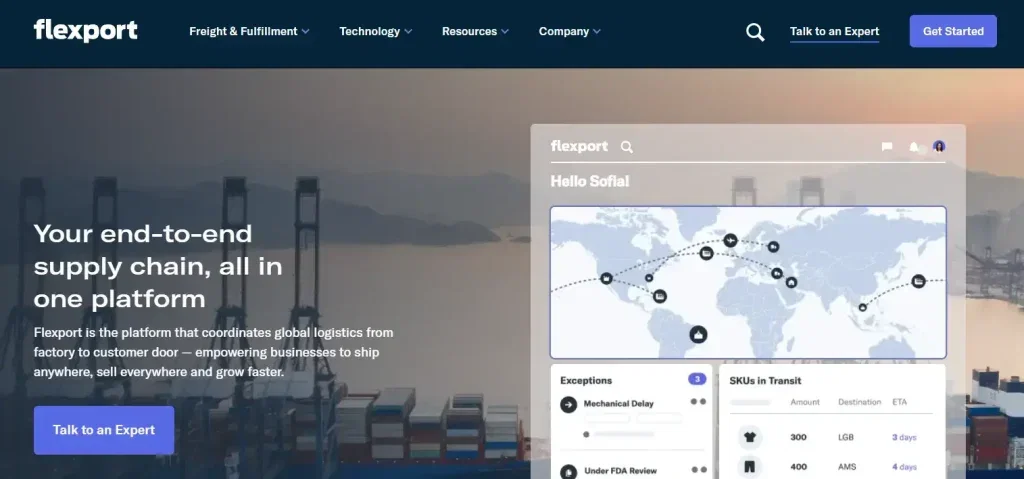
Flexport handles the complex parts of international shipping ocean freight, air cargo, and ground transport while giving you visibility into where everything is. They combine logistics expertise with technology that tracks shipments and organizes data for customs.
For ocean shipping, they manage full container loads and consolidated freight. Digital systems help structure the paperwork, which speeds up customs processing. Air freight customers get charter options tailored to their timeline, plus updates on cargo location as it moves.
Flexport also coordinates trucking drayage from ports, local cartage, full truckload, and less-than-truckload shipments all through one system with pricing set for your account.
Flexport added ecommerce fulfillment through its 2023 acquisition of Shopify Logistics, including Deliverr. Since January 2026, fulfillment accounts carry a $5,000 minimum monthly spend. Flexport Prep handles FBA unit prep, including FNSKU labels and poly bags.
Key Features:
- Access global freight solutions with real-time tracking and SKU-level visibility.
- Flexport’s licensed customs team helps minimize import duties and speed up clearance, even without using its shipping services.
- You can manage all domestic and international ground transport in one place from dispatch to final delivery.
- It supports fast and reliable DTC and B2B fulfillment and simplifies multi-channel selling.
- You can take control over shipments and inventory with a user-friendly dashboard.
6. Red Stag Fulfillment: Best for Heavy and Bulky Products
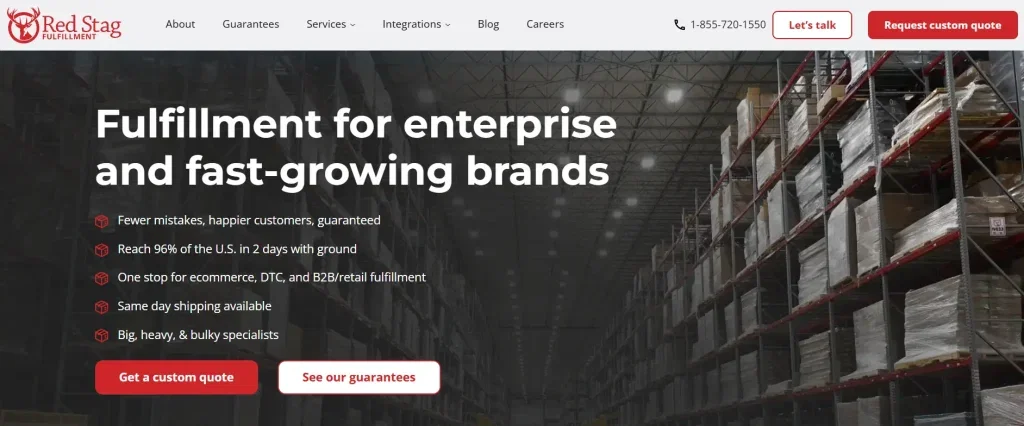
Red Stag Fulfillment specializes in big, heavy, and bulky products requiring specialized handling. They manage difficult inventory reliably without sacrificing delivery speed.
Its two warehouses in Sweetwater, Tennessee and Salt Lake City, Utah reach 96% of the US in 2 days by ground. Same-day shipping is available. Red Stag serves online stores, B2B orders, and retail distribution.
What They Offer:
- Accepts heavy, oversized, and fragile inventory other warehouses turn away
- Supports Amazon Seller Fulfilled Prime for extra-large items and connects to major selling platforms
- Plans inventory levels and assembles product kits or bundles
- Manages LTL freight for bulk orders going to business customers
7. Byrd: Best for European Fulfillment
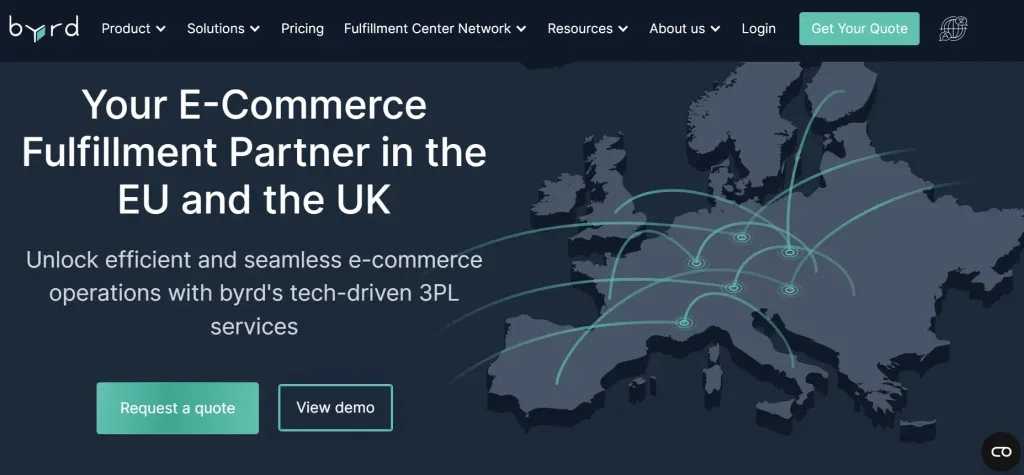
Byrd is a Vienna-based fulfillment platform with 20+ connected warehouses across Europe. Brands link their store through Byrd’s API, and orders route automatically across the network.
They spread inventory across warehouses in different countries. This puts products physically closer to your international buyers, which cuts down on both shipping time and costs. Orders can ship the same day they’re placed.
What They Offer:
- Partner warehouses in multiple European countries with flexible inventory distribution
- Quick API setup using JSON REST interface that works with most ERP and inventory systems
- Same-day shipping when orders process automatically right after purchase
- Rate comparison across different carriers to find cost-effective shipping
- Full returns handling from quality checks through restocking
8. XPDEL: Best for D2C and B2B Order Fulfillment
XPDEL runs a network of fulfillment centers across North America. It picks which warehouse to ship from based on delivery speed and cost. Keep the existing XPDEL link and the rest of the paragraph. Their platform includes analytics that show business trends and live dashboards where you track what’s happening with orders and inventory across locations.
Most eCommerce platforms already have integrations ready, so setup doesn’t drag on. The system selects fulfillment locations without manual routing decisions. Inventory positioning uses demand data to avoid tying up too much capital in stock while preventing sellouts.
Returns work through home pickup if needed, with flexible options for routing returned products back through the network. Their operations center runs continuously, watching for issues that could delay orders and fixing them before customers notice.
What They Offer:
- Fast setup using integrations built for common eCommerce systems
- Automatic warehouse selection based on customer location and shipping cost
- Demand-based inventory positioning to balance stock levels with actual sales
- Home pickup for returns plus flexible routing to return destinations
- Round-the-clock operations monitoring that catches problems early
9. eFulfillment Service: Best for Flexible Contracts
eFulfillment Service prices everything upfront like warehouse space, order processing, shipping without setup fees or contracts that lock you in. Their warehouse staff picks and packs orders with accuracy as the priority, and they move quickly to keep delivery times short.
Their Fulfillment Control Panel runs in your browser and shows order status, inventory counts, and shipment tracking whenever you log in. The system connects to major ecommerce platforms and shopping carts.
Climate-controlled storage protects inventory without monthly minimums or long-term storage penalties. The focus stays on getting orders right and out the door fast using established pick and pack procedures.
What They Offer:
- Upfront pricing without setup fees, connection charges, or required contracts
- Browser-based control panel with live updates on orders, inventory, and shipments
- Ready-made connections for major ecommerce platforms and carts
- Climate-controlled warehouse space without long-term storage requirements
- Pick and pack operations focused on accuracy and speed
Comparison Between Best Amazon FBA Alternatives
This table compares five providers on the features Amazon sellers ask about most.
| Feature | AMZ Prep | ShipBob | ShipMonk | Flexport | SHIPHYPE |
|---|---|---|---|---|---|
| 2-day delivery across major markets | ✅ | ✅ | ✅ | ✅ | ✅ |
| Amazon FBA prep services | ✅ | ✅ | ✅ | ✅ Flexport Prep | ✅ |
| Middle Mile into Amazon FCs | ✅ | ❌ | ❌ | ❌ | ❌ |
| Cold storage fulfillment | ✅ | ❌ | ❌ | ❌ | ❌ |
| Multichannel integration | ✅ | ✅ | ✅ | ✅ | ✅ |
| Fulfillment centers outside North America | ✅ UK and Europe | ✅ | ✅ UK and Europe | Freight only | ❌ |
| Real-time inventory tracking | ✅ | ✅ | ✅ | ✅ | ✅ |
| Custom packaging and kitting | ✅ | ✅ | ✅ | ❌ | ✅ |
| Freight forwarding | ✅ | ❌ | ❌ | ✅ | ❌ |
Choosing Your Amazon FBA Alternative
Start with your channel mix. Amazon-first brands usually keep FBA and add a 3PL for prep, overflow, and SFP. Multichannel brands get more from one provider that ships every channel from one inventory pool.
Request itemized quotes from two or three providers. Compare storage, pick and pack, freight, and Amazon prep fees line by line.
Frequently Asked Questions About Amazon FBA Alternatives
What is the best alternative to Amazon FBA?
The best alternative depends on your sales channels. Amazon-first sellers often use SFP or FBM with a 3PL. Multichannel brands usually choose an ecommerce fulfillment provider like AMZ Prep, ShipMonk, or ShipBob.
Is FBM cheaper than FBA?
FBM often costs less for oversized, slow-moving, or high-margin items because you avoid FBA storage and fulfillment fees. FBA can cost less for small, fast-selling items that benefit from the Prime badge.
Can I keep the Prime badge without using FBA?
Yes. Seller Fulfilled Prime lets you or your 3PL ship Prime orders from your own warehouse. You must meet Amazon’s delivery speed and on-time standards to keep the badge.
Does Amazon still prep FBA shipments in 2026?
No. Amazon stopped offering prep and item labeling for US FBA shipments on January 1, 2026. Sellers must prep in-house or use a third-party prep provider before inventory ships to Amazon.
What does an ecommerce fulfillment provider do?
An ecommerce fulfillment provider stores inventory and ships orders for your online store and marketplaces. Many also handle returns, kitting, B2B orders, and Amazon FBA prep from one inventory pool.
Can I use FBA and a 3PL at the same time?
Yes. Many brands keep fast sellers in FBA and store the rest with a 3PL. The 3PL preps and replenishes FBA inventory and ships orders from other channels.

Arishekar N is a Vice President (VP) of Marketing at AMZ Prep, specializing in ecommerce fulfillment and Amazon logistics strategies with a proven track record of driving growth for e-commerce businesses. He is a strategic leader with extensive expertise in marketing, e-commerce operations, SEO & advertising, and branding.
Stay updated on his latest insights by following him























Switching to a 3PL provider gave us so much more control over our branding.
This is such a helpful guide for exploring new fulfillment options outside of Amazon.
We moved to a hybrid model of FBM and 3PL, and it’s worked out really well for managing costs.
We left FBA because of the high fees—this confirmed we made the right choice.
Keeping inventory local with a smaller fulfillment partner really sped up delivery times for us.
Having flexible options like multi-channel fulfillment is such a boon for growing businesses.
Outsourcing fulfillment to a 3PL allowed us to focus more on scaling our sales.
Fulfillment alternatives that allow for better customer service have made all the difference.
Seeing cost comparisons laid out like this makes it easier to plan for switching services.
Transitioning away from FBA wasn’t easy, but this makes the options much clearer.