
What if I told you that a single shipping mistake could cost your business $50,000 and months of delays?

It happens more often than you think. Companies are ready to expand globally and jump into international shipping, only to watch their products get trapped in customs or hit with unexpected fees that wipe out their profits.
As international trade grows, so does the complexity. Experts predict that global supply chain management will exceed $30 billion by 2026. With demand for international products, the value of distribution and logistics software continues to grow.
That’s where freight forwarders come in, acting as behind-the-scenes logistics experts who manage documentation, compliance, and transport coordination to make global shipping work efficiently. That’s exactly what AMZ Prep’s freight forwarding services are designed to do for eCommerce sellers.
This blog will further walk you through what a freight forwarder does, its types, freight broker vs freight forwarder, and much more.
What Does a Freight Forwarder Do?
The freight forwarder is an entity that serves as the ultimate logistics coordinator. The team who make international shipping look easy when it’s actually complex behind the scenes.
Freight forwarding is about moving imports and exports through the supply chain. These companies work with shipping lines, airlines, trucking companies, and customs authorities to get your goods from point A to point B.
Let’s look at a real example of freight forwarding. You’re importing organic skincare products from a supplier in South Korea to sell on your Shopify store in the U.S.
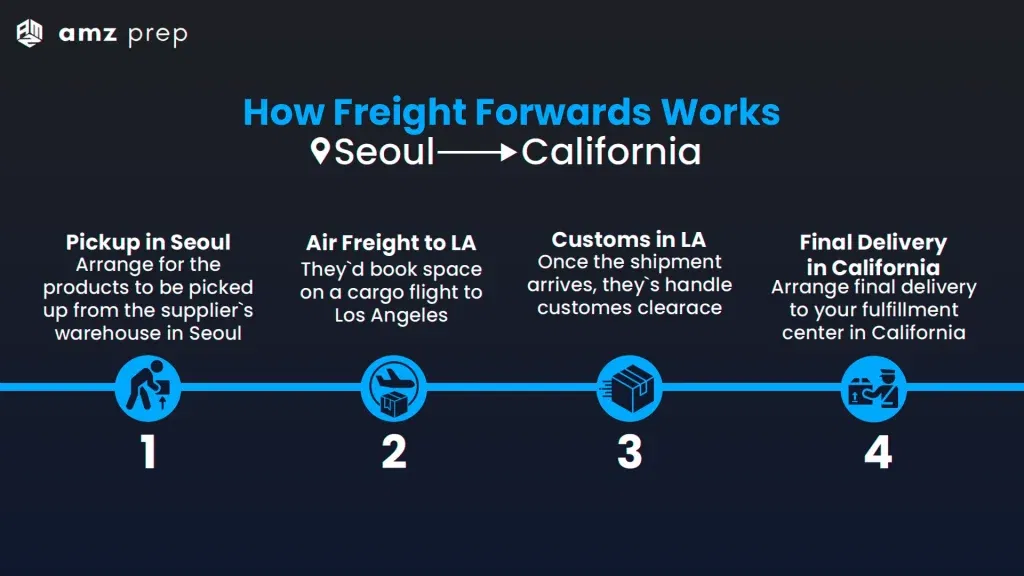
Sounds simple, right? Well, that’s exactly the point. Good freight forwarders offer comprehensive services that make the complex look simple.
What Are the Stages of the Freight Forwarding Process?
Professional freight forwarding follows a systematic shipping process and will make sure nothing falls through the cracks.
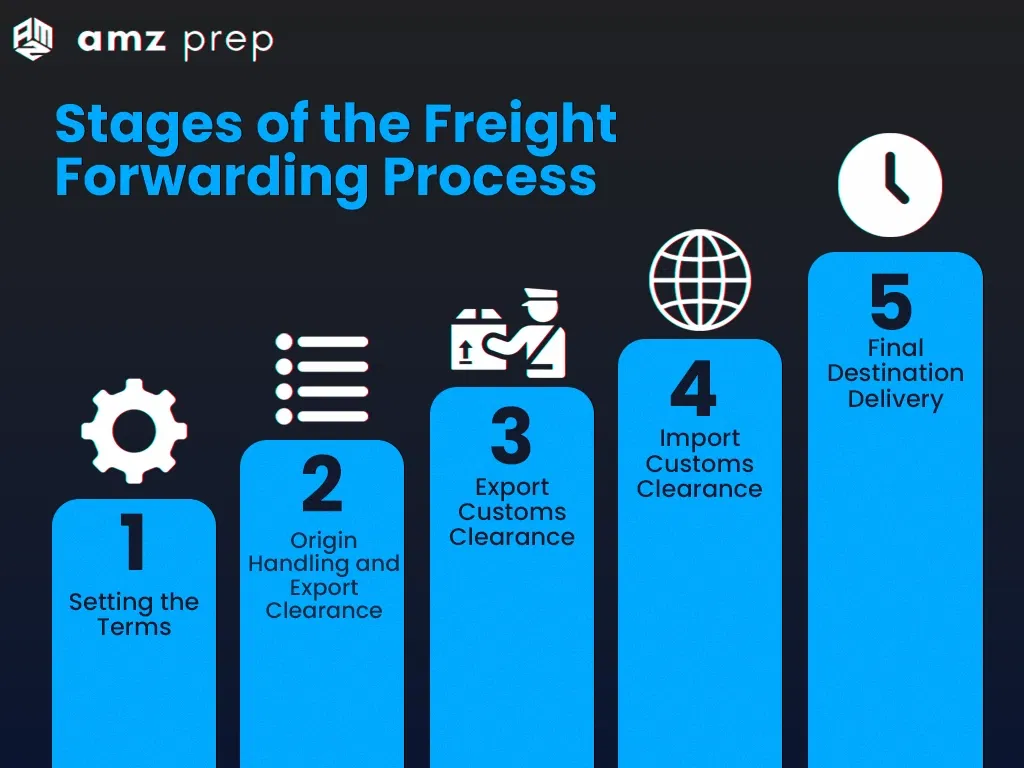
Stage 1: Setting the Terms
Everything starts with International Commercial Terms, or Incoterms. These rules decide who’s responsible for what during the shipment of goods. In short, it establishes the ground rules that prevent disputes later.
Stage 2: Origin Handling and Export Clearance
Once terms are agreed, freight forwarders arrange moving goods from the supplier’s location to the next step. This might be a seaport, airport, or rail terminal. They also handle any required customs inspections at the origin country, managing the loading and unloading goods process efficiently.
Stage 3: Export Customs Clearance
Here’s where the paperwork gets serious. The forwarder coordinates all documentation between supplier and recipient, including the bill of lading and other essential shipping documents. They ensure everything meets legal requirements and carrier standards. Think of it as creating a passport for your shipment, which is why following a proper international shipping checklist can help avoid costly documentation errors.
Stage 4: Import Customs Clearance
When goods arrive in the destination country, customs officials check everything again. Smart forwarders prepare this documentation in advance to avoid delays and handle the payment of import duties, and help businesses avoid hidden customs charges in cross-border shipping because. As nobody wants their inventory sitting in customs limbo.
Suggested Read: A Practical Guide to CUSMA, HTS Codes, and Preferential Duty
Stage 5: Final Destination Delivery
Once customs approves the shipment, the forwarder arranges final delivery. This could be direct to your warehouse, retail store, or fulfillment center. The journey ends when your goods are exactly where you need them to be.
Freight Broker vs Freight Forwarder: Understanding the Key Differences
One of the most common questions we hear is about the difference between freight brokers and freight forwarders. While they might sound similar, they serve completely different purposes in the supply chain.
| Freight Forwarder | Freight Broker | |
|---|---|---|
| Physical Handling | Takes physical possession and responsibility for goods | Pure intermediary – never touches goods |
| Accountability | Responsible for damage, loss, or delays | Limited responsibility for outcomes |
| Service Model | Actually handles products during transit | Connects shippers with carriers (like real estate agents) |
| Geographic Focus | Specializes in international shipping one country to another | Typically focuses on handling domestic freight |
| Transportation Modes | Coordinates multiple modes of transport (sea, air, road, rail) | Primarily trucking and standard shipments |
| Documentation | Manages all international paperwork and compliance | Limited value-added services beyond matching |
| Customs Expertise | Handles export documentation, customs declarations, import clearance | Generally not involved in customs processes |
| Problem Resolution | Single point of contact for issues | May require dealing with multiple parties |
| Cross-border Commerce | Expert in regulatory compliance and international requirements | Limited international capabilities |
| Value for E-commerce | Invaluable for international operations | Best for simple domestic shipping arrangements |
Common Freight Forwarding Challenges and Solutions
Understanding the freight forwarding challenges helps you prepare for smoother shipping experiences and avoid costly mistakes.

Documentation and Compliance Issues
Challenge: Missing or incorrect paperwork causes 60% of shipping delays and can result in huge fines or seized goods.
Documentation requirements vary dramatically by destination. China to USA shipments need ISF filings and FDA registration. Cross-border shipping from USA to Canada requires bilingual labeling and CFIA permits. The EU demands CE marking and REACH compliance.
The EU demands CE marking and REACH compliance. Common errors include misclassified HS codes, missing certifications, and incomplete product descriptions.
These mistakes will cause cargo detention, customs penalties up to $10,000, and demurrage charges of $75-150 per day.
Solution: Work with freight forwarders who maintain current regulatory knowledge and automated documentation review systems. Establish country-specific compliance checklists before shipment.
Communication Breakdowns
Challenge: Poor communication between multiple parties leads to missed deadlines and frustrated customers. Poor communication can cause you serious problems. Wrong delivery addresses cause failed deliveries and expensive re-routing.
Containers sit at ports for days due to missed pickup appointments, costing $75-150 daily in storage fees. Sometimes, when you miss notifications about customs issues that will leave your shipments stuck with no tracking updates for weeks.
System problems make things even worse: shipping companies, truckers, and warehouses use different systems that don’t talk to each other. Language barriers with overseas suppliers create 8-12 hour delays for urgent issues.
Solution: Choose forwarders with dedicated account managers and tracking systems that connect to your platform. Set up clear processes for handling urgent issues and have backup ways to communicate across time zones.
Unexpected Cost Increases
Challenge: Hidden fees, currency fluctuations, and freight charges can increase your shipping costs by 15-30%, destroying your profit margins.
Recent shipping costs have changed. Container rates from Asia to Europe jumped 198% compared to last year, reaching $4,343 per container. Pacific routes are hitting $8,000 per container.
Below you can find some hidden costs,
- Storage fees at ports: $75-$300 per day for delayed pickup
- Peak season charges: 20-40% extra during October-January
- Fuel adjustments: Weekly changes tied to oil prices
- Currency exchange fees: 2-4% on international payments
- Late payment penalties: Now up to 9.9% of overdue amounts
Solution: Request detailed cost breakdowns upfront. Build 15 to 20% cost buffers into shipping budgets, use a freight class calculator along with a freight density calculator to estimate shipping costs accurately, and monitor pickup schedules closely to avoid expensive storage fees.
Quality Control Problems
Challenge: Damaged goods during transit result in customer complaints and return costs.
There is a high chance that product damage may happen at multiple points during shipping. When the container loading is poor, it will cause product crushing when heavy items shift onto lighter products. Temperature changes in containers damage electronics and cosmetics. Rough handling at ports breaks fragile items. Shared containers risk contamination from other cargo like chemicals or food products.
These types of damaged goods can cause you double costs. So, you’ll lose the original product value plus pay return shipping, replacement costs, and potential refunds. These are costly shipment exceptions that affect both your bottom line and brand reputation.
Solution: Use proper freight packaging requirements designed for international shipping. Consider cargo insurance for valuable shipments over $5,000, and make sure your freight insurance policy covers the actual declared value, not just carrier liability limits. Choose forwarders with proven careful handling records and inspect high-value items before shipping.
DIY Logistics Approach
Challenge: Many businesses try to handle international logistics on their own, thinking it saves money. This is especially common among those shipping sensitive or regulated products like medical devices, supplements, cosmetics, or temperature-controlled goods. A common question at this stage is: how do you ship dangerous goods without triggering carrier rejections or customs holds? The answer almost always involves working with a certified specialist, not going it alone. This approach usually backfires.
DIY logistics requires expertise that takes years to develop. Customs rules change frequently, shipping rates fluctuate daily, and documentation requirements vary by country and product type. One mistake can result in delayed shipments, hefty fines, or seized goods.
Hidden costs are huge. Time spent coordinating shipments could be invested in growing your business. Mistakes lead to customer complaints, negative reviews, and stockouts during peak selling seasons.
Solution: Partner with experienced freight forwarder who have the expertise and systems to handle complex international shipping requirements efficiently.
Traditional Freight Forwarders
Challenge: Traditional freight forwarders handle international transportation well, but they stop there. They deliver your container to the port, and that’s where their responsibility ends. For eCommerce sellers, that’s just the beginning.
eCommerce requires specialized ecommerce fulfillment solutions that basic freight forwarders simply don’t offer: container unpacking, individual item inspection, platform-specific labeling, and compliance checking.
Traditional forwarders aren’t equipped for these requirements. Their systems don’t connect with modern eCommerce platforms, creating errors and delays that hurt your business.
Solution: Choose the best freight forwarders who specialize in eCommerce operations and offer integrated services from port delivery through final fulfilment. In addition, they must provide access to Amazon FCs and Shein warehouse locations, helping sellers send their consignments without any hassle.
Seasonal Considerations and Peak Shipping Periods
Seasonal factors greatly affect your freight forwarding costs, transit times, and capacity availability throughout the year.
Peak Season Challenges (October – January)
During peak shipping season, several factors affect your logistics:
- Capacity Constraints: Available shipping space becomes limited, leading to higher rates and longer booking times
- Port Congestion: Major ports experience delays of 5-10 additional days due to volume increases
- Rate Increases: Shipping costs can increase 20-40% during peak periods
- Extended Transit Times: Normal shipping schedules may be delayed by 1-2 weeks
Golden Week and Chinese New Year Impact
Chinese manufacturing shutdowns during Golden Week (October) and Chinese New Year (February) create a huge supply chain disruptions:
- Factories close for 1-2 weeks, creating pre-holiday shipping rushes
- Post-holiday delays as operations gradually resume
- Booking competition grew higher before shutdown periods
Planning Strategies for Seasonal Success
- Advance Planning: Book shipping capacity 6-8 weeks before peak seasons to secure space and better rates.
- Inventory Buffer: Increase safety stock levels by 25-30% before peak periods to avoid stockouts.
- Alternative Routes: Develop backup shipping routes and carriers to transport the goods to maintain flexibility during congested periods.
- Cost Management: Budget for 20-30% higher shipping costs during peak seasons and factor this into pricing strategies.
Transportation Modes and Options: What You Need to Know
Understanding different modes of transport helps you make necessary decisions about cost, speed, and reliability in cross-border eCommerce parcel distribution and international delivery systems. Each option has specific advantages of working with different means of transport depending on your products and timeline requirements.
Sea Freight Options
Container shipping is the most affordable way of transportation for large volumes. Most eCommerce shipments can be efficiently handled with ordinary 20-foot and 40-foot containers.
Less Than Container Load (LCL) sharing allows smaller cargoes to benefit from lower ocean freight prices through freight consolidation. Your goods share container space with other shipments, which leads to lower pricing for partial loads. Full Container Load (FCL) means you can use whole containers for a single shipment.
Specialized vessels manage specific demands. Tankers transport liquid and dangerous goods. Breakbulk carriers transport goods such as grain and coal. Roll-on/roll-off ships transport wheeled goods like automobiles.
Air Freight Solutions
Air freight offers speed when time is critical. Direct services use scheduled passenger flights for smaller parcels. Consolidation services combine multiple shipments on single flights to reduce costs.
Charter services provide dedicated aircraft for urgent or oversized cargo. While expensive, charters offer complete control over timing and handling. This option works well for high-value or time-sensitive shipments.
The speed versus cost trade-off is crucial in air freight decisions. Rush shipments might justify premium pricing, while routine restocking can use slower, cheaper options.
Suggested Read: The Complete Guide to Shipping from China to the UK
Ground Transportation
Final mile delivery connects international shipments to their destinations through road transport. Container trucks provide standard transport for most shipments. Specialized vehicles handle temperature-controlled or oversized cargo. Depending on the destination, carriers may also provide Liftgate services to safely unload freight where forklifts or loading docks are unavailable.
Nationwide logistics networks, including partnerships with rail freight companies in USA, reduce transit times and costs through strategic positioning. Multiple warehouse locations minimize final delivery distances. This geographic coverage is especially valuable for large markets like the United States.
Conclusion
Choosing the right freight forwarding partner is one of the most important decisions for growing your eCommerce businesses. The wrong choice can lead to delays, miscommunication, and stalled growth. The right one becomes a long-term asset to help you save a lot of time, and improve customer satisfaction.
At AMZ Prep, we go beyond basic freight forwarding. Our platform-first approach, deep Amazon and DTC expertise, and same-day processing capabilities make us the ideal growth partner for eCommerce brands. Whether you’re shipping internationally or scaling fulfillment across the U.S., we’ve built the infrastructure to help you grow.
Frequently Asked Questions About Freight Forwarding
How do I ship a personal item using a freight forwarder?
To ship personal items via freight forwarder, first research reputable companies and request quotes. Provide detailed item descriptions, dimensions, and weight. Complete required documentation including customs forms for international shipments. Pack the items securely, arrange pickup or delivery to the forwarder’s warehouse, and track shipment progress throughout the process.
Are you looking for a Freight Forwarder working in US markets?
If you are looking for Freight Forwarder, AMZ Prep can handle Amazon FBA shipments, product preparation, and warehouse management. These forwarders understand US regulations, customs procedures, and offer services including labeling, packaging, inventory management, and direct-to-Amazon delivery solutions.
Can Freight Forwarders deliver to a storage facility?
Absolutely. Freight forwarders like AMZ Prep can deliver cargo to storage facilities, warehouses, and distribution centers. They coordinate with facility managers for scheduling, access requirements, and unloading procedures.
What’s the difference between freight forwarding and moving services?
Freight forwarding handles commercial cargo shipments, focusing on logistics, customs clearance, and documentation for businesses. Moving services are specialized in household goods relocation for individuals and families. Freight forwarders manage complex supply chains and international trade, while movers provide packing, loading, and residential relocation services with different insurance and regulatory requirements.
How do companies benefit from using professional ocean freight forwarding services?
Companies gain cost savings through consolidated shipping, reduced transit times, and bulk rate negotiations. Professional forwarders handle complex documentation, customs clearance, and regulatory compliance. They provide cargo tracking, insurance options, and risk management. Their expertise minimizes delays, reduces shipping errors, and offers scalable solutions for growing businesses’ international trade needs.
What documents do I need for international freight forwarding?
You must have documents like Commercial Invoice, Packing List, Bill of Lading/Airway Bill, Certificate of Origin, and Export/Import licenses (if required). Product-specific documents may include FDA certificates, FCC compliance documentation, CE marking, or other regulatory approvals.
Can freight forwarders handle Amazon FBA shipments internationally?
Yes, specialized freight forwarders like AMZ Prep offer Amazon FBA prep services including labeling, packaging, and direct delivery to Amazon fulfillment centers. They handle customs clearance, compliance requirements, and platform-specific preparations. Services typically include FNSKU labeling, poly bagging, bundling, and carton forwarding.
What insurance coverage should I get for international freight forwarding?
Marine cargo insurance typically covers 110% of invoice value and protects against physical loss or damage during transit. Coverage ranges from $2-8 per $1,000 of cargo value. Standard coverage includes fire, theft, collision, and weather damage but excludes delays, market fluctuation, and packaging issues.

Arishekar N is a Vice President (VP) of Marketing at AMZ Prep, specializing in ecommerce fulfillment and Amazon logistics strategies with a proven track record of driving growth for e-commerce businesses. He is a strategic leader with extensive expertise in marketing, e-commerce operations, SEO & advertising, and branding.
Stay updated on his latest insights by following him
















The explanation of Incoterms, origin/export clearance and final delivery made the process feel much more manageable great resource for anyone scaling globally.
Short, actionable and well-written – perfect for e-commerce sellers.
Excellent framework for understanding freight forwarding stages.
The customs documentation section really clarified things for me.
The part about communication breakdowns and tracking visibility hit home. It reminded me that logistics isn’t just about cost but control.
Loved the checklist of hidden costs that can wreck margins.
This article helped me realise that even experienced sellers underestimate the paperwork and customs side of forwarding. I’ll reconsider my freight partner criteria.
Very useful tips on avoiding common shipping challenges and delays.
Insightful guide for eCommerce sellers on import/export procedures.
Great comparison between freight forwarders and brokers.
Excellent guide on freight forwarding and international shipping, very informative!
The breakdown of modes (air, ocean, ground) gave good clarity on cost-versus-speed trade-offs.
Loved the breakdown of transportation modes and cost-saving strategies.
Clear and practical tips on managing freight forwarding processes efficiently
Great guide! Freight forwarding for eCommerce can be a real headache without the right knowledge, and this post breaks it down in such a clear and actionable way. I especially appreciated the comparison between air and ocean freight — perfect for growing online sellers weighing cost vs. speed. Thanks for helping demystify such a critical part of the supply chain!
Very helpful insight on peak-season surcharges and how to plan ahead.
Great explanation of freight brokers vs forwarders makes logistics much clearer.
Helpful insights on customs clearance and shipping documentation for sellers.