
‘Shipment Exception.’ Two words that can instantly trigger anxiety for any eCommerce seller checking their dashboard at 3 AM.
Your customer ordered a birthday gift promising next-day delivery. You’ve carefully packed it, printed the label, and handed it to the carrier. Then those dreaded words appear in the tracking update, and your phone starts lighting up with ‘Where’s my order?’ messages.
For online sellers in 2025, these delivery disruptions aren’t just inconvenient; they directly impact your seller ratings, customer lifetime value, and bottom line.
With 62% of online shoppers now experiencing delivery exceptions and 78% expecting you (not the carrier) to fix them, understanding how to prevent and manage these issues is non-negotiable.
What is a Shipment Exception?
A shipment exception (also known as ‘Delivery Exception’) is when unexpected disruption disrupts the normal delivery process of a package you’ve shipped to your customer.
Unlike standard shipment delays, which might just mean the package is moving slowly, a shipment exception indicates a specific problem that needs attention and might affect your seller metrics.
Different carriers use slightly different language, but you’ll see this term Different carriers use slightly different language, but you’ll see this term pop up with all major shipping companies your store uses.
Here’s what separates an exception from a normal delay in your eCommerce business:
- It’s a specific problem, not just slow movement
- The carrier has flagged your customer’s package in their system
- Your delivery estimate to buyers gets changed
- You may need to take action as the seller to resolve it
When you see this status, it doesn’t always mean something bad. Most of the exceptions will get resolved in 24-48 hours without affecting your brand reputation. But when there’s an error, addressing it early helps get it back on track to your customer.
Pro tip: You can set up notifications from carriers like FedEx Delivery Manager or UPS My Choice for your shipments. These free tools notify you about exceptions right away usually before customers find out giving you a 2-4 hour advantage to handle the situation.
Most Common Shipment Exceptions in eCommerce
There are various reasons for shipment exceptions in eCommerce. Knowing the different types can help you understand what’s happening to the package you sent to customers.
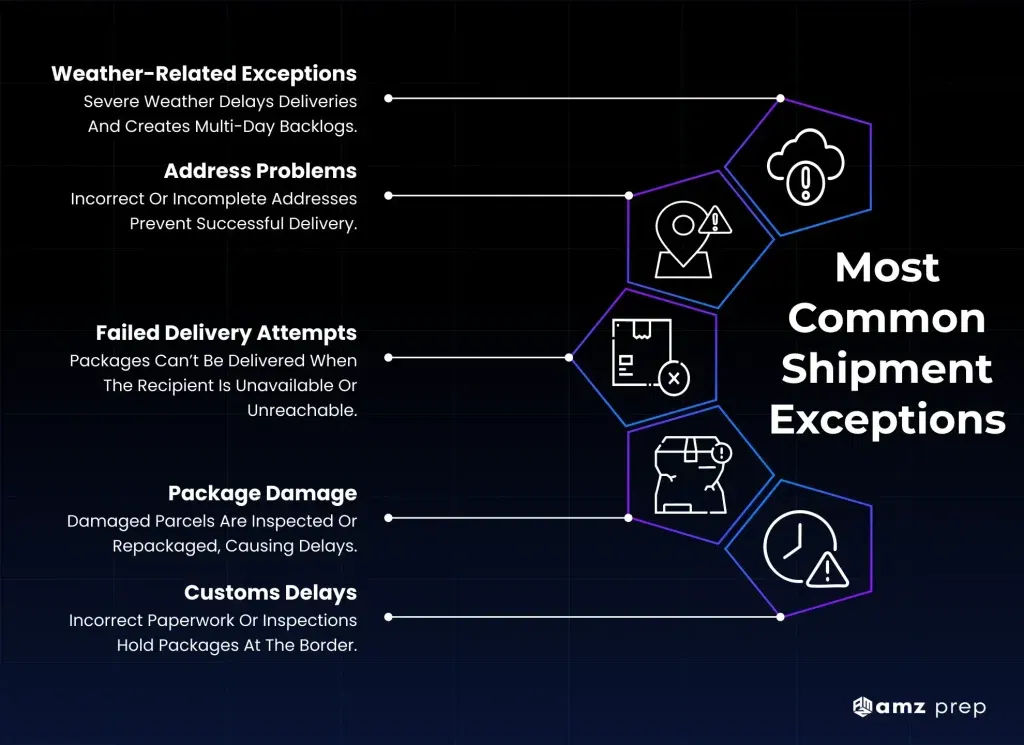
Weather-Related Exceptions
Bad weather is one of the biggest reasons shipments get flagged with exceptions, particularly during domestic shipping seasons like winter or hurricane season.
When serious weather hits, carriers put driver safety first and delivery schedules second. That’s why you’ll see a spike in shipment exceptions during winter storms or hurricane season.
Most of the carriers like FedEx, UPS, and USPS usually resume their normal operations within 24-48 hours after weather events clear. But, some of the backlog clearance can extend up to 3-5 days during peak seasons.
However, large weather events can create backups that take days to resolve. Most of the delivery route impassable conditions are often weather-related.
DID YOU KNOW? Winter months (December-February) account for 41% of annual weather-related exceptions, despite being only 25% of the year. Smart sellers build an extra 1-2 day buffer into delivery promises during these months, reducing negative reviews by 52%.
Address Problems
‘Sorry, we couldn’t find you!’ Address issues cause a surprising number of shipment exceptions. This includes, incorrect house numbers, missing apartment numbers, recently changed street names, new developments not in GPS systems and hard-to-find rural addresses.
Always double-check the shipping details before finalizing an order and to be proactive. International shipping requires even more attention to address details to prevent customs delays.
Failed Delivery Attempts
Sometimes the package arrives at your customer’s delivery route but still can’t be delivered. The carrier might report a shipment exception if:
- No one was available to sign the package you sent
- The delivery location was unclear to the driver.
- Your business buyer’s location was closed during delivery hours.
- Guard dogs prevented safe access to your customer’s property.
- The carrier couldn’t locate a safe drop-off spot for your product.
Many carriers will make multiple delivery attempts before returning a package to you as the seller. Check your tracking information for instructions before telling your customer about redelivery options. In some cases, you might see “delivery not attempted” in the shipment tracking updates.
DID YOU KNOW? 68% of failed residential deliveries occur between 9 AM – 5 PM when most people are at work. Offering delivery to workplaces, parcel lockers, or evening delivery windows can reduce failed attempts by up to 70% for your regular customers
Package Damage
Nobody wants their products arriving damaged to customers. If a package you’ve shipped gets crushed, torn, or soaked during transit, the carrier may flag it with a shipment exception.
In those cases, the box needs to be repackaged before reaching your customer. Your product contents need inspection by the carrier and as the shipper you will be notified about potential claims. Also, you may need to prepare replacement products for shipping.
Quality packaging with proper cushioning can significantly reduce the chance of damage-related exceptions affecting your brand’s reputation. The nature of the delay is important to understand when resolving these issues.
DID YOU KNOW? Packages marked ‘Fragile’ are actually handled more roughly by some carriers because automated sorting systems can’t read the label, they just process it normally. To avoid that, you can use strong packaging to your products and avoid fragile labels.
Suggested Read: Amazon FBA: Guidelines for Custom Product Packaging
Customs Delays
For international shipping, some exceptions may occur due to custom delays. Missing paperwork, incorrect tariff codes, or random inspections can all trigger a shipment exception.
International sellers should be especially careful with documentation and customs compliance.
Even small mistakes can lead to big delays causing shipment exceptions and late delivery of a package. Shipment tracking becomes even more critical for international packages.
Cross-Border Challenges in 2026
International shipping continues to face growing complexity due to evolving global trade policies. Ongoing tariff structures affecting electronics, textiles, and consumer goods have significantly increased customs exceptions for shipments from China, Vietnam, Mexico, and other key trading partners.
The reciprocal tariff framework introduced in 2025 continues to impact cross-border eCommerce in 2026, with customs documentation requirements becoming more stringent. Sellers using DDP (Delivered Duty Paid) shipping must now ensure absolute accuracy in duty, tax, and classification data, as customs authorities apply stricter validation standards. As a result, international sellers face:
- Enhanced scrutiny of declared values and product classifications
- Stricter enforcement of harmonized system (HS) code accuracy
- Increased random inspections at ports of entry
- Longer clearance times during peak import periods
Section 301 tariffs remain in effect, requiring precise documentation to avoid customs holds. Experienced international sellers now build an additional two to three business days into cross-border shipping timelines to account for heightened customs processing and inspection delays.
How Shipment Exceptions Affect Your Business?
One shipment exception won’t hurt your business, but when issues keep happening or don’t get resolved, real problems start. On Amazon, repeated delivery problems lower your seller rating. If it continues, your account could face suspension.
When deliveries run into trouble, here’s the impact:
- Customer loyalty drops. When packages arrive repeatedly late, buyers don’t return.
- Support workload increases. Each problem package requires your team to intervene and handle it.
- Sales decline. Frustrated customers cancel orders or buy from competitors instead.
- Platform consequences. Marketplaces penalize sellers who have consistent delivery issues.
- Operations get disrupted. Exceptions require manual handling, pulling your team away from regular tasks.
FedEx Shipment Exception
FedEx processes millions of packages every day, which is why their exception tracking system is very detailed. When you see a ‘FedEx shipment exception,’ understanding what caused it and knowing how to track it makes a big difference.
Most exceptions happen because of delivery issues, weather delays, customs clearance problems, an incorrect or hard-to-find address, the customer not being home, or similar situations.
Barcode Problems at FedEx
Sometimes you’ll see “barcode label unreadable and replaced” as a FedEx exception. This means:
- The label got ripped or too dirty to scan
- Water from rain or snow damaged it
- The label came loose or got bent during shipping
- The print got smeared so scanners can’t read it
FedEx workers then have to print a fresh label by hand. Your package will likely arrive 4–24 hours late because they need to:
- Take it off the conveyor belt
- Print and attach a new label
- Scan it back into their system
- Send it through sorting again
eBay Shipment Exceptions
If you sell on eBay, shipment exceptions need extra attention. They can hurt your seller metrics, lower your customer satisfaction scores, and cut into your profits.
So how does eBay handle delivery problems?
When an eBay shipment exception occurs, the buyer sees the exception in their tracking updates. eBay’s system notes the delay in your seller performance and the estimated delivery window will be automatically extended. You might also receive an automated message about the situation.
eBay also has specific policies about late deliveries and shipment exceptions. Sellers aren’t penalized for carrier-caused delays if tracked shipping was used. All you need to do is upload tracking within your seated handling time. Buyers can’t leave negative feedback for issues proven to be the carrier’s fault. eBay will sometimes remove negative feedback about shipping delays when major disasters happen.
Best Practices for eBay Sellers:
- Always get tracking numbers as they’re your best defense when delivery disputes come up
- Add tracking info quickly, within the handling time you promised
- Stick with carriers that deliver reliably
- Save screenshots of tracking updates and any messages from carriers
- Reach out to buyers about delays before they contact you
Suggested Read: How to do eBay dropshipping?
DHL Shipment Exception on Hold
DHL marks packages “on hold” when something stops them from moving forward. Here’s what usually causes it:
Common reasons for DHL ‘on hold’ status:
- Customs needs more paperwork or payment
- The delivery address is incomplete or wrong
- The destination has temporary access limits
- The package arrived during a weekend or holiday
- DHL has too many packages and not enough trucks
- Required documents like invoices or permits are missing or incorrect
How long does DHL ‘on hold’ last?
Most holds get cleared in 1-3 business days. Customs holds can stretch to 5-10 days depending on which country is processing it.
What to do when your DHL shipment is on hold:
- Look at DHL tracking to see why it’s on hold
- Call DHL if they need more documents
- Double-check the recipient’s address and phone number
- Make sure all customs forms are filled out correctly for international shipments
- Check tracking every day as holds can lift without warning
DHL usually explains holds better than other carriers, so you’ll know what needs fixing.
Amazon Shipment Exceptions
Amazon sellers need solid delivery performance to rank well in search and win the Buy Box. When exceptions happen on your orders, Amazon tracks them and uses that data in your seller ratings.
Amazon gives sellers tools to handle problems:
- Dashboards that flag risky shipments
- Pre-written messages to send customers
- Reports showing how exceptions affect your metrics
- Direct carrier connections for tracking
When an exception happens, Amazon updates the delivery date for customers automatically. But if exceptions keep happening, your account health score drops. That can affect your ability to sell. Consistent delivery is one of the main things Amazon looks at when evaluating sellers.
How Shipment Exceptions Compare Across Marketplaces & Carriers?
Not all shipment exceptions are treated equally. Each marketplace handles delays, lost parcels, and customs issues differently. Here’s a breakdown to help you prepare and protect your seller performance.
| Amazon | eBay | Shopify | FedEx | |
|---|---|---|---|---|
| Exception Notifications | Real-time via Seller Central and email | Buyer and seller notified via eBay Messages | Real-time via Shopify admin/dashboard or connected app | Real-time via FedEx tracking system, email, and mobile app |
| Who Reports the Exception | Carrier or Amazon logistics | Carrier or buyer (manually) | Carrier via connected apps or 3PL | Automated carrier systems and facility staff |
| Platform Responsibility | If Amazon ships (FBA), they handle most exceptions | Mostly buyer-seller resolution | Up to seller and 3PL | FedEx handles resolution through their customer service |
| Delivery Time Promise | Strict (e.g., 2-day Prime or FBA shipping SLA) | Estimated, not guaranteed | Set by seller; less rigid | Specific service commitments (Next Day, 2-Day, etc.) |
| Customs & Duties Handling | Seller handles if FBM; Amazon covers for FBA Global | Seller manages all customs and exceptions | Seller/3PL responsibility | FedEx assists but seller/recipient responsible for payments |
| Support for International Orders | Robust FBA export program | Limited support, depends on carrier | Depends on 3PL or connected shipping service | Global network with customs clearance services |
| Reimbursement/Compensation Process | FBA reimburses for lost/damaged shipments | No built-in system; must negotiate with carrier | Depends on fulfillment partner or insurance | Direct claims process with FedEx for lost/damaged items |
| Preferred Carrier Restrictions | Yes (especially for FBA) | No restrictions | No, but integrated with major carriers | Highly detailed with facility-level updates |
| Best for Handling Exceptions | Amazon (FBA) – Most automated and seller-friendly | eBay – Requires more manual involvement | Shopify – Flexible, depends on integrations | Typically 24-48 hours for most issues |
| Support for International Orders | Robust FBA export program | Limited support, depends on carrier | Depends on 3PL or connected shipping service | FedEx – Professional carrier with dedicated support systems |
How to Measure Shipment Exceptions: Key Metrics for eCommerce Success
Before you fix problems, you need to understand what’s happening with your shipments. Tracking the right numbers helps you spot issues early and cut down on exceptions. Here are the main things to watch:
How Often Exceptions Happen
Count how many exceptions you get in a week or month. If the number keeps climbing, you probably have bigger problems. Maybe warehouse processes need work, or your carrier isn’t performing well.
How Much Delays Cost You Time
Look at how long each exception pushes back delivery. When you see how exceptions slow things down, you can set better expectations with customers.
What It Costs You Money
Add up what exceptions cost like extra shipping fees, refunds you issue, time your support team spends fixing problems. For online sellers, this includes things like ecommerce sales tax compliance costs that eat into your margins. Tracking these numbers shows you where to focus on saving money.
What Customers Are Saying
Pay attention to complaints about delayed or problem shipments. If you’re hearing the same complaints repeatedly, there’s something in your supply chain or fulfillment setup that needs fixing.
When you look at these numbers over time, you’ll start seeing patterns. That’s when you can get ahead of problems instead of just reacting to them.
Best Practices for Sellers to Prevent Shipment Exceptions
How to avoid problems with exceptions and protect your seller ratings! Here are proven strategies specifically for online sellers to reduce shipment exceptions.
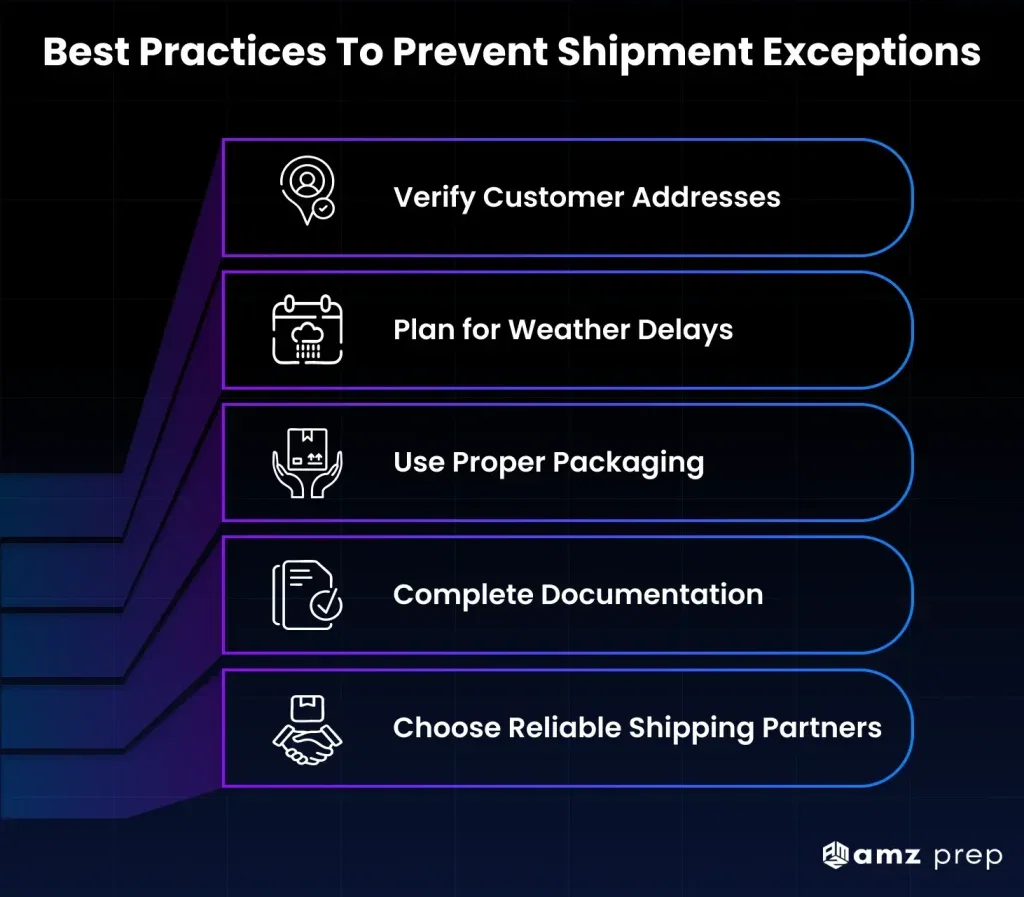
Double-Check All Customer Addresses
Incorrect address errors cause a large percentage of avoidable exceptions that hurt your seller metrics. Make use of the below given practices:
- Use address verification software integrated with your selling platform
- Send order confirmation emails asking customers to verify their address
- Include apartment/suite numbers in the correct fields on shipping labels
- Add delivery instructions for hard-to-find locations in the special instructions field
- Verify ZIP/postal codes match the actual address before printing labels
- Consider required signatures only for high-value items to avoid failed delivery attempts
- Keep a database for tracking status of problematic addresses from past orders
Many selling platforms like Shopify and eBay offer address validation tools. Using them adds only seconds to your fulfillment process but saves days in delivery time and protects your seller rating.
Weather Delays
You can’t control the extreme weather, but you can plan around it. Ensure to monitor weather forecasts along shipping routes. During major storms, you can consider using expedited shipping to avoid delivery delays and for better order fulfillment.
Communicate with your customers about the shipping process and delivery time during hurricane or winter-storm season. It’s important to note that you can use climate-controlled shipping for temperature-sensitive products.
Handling Shipment Packaging
Use boxes with at least 2 inches of cushioning on all sides to prevent damage while shipping. Make sure to select box sizes appropriate for the products so they don’t shift during transit.
You can also use water-resistant packaging for valuable items. Remember that your package will likely be stacked under other boxes. Successful delivery rates improve with proper packaging techniques.
Documentation Diligence
Complete documentation prevents many customs and delivery exceptions. You can include detailed customs forms for international shipments and maintain accurate values and descriptions.
As a seller, you can include all required hazardous materials documentation and keep copies of all shipping documents. For international sellers, proper documentation is possibly the most important factor in preventing exceptions.
Choose Reliable Shipping Partners
Shipment exceptions happen even to the most careful sellers, but working with dependable shipping partners can dramatically reduce the impact. It’s your responsibility to choose the best 3PL service providers.
The best shipping companies use tracking systems that spot potential delays early and give you a proof of delivery. This helps you tell customers about any problems before they affect delivery times.
Leading 3PL providers like AMZ Prep use AI-powered quality control systems that flag 95% of potential exceptions before packages leave the warehouse, combining automated address validation with predictive weather routing. They know how shipping problems can affect your Amazon seller ratings, so they treat every package with special care.
When picking shipping partners, ask about their problem rates and how fast they deliver the package. Companies with good delivery management plans can often find new routes, understand severe weather conditions or speed up delivery when delays or issues happen.
AI and Technology Solutions for Exception Prevention
More eCommerce businesses are now using artificial intelligence and machine learning to spot shipment exceptions before they occur. This tech-focused approach is changing how logistics works.
Machine Learning for Predictive Analysis
AI looks at past shipping data to spot patterns that come before exceptions. It processes millions of data points like weather, carrier performance, route conditions, seasonal trends and can predict potential delays with surprising accuracy.
Top logistics companies use machine learning that predicts weather delays correctly 85-90% of the time and catches address problems about 78% of the time.
Automated Exception Management Systems
Instead of watching every package manually, sellers now use automated systems that:
- Track all shipments in real-time across different carriers
- Flag packages that might have problems based on predictions
- Send messages to customers about delays before they happen
- Change routes automatically when delays show up
- Create backup delivery options when the usual route fails
AI-Powered Route Optimization
Advanced routing systems review real-time conditions such as traffic jams, weather issues, carrier capacity, and past route performance. If the usual shipping path looks risky, the system recommends a better alternative.
Integration with Carrier APIs
Modern exception prevention depends on getting instant updates from carriers through their APIs. This gives you immediate information about:
- Where packages are and any status changes
- Delays or capacity problems at carrier facilities
- Weather alerts on specific routes
- Customs progress for international orders
Advanced Technologies: Some logistics companies use digital twin technology (virtual versions of shipments) and smart packaging with sensors to monitor conditions and predict what will happen. These options are mostly for larger operations right now.
Exception Prevention in 2026: What’s New
The shipment exception landscape is evolving rapidly with new technology deployments:
Real-Time Exception Prediction
Leading carriers now offer AI-powered exception forecasting that alerts sellers 6-12 hours before potential delays occur, allowing proactive customer communication.
Blockchain Tracking Integration
Major logistics providers are piloting blockchain-based tracking systems that provide immutable delivery verification, reducing address-related exceptions by up to 23%.
Smart Package Technology
IoT-enabled packages with embedded sensors can now detect improper handling, temperature excursions, or routing errors in real-time, triggering automatic rerouting protocols.
Automated Customer Communication
Modern exception management platforms automatically notify customers via their preferred channel (SMS, email, app notification) within minutes of exception detection, reducing support ticket volume by 40-60%.
Carrier Performance Analytics
Sellers can now access real-time carrier performance dashboards showing exception rates by route, service level, and product type, enabling data-driven carrier selection.
These technologies are transitioning from “enterprise-only” solutions to accessible tools for mid-sized eCommerce brands, with pricing models that scale based on shipping volume.
Alternative Delivery Methods and Modern Solutions
Delivering to someone’s home isn’t always the most dependable choice. Modern online businesses use alternative methods that reduce exceptions and make customers happier.
Out-of-Home Delivery Networks
When delivering to someone’s house doesn’t work out, here are backup options:
- Lockers: Secure boxes at stores, apartment buildings, and train stations that customers can access anytime
- Store Pickup: Retail partners and service centers hold packages until customers come get them
- Work Address: Packages go straight to the customer’s office
- College Delivery: Special setups for students on campus
Flexible Delivery Windows
Giving customers control over when packages arrive prevents missed deliveries:
Customers select a 2-4 hour window that fits their schedule. Rush delivery gets packages there the same day. Night and weekend slots work for people who can’t be home during the day. Or customers just pick the exact date they want, even weeks out.
Smart Delivery Technology
Technology helps deliveries go more smoothly:
Real-time GPS shows exactly where the package is and when it’ll arrive. Drivers take photos when they drop off packages, with location and time recorded. Some homes now have smart locks so packages can go inside safely. A few areas are testing drones and self-driving vehicles for deliveries.
Returns Integration
Returns work better when they connect with regular deliveries:
Drivers can grab returns when they drop off new packages. Return labels come in the box with the original order. Customers can drop returns in the same lockers where they picked up deliveries. Some services let drivers process returns right there during the visit.
Shipment Exceptions and Seasonal Demands
Certain months get busier with shipments, which means more exceptions. The busiest times are:
- Holiday Season (November-December): More shopping and tight deadlines mean delays from high volume
- Year-End Rush: Last-minute orders create shipping bottlenecks
- Weather Events: Winter snowstorms or summer hurricanes cause widespread delays
Knowing when exceptions happen more often helps you prepare. You can adjust shipping plans, stock levels, and what you tell customers. Peak seasons directly affect exceptions. During holidays or product launches, the jump in orders can overwhelm shipping networks.
More packages mean more chances for delays, damage, or wrong deliveries.
Exceptions cost money like extra shipping fees, returns and hurt customer trust, which affects future sales. Understanding this helps you track your financial health during busy periods.
To handle this, plan ahead for these spikes. Lock in reliable shipping partners, adjust inventory, and make sure your customer service team is ready for more questions.
Conclusion
Shipment exceptions are annoying, but they don’t have to hurt your business. With good prevention and smart handling, you can protect your seller ratings and keep customers happy.
In today’s complicated shipping world, knowing best practices and keeping good communication with your carriers turns potential problems into manageable situations that won’t damage your reputation or customer satisfaction.
Frequently Asked Questions
How long does a shipment exception last?
A shipment exception usually doesn’t last more than 7 days. Even after these days, if the products don’t reach their destination, it means the package is temporarily delayed. You may have to contact your carrier service and check with them.
How shipment exceptions affect Your business?
While a single shipment exception might not cause significant damage, recurrent issues or unresolved exceptions can have serious consequences for your business. Especially for platforms like Amazon, repeated shipment exceptions can hurt your seller rating and, in some cases, result in account suspension.
How do I fix a shipment exception?
To fix a shipment exception, check the product’s tracking number and contact the carrier to find out the status of your product. After finding out the issue, you can communicate with your customers about the delay and even resolve the issue by offering a refund or credit if they want to.
What is the average resolution time for shipment exceptions?
Resolution times vary by carrier and exception type:
Failed delivery attempts: 1-3 business days
Address issues: 1-2 business days
Weather delays: 2-5 business days
Customs clearance: 3-7 business days
Damaged packages: 2-4 business days
What does exception mean in shipping?
Exception status means that an unexpected event has occurred and caused delay on delivery of your package. The variety of reasons include, natural disaster, severe weather, or some other conditions. Delivery exception doesn’t necessarily mean the package cannot be delivered as the sellers try hard to deliver the product in time.
What does exception mean in transit?
A “delivery exception” means the shipment is somewhere stuck in the middle of transit due to unavoidable circumstances. The reason behind the exception means, incorrect shipping address, products damage in transit, weather conditions, and many more. Delivery not attempted may appear as a specific type of exception.
Which carriers have the lowest rates of shipment exceptions?
Regional carriers typically have the lowest exception rates (5.2%), followed by FedEx (6.7%), UPS (7.1%), USPS (8.3%), and DHL (9.2%). For specialized shipments like perishables or oversized items, niche carriers often perform better with rates around 4-6%.
How have shipment exceptions changed in 2026 compared to previous years?
Shipment exception rates in 2026 remain similar to 2025, but the causes have shifted. Weather-related disruptions have increased due to extreme conditions, while address-related exceptions dropped by around 15% because of better technology. Cross-border exceptions remain high from tariff compliance, though AI tools now resolve most issues faster.
What’s the average cost of a shipment exception to eCommerce businesses in 2026?
In 2026, the average shipment exception costs eCommerce sellers between $25 and $75 per incident. This includes customer support time, refunds or replacements, lost repeat sales, and seller rating impact. For high-value products or loyal customers, a single exception can exceed $200.

Arishekar N is a Vice President (VP) of Marketing at AMZ Prep, specializing in ecommerce fulfillment and Amazon logistics strategies with a proven track record of driving growth for e-commerce businesses. He is a strategic leader with extensive expertise in marketing, e-commerce operations, SEO & advertising, and branding.
Stay updated on his latest insights by following him

















Finally understand what a shipment exception actually means super helpful breakdown!
This cleared up so much confusion especially around tracking statuses like ‘delivery rescheduled’.
Bookmarking this for my support team great resource for handling customer inquiries.
We just started managing our own logistics this article was exactly what we needed!
Didn’t realize address issues were the most common cause good to know for next time.
Would love a downloadable cheat sheet version of this post for warehouse teams.
Nice touch including steps for both carriers and Amazon it’s often hard to find both in one place.
I had this exact issue with FedEx last month wish I’d seen this guide earlier.
Appreciate the tone it’s not just informative but actually readable.
Loved the table with common reasons and solutions made it so easy to digest.