
ShipStation is one of the most widely used shipping software platforms in eCommerce, but rising monthly fees, gated API access, and inconsistent customer support on lower plans push thousands of sellers to look elsewhere each year.
The best ShipStation alternatives in 2026 are Shippo, Veeqo, Prep Parcel, Easyship, Pirate Ship, eShipper, ShippingEasy, ShipEngine, Ordoro, ShipHero, and Shopify Shipping.
Each tool serves a different type of operation. Some are better in price. Some offer deeper carrier integrations. Others combine shipping management with inventory control or a physical fulfillment network.
This guide breaks down each option by use case so you can find the right alternative for your volume, channel mix, and growth stage.
Why Sellers Switch from ShipStation
Most sellers searching for a ShipStation alternative are dealing with one of three situations.
Pricing that scales faster than the business
ShipStation charges by shipping volume, not by features. Plans run from $14.99 for 50 shipments to $7,499.99 per month for 1,00,000 shipments.
The issue is that features like phone customer support, advanced automation rules, and API access are locked behind plan tiers regardless of volume.
A seller who needs the Shipping API to build custom integrations must pay $29.99 per month minimum, even if they only ship 60 parcels a month.
API access behind a paywall
Shippo and ShipEngine include API access on free tiers. ShipStation does not. For brands building custom workflow customization or connecting shipping to a proprietary OMS or ERP, this creates unnecessary cost at the start.
Support that varies by plan
Email-only support on the Starter plan is a known friction point for sellers managing multi-channel operations. Reviews on G2 and Capterra consistently flag resolution times as a concern on lower-tier plans.
Quick Comparison: ShipStation Alternatives at a Glance
| Tool | Free Plan | Starting Price | Carrier Count | Best For |
|---|---|---|---|---|
| Shippo | Yes | $19/month | 40+ | Multi-channel label printing |
| Veeqo | Yes | Free | Major carriers | Amazon sellers |
| Prep Parcel | No | Customized quote | 20+ incl. regional | Multi-carrier shipping + fulfillment network |
| Easyship | Yes | $29/month | 250+ | International shipping solution |
| Pirate Ship | Yes | Free (pay per label) | USPS + UPS | Low-volume domestic |
| eShipper | No | Customized quote | 50+ | Canadian and cross-border |
| ShippingEasy | Yes | $19.99/month | USPS, UPS, FedEx | Shipping and returns + email marketing |
| ShipEngine | Yes (API) | $0 pay-per-call | 40+ | Developer-built workflows |
| Ordoro | No | $59/month | Major carriers | Shipping + inventory sync |
| ShipHero | No | Quote-based | Major carriers | Warehouse teams + WMS |
The 10 Best ShipStation Alternatives in 2026
1. Shippo: Best ShipStation Alternative for Multi-Channel Label Printing
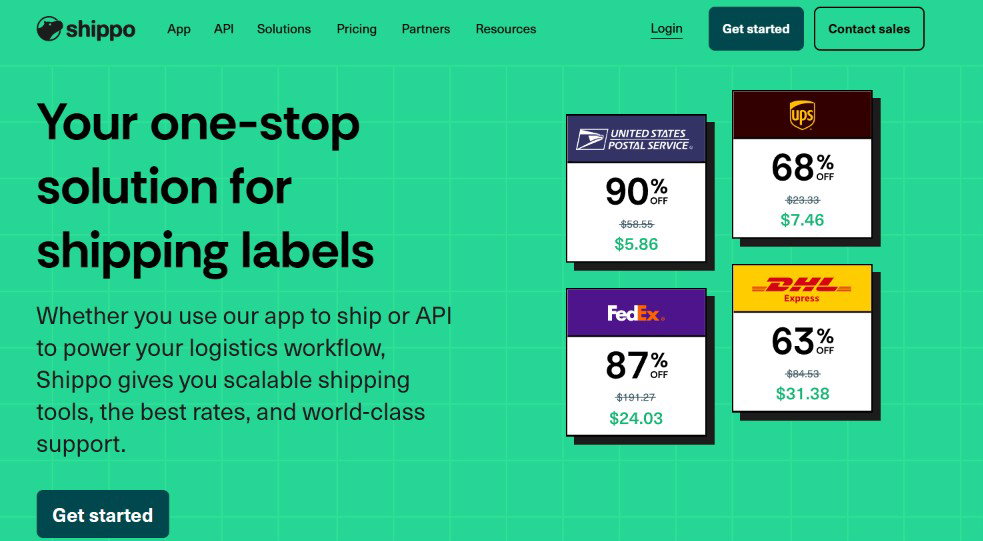
Shippo is a multi-carrier shipping platform built for eCommerce sellers managing orders across several channels. It connects to 40+ carriers including USPS, UPS, FedEx, and DHL, and pulls amazon orders, Shopify, WooCommerce, eBay, and Etsy orders into one dashboard.
- API access on all plans, including free. No paywall for teams building custom integrations or connecting to a proprietary OMS.
- Rate shopping runs automatically across connected carriers, surfacing the cheapest option per shipment without manual checking.
- Automation rules handle carrier selection, service levels, and order tagging based on weight, destination, or channel without manual input.
- Branded tracking pages and returns portal are included on paid plans, covering the post-purchase experience alongside outbound shipping.
Best for: Multi-channel sellers who want affordable label printing, carrier integrations, and API access without a plan-tier paywall.
Pricing: Free starter tier, pay-per-label. Professional plans from $17/month.
Shippo’s automation rules are lighter than ShipStation’s for complex multi-warehouse conditional logic, so sellers with advanced workflow customization needs may hit a ceiling.
2. Prep Parcel: Best for Brands That Need Multi-Carrier Shipping Backed by a Fulfillment Network
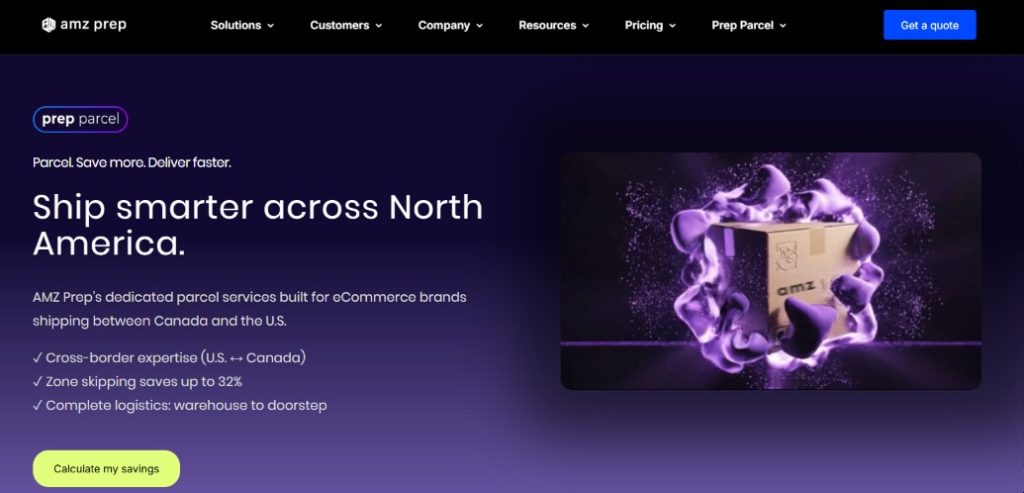
Prep Parcel is AMZ Prep’s multi-carrier shipping platform, giving brands pre-negotiated enterprise carrier rates across USPS, UPS, FedEx, OnTrac, LaserShip, Canada Post, and regional carriers. Unlike pure shipping software, it is backed by 50+ fulfillment centers across the US, Canada, the UK, and Europe.
- Enterprise discounts of 30 to 60% below market shipping costs, available from day one with no volume minimums or carrier contracts required.
- Rate shopping selects the fastest and most affordable carrier per shipment automatically, factoring in destination, weight, and delivery window.
- Zone skipping cuts 2 to 3 carrier handoffs and saves 20 to 30% on long-zone lanes for brands shipping 50+ packages weekly to distant regions.
- Cross-border US-Canada routing, CBSA clearance, USMCA certification, and Importer of Record services all handled end to end, with real-time tracking portal and notifications across Shopify, Amazon, WooCommerce, and TikTok Shop.
Best for: Growing brands that want enterprise carrier rate access and multi-carrier shipping without needing high volume to qualify, especially those managing US-Canada cross-border shipments.
Pricing: Contact the team to get custom pricing
Prep Parcel works best within AMZ Prep’s fulfillment network. Brands that only need a software layer over an in-house warehouse will get more flexibility from a pure SaaS tool.
3. Veeqo: The Best Free ShipStation Alternative for Amazon Sellers
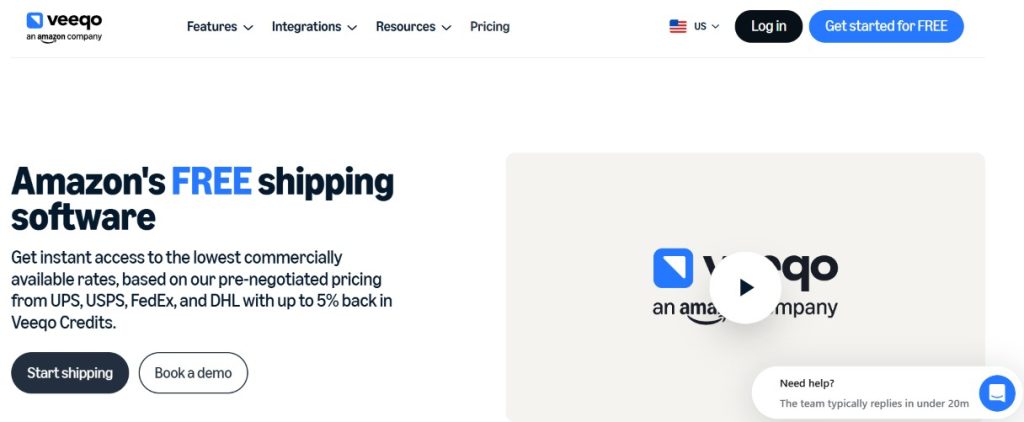
Veeqo is a free shipping management and inventory sync platform owned by Amazon. It is purpose-built for sellers whose primary volume runs through Amazon’s ecosystem, with native Seller Central integration and inventory sync across all connected channels.
- Completely free with no shipment cap, no monthly fees, and no pro plan required to access core features.
- Inventory sync updates stock levels across Amazon, Shopify, eBay, Walmart, and Etsy in real time, removing the manual reconciliation most platforms leave to the seller.
- Branded tracking and batch label printing included, with compare rates across carriers on every shipment.
- Earns up to 5% back in Veeqo Credits on eligible shipments, which offsets shipping costs over time.
Best for: Amazon sellers who want free shipping software with real-time inventory sync across channels.
Pricing: Free.
Veeqo is owned and operated by Amazon. Brands that prefer to keep multi-channel sales data away from a platform that also operates as a marketplace should factor that into the decision.
4. Easyship: Best ShipStation Alternative for International Shipping
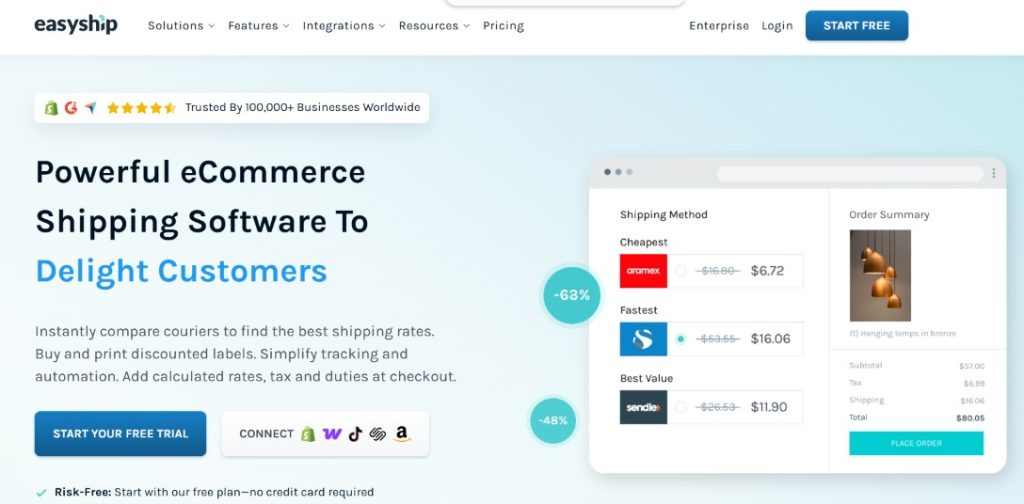
Easyship is a global shipping solution connecting to 250+ couriers across 220+ countries. It was built specifically for brands whose customers are spread across multiple countries and for whom customs, duties, and international carrier options are a daily operational reality.
- Covers regional carriers most platforms exclude: Aramex, SF Express, and country-specific last-mile providers that deliver faster and cheaper in their home markets.
- Duties and taxes calculated in real time at checkout, so customers see the true landed cost before they buy. This reduces failed deliveries and abandoned carts caused by surprise fees on arrival.
- Branded tracking and returns management included across international lanes, keeping the post-purchase experience consistent regardless of destination country.
- Streamline customs documentation across supported lanes, including paperless trade where available.
Best for: Brands where international volume is 30% or more of total orders and compare rates across carriers globally is a daily need.
Pricing: Free plan available. Paid plans from $29/month.
For US-domestic-primary sellers, Easyship’s international feature set adds cost without practical benefit.
5. Pirate Ship: The Simplest Free Alternative to ShipStation for Low-Volume Sellers
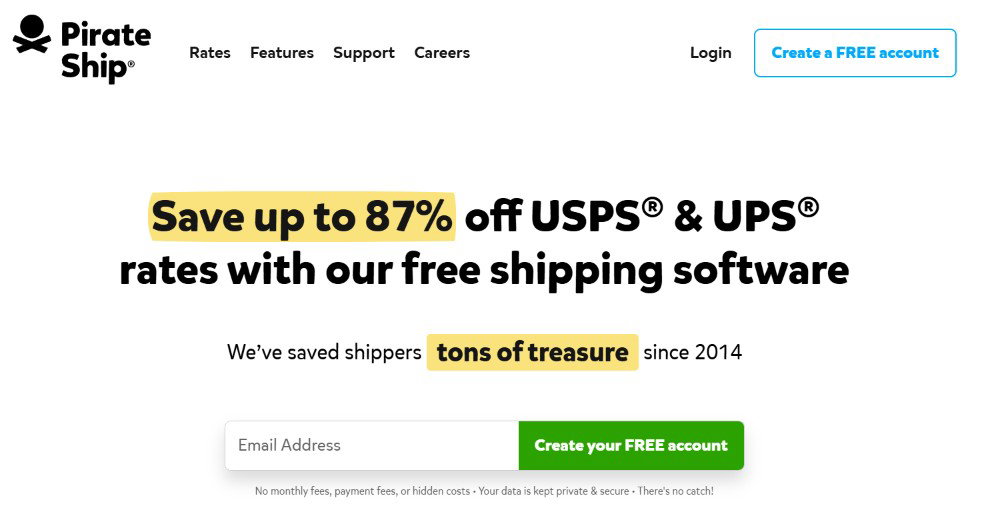
Pirate Ship is a free shipping software tool built around one value: USPS and UPS carrier rates at commercial pricing with no subscription and no markup on labels.
- No monthly fees, no pro plan requirement, no per-label markup. Pay only the carrier rate on every shipment.
- USPS Commercial Plus and UPS discounted rates available from signup, with no volume threshold to qualify.
- Label printing and basic returns portal functionality included, with integrations for Shopify, eBay, Etsy, and WooCommerce.
Best for: Low-volume sellers shipping under 200 orders per month via USPS and UPS who want zero fixed shipping costs.
Pricing: Free. Pay per label.
Pirate Ship covers USPS and UPS only. No FedEx, no DHL, no regional carriers, and no international couriers beyond USPS international. Sellers who need to compare rates across carriers or route by zone will outgrow it quickly.
6.eShipper: Best ShipStation Alternative for Canadian and Cross-Border Sellers
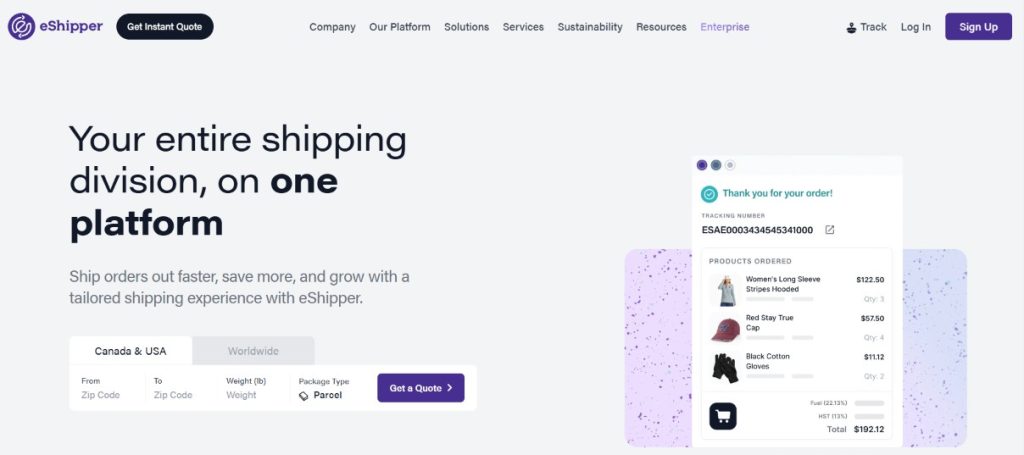
eShipper is a Canadian multi-carrier shipping platform connecting to 50+ carriers including Canada Post, Purolator, FedEx, UPS, and DHL. It is built for brands with Canadian customer volume or cross-border fulfillment requirements in both directions.
- Canadian carrier options including Purolator and regional last-mile providers that US-native platforms do not cover natively, with better pricing on Canadian postal codes as a result.
- Transparent pricing by lane and volume, with no hidden surcharges on cross-border shipments.
- Automation rules handle carrier selection and routing across Canadian and US lanes from one dashboard, with branded tracking on all outbound shipments.
- Streamline customs documentation and cross-border compliance for Canada-US shipments, including commercial invoices and carrier-specific requirements.
Best for: Canadian-based brands or US brands with significant Canadian customer volume who need depth in Canadian carrier integrations.
Pricing: Quote-based. Rates vary by carrier and shipping volume.
For US-domestic-primary sellers with no Canadian component, eShipper’s core advantage does not apply.
7. ShippingEasy: Best for Sellers Who Want Shipping Plus Email Marketing
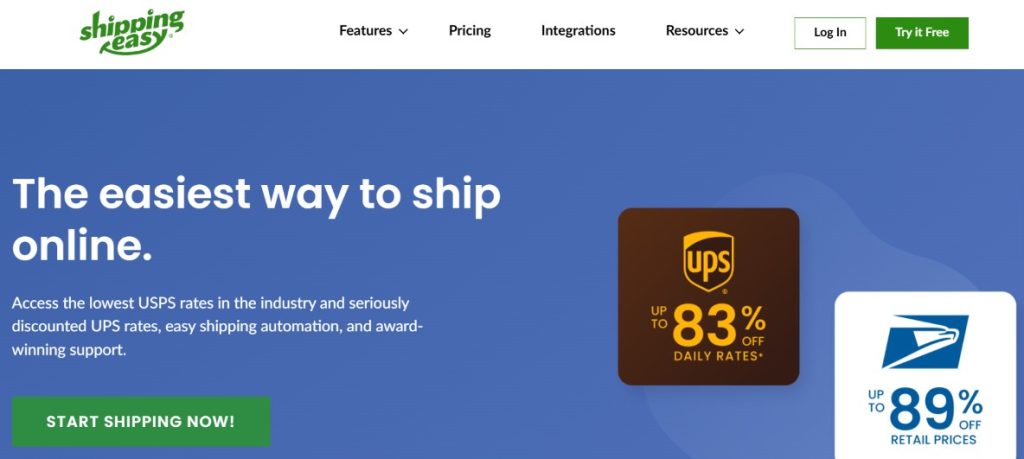
ShippingEasy is a shipping solution that combines label printing, order management, and built-in email marketing workflows in one platform. It connects to USPS and UPS on all plans, with FedEx available on higher tiers.
- Built-in email marketing and customer follow-up tools included natively, covering post-purchase sequences, review requests, and win-back flows that ShipStation does not offer without third-party integrations.
- Returns portal and return labels included on paid plans, handling returns and exchanges without connecting a separate tool.
- Automation rules for carrier selection and order routing reduce manual input at moderate shipping volume.
Best for: Sellers who want shipping software and basic marketing automation in one interface without managing multiple subscriptions.
Pricing: Starter plan available. Paid plans from $19.99/month.
ShippingEasy’s carrier network and automation depth are narrower than ShipStation’s. It is not built for complex multi-warehouse operations or high-order-velocity brands.
8. ShipEngine: Best ShipStation Alternative for Developers Building Custom Workflows
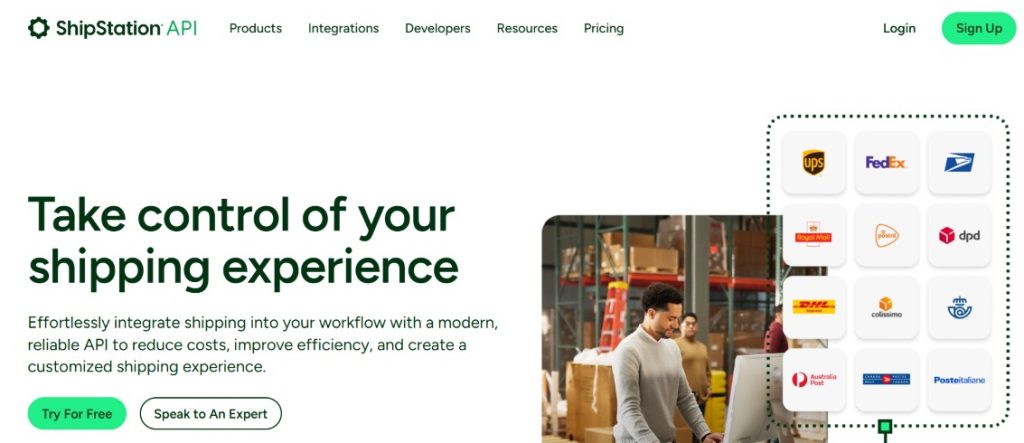
ShipEngine is a multi-carrier shipping API connecting to 40+ carriers. It is not a dashboard tool. It is an API layer that technical teams integrate directly into their own platform, OMS, or ecommerce infrastructure.
- API access at no cost on the free tier, with rate shopping, label printing, address validation, real-time tracking, and returns management all available through one API endpoint.
- One-click carrier switching, carrier integrations across 40+ providers, and custom integrations with any internal system via REST API.
- No monthly fees on the free tier. Paid plans scale by call volume, making it cost-effective for brands with variable shipping volume.
Best for: Technical teams building custom integrations who want full workflow customization over how shipping connects to their existing stack.
Pricing: Free tier with pay-per-call pricing. Paid plans by usage volume.
ShipEngine has no user-facing interface. Without engineering resources to implement it, there is no value to extract.
9. Ordoro: Best for Multi-Channel Sellers Who Need Shipping Plus Inventory Sync
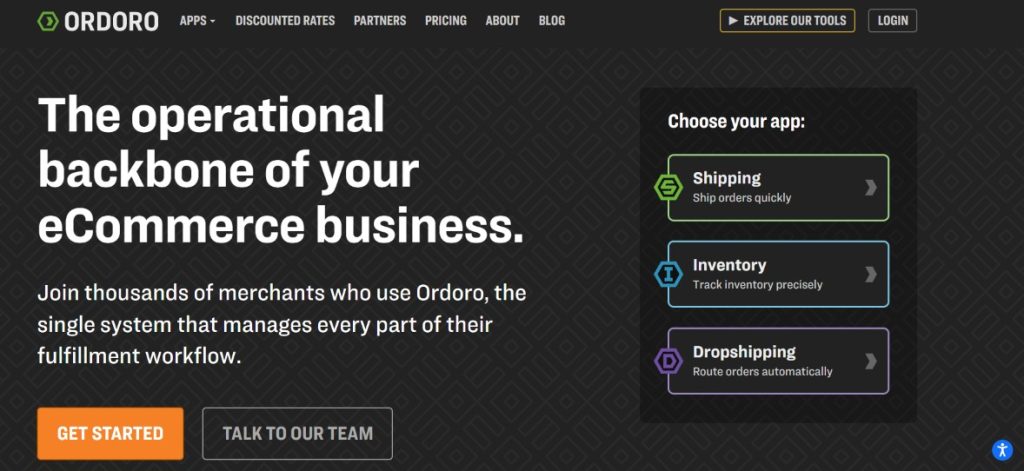
Ordoro combines multi-carrier shipping with inventory sync, purchase order tracking, kitting, and dropshipping workflows. It targets sellers who have outgrown a pure label printing tool but are not yet running a full WMS.
- Inventory sync across Amazon, Shopify, eBay, WooCommerce, and Walmart with unified stock visibility and automatic channel updates on every order.
- Kitting and bundling built into the platform, handling composite products and print labels for kitted orders without manual workarounds.
- Automation rules for carrier selection, order tagging, and routing reduce manual decisions at higher order counts.
Best for: Multi-channel sellers managing bundles, kits, and distributed stock who need inventory sync and shipping management in one tool.
Pricing: From $59/month.
Ordoro’s international carrier options and routing depth are narrower than Easyship or Shippo for cross-border operations.
10. ShipHero: Best for Warehouse Teams That Need WMS and Multi-Carrier Shipping Together
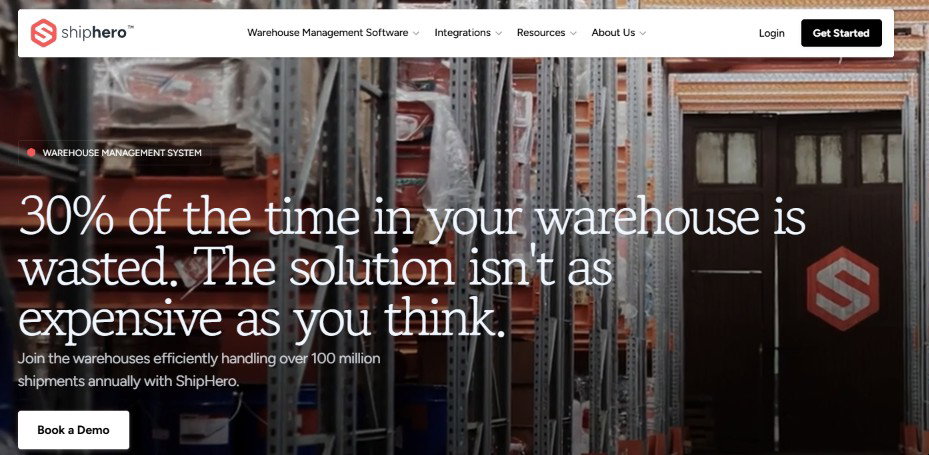
ShipHero is a warehouse management system with integrated multi-carrier shipping. It is built for brands running their own warehouse, covering pick-and-pack workflows, barcode scanning, bin location management, and carrier rate shopping from one platform.
- Eliminates the need to connect a separate WMS to a separate shipping software layer. Warehouse operations and label printing run from the same system.
- Rule-based pick routing, wave management, and carrier selection reduce warehouse handling time and manual decision-making at volume.
- Real-time dashboard gives operations teams full visibility into orders, inventory, carrier performance, and fulfillment accuracy in one view.
Best for: Brands owning and operating their own warehouse who need WMS functionality and multi-carrier shipping under one roof.
Pricing: Quote-based.
ShipHero is not a fit for brands using a 3PL. The WMS layer requires direct physical warehouse control to function as designed.
How to Find the Right Alternative to ShipStation
The right tool depends on four things: shipping volume, channel mix, whether you need API access, and whether your operation has grown past what a SaaS-only shipping solution can handle.
| Your situation | Best fit |
|---|---|
| Multi-channel seller, need API and affordable label printing | Shippo |
| Amazon sellers, want free inventory sync and shipping | Veeqo |
| Scaling brand, need enterprise carrier rates + fulfillment network | Prep Parcel |
| International-first, need 250+ couriers and landed cost at checkout | Easyship |
| Low volume, USPS and UPS only, zero monthly fees | Pirate Ship |
| Canadian or cross-border volume, need Canadian carrier options | eShipper |
| Want shipping plus basic email marketing in one tool | ShippingEasy |
| Technical team building custom integrations into your own platform | ShipEngine |
| Multi-channel with inventory sync and kitting needs | Ordoro |
| Own your warehouse, need WMS and multi-carrier shipping in one system | ShipHero |
| Single Shopify store, under 200 orders per month | Shopify Shipping |
If you are evaluating shipping software more broadly, this guide to top ecommerce shipping software covers platform comparisons beyond the ShipStation competitor set.
For brands also evaluating their 3PL setup alongside their shipping solution, the ShipBob alternatives comparison covers the fulfillment layer.
Conclusion
The best ShipStation alternative is the one that fits where your operation is now, not just where it started. Pure label printing tools serve lower volumes with simple channel mix well.
As shipping volume grows and channels multiply, carrier rate access, automation depth, and the physical network behind the software become the variables that actually move your shipping costs. Evaluate each option against your next 12 months to land on the best.
Frequently Asked Questions
What is the best alternative to ShipStation?
Shippo is the strongest general-purpose replacement for multi-channel sellers. It covers 40+ carrier integrations, includes API access on all plans, and starts free. Veeqo is the best free option for Amazon sellers. Prep Parcel suits brands that need enterprise carrier rates backed by a physical fulfillment network across 50+ locations.
Is there a free alternative to ShipStation?
Yes. Veeqo is free with no shipment cap for core shipping management and inventory sync features. Pirate Ship is free with pay-per-label pricing on USPS and UPS. Shippo offers a free starter tier before committing to a monthly plan.
Why is ShipStation so expensive?
ShipStation prices plans by shipping volume, from $9.99 for 50 shipments to $399.99 for unlimited. Features like API access and phone customer support are locked behind plan tiers regardless of shipment count. As brands scale, the combination of volume pricing and feature gating pushes monthly fees up faster than comparable platforms.
Which ShipStation alternative is best for Shopify?
Shippo and Veeqo both integrate cleanly with Shopify. For single-channel Shopify sellers under 200 orders per month, Shopify Shipping removes the need for any third-party tool. For multi-channel Shopify sellers also selling on Amazon, eBay, or Walmart, Shippo handles all channel imports with API access included on all tiers.
What is the best shipping software for ecommerce?
It depends on volume, channel mix, and whether you need physical fulfillment infrastructure alongside shipping software. Shippo covers the widest range of multi-channel use cases at affordable pricing. Easyship leads for international-primary operations. For brands that have scaled past SaaS-only tools, Prep Parcel combines multi-carrier shipping with AMZ Prep’s fulfillment network across 50+ locations in 6 countries.

Arishekar N is a Vice President (VP) of Marketing at AMZ Prep, specializing in ecommerce fulfillment and Amazon logistics strategies with a proven track record of driving growth for e-commerce businesses. He is a strategic leader with extensive expertise in marketing, e-commerce operations, SEO & advertising, and branding.
Stay updated on his latest insights by following him

















Comments