Selling prescription drugs, weight-loss injectables, or wellness supplements directly to customers comes with one massive challenge: How do you keep temperature-sensitive products safe from your warehouse to your customer’s doorstep?
One wrong temperature can destroy product potency. Miss a compliance requirement, and you’re looking at FDA penalties. Lose a high-value shipment to heat damage, and you’ve just burned through your margins.
Here’s the reality in 2026: The pharmaceutical cold storage market is projected to reach $34.5 billion by 2035, growing at 6.9% annually because more brands like yours are going direct-to-consumer. But growth means nothing if your products arrive degraded or your cold chain fails an audit.
This guide breaks down exactly what you need: from choosing the right 3PL partner to avoiding the most common (and expensive) cold chain mistakes.
Pharmaceutical Cold Storage: What Is It?
Pharmaceutical cold storage refers to controlled environments where temperature-sensitive medications are stored to maintain efficacy and safety. These environments are more than just cold rooms. They’re fitted with:
-
- Redundant cooling systems
-
- Continuous temperature monitoring
-
- Alarm systems for excursions
-
- Backup power for uninterrupted operation
The reason cold storage is critical? Many pharmaceutical products like biologics, vaccines, and insulin begin degrading if exposed to temperature fluctuations. Proteins can denature. Active ingredients can lose potency. Some compounds even become harmful.
In 2026, AI-powered monitoring systems represent the fastest-growing segment (9.2% annually) as FDA and EMA enforcement intensifies around real-time compliance documentation and predictive maintenance capabilities.
So yes, it’s absolutely necessary.
Even a short exposure to the wrong temperature range during storage or transit can trigger a recall, reduce shelf life, or harm patients. Regulatory bodies like the FDA and USP mandate specific cold storage protocols for this exact reason. Many of these standards overlap with broader FDA medical device shipping regulations that govern the safe handling and transportation of healthcare products.
The Rise of Direct-to-Consumer Pharma Brands
The old model of pharmacy pickup is being replaced. Patients and consumers now expect fast, discreet, and convenient deliveries to their doorsteps. This shift to DTC means sellers like you must handle product safety and customer experience.
Here’s what’s changing:
Telemedicine + DTC sales = More orders shipped directly to customers
Consumers demand speed and safety = Logistics need to be airtight
Regulatory oversight hasn’t changed = You’re still responsible for cold chain compliance
Here’s what changed in the last 18 months: Big pharma is now competing with you isn’t just competing, they’re dominating DTC channels.
Companies like Novartis and Eli Lilly aren’t just selling through pharmacies anymore, they’re launching their own direct-to-patient platforms. Eli Lilly now ships GLP-1 medications (Zepbound, Mounjaro) straight to customers’ doors, completely bypassing traditional pharmacies.
Novartis launched with direct-to-patient platforms for specialty medications. Pfizer is testing home delivery for chronic disease medications in major metro areas.
The Challenge: You’re competing against companies with unlimited logistics budgets and established pharmaceutical infrastructure.
Your Advantage: Agility and customer experience. While Fortune 500 companies navigate bureaucracy and legacy systems, you can offer:
-
- Same-day or next-day delivery in major markets
-
- Personalized customer service that enterprise companies struggle to match
-
- Faster iteration on packaging, delivery experience, and customer communication
-
- Niche specialization that big pharma can’t efficiently serve
The brands winning in 2026 treat cold chain logistics as a competitive differentiator, not just a compliance checkbox. When customers choose between your brand and a pharmaceutical giant, flawless delivery becomes your competitive moat.
GLP-1 Medications: Why Your Cold Chain Needs to Be Perfect
The weight-loss injectable market surpassed $110 billion globally in 2025, with 1 in 7 U.S. adults now using GLP-1 medications. This explosive demand created a pharmaceutical cold chain crisis: sudden volume spikes overwhelmed existing infrastructure, causing widespread shortages, temperature excursions, and recalls.
For DTC brands, GLP-1s represent the highest-stakes opportunity in pharmaceutical logistics:
GLP-1 medications like Ozempic, Wegovy, and Zepbound have exploded in popularity and they’ve completely changed the game for DTC pharmaceutical logistics.
Here’s why these weight-loss and diabetes injectables are so challenging:
The Stakes Are High
-
- Each monthly supply costs over $1,000. One temperature slip = thousands in wasted inventory.
-
- 1 in 7 U.S. adults has used a GLP-1 injectable, meaning shipping volumes are massive and growing.
-
- Customers expect home delivery with zero temperature issues.
-
- Insurance reimbursement requires proof of proper cold chain handling
The Cold Chain Requirements
GLP-1 medications must stay between 36°F and 46°F (2–8°C) from the moment they leave your warehouse until they reach your customer’s refrigerator. That means:
-
- Continuous refrigeration throughout the entire journey
-
- Specialized insulated mailers with phase-change materials (PCMs) that adapt to temperature changes
-
- Temperature indicators so customers can verify product integrity
-
- Validated packaging proven to maintain proper temperature for 48-72 hours minimum 72+ hours minimum (up from 48 hours in 2024 due to carrier delays and extreme weather events)
How AMZ Prep Handles GLP-1 Logistics
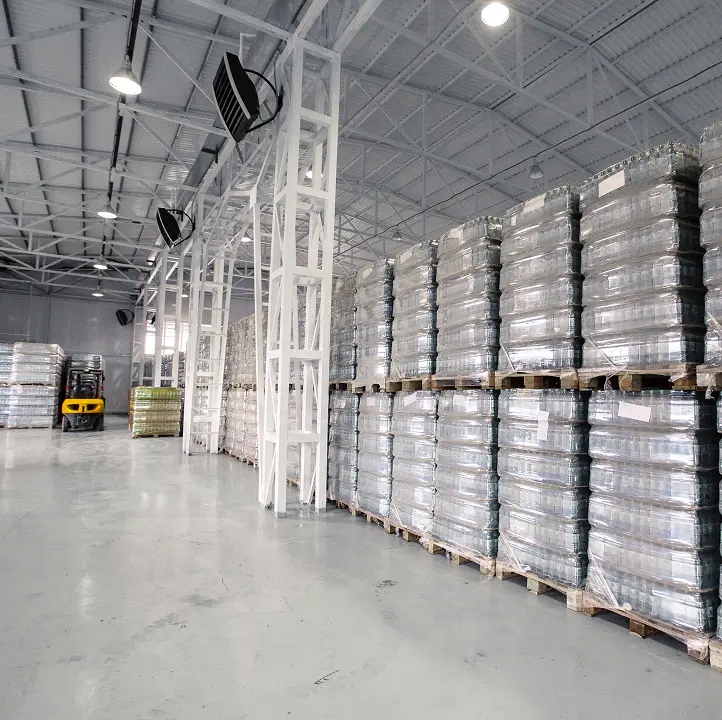
At AMZ Prep, we’ve built our cold storage infrastructure specifically for high-value, temperature-sensitive medications like GLP-1s. Our facilities include:
-
- Pharmaceutical-grade refrigeration with 24/7 24/7 AI-powered monitoring
-
- ISTA-certified packaging solutions designed for temperature-critical products
-
- Real-time temperature tracking with blockchain verification from warehouse to doorstep
-
- Backup power systems and automated alerts to prevent any excursions
-
- Climate-adaptive routing that avoids extreme weather zones
Whether you’re shipping 50 GLP-1 prescriptions a week or 5,000, our cold chain ensures every single unit arrives in perfect condition, protecting both your product investment and your customer relationships.
What to Look for in a 3PL Cold Storage Partner?
Like you, most DTC pharmaceutical brands can’t build your cold storage infrastructure overnight. Instead, you can partner with specialized cold storage 3PL providers who understand pharmaceutical requirements.
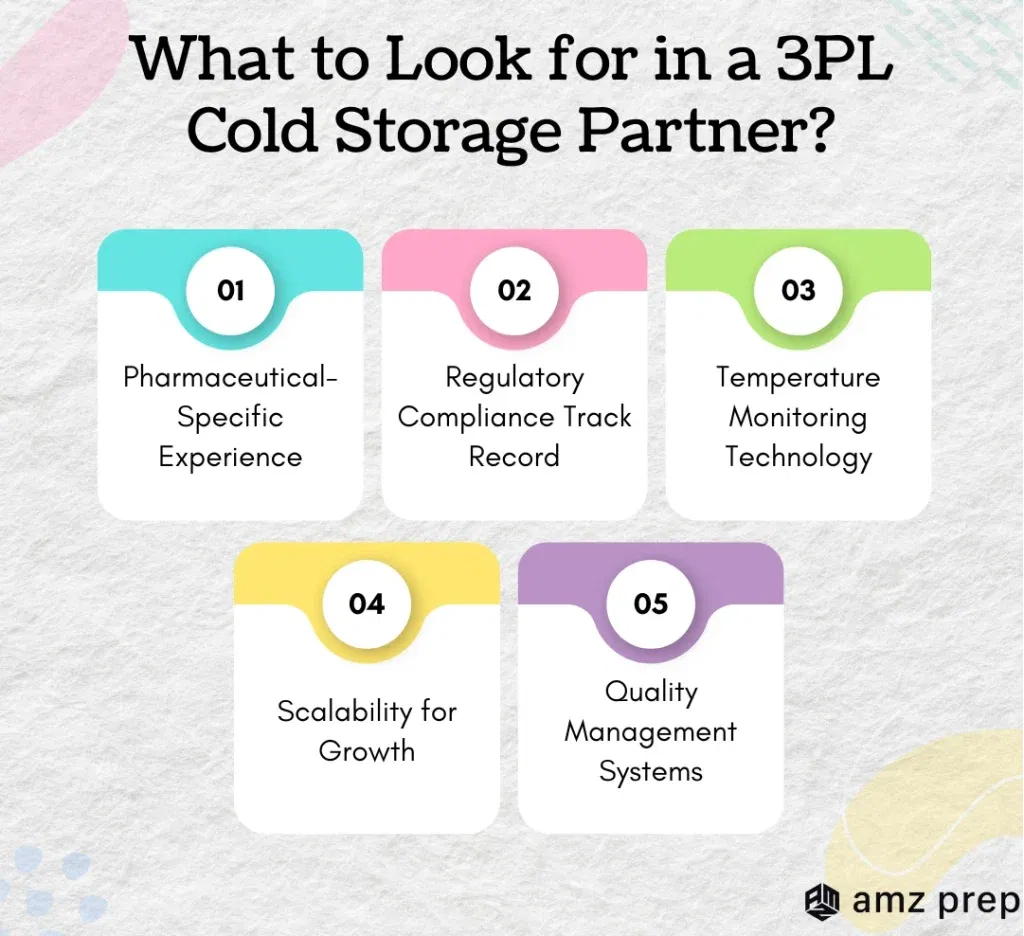
Pharmaceutical-Specific Experience
When evaluating potential 3PL partners for your pharmaceutical storage facilities needs, consider pharmaceutical-specific experience as your starting point.
LooLook for partners with:
-
- Experience handling prescription medications and
-
- Familiarity with your specific product temperature requirements.
-
- Track record with biologics, injectables, or temperature-sensitive compounds
-
- References from similar DTC pharmaceutical brands
Partners with established pharmaceutical experience can help you prevent costly mistakes and compliance issues before they happen.
Regulatory Compliance Track Record
Your 3PL partner becomes an extension of your compliance framework. Verify their:
-
- FDA inspection history and any citations received
-
- Current good manufacturing practice (cGMP) compliance
-
- Documentation practices for maintaining cold chain records
-
- Quality management systems and calibration schedules
Request actual examples of their compliance documentation to assess thoroughness. The best partners maintain meticulous records that exceed minimum requirements.
Temperature Monitoring Technology
Modern pharmaceutical cold storage in 2026 relies on interconnected AI-powered ecosystems. Look for partners offering:
IoT-Enabled Real-Time Monitoring
Continuous temperature tracking with cloud-based dashboards providing instant visibility across your entire cold chain. In 2026, this includes mobile app access with push notifications.
AI-Powered Predictive Analytics
Machine learning now predicts equipment failures 72 hours in advance, reducing temperature excursions by up to 87% (pharmaceutical industry benchmark). These systems integrate:
-
- Dynamic route optimization analyzing real-time weather patterns and carrier performance
-
- Thermal modeling software simulating worst-case packaging scenarios before shipment
-
- Automated risk scoring flagging high-risk shipments during extreme weather events
-
- Predictive maintenance scheduling based on equipment performance trends
Blockchain Integration
Immutable record-keeping for complete supply chain transparency and tamper-proof documentation. This is no longer optional – FDA and EMA increasingly require blockchain-verified cold chain documentation for audits in 2026.
Automated Alert Systems
Instant notifications for temperature deviations,with validated backup protocols for power, equipment malfunctions, or unexpected delays. Modern systems include escalation protocols and automatic carrier rerouting.
These technologies aren’t optional anymore – their regulatory expectations as FDA and EMA enforcement tightens throughout 2026.
Sustainability and Environmental Compliance
In 2026, cold chain sustainability has moved from competitive differentiator to regulatory requirement in many markets. Leading 3PLs are implementing:
Reusable Packaging Systems
-
- Multi-use insulated containers that reduce waste by 60% and cut operational costs by 30-40%
-
- Example: CCT’s Tower Elite maintains temperatures through multiple shipping cycles
-
- ROI typically achieved within 12-18 months for medium-volume shippers
Fiber-Based Solutions
-
- Recyclable corrugated packaging solutions maintain controlled temperatures for up to 36-48 hours
-
- TailorTemp and similar innovations replace non-recyclable polystyrene foam entirely
-
- Lightweight design reduces shipping costs by 15-20% versus traditional coolers
Energy-Efficient Refrigeration
-
- Natural refrigerants (R-744/CO₂, R-290) replacing synthetic HFCs
-
- Solar-powered refrigeration units in select facilities
-
- Renewable energy integration reducing carbon footprint by 40-60%
Circular Economy Models
-
- End-to-end recycling programs for phase-change materials and insulation
-
- Take-back programs for insulated shippers with cleaning and revalidation
-
- Partnership with recycling networks ensuring proper material recovery
These initiatives address both environmental regulations and consumer expectations. A 2025 industry survey found that 72% of DTC pharmaceutical customers consider environmental impact when choosing brands, up from 68% in 2024.
Scalability for Growth
As your DTC pharmaceutical business grows, your cold storage needs will expand. Ensure your partner can:
-
- Accommodate increasing inventory volumes without compromising temperature control
-
- Support seasonal fluctuations in demand (holiday shipping, summer heat challenges)
-
- Expand into new geographic markets as you grow
-
- Integrate with your existing systems (WMS, OMS, customer communication platforms)
The best partners become strategic advisors in your distribution planning. They should proactively suggest improvements to your cold chain as your business evolves, not just react to your requests.
Quality Management Systems
Evaluate your 3PL partners’ quality management structure and calibration schedules for temperature monitoring devices. Their quality systems should integrate easily with yours, creating a unified approach to cold chain integrity.
Look for:
-
- Staff training programs with competency verification
-
- ISO 9001:2015 certification minimum
-
- Regular internal audits and continuous improvement programs
-
- Documented corrective and preventive action (CAPA) processes
Regulatory Requirements for Pharmaceutical Cold Storage
You can’t talk about pharmaceutical cold storage without touching compliance. It’s not just about keeping things cool, it’s about keeping things legal.
The U.S. Food and Drug Administration (FDA) and the U.S. Pharmacopeia (USP) set the standards for cold storage pharmaceutical products. And whether you’re selling directly to consumers or through clinics, you’re still on the hook.
Ultra-Cold Storage
Every drug label comes with storage instructions, and those aren’t suggestions. They’re regulatory mandates.
-
- Refrigerated meds (like insulin or GLP-1 injectables) must stay between 36°F and 46°F (2°C to 8°C).
-
- Frozen products (like certain vaccines and biologics) may need temps from -13°F to 5°F (-25°C to -15°C).
-
- Room temperature drugs still have limits – typically 68°F to 77°F (20°C to 25°C), with short-term leeway.
-
- Ultra-Cold Storage (-40°F to -80°F / -40°C to -80°C): Required for mRNA vaccines and certain cell and gene therapies
-
- Cryogenic Storage (below -150°F / -80°C): Essential for advanced biologics and regenerative medicine products
If the product goes out of range? It could lose potency or trigger a recall.
Documentation and Monitoring
Cold storage isn’t “set it and forget it.” You’re expected to document temperature records continuously, not just check once a day.
The FDA may audit your pharmaceutical storage facilities, especially if you’re storing drug cold storage products long-term. During audits, inspectors want to see:
-
- Calibrated temperature monitoring logs
-
- Backup power plans
-
- Deviation reports (for excursions)
-
- Preventive maintenance schedules
Good 3PL partners provide full traceability, including temperature mapping and digital dashboards that show real-time conditions.
Last-Mile Considerations for Cold Chain Medicine
The final delivery stage presents unique challenges for cold chain medicine. You’ve stored your products correctly, great. But the job’s not done. You also need to manage last-mile delivery, often where most cold chain breakdowns happen.
This is where specialized pharmaceutical cold storage trucking in North America supports consistent temperature-controlled compliance across regional and long-haul transport.
Think about it: A delivery truck parked too long in the sun. A customer is missing their delivery window. A package sitting on a porch during a summer heatwave or winter freeze.
Here’s how you protect your product and improve customer satisfaction:
Validated Shipping Containers
When it comes to cold chain medicine, packaging does more than protect. It’s your front-line defense against heat, cold, and delays.
The best DTC brands use validated packaging and containers that maintain temperature longer than the shipping window, with a margin of error. In 2026, industry standard is 72-96 hour validation (up from 48 hours) due to:
-
- Increased carrier delays (weather, staffing shortages, peak season congestion)
-
- More extreme weather events requiring longer protection windows
-
- Regulatory pressure for extended validation periods
These containers are tested through qualification studies (ISTA 7D/7E protocols) that simulate real-life conditions like:
-
- Hot summer days (105°F+ ambient temperatures)
-
- Winter freezing conditions (below 0°F)
-
- Unexpected delivery delays and re-routing
-
- Multiple carrier handoffs
2026 Innovation: Smart packaging with embedded IoT sensors that communicate directly with customers via SMS/email, providing real-time temperature status and delivery alerts.
Carrier Selection and Training
Not every carrier understands the delicate cold storage of pharmaceutical products. Some toss packages, delay routes,or leave boxes in hot trucks.
How do you avoid that?
Work with carriers who specialize in pharmaceutical delivery. The best 3PL will add temperature-sensitive labels and “priority” tags. Some brands go even further and build dedicated delivery networks in major markets
-
- FedEx Healthcare Solutions
-
- UPS Premier (temperature-controlled)
-
- Specialty pharmaceutical couriers for high-value products
In 2026, leading DTC brands implement:
-
- Carrier scorecarding based on temperature compliance and on-time delivery
-
- Dedicated pharmaceutical delivery routes avoiding residential weekend delivery
-
- GPS tracking with temperature monitoring integration
-
- Direct-to-patient signature requirements for high-value medications
-
- White-glove delivery services for ultra-sensitive products (includes refrigerator placement)
The best 3PLs add temperature-sensitive labels, “priority” tags, and carrier-specific handling instructions. Some brands build dedicated delivery networks in major markets – not always necessary, but it gives tighter control when timing is everything.
Customer Communication
Your cold chain doesn’t stop at delivery, it extends into the customer’s hands. Communication matters just as much as packaging.
Best practices for 2026:
Pre-Delivery Notifications
-
- 24-hour advance notice with delivery window
-
- SMS/email alerts when package is out for delivery
-
- Real-time tracking links with estimated delivery time
Delivery Instructions
-
- Why fast unpacking is critical (include in packaging and email)
-
- How to store medication at home (temperature range, location in refrigerator)
-
- What to do if temperature indicators look off (customer service contact, photo documentation)
-
- What to expect: condensation on packaging is normal, explain why
Post-Delivery Follow-Up
-
- Automated email 1 hour after delivery confirming receipt
-
- Temperature indicator verification instructions
-
- Customer service number prominently displayed
-
- Satisfaction survey to identify delivery issues early
This simple step reduces complaints by 40% and improves safety without adding significant cost to your operations.
Delivery Timing Optimization
Here’s where tech meets timing. Smart DTC brands use predictive analytics to avoid risky delivery times.
Common strategies in 2026:
Avoid Weekend Deliveries If packages sit outside for 48+ hours, temperature control fails. Schedule Tuesday-Thursday delivery for most reliable windows.
Morning Delivery Windows Temperatures are cooler, reducing thermal stress on packaging. Premium shipping services offer AM-only delivery.
Weather-Based Hold Protocols Pause shipments during:
-
- Heatwaves (ambient temperatures above 95°F)
-
- Extreme cold (below 20°F in delivery location)
-
- Severe weather events (hurricanes, blizzards, flooding)
Geographic Routing
-
- Southern states: Ship Monday-Tuesday to avoid weekend heat
-
- Northern states: Avoid Friday shipments in winter (weekend freezing risk)
-
- Remote areas: Require signature to prevent extended outdoor exposure
AI-Powered Delivery Prediction 2026 technology analyzes historical delivery performance, weather forecasts, and carrier data to recommend optimal ship dates for each ZIP code automatically.
Common Challenges in DTC Pharmaceutical Cold Storage (And How to Avoid Them)
Even the best plans can run into obstacles, especially in cold chain logistics. DTC pharmaceutical brands face unique challenges that traditional retail pharmacies don’t deal with.
Let’s break down the top issues and how to solve them:
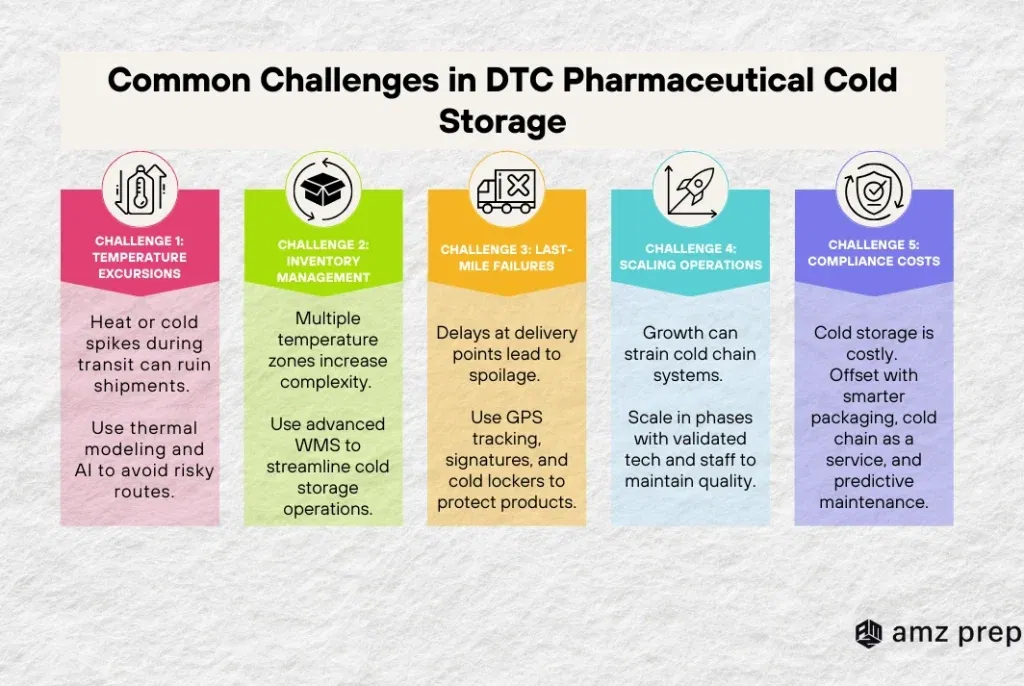
Challenge #1: Temperature Excursions During Transit
Temperature excursions are the number one reason cold shipments go wrong. These happen when products get too hot or cold, even for a short time.
What causes it?
-
- Counterfeit products entering the supply chain
-
- Insufficient cold chain capacity during peak demand seasons
-
- Climate change creating more extreme weather patterns
Forward-thinking DTC brands now use multi-layered protection strategies:
-
- AI-Powered Route Optimization: Analyzing weather patterns, transit times, and carrier performance data to select the safest shipping routes
-
- Thermal Modeling: Advanced simulation software that predicts packaging performance under worst-case scenarios before products ship
-
- Blockchain Tracking: End-to-end visibility ensuring every temperature point is recorded and tamper-proof
-
- Validated Packaging: ISTA-certified solutions tested against extreme conditions, not just average scenarios
Most of the pharmaceutical companies implementing these technologies have reduced temperature excursions by up to 87% while cutting waste by significant margins.
Some even use AI-powered tools that analyze weather, transit times, and packaging setups. These systems identify risky routes before packages ever leave the warehouse.
Challenge #2: Inventory Management Complexity
When a warehouse holds products at multiple temperature ranges, simple inventory systems no longer cut it. Managing cold storage pharmaceutical products is a whole different ball game.
Here’s the problem: each zone has a different ambient, refrigerated, or frozen temperature, which requires different processes. That means picking, packing, and restocking get more complicated.
Advanced warehouse management systems (WMS) solve this by optimizing pick paths. That way, fridge and freezer doors stay closed longer, reducing temperature fluctuation and improving shelf life.
Challenge #3: Last-Mile Delivery Failures
The last mile often causes the most cold chain issues. Packages sit in mailrooms, on porches, or on trucks longer than expected.
So, how do top DTC brands fix this?
-
- Require signature confirmations for temperature-sensitive drugs
-
- Add GPS tracking for higher-value shipments
-
- Place orders in cold lockers inside buildings or workplaces
These small changes protect your cold chain medicine even after it leaves your facility.
Challenge #4: Scaling Cold Chain Operations
Imagine you’ve delivered 100 orders a day. Pretty awesome! But what happens when you hit 1,000? Scaling cold chain logistics is no joke.
The most successful brands don’t rush. They expand in controlled phases, validating each new zone, staff hire, or tech system. That way, you don’t have to compromise on quality even when volume spikes.
Think of growth like temperature control: steady, monitored, and planned.
Challenge #5: Managing Costs While Maintaining Compliance
Pharmaceutical cold storage doesn’t come cheap. From power backups to compliance audits, it can cause you more.
Smart brands manage this in two ways. They optimize packaging to reduce dimensional weight, cut shipping costs, and change to cold chain as a service, turning fixed costs into operational ones.
Some also use predictive maintenance to prevent costly equipment failures before they happen.
In addition, managing the costs required for fulfillment can become another headache. To help, we have created an exclusive Cold Storage Cost Calculator. Our free tool provides easy access and instant results.
Now you can easily manage both compliance and cost.
Conclusion
The cold chain isn’t going away, it’s only getting more important as DTC pharmaceutical brands continue to grow.
But here’s the good news: brands that get their cold storage right don’t just stay compliant. They build trust with customers through consistent product quality and reliable delivery.
What separates successful DTC pharmaceutical brands:
-
- Smart technology: Real-time temperature tracking and alerts that catch problems before they happen
-
- The right partner: A 3PL that understands pharmaceutical requirements, not just general warehousing
-
- Room to grow: Cold storage infrastructure that scales with your business without cutting corners on compliance
-
- Product protection: Packaging and processes designed for high-value medications like GLP-1 injectables
Your cold chain isn’t just logistics, it’s part of your brand promise. When customers order temperature-sensitive medications, they’re trusting you to deliver them safely. Get it right, and you build loyalty that lasts.
Ready to protect your products and grow your brand?
AMZ Prep specializes in pharmaceutical cold storage for DTC brands. We handle everything from temperature-controlled warehousing to last-mile delivery, so your products arrive in perfect condition.
Whether you’re shipping insulin, GLP-1 medications, or other temperature-sensitive products, we’ve got the infrastructure and experience to keep you compliant and keep your customers happy. Get in touch with us!
Let’s build a cold chain that supports your brand growth.
Supplement sellers on Amazon whose products fall under meltable classifications can use this playbook to plan their fulfillment approach for the restricted period. Button: Download the Meltable Season Playbook
Frequently Asked Questions
What is the cold chain for pharmaceuticals?
What medications are kept in cold storage?
What is room temperature for drugs?
Which drugs are stored in the freezer?
Do GLP-1 medications require special cold storage?
What is ultra-cold storage and why is it growing?
How are AI and IoT changing pharmaceutical cold storage?

Arishekar N is a Vice President (VP) of Marketing at AMZ Prep, specializing in ecommerce fulfillment and Amazon logistics strategies with a proven track record of driving growth for e-commerce businesses. He is a strategic leader with extensive expertise in marketing, e-commerce operations, SEO & advertising, and branding.
Stay updated on his latest insights by following him















Comments