One leak, one thaw, one bad review – that’s all it takes to lose a loyal customer.
The frozen food market is heating up, with demand growing fast. But with growth comes pressure: every shipment must arrive frozen, fresh, and flawless. When packaging fails, so does the product and your brand reputation.
If you deliver frozen meats, artisan ice cream, or heat-and-eat meals online, your packaging is more than simply a box; it is a protective barrier for your products. As a seller, you must understand that packaging for frozen food demands precision, planning, and the right materials.
This blog will guide you through frozen food packaging that works. Let’s dive in!
How do Temperature Fluctuations Affect Frozen Food Quality in the Freezer Aisle?
To understand the importance of frozen food packaging, imagine you’re shipping frozen strawberries.
At the perfect temperature of 0°F (-18°C), those berries have microscopic ice crystals that keep everything intact. But when temperatures fluctuate, say it may be a hot summer, the crystals will melt and refreeze into larger formations.
The result? Mushy strawberries that look like they’ve been through a blender. This process doesn’t just affect texture. It destroys the quality and structure of your food, leading to:
Moisture loss – Your products lose all their freshness away
Nutrient degradation – Vitamins and minerals break down faster
Flavor changes – That fresh taste becomes flat and lifeless
Visual damage – Nobody wants to buy food that looks freezer-burned
Here’s where things get specific. Not all frozen foods are equal when it comes to temperature tolerance. Your variety of packaging strategy needs to account for these differences, ensuring your frozen food option maintains its structural integrity.
Time matters, too. Your products might survive a quick temperature spike, but time-temperature abuse is cumulative. Spending two hours at 15°F is worse than spending 30 minutes at 20°F. Your packaging strategy needs to account for worst-case transit scenarios and help reduce food waste.
Frozen Food Packaging Solutions for Shipping
Your packaging system should include primary packaging, insulation, and coolant. Each layer plays a role in preserving product integrity and ensuring your products stand out in the freezer aisle. Let’s look into it in more detail.
Sustainable Pouch Options for Frozen Products
Modified atmosphere packaging (MAP) is something that you must keep in mind. Instead of removing all air, you replace it with specific gas mixtures that preserve quality. It’s commonly used for frozen prepared meals where you want protection without the crushing pressure of vacuum sealing.
Eco-friendly packaging solutions are important as businesses focus on corporate sustainability. Recyclable packaging options include paper-based packaging solutions and renewable materials that help you reduce environmental impact while maintaining strength and durability.
Reusable Insulated Containers for Sustainable Packaging
Polyurethane foam containers offer superior insulation but cost more. They maintain temperatures longer and handle extreme weather better. If you’re shipping high-value frozen items like wagyu beef or artisanal ice cream, the extra expense pays for itself in reduced loss.
Reusable container systems are gaining popularity among businesses focused on sustainability goals. These heavy-duty solutions can be returned and reused multiple times, reducing overall packaging format waste.
Proper packaging is one part of meltable season readiness. We’ve made a playbook that covers the full fulfillment strategy for Amazon sellers. Download the Meltable Season Playbook
Aluminum Foil Liners and Thermal Protection
Corrugated insulated boxes are easy to brand and are often more environmentally valuable. These work well for businesses shipping moderate volumes of frozen goods while providing excellent design solutions for brand visibility.
Thermal Protection Materials
Thermal protection materials may not seem like much, yet they might mean the difference between success and failure.
Recyclable Insulation Materials for Eco-Conscious Brands
Reflective bubble wrap helps protect fragile goods. The reflective surface prevents heat from reaching your products, while the air bubbles provide insulation. It’s perfect for wrapping food or lining your shipping containers.
Aluminum foil barriers provide excellent thermal protection and are completely recyclable. These materials work well in laminate structures that combine multiple protective layers.
Aluminum Foil and Reflective Packaging Solutions
Multi-layer insulation systems combine different materials for maximum protection. Suppose your frozen meal kit gets wrapped in reflective bubble wrap, placed in a polyurethane container, surrounded by thermal blankets, and shipped in a corrugated box. In that case, that’s excellent protection to use.
Sustainable Liner Options That Reduce Environmental Footprint
Phase change materials (PCMs) are the high-tech option. These materials absorb and release heat at specific temperatures, providing consistent thermal protection. They’re more expensive but incredibly effective for long-distance shipments or extreme weather conditions.
Waxed and freezer paper provide traditional yet effective protection for certain frozen products, especially in farm-to-table operations with natural packaging materials.
Choosing the Right Coolant for Your Frozen Foods Packaging
With the below table comparison, you can get an idea of choosing the right coolant to pack your frozen foods:
| Coolant Type | Temperature Range | Duration | Best For |
|---|---|---|---|
| Dry Ice | -78.5°C (-109.3°F) | 3-5 days | Premium frozen foods, long transit, ice cream |
| Frozen Gel Packs | -18°C to -10°C (0°F to 14°F) | 1-2 days | Short transit, frozen vegetables, cost-conscious shipping |
When to Choose Each Coolant?
| Scenario | Recommended Coolant | Why |
|---|---|---|
| Ice cream shipping, any distance | Dry ice | Ultra-low temperature requirements |
| Frozen vegetables, 1-2 day shipping | Frozen gel packs | Cost-effective, adequate protection |
| Summer shipping to hot climates | Dry ice | Superior heat resistance |
| Eco-conscious customer base | Frozen gel packs | Reusable, sustainable option |
| International shipping | Check regulations first | Some countries restrict dry ice |
Packaging Solutions for Different Frozen Products
Poultry and Seafood Packaging with Airtight Freezer Storage
Shipping frozen proteins comes with unique challenges that’ll make you stop and think of the complexity. We’re talking about products that can leak during thawing, carry food safety risks, and cost serious money to replace.
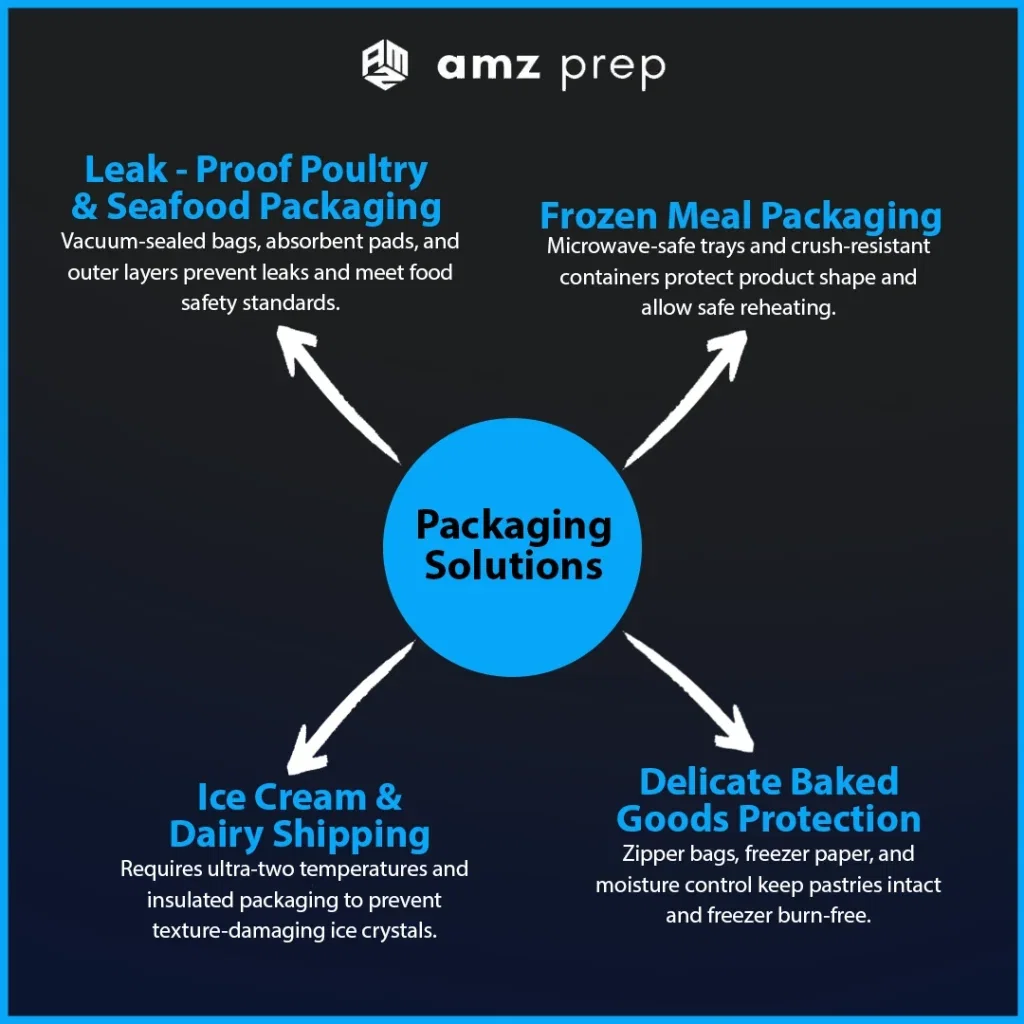
Leak-proof packaging isn’t optional – it’s mandatory. Imagine a customer opening their box to find frozen salmon leaked all over everything else. You’ve lost that customer forever, plus you can face some issues.
Your packaging system needs multiple barriers:
- Primary vacuum-sealed bags for individual portions
- Secondary leak-proof pouches or containers
- Absorbent pads to catch any moisture
- Outer packaging that contains everything if the worst happens
HACCP-compliant materials ensure your packaging meets food safety standards. This means using materials approved for direct food contact and following proper sanitation procedures during packaging. Your frozen burger patties need packaging that maintains food safety from your facility to the customer’s freezer.
Microwave Safe Trays and Pouches for Frozen Meals
Prepared frozen meals have their own packaging puzzle. These products often have multiple components with different temperature sensitivities and must survive both shipping and reheating.
Preventing package crushing is crucial for maintaining product integrity. Your frozen lasagna needs to arrive looking like lasagna, not abstract art. This means choosing containers with adequate crush resistance and proper void fill to prevent shifting during transport.
Steam-resistant packaging for microwave-ready products adds another layer of complexity. The packaging must maintain frozen temperatures during shipping but handle steam and heat during reheating. Many businesses use dual-packaging systems with shipping containers and microwave-safe inner packaging.
Multi-compartment frozen meals require careful consideration of each component’s needs. Your frozen meal kit with proteins, vegetables, and sauces might need different protection levels for each component. Some brands use separate packaging for temperature-sensitive sauces within the main meal container.
Frozen Dairy Products and Ice cream Shipping
Ice cream and frozen dairy products demand consistent ultra-low temperatures and have zero tolerance for temperature fluctuations.
Ultra-low temperature maintenance means your packaging system needs to handle temperatures well below standard frozen food requirements. Premium ice cream should stay at -5°F to -10°F throughout shipping. Any warmer, you get ice crystal formation that ruins your product’s texture.
Preventing temperature shock in frozen dairy requires gradual temperature changes rather than sudden spikes. This means using packaging systems with thermal mass and materials that absorb and release heat slowly. Some ice cream shippers include frozen gel packs designed for dairy temperature ranges.
Artisanal products often demand specialized packaging solutions. Your small-batch gelato requires different conditions than ice cream that is sold in bulk. Consider packaging that reflects the high quality of your goods while also providing excellent protection.
Freezer Paper and Zipper Bags for Delicate Frozen Products
Frozen baked goods combine the challenges of maintaining temperature with protecting delicate structures. Your frozen croissants need to arrive both frozen and structurally intact.
Zipper closure systems provide excellent resealing capability for consumers while maintaining airtight protection during shipping. Freezer tape can provide additional security for packages that need extra sealing reinforcement.
Moisture control is critical for frozen bread and pastries. Too much moisture during shipping creates ice crystals that destroy the texture. Too little moisture leads to freezer burn. The solution often involves modified atmosphere packaging that controls humidity levels.
Decorated cakes and pastries require packaging that protects both their temperature and appearance. Your frozen wedding cake decorations cannot look like they were blended. This frequently results in custom-fitted packaging with multiple layers of protection.
Designing Eco-Friendly and Cost-Effective Frozen Food Packaging
Right-Sizing Your Frozen Food Packaging
Here’s where efficiency meets effectiveness. The goal is optimal protection without paying for unnecessary space or materials. Getting this balance right can significantly impact your shipping costs and customer satisfaction, much like optimizing layout and workflows can influence food traffic.
Dimensional weight optimization is crucial because carriers charge based on both actual weight and package dimensions. Your frozen food packaging might be heavy due to coolants, but you don’t want to pay extra for empty space. This means choosing containers that closely match your product dimensions while leaving room for insulation and coolants.
Standardizing box sizes across your frozen product lines creates operational efficiencies. Instead of custom packaging for every product, develop 3-4 standard sizes that handle most of your range. Your frozen pizza, frozen meals, and frozen desserts might all fit in the same medium-sized container with different insulation configurations.
Cube utilization matters for both shipping costs and environmental impact. Design your packaging to maximize how efficiently products fit together.
Seasonal Packaging Adjustments for Frozen Foods
Your packaging strategy can’t be static, as it needs to adapt to seasonal conditions. Shipping frozen foods in Phoenix in July requires different solutions than shipping the same products in Minneapolis in January.
Summer packaging requirements are more demanding. Higher ambient temperatures mean you need more coolant, better insulation, and faster shipping methods. Your standard packaging might work fine in spring but fail miserably during a summer heat wave.
Winter considerations include cold weather brittleness in packaging materials and potential freeze-thaw cycles during shipping. Your packaging materials need to remain flexible and protective even in sub-zero conditions.
Regional climate adjustments mean customizing your approach based on shipping destinations. Products shipped to Florida need protection that is different from those shipped to Alaska. Consider regional packaging variations or seasonal packaging calendars.
Testing and Validating Your Frozen Food Packaging Systems
Thermal Performance Testing Methods
Testing isn’t optional – it’s more like having insurance against expensive failures. You need to know how your packaging performs before your customers do.
Temperature mapping during simulated shipping involves placing temperature loggers throughout your packaging and subjecting it to realistic shipping conditions. Create test scenarios that mimic your actual shipping routes, including delays and temperature extremes.
Accelerated aging tests help predict how your packaging materials will perform over time. Materials that work great when new might fail after storage or handling. Test how your packaging performs after being stored in various conditions.
Distribution cycle testing takes the entire shipping process, from your facility to the customer’s door. This includes handling at distribution centers, delivery truck conditions, and final delivery scenarios.
Package Integrity Testing for Frozen Foods
Beyond temperature control, your packaging needs to maintain physical integrity throughout the shipping process.
Leak testing for frozen meat and seafood is critical for food safety and customer satisfaction. Test your packaging with actual products under various temperatures and handling conditions.
Drop testing and compression testing help you with the realities of shipping and handling. Your packages will be dropped, stacked, and possibly thrown around during transit.
Cold temperature flexibility testing ensures your packaging materials remain functional in frozen conditions. Some materials become brittle when cold, leading to cracks or breaks during handling.
Common Frozen Food Packaging Mistakes That Affect Your Freezer Storage
1. Thermal Bridging and Heat Transfer Issues
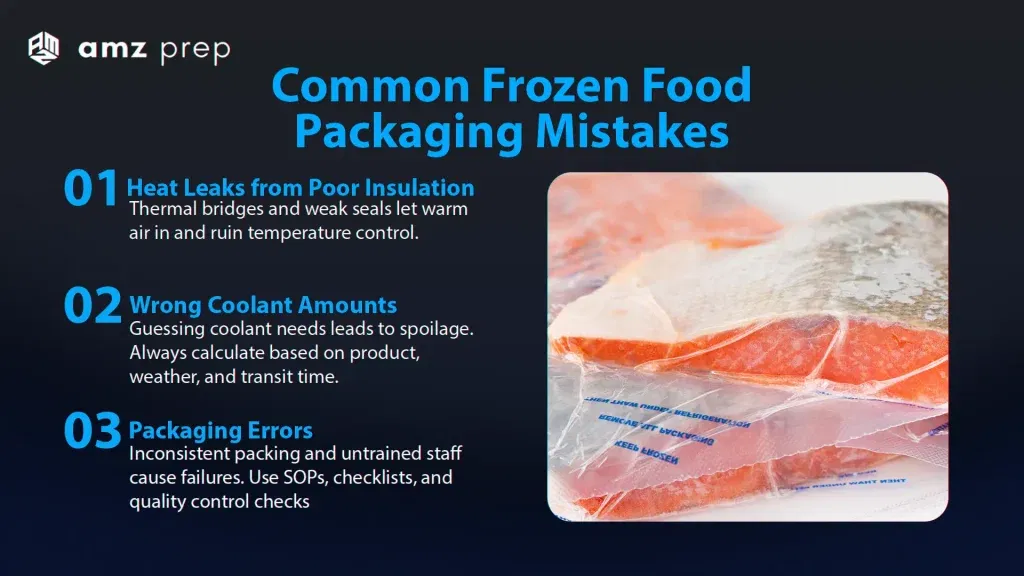
Thermal bridging is the silent killer of frozen food packaging. It happens when heat finds a path through your insulation system, usually through design flaws you didn’t consider.
Common thermal bridges include:
- Metal components that conduct heat
- Gaps or compressed insulation areas
- Poor sealing around container edges
- Coolant placement that creates hot spots
Identifying heat leak points requires systematic testing and temperature mapping. Look for areas where your packaging consistently fails or where temperatures rise faster than expected.
Proper sealing techniques make or break your insulation system. Poor seals allow warm air infiltration that destroys your carefully planned temperature control. Invest in quality sealing equipment and train your staff on proper techniques.
2. Inadequate Coolant Calculations
This is where many businesses fail – they guess at coolant requirements instead of calculating them properly.
Common miscalculations include:
- Underestimating transit times during peak seasons
- Failing to account for extreme weather conditions
- Not considering shipping delays and handling time
- Using generic formulas without product-specific adjustments
Seasonal adjustment errors happen when businesses use the same coolant quantities year-round. Your summer shipping needs significantly more cooling power than winter shipments.
Transit time estimation mistakes often result from optimistic assumptions about shipping speed. Always plan for delays and longer transit times than carriers promise.
3. Package Assembly and Human Error Prevention
Even perfect packaging designs fail if assembly is inconsistent or incorrect.
Standardized packing procedures ensure consistency regardless of who’s doing the packaging. Create detailed standard operating procedures with visual guides and checklists.
Training requirements for packaging staff should cover proper handling of coolants, assembly procedures, and quality control checkpoints. Regular refresher training prevents skill degradation.
Quality control checkpoints at various stages catch errors before packages ship. Implement checks for coolant quantities, sealing quality, and proper assembly.
Packaging Material Regulations for Frozen Food Compliance
There are certain frozen food packaging regulations that every seller must follow:
FDA packaging material requirements specify which materials can contain frozen foods. Not all packaging materials are food-safe, and some may leach chemicals into your products under frozen conditions. Ensure your primary packaging materials have proper FDA approval for frozen food contact.
USDA guidelines for frozen meat and poultry add additional layers of requirements for protein products. These guidelines cover everything from packaging materials to labeling requirements. If you’re shipping frozen meat products, USDA compliance isn’t optional.
Dry ice shipping regulations classify dry ice as hazardous material requiring specific documentation, labeling, and handling procedures. These requirements also extend to hazmat shipping paperwork, which must be accurate and compliant for every shipment. Training your staff on these requirements prevents shipping delays and regulatory issues.
International shipping compliance becomes relevant if you’re expanding your brand globally. Different countries have varying requirements for frozen food packaging materials, coolant restrictions, and documentation. Make sure you research the requirements for each target market before expanding internationally.
3PL Partnerships for Frozen Food Packaging Solutions
As your business grows, specialized third-party logistics providers can handle complex frozen food packaging while you focus on your brand growth and product development.
When to Consider 3PL Partners
Look for 3PL providers with frozen food experience once you exceed 500-1000 monthly shipments. Key requirements include temperature-controlled facilities, packaging expertise, regulatory compliance knowledge, and scalable operations that handle seasonal fluctuations.
Setting Up Successful Partnerships
Document your packaging specifications thoroughly, including materials, assembly procedures, and quality standards. Establish regular quality reviews and performance metrics covering temperature maintenance, packaging accuracy, and customer satisfaction.
Most businesses find 3PL partnerships cost-effective due to shared infrastructure and bulk purchasing power, though specialized frozen food handling costs more than general fulfillment.
For brands looking for specialized frozen food fulfillment, AMZ Prep offers temperature-controlled packaging solutions with expertise in regulatory compliance and scalable operations. Their focus on frozen food logistics help brands maintain product quality while simplifying the fulfillment processes.
Conclusion
Frozen food packaging isn’t just about keeping things cold; it’s about building a sustainable business that delivers quality products consistently. From understanding the science of temperature control to selecting the right materials and coolants, every decision impacts your bottom line and customer satisfaction.
Your customers are counting on you to deliver frozen foods that taste as good as they did when they left your facility. With the right packaging strategy, you can exceed those expectations while building a profitable business in the frozen food market.
Frequently Asked Questions
What is the best packaging for shipping frozen food?
The best packaging includes a moisture-barrier primary wrap (like vacuum-sealed film), insulation (EPS, polyurethane, or thermal liners), and a coolant (dry ice or gel packs). You can also choose materials based on product type, transit time, and destination climate.
Can I ship frozen food without dry ice?
Yes, for short transit times or less temperature-sensitive products, frozen gel packs are a cost-effective alternative. However, dry ice is better for ultra-low temperature needs and longer distances.
How long will frozen food stay cold in transit?
With proper packaging, frozen food can stay cold for 24 to 72 hours. Factors include the type of coolant used, insulation quality, and external temperatures.
What type of insulation is best for frozen food?
For basic shipments, EPS foam works well. Polyurethane foam offers better insulation for premium products or longer trips. Corrugated insulated boxes are a good option for eco-conscious brands.
Is vacuum sealing required for all frozen foods?
Not always. Vacuum sealing works best for meats and meals but may crush delicate items like pastries or berries. You can choose the method based on your product sensitivity.

Arishekar N is a Vice President (VP) of Marketing at AMZ Prep, specializing in ecommerce fulfillment and Amazon logistics strategies with a proven track record of driving growth for e-commerce businesses. He is a strategic leader with extensive expertise in marketing, e-commerce operations, SEO & advertising, and branding.
Stay updated on his latest insights by following him
















I now understand the importance of choosing the right packaging to ensure customer satisfaction.
I never realized how crucial proper packaging is until reading this.
This blog has transformed the way I approach frozen food shipping.
I appreciate the detailed insights on temperature fluctuations and their impact on food quality.
The advice on balancing cost and quality in packaging is spot on.
The emphasis on using the right materials to prevent freezer burn was eye-opening.
This guide is a lifesaver for anyone shipping frozen goods.
The section on eco-friendly packaging options was particularly helpful.
The tips on maintaining product integrity during transit are invaluable.
Great resource for understanding the complexities of frozen food shipping.