
April 15 marks a critical deadline for Amazon FBA sellers with temperature-sensitive products. If you sell chocolates, gummies, certain supplements, or other meltable items, this date is the beginning of a challenging period that won’t end until October 15.
During these six months, Amazon FBA won’t accept your meltable products, thus putting your business and cash flow at serious risk. This blog will guide you through alternative ways to sell your meltable products, why Amazon FBA stops accepting meltable inventory after April 15, and much more. Let’s dive in!
Why Amazon FBA Stops Accepting Meltable Inventory After April 15?
Starting April 15 each year, Amazon FBA stops accepting meltable products in their inventory. This restriction continues until October 15, when temperatures begin to cool down across most regions. You might be wondering why these specific dates are chosen.
The answer is because of the warehouse temperatures.
Amazon’s fulfillment centers struggle to maintain the temperature-sensitive products in their warehouses due to the temperatures inside delivery trucks and certain areas of warehouses. During this time, temperatures need to be higher than what is actually required to maintain the chocolate bars or gummies.
So, what happens when meltable products get too warm? Chocolates will lose their shape and become messy. Gummies will stick together, wax based-products will lose their original state and some supplements will break down and lose effectiveness.
It’s important to note that Amazon also issues removal orders for meltable inventory that sellers may have in the fulfillment centers during this restricted period. According to Amazon, whatever inventory that arrives at fulfillment or is considered meltable will not be stored in their warehouse.
With over 310 million active users, Amazon leads the online shopping market and never compromises on customer experience. So, they never compromise with customer experience. Also, none of the customers likes to get meltable products at their door step. This is why Amazon has implemented this seasonal restriction and does not accept products that are subject to a meltable ASIN list.
What To Do After April 15: Alternative Fulfillment Paths
When Amazon FBA (Fulfillment by Amazon) stops accepting your perishable products, you’ll need an alternative fulfillment method to keep your business running smoothly.Let’s look at two effective methods that can help you manage this situation.
1. Switch to FBM to Sell Meltable Products
FBM (Fulfillment by Merchant) means you handle the storage and ship your meltable products yourself (or through a 3pl partner) instead of relying on Amazon fulfillment centers. Once FBA stops accepting meltable, switching to FBM lets you keep your listings live and keep orders flowing.
To make this work, you’ll need;
- A safe place to store your meltable products (cool, dry, and temperature-controlled)
- Fast shipping options (ideally 2-day to avoid heat exposure)
- Packaging that protects your products from warm weather
- Pack your meltable products with insulated liners and cold packs.
If you choose FBM, you should be aware of its drawbacks. The downsides include losing your valuable Prime badge, potential drops in conversion rates, and decreased sales during peak summer months.
However, keeping your products in Amazon FBA during this period isn’t a viable option. We have an excellent alternative solution that can help your business succeed. Yes, we are talking about choosing the right 3PL business partner for your business.
2. Work with a 3PL That Offers Cold Storage
3PL (Third-Party Logistics) partners provide scalable solutions when your fulfillment operations hit capacity limitations. Outsourcing to 3PLs with temperature-controlled warehousing is a strategic advantage during Amazon’s meltable inventory restriction period (April 15 to October 15).
These providers maintain consistent climate conditions for heat-sensitive inventory while handling storage, picking, packing, and shipping functions through integrated inventory management systems, allowing you to focus more on business growth. Quality 3PLs specializing in temperature-controlled logistics typically offer:
- Climate control systems keeping temperatures between 55-65°F
- Temperature monitoring with alerts
- Special handling procedures for meltable products
- Insulated packaging for warm weather shipping
- Separate storage areas for meltable inventory
- Easy integration to your online sales platforms
- Documentation of temperature conditions throughout storage and shipping
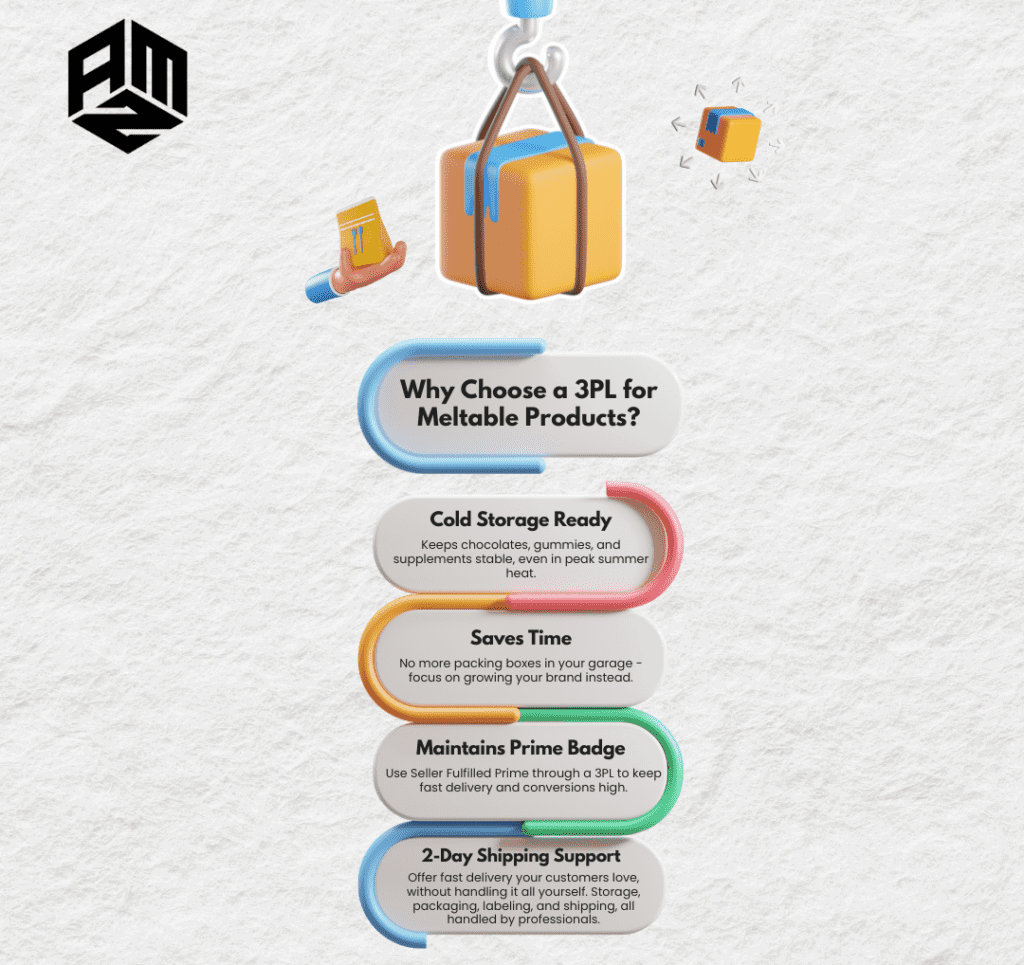
Seller Fulfilled Prime can also be the best option to take care of your meltable products and also maintain your critical prime badge. You can also offer 2-day delivery that your customers expect and improve your conversion rates this summer. While 3PL takes care of everything from pickup to delivery, you can easily focus on growing your brand and developing new product lines.
How to Exempt a Product From Meltable Classification?
Not all temperature-sensitive products necessarily fall under Amazon meltable inventory restrictions. In some cases, you might be able to get an exemption for your products. Let’s look into how to find if your product qualifies and what steps to take.
Step 1: Check whether your product really needs an exemption
First, check if your product is actually classified as meltable. Amazon typically classifies these categories as meltable:
- Chocolate and chocolate-covered products
- Gummy candies and similar confections
- Certain supplements with gel coatings
- Products containing wax components
- Some health and beauty items with temperature-sensitive ingredients
The easiest way to check is through your Seller Central account. Navigate to the “Inventory” tab and look for any flags or warnings on your product listings. Products classified as meltable will have a clear indication in their details.
Note: You can also download the updated meltable ASINs list. Within the list of meltable ASINs, if the products you are selling are on the list then it is considered as meltable and must follow the inbound restrictions.
Step 2: Product incorrectly classified as meltable
If your product appears on the ASINs list and you believe it shouldn’t be classified as meltable, you can request an exemption from Amazon. Follow the below steps:
- Collect evidence that your product can withstand high temperatures without damage
- Take clear photos of your product packaging, focusing on any temperature-related information
- Contact Seller Support through your Seller Central account
- Specifically mention you’re requesting an “Amazon meltable inventory exemption review”
- Include your evidence and photos in your request
- Be prepared to send physical samples for testing if requested.
When making your case, focus on specific product features that prevent melting. For example, if your chocolate contains special stabilizers that increase its melting point above 155 degrees Fahrenheit, you can highlight this information. If your gummies have a protective coating that prevents sticking in high heat, you can also mention this.
Step 3: How to make a successful exemption request
In order to be exempt from the meltable category, Amazon must receive a letter from the manufacturer. Amazon meltable inventory evaluates exemption requests based on various factors to check whether your product is meltable.
Amazon FBA will test the temperature resistance of your products and also they will check the package to withstand heat. Additionally, they’ll review your previous sales performance during summer months.
Step 4: Assessing your chances of receiving an exemption
There are Amazon sellers who got an exemption for their chocolate-covered protein bars. The key was their special triple-layer packaging and the stabilizing ingredients in their chocolate coating. They provided temperature test results showing the product remained intact even between 75 to 155 degrees Fahrenheit for extended periods.
Remember that exemptions aren’t guaranteed. Amazon prioritizes customer experience above all else, so they won’t grant exemptions unless they’re confident your product truly won’t create issues during shipping and storage.
If your exemption request is denied based on Amazon’s meltable inventory policy, don’t worry! There are still plenty of ways to continue selling your products during the restricted months using a 3PL partner.
Manage Amazon Meltable Inventory With a 3PL Partner
When Amazon FBA puts restrictions on meltable inventory, as a seller you will need a reliable backup plan like a trustable 3PL partner. AMZ Prep is one of the leading 3PL providers who offer temperature-controlled storage to keep your meltable category products safe and stable. From gummies to chocolate, your goods are stored in cool, compliant environments even during the summer.
While Amazon FBA hits pause, AMZ Prep handles FBM (Fulfilled by Merchant) orders easily. They also support DTC (Direct-to-Consumer) shipping, so you can continue selling on other platforms like Shopify or Walmart.
From bubble wrapping and poly bagging to labeling and kitting, AMZ Prep ensures every meltable unit is prepped for safe, on-brand delivery.
Don’t delay. The meltable season has already begun. It’s time to prepare strategically, maintain proper temperature control, and keep your orders flowing!
Frequently Asked Questions
What are some important dates to remember about Amazon meltable inventory?
Some of the important dates are as follows:
April 15, 2026: Last day Amazon will accept your meltable inventory at fulfillment centers.
May 1, 2026: Any remaining meltable FBA inventory will be marked unfulfillable and may be disposed of for a fee.
October 15, 2026: Last day of the meltable restriction period. Inventory may be sent back to FBA starting October 16.
What is Amazon Meltable Inventory?
Amazon meltable inventory refers to heat-sensitive products like chocolates, gummies, and wax-based items that FBA accepts only during cooler months (October 16 to April 14). These restrictions exist because Amazon's fulfillment centers from April 15 can't maintain products requiring refrigeration during warmer periods.
How to calculate the fee for Amazon meltable inventory?
According to Amazon's meltable policy, they charge a Low-Inventory-Level fee for meltable products between April 15 to October 15. To know more about their fee structure, you can visit the seller central website.
How long does the Amazon exemption process take?
The review process typically takes 5-10 business days, but can sometimes extend to 2-3 weeks during busy periods. Submit your request well before the April deadline to ensure sufficient processing time.
What if my product is incorrectly flagged as meltable?
If you believe your product has been incorrectly classified, gather evidence of its heat resistance and submit an exemption request through Seller Support. Include clear photos, product specifications, and any available testing data.

Arishekar N is a Vice President (VP) of Marketing at AMZ Prep, specializing in ecommerce fulfillment and Amazon logistics strategies with a proven track record of driving growth for e-commerce businesses. He is a strategic leader with extensive expertise in marketing, e-commerce operations, SEO & advertising, and branding.
Stay updated on his latest insights by following him
















Comments