
I get it – dealing with domestic shipping feels like the least exciting part of your business, right? You’d rather focus on your products, your marketing, maybe even your bookkeeping before tackling shipping logistics.
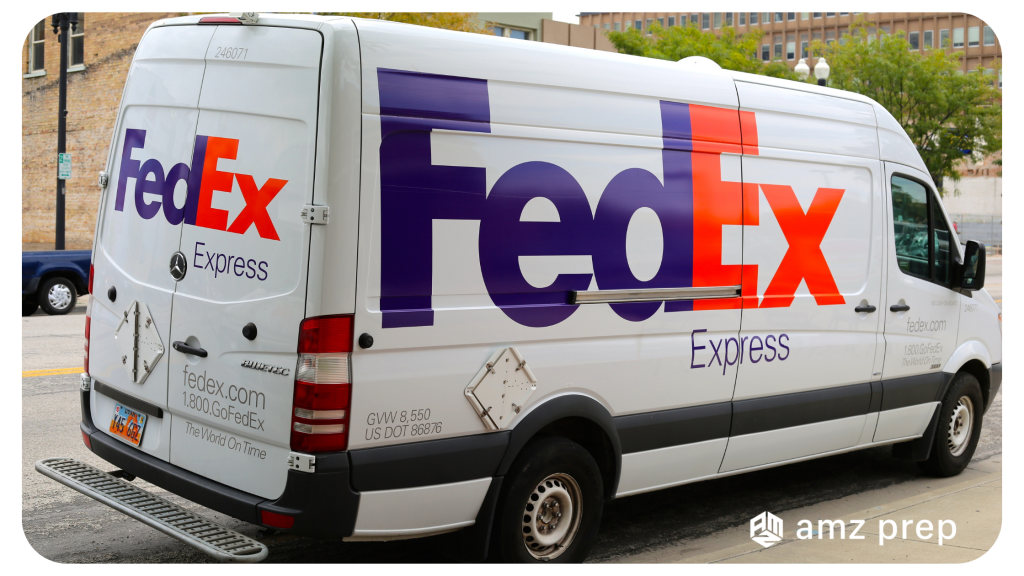
But here’s what we’ve learned from working with hundreds of online sellers: your domestic shipping strategy can make or break your entire business.
Are you watching your profits disappear into shipping costs? Getting those dreaded reviews about slow deliveries? Trust me, you’re in good company.
I’ve watched brilliant entrepreneurs with amazing products struggle simply because they treated shipping as an afterthought.
But here’s what excites me—you don’t have to figure this out the hard way like so many others did. I’m going to walk you through everything about domestic US shipping, step by step.
By the end of this, you’ll know exactly how to transform your biggest headache into the reason customers choose you over your competition.
Domestic Shipping Services Can Make or Break Your Business
Numbers Don’t Lie
US domestic shipping processed over 22.37 billion packages in 2024—that’s a 4% jump from the previous year. (Source: PitneyBowes)
Your clients get 4 to 6 packages a month, and in the busiest months, that number goes up to 12.
What does this imply for you?
You have a lot of competitors, and your clients have high expectations.
High Expectations
I hate to break it to you, but 70% of your potential customers will abandon their carts if your shipping costs are too high. (Source: Baymard)
Yet here’s the kicker—88% of them are willing to pay more for same-day or next-day delivery. (Source: Retail Touch Points)
Confusing, right?
This is the paradox you’re facing: customers want fast shipping but don’t always want to pay for it.
Current Struggles
If you’re reading this, chances are you’re dealing with some of these headaches:
You’re probably pulling your hair out over unpredictable shipping costs that eat into your already thin margins.
Maybe you’ve put all your eggs in one carrier basket, only to face service disruptions during the worst possible time.
Or perhaps you’re over-packaging everything because you’re terrified of damaged goods, but those dimensional weight charges are killing your profits.
Sound familiar? You’re not alone, and more importantly, these problems are totally fixable.
Peak Pressure
Remember last Black Friday? If you’re like most sellers, those few months from Black Friday to New Year’s probably felt like running a gauntlet. Shipping volumes can increase by 200-300%, and carriers start slapping on peak season surcharges that can add $0.30 to $5.00 per package to your costs.
Here’s what successful sellers do differently: they start planning in August.
Yes, August. While their competitors are scrambling in November, they’ve already secured capacity and adjusted their pricing strategies. Part of that prep means choosing the right shipping companies for small businesses, early ones that offer rate flexibility and don’t penalise you for lower off-peak volumes.
The Pricing Game
Let me share something that might frustrate you: while large enterprises enjoy 40-60% discounts off published shipping rates, you might be paying close to retail.
It’s not fair, but it’s reality. The key is knowing how to level the playing field, and I’ll show you exactly how to do that.
Here’s Every Domestic Shipping Option (And When It Actually Works)
Let me walk you through each shipping option so you can make smart decisions that balance cost, speed, and reliability.

Ground Shipping
Ground shipping should be your go-to for most orders. It usually takes 1 to 5 business days, depending on how far away it is, and it’s the cheapest way to go.
For example, if you send something from Los Angeles to Phoenix, it will probably be there in two days. The same package going to Miami? Plan for 4-5 days.
Success Story: I know a clothing retailer in Denver who uses ground shipping for 80% of their orders. Instead of promising specific delivery dates, they set delivery windows.
This simple strategy keeps their customers happy while maintaining shipping costs at just 8% of their total order value. Smart, right?
Expedited Shipping
Two-day and next-day ground services bridge the gap between budget and premium. They’re faster than standard ground but won’t break your bank like air services.
Here’s how one seller uses this:
An electronics seller in Austin offers three tiers: standard ground ($6.99, 3-5 days), expedited ground ($12.99, 2 days), and next-day air ($24.99, 1 day).
This captures customers willing to pay for speed while keeping a budget option available.
Express and Overnight
Express services guarantee delivery within 1-3 days using air transport. Yes, they’re expensive, but they can be incredibly profitable when positioned correctly.
Case study: A medical supply company ships critical equipment overnight ($45-85 per package).
While express and overnight shipments represent only 15% of their volume, they generate 35% of their shipping revenue because they charge premium prices for emergency deliveries.
Specialized Shipping Services for Special Products
If you’re selling large, fragile, or temperature-sensitive items, you’ll need specialized services. White glove delivery handles big or delicate items with inside delivery and setup. This includes operations like shipping furniture across Canada, where white‑glove delivery and precise carrier selection can improve customer satisfaction and reduce damage
Refrigerated shipping maintains temperature control for perishables.
Suggested Read: Shipping Large Items – From Costs to Best Practices Complete Guide
Regional Carriers for domestic shipping
Many sellers don’t know this, but in certain places, regional carriers provide better pricing and service than major carriers.
Real example: An online furniture store works with many regional carriers and saves 15–25% compared to major carriers, while still getting items to customers in 2–3 days in their core markets.
That’s money straight to their bottom line.
Pro tip: AMZ Prep partners with multiple carriers to ship products to Amazon fulfillment centers, Walmart distribution centers, and Shein warehouse locations.
Is Domestic Shipping Eating Into Your Profits?
Several factors determine whether shipping helps or hurts your profits. Let me show you the ones that matter most.
The Dimensional Weight Trap
If you haven’t wrapped your head around dimensional weight pricing, you’re probably losing money. Carriers now charge based on package size, not just weight. Here’s the formula you need to know:
For FedEx and UPS: (Length × Width × Height) ÷ 166
For USPS Priority Mail: (Length × Width × Height) ÷ 139
They charge you for whichever is greater – actual weight or dimensional weight. A lightweight but bulky item might cost more to ship than something heavy but compact.
Tip: To save your shipping costs, and find the most economical carrier try our dimensional weight calculator. This tool will suggest you the best carrier based on your dimensional weight, shipping zone, and type of service.
Distance and Shipping Zones
Carriers divide the country into zones based on distance from your location. Shipping to nearby zones costs significantly less than cross-country shipments.
These zone maps might help you choose the best placement and pricing strategy for your warehouse.
Why You Shouldn’t Put All Your Eggs in One Basket
Relying on a single carrier is risky business. What happens when they have service disruptions during your busiest season?
Successful sellers typically use 2-3 primary carriers, switching based on destination zones, package characteristics, and current service levels.
The Packaging Optimization Goldmine
Right-sizing your package might save you 10–25% on shipping expenses.
Use boxes that are the right size, fill in as little space as possible, and use packing materials that keep your items safe without adding extra weight.
Volume is Your Friend
The amount of shipping you do is closely related to the savings you may get. You may sometimes get cheaper pricing if you send more than 100 parcels a month.
If you send more than 1,000 parcels, you could be able to get big volume savings and a personal account manager.
Technology Can Save You Time and Money
Shipping software systems may help you save money on manpower and make things more accurate.
Automated address verification, rate shopping between carriers, and batch processing are just a few of the features that may save you a lot of time and money, particularly as your business expands.
Scaling Domestic Shipping with Your Business Growth
Your shipping approach should evolve as your business grows. Here’s what that looks like at each stage.
Small and Medium Enterprises (10-500 Packages Monthly)
Shipping in this range? You’ve probably noticed it’s tough to negotiate with carriers and still keep delivery options attractive.
The solution is simple: adopt a multi-carrier shipping platform. You’ll gain access to competitive rates and tools once reserved for high-volume shippers—without the volume.
Medium Scale Operations (500-5,000 Packages Monthly)
At this level, you can start negotiating directly with carriers while maintaining flexibility through shipping platforms.
Your approach: Use a hybrid strategy combining negotiated carrier rates for high-volume lanes with platform rates for smaller volume routes.
This is also when you should seriously consider regional carriers for specific markets.
Large Scale and Enterprise (5,000+ Packages Monthly)
Shipping at this level needs complex tactics, such as keeping an eye on many carriers, using strong analytics, and maybe even having your own fleet for last-mile delivery.
It is important for businesses to have a Transportation Management System (TMS) that automatically chooses carriers based on cost, performance, and availability.
You may also get service assurances and personalized account assistance by making custom contracts with carriers.
The Best Domestic Shipping Companies for U.S. Retailers
Let me break down the major players so you know who to call for what.
United Parcel Service (UPS)
UPS operates the world’s largest private fleet and excels in business-to-business shipping. Their extensive network reaches every US address, and they offer strong integration with business systems.
When to choose UPS: If you’re doing a lot of B2B shipping, need comprehensive logistics services, or want strong pickup network access and advanced tracking capabilities.
Suggested Read: What is UPS Next Day Air Saver? How does it work, and Why opt for it?
FedEx
FedEx pioneered overnight delivery and still leads in express services. Their air network provides the fastest transit times for urgent shipments, while FedEx Ground competes effectively in regular shipping.
When to choose FedEx: For express delivery leadership, when you need extensive air network coverage, or if you’re shipping internationally and want integrated services.
United States Postal Service (USPS)
USPS delivers to every US address and offers competitive rates for lightweight packages and rural deliveries. No residential delivery surcharges make them especially attractive for certain shipments.
When to choose USPS: For universal coverage, competitive rates on light packages, rural coverage without extra fees, or when you need cost-effective solutions.
Amazon Logistics
Amazon’s logistics network has grown rapidly and now handles delivery for Amazon marketplace sellers and select third-party customers. Their focus on fast delivery has pushed industry standards.
When to consider Amazon: If you’re selling on Amazon and want integrated logistics, or if you need rapid growth capability and innovative delivery methods.
Regional Carriers
Regional carriers often provide superior service levels and competitive pricing in their coverage areas.
When to use regional carriers: For regional expertise, competitive pricing, flexible service options, and often better customer service than national carriers.
Suggested Read: Shein Shipping Guide – How a Global Retailer Manages Cost-Effective Domestic Delivery
Domestic Shipping Timelines
Let me show you exactly what you’ll pay with different carriers so you can make informed decisions.
| Service Level | UPS Ground | FedEx Ground | USPS Ground Advantage | Regional Carriers |
|---|---|---|---|---|
| 1 lb package (Zone 3) | $8.45 | $8.85 | $7.37 | $6.50-$7.20 |
| 5 lb package (Zone 5) | $12.80 | $13.20 | $10.89 | $9.85-$11.50 |
| 10 lb package (Zone 7) | $18.95 | $19.75 | $16.45 | $15.20-$17.80 |
| Residential surcharge | $4.95 | $4.95 | $0.00 | $2.50-$4.00 |
UPS: What You Can Actually Negotiate
UPS published rates are just starting points. Here’s what discounts you can realistically expect:
- Small volume (1-100 packages/month): 10-15% off published rates
- Medium volume (100-1,000 packages/month): 20-35% off published rates
- Large volume (1,000+ packages/month): 40-60% off published rates
- Enterprise volume (10,000+ packages/month): Up to 70% off with custom contracts
FedEx: Premium Pricing with Premium Service
FedEx generally runs 5-10% higher than UPS for ground services, but you often get faster transit times for express shipments. Their SmartPost service can save you 15-25% on packages under 1 pound.
USPS: Your Lightweight Champion
USPS shines for packages under 2 pounds and rural deliveries. making USPS shipping to Canada a practical option for sellers handling lightweight cross-border orders.
Here’s where they really win:
- Packages under 1 lb: 25-40% cheaper than competitors
- Rural deliveries: No additional surcharges (saves you $4.95+ per package)
- Priority Mail Express: Competitive with FedEx/UPS express services
- Flat Rate boxes: Excellent value for heavy, small items
Regional Carriers: The Local Advantage
Within their service areas, regional carriers typically offer 10-25% savings plus better service:
- OnTrac (West Coast): 15-20% savings, next-day service in CA
- Lasership (East Coast): 10-25% savings, same-day delivery options
- GSO (Nationwide): 10-15% savings, strong B2B focus
- Spee-Dee (Midwest): 20-30% savings, excellent rural coverage
The Hidden Fees That Add Up
Don’t forget about additional fees that can significantly impact your total costs.
| Fee Type | UPS | FedEx | USPS | Regional Avg |
|---|---|---|---|---|
| Residential Delivery | $4.95 | $4.95 | $0.00 | $2.50 |
| Delivery Area Surcharge | $4.10 | $4.10 | $0.00 | $2.00 |
| Additional Handling | $16.80 | $16.80 | $0.00 | $8.50 |
| Oversized Package | $91.00 | $91.00 | $0.00 | $45.00 |
| Peak Season Surcharge | $0.30-$5.00 | $0.35-$5.45 | $0.00 | $0.25-$3.00 |
Domestic Shipping for Regional Delivery Coverage
Understanding where your packages go and how long they take helps you set realistic customer expectations and optimize your inventory placement.
Your Fastest Routes (High-Volume Lanes)
Here are the busiest shipping lanes and their typical ground transit times:
- Los Angeles to Phoenix: 1-2 days
- Chicago to Detroit: 1-2 days
- New York to Philadelphia: 1-2 days
- Dallas to Houston: 1-2 days
- Seattle to Portland: 1-2 days
Coast-to-Coast Reality Check
Cross-country ground shipments typically take 4-6 days:
- Los Angeles to New York: 5-6 days
- Seattle to Miami: 5-6 days
- San Francisco to Boston: 5-6 days
Rural Delivery Considerations
Rural deliveries often add 1-2 days to standard transit times and may include surcharges. Alaska and Hawaii require special services with longer transit times and higher costs.
Strategic Warehouse Placement Options
Many successful sellers use multiple fulfillment centers to reduce shipping times and costs:
- Bicoastal setup: East and West Coast warehouses for national coverage
- Central distribution: Single Midwest location for balanced national reach
- Regional hubs: Multiple smaller warehouses serving specific regions
Choosing Between FBA and FBM for Domestic Shipping
Amazon sellers face special problems that need special solutions. I’ll show you how to be successful with both ways of finding happiness.
Fulfillment by Amazon (FBA)
How quickly you get your goods to Amazon’s distribution centers is very important to your FBA business.
Your inbound shipping optimization strategy:
- Consolidate shipments to reduce per-unit costs
- Use Amazon’s partnered carrier program for discounted rates
- Time your shipments to avoid peak season surcharges
- Consider Amazon’s Inventory Placement Service to simplify shipping to a single center (for a fee)
Fulfillment by Merchant (FBM)
FBM gives you complete control over fulfillment and shipping, but you need the right strategy to compete effectively.
Your multi-carrier approach
Use multiple carriers to optimize costs and service levels. Amazon Buy Shipping often provides competitive rates with seamless integration into your seller tools.
Competing with Prime
To succeed as FBM, you often need to offer Prime-like shipping speeds. This requires investment in expedited services or local fulfillment networks.
Seller Fulfilled Prime
This SFP program allows you to offer Prime shipping by meeting strict delivery and customer service requirements. It’s challenging to maintain, but gives you access to Prime customers without FBA fees.
Domestic Shipping Platform Comparison: Amazon, Walmart & Shopify
Each platform has different shipping requirements and opportunities. Here’s your complete comparison:
| Metrics | Amazon FBA | Amazon FBM | Walmart Marketplace | Shopify Stores |
|---|---|---|---|---|
| Average Shipping Cost (% of Order Value) | 15-20% (included in FBA fees) | 6-8% | 7-9% | 8-12% |
| Customer Speed Expectations | 1-2 days (Prime) | 2-3 days | 2-3 days | 3-5 days (varies) |
| Platform Shipping Tools | Excellent integration | Good (Buy Shipping) | Good (partnerships) | Excellent (3rd party) |
| Required Service Levels | Handled by Amazon | 95%+ on-time delivery | 95%+ on-time delivery | Variable by seller |
| Packaging Requirements | Amazon standards | Your choice | Walmart compliance | Your choice |
| Tracking Requirements | Automatic | Required | Required | Recommended |
| Customer Service | Handled by Amazon | Your responsibility | Your responsibility | Your responsibility |
| Return Handling | Handled by Amazon | Your responsibility | Your responsibility | Your responsibility |
| Peak Season Preparation | Amazon manages | 2-3 months advance | 2-3 months advance | 1-2 months advance |
| Multi-Carrier Options | Limited (Amazon network) | Yes (Buy Shipping) | Yes (approved carriers) | Yes (full flexibility) |
Your Platform-Specific Success Strategies
Amazon FBA optimization:
- Focus on inbound shipping cost optimization through consolidated shipments
- Use strategic inventory placement to reduce storage fees
- Plan seasonal inventory to avoid long-term storage fees
- Leverage Amazon’s partnered carrier program for inbound shipments
Amazon FBM success factors:
- Implement multi-carrier rate shopping for optimal costs
- Work toward Prime shipping eligibility through Seller Fulfilled Prime
- Integrate with Amazon Buy Shipping for competitive rates
- Automate tracking updates to maintain seller metrics
Walmart Marketplace requirements:
- Ensure Two Day delivery compliance for competitive advantage
- Consider WFS (Walmart Fulfillment Services) as you scale
- Track carrier performance for Walmart metrics
- Plan seasonal capacity for holiday peaks
Shopify store advantages:
- Take advantage of complete shipping strategy control
- Access all carrier options and negotiate your own rates
- Create custom packaging and branding opportunities
- Design flexible shipping zones and rate structures
Domestic Shipping Strategy for China-Based Product Imports
If you’re importing products from China, you have unique domestic shipping considerations once products reach US shores.

Duty and Tax Implications
Import duties and taxes affect your product costs. and directly impact your domestic shipping strategy especially if you regularly ship from Canada to US and need to factor in customs clearance timelines, duties, and cross-border documentation.
Optimize Your Packaging
Products imported from China arrive as per the manufacturer’s packaging standards that aren’t optimized for US domestic shipping. Repackaging reduces the product’s dimensional weight which saves your money.
Higher Return Rates
Imported products may have higher return rates. Reverse logistics become critical. Include return shipping costs into your pricing strategies from the start.
Inventory Management
Long lead times for imported products require careful inventory planning to avoid stockouts. Your domestic shipping strategies should account for inventory velocity and seasonality.
Multi-Channel Distribution
You can benefit from distributing inventory across multiple fulfillment centers or using 3PL services to optimize domestic shipping costs and transit times.
How 3PLs Help You in Domestic Shipping
Domestic shipping gets complicated quickly, but third-party logistics like AMZ Prep providers take the complexity off your plate.
They give you access to carrier networks and shipping discounts that would take years to build on your own.
You get streamlined processes throughout the fulfillment.
They provide their professional shipping options to growing businesses.
You avail of the benefit in advanced logistics technology and carrier management.
3PLs get updated with new delivery technologies and changing customer expectations. They help your shipping strategy stay in trend to meet your requirements.
Final Thoughts
Achieving shipping excellence in 2026 goes beyond speed—it requires strategic planning, flexibility, and a focus on what customers truly want.
Success comes from integrating your shipping approach with your overall business objectives while leveraging current data insights.
Companies that view shipping as an opportunity for growth rather than merely an expense will forge deeper customer connections and sustainable success.
Your Most Important Questions Answered
What’s the cheapest way for a small seller to ship within the US?
Use USPS for packages under 2 lbs. Look into local carriers for nearby areas. Keep packaging small to avoid extra fees and choose ground shipping for non-urgent orders.
How do I set up shipping zones and prices?
Check where most of your orders go and what your packages weigh. Use carrier maps to see shipping costs and group zones accordingly. Offer free shipping over a certain spend and tiered options for speed.
Should I use FBA or FBM on Amazon?
FBA costs more but includes Prime and Amazon’s service. FBM is cheaper if you ship yourself and want more control. FBA works best for high volume; FBM suits smaller, high-value items.
How do I cut shipping costs during the holiday rush?
Plan early—by August. Lock in carrier deals, stock inventory closer to customers, and offer fast shipping as a paid upgrade. Run early-bird promos to spread out orders and save on last-minute shipping.
What shipping metrics should I track?
Watch your shipping cost as a % of order value (aim for 6–10%), delivery times, success rates, and customer feedback. Also monitor return rates, package size charges, and seasonal trends to fine-tune your strategy.

Blair Forrest is the Founder of AMZ Prep, one of North America’s fastest-growing third-party logistics and fulfillment networks, built entirely without outside capital since 2016. Under his leadership, AMZ Prep has scaled to 50+ fulfillment centers across 6 countries, processing over 10 million plus units monthly and powering $2 billion+ in annual GMV for more than 5,000 brands worldwide including 437, Silverts, Saltyface, Unilever, Duracell, and JBL. A recognized authority in eCommerce logistics, Amazon FBA strategy, and supply chain optimization, Blair has helped thousands of sellers and brands master their fulfillment operations from first shipment to enterprise scale. He regularly consults on FBA prep, multi-channel fulfillment, last mile delivery, international expansion, and cost reduction strategies that save brands 20–40% compared to traditional 3PL providers. Blair’s insights on Amazon logistics, 3PL operations, and eCommerce growth are widely cited across the industry. Through AMZ Prep’s content, guides, and resources, he continues to share battle-tested strategies drawn from managing one of the largest independently owned fulfillment networks in North America.
















Comments