
That moment when someone clicks ‘Buy Now’ on your product? It’s actually just the start of your real challenge.
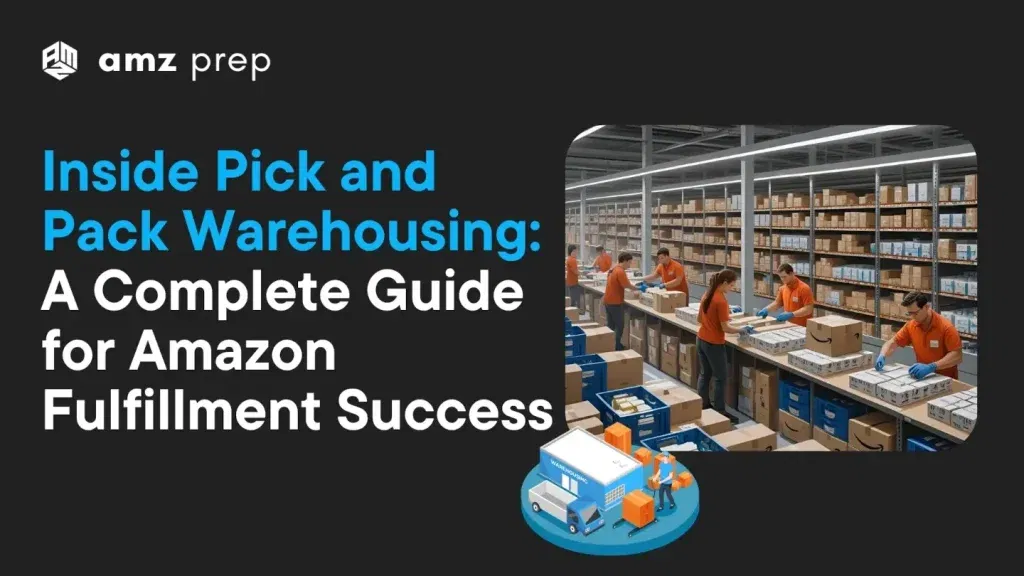
What happens next in your warehouse can make a huge impact on your entire business. Understanding Amazon warehouse picking and packing operations is crucial – there are many sellers who fail because they didn’t understand how their pick and pack warehouse operations actually worked.
Here’s the thing about Amazon – whether you’re doing FBA, FBM, or mixing both approaches, your warehouse game has to be tight. There’s no room for ‘we’ll figure it out as we go.’ Amazon’s customers expect perfection, and Amazon’s algorithms reward sellers who deliver it consistently.
Let us walk you through exactly how successful pick and pack warehouses operate in 2026, what makes Amazon warehouse picking and packing different from everything else, and how to avoid the costly mistakes that kill profitable business
Understanding Pick and Pack Warehouse Operations
Most people think of a warehouse as a big storage room. But, they’re wrong!
Traditional warehouses are basically like huge parking lots for products. Pallets come in, pallets sit around, pallets go out to retailers. Simple bulk movement with minimal complexity.
Pick and pack warehouses? Completely different. Every single day, these facilities handle thousands of individual customer orders. Each order might have different products, different destinations, different shipping requirements. It’s organized chaos that only works when every system is dialed in perfectly.
The Real Difference That Matters
Your warehouse picker isn’t just wandering around hoping to find the right stuff. Modern pick and pack warehouses use sophisticated routing systems that tell workers exactly where to go, what to grab, and in what order.
The warehouse layout itself tells the story. Inside an eCommerce fulfillment center, fast-moving products live in prime areas that are easy-to-reach and minimize walking time. Seasonal items are kept at the back. Every product will have a specific location, and the team will track those locations in real-time.
Here’s what actually drives success in these operations:
Warehouse Management Software – This isn’t optional anymore. The software coordinates everything from incoming inventory to outbound shipments. Without it, you’re basically missing out on something.
Strategic Layout Design – Every aisle, every shelf, every picking route gets optimized for efficiency. Good facilities can cut picking time by 40% just through smart layout decisions.
Specialized Packing Stations – These aren’t just tables with tape dispensers. Professional packing stations have everything needed for different product types, shipping requirements, and customer expectations.
Real-time Inventory Tracking – You need to know exactly what you have, where it is, and how much is left. Real-time tracking prevents ‘out of stock’ messages after someone has already bought your product.
Amazon Warehouse Picking and Packing Requirements
Selling on Amazon isn’t like selling anywhere else. The platform has specific requirements that every seller and the warehouse team must know.
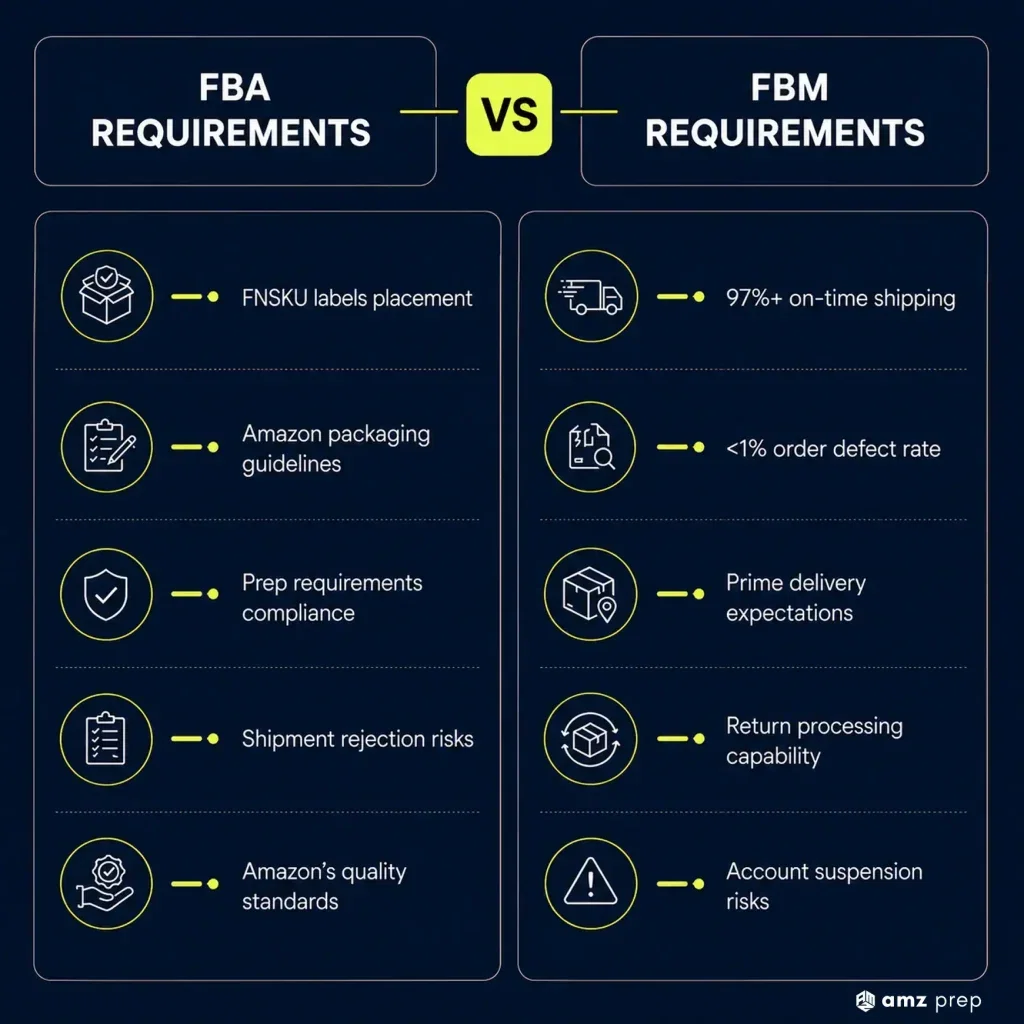
FBA vs FBM Warehouse Operations
FBA (Fulfilled by Amazon) Warehouse Preparation
When you send inventory to Amazon’s warehouses, they become incredibly picky about how products arrive. Wrong label placement? Rejected shipment. Improper packaging? Your stuff gets returned at your expense.
Your pick and pack warehouse needs to handle FNSKU labeling perfectly, follow Amazon’s packaging guidelines exactly, and prep products according to Amazon’s ever-changing requirements. One mistake here can shut down your entire operation.
FBM (Fulfilled by Merchant) Warehouse Operations
Fulfilling orders yourself gives you more control, but Amazon still expects perfection. Your pick and pack warehouse has to meet Amazon’s performance standards or your account gets suspended.
Amazon-Specific Warehouse Challenges
Below are some of the Amazon challenges that nobody talks about:
Prime Shipping Requirements
Amazon Prime customers are expecting speedy and reliable shipping. To achieve these expectations, your pick and pack warehouse must be able to execute orders on the same day or the next.
Suggested Read – Amazon Prime Day 2026: What It Is, When It Is, and How Sellers Can Prepare
Return Processing
With Amazon’s extensive return policy, your pick and pack warehouse must quickly handle returned inventory, verify things, and assess restocking eligibility – especially when returned products are later resold through deals. Following a structured 3PL return warehouse process ensures faster inspections, accurate restocking, and better inventory recovery.
Seasonal Volume Fluctuations
Amazon sales tend to rise at peak periods such as Prime Day, Black Friday, and the Christmas season. Your pick and pack warehouse must scale operations accordingly.
Setting Up Your Pick and Pack Warehouse for Amazon Success
Warehouse Layout Design for Amazon Operations
An effective pick and pack warehouse plan increases efficiency while decreasing errors. Fast-moving Amazon products should be kept in easily accessible areas, while seasonal products can be kept in less accessible locations.
Your warehouse layout should include:
- Receiving Areas: Dedicated spaces for incoming inventory with proper quality control stations
- Storage Zones: Organized by product velocity and Amazon-specific requirements
- Picking Aisles: Wide enough for efficient picker movement with clear navigation
- Packing Stations: Equipped with Amazon-compliant packaging materials and shipping supplies
- Shipping Areas: Organized by carrier and delivery speed requirements
Staffing Your Pick and Pack Warehouse
Amazon warehouse picking and packing requires trained staff who understand Amazon’s specific requirements. Your warehouse team should be familiar with:
- Amazon’s packaging and prep requirements
- FNSKU labeling procedures
- Prime shipping deadlines
- Return processing protocols
- Quality control standards
Pick and Pack Warehouse Technology Solutions
Warehouse Management Systems for Amazon Sellers
For Amazon sellers, your WMS must integrate easily with Amazon’s systems. Orders should download automatically, inventories should sync in real time, and shipping confirmations should upload without manual involvement.
Key features:
- Automatic Amazon Integration – No manual order entry or inventory updates
- Multi-channel Inventory Sync – Prevents overselling across platforms
- Optimized Pick Lists – Routes that minimize walking time and maximize efficiency
- Carrier Integration – Automated shipping label creation and tracking updates
- Return Workflows – Systems that handle returned merchandise efficiently
Barcode and Scanning Systems
Scanning isn’t just about convenience – it’s about survival on Amazon. Your scanning system needs to handle Amazon FNSKU codes, manufacturer UPC codes, internal location codes, and shipping verification.
Advanced systems catch errors before products leave your warehouse. This protects your Amazon metrics and prevents the costly returns that kill profitability.
Quality Control in Pick and Pack Warehouses
Amazon’s performance standards aren’t suggestions – they’re requirements with serious consequences.
The Numbers That Matter
Order Defect Rate: Amazon demands below 1%. Even small percentages of wrong items, damaged products, or incomplete orders can trigger account suspension.
Late Shipment Rate: Amazon expects 97%+ on-time performance. Your warehouse operations need reliability and speed to meet these standards consistently.
Customer Satisfaction: Poor warehouse performance shows up in reviews and feedback, and items that fail quality checks frequently get routed toward Amazon Warehouse Deals rather than being restocked as new, which affects both your brand perception and the recoverable value of that inventory.
Quality Systems That Actually Work
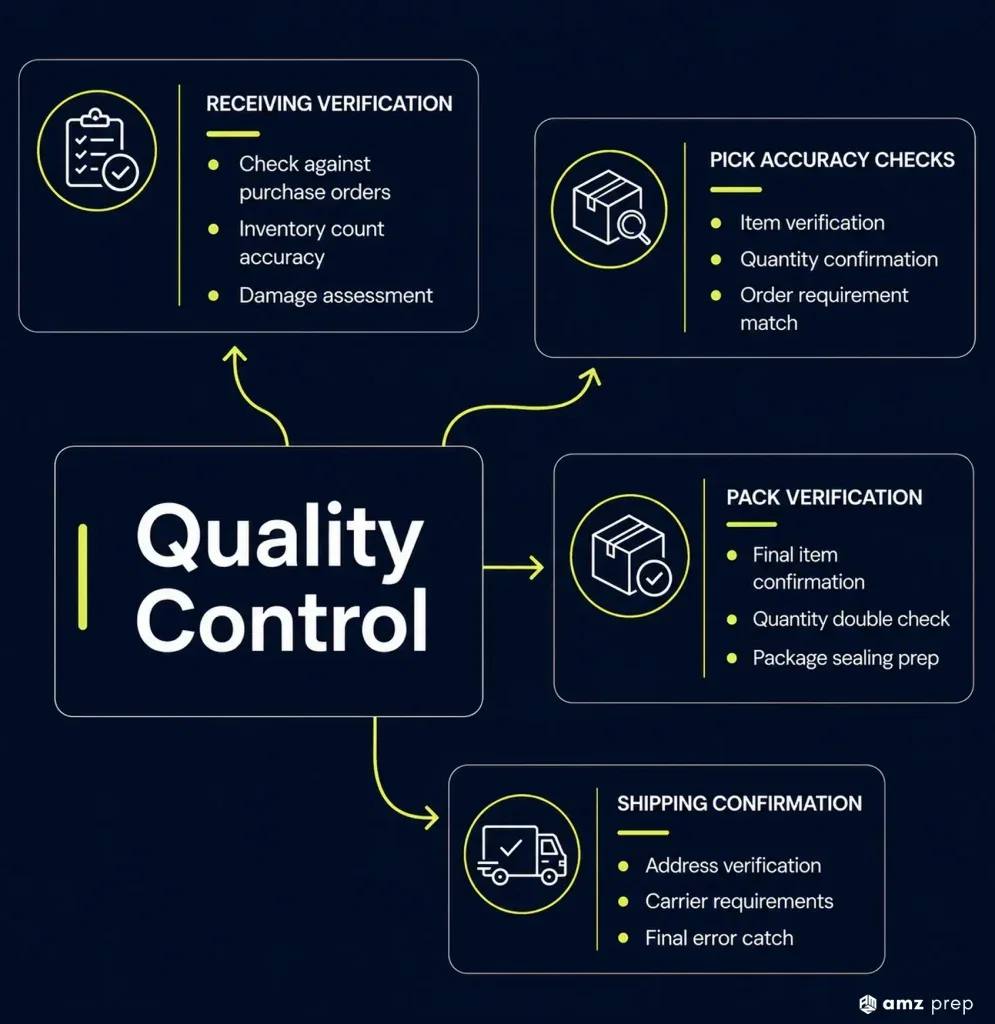
Successful warehouses implement multiple checkpoints:
- Receiving Verification: Incoming inventory gets checked against purchase orders immediately
- Pick Accuracy Checks: Items get verified against order requirements before moving to packing
- Pack Verification: Final confirmation of correct items and quantities before sealing
- Shipping Confirmation: Last chance to catch addressing or carrier requirement errors
Choosing Between In-House and Outsourced Pick and Pack Warehouses
This choice affects everything about your business operations and profitability.
When Running Your Own Warehouse Makes Sense
Keep operations in-house when you have:
- Predictable order volumes that justify fixed warehouse costs
- Products requiring specialized handling knowledge or expertise
- Need for complete control over the customer experience
- Available capital for warehouse infrastructure investment
- Team with proven warehouse management skills
When Outsourcing Saves Your Business
Consider professional pick and pack warehouses when you experience:
- Order volumes that fluctuate significantly throughout the year
- Lack of warehouse management expertise or experience
- Desire to focus resources on product development and marketing
- Peak season volumes that overwhelm your current capacity
- Limited capital for warehouse infrastructure and technology
- Need for geographic distribution closer to customers
Choosing the Right Warehouse Partner
Look for providers with proven Amazon experience, not just general ecommerce fulfillment. Before vetting providers, use our warehouse space calculator to determine your exact storage requirements so you can properly evaluate if their facilities can handle your volume. Their systems must integrate seamlessly with Amazon’s platform and your existing tools.
Verify they can handle peak season volumes without service quality degradation. Consider geographic proximity to your customer base and Amazon fulfillment centers.
Most importantly, review actual performance metrics – accuracy rates, on-time shipping percentages, and customer satisfaction scores from current clients.
Scaling Your Pick and Pack Warehouse Operations
Whether you’ve chosen to run your own warehouse or partner with a 3PL, growth brings its own challenges that require careful planning. Here’s how to scale properly.
Managing Amazon Growth Intelligently
Inventory forecasting becomes critical as you grow. Stock out during peak demand and you lose sales permanently. Overstock and you tie up cash while paying storage fees.
Staffing flexibility matters more than having a large permanent team. You need systems to quickly onboard temporary workers during peak seasons without sacrificing quality.
Technology investments should focus on handling increased volume without proportional increases in labor costs. The right systems let you grow revenue without growing headaches.
How to Survive Peak Seasons?
Amazon’s peak seasons can make or break your entire year. Preparation starts months in advance.
Analyze last year’s data to forecast volume increases accurately. Move fast-moving inventory to accessible locations before peak season hits. Train all staff (including temporary workers) on Amazon requirements and your quality standards.
Most importantly, develop backup plans for equipment failures, staff shortages, and unexpected volume spikes. When peak season hits, you won’t have time to figure things out on the fly.
Conclusion
Understanding how pick and pack warehouses work and applying Amazon-specific optimizations will help you to get a competitive advantage in the marketplace. Whether you run your own center or partner with an experienced pick and pack fulfillment provider, concentrating on these key areas can improve your Amazon business. You must know these basic concepts as they are especially important for Amazon sellers who work with prep centers. 3PLs such as AMZ Prep have built a solid reputation by adapting the same pick and pack strategies to Amazon’s specific criteria, guaranteeing that products comply with FBA standards.

Arishekar N is a Vice President (VP) of Marketing at AMZ Prep, specializing in ecommerce fulfillment and Amazon logistics strategies with a proven track record of driving growth for e-commerce businesses. He is a strategic leader with extensive expertise in marketing, e-commerce operations, SEO & advertising, and branding.
Stay updated on his latest insights by following him
















AMZ Prep’s guide on pick and pack warehousing is a game-changer for streamlining fulfillment processes.
Understanding the importance of accurate inventory management in pick and pack operations has been crucial for scaling my business.
The detailed breakdown of pick and pack methods, including piece picking and batch picking, has helped me choose the right strategy for my business
The integration of AMZ Prep’s services with Amazon FBA ensures seamless order fulfillment and timely deliveries.
Implementing best practices from this guide has significantly reduced my order processing time and improved customer satisfaction
Understanding the cost implications of different pick and pack methods has allowed me to make more informed decisions for my business.
The guide’s insights into optimizing warehouse layout for efficient picking and packing have been invaluable.
Would love to see a video walkthrough of a pick and pack process in action.
Bookmarking this for our warehouse onboarding great resource for training new staff.
Leveraging AMZ Prep’s advanced technology has enhanced the accuracy and speed of my fulfillment operations
Thanks for covering the tech side too WMS and barcode scanning make a huge difference.
Very helpful guide for comparing in-house vs 3PL pick and pack setups.
The emphasis on optimizing pick and pack workflows to reduce errors and improve efficiency is spot on.
Great explainer on how pick and pack impacts order accuracy and customer satisfaction.
The comprehensive approach to pick and pack warehousing in this guide has provided me with the tools to scale my operations effectively.
Clear, concise, and actually useful this saved me from a ton of research.
The cost factors section really helped me rethink my warehouse budgeting.
Just what I needed to send to my co-founder to justify outsourcing fulfillment.