
When it comes to selling on Amazon, FBA is the top choice for 89% of Amazon sellers. And why shouldn’t FBA be the Top Choice? Amazon takes care of the heavy lifting. But what about the hidden fees, the storage costs, and the strict regulations? That’s where smart sellers would consider Dropshipping. Imagine a business model with low upfront risk, no need to stock inventory, and fewer headaches over fees.
In 2026, sellers should ask themselves: Is dropshipping the smarter, more flexible option for my eCommerce business. Amazon FBA vs. Dropshipping 2026. It’s time to see who comes out on top.
Understanding Dropshipping
In dropshipping, sellers don’t buy inventory upfront. When a buyer orders, the seller purchases from a supplier. The supplier then ships the items to the customer.
Imagine you open an online store selling phone accessories. As a dropshipper, you don’t need any stock. When a customer orders a product, you place the order with your supplier. The supplier then ships it directly. You never touch the product—just manage the store and orders. This means less risk, no warehouse costs, and no need to worry about unsold stock.
Dropshipping is a worthwhile option for retailers as they needn’t stock inventory. This is especially true for White and private-label products. White-label products are generic items you can brand as your own for quick market entry, like a popular kitchen gadget. This means retailers can put their own branding.
Private label products are custom-made for your brand, helping build loyalty. For example, you might create a unique skincare line reflecting your brand’s values. Now, let’s compare that to Amazon FBA. You’d need to buy a batch of phone cases upfront, store them at Amazon’s warehouse, and pay for storage. Sure, Amazon handles shipping and customer service, but you already have money tied up in a whole lot of processes. You are not making profit till you can sell a considerable amount of stock.
How does Dropshipping Work?
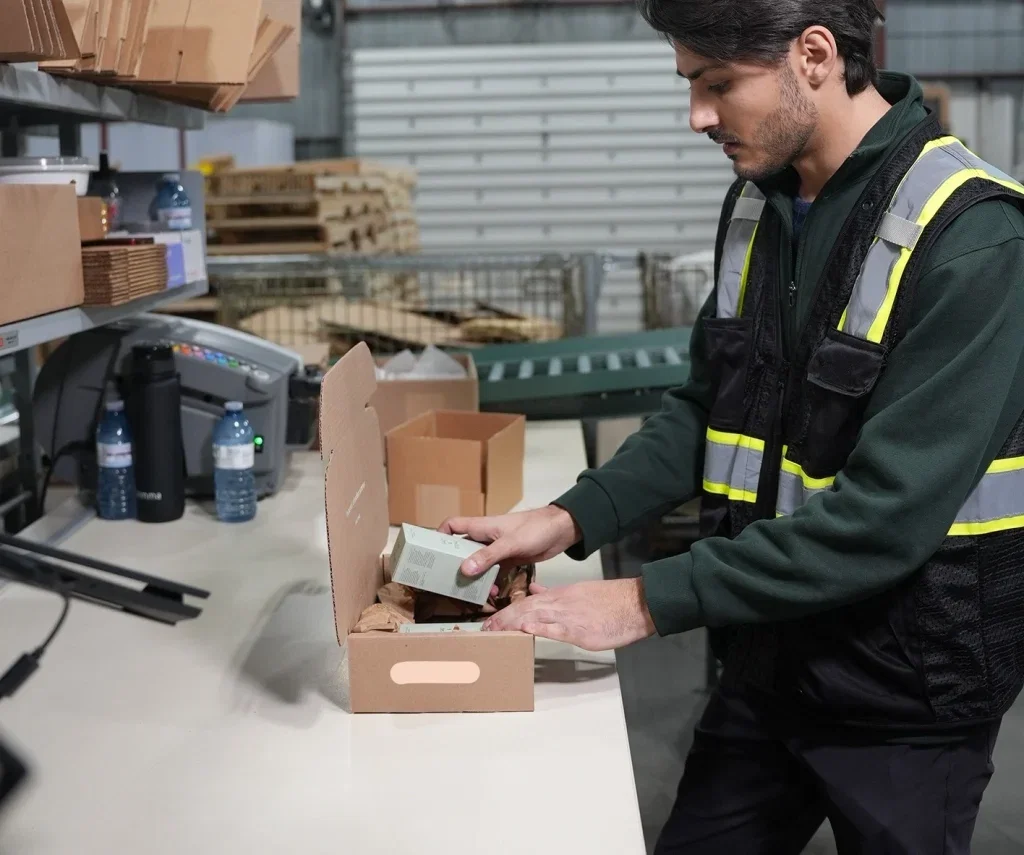
- You start by selecting products to sell and listing them on your online store. Choose items that are in demand.
- When a customer finds a product they like, they place an order and pay you through your platform. This payment gives you the funds needed to purchase the product from the supplier.
- After receiving the order, buy the product from your chosen supplier at the wholesale price.
- Share the customer’s shipping information with the supplier. The details are very important for timely delivery. So implementing multiple checks would be advisable.
- If you’re discussing fulfillment details or terms over the phone, it’s helpful to document these conversations.
- The supplier packages the product, often including your branding. This helps create a professional image and helps you build a brand.
- The supplier ships the product straight to the customer. This eliminates the need for you to store and shipping on your part. Thus making it a low-risk business model.
- Once the product is shipped, you can send the tracking details to the customer. This transparency builds trust with the customers.
- Now your profit comes from the difference between the retail price customer and the wholesale price. This does mean a slim profit margin.
Pros And Cons Of Dropshipping
| Pros of Dropshipping | Cons of Dropshipping |
|---|---|
| Low Startup Costs No need to purchase or store inventory; you only pay for products when a customer places an order. | High Competition Lower barrier to entry, increased competitor |
| Low Risk You avoid the risk of unsold inventory since you only purchase products after a sale. | Lack of Control over Supply Chain You rely on suppliers for stock, shipping times, and quality, which can lead to issues. |
| No Storage or Overhead Costs No need for warehousing or inventory management, saving on expenses. | Slim Profit Margins Paying wholesale prices and competing with other sellers can reduce profitability. |
| Scalability Since there is no need for storage and shipping, you can theoretically handle bulk orders. | Customer Service Issues Limited control over product quality and shipping can lead to customer dissatisfaction. |
| Location Independence You can run your business from anywhere. |
Is Dropshipping Better on Amazon or Shopify?
Shopify is often the better platform for dropshipping due to its lower startup costs, greater control over branding, and scalability. You can create a unique online store with your own domain, explore domain names for entrepreneurs that match your brand vision, personalize customer interactions, using an online catalog maker, and avoid bulk inventory costs. While dropshipping is possible on Amazon, it carries more risk and strict policies. For beginners seeking a low-investment entry into eCommerce, Shopify offers a more manageable and profitable route to building a successful dropshipping business. To understand how shipping costs will affect your margins, you can use a Shopify shipping calculator to estimate fulfillment expenses before you launch.
Starting Your Dropshipping Business with Shopify
If you want to start a dropshipping business, Shopify is the choice. With Shopify, you can manage your entire store in one place. It has customizable templates, helpful apps, and built-in payment options, so you can set up your store quickly. Also shopify has a large customer base around the world.
Before you start, research to find a reliable dropshipping supplier or a reputable print on demand platform. This is the most important step. Also, be ready to spend time marketing your products to get customers.
You might also want to look into third-party logistics (3PL) companies that work with Shopify. A 3PL can help you if you plan to sell on multiple platforms.
| Supplier | Recommended Uses |
|---|---|
| AliExpress | Great for beginners and veterans to research the market and build supplier relationships. |
| DSers | Efficient for comparing suppliers and processing orders on AliExpress. |
| Worldwide Brands | Provides lifetime access to a wholesale supplier directory. |
| Zendrop | Best for Shopify users wanting to dropship customized or branded products from the US. |
| Modalyst | Ideal for listing unique or high-ticket products using the Modalyst Private Label program. |
| Wholesale Central | Resource for discovering dropshipping suppliers, wholesale distributors, and manufacturers. |
| Spocket | Recommended for selling products from domestic suppliers to minimize delivery times. |
| Megagoods | Best for selling electronics with shipping within the US. |
| CJDropshipping | Ideal for a single solution for shipping products to the US. |
| Wholesale2b | Best for dropshippers in North America wanting consistent shipping times. |
| Doba | Convenient way to manage dropshipping and find the right products to sell. |
| SaleHoo | Directory and research tool for AliExpress; annual membership required. |
| Alibaba | Ideal for retailers using dropshipping along with other sourcing methods. |
How much do dropshippers make on average?
There isn’t much data on the subject. The dropshipping industry is expected to reach $26 billion by 2027.
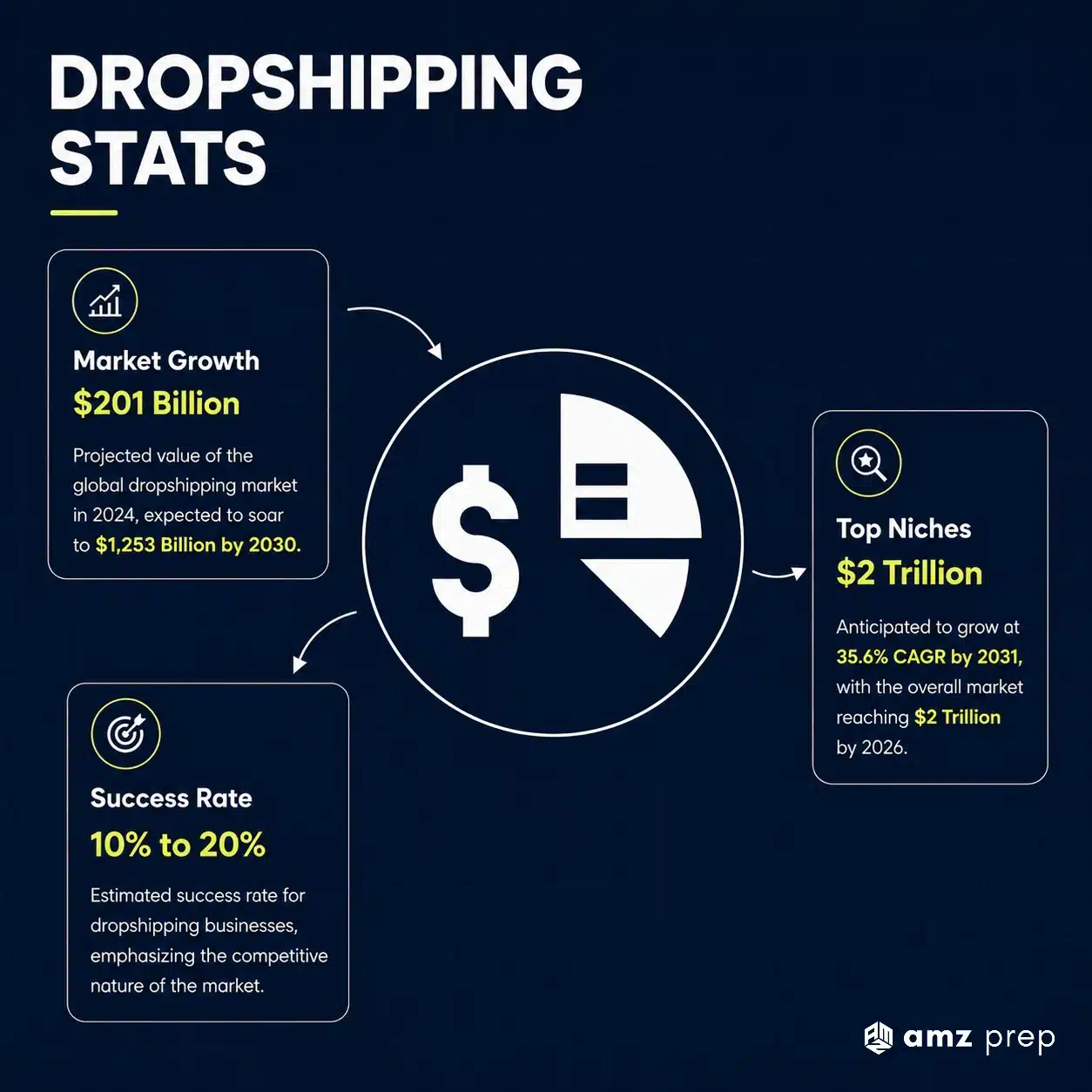
The State of Dropshipping in 2025
1. Market Growth
- $442.61 Billion: Projected value of the global dropshipping market in 2025, expected to soar to $1,253 Billion by 2030.
2. Success Rate
- 10% to 20%: Estimated success rate for dropshipping businesses, emphasizing the competitive nature of the market.
3. Top Niches
- Fashion: Anticipated to grow at a 35.6% CAGR by 2031, with the overall market reaching $2 Trillion by 2026.
4. Consumer Expectations
42%: Shoppers expect a 2-day shipping option, highlighting the demand for fast delivery in the e-commerce landscape.
Understanding FBA
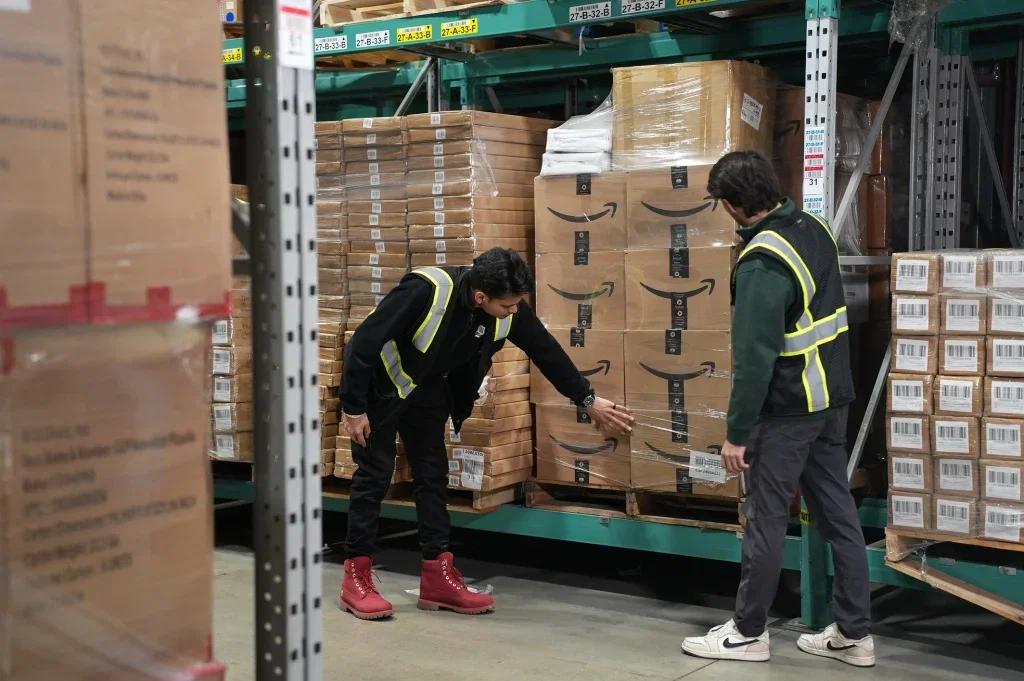
FBA means “Fulfillment By Amazon”. It’s a program from Amazon. It lets you sell products without managing warehousing. Shipping and customer service are also handled by Amazon. Sounds similar to Dropshipping, right? Swap supplier of Dropshipping with Amazon and you get FBA. Though it seems similar, Amazon FBA is different from dropshipping. It has its own requirements. The process also impacts sellers in unique ways.
Is Amazon FBA very profitable?
About 50% of Amazon sellers using FBA made between $1,000 to $25,000 per month.
What percent of Amazon FBA sellers are successful?
Around 46% of Amazon sellers succeed. They achieve success rates of 11% to 25%. About 64% become profitable within 12 months.
If you interested to know more about the stats related to Amazon in 2025, check out this article
How does Amazon FBA work?
- The first step is deciding what products you want to sell. Once you’ve identified a product, you need to source it from a reliable supplier.
- After procuring your inventory, you must prep it according to Amazon’s packaging and labeling guidelines. This is easier said than done. A more time and cost-efficient option is employing a 3PL service.
- Once your inventory arrives at the fulfillment center, you create product listings on Amazon. Rejection of inventory can happen at this stage too, so include accurate product information, high-quality images, compelling descriptions, and competitive pricing.
- When a customer places an order, Amazon’s system automatically processes it. Amazon employees pick, pack, and ship the order directly to the customer.
- Amazon handles all customer service inquiries, including questions, issues, and returns.
Various fees associated with Amazon FBA
- Subscription Fees $39.99/month for the Professional plan, or $0.99/item for the Individual plan.
- Referral Fees 8-15% of each sale, depending on the product category.
- Fulfillment Fees Based on size/weight, starting around $2.50 for small items.
- Storage Fees Monthly charge per cubic foot, higher in the holiday season.
- Long-Term Storage Extra fees for items stored over 365 days.
- Removal Fees Pay to remove unsold inventory, starting at $0.52 per item.
- Returns Fees Applies in some categories, like apparel.
Is Amazon FBA More Profitable Than Dropshipping?
There really isn’t a straight answer. It depends on various factors, but usually FBA is better for bulk orders. The clearest way to compare your specific situation is to run the numbers through an FBA profit margin calculator before committing to either model.
Amazon FBA vs Dropshipping vs Affiliate Marketing
| Model | Description |
|---|---|
| Amazon FBA | If you’re considering selling your own products through Amazon, then FBA is a great option. With FBA, you send your inventory to Amazon’s fulfillment centers. Just keep in mind that while you benefit from Amazon’s resources, there are fees involved. |
| Dropshipping | This is when you want to start an online store without much investment. Here’s how it works: when a customer places an order, you buy the product from a supplier, who then ships it directly to the customer. This means lower upfront costs and less risk. Yet this model puts heavy reliance on suppliers. |
| Affiliate Marketing | Have you ever thought about promoting products without dealing with inventory or customer service? You can partner with companies to promote their products. This is done with referral links. When someone makes a purchase through your link, you earn a commission. |
Head-to-Head Amazon FBA vs Dropshipping
Before choosing between FBA and dropshipping, understand the fundamentals of how to sell on Amazon to determine which model best fits your business goals.
Let’s take of look at how FBA and Dropshipping stack up against each other.

Initial Investment
Advantage Dropshipping
Dropshipping is great for low-cost entry. You don’t need to buy inventory upfront. This means you can start with little capital. If you’re looking for other low-investment ways to start selling, Amazon Merch on Demand is another beginner-friendly option because it doesn’t require buying inventory upfront.
In contrast, Amazon FBA requires a larger investment due to upfront inventory purchase.. This can be risky, especially for beginners.
Fees
Advantage Dropshipping
Dropshipping generally involves lower fees. You only incur fees after a sale. Plus you don’t have to pay for storage and shipping costs.
Amazon FBA has several fees, which can accumulate quickly,
Risk
Advantage Dropshipping
Dropshipping has less financial risk. You buy inventory only after a sale. If products don’t perform, you can easily remove them.
Amazon FBA carries more risk. You must invest in inventory upfront. If products don’t sell, substantial losses can occur.
Branding
Advantage Dropshipping
If building your own brand is a priority, dropshipping offers more flexibility. You can design your website and packaging to reflect your brand identity.
Amazon FBA limits branding opportunities since Amazon ships your products in its packaging, making it harder to build a distinct brand presence.
Customer Base
Advantage Amazon FBA
With Amazon FBA, you reach more buyers. You tap into Amazon’s vast customer base. This includes millions of Prime members. Selling products becomes easier.
In dropshipping, you have to attract customers yourself. You must drive traffic. This is done through your website, dedicated landing pages, and other sales channels. But in the end, you build a brand.
Final Verdict
Advantage Depends on the Business Model
Here is the thing, If you’re looking for a low-risk, low-investment business model with control over branding, Dropshipping is your best bet. It needs little investment. You have full control over branding. For more reach, try Amazon FBA. It offers a huge customer base. But be ready to invest upfront. The benefits include convenience. It also ensures smooth order fulfillment.
Final Takeaway
Choosing between Amazon FBA and dropshipping depends on your needs. Amazon FBA is great and offers Prime shipping. But upfront costs and fees exist. But Fulfillment by Amazon builds credibility and helps sellers succeed.
Dropshipping model suits new businesses. You can start with less. No need to manage inventory. The dropshipping supplier handles shipping. Sellers often add affiliate marketing to creates extra income.
Dropshipping has some downsides. Profit margins are tighter. Suppliers can be unreliable. Understanding the key differences helps. It ensures you make the best choice.Amazon FBA or dropshipping? The choice depends on goals. Clarity will guide your path. Learn each model well. It will lead to success. You’ll efficiently ship products and grow your dropshipping store with the Amazon warehouse.

Arishekar N is a Vice President (VP) of Marketing at AMZ Prep, specializing in ecommerce fulfillment and Amazon logistics strategies with a proven track record of driving growth for e-commerce businesses. He is a strategic leader with extensive expertise in marketing, e-commerce operations, SEO & advertising, and branding.
Stay updated on his latest insights by following him






Quick clarifying question, when you say “dropshipping margins of 10-30%,” is that gross or net of ad spend? The distinction matters a lot at scale.
The point about Amazon owning the customer relationship in both models is what most beginners miss. With FBA AND dropshipping on Amazon, you don’t really have a business, you have a sales channel.
Curious whether you’ve seen any sellers successfully run dropshipping at scale ($1M+/year) without getting destroyed by ad costs. I haven’t.
Beginner question, how do you handle returns with dropshipping? That’s the part that scared me off when I was researching.
Useful for first-time sellers. I’d just caution that “FBA = passive income” is a myth, the operational chaos is bounded but it’s still real work.
The margin comparison was useful but I think the article underplays how brutal Amazon FBA fees have gotten in 2025. Inbound placement fees alone changed the math.
Honestly the most underrated point here is supplier reliability for dropshippers. Once you cross 30+ orders/day, supplier delays start triggering chargebacks and you’re cooked.
The breakdown of capital requirements vs control was clear-eyed. Most “FBA vs dropshipping” content reads like an FBA pitch deck, this didn’t.
As someone running both models for different SKUs, I’d add a hybrid section. We use FBA for hero products and dropship the long-tail to test demand. Best of both.
This is the comparison I wish someone had handed me before I lost $11K dropshipping in 2022. The cash flow point about scaling chaos is exactly what killed my store.
Learning about the new selection program and waived placement fees was a pleasant surprise.
AMZ Prep’s insights into VAT registration and compliance for UK sellers are invaluable.
The guide’s focus on understanding FBA fees as an ongoing habit is a valuable takeaway.
AMZ Prep’s comprehensive approach to FBA fees across multiple marketplaces is a must-read.
The emphasis on optimizing storage costs during peak seasons aligns perfectly with my strategy.
AMZ Prep’s breakdown of Amazon FBA fees is incredibly detailed and easy to understand.
The guide’s comparison of standard vs. low-price FBA rates helped me optimize my product pricing.
Understanding the seasonal storage fee changes in the UK market was crucial for my planning
Switching from dropshipping to FBA allowed us to start building a stronger brand presence.
FBA’s fast shipping options really give it an edge for customer satisfaction.
The breakdown of profit margins here reflects exactly what I’ve experienced in my business.
This is a great reminder to weigh branding opportunities when choosing between these two models.
Focusing on scalability helped me decide to transition from dropshipping to FBA.
Balancing customer expectations with dropshipping timelines is always tricky, but this explained it well.
Dropshipping saved us a lot on storage costs, but you do give up control over shipping quality.
FBA’s upfront costs are steep, but the logistics side is so much easier to manage.
This comparison is spot on—both models have pros and cons, but I’d say go for Dropshipping when starting out
FBA has been great for scaling, but dropshipping gave me more freedom when I was starting out.
The flat-rate pricing model for FBA prep services is a game-changer for budgeting.
The detailed explanation of referral fees across different categories clarified many uncertainties.