
As your brand expands into international markets, maintaining consistent language across websites, documentation, and marketing materials becomes increasingly important. One common question is whether to use fulfilment vs fulfillment when communicating with customers across different English-speaking regions.
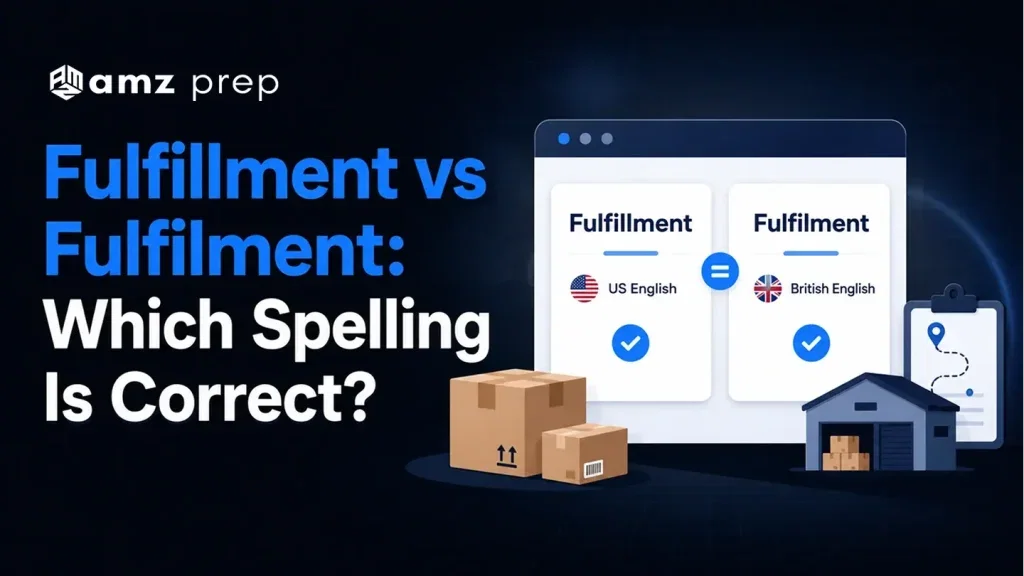
Although both spellings refer to the same process, choosing between fulfilment or fulfillment depends on the type of English your market follows. Using the appropriate spelling helps create consistency across your content while aligning with regional language conventions.
This guide explains fulfillment vs. fulfilment: which one is correct, where each spelling should be used, and how businesses can choose the most correct version for their audience.
TL;DR
- ‘Fulfillment’ is the standard spelling in American English.
- ‘Fulfilment’ is the preferred spelling in British, Australian, and most Commonwealth English.
- Both spellings have exactly the same meaning.
- Consistently using the correct regional spelling improves readability and maintains a professional editorial style.
Understanding the Spelling of Fulfillment
The words ‘fulfillment’ and ‘fulfilment’ mean exactly the same thing. The only difference is where they are used. ‘Fulfillment’ is the American English spelling, while ‘fulfilment’ is the British English spelling.
In ecommerce and logistics, fulfillment is the process of receiving products, storing inventory, packing orders, shipping them to customers, and handling returns. A good fulfillment process helps businesses save time, reduce errors, and deliver orders faster.
Using the right spelling is important because it makes your content feel natural to your audience. If your customers are mainly in the United States, use ‘fulfillment.’ If they are in the United Kingdom, Australia, or other countries that follow British English, use ‘fulfilment.’
Neither spelling is more correct than the other. The key is to choose the version that matches your audience and use it consistently across your website, blog, emails, and marketing materials.
This version uses simpler language while keeping the information accurate and SEO-friendly.
Fulfillment or Fulfilment: What’s the Difference?
The only difference between ‘fulfillment’ and ‘fulfilment’ is the spelling. They have the same meaning, pronunciation, and are used in the same way.
American English standardizes the word as ‘fulfillment,’ while British English prefers ‘fulfilment.’ Australian, New Zealand, and most Commonwealth countries also follow the British spelling convention.
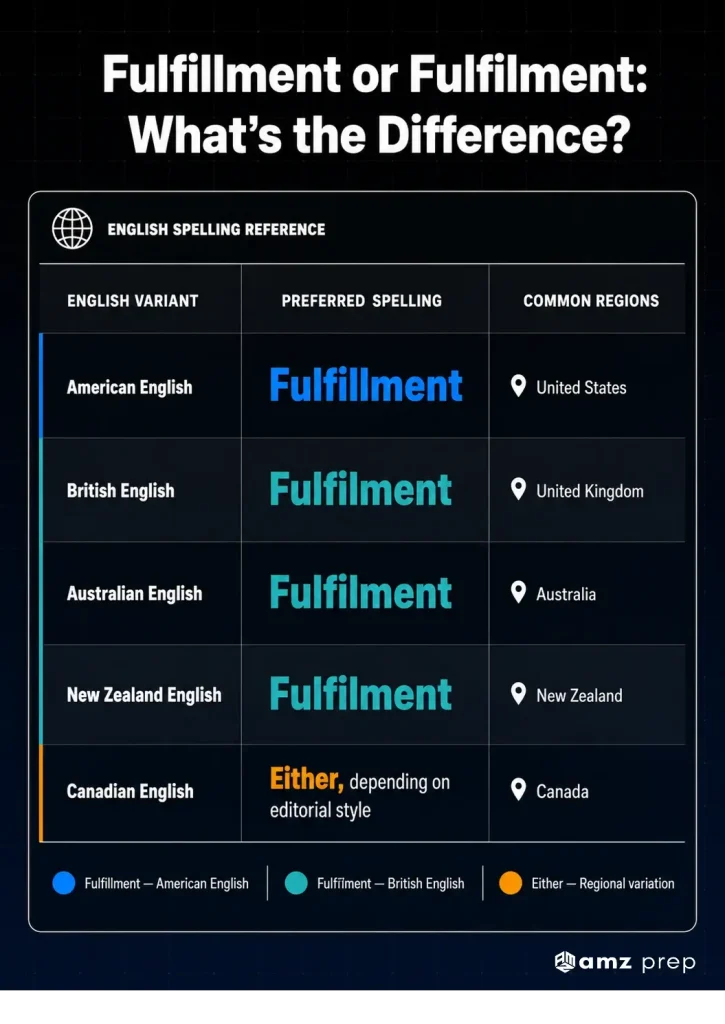
From an operational perspective, there is no functional difference between the two spellings. Businesses should simply use the version that matches their editorial standards and customer expectations.
Why Do British and American English Spell Words Differently?
Many spelling differences between British and American English developed as the two versions of the language evolved. Over time, American English adopted simplified spellings for many words, while British English kept the traditional forms.
For businesses, using the correct regional spelling helps create a more natural experience for readers. If you serve customers in different countries, matching your spelling to your audience can make your website and marketing materials feel more familiar and professional.
‘Fulfillment’ and ‘fulfilment’ are just one example of this difference. Both words have the same meaning, but the preferred spelling depends on whether you’re writing in American or British English.
| American English | British English |
|---|---|
| Fulfillment | Fulfilment |
| Color | Colour |
| Center | Centre |
| Organize | Organise |
| Analyze | Analyse |
| Traveling | Travelling |
| Defense | Defence |
These spelling differences are based on regional language standards, not meaning. To keep your content clear and professional, use one spelling consistently throughout a page or document. If you create content for different regions, you can use localized versions with the appropriate spelling for each audience.
How Do Major Dictionaries Spell Fulfillment?
Leading dictionaries recognize both spellings while identifying one as the preferred version for their respective variety of English.
| Dictionary | Preferred Spelling |
|---|---|
| Merriam-Webster | Fulfillment |
| Oxford English Dictionary | Fulfilment |
| Cambridge Dictionary | Both, depending on region |
| Collins Dictionary | Both, depending on region |
Merriam-Webster follows American English conventions and lists ‘fulfillment’ as the standard spelling. Oxford follows British English and uses ‘fulfilment,’ while Cambridge and Collins acknowledge both forms depending on regional usage.
Rather than indicating one spelling is superior, dictionary preferences simply reflect the language standards used in different countries.
How Do You Spell Fulfillment Around the World?
Businesses expanding internationally often ask, ‘How do you spell fulfillment?’ The answer depends entirely on the country and the variety of English being used.
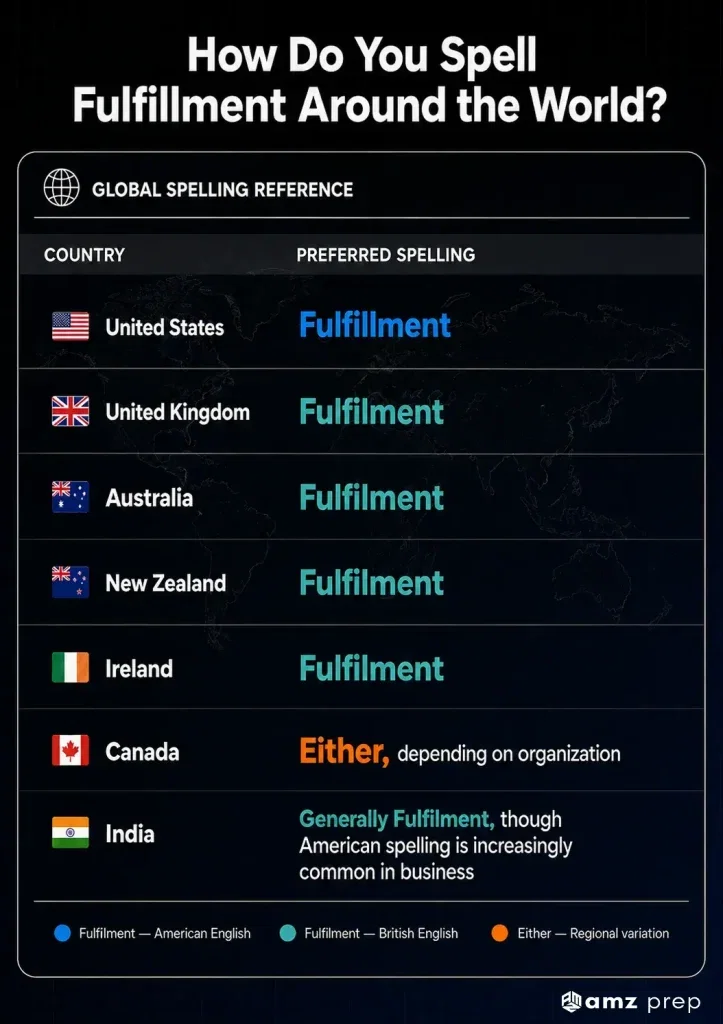
For businesses wondering how do you spell fulfillment in Australia, the preferred spelling is ‘fulfilment,’ following British English conventions.
Depending on your business requirements, you may choose to localize spelling for different markets or adopt a single editorial standard across your global content. The most important consideration is maintaining consistency.
Which Spelling Should Businesses Use?
Instead of asking which spelling is correct, think about who you’re writing for. The right choice depends on your audience.
If your customers are in the United States, use ‘fulfillment.’ If you’re targeting customers in the United Kingdom, Australia, New Zealand, or Ireland, use ‘fulfilment.’
If your business serves customers in multiple countries, you have two options. You can create separate versions of your content for each region, or you can choose one spelling and use it consistently across all your materials.
Before deciding, look at your target market, brand guidelines, and existing content. Keeping your spelling consistent across your website, emails, blogs, and marketing materials helps your brand look more professional and builds trust with your audience.
Common British and American Spelling Differences
Fulfillment is only one example of the spelling differences that exist between British and American English. Understanding these patterns helps businesses create consistent content for international audiences.
| American English | British English |
|---|---|
| Fulfillment | Fulfilment |
| Color | Colour |
| Honor | Honour |
| Center | Centre |
| Organize | Organise |
| Analyze | Analyse |
| Catalog | Catalogue |
| Program | Programme (certain contexts) |
| Meter | Metre |
| Traveling | Travelling |
Recognizing these differences allows businesses to develop editorial standards that match the expectations of their target markets while maintaining a consistent brand voice.
Conclusion
The difference between fulfillment and fulfilment comes down to regional spelling conventions rather than meaning. American English standardizes the word as ‘fulfillment,’ while British, Australian, and most Commonwealth English use ‘fulfilment.’
Instead of worrying about which spelling is more correct, choose the one that matches your audience. Using the right regional spelling makes your content feel more natural and helps build trust with your readers.
The most important thing is to stay consistent. Whether you’re writing your website, blog, emails, or marketing materials, using the same spelling throughout creates a more professional and polished brand experience.
Frequently Asked Questions
Is fulfillment or fulfilment correct?
Both spellings are correct. ‘Fulfillment’ is the standard American English spelling, while ‘fulfilment’ is the preferred spelling in British and Commonwealth English.
How do you spell fulfillment?
If you are writing in American English, the correct spelling is ‘fulfillment.’ If you are writing in British English, the preferred spelling is ‘fulfilment.’
How to spell fulfillment correctly?
The correct spelling depends on your audience. American English uses ‘fulfillment,’ while British English uses ‘fulfilment.’
What is the correct spelling of fulfillment?
There is no universally correct spelling. The correct spelling of fulfillment depends on the regional variety of English you are using.
How do you spell fulfillment in Australia?
Australian English follows British spelling conventions, so ‘fulfilment’ is the preferred spelling.
Does the spelling change the meaning?
No. Both spellings refer to exactly the same concept and are used interchangeably depending on regional language standards.

Arishekar N is a Vice President (VP) of Marketing at AMZ Prep, specializing in ecommerce fulfillment and Amazon logistics strategies with a proven track record of driving growth for e-commerce businesses. He is a strategic leader with extensive expertise in marketing, e-commerce operations, SEO & advertising, and branding.
Stay updated on his latest insights by following him







Comments