
This June, we shipped 5 major features focused on D2C automation, warehouse visibility, and operational reporting.
These updates continue the momentum from our Navigate May Release, with expanded focus on inbound reconciliation, outbound reporting transparency, and seamless D2C order routing across integrated platforms.
Here’s what’s new in Navigate:
D2C Integration Progress
Order tags now flow seamlessly through the entire D2C ecosystem.
What’s enabled
- Pull order tags from MyShip into Navigate
- Push order tags from Navigate into ShipHero
- Push order tags from Navigate into Logiwa
Why this matters
Many D2C sellers use Shopify order tags to drive fulfillment logic. Previously, these tags were siloed in individual systems. Now they flow through the entire ecosystem automatically.
This is foundational work that enables carrier mapping and future automation rules. If you run D2C operations with Shopify, MyShip, Navigate, and a warehouse management system, order tags now carry through from store to warehouse without manual intervention.
Consolidated Inbound Summary Metrics
Inbound Detail pages now display consolidated summary metrics at a glance.
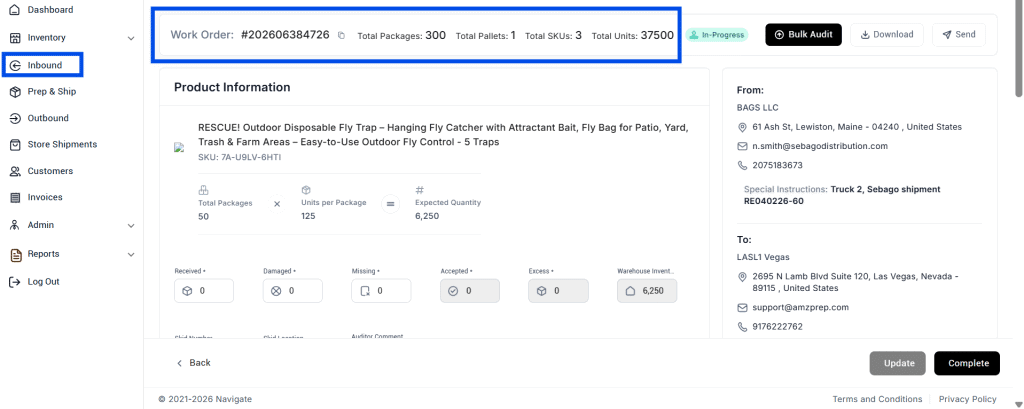
What you see
- Inbound activity overview without navigating multiple sections
- Quick snapshot of key metrics before drilling into details
- Improved visibility into receiving progress
Impact on operations
Instead of hunting through multiple pages to understand inbound status, users now see the full picture immediately. This reduces time spent reviewing inbound details and speeds up decision-making on receiving delays.
For operations teams tracking inventory flow, this consolidation provides the transparency needed to identify bottlenecks in the receiving process.
Enhanced Outbound Visibility
Work Order pages now display consolidated shipment metrics, providing complete visibility into outbound processing.
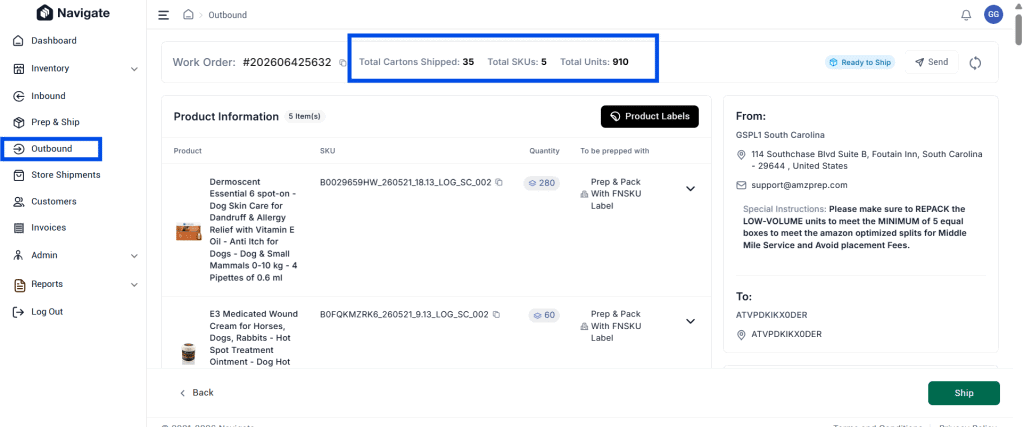
The Work Order page now shows:
- Shipment metrics
- Packaging metrics
- Processing metrics
This consolidation gives warehouse teams and ops managers a complete view of outbound activity in one place. You can now see the full status of order processing, packing progress, and shipment readiness without toggling between multiple views.
If you’re tracking fulfillment SLAs or managing warehouse performance, this single-view approach eliminates the need to cross-reference multiple screens to understand outbound status.
Barcode (UPC) Mapping
Products can now be mapped using UPC barcodes.
What’s new
- Mapped barcodes now display across the Products page
- Mapped barcodes appear on the Inbounds page
- Warehouse teams can scan to identify products
Impact on warehouse operations
- Faster product identification in receiving
- Improved warehouse scanning workflows
- Reduced manual lookup time
- Lower risk of SKU misidentification during receiving
If your warehouse uses barcode scanning for inbound receiving, UPC mapping makes product identification immediate and error-proof. This is especially valuable for high-volume receiving environments where speed and accuracy are critical.
Prep Request Management Restored
Clients and admins can now fully update prep requests across all workflows.
What’s enabled
- Client-side prep request updates
- Admin-side prep request updates
This enhancement restores complete prep request management functionality. Both clients and internal teams can now make changes to prep requests seamlessly without workarounds or friction.
Navigate continues to evolve every month as we add new automation and workflow improvements for sellers. For the latest updates before this release, explore the Navigate May release covering inventory reconciliation reports and enhanced outbound reporting capabilities.
Email us at techsupport@amzprep.com and we’ll help you get started right away.

Ginny Kaur is the Technical Project Manager at AMZ Prep, leading Navigate platform development and operations strategy. With 5+ years at AMZ Prep, Ginny bridges business requirements with technology to deliver fulfillment solutions that scale.
Her expertise spans Navigate software management, process optimization, warehouse operations, and cross-functional team leadership. She’s driven major platform initiatives including UI redesigns, feature development, and system integrations. Ginny manages the full product lifecycle from business requirements and Scrum coordination to testing, documentation, and client onboarding.
She’s passionate about solving operational challenges through technology and works directly with the engineering team to ensure Navigate evolves to meet client needs. Ginny’s insights on fulfillment workflows, warehouse management, and platform capability directly inform Navigate’s product roadmap.

















Comments