
May 2026 did not feel like a normal month in Amazon selling. It felt like one of those periods where the platform is moving in several directions at once, but the real message only becomes clear when you stand back and look at the whole system. Prime Day moved to June, fulfillment rules tightened, supply chain tooling expanded, returns and resale got more structured, ad and shopping behavior moved further into AI-assisted discovery, and compliance became less forgiving across the board. Taken together, the month made one thing very clear to me: Amazon was not simply adjusting features. It was recalibrating how serious sellers are expected to operate.
Why May 2026 Deserved a Closer Read
I have always found that the most important Amazon months are not the loudest ones. They are the months where the deadlines tighten, the fees get a little sharper, the systems get a little less forgiving, and the seller who is not paying attention starts to bleed margin without immediately seeing where it went. May 2026 had that kind of energy. It was not one dramatic headline. It was a stack of changes across inventory, logistics, pricing, advertising, fulfillment, and account health that together altered how a seller had to think about the next quarter.
What stood out most was that Amazon treated May as a preparation month for June Prime Day, not as a month for broad, standalone policy drama. The practical impact was earlier decision-making, tighter inbound discipline, and less room for last-minute improvisation. Sellers who understood that moved sooner. Sellers who did not were already behind before June even arrived.
Prime Day Moved to June, and That Changed the Seller Calendar

The biggest operational shift of the month was Prime Day moving out of May and into June. On paper, that is a simple date change. In reality, it compressed the entire seller calendar. When a major traffic event moves later, but the deal and inbound deadlines remain clustered at the end of May, the planning window shrinks fast. Amazon’s own announcements and seller-news coverage pointed to the fact that Prime Day 2026 officially shifted into June, affecting deal timing and inventory planning.
That shift mattered because it forced sellers to make inventory and promotion decisions earlier than they might have expected. May became the month to lock forecasts, promo targets, and supply timing rather than the month to keep “monitoring the situation.” Amazon’s Prime Day readiness messaging made that clear, and the timeline built around it showed that by May 1 to 4 sellers were already expected to be finalizing assortment and inventory forecasts.
The real pressure came at the end of the month. May 26 was the last day to schedule Prime-Exclusive Best Deals and Lightning Deals, and May 27 was the final warehouse arrival deadline for many FBA shipments using AWD or minimal shipment splits, with Amazon-optimized splits extending the arrival window only to June 5. Those are not soft dates. Those are the kind of dates that define whether a seller enters Prime Day with leverage or with regret.
Prime Day preparation ultimately becomes a freight-planning exercise. Sellers had to determine whether inventory should move through consolidated shipments or dedicated truckloads based on volume, urgency, and destination requirements. Understanding the differences between LTL vs FTL shipping became increasingly important as May’s inbound deadlines approached.
Why the Prime Day Shift Hit Inventory Planning So Hard
Experienced sellers know that the hardest part of Prime Day is not the event itself. It is backward math. The further you get into the calendar, the more your choices narrow. By May, if your inventory is not already in motion, the problem is not strategy anymore. It is logistics. The Prime Day timing change turned May into a decision month rather than a planning month, especially for FBA sellers who had to work backward from shipping cutoffs and split strategy.
This is where the difference between surface-level planning and actual operational maturity becomes obvious. A seller can have a good product and still lose Prime Day because inbound timing was too loose, promotion setup was too slow, or the replenishment plan assumed the network would absorb delay. The May timeline made that less possible. Sellers were advised to work backward from inbound deadlines and confirm shipment split strategy because late changes could affect availability. That is the kind of guidance that only matters when the margin for error is already small.
Amazon’s Logistics Push Got Deeper, Not Just Wider
Another major theme in May was Amazon’s continued expansion of Supply Chain Services. Amazon announced broader access to its logistics network, including trailers and aircraft, for businesses beyond Amazon sellers, and the coverage around the update described it as a global launch of integrated supply chain services for off-Amazon orders as well. That tells me Amazon is not only trying to improve shipping. It is trying to occupy more of the transportation chain itself.
I have learned to read these logistics expansions as directional, not merely functional. Amazon is moving closer to the upstream side of commerce, not just the downstream side where the sale is completed. That matters because once Amazon becomes part of your freight path, your storage path, your cross-docking path, and your fulfillment path, the platform stops being just a marketplace partner. It starts becoming part of the operating infrastructure.
For sellers, that creates both opportunity and dependence. The opportunity is more control, more speed, and in some cases better cost structure. The dependence is that your business becomes more tightly tied to Amazon’s network assumptions. When Amazon moves logistics deeper into the stack, sellers who do not understand their own transportation economics can get comfortable too early and pay for it later.
Amazon’s expansion of Supply Chain Services was one of the clearest signals that the company wants to manage a larger portion of the product journey before inventory even reaches a fulfillment center. For sellers trying to understand the implications, this Amazon Supply Chain Services playbook provides a useful framework for evaluating where Amazon’s logistics ecosystem is heading.
Fee Pressure and Measurement Discipline Became More Important
May also brought several changes that made it harder to operate casually. One of the biggest was the 3.5% fuel and logistics surcharge extending to Multi-Channel Fulfillment and Buy with Prime orders in the U.S., effective May 2, 2026. That directly hits margins on off-Amazon sales fulfilled through Amazon’s network.
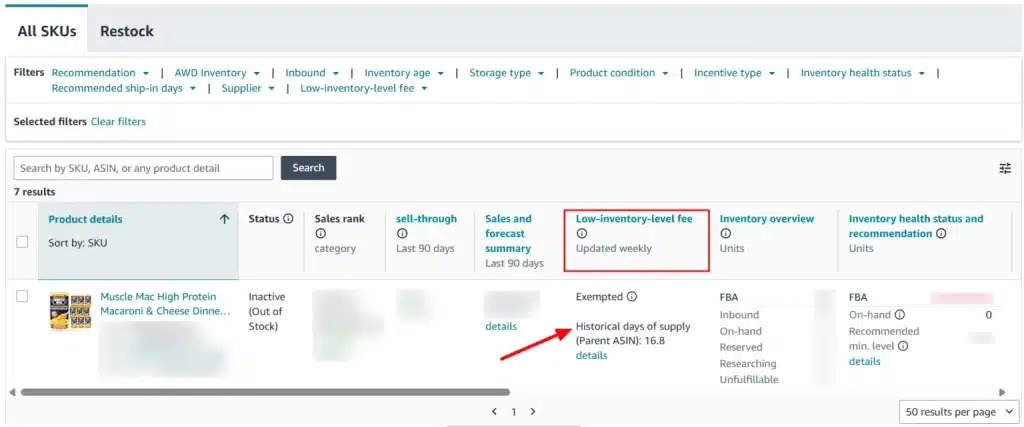
That same fee logic showed up elsewhere in the month. Amazon said the low-inventory-level fee was now calculated at the FNSKU, or child SKU, level instead of the parent-ASIN level, which means individual slow-moving variations can trigger charges even if the parent listing looks healthy. That is a very different kind of risk than older, looser inventory logic. It rewards granular replenishment discipline and punishes sellers who assume one strong variation can hide a weak one.
Then there were inbound defect fees of up to $0.60 per unit for FBA shipping errors, including unlabeled boxes, missing items, and wrong quantities. That matters because it turns warehouse sloppiness into direct cost. It is one thing to have a receiving delay. It is another thing to be billed for avoidable mistakes that could have been caught before the shipment left the dock.
Certified dimensions in the UK, France, Italy, and Spain also mattered more than they looked at first glance. Amazon gave sellers a way to submit verified package dimensions instead of relying on Amazon’s laser-scanner measurements. Any seller who has ever been hit with a wrong size tier understands why this is not trivial. Dimensions are not just product data. They are fee data.
Meltable Inventory and Seasonal Cutoffs Showed the Cost of Delay
May also reinforced one of the oldest truths in fulfillment: if you miss your seasonal window, the inventory becomes someone else’s problem, and that someone else is usually you. Amazon’s May updates noted that meltable FBA inventory left in fulfillment centers past the seasonal cutoff was being classified as unfulfillable, with disposal charges of $0.50 to $1.00 per unit. That is a blunt reminder that seasonal inventory is only an asset when it is still viable.
This is where many sellers underestimate the real cost of inventory aging. The cost is not just storage. It is waste, disposal, and lost sales opportunity. Every experienced operator knows that if the inventory is not positioned correctly before the window closes, Amazon will not preserve value for sentiment. It will bill the outcome.
Returns, Resale, and Customer Service Became More Structured
One of the more practical updates of the month was the expansion of FBA Grade and Resell, along with support for FBA Donations and donation certificates. Amazon also said Customer Service by Amazon was upgraded to reduce return-less refunds and SAFE-T claims. These are not flashy consumer-facing features, but they matter deeply to sellers because they affect what happens after the order is complete.
I think return handling is one of the most underappreciated profit centers in ecommerce. Sellers often obsess over acquisition and ignore what happens when the product comes back, gets damaged, gets refunded, or gets written off. Amazon’s May improvements in resale, donation, and customer service tooling all point to a broader effort to reduce waste in the return lifecycle. That is good for sellers who run clean operations and bad for sellers who rely on uncertainty to hide inefficiency.
The May summary around returns was straightforward: better handling of returns, fewer return-less refunds, and more ways to recover value from returned inventory or route it to donation. That is not a minor operational detail. That is margin protection.
Part of what makes these changes so significant is the sheer scale at which Amazon operates. Few businesses in history have built a workforce and logistics footprint of this magnitude. Understanding how many people work for Amazon helps explain why the company can continue expanding transportation, fulfillment, and supply chain services simultaneously.
Seller Fulfilled Prime and FBM Accuracy Standards Tightened the Delivery Promise
Another important part of the month was the tightening of Seller Fulfilled Prime requirements and the new FBM Handling Time Accuracy policy. Amazon raised SFP delivery speed expectations and said that for standard-size items, 40% of Prime page views needed a 1-day promise, 75% needed a 2-day promise, and 90% needed a 5-day promise. The policy was announced in May with a July 6 enforcement date.
At the same time, Amazon introduced a handling time accuracy policy for merchant-fulfilled sellers, announced May 27 and enforced June 29, requiring stated handling times to match actual shipping speed and keeping late shipment rate under 4%. If a seller consistently ships faster than its stated handling time and fails to adjust, Amazon can auto-set handling time for 180 days. That is a major operational signal. Amazon is no longer treating handling time as a casual seller setting. It is treating it as a performance promise.
What I take from that is simple: Amazon wants the delivery promise and the actual delivery behavior to match more closely. The platform has spent years training customers to expect speed. In May, it made sellers carry more of the burden of honoring that promise with precision.
The extension of fuel and logistics surcharges, combined with low-inventory fees and inbound defect charges, reinforced an important reality: operational mistakes directly impact profitability. Sellers focused on protecting Amazon seller profit margins were often the first to identify and correct inefficiencies before they became expensive problems.
The Advertising Stack Became More Connected to Inventory and Search
The ad story in May was not just about billing or placements. It was about integration. Amazon introduced a third-party PPC and organic integration API that let platforms connect paid data with organic listing metrics. That opens the door for smarter automation, such as lowering bids if Buy Box share falls or pausing campaigns if inventory drops too low.
That matters because it reflects a broader truth about Amazon advertising now: ads do not live in isolation anymore. Performance is tied to inventory, pricing, buy box control, and organic ranking. The best ad strategy in the world will still fail if the product is out of stock or the conversion signal breaks. Amazon’s own reporting and third-party tools are moving in the direction of unified operational visibility, which is exactly where mature sellers need them to go.
Sponsored Ads billing was also set to move toward automatic deduction from Seller Central balances on August 1, with sellers needing to opt out manually if they wanted to keep invoice or credit-card billing. That may look like a back-office billing change, but it affects cash flow, billing structure, and finance operations. For any seller using rewards cards or invoice financing, that detail matters.
Amazon’s Shopping Experience Became More AI-Driven

One of the most consequential developments of the month was the continued convergence of Rufus and Alexa+ under a single shopping profile. Amazon said active Sponsored Products campaigns were now automatically eligible to appear in voice and chat shopping sessions. That is a major sign that Amazon’s search environment is becoming more conversational and more AI-mediated.
For sellers, this means the way products are surfaced is gradually changing. Traditional keyword search still matters, but it is no longer the only layer. Search is becoming an interpretation. Shoppers are asking more natural questions. Amazon is deciding what answer structure best fits the query. That means listing clarity, contextual language, and backend data hygiene become even more important than they already were.
Amazon also launched AWS Agentic Shopping Assistant for external retailers, which lets other merchants build their own shopping assistants on the same foundation behind Amazon’s own tools. That tells me Amazon is thinking far beyond the marketplace page. It is thinking about how shopping behavior itself can be guided across ecosystems.
Catalog Quality and Brand Controls Got Stricter
May was also a month where Amazon pushed harder on listing integrity. Automated systems increased suppressions of non-compliant main images, and Amazon intensified its crackdown on variation stuffing and branded products incorrectly listed as generic. It also began splitting reviews and ratings across variations that are not functionally identical, which reduces the old advantage of mixing unrelated child ASINs under one review pool.
Premium A+ Content also became free and available to more Brand Registry sellers in May, provided they met eligibility requirements including an active Brand Story and five approved A+ projects in the last 12 months. That matters because Amazon is making brand presentation more accessible while also making catalog quality more unforgiving. In other words, Amazon is rewarding sellers who build properly and punishing sellers who try to fake structure.
A related update was the structural cleanup of listing attributes and enumeration values across many product types on May 25. That is the kind of backend change that can cause confusion if a seller is not reviewing flat-file templates carefully. It is not glamorous, but it is exactly the sort of thing that can suppress a listing if ignored.
Amazon also tightened Brand Registry guidance around packaging and USPTO verification, and it enforced a programmatic block on creating new ASINs under a registered brand without authorization. Those changes make brand ownership and catalog governance more valuable than ever.
Compliance and Account Health Became Harder to Hand-Wave
The compliance story in May was one of the clearest signals of the month. Amazon’s enforcement around European BSA Article 3 suspensions targeted retail-arbitrage and uncertified-liquidator sourcing, freezing payouts and demanding traceability documentation. EU GPSR suppressions also targeted listings without a verified Responsible Person, manufacturer details, and category-specific safety labels.
At the same time, Amazon’s account health monitoring became more holistic. A minor policy violation plus a borderline Order Defect Rate or Late Shipment Rate could trigger automated takedowns or suspensions. That means the old assumption that one green metric will shield a seller from a red one is no longer safe. Amazon is increasingly looking at the combined risk profile.
Amazon also put its BSA Agent Policy into active enforcement, requiring AI tools, pricing bots, and other automated systems to identify themselves clearly and stop accessing Seller Central if Amazon requests it. That matters more than some sellers realize because the stack of third-party tools many teams rely on is now part of the compliance conversation.
Financial Operations and Tax Reporting Still Mattered
The payment and funding updates in May were important because cash flow is never just a finance department concern on Amazon. Seller Wallet expanded to UK and EUR marketplaces, helping sellers manage USD and EUR balances and reduce conversion friction when paying suppliers or VAT. That is useful, especially for multi-marketplace sellers trying to keep capital from leaking through exchange costs.
There was also a widespread Seller Central billing bug on May 26 that triggered “Unable to Charge” errors and temporarily froze payouts. The key detail there was operational, not conceptual: the fix was to open a support case referencing the bug, not to delete and re-add the card. That kind of situation reminds me that payment systems can fail in ways that look like user error when they are actually platform defects.
Amazon also continued its accrual-based 1099-K reporting realignment, with deferred transactions shown based on order post dates, and states including Illinois and Kentucky moving to revenue-only economic nexus thresholds. Those changes matter to sellers who need clean reporting and accurate tax reconciliation.
Additional Operational Details I Would Not Ignore
A few other May updates deserve space because they fit the same overall theme.
Amazon opened the Partnered Carrier Program more broadly for approved Dangerous Goods sellers, giving them negotiated rates through specialized hazmat logistics paths. That signals continued segmentation by product risk and shipping complexity.
Amazon Australia expanded Customer Service by Amazon to merchant-fulfilled orders, and Yun Express Buy Shipping became available for China-to-Australia FBM lanes. Those changes reflect Amazon’s continued push to standardize seller service performance across more markets.
Ships in Product Packaging also expanded to MCF and Buy with Prime, which means packaging presentation is becoming more tied to operational efficiency and branded delivery experience. The SAFE-T claims window for FBM returns was cut to 30 days, and commingling ended, requiring FNSKU stickers for resellers not enrolled as Brand Representatives. Those are not small administrative edits. They are structural changes to how inventory identity and return risk are managed.
Amazon also launched its monthly “Ask Amazon” forum series on May 27 with faster response commitments and stricter moderation. That may sound like a community update, but it matters because Amazon is shaping how seller communication is managed and what kind of public discussion it is willing to tolerate.
My View of May 2026 in One Sentence
If I had to compress the month into one sentence, I would say this: Amazon spent May 2026 making the marketplace more precise, more restrictive, more logistics-aware, and more AI-mediated at the same time.
That combination matters because it changes what success looks like. It is no longer enough to have a decent product and some ad spend. Sellers now have to manage inventory timing, fee exposure, fulfillment accuracy, catalog integrity, brand presentation, return recovery, account health, and search readiness as one connected system. May made that impossible to ignore.
What I Would Tell a Serious Seller After Reading May 2026 Correctly
I would not tell a serious seller that May 2026 was about one announcement or one policy. It was about direction. Prime Day moved to June, but the operational consequences were felt in May. Logistics got deeper. Fees got sharper. AI shopping got more real. Compliance got less forgiving. Returns became more structured. Billing, reporting, and catalog management all got more exacting.
The sellers who win in that environment will not be the loudest ones. They will be the ones who understand timing, know their inventory, protect their margins, document their operations, and respect the fact that Amazon is turning commerce into a more integrated system every month.
That is what May 2026 looked like to me.
Not noise.
Not a one-off.
A shift in how the game is being played.
Here is an Overview of May
| Date | Event | What Happened | Why It Mattered |
|---|---|---|---|
| May 1, 2026 | Meltable Inventory Enforcement | Amazon began classifying meltable inventory remaining after seasonal cutoffs as unfulfillable and subject to disposal fees. | Reinforced the importance of inventory lifecycle management and seasonal planning. |
| May 2, 2026 | Fuel & Logistics Surcharge Expansion | Amazon extended its 3.5% surcharge to Multi-Channel Fulfillment (MCF) and Buy with Prime orders in the U.S. | Increased fulfillment costs for brands using Amazon’s logistics network beyond FBA. |
| May 5, 2026 | Certified Dimensions Expansion | Certified Dimensions became available in the UK, France, Italy, and Spain. | Allowed sellers to challenge inaccurate dimensional measurements that affect FBA fees. |
| May 6, 2026 | Amazon Supply Chain Services Expansion | Amazon expanded access to its end-to-end logistics and supply chain solutions. | Signaled Amazon’s continued move upstream into freight, storage, and transportation management. |
| May 7, 2026 | Seller Wallet Expansion | Seller Wallet expanded across additional European marketplaces. | Simplified international payments, supplier transactions, and currency management. |
| May 7, 2026 | Subscribe & Save Churn Reporting | Amazon launched 90-day churn tracking for Subscribe & Save. | Gave sellers better visibility into customer retention and subscription performance. |
| May 8, 2026 | Dangerous Goods Partnered Carrier Expansion | Additional approved hazmat sellers gained access to Partnered Carrier Program rates. | Improved shipping options for regulated products while lowering transportation costs. |
| May 9, 2026 | Low Inventory Fee Changes | Amazon confirmed Low Inventory Level Fees would be calculated at the child SKU (FNSKU) level. | Required more accurate replenishment planning for product variations. |
| May 10, 2026 | Inbound Defect Fee Enforcement | Amazon increased enforcement of inbound shipment defect fees. | Made warehouse accuracy and shipment compliance more critical. |
| May 12, 2026 | SP-API Developer Fee Reversal | Amazon cancelled previously announced SP-API developer fees. | Reduced operational costs for software providers and sellers using integrations. |
| May 13, 2026 | PPC & Organic API Integration | Amazon released APIs connecting advertising and organic ranking data. | Enabled more sophisticated automation and inventory-aware advertising strategies. |
| May 15, 2026 | Alexa Shopping & Rufus Integration | Amazon further integrated Alexa+ and Rufus shopping experiences. | Marked another step toward conversational commerce and AI-assisted shopping. |
| May 16, 2026 | Sponsored Products in Conversational Shopping | Sponsored Products became eligible for AI-powered shopping experiences. | Expanded ad visibility beyond traditional search results. |
| May 18, 2026 | Typical Price Calculation Changes | Amazon revised how Typical Price is calculated. | Reduced effectiveness of excessive discounting and promotion abuse. |
| May 19, 2026 | Premium A+ Content Expansion | Premium A+ Content became available to more Brand Registry sellers. | Improved opportunities for brand storytelling and conversion optimization. |
| May 20, 2026 | Brand Registry Packaging Guidance Updates | Amazon introduced stricter packaging and verification standards. | Increased emphasis on brand ownership and catalog integrity. |
| May 22, 2026 | Main Image Compliance Enforcement | AI-powered image reviews increased listing suppressions for non-compliant images. | Required sellers to maintain stricter catalog compliance. |
| May 23, 2026 | Variation Abuse Crackdown | Amazon intensified enforcement against variation manipulation and generic listing abuse. | Improved catalog quality and reduced manipulation tactics. |
| May 24, 2026 | Review Segmentation Changes | Reviews increasingly separated across non-identical variations. | Made ratings more product-specific and accurate. |
| May 25, 2026 | Product Type Template Updates | Amazon updated category templates and listing attribute requirements. | Required sellers to review catalog data and flat-file processes. |
| May 26, 2026 | Prime Day Deal Submission Deadline | Final day to submit Prime Exclusive Best Deals and Lightning Deals. | Locked in promotional strategy for Prime Day 2026. |
| May 26, 2026 | Seller Central Billing System Issue | Billing bug caused payout interruptions and “Unable to Charge” errors. | Highlighted the importance of cash flow monitoring and account health. |
| May 27, 2026 | Prime Day FBA Inventory Deadline | Final inbound deadlines for AWD and FBA inventory. | Determined Prime Day inventory availability and replenishment readiness. |
| May 27, 2026 | FBM Handling Time Accuracy Policy Announced | Amazon introduced stricter standards for merchant-fulfilled handling times. | Increased accountability for shipping performance and customer promises. |
| May 27, 2026 | Amazon Launches Ask Amazon Forum Series | Monthly live seller Q&A initiative launched. | Improved seller communication and access to Amazon representatives. |
| Throughout May 2026 | GPSR Enforcement Continues | EU listings without proper GPSR compliance faced suppression. | Increased compliance burden for European marketplace sellers. |
| Throughout May 2026 | BSA Agent Policy Enforcement | Amazon began enforcing disclosure requirements for AI and automation tools. | Added new compliance requirements for software-assisted selling. |
| Throughout May 2026 | Holistic Account Health Monitoring | Amazon expanded account health evaluation beyond individual metrics. | Made compliance, performance, and operational excellence more interconnected. |
| Throughout May 2026 | Returns, Donations & Resell Expansion | FBA Grade & Resell, Donations, and CSBA enhancements expanded. | Improved post-purchase inventory recovery and profitability. |
| Throughout May 2026 | AI Shopping Evolution | Rufus, Alexa+, Sponsored Products, and conversational commerce expanded. | Signaled Amazon’s transition toward AI-driven product discovery and shopping experiences. |
Key Themes That Defined May 2026
| Theme | Impact on Sellers |
|---|---|
| Prime Day Preparation | Earlier inventory commitments and compressed planning timelines. |
| Operational Discipline | Increased penalties for inventory, shipping, and fulfillment mistakes. |
| AI-Powered Commerce | Greater emphasis on conversational search and AI-driven discovery. |
| Supply Chain Integration | Amazon expanded deeper into logistics and transportation. |
| Catalog Compliance | Stricter enforcement around listings, images, variations, and reviews. |
| Profitability Management | New fees and surcharge structures increased pressure on margins. |
| Compliance & Regulation | GPSR, BSA, and Account Health enforcement became more significant. |
| Brand Building | Premium A+, Brand Registry, and content quality gained importance. |

Arishekar N is a Vice President (VP) of Marketing at AMZ Prep, specializing in ecommerce fulfillment and Amazon logistics strategies with a proven track record of driving growth for e-commerce businesses. He is a strategic leader with extensive expertise in marketing, e-commerce operations, SEO & advertising, and branding.
Stay updated on his latest insights by following him

















Comments