
Choosing an ecommerce platform in 2026 means understanding the difference between marketplaces and software platforms. These are not interchangeable tools. They serve entirely different business models.
Quick answers before you read further:
- Best overall for small business: Shopify
- Best for WordPress users: WooCommerce
- Best for B2B ecommerce: BigCommerce B2B Edition
- Best for instant traffic: Amazon marketplace
- Best for customization: Adobe Commerce (Magento)
- Best for budget-conscious startups: WooCommerce or Wix
The ecommerce platform market in North America reached $1.26 trillion in 2024. That number tells you the stakes. Picking the wrong platform costs you months of migration time, thousands in development fees, and lost revenue while you rebuild.
This blog separates popular ecommerce platforms into three categories: online marketplaces (sell on someone else’s site), ecommerce store platforms (build your own site), and B2B platforms (handle complex wholesale operations). Each category solves different problems.
At AMZ Prep, we fulfill orders for brands selling across Shopify, WooCommerce, BigCommerce, Amazon, Walmart, and direct-to-consumer channels. We see which platforms actually scale and which create operational bottlenecks. This breakdown reflects that operational view.
Understanding the Three Types of eCommerce Platforms
Before comparing individual platforms, you need to know which category fits your business model.
Category 1: Online Marketplaces
What they are: Third-party websites where you list and sell products alongside other sellers.
Examples: Amazon, eBay, Etsy, Walmart Marketplace, Target Plus
How they work: You create a seller account, list products using their catalog structure, and pay fees per sale (typically 15-45% of revenue).
Traffic: Built-in. Amazon delivers 4.79 billion monthly visits. You get instant access to their customer base.
Trade-offs: High fees, zero customer data ownership, strict platform rules, limited branding control.
Best for: Brands that prioritize immediate sales over brand building. Product-focused sellers who want traffic without marketing spend.
Category 2: eCommerce Store Platforms (SaaS & Self-Hosted)
What they are: Software that lets you build and run your own online store on your own domain.
Examples: Shopify, WooCommerce, BigCommerce, Wix, Squarespace
How they work: You pay monthly fees ($29-$299+), choose a design template, add products, and drive your own traffic through ads, SEO, or social media.
Traffic: None. You own the brand and customer data, but you must generate every visitor yourself.
Trade-offs: Full control over branding, pricing, and customer relationships. But you pay for traffic acquisition (ads, SEO, content).
Best for: Brands building long-term customer relationships. Businesses with marketing budgets. Companies that want to own their customer email lists.
Category 3: Enterprise & B2B Platforms
What they are: Advanced platforms built for wholesale, multi-location operations, and complex pricing structures.
Examples: Adobe Commerce (Magento), Salesforce Commerce Cloud, SAP Commerce Cloud, BigCommerce B2B Edition, OroCommerce
How they work: These handle account hierarchies, custom pricing per customer, quote workflows, purchase order systems, and ERP integrations.
Traffic: None. You drive your own traffic and manage your own sales team.
Trade-offs: Extremely powerful for complex B2B workflows. Extremely expensive ($100K-$500K+ annually). Requires technical teams to maintain.
Best for: Manufacturers, distributors, wholesalers with existing B2B customer bases. Companies selling to other businesses with negotiated pricing.
Which category do you need?
- If you need instant traffic and do not care about branding: Marketplace (Amazon, eBay)
- If you want to build a brand and own customer relationships: Store Platform (Shopify, WooCommerce)
- If you sell wholesale or B2B with complex pricing: B2B Platform (BigCommerce B2B, Adobe Commerce)
Most successful ecommerce brands use a combination. They sell on Amazon for volume, run a Shopify store for brand control, and use wholesale platforms for B2B accounts.
Best eCommerce Platforms Comparison Table
| Platform | Best For | Category | Setup Difficulty | Monthly Cost | Transaction Fees | Market Share (US) |
|---|---|---|---|---|---|---|
| Shopify | Most businesses | Store Platform | Easy | $29-$299 | 2.9% + 30¢ | 29% |
| WooCommerce | WordPress users | Store Platform | Medium | $50-$400 total | 0% platform fee | 18% |
| Amazon | Instant traffic | Marketplace | Easy | $39.99 Pro | 15-45% per sale | 37.60% |
| BigCommerce | B2B & scaling brands | Store Platform | Medium | $29-$299+ | 0% | Growing |
| Wix | Small stores | Store Platform | Easy | $29-$159 | 2.9% + 30¢ | Niche |
| Adobe Commerce | Enterprise | B2B Platform | Complex | $12,500+/mo | 0% | Enterprise leader |
| eBay | Auctions & used goods | Marketplace | Easy | Free/$21.95 Store | 13.25% average | Declining |
| Etsy | Handmade & vintage | Marketplace | Easy | $0.20/listing | 6.5% + payment | Niche |
| Squarespace | Content-first brands | Store Platform | Easy | $27-$65 | 3% | Niche |
| Walmart Marketplace | Mass-market products | Marketplace | Medium | Free | 8-15% | Growing |
| BigCommerce B2B | Mid-market B2B | B2B Platform | Medium | $12K-$50K/year | 0% | B2B specialist |
| OroCommerce | Complex B2B | B2B Platform | Complex | $60K-$200K/year | 0% | B2B enterprise |
| Salesforce Commerce | Enterprise omnichannel | B2B Platform | Complex | $200K+/year | 0% | Enterprise leader |
| Target Plus | Premium marketplace | Marketplace | Hard | Invitation only | 8-12% | Invitation only |
| Wayfair | Home & furniture | Marketplace | Medium | Free | 15% | Niche category |
Best eCommerce Store Platforms: Build Your Own Site
These platforms let you create your own branded online store. You control the design, customer data, and pricing strategy.
1. Shopify (Best Overall for Most Businesses)
Why it ranks first:
Easiest setup process among all platforms. Non-technical users can launch in 24-48 hours using pre-built themes. The app store offers 8,000+ integrations for email, shipping, accounting, and inventory management.
Built-in marketing tools include abandoned cart recovery, discount codes, and basic SEO. Multi-channel selling lets you connect Shopify to Amazon, eBay, Facebook, Instagram, TikTok, and sell everywhere from one dashboard.
Trade-offs:
Transaction fees add up on lower-tier plans unless you use Shopify Payments. Advanced customization requires Liquid code knowledge or hiring a developer. App costs stack quickly. Popular apps charge $20-$100/month each.
Choose Shopify if: You want the fastest path from zero to selling online. You value ease of use over deep customization.
2. WooCommerce (Best for WordPress Users)
Why it ranks second:
Free open-source plugin for WordPress. You pay only for hosting, themes, and extensions. Unlimited customization if you know WordPress and PHP.
The largest plugin ecosystem provides thousands of free and paid extensions for shipping, payments, subscriptions, and memberships. Full ownership of your store code and data.
Trade-offs:
Requires technical knowledge to set up hosting, install WordPress, configure plugins, and manage updates. Security and performance depend entirely on your hosting choice. No built-in support. You troubleshoot issues yourself or hire developers.
Choose WooCommerce if: You already use WordPress for your website. You have technical skills or a developer on your team. You want zero platform fees.
3. BigCommerce (Best for Scaling Brands & B2B)
Why it ranks third:
Zero transaction fees on all plans. BigCommerce makes money from monthly subscriptions only, not your sales. Built-in B2B features on higher-tier plans include customer groups, bulk pricing, and quote systems.
Higher sales thresholds than Shopify before forcing plan upgrades. Strong SEO tools and site speed performance out of the box.
Trade-offs:
Steeper learning curve than Shopify. The interface feels more technical. Theme selection smaller than Shopify. The app ecosystem is growing but still smaller than Shopify.
Choose BigCommerce if: You sell high volumes and want to avoid transaction fees. You need B2B features without paying for enterprise software, and may also need BigCommerce fulfillment companies as order volume grows.
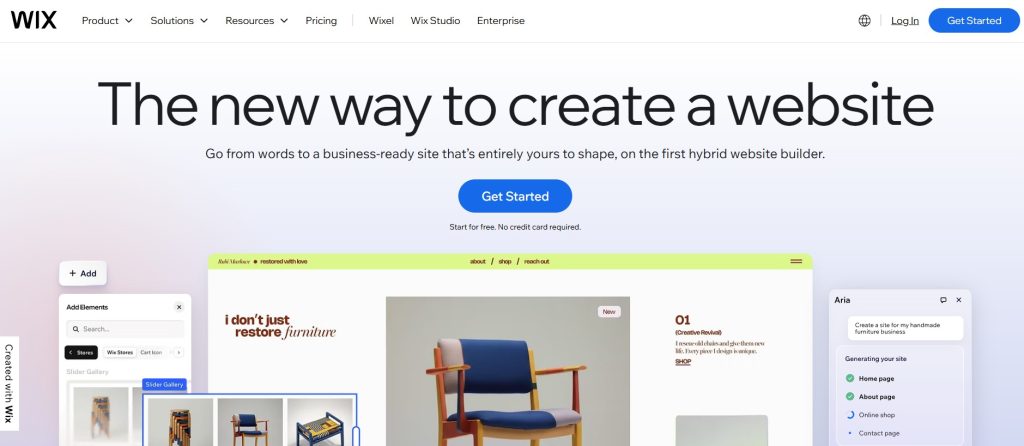
4. Wix (Best for Small Stores & Beginners)
Why it makes the list:
Drag-and-drop website builder. Easier than Shopify for complete beginners. All-in-one platform with hosting, domain, email, and store in one package. Lower starting price than Shopify.
Trade-offs:
Limited scalability. Wix works for stores with under 100 products. Beyond that, performance and management become difficult. Weak app ecosystem compared to Shopify and WooCommerce. Not built for multi-channel selling or complex inventory management.
Choose Wix if: You are testing a side hustle. You sell fewer than 50 products. You want the simplest possible setup.
5. Squarespace (Best for Content-First Brands)

Why it makes the list:
Beautiful design templates. Squarespace templates look more polished than Shopify out of the box. Best for brands where content (blogs, portfolios, lookbooks) drives sales. All-in-one platform like Wix but with better design quality.
Trade-offs:
Limited ecommerce features. No abandoned cart recovery on lower plans. Weak inventory management. Slow load times compared to dedicated ecommerce platforms. Small app ecosystem.
Choose Squarespace if: You run a content-heavy business (blog, magazine, portfolio) and sell products as a secondary revenue stream.
Best Online Marketplaces: Sell on Established Platforms
Marketplaces give you instant access to millions of buyers. You list products on their site and pay fees per sale.
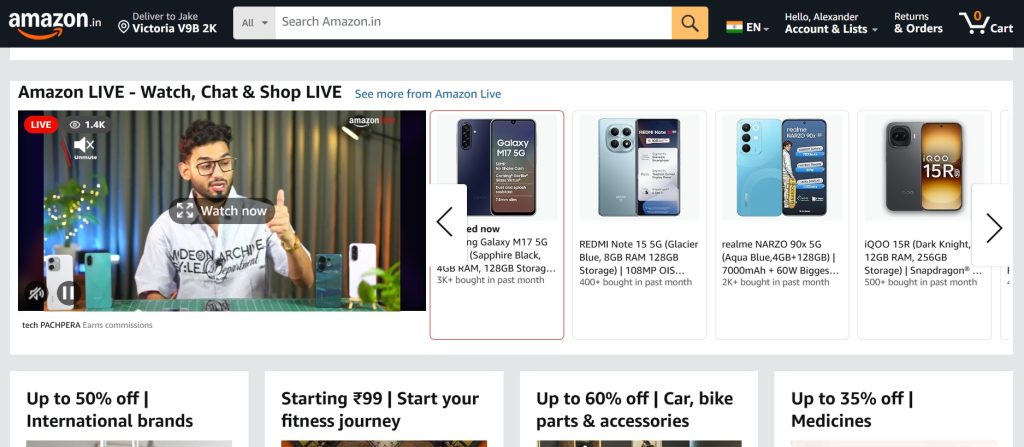
1. Amazon (Largest Traffic, Highest Fees)
Why it dominates:
Instant traffic. Amazon shoppers have buying intent. You do not need to run ads to get initial sales. Fulfillment by Amazon (FBA) means Amazon stores, packs, and ships your products. Your items qualify for Prime 2-day shipping. Trust factor matters. Buyers trust Amazon’s return policy and customer service more than unknown brand websites.
Trade-offs:
High fees eat 30-45% of revenue when you include referral fees, FBA fees, and advertising costs. Zero customer data. You cannot email customers or build a relationship beyond Amazon’s platform. Algorithm dependence means Amazon controls your visibility. One policy change can tank your sales.
Choose Amazon if: You sell commodity products where price and convenience matter more than brand loyalty. You want sales volume over margin.
2. eBay (Best for Auctions & Used Goods)

Why it still matters:
Auction format works for rare, collectible, or used items where price discovery happens through bidding. Lower fees than Amazon if you avoid Store subscriptions. International reach with minimal setup.
Trade-offs:
Declining market share. eBay lost ground to Amazon, Facebook Marketplace, and Poshmark. Seller protection is weaker than Amazon. Buyers win most disputes. Traffic quality is lower than Amazon. More browsers than buyers.
Choose eBay if: You sell used, vintage, or collectible items. You want auction-style pricing.
3. Etsy (Best for Handmade & Vintage)
Why it works:
Community of buyers specifically looking for handmade, vintage, and artisan goods. Low barrier to entry. List individual items for $0.20 each. Built-in trust for handmade products. Buyers expect Etsy sellers to be small independent creators.
Trade-offs:
Niche audience. Etsy works only for handmade, vintage (20+ years old), or craft supplies. Fee structure adds up. 6.5% transaction fee + 3% payment processing + $0.20 per listing + optional ad spend. UK sellers should also understand Etsy returns for UK sellers before choosing the platform. Limited branding. Your Etsy shop looks like every other Etsy shop.
Choose Etsy if: You sell handmade products, vintage items, or craft supplies. You want to reach buyers specifically looking for artisan goods.
4. Walmart Marketplace (Growing Fast, Approval Required)
Why it is growing:
Lower fees than Amazon (8-15% vs 15-45%). Access to Walmart’s 110 million monthly website visitors. Walmart Fulfillment Services (WFS) competes with Amazon FBA.
Trade-offs:
Approval process. Walmart rejects sellers without established sales history or US-based operations. Smaller marketplace than Amazon. Less traffic and fewer buyers. Walmart shoppers skew price-sensitive. Premium brands struggle.
Choose Walmart Marketplace if: You sell mass-market products at competitive prices. You already have sales history on Amazon or your own site.
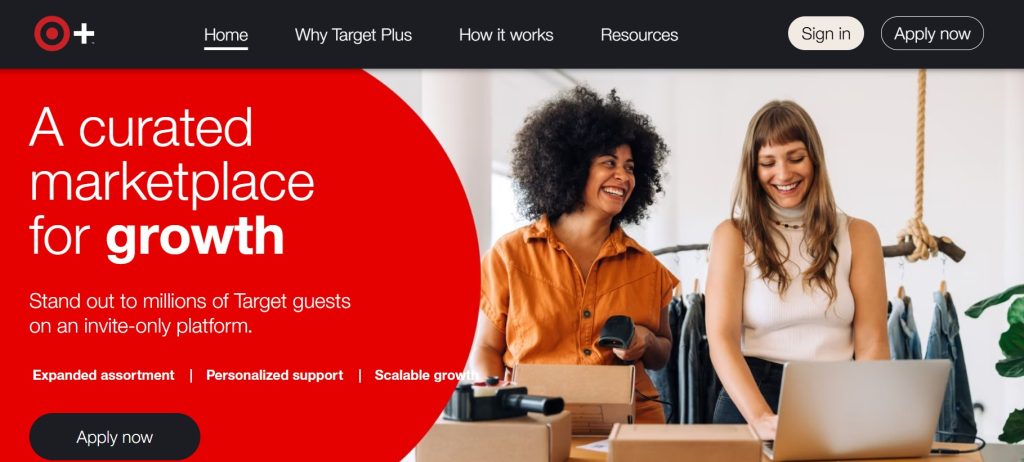
5. Target Plus (Invitation Only, Premium Positioning)
Why it is different:
Curated marketplace. Target invites brands that align with their aesthetic and quality standards. Premium positioning. Target shoppers spend more than Walmart shoppers. Lower fees than Amazon.
Trade-offs:
Invitation only. You cannot apply. Target reaches out to brands they want. Strict product quality and brand alignment requirements.
Choose Target Plus if: You get invited. Your brand aligns with Target’s modern, design-focused positioning.
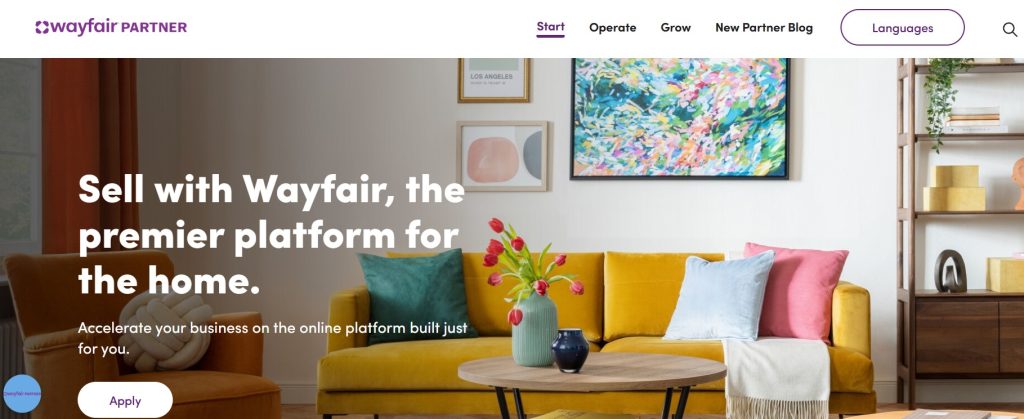
6. Wayfair (Best for Home Goods & Furniture)
Why it matters:
Category specialist in home goods, furniture, and decor. Wayfair attracts buyers specifically shopping for home furnishings. Lower competition than Amazon in the furniture category. Built-in logistics support for large-item fulfillment.
Trade-offs:
Niche marketplace. Only works for home goods, furniture, bedding, and decor categories. High return rates common in furniture (buyers ordering multiple sizes/colors). The approval process requires established product catalog and business credentials.
Choose Wayfair if: You sell furniture, home decor, bedding, or housewares. You want access to home goods buyers without competing against Amazon’s broad marketplace.
Best B2B eCommerce Platforms: Wholesale & Complex Pricing
B2B ecommerce platforms handle features B2C platforms cannot: customer-specific pricing, quote workflows, account hierarchies, purchase orders, and ERP integrations.
If you sell to other businesses rather than individual consumers, you need platforms built for B2B operations.
1. BigCommerce B2B Edition (Best for Mid-Market B2B)
B2B features:
Customer groups with unique pricing per group. Quote request workflow where buyers request quotes and sales approves. Account hierarchies allow parent companies with multiple buyer locations. Purchase order payment terms include Net 30 and Net 60. Minimum order quantities and bulk pricing tiers.
Why it works:
Lower cost than enterprise B2B platforms like Adobe Commerce or Salesforce. Built on BigCommerce infrastructure so you get B2C and B2B in one platform. Easier to implement than custom-built B2B solutions.
Trade-offs:
Less powerful than Adobe Commerce or OroCommerce for very complex B2B workflows. Limited ERP integration compared to enterprise platforms.
Choose BigCommerce B2B if: You sell wholesale to businesses and want a modern B2B platform without enterprise software costs.
2. OroCommerce (Best for Complex B2B Operations)
B2B features:
Multi-organization account management. Advanced pricing rules including contract-based, volume-based, and customer-specific pricing. RFQ workflows with approval chains. Multiple price lists per customer. Deep ERP and CRM integrations.
Why it works:
Built specifically for B2B. Not a B2C platform with B2B features bolted on. Handles complex pricing scenarios no other platform can match. Open-source flexibility for custom workflows.
Trade-offs:
Requires a dedicated development team to implement and maintain. Higher cost than BigCommerce B2B. Overkill for simple B2B needs.
Choose OroCommerce if: You run complex B2B operations with thousands of SKUs, custom pricing per customer, and ERP integration requirements.
3. Adobe Commerce (Magento) B2B (Best for Enterprise B2B)
B2B features:
Everything OroCommerce offers plus better scalability. Company account structures with unlimited sub-accounts. Requisition lists and quick order forms. Shared catalogs show different products to different customer segments. Native integration with Adobe Experience Cloud.
Why it works:
Most powerful B2B platform available. Scales to billions in annual revenue. Best-in-class customization and integration capabilities.
Trade-offs:
Extremely expensive. Total cost of ownership exceeds $500K annually for most implementations. Requires large in-house or agency development teams. Overkill for businesses under $50 million in annual revenue.
Choose Adobe Commerce if: You operate enterprise-level B2B operations with complex requirements and budgets to match.
4. Salesforce Commerce Cloud (Best for CRM-Integrated B2B)
B2B features:
Native Salesforce CRM integration. Account-based pricing and catalogs. Quote-to-cash workflows. Advanced analytics and reporting. Omnichannel commerce across web, mobile, and in-person.
Why it works:
Unmatched CRM integration if you already use Salesforce. Single customer view across sales, service, and commerce. Best-in-class reporting and analytics.
Trade-offs:
Most expensive option on this list. Requires Salesforce expertise to implement and manage. Long implementation timelines (12-24 months typical).
Choose Salesforce Commerce Cloud if: You already use Salesforce CRM and need B2B commerce tightly integrated with your sales processes.
B2B Platform Comparison Table
| Platform | Best For | Pricing Complexity | Account Management | ERP Integration | Annual Cost |
|---|---|---|---|---|---|
| BigCommerce B2B | Mid-market B2B | Strong | Strong | Moderate | $12K-$50K |
| OroCommerce | Complex B2B | Excellent | Excellent | Excellent | $60K-$200K |
| Adobe Commerce | Enterprise B2B | Excellent | Excellent | Excellent | $150K-$500K+ |
| Salesforce Commerce | CRM-integrated | Excellent | Excellent | Excellent | $200K+ |
B2B Features Checklist
When evaluating B2B platforms, verify these capabilities:
Account & User Management:
- Account hierarchies (parent companies with sub-accounts)
- Role-based permissions (buyers, approvers, admins)
- Multi-user accounts with approval workflows
Pricing & Catalogs:
- Customer-specific pricing
- Contract-based pricing
- Volume discounts and bulk pricing tiers
- Multiple price lists
- Restricted catalogs (show different products to different customers)
Quoting & Ordering:
- RFQ (Request for Quote) workflow
- Quote approval chains
- Quick order forms for repeat purchases
- Requisition lists
- Minimum order quantities
Payment & Terms:
- Purchase order payment method
- Net 30/60/90 payment terms
- Credit limit management
- Invoice generation
Integration Capabilities:
- ERP integration (SAP, Oracle, NetSuite, Microsoft Dynamics)
- CRM integration (Salesforce, HubSpot)
- PIM integration (Akeneo, Salsify)
- EDI support for large retailers
If your platform lacks 50%+ of these features, you are using a B2C platform for B2B operations. This creates manual workarounds that do not scale.
How to Choose the Best eCommerce Platform for Your Business
Follow this decision tree:
Step 1: Marketplace or Store Platform?
Do you need instant traffic and do not care about brand control?
YES: Choose a marketplace (Amazon, eBay, Etsy)
NO: Continue to Step 2
Step 2: B2B or B2C?
Do you sell primarily to other businesses with negotiated pricing?
YES: Choose a B2B platform (BigCommerce B2B, OroCommerce, Adobe Commerce)
NO: Continue to Step 3
Step 3: Technical Skills Assessment
Do you have a developer on your team or budget to hire one?
YES: Consider WooCommerce (most customization) or BigCommerce (best for scaling)
NO: Choose Shopify (easiest setup)
Step 4: Budget Reality Check
What can you afford monthly?
- Under $100/month: WooCommerce or Wix
- $100-$300/month: Shopify or BigCommerce
- $300-$2,000/month: Shopify Plus
- $12K-$50K/year: BigCommerce B2B Edition
- $60K+/year: Adobe Commerce or Salesforce Commerce Cloud
Step 5: Product Count & Complexity
How many products do you sell?
- Under 100 products: Any platform works. Choose based on budget and skills.
- 100-1,000 products: Shopify, WooCommerce, or BigCommerce
- 1,000-10,000 products: BigCommerce or Adobe Commerce
- 10,000+ products: Adobe Commerce or Salesforce Commerce Cloud
Step 6: Multi-Channel Strategy
Do you plan to sell on multiple channels (your website + Amazon + social media)?
YES: Choose Shopify (best multi-channel integrations) or BigCommerce
NO: Any platform works
Quick Recommendations by Business Type
- Small business testing a product idea: Wix or WooCommerce
- Growing DTC brand with marketing budget: Shopify
- High-volume seller avoiding transaction fees: BigCommerce
- Mid-market B2B manufacturer: BigCommerce B2B Edition
- Enterprise B2B with complex pricing: OroCommerce or Adobe Commerce
- Content creator selling products on the side: Squarespace
- Handmade product seller: Etsy + Shopify (use Etsy for traffic, Shopify for brand building)
- Dropshipper or reseller: Amazon + eBay
Choosing the Best eCommerce Platform: Final Recommendations
The best ecommerce platform depends on your business model, not industry trends.
- If you want immediate sales without marketing effort: Sell on Amazon or eBay.
- If you are building a brand and want customer data: Use Shopify or WooCommerce.
- If you sell wholesale to businesses: Use BigCommerce B2B Edition or OroCommerce.
- If you run enterprise operations: Adobe Commerce or Salesforce Commerce Cloud.
Most successful ecommerce brands run multi-channel strategies. They sell on Amazon for volume, operate a Shopify store for brand control, and use wholesale platforms for B2B accounts.
At AMZ Prep, we fulfill orders for brands across all major ecommerce platforms. We see which platforms scale without creating operational chaos. Shopify and BigCommerce integrate cleanly with fulfillment operations. Amazon FBA handles fulfillment but locks you into their ecosystem. WooCommerce offers flexibility but requires technical management.
Your platform choice determines your fulfillment options. Some platforms integrate with 3PLs automatically. Others require custom development. Factor fulfillment complexity into your platform decision before you build.
Need help managing fulfillment across multiple ecommerce platforms? AMZ Prep integrates with Shopify, WooCommerce, BigCommerce, Amazon, Walmart, and 100+ other platforms.
Frequently Asked Questions
What are the best ecommerce platforms for small business?
Shopify ranks first for small businesses due to ease of setup and built-in marketing tools. WooCommerce ranks second for budget-conscious businesses with WordPress experience. Wix works for very small stores under 50 products. All three platforms let you launch without developers.
What are the best ecommerce store platforms vs online marketplaces?
Best ecommerce store platforms (build your own site): Shopify, WooCommerce, BigCommerce. Best online marketplaces (sell on existing sites): Amazon, eBay, Etsy. Store platforms give you brand control and customer data. Marketplaces give you instant traffic and built-in trust but take 15-45% fees per sale.
Which platforms are best for B2B ecommerce?
BigCommerce B2B Edition ranks first for mid-market B2B ($12K-$50K annually). OroCommerce ranks second for complex B2B operations ($60K-$200K annually). Adobe Commerce ranks third for enterprise B2B ($150K-$500K+ annually). Regular B2C platforms like Shopify lack customer-specific pricing and quote workflows required for B2B.
What are the best ecommerce merchant platforms?
Shopify leads with 29% US market share and 4.6 million active stores. WooCommerce follows with 18% market share. BigCommerce grows fastest among scaling brands. All three platforms offer payment processing, inventory management, and shipping integrations. Shopify is easiest, WooCommerce is most customizable, BigCommerce has zero transaction fees.
What is ecommerce platform market share in 2026?
Shopify holds 29% of US ecommerce platform market share. WooCommerce holds 18%. Amazon dominates marketplace sales with 37.6% of total ecommerce revenue. BigCommerce grows but exact market share is unclear. Wix, Squarespace, and Magento split the remaining market. Most successful brands use multiple platforms simultaneously.
What are the best ecommerce search platforms?
Amazon dominates ecommerce search with 4.79 billion monthly visits and 37.6% market share. Google Shopping drives traffic to Shopify and WooCommerce stores. eBay delivers 1.21 billion monthly visits for auction-style products. Etsy serves niche handmade and vintage searches. Facebook and Instagram Shops grow for social commerce.
Which ecommerce platform has the lowest fees?
WooCommerce has zero platform fees (you pay only payment processor fees of 2.9% + 30¢). BigCommerce charges zero transaction fees but requires monthly subscriptions of $29-$299. Shopify charges 2.9% + 30¢ unless you use Shopify Payments. Amazon charges 15-45% per sale including referral and fulfillment fees.
Can I switch ecommerce platforms later?
Yes, but migration costs time and money. Moving from Shopify to WooCommerce or vice versa requires exporting product data, re-uploading to the new platform, reconnecting payment processors, and rebuilding custom code. Plan for 40-120 hours of work or $5K-$20K in developer fees. Choose carefully upfront to avoid migration.
What is the difference between popular ecommerce platforms and biggest ecommerce sites?
Popular ecommerce platforms (Shopify, WooCommerce) are software tools that let you build your own store. Biggest ecommerce sites (Amazon, eBay, Walmart) are marketplaces where you list products alongside competitors. Platforms give you control. Marketplaces give you traffic. Most brands use both.
Are ecommerce platforms worth it for small businesses?
Yes, if you want to own customer relationships and build brand equity. Ecommerce platforms like Shopify and WooCommerce let you collect customer emails, control pricing, and avoid marketplace fees. Trade-off: you must drive your own traffic through ads or SEO. Start with a marketplace for quick revenue, then build your platform for long-term brand value.

Arishekar N is a Vice President (VP) of Marketing at AMZ Prep, specializing in ecommerce fulfillment and Amazon logistics strategies with a proven track record of driving growth for e-commerce businesses. He is a strategic leader with extensive expertise in marketing, e-commerce operations, SEO & advertising, and branding.
Stay updated on his latest insights by following him







Adaptability’ is a theme I kept spotting — this list helps me narrow down which platforms truly deliver it.
The emphasis on integrations (with Amazon, Walmart, DTC) is exactly what I was looking for.
Multichannel integration is becoming non-negotiable. Thanks for ranking by real utility.
Readable, actionable, and grounded — great resource for evaluating platform ROI.
Ecommerce hosting reliability is so often overlooked. Good to see it emphasized in this list.
Seeing Shopify, WooCommerce, and AMZ Prep in the same ranking gives perspective on flexibility versus specialization.
Scalable platform choice is critical for growth — this article nailed the criteria.
AMZ Prep showing up here reinforces how critical fulfillment & logistics are in platform selection.
Really eye-opening list of ecommerce platforms — I didn’t realize how many versatile options exist.
Platform comparison tied to merchant needs — love the practical angle here.