
February wasn’t loud. It wasn’t dramatic. But it was one of those months where Amazon quietly tightened bolts across returns, reviews, automation, and fees , the kind of changes that don’t feel urgent until they hit your margins or your listings.
Let’s walk through what changed, what it really means, and where I’d focus if I were running your operation right now.
Table of Contents
- Seller-Fulfilled (FBM) Changes , Returns Are Getting Tighter
- Amazon Prepaid Return Labels (APRL) , No More High-Value Exemptions
- SAFE-T Claim Window , Cut in Half
- OTDR (On-Time Delivery Rate) , Enforcement Gets Smarter
- Reviews & Listings , A Shift That Will Affect Launches
- Review Sharing Across Variations
- “Review Listing Changes” Dashboard
- Advertising & Automation , Rules Are Tightening
- Ads MCP Server (Open Beta)
- Business Solutions Agreement (BSA) Update , “Agent Policy”
- Account Health , New Metric Alert
- FBA Fee & Cost Changes , The Margin Reality
- FBA Prep Service Ended
- Return Processing Fees Expanded
- Europe , Becoming More Attractive
- Removal & Disposal Fee Timing
- Where Sellers Stand Now
- Where I’d Focus Today
- Final Thoughts
Seller-Fulfilled (FBM) Changes , Returns Are Getting Tighter
Amazon Prepaid Return Labels (APRL) , No More High-Value Exemptions
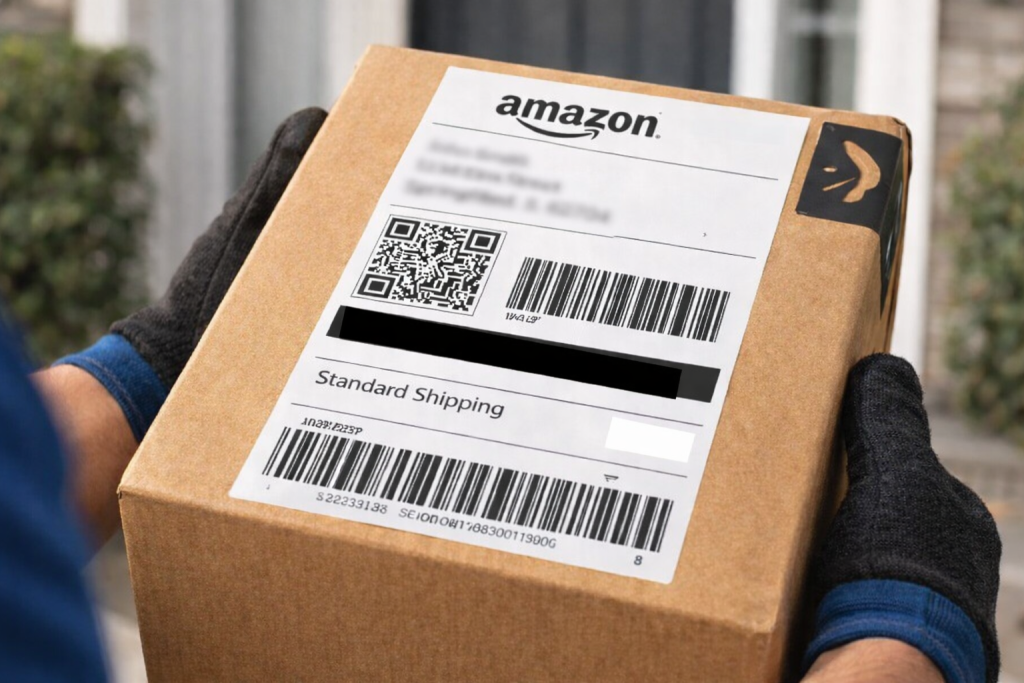
Effective February 8, 2026
If you’re running FBM, this is a big one. Amazon officially removed the high-value item exemption from their prepaid return labels. That means every U.S. seller-fulfilled return , no matter the price of the item , has to use an Amazon-issued label.
What Changed?
Before this update, if you were selling an expensive or fragile item, you could opt out of using the Amazon-prepaid label and manage returns through your own process. You had some flexibility , you could choose carriers, require extra confirmation, or even handle certain high-ticket returns yourself. This is similar to how seller flex amazon allows brands to manage fulfillment from their own warehouses while still leveraging Amazon’s delivery network.
Not anymore. Now, Amazon automatically generates the prepaid label for eligible returns, and the shipping costs hit you. Even expensive or fragile SKUs fall under the same rules as smaller items.
Why This Matters
On the surface, it might feel like a small operational tweak, but it actually changes a few things:
- Faster refunds for customers – Returns and refunds will process faster because Amazon controls the label.
- More automation – You don’t have to negotiate return shipping with each customer.
- Less flexibility – Your old workflows for high-value items are gone.
- Higher cost exposure – If an item is damaged during shipping or returned for no good reason, the cost now lands squarely on you.
Basically, Amazon is centralizing control, and for FBM sellers who liked customizing approvals for costly items, that lever is gone.
If you sell supplements, cosmetics, or food products, proper storage conditions matter more than most sellers realize. Our temperature-controlled warehouse guide explains why climate control in fulfillment can directly impact product quality and returns.
What I’d Do Right Now
- Check your margins – Look at all high-value SKUs. Factor in the return shipping cost, the chance of damage, and the potential refund. You may need to adjust pricing or even packaging to protect your margins.
- Step up packaging – If you’re selling anything fragile, now is the time to double-check boxes, padding, and tape. Avoid returns caused by preventable damage.
- Improve your inspection process – Returns need to be documented immediately. Photos, notes, and condition logs will save you money later.
- Track refunds and SAFE-T claims – Don’t wait for a week or two. Every day counts, especially with new timelines.
If FBM is a core part of your business, these changes aren’t game-breaking, but they will affect how you plan for returns, pricing, and operational workflows going into Q2.
If you’re running FBM or Seller Fulfilled Prime, delivery performance is critical. Our Seller Fulfilled Prime weekend shipping guide breaks down what Amazon expects for on-time delivery compliance.
SAFE-T Claim Window , Cut in Half
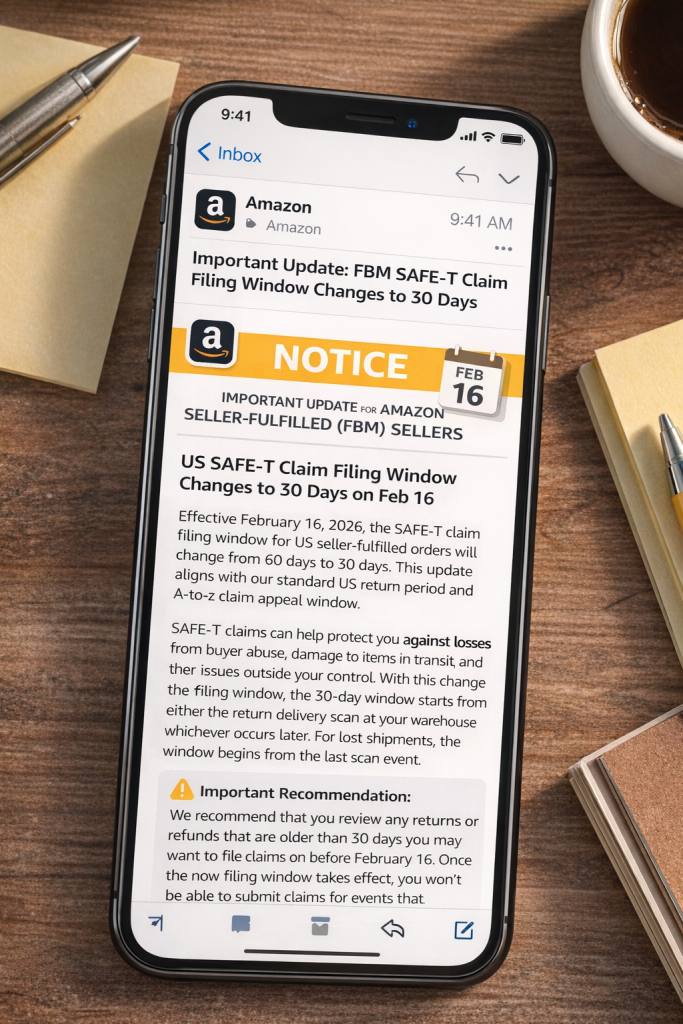
Effective February 16, 2026
This is another one that looks small but has real financial consequences. Amazon shortened the SAFE-T claim window from 60 days to 30 days.
What Changed?
- Old window: 60 days from the refund event to file a SAFE-T claim.
- New window: 30 days.
This applies to:
- Damaged items
- Lost packages
- Customer-initiated returns
The timeline is now aligned with A-to-z Guarantee cycles. Amazon expects sellers to act faster if they want reimbursement.
Brands selling treats, supplements, or specialty pet food should also consider pet product cold storage fulfillment to protect product quality during storage and shipping.
Why This Matters
If you’re managing high-volume returns, this suddenly becomes a critical operational concern. Half the time means half the opportunity to recover your losses. Miss a claim? That’s money gone.
Imagine handling 1,000 returns per month. Under the old 60-day window, you might get lucky filing a claim after catching up on inspections. Now, you need everything ready immediately.
What You Can Do
- Weekly audits – Don’t wait for month-end. Check refunds, file claims, and log every detail weekly.
- Streamline inspections – Take photos, note damage, and log every return as soon as it hits your warehouse.
- Centralize tracking – Use a WMS, ERP, or Amazon refund tracking software to track refund dates, claim windows, and statuses. A spreadsheet works if volume is low, but 1,000+ monthly returns need proper tooling.
- Assign responsibility – Have one person or team own SAFE-T tracking. No gray areas.
- Train your team – Everyone touching returns should understand the timeline and escalation paths.
A little pro tip: integrate SAFE-T monitoring with your weekly inventory check. That way nothing slips through the cracks, and you protect your bottom line.
OTDR (On-Time Delivery Rate) , Enforcement Gets Smarter
Effective February 28, 2026
Previously, if your OTDR dropped below 90%, Amazon could deactivate all FBM listings. That meant even small, low-volume SKUs got frozen along with your top sellers , a total account lockdown.
Now, Amazon is smarter. Only your highest-volume or most impactful listings are deactivated if you fall below 90%.
Why This Is Actually Good News
It’s targeted enforcement, which means:
- Less risk of a full-account freeze
- Still immediate consequences for top sellers
- Encourages precision rather than blanket fear
If you only have a few high-volume SKUs, you need to focus there. They’re the ones that drive revenue, and those are the listings Amazon is watching most closely.
Recommended Actions
- Monitor OTDR daily – Especially for your top sellers.
- Strengthen partnerships – Work closely with carriers, 3PLs, or fulfillment teams to avoid delays.
- Buffer stock for high-volume SKUs – Don’t rely on tight timing. Have contingency plans.
- Track trends – Your WMS or reporting dashboard should flag late shipments before penalties kick in.
Targeted enforcement rewards precision. One late shipment on a best-seller can hurt revenue more than a handful of late low-volume orders.
Running temperature-sensitive inventory requires specialized infrastructure. This guide covers the essential cold storage equipment for warehouses that keeps climate-controlled facilities operating properly.
Reviews & Listings , A Shift That Will Affect Launches
Review Sharing Across Variations
Effective February 12, 2026, rolling through May 31
This one’s going to hit brands launching new products or multiple variations. Amazon will no longer pool reviews across variations that differ in:
- Functionality
- Performance
- Formulation
- Intended use
Reviews will still pool for:
- Color or pattern
- Simple size variations
- Pack quantity
Why This Is Big
Sellers have leaned on variations to consolidate social proof. That playbook is narrowing.
Now:
- Child ASINs may show fewer reviews
- Launch costs per variation go up
- Conversion rates may dip
- Black-hat tricks get harder
If you’re launching supplements, cosmetics, or performance-differentiated products, expect each SKU to stand more on its own. This forces a cleaner, more deliberate catalog structure.
Trade policy also continues to shape ecommerce economics. The $10 billion tariff reversal affecting ecommerce imports is another example of how regulatory shifts can quickly change supply chain costs.
“Review Listing Changes” Dashboard

Amazon rolled out a new dashboard to track listing edits they made over the past 60 days. This replaces the old Excel sheet system.
It is small, but it’s really helpful. Visibility, It is one of those background characters but If you’ve ever woken up to changed bullets, altered backend attributes, or unapproved category tweaks, you know the value of visibility. Make it a monthly audit habit.
Advertising & Automation , Rules Are Tightening
Ads MCP Server (Open Beta)
Launched February 2, 2026
Amazon introduced an AI-based ad workflow tool. You can manage campaigns using plain-language prompts through the Ads API.
One thingl is clear: Campaign management is moving toward automation-first workflows. That, but does not mean Manual is going away but AI-driven processes are becoming the norm.
If you already use advanced tools, this likely fits into your stack. If not, you’ll need to catch up soon.
Amazon kept building on this foundation through Q2 the Amazon April 2026 changes pushed advertising automation and AI-driven ad placements significantly further, and sellers who didn’t adapt in February were behind by April.
Business Solutions Agreement (BSA) Update , “Agent Policy”
Announced February 17 | Effective March 4
Amazon added rules for automation tools, AI scripts, and bots:
- Agents must identify themselves
- They must comply with rules
- They need a “kill switch”
- You can’t use Amazon data to train AI
This affects:
- Repricers
- Inventory management tools
- Ad automation
- Browser extensions
- VA automation systems
Bottom line: automation is allowed, but uncontrolled automation is not. If you’re heavily automated, audit your stack now. Compliance is becoming a bigger factor, and some tool vendors may raise prices to adapt.
Account Health , New Metric Alert
Business Hour Delivery Rate
Now on the Account Health dashboard. It tracks:
- Delivery performance for Amazon Business customers
- Whether deliveries happen during business hours
Not a headline change, but if you serve B2B buyers, missing this metric can quietly affect account eligibility. Keep it on your radar.
FBA Fee & Cost Changes , The Margin Reality
Effective January 15, 2026
Amazon says FBA fees rise $0.08 per unit on average. But averages are misleading , low-price small standard SKUs see a bigger increase than high-ticket items.
For example:
| Price | Size | Per-Unit Change | Annual @ 20k units |
|---|---|---|---|
| <$10 | Small Std | +$0.12 | $2,400 |
| $10–50 | Small Std | +$0.25 | $5,000 |
| $10–50 | Large Std | +$0.05 | $1,000 |
| >$50 | Small Std | +$0.51 | $10,200 |
| >$50 | Large Std | +$0.31 | $6,200 |
If your catalog is mixed, check SKU-level mapping. The blended $0.08 figure understates some impacts and overstates others.
FBA Prep Service Ended
Effective January 1, 2026
Amazon no longer handles internal prep. That means:
- More prep shifts to third-party centers
- Upstream operational discipline matters more
- Errors upstream now cost money
Return Processing Fees Expanded
More categories are affected, including apparel and footwear. Return-heavy SKUs now put more pressure on margins.
Amazon is signaling: absorb more costs directly.
Europe , Becoming More Attractive
Referral Fee Reductions (Feb 1, 2026)
- Home, Grocery, Pet clothing & food, Vitamins
- Example: Home items ≤ €20 dropped from 15% to 8%
Low-Price FBA Expansion
- Items ≤ €20 receive ~€0.40–0.45/unit FBA reduction
- Parcel fees drop ~€0.26–0.32
Net effect: ~€0.15–0.17/unit average savings. EU economics just got a little sweeter.
Removal & Disposal Fee Timing
Effective March 1, 2026
Fees now hit per unit as processed, instead of when the entire order is completed. Rates didn’t change, but cash-flow timing did.
- Accounting needs to be tighter
- Inventory decisions need to be cleaner
- Slow-moving stock becomes visible financially
Where Sellers Stand Now
In the US
Pressure is building:
- Higher FBA fees
- Expanded return fees
- Review splits reducing social proof
- Automation compliance
- Shorter SAFE-T windows
Individually, none of these break a business. Together, they expose sloppy operations.
In the EU
- Referral and FBA fee reductions
- Improved low-price economics
- Better margins on certain categories
For the right SKUs, EU expansion looks more attractive than it has in a while.
Where I’d Focus Today
- Audit variation structures
- Tighten SAFE-T claim monitoring
- Confirm automation tools are compliant
- Re-run margin math SKU by SKU
- Keep inventory disciplined , removal fees are faster
Final Thoughts
February 2026 wasn’t flashy. It was structural.
Amazon is quietly:
- Standardizing returns
- Cleaning up review manipulation
- Regulating automation
- Nudging US margins
- Incentivizing EU growth
They rarely swing wildly. They tighten, layer by layer.
If you adapt operationally , not emotionally , you’ll come out ahead.
Stay structured. Stay compliant. Keep your margin math sharp. February was subtle, but months like this make all the difference.

Arishekar N is a Vice President (VP) of Marketing at AMZ Prep, specializing in ecommerce fulfillment and Amazon logistics strategies with a proven track record of driving growth for e-commerce businesses. He is a strategic leader with extensive expertise in marketing, e-commerce operations, SEO & advertising, and branding.
Stay updated on his latest insights by following him

















Comments