
I’m writing this to you from Mexico. I’m currently here on a “baby moon” with my wife. We have a little one arriving very soon, but the news coming out of the Supreme Court is so significant for our industry that I couldn’t wait until I was back in the office to break it down for you.
If you’ve been running an e-commerce brand over the last 18 months, you’ve been in the trenches. You’ve seen your P&Ls take hit after hit from volatile shipping costs and unpredictable tax liabilities. It’s hard enough to scale a business when the world is stable; it’s nearly impossible when the rules of the game change every week.
As the founder of Amz Prep, I’ve watched firsthand as these “fast-twist” tariff decisions, specifically those rooted in the Trump administration’s trade policies that have wreaked havoc on global supply chains. But the Supreme Court has just handed down a landmark perspective: they’ve effectively labeled these sporadic, emergency-style tariff implementations as “unjust and unruly.”
This ruling marks a potential end to the era of randomly flagged tariff codes that have impacted tens of billions of dollars in trade. Here is why this matters for your bottom line and how you need to pivot right now.
A Return to Regularity and Forecasting Stability
For the past year and a half, e-commerce leaders have been forced to operate in a defensive crouch. The Supreme Court’s decision specifically targets the “unruly” nature of how new tariff codes were being flagged without warning or consistent methodology.
In logistics, predictability is the ultimate competitive advantage. When the regulatory landscape is stable, you can actually build a sustainable business model. This ruling signals a shift back toward a system where administrative whims don’t derail your entire year of planning.
“There should be stability in how we approach things… which is going to help e-commerce brands be able to forecast and plan inventory and profitability.”
When you aren’t looking over your shoulder for a surprise 25% tax hike on your next container, you can finally focus on what matters: inventory planning and long-term profitability.
The Multi-Billion Dollar Refund Hunt
This is the most explosive part of the news: we are now entering a landscape where those “unjust” payments may be eligible for refunds. We are talking about a pool of “Trump tariff” costs that reaches into the tens of billions of dollars.
For some of the mid-to-large-scale brands I work with, this isn’t just “found money”, it’s a potential recovery of tens of millions of dollars in capital that was stripped from their operating budgets. To be clear, the government isn’t going to hand this back easily. You need to “get your ducks in order” immediately.
If you want to be first in line when the door to refunds opens, you need to work with your brokerage firms and freight companies to aggregate the following intelligence:
- Historical HTS (Harmonized Tariff Schedule) Codes: Every code used for your imports over the last 18 months.
- Liquidated Entry Records: Full documentation of every entry that has been finalized by Customs.
- Section 301 Communication Logs: Direct records of all Section 301 payments made to U.S. Customs and Border Protection (CBP).
The window for data collection is now. Don’t wait for a formal announcement to start digging through your archives.
The “China Lane” Exodus and Manufacturing Diversification
While the legal side of this is playing out in court, the operational reality on the ground is that brands are “changing lanes.” The “China lane” has become a bottleneck of risk, and I’m seeing a massive migration of manufacturing to alternative regions.
The goal is simple: avoid the China-specific hits by diversifying your sourcing. We are seeing brands move their production “lanes” to:
- Taiwan
- India
- Pakistan
Some founders are attempting the “holy grail” of sourcing locally within the U.S. While I’ll be the first to tell you that local sourcing remains “incredibly difficult” from a cost and infrastructure standpoint, the desire for a shorter, more secure supply chain is at an all-time high.
Localization as a Tariff Shield
If you are in a high-impact category, especially apparel or baby products you know that the “Trump tariffs” hit your margins harder than almost anyone else. For these brands, diversifying manufacturing isn’t always enough; you need to change your fulfillment center of gravity.
We are seeing a surge in brands setting up shop and localizing fulfillment in Canada or the UK. Here’s the strategy: while Section 301 policies remain 100% intact for U.S. imports, localizing in Canada allows brands to scale internationally and bypass the massive “tariff hit” and CBP bottlenecks typical of the U.S. market. It’s a way to maintain your growth trajectory without being held hostage by the U.S. regulatory environment.
Conclusion: Transparency as the Ultimate Competitive Advantage
At the end of the day, this Supreme Court decision is a massive net win for the e-commerce community. I am not necessarily against tariffs, but I am against chaos. What brands need and what has been missing is strategy and transparency.
The “unruly” nature of the last 18 months has had a tragic cost. It is a shame to see the number of American brands that have already gone out of business because they simply couldn’t keep up with erratic, unpredictable costs. For those of you who have survived, this ruling is a glimmer of hope that we are returning to a system where you can plan, compete, and stay profitable.
One final question for you: Do you believe this refund process will actually materialize into cash in your pocket, or is this just more regulatory noise? Regardless of your take, the real question is: is your data ready if the opportunity arrives?
I’d love to hear your thoughts in the comments.
For now, I’m getting back to the beach before the baby arrives.
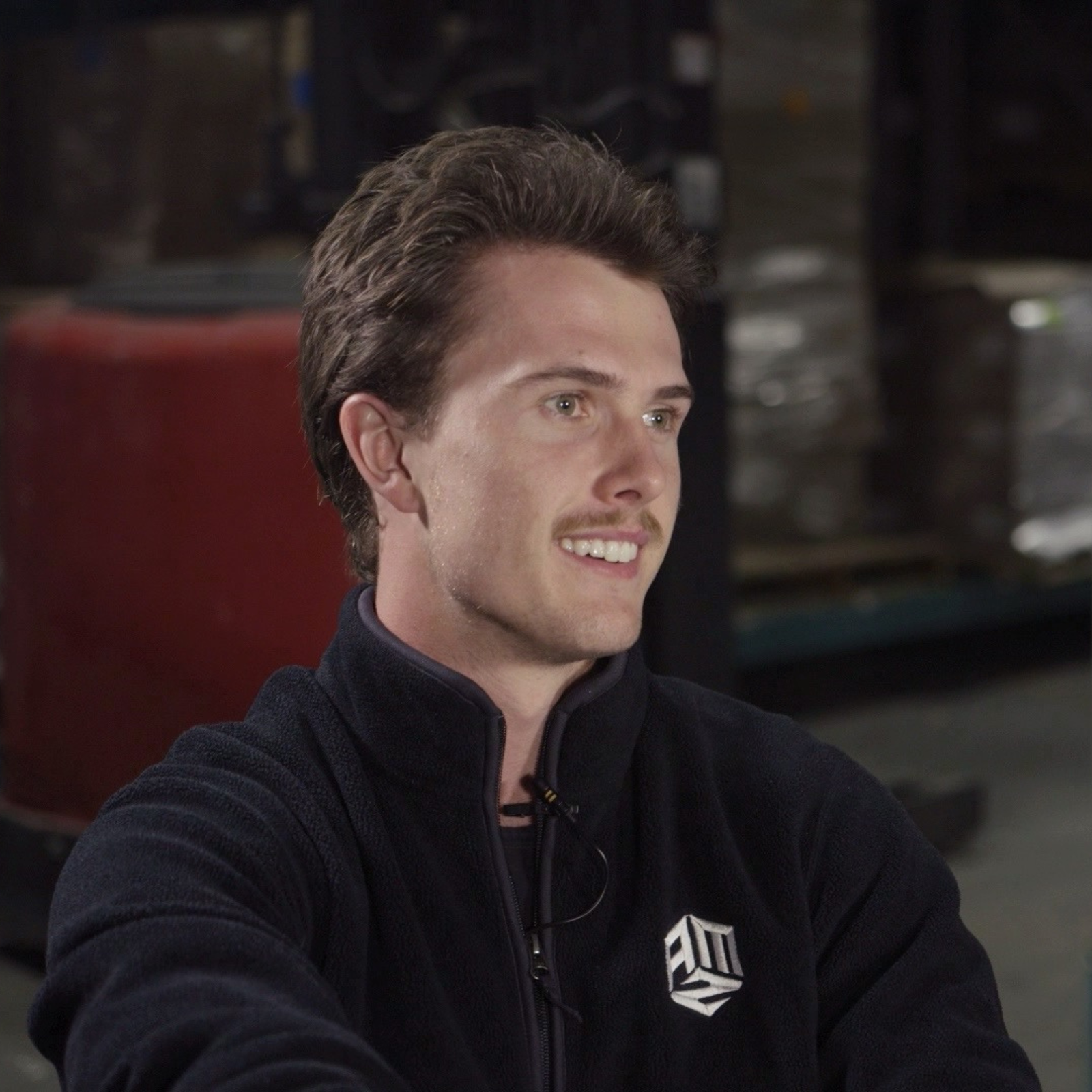
Blair Forrest is the Founder of AMZ Prep, one of North America’s fastest-growing third-party logistics and fulfillment networks, built entirely without outside capital since 2016. Under his leadership, AMZ Prep has scaled to 50+ fulfillment centers across 6 countries, processing over 10 million plus units monthly and powering $2 billion+ in annual GMV for more than 5,000 brands worldwide including 437, Silverts, Saltyface, Unilever, Duracell, and JBL. A recognized authority in eCommerce logistics, Amazon FBA strategy, and supply chain optimization, Blair has helped thousands of sellers and brands master their fulfillment operations from first shipment to enterprise scale. He regularly consults on FBA prep, multi-channel fulfillment, last mile delivery, international expansion, and cost reduction strategies that save brands 20–40% compared to traditional 3PL providers. Blair’s insights on Amazon logistics, 3PL operations, and eCommerce growth are widely cited across the industry. Through AMZ Prep’s content, guides, and resources, he continues to share battle-tested strategies drawn from managing one of the largest independently owned fulfillment networks in North America.
















Comments