
As a seller managing multiple platforms like Amazon, Walmart, and eBay, catalog management software can be a lifesaver. Imagine selling outdoor gear and apparel, like camping equipment, hiking boots, and jackets, while juggling inventory, pricing, and product details across all channels. Instead of manually updating each one, catalog software allows you to update once, and it automatically syncs everywhere.
For example, if your main product is performing well, the software can push less popular variations to customers. When launching a new product, you can link it to a successful product to increase visibility and trust. If an item isn’t selling well, you can give it a fresh start with a new listing for better visibility. The software also helps identify slow sellers, allowing you to adjust photos and descriptions to make them more appealing. Overall, the Catalog Management Software is more than managing your product inventories, it is a powerful tool designed to take your business to the next level.
Just think of all the time you will save with a Catalog Management Software
What is a Catalog Management Software?
In simple terms, it is a specialized organizational tool. Indeed, catalog management software enables consistency, accuracy, and timeliness across multiple channels. These software solutions help to improve the quality and consistency of product data and enhance the customer experience by providing relevant and timely information. By doing this, companies will eventually increase sales growth, raise customer satisfaction, and maintain competitiveness in the fast-moving e-commerce market.
For Example, If you are a multichannel seller, it would be a godsend to have a centralized directory of all your inventory spread across multiple channels.
Catalog management software offers significant advantages by centralizing product data and ensuring accurate, up-to-date electronic catalogs. It streamlines operations, reduces errors, and serves as a key marketing tool for consistent, attractive product presentations across channels.
Key Features of Best Catalog Management Software
When choosing catalog management software, consider the following key features
- Centralized Database
The most basic feature of all catalog management software. A single repository for all product data, ensuring consistency across channels. Consider this, CMSs provide inventory management services for retailers and if the retailer updates a product’s description or price, the change needs to be reflected across all platforms in real-time.
- Real-Time Inventory Tracking
When an eCommerce seller is using multiple platforms, Real-time inventory tracking will allow Sellers to monitor stock levels across all locations. Take a hypothetical scenario, a hot-selling dress is running low in one warehouse, the Sellers can quickly transfer stock from another location to proactively.
- Easy Product Classification and Categorization
The software facilitates the smooth classification and categorization of products. Easy product classification and categorization allow warehouse staff to quickly locate and pick items during order fulfillment. This feature often comes in handy during peak seasons
- Integration with Other Systems
Most software integrates with e-commerce platforms, inventory management systems, and ERP solutions. When a product is sold, the inventory level is automatically updated in the WMS and ERP
- Reporting and Analytics
The software’s reporting tools can analyze inventory turnover rates, order fulfillment accuracy, and other KPIs. This means that certain items that have high turnover rates can be identified and stock levels can be adjusted accordingly
- Scalability
While increased orders may seem like a blessing, many companies find it a curse due to the challenges of scaling up. Regardless of size, businesses often struggle in this regard, The catalog management software’s scalability allows the provider to handle the increasing number of products and orders without overhauling their system.
Benefits of Using Catalog Management Software on Amazon
As an Amazon seller, managing hundreds or even thousands of products can be overwhelming. Each product requires detailed descriptions, images, pricing, and consistent information across all your platforms.
This is where Catalog Management Software (CMS) becomes essential, offering not just organization but a serious profit boost!
Why Do You Need a Catalog Management Software?
A CMS provides a centralized database to manage all your product information, eliminating the need to juggle spreadsheets or track updates across multiple files. It also automates synchronization across channels, ensuring accuracy and reducing costly errors like typos or inconsistent pricing that frustrate customers. By automating repetitive tasks such as listing creation and data uploads, CMS frees up time for strategic decisions and scaling your business. Consistent and accurate product information also builds trust with customers, leading to increased customer satisfaction and repeat purchases.
The impact of CMS on Amazon sales is significant. CMS helps optimize product listings with proper keywords and categories, which boosts your search ranking and brings more eyes to your products. It ensures brand consistency across all your listings, strengthening your brand identity and helping you stand out in a crowded marketplace. These combined benefits ultimately drive more traffic to your listings, improve conversion rates, and increase sales and profits.
The Profit Difference: CMS vs. No CMS
While exact numbers vary, the increased efficiency, accuracy, and customer satisfaction achieved through CMS usage almost certainly lead to higher profits. Small improvements across multiple areas of your business ultimately lead to better profit margins across the board.
Beyond Amazon CMS for Omnichannel Selling
For sellers on multiple platforms, CMS becomes even more critical. It centralizes product data and enables easy, consistent publishing across multiple channels, broadening your reach and maintaining consistent branding. These are just some of the benefits of employing a catalog management software.
- Improved Efficiency
Sellers and Retailers Work Better when catalogs are faster and less effort is spent on them. Stores can put products out faster and run things more. This increase in speed lets both sides focus on big-picture plans instead of getting stuck doing slow, hands-on tasks.
- Enhanced Accuracy
Stores that have accurate product listings would see fewer upset customers and even fewer returns. Both sides deal with way less day-to-day problems and save money because of it
- Better Customer Experience
A smooth customer journey provides benefits for all parties involved. Sellers can ensure that orders are fulfilled correctly and on time, leading to higher customer satisfaction. Retailers benefit from improved brand reputation, as customers trust that the product.
- Enhanced Search and Discoverability
Catalog management tools make products easier to find with strong search features and smart product grouping. Smart search engines can figure out what customers want and show them the best results. Shoppers can also use filters and groups based on things like brand, size, color, or price to make browsing simpler. This helps stores sell more and keep customers happy. It also lets Sellers handle orders based on what customers prefer.
- Increased Efficiency and Automation
The software automates tasks instead of requiring manual updates of product data across multiple platforms. For example when product pricing changes in your inventory system, it can update across all linked sales channels. This saves time, cuts down on manual errors, and frees up resources to tackle other key tasks. Partnering with experts like Scalo can help businesses implement tailored automation solutions that maximize efficiency and streamline operations. Sellers and retailers alike enjoy smoother quicker operations letting them zero in on growth and customer service.
- Multichannel Selling
Handling product details across these different platforms can be a handful if you do it by hand. Catalog management tools make this easier by letting you publish and sync across channels from one main screen. Sellers can make a product listing once and share it on all the platforms they want keeping things the same and saving a lot of time and work.
These tools allow them to handle and keep product info in sync across many platforms without much fuss.
TOP 10 Best Amazon Catalog Management Software Shortlist
Below is a short list of the top 10 catalog management tools available in the market
Plytix
Best For Product Information Management (PIM)
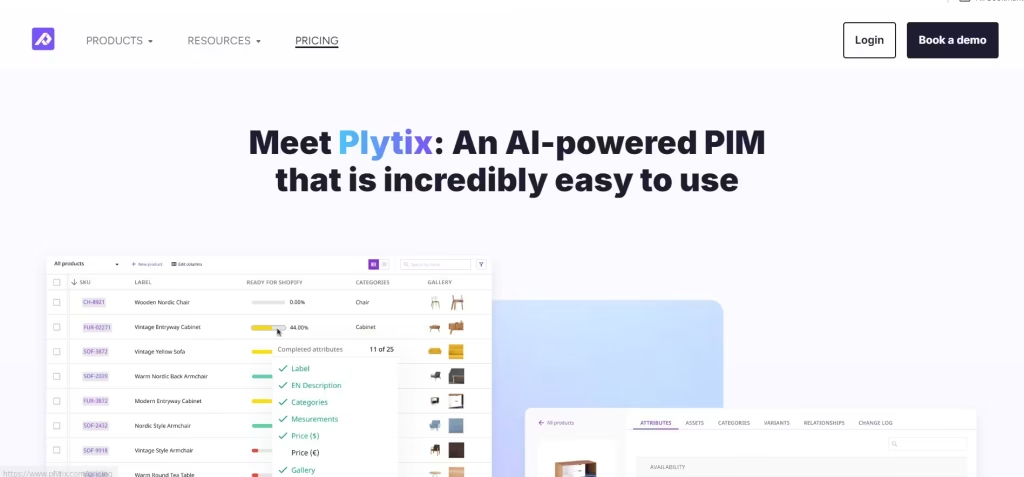
Plytix excels in providing a centralized database for all product information, ensuring consistency across multiple sales channels. It also offers multichannel publishing, allowing businesses to distribute their product data across various platforms seamlessly. Data integration and validation features make it easier to maintain accuracy, reducing errors in product listings.
Pros
Plytix provides a clean, easy-to-navigate interface, making it accessible for small to mid-sized businesses. Its multichannel publishing capabilities help streamline operations, and the ability to validate data ensures fewer mistakes, which is particularly valuable for businesses dealing with large volumes of products.
Cons
The pricing starts at $450/month, which may be steep for smaller businesses. Advanced features might require additional investment, making it a significant commitment for companies that don’t need extensive capabilities.
How to Choose for Amazon
For sellers looking for a strong PIM tool that integrates well with Amazon, Plytix is a solid choice if managing large amounts of product information across multiple platforms is a priority. However, budget-conscious sellers may want to explore other options if they do not need the extensive multichannel capabilities.
Algolia
Best For Search and Personalization

Algolia specializes in providing SKU-based search, which is crucial for sellers who need to manage large catalogs. It offers advanced filtering options and personalization, helping users quickly locate specific products. Its search capabilities are designed to improve the customer experience by making it easier to find products.
Pros
Algolia’s SKU-based search is powerful and effective, especially for businesses with expansive product catalogs. The personalization feature helps in creating a tailored shopping experience, increasing customer engagement. It also offers sophisticated filtering options that are essential for narrowing down product searches.
Cons
The pricing structure, starting at $1.00 per 1,000 requests, may become costly for businesses with a high volume of searches. It requires careful monitoring to prevent escalating costs.
How to Choose for Amazon
Algolia works well for Amazon sellers who prioritize an enhanced search experience within their own online store or need advanced filtering capabilities. Its robust search tools make it ideal for those managing large inventories, but the cost needs to be evaluated based on search volume.
Sales Layer
Best For Personalized Digital Catalogs
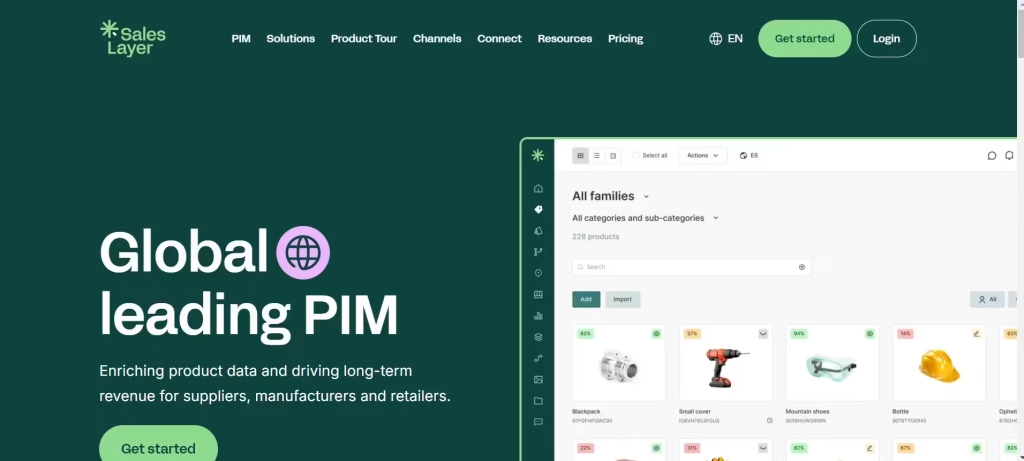
Sales Layer is geared toward businesses looking to create personalized catalogs for different customer segments. With seamless CRM system integration, it facilitates processes like CRM data migration and supports tailored marketing strategies. This software is ideal for businesses aiming to strengthen customer relationships through personalized content.
Pros
Sales Layer’s ability to create personalized digital catalogs is a standout feature. The integration with CRM allows for better customer segmentation, leading to more targeted marketing efforts. This is particularly useful for businesses that rely on personalization to enhance customer experience.
Cons
The pricing is available upon request, which can be a hurdle for smaller businesses or those working with strict budgets. The setup process may also be time-consuming for companies not familiar with CRM integration.
How to Choose for Amazon
For Amazon sellers who value personalization and want to create tailored digital catalogs for different customer segments, Sales Layer offers the necessary tools. However, sellers should assess their need for CRM integration and evaluate whether personalized catalogs are a priority before committing.
Pimcore
Best For Large-Scale

Catalog Management
Pimcore is a highly customizable solution designed for large-scale catalog management. It offers ready-to-publish catalogs and supports multi-channel distribution, making it an ideal choice for businesses that need to manage extensive product data.
Pros
Pimcore’s high level of customization allows businesses to tailor the software to their specific needs. The multi-channel distribution capabilities help streamline the publishing process across various platforms, while the software’s ability to handle large datasets makes it ideal for big companies.
Cons
Although the basic version is free, advanced features come at a high cost, starting at $1,800/month. This can be prohibitive for smaller businesses that may not need such advanced capabilities. The software’s extensive customization options might also present a steep learning curve for users.
How to Choose for Amazon
Pimcore is suitable for large-scale sellers with complex catalog management needs. For Amazon sellers with large inventories and advanced distribution requirements, Pimcore offers powerful tools, though the cost and learning curve should be considered.
Elastic Path Product Experience Manager (EP-PXM)

Best For Global Enterprises
Elastic Path’s Product Experience Manager is designed for global enterprises, offering scalability, flexibility, and comprehensive management tools for large-scale operations. It is especially suited for businesses managing international product catalogs.
Pros
EP-PXM stands out for its ability to handle global enterprise management efficiently. Its scalability ensures that it can grow with a business, while its flexibility allows customization for various market needs.
Cons
The pricing, starting at $50,000/year, is prohibitively expensive for smaller businesses. Elastic Path’s focus on large-scale enterprises makes it unsuitable for businesses that do not need the extensive tools it offers.
How to Choose for Amazon
For large Amazon sellers managing global operations, EP-PXM provides powerful tools for managing international product catalogs. However, the high cost means this software is only practical for sellers with a significant global presence and substantial budgets.
CatBase

Best For Detailed Catalog Management
CatBase is a tool designed for businesses that need to handle detailed data efficiently. It integrates with publishing software, making it ideal for companies focused on producing printed or digital catalogs.
Pros
CatBase’s detailed data handling is one of its primary advantages. It can integrate with various publishing software, streamlining the catalog creation process. Its one-time payment model is appealing for businesses looking to avoid ongoing subscription fees.
Cons
The one-time payment of $777 may still be expensive for some, especially if the business doesn’t need all the features CatBase offers. The software may also be too focused on catalog publishing, making it less versatile than other options.
How to Choose for Amazon
CatBase is suitable for Amazon sellers who need to manage detailed product data and create catalogs for both print and digital formats. Its one-time payment model can be attractive for businesses wanting to avoid subscription fees.
Productsup Advertising PX
Best For Omnichannel Selling
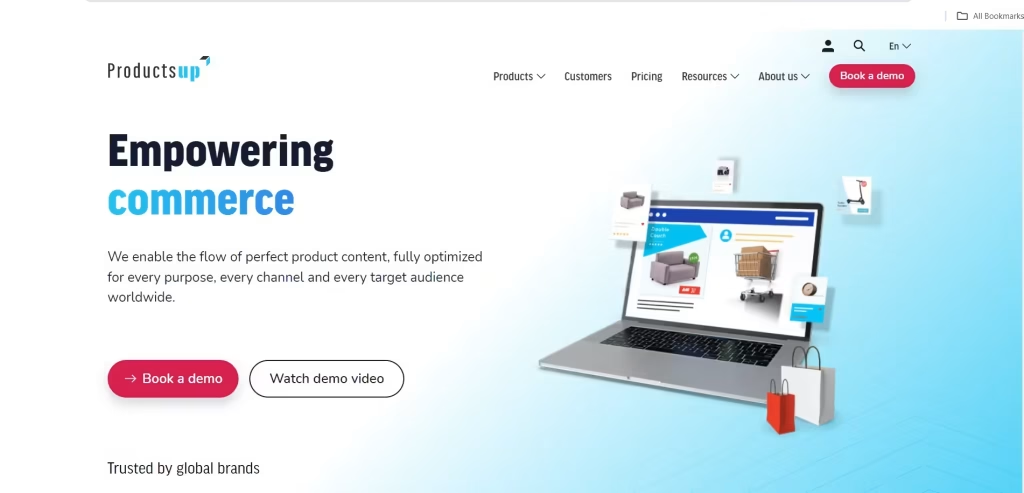
Productsup Advertising PX focuses on optimizing product data for omnichannel selling. It ensures that product information is consistent across all sales channels and provides feedback on sales performance.
Pros
Productsup offers excellent tools for businesses looking to optimize their product data for multiple sales channels. The feedback provided on sales performance helps businesses adjust their strategies for better results.
Cons
Pricing is available upon request, which can make it difficult for businesses to determine whether it fits within their budget. It may also offer more features than some sellers need, depending on their omnichannel strategy.
How to Choose for Amazon
For Amazon sellers who prioritize omnichannel selling and want to optimize product data across various platforms, Productsup Advertising PX provides the necessary tools. However, sellers should carefully consider whether they need this level of omnichannel support.
Publitas
Best For Dynamic and Shoppable Catalogs
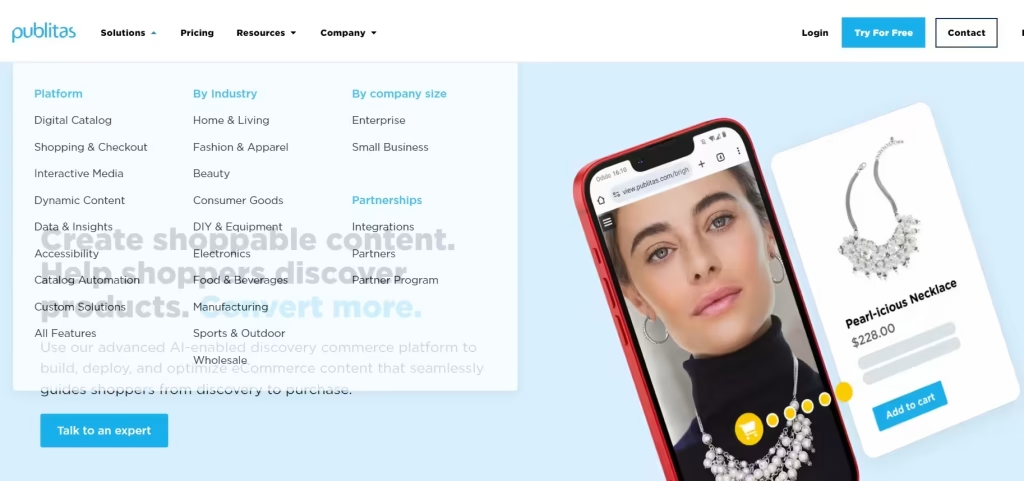
Publitas is known for creating dynamic, interactive catalogs that integrate shoppable elements and are optimized for SEO. This makes it easier for customers to browse and purchase products directly from the catalog.
Pros
Publitas’ dynamic catalogs are highly engaging, offering customers a visually appealing way to interact with products. The ability to add shoppable elements directly into the catalogs is a great feature for businesses looking to enhance the customer experience.
Cons
Starting at $499/month, Publitas can be expensive, especially for businesses that do not rely heavily on interactive catalogs. Smaller companies may find the cost outweighs the benefits if their primary focus is not on catalog-driven sales.
How to Choose for Amazon
Publitas is ideal for Amazon sellers who want to create dynamic, shoppable catalogs that enhance the customer experience. Sellers should assess whether they will benefit from interactive catalogs before making a decision.
B2B Wave
Best For B2B Catalogs
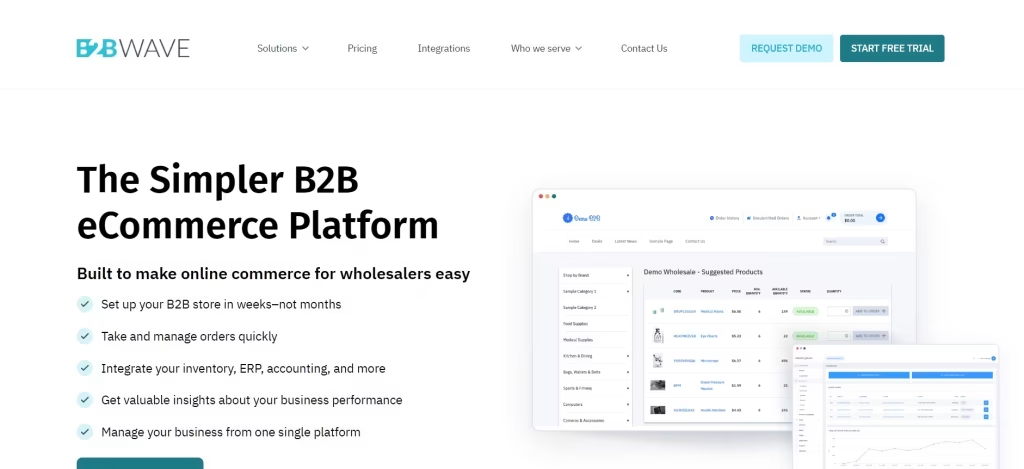
B2B Wave is designed specifically for B2B businesses, offering features like a sales rep portal, customer and order management, and B2B integration. This tool is tailored to the needs of B2B sellers looking to streamline their operations.
Pros
B2B Wave’s focus on B2B businesses makes it a great fit for companies in this space. The sales rep portal and order management features help streamline operations, while the customer management tools enable more personalized service.
Cons
With pricing starting at $160/month, it may not be the cheapest option for B2B sellers. Smaller businesses might find it more cost-effective to explore other catalog management tools that offer similar features at a lower price point.
How to Choose for Amazon
For Amazon sellers focused on B2B sales, B2B Wave offers a solid set of features that cater to this specific market. Sellers should consider their B2B needs when evaluating this software.
Filestage

Best For Review and Approval Process
Filestage simplifies the review and approval process for catalogs by providing collaborative feedback tools, online proofing, and workflow management. It is ideal for teams that need to manage large projects with input from multiple stakeholders.
Pros
Filestage’s collaborative tools streamline the review and approval process, making it easier for teams to work together efficiently.
Cons
Filestage’s focus on the review and approval process may limit its usefulness for businesses that don’t require extensive collaboration. Custom enterprise pricing may be prohibitive for smaller teams.
How to Choose for Amazon
For Amazon sellers who collaborate with multiple stakeholders on catalog management, Filestage provides the tools necessary to manage the review process efficiently. Businesses with less complex collaboration needs may want to consider more cost-effective options.
Overview of the Best Catalog Management Software
| Software | Best For | Key Features | Pricing |
|---|---|---|---|
| Plytix | Product Information Management (PIM) | Centralized database Multichannel publishing Data integration and validation | Starts at $450/month |
| Algolia | Search and Personalization | SKU-based search Personalization Sophisticated filtering | Starts at $1.00 per 1,000 requests/month |
| Sales Layer | Personalized Digital Catalogs | Customer segmentation Tailored catalog creation Integration with CRM | Available upon request |
| Pimcore | Large-Scale Catalog Management | High customization Ready-to-publish catalogs Multi-channel distribution | Free for basic; starts at $1,800/month for advanced features |
| Elastic Path Product Experience Manager (EP-PXM) | Global Enterprises | Scalability Flexibility Global enterprise management | Starts at $50,000/year |
| CatBase | Detailed Catalog Management | Detailed data handling Integration with publishing software Efficient data importing | One-time payment of $777 |
| Productsup Advertising PX | Omnichannel Selling | Omnichannel selling Product data optimization Sales channel feedback | Available upon request |
| Publitas | Dynamic and Shoppable Catalogs | Dynamic catalogs SEO optimization Interactive elements | Starts at $499/month |
| B2B Wave | B2B Catalogs | Sales rep portal Customer and order management B2B integration | Starts at $160/month |
| Filestage | Review and Approval Process | Collaborative feedback tools Online proofing Workflow management | Free plan available; custom enterprise pricing |
Conclusion
As catalog management becomes increasingly essential for sellers, choosing the right software can significantly impact your success. Imagine effortlessly syncing inventory across platforms, boosting visibility for less popular product variations, linking new items to successful listings, and giving underperforming products a fresh start. The right catalog management system makes all this possible, while also identifying slow sellers and helping you make them more appealing.
To achieve high productivity and better customer satisfaction, carefully evaluate your options and select software with a user-friendly interface, robust data handling, smooth system integration, and detailed reporting features. Take control of your catalog management and Level Up your business.
Choose the right catalog management software today!
FAQ’s
Why is catalog management software important for 3PL companies?
Catalog management software is essential for 3PL companies because it simplifies the handling of product information across various platforms. Data consistency across multiple platforms is a necessity for any modern company.
These tools are especially valuable for 3PL companies. Furthermore, catalog management software supports advanced features such as dynamic catalog creation and personalized product recommendations. These features allow data-driven decisions to be taken by companies. Better insight means better sales and better reputation.
How do I choose the right catalog management software?
Finding the best catalog management software involves evaluating solutions for catalog data handling, online product catalogs, digital asset management, and product feed management to ensure comprehensive product management and efficient operations.
Analyse Your Needs
List all the critical features you would like or benefit your business, For example, multichannel publishing, automation, and integration with the existing systems should be given priority. Ensure that the software can scale when a product catalog grows.
Evaluate User Experience
Choose software that comes with an intuitive user interface and navigation features. It should have enough customizable options so that the software will fit your particular workflow.
Verify Integration and Automation
Integration with the present systems, such as ERP, CRM, and e-commerce platforms. Automation features must make tasks like updating data and syncing across channels seamless.
Cost and Support
Compare the costs and any hidden costs while determining the return on the investment. Look for vendors who are responsive in terms of customer service and offer good resources for training.
Testing and Review
Use free trials to test the functionality of the software. Review case studies and check their reliability and effectiveness against other similar companies.

Blair Forrest is the Founder of AMZ Prep, one of North America’s fastest-growing third-party logistics and fulfillment networks, built entirely without outside capital since 2016. Under his leadership, AMZ Prep has scaled to 50+ fulfillment centers across 6 countries, processing over 8 million units monthly and powering $2 billion+ in annual GMV for more than 5,000 brands worldwide including 437, Silverts, Saltyface, Unilever, Duracell, and JBL. A recognized authority in eCommerce logistics, Amazon FBA strategy, and supply chain optimization, Blair has helped thousands of sellers and brands master their fulfillment operations from first shipment to enterprise scale. He regularly consults on FBA prep, multi-channel fulfillment, last mile delivery, international expansion, and cost reduction strategies that save brands 20–40% compared to traditional 3PL providers. Blair’s insights on Amazon logistics, 3PL operations, and eCommerce growth are widely cited across the industry. Through AMZ Prep’s content, guides, and resources, he continues to share battle-tested strategies drawn from managing one of the largest independently owned fulfillment networks in North America.

















Comments