In a bold move that’s sending ripples through the global trade landscape, President Trump has implemented new tariff regulations under the International Emergency Economic Powers Act (IEEPA). This unprecedented use of IEEPA marks the first time in history the act has been leveraged to address both national security concerns and international trade issues.
The Policy Background
President Trump’s decision stems from stated concerns about:
- Security risks from illegal immigration
- Drug trafficking, particularly fentanyl
- Trade imbalances affecting American businesses
- Protection of domestic manufacturing
This executive action represents a significant departure from traditional trade policy implementation, as IEEPA has never before been used for such comprehensive tariff regulation.
This executive action represents a significant departure from traditional trade policy implementation, as IEEPA has never before been used for such comprehensive tariff regulation. For more details, check out the de minimis rule and its impact on cross-border trade.
Latest Update: 30-Day Grace Period for North American Trade
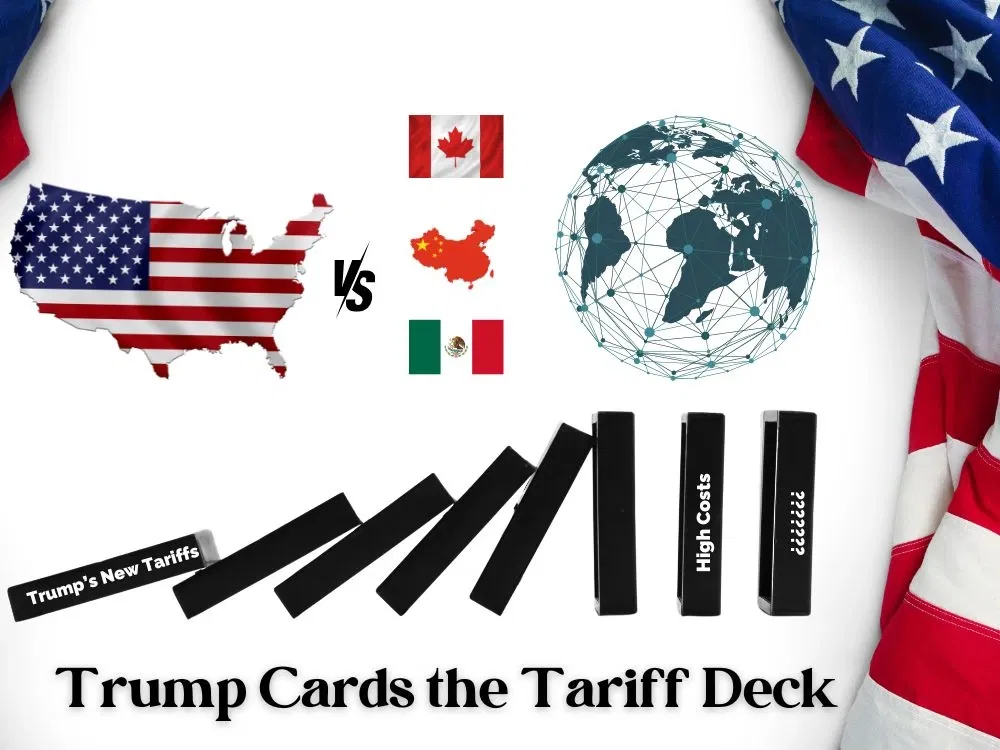
In a crucial development, a 30-day pause has been announced for tariffs on Canadian and Mexican imports, providing sellers with a strategic window to adapt their supply chains. However, Chinese imports remain subject to immediate implementation.
Key Tariff Rates and Implementation Details
New Tariff Structure
Canada and Mexico (currently paused for 30 days):
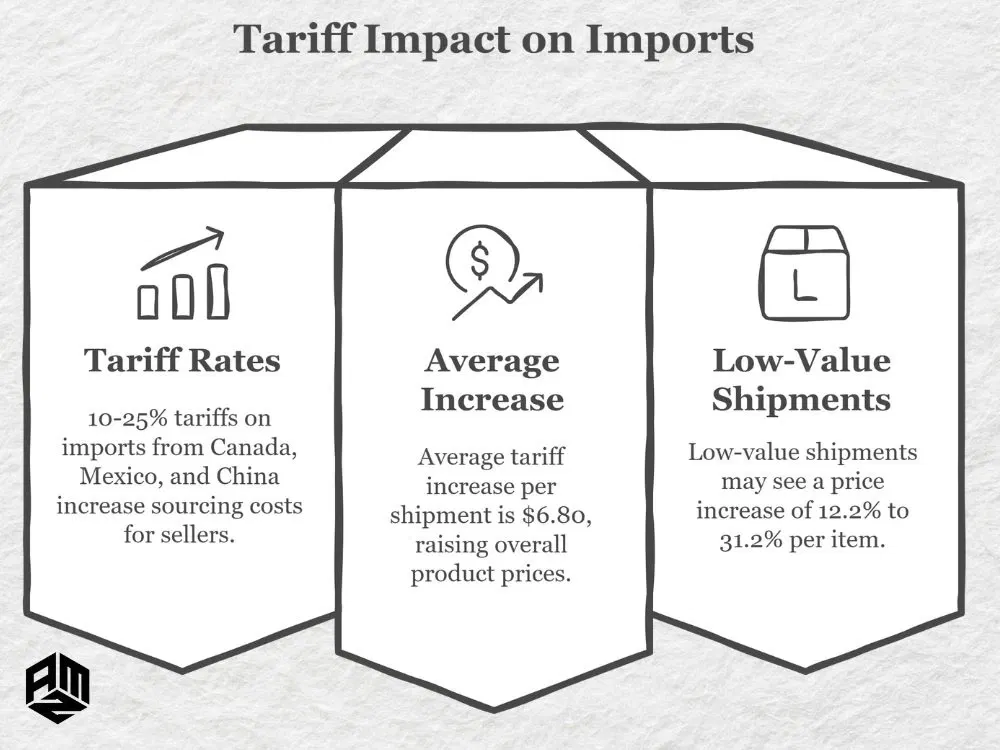
- General imports: 25%
- Energy imports from Canada: 10%
China:
- All imports: 10%
- Effective: February 4, 2025, 12:01 am ET
You can use our Reciprocal Tariff Calculator to estimate the new landed costs and duty impact based on these updated rates.
Amazon FBA fees could become an even bigger expense for sellers in 2025. Understanding the breakdown of these fees is now more important than ever.
Critical Changes to De Minimis Rules
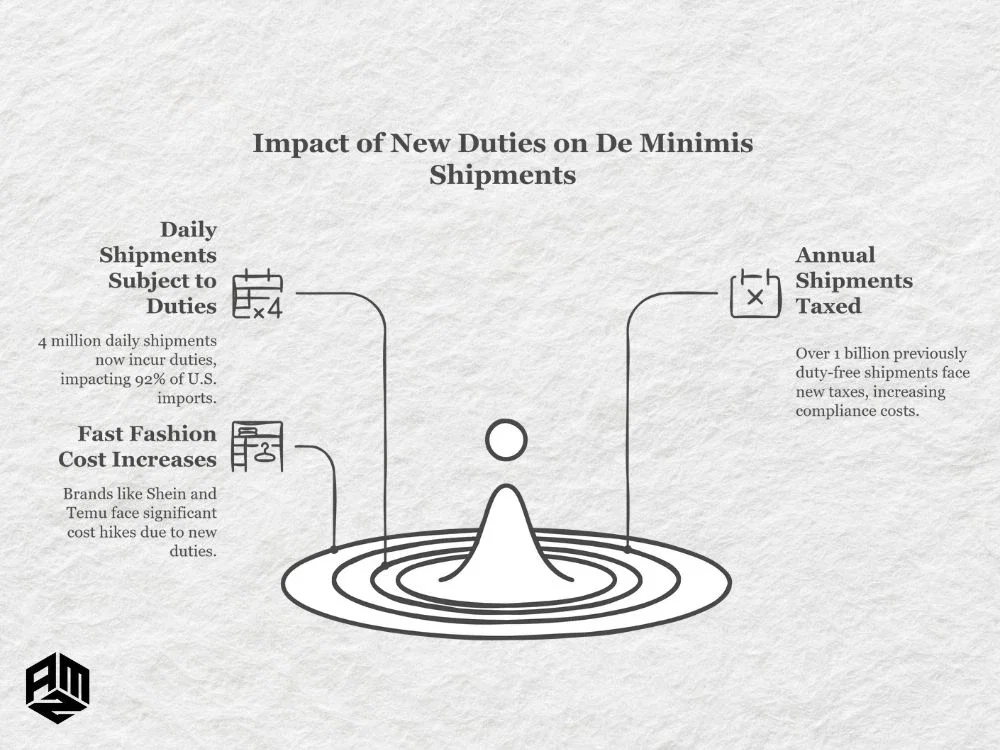
The suspension of the $800 de minimis threshold represents one of the most significant shifts in e-commerce trade policy. Here’s what sellers need to know:
- Previous daily volume: 4 million+ de minimis packages
- Annual value: $54.6 billion in duty-free imports
- Average shipment value: $54
- Impact: All shipments now subject to duties regardless of value
- Average tariff increase per shipment: $6.80, raising overall product prices.
- Low-value shipments may see a price increase of 12.2% to 31.2% per item.
Strategic Implications for E-commerce Businesses
Immediate Business Impact
- Direct-to-consumer platforms (Shein, Temu, AliExpress) face increased operational costs
- Higher landed costs affecting pricing strategies
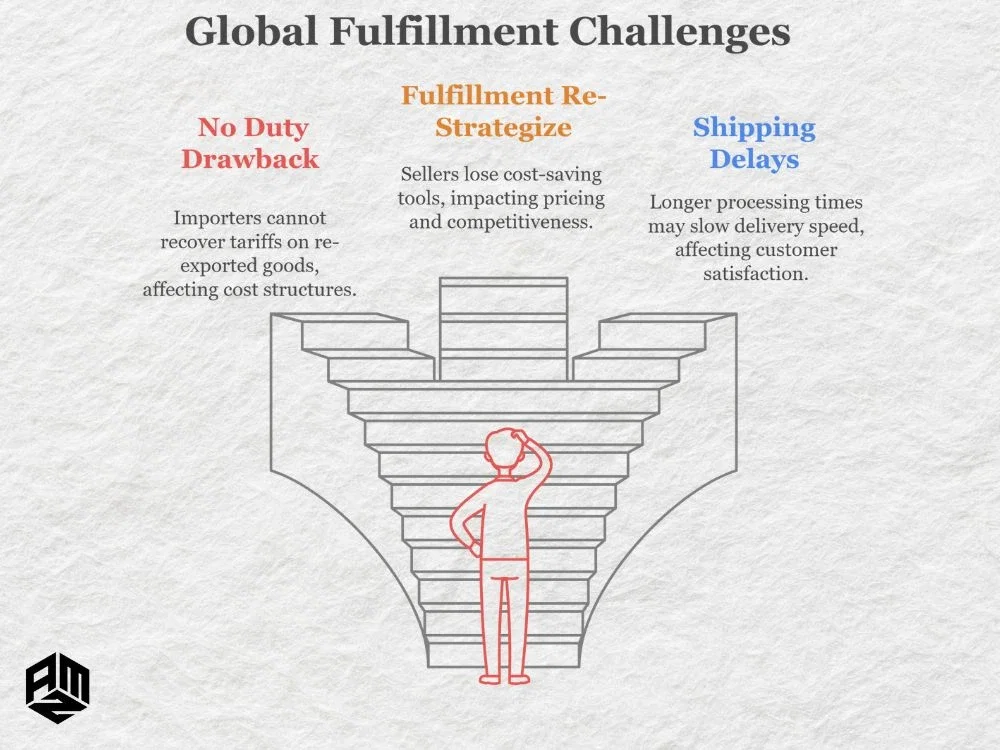
- Extended customs processing times impacting delivery promises
Supply Chain Considerations
- Free Trade Zones (FTZs) changes affecting inventory management
- No duty drawback availability for re-exported goods. Retailers that re-export products (e.g., global e-commerce sellers with fulfillment centers in multiple countries) will lose out
- Need for strategic warehouse locations within the US
Industry-Specific Effects and Opportunities
Apparel and Textiles Sector
- 51.4% of all de minimis imports affected
- Fast fashion businesses requiring significant strategy adjustments
- Potential advantages for domestic manufacturers
Price Impact Analysis
- Low-value shipments: 12.2% to 31.2% price increase
- Overall imported goods: 0.29% average increase
- Low-value shipments could see price increases of 12.2% to 31.2% per item.
- Average tariff increase per shipment: $6.80, raising overall product prices.
- Consumer prices: 0.10% Year 1 increase, rising to 0.12% by Year 10
Tariff hikes may not be the only added cost—inbound fees for shipping inventory into Amazon fulfillment centers can also fluctuate.
Strategic Recommendations for E-commerce Sellers
Short-term Adaptations
- Review and adjust pricing strategies
- Evaluate current supplier relationships
- Consider US-based fulfillment options
Long-term Strategy Development
- Diversify supply chain sources
- Invest in domestic warehousing solutions
- Explore automated customs compliance tools
Economic Impact and Market Opportunities
Consumer Behavior Shifts
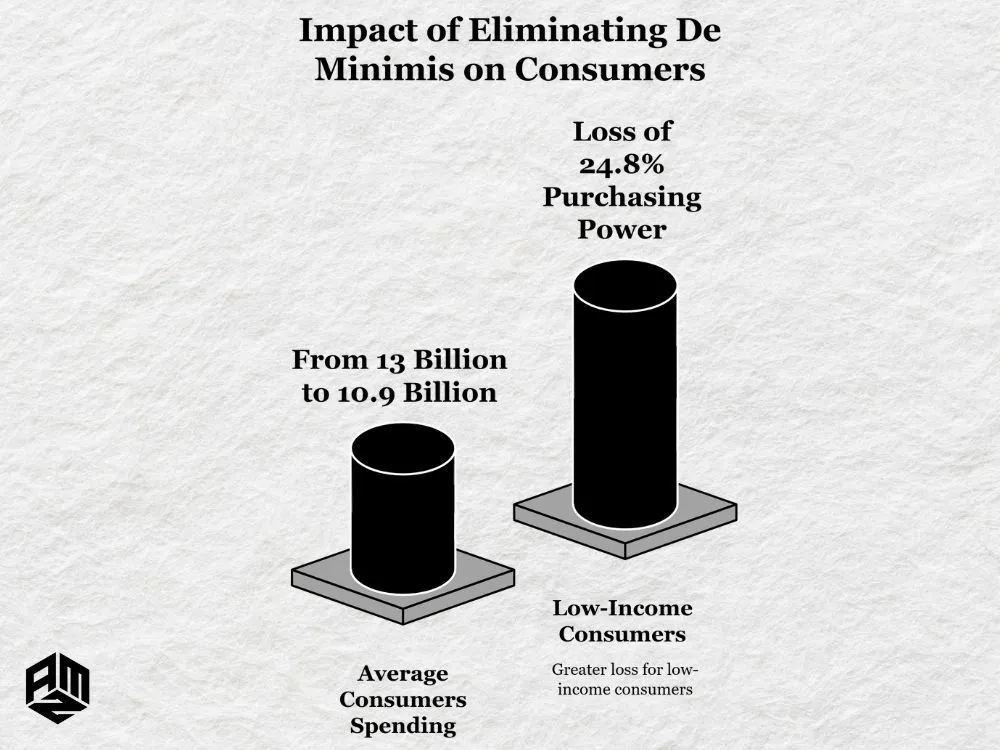
- Total economic impact: $10.9-$13 billion in consumer welfare effects
- Demographic considerations: Higher impact on budget-conscious consumers
- Opportunity: Increased competitiveness for domestic sellers
Market Position Enhancement
- Reduced competition from ultra-low-cost international sellers
- Increased value proposition for quality-focused brands
- New opportunities for domestic manufacturing partnerships
Long-Term Storage Fees could become a hidden challenge. It will be imperative to minimize storage costs.
Looking Ahead: Future-Proofing Your E-commerce Business
Emerging Opportunities
- Domestic supplier relationship development
- Enhanced inventory management systems
- Strategic pricing model innovations
Risk Mitigation Strategies
- Diversified supplier networks
- Robust compliance monitoring systems
- Adaptive pricing mechanisms
Expert Insights from AMZ Prep
As e-commerce experts, we recommend focusing on adaptability and strategic planning during this transition period. The new tariff landscape, while challenging, presents opportunities for businesses to strengthen their market position through innovative solutions and strategic partnerships.
Key Takeaways for Success
- Implement dynamic pricing strategies
- Invest in domestic fulfillment solutions
- Focus on supply chain diversification
- Enhance compliance monitoring systems
- Develop strategic supplier relationships
Conclusion
While the 2025 tariff changes present significant challenges for e-commerce sellers, they also create opportunities for business transformation and growth. Success in this new environment will depend on strategic adaptation, efficient operations, and innovative approaches to maintaining competitiveness.
This comprehensive analysis was prepared by the AMZ Prep team of e-commerce experts. For personalized guidance on navigating these changes, contact our specialist team.
Last Updated: February 4, 2025

Blair Forrest is the Founder of AMZ Prep, one of North America’s fastest-growing third-party logistics and fulfillment networks, built entirely without outside capital since 2016. Under his leadership, AMZ Prep has scaled to 50+ fulfillment centers across 6 countries, processing over 10 million plus units monthly and powering $2 billion+ in annual GMV for more than 5,000 brands worldwide including 437, Silverts, Saltyface, Unilever, Duracell, and JBL. A recognized authority in eCommerce logistics, Amazon FBA strategy, and supply chain optimization, Blair has helped thousands of sellers and brands master their fulfillment operations from first shipment to enterprise scale. He regularly consults on FBA prep, multi-channel fulfillment, last mile delivery, international expansion, and cost reduction strategies that save brands 20–40% compared to traditional 3PL providers. Blair’s insights on Amazon logistics, 3PL operations, and eCommerce growth are widely cited across the industry. Through AMZ Prep’s content, guides, and resources, he continues to share battle-tested strategies drawn from managing one of the largest independently owned fulfillment networks in North America.






Comments