Sea freight moves goods in containers across the ocean. It carries the largest share of world trade and gives importers the lowest cost per unit for heavy or high volume cargo.
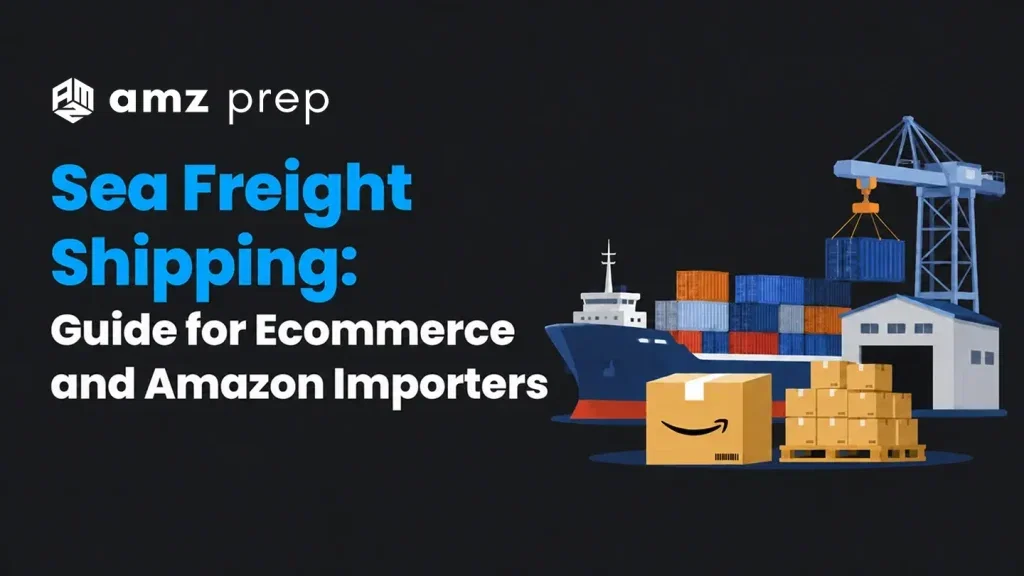
Most ecommerce brands use it to bring inventory from China, Europe, or India into the US and Canada. The trade off is time. Ocean transit runs in weeks, not days.
This guide covers how it works, what it costs, how long it takes, and how to move goods from the port to Amazon without delays.
What Is Sea Freight, and How Does It Work?
Sea freight, also called ocean freight, is the transport of cargo in steel containers aboard large vessels. A shipper books space with an ocean carrier or through a forwarder. The container is loaded at origin, trucked to a port, and sailed to a destination port. From there it clears customs and moves inland by truck or rail.
Two parties matter here. The carrier owns the ships and runs the routes. The forwarder books the space and manages the paperwork. Many importers never deal with a carrier directly. They work through a forwarder who handles the booking, customs, and inland legs.
Cargo travels one of two ways: a full container or a shared container. That single choice drives most of your cost and timing, and we cover it below.
Sea Freight vs Air Freight: Which Fits Your Shipment?
Both move goods across borders. They suit different needs.
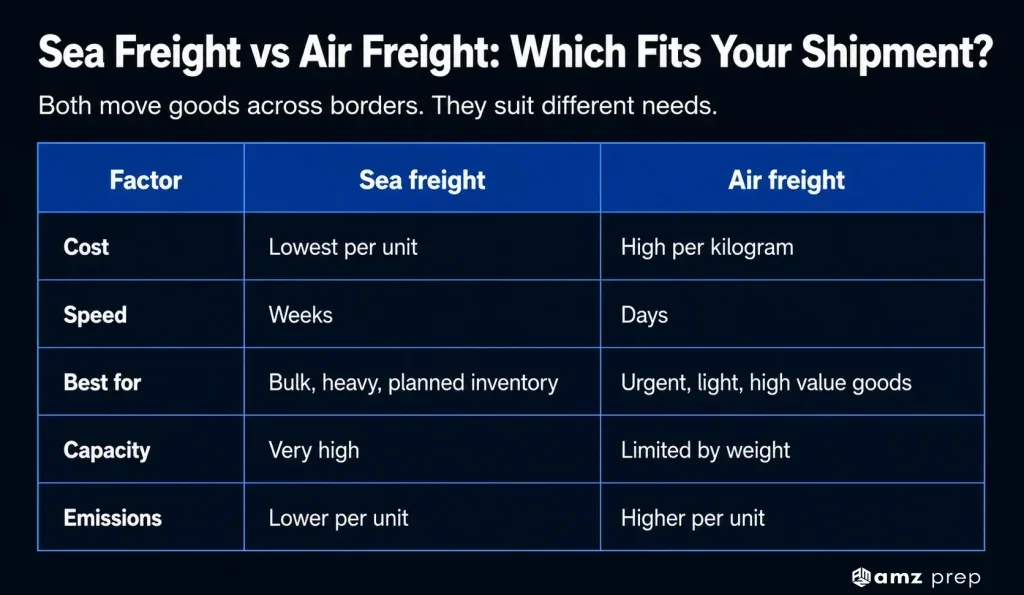
The rule most brands follow is simple. Plan ahead and ship by sea to protect margin. Use air only when stock is about to run out or the product is small and high value. Many brands split a purchase order, sending most by sea and a small portion by air to cover the gap.
What Is an Ocean Freight Forwarder?
An ocean freight forwarder arranges and manages your sea shipments. They book carrier space, prepare documentation, handle customs entry, and coordinate inland delivery. They do not own the vessels. They act as your agent across the carriers, ports, and trucking lines.
A good forwarder earns its fee in three ways. It secures space and stable rates during tight seasons. It keeps documentation clean so customs does not hold your goods. It gives you one point of contact instead of five.
If you are weighing options, the criteria that separate strong forwarders from weak ones are covered in our breakdown of the top freight forwarders for Amazon sellers.
FCL vs LCL: Choosing the Right Container Option
The container decision sets your cost and your risk.
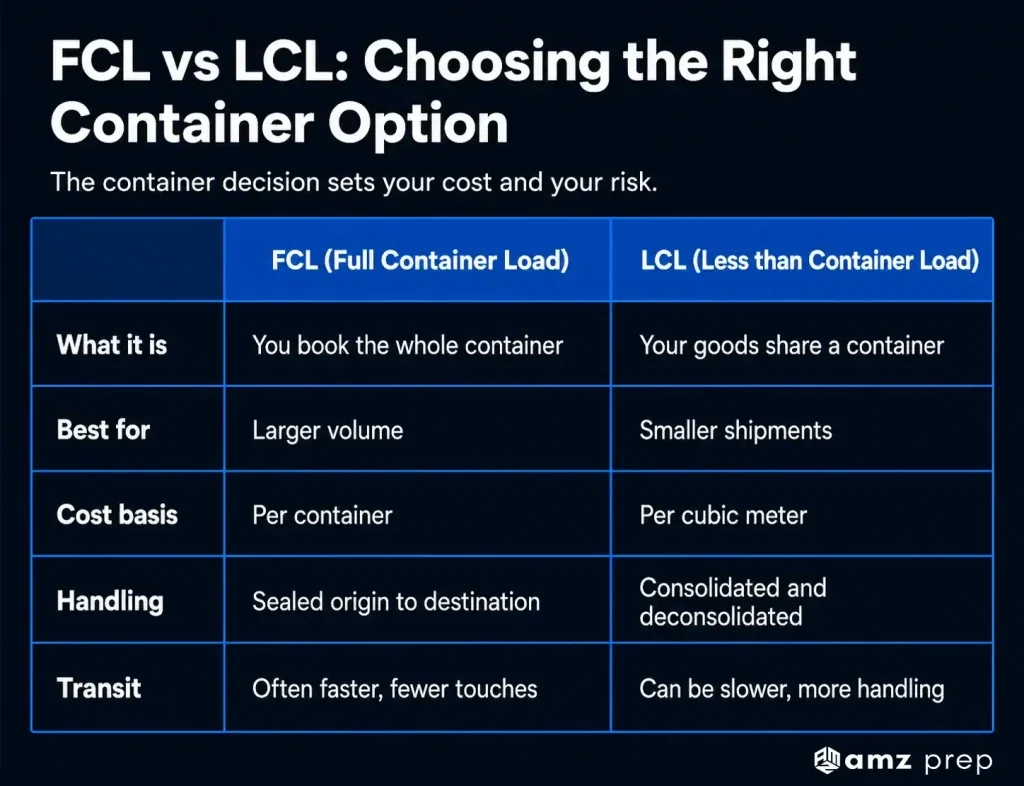
FCL makes sense once you have enough volume to fill most of a container. The cost per unit drops, and the sealed container moves with fewer touchpoints.
LCL suits brands that cannot fill a box yet. You pay only for the space you use, but your goods get consolidated with other shippers, which adds handling and time.
A practical threshold helps. When your shipment passes roughly 15 cubic meters, FCL often costs about the same as LCL while moving faster. You can model both options before you book with our Amazon freight rate calculator.
How Much Does Sea Freight Cost?
Sea freight pricing has three layers. The base rate covers the ocean leg. Surcharges cover fuel, peak season, and port fees. Inland and customs costs cover the rest of the journey.
FCL is priced per container, usually a 20ft or 40ft box. On many lanes a 20ft container starts near $1,500, then surcharges apply. Rates swing with lane, season, and capacity, so treat any figure as a starting point. LCL is priced per cubic meter with a minimum charge, which makes very small shipments expensive per unit.
Two costs catch importers off guard. Demurrage applies when your container sits at the port too long. Detention applies when you hold the carrier’s equipment too long. Both are avoidable with a plan for the post port leg, which we cover next.
How Long Does Ocean Freight Take?
Transit time depends on the lane and the routing. These are typical port to port ranges.
- Asia to US West Coast: about 15 to 30 days
- Asia to US East Coast: about 30 to 45 days via Panama
- Europe to US East Coast: about 15 to 25 days
- Asia to Canada West Coast (Vancouver, Prince Rupert): about 15 to 25 days
Port to port is only part of the clock. Add customs clearance, drayage, and inland transport. Current routing changes on some lanes have added one to three weeks, so build a buffer into your reorder dates. Carriers in the most reliable alliances hold their schedules better, which matters when your stock is timed to a sales window.
What Happens After Your Container Reaches Port?
This is the part most guides skip, and it is where deliveries break down. The ocean leg ends at the port. Your goods still need to clear, get prepped, and reach Amazon or your customers.
The sequence runs like this. Customs clears the entry. For low value parcels, Section 321 de minimis can clear goods under the threshold without duties. A drayage truck pulls the container from the port. Goods are unloaded, inspected, and prepped to Amazon’s standards. Then they move into the FBA network.
That last leg is its own discipline. Sending full containers straight into Amazon often triggers placement fees and long check in times.
Routing through a prep and consolidation partner solves both. AMZ Prep manages the ocean booking, customs, prep, and the middle mile leg into FBA under one roof, with FCL and LCL options from China, Europe, and India.
For heavier domestic moves after the port, our LTL and FTL freight options cover the inland network.
How to Plan Sea Freight for Amazon and Ecommerce?
A short checklist keeps shipments on time.
- Choose FCL or LCL based on volume, using the 15 cubic meter guide
- Book earlier in peak season to hold rates and space
- Confirm the forwarder handles customs and inland delivery, not just the ocean leg
- Plan the port to FBA leg before the container sails to avoid placement fees
- Build a one to three week buffer into reorder dates
Importers who own the full path, from origin to Amazon, keep stock selling. Those who stop planning at the port pay for it in fees and stockouts.
Conclusion
Sea freight works best with planning. The brands that stay in stock book early, choose the right container option, and map the route from port to Amazon before the vessel sails. The ocean leg becomes predictable once you treat it as one stage in a longer process, not the last step.
Start by setting reorder dates that build in transit time and a buffer. Then confirm your provider handles customs, prep, and the inbound leg, not just the booking. That step keeps inventory moving and your listings live.
Frequently asked questions
What is sea freight?
Sea freight is the transport of goods in containers aboard ocean vessels. It moves most global trade by volume. Shippers use it for large, heavy, or non urgent cargo because the cost per unit stays low.
What is the difference between sea freight and air freight?
Sea freight costs less and carries more, but takes weeks. Air freight is faster, often days, but costs far more per kilogram. Sea suits bulk and planned inventory. Air suits urgent or high value goods.
How much does sea freight cost?
Sea freight cost depends on volume, lane, and season. Full container loads are priced per container. Smaller shipments pay per cubic meter. A 20ft container often starts near $1,500, before surcharges and fees apply.
What is an ocean freight forwarder?
An ocean freight forwarder books and manages sea shipments for you. They arrange carrier space, customs clearance, and documentation. They do not own the vessels. They coordinate the carriers, ports, and inland delivery on your behalf.
What is FCL vs LCL shipping?
FCL means full container load, where you book an entire container. LCL means less than container load, where your goods share space with others. FCL suits larger volumes. LCL suits smaller shipments that cannot fill a container.
How long does ocean freight take?
Ocean freight from Asia to the US West Coast often takes 15 to 30 days port to port. East Coast routes run longer. Add time for customs, inland transport, and current routing changes.

Chadwick Collins is an Enterprise Fulfillment Consultant at AMZ Prep, where he partners with high growth ecommerce brands to design and scale Amazon first logistics strategies. He brings extensive experience in freight, supporting brands across domestic and cross border transportation, routing optimization, and cost control.
At AMZ Prep, Chadwick works closely with enterprise clients to improve inventory flow, reduce landed costs, and accelerate delivery performance across North America. His expertise spans FBA, DTC, and B2B fulfillment, with a strong focus on aligning freight strategy with overall supply chain efficiency. He helps brands navigate complex logistics challenges while turning operations into a competitive advantage.
















Comments