
What if I told you that Amazon had a somewhat unknown business-to-business marketplace that offered exclusive pricing for small and enterprise-sized businesses? Well, to the shock of many, that is exactly the case when it comes to Amazon Business.
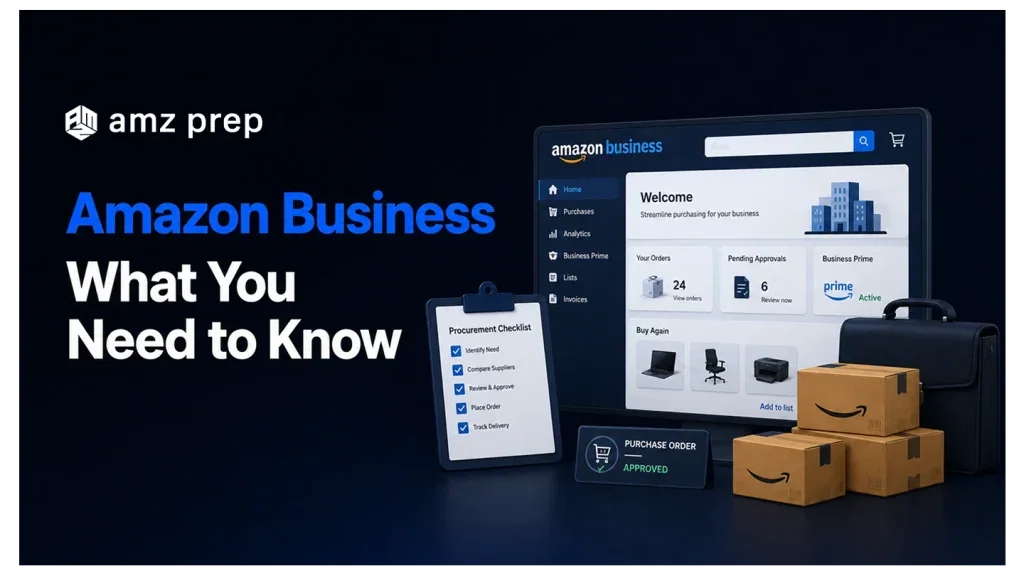
It is the familiar experience of Amazon, enhanced with B2B marketing and a streamlined, bulk-focused platform. Currently, Amazon Business has 12 million products on offer, with quantity discounts starting at just two units.
The platform even has a “business prime” service, that allows business buyers to access quantity discounts, and preferred suppliers with an Amazon Business Account.
Whether you are a small business looking for a guided buying experience, or a large, sophisticated enterprise with a complex purchasing system, Amazon Business has a wealth of product offerings on their B2B marketplace.
What is Amazon Business?
Amazon Business is a B2B (business-to-business) marketplace offered by Amazon that caters specifically to the needs of businesses, organizations, and institutions of all sizes. It allows registered business accounts to purchase products for commercial use, often with additional features not available to regular consumers.
What kind of businesses are on Amazon business?
You can find businesses of all sizes and types on Amazon. From sole proprietors to fast-growing startups, millions of small businesses worldwide buy on Amazon Business.

As a small business, Amazon offers a special certification that flags you to potential buyers. For small businesses looking to stand out, earning free online certifications can further enhance credibility and attract potential buyers on platforms like Amazon Business. It will allow you to improve your B2B marketing strategies that will help you gain an edge over larger, more sophisticated sellers.
It offers smaller businesses the chance to reach business buyers, support a multi-channel strategy, and scale their growth in new and powerful ways.
What is the business model of Amazon?
At the center of Amazon Business is a platform-based business model. Rather than just selling its own products, Amazon allows millions of third-party sellers to list items for sale to registered business customers. These sellers can customize their offers with volume pricing, flexible payment terms, and tax-exempt options. Amazon earns revenue from these sellers through referral fees, seller subscriptions, and additional service charges.
A foundation of the Amazon Business model is Fulfillment by Amazon (FBA). FBA enables sellers to store their products in Amazon’s warehouses, where Amazon then handles picking, packing, and shipping when a business places an order. This is especially valuable in the B2B world, where bulk shipments, time-sensitive deliveries, and consistent service levels are critical. If you’re new to this fulfillment method, it’s helpful to understand the associated Amazon FBA fees to plan your pricing and margins accordingly.
Shipping inventory into Amazon’s network is a major part of FBA success. You can learn more about the process in our guide to shipping to Amazon FBA, which breaks down requirements like labeling, carrier selection, and packaging. Since Amazon made major changes in 2026, reviewing the latest fulfillment requirements before creating shipments can help avoid compliance issues.
By leveraging Amazon’s logistics network, including strategically positioned Amazon RDC facilities, sellers can support faster inventory movement and wider delivery coverage, enhancing customer trust and increasing conversion rates.
FBA also supports features like consolidated shipping, detailed tracking, and customer service, all managed by Amazon. This removes logistical complexities for sellers and offers business buyers a seamless experience that mirrors the speed and professionalism they expect from dedicated procurement platforms. Understanding where your inventory is stored can help reduce transit time and shipping costs, so be sure to review our overview of FBA warehouse locations if you’re optimizing fulfillment strategy.
While Amazon Business includes other tools such as analytics, spending controls, and optional services like Business Prime, it is FBA that truly powers the backbone of the platform’s scalability. It allows Amazon to maintain high service standards even across millions of SKUs offered by third-party sellers.
Additionally, partnering with one of the best Amazon FBA prep centers can simplify the work involved in preparing inventory to meet FBA’s strict requirements.
Before diving into prep and logistics, make sure you understand the fundamentals of how to sell on Amazon, including product listings, fees, and fulfillment options.
Amazon Business is more than just a B2B storefront—it’s an ecosystem where sellers and buyers can transact efficiently at scale. Its revenue is generated not only through product sales but through service layers like FBA that solve critical supply chain challenges.
Where is Amazon Business available?
As of 2025, Amazon Business is only available in select countries.
- United States
- Canada
- Mexico
- United Kingdom
- Germany
- France
- Italy
- Spain
- Japan
- India
Amazon is working to improve and expand this list, and it will likely follow Amazon’s B2C marketplace with explosive growth.
How much does it cost and what are the payment options?
Both platforms share a similar payment method that provides the user flexibility and choice. Amazon Business accepts credit cards, debit cards, and the Amazon corporate credit line. Any authorized user of your business account can purchase items on the B2B platform.
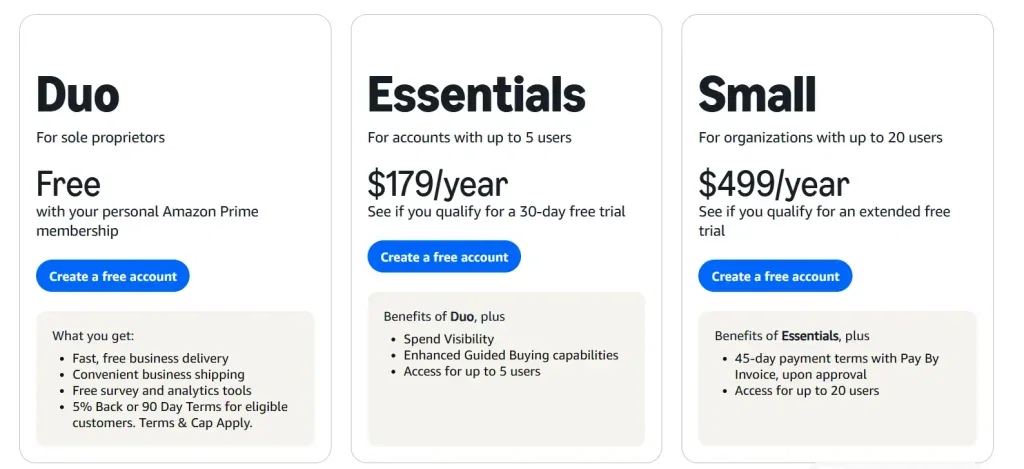
Below are the Amazon Business Prime cost breakdowns by location.
Starting at just Free for a sole proprietor, and getting as high as $499/year for an organization with up to 20 users, Amazon Business has a wide range of options that suit all use cases. The different options range in price based on the additional features that are on offer.
Advantages of Amazon Business to Small Businesses
There are several advantages of using Amazon’s B2B platform.
Tax Advantages
One of the most significant advantages of Amazon Business is the tax exemption for qualifying organizations.
Known within the Amazon B2B world as ATEP, the program creates an exemption in Amazon’s system that prevents it from collecting sales taxes or use taxes for purchases you make via Amazon-operated websites. Note that this only applies to qualifying sellers!
Business Analytics
Another great benefit is the available analytics that can be used for internal reporting purposes. It will allow you to analyze spending patterns for insights that can help inform your budgeting decisions and buying policies.
You can filter suppliers by GST/HST/QST invoice availability, and download tax invoices to simplify accounting claims for input tax credits.
For sellers managing many transactions, a reliable invoice generator software helps automate billing and keep tax records organized.
Quantity Discounts
Pricing is a huge bonus of Amazon Business. Save up to 10% with quantity discounts on over 12 million products starting at just two units of the same item.
Amazon’s B2B marketing platform is incredible, and it allows you get a great glimpse and easily evaluate preferred suppliers using your Amazon business account.
Simplified Buying Experience
Finally, the buying experience is simple. With 95 million Prime Members in the US, and 2 million in Canada, it is no secret that a huge portion of the population is familiar with Amazon.
Your business will not have to navigate the web that is B2B marketing and B2B sales, meaning that you can quickly and easily order products from key business buyers on Amazon Business.
Fast, Free Business Delivery
Amazon Business gives you access to free, fast, one-day shipping on hundreds of thousands of eligible items. Some items even get access to free same-day delivery.
The service also offers free two-day shipping on millions of eligible items. The B2B service can help improve the speed and reliability of your supply chain.
Why you should consider using Amazon Business?
Whether you are an aspiring supplier looking to access millions of business accounts, or a small business looking for discounts on popular products, Amazon Business is a great place to access a massive B2B marketplace.
Businesses of all sizes can benefit from using Amazon Business as their primary B2B marketplace.
For sellers: Improve your eCommerce business and access millions of buyers looking to purchase in bulk from you and your business. Offer specialized B2B marketing to improve your brand image and diversify your sales channels. B2B relationships can help you move unprecedented amounts of volume.
For buyers: Amazon Business offers a simplistic, comprehensive, focused B2B buying experience with the familiarity of the consumer side of Amazon. If you are willing to pay the premium, you can access exclusive tools, pricing and quick shipping that will help you get product into your supply chain faster, and at a lower cost than going through conventional B2B channels.
Conclusion
Effectively selling products on Amazon is complex. A great seller will have to juggle marketing efforts, logistics, case management, and more – meaning that a great seller will have their hands full.
This, combined with the constant pressure from maintaining great listings can make selling on Amazon overwhelming.
If you don’t feel like you have the time to focus on preventing suppressed listings from happening, consider looking at a trusted agency who offers Amazon account management services.
Hiring the right agency can offer you effective Amazon account management services that will help you optimize your Amazon listings and your Amazon SEO, freeing up time for you to focus on the more important elements of your Amazon business.
FAQs
Do you need a business license to sell on Amazon?
You don’t always need a business license to sell on Amazon, but it depends on your location and business type. Some sellers use a personal account, but having a business license is required or recommended for certain categories or if you want a professional seller account.
How to delete an Amazon Business account?
To delete your Amazon Business account, contact Amazon Seller Support or Business Customer Support directly. You cannot delete it yourself from the dashboard; support will guide you through the process.
How to start a delivery business with Amazon?
To start a delivery business with Amazon, you can join Amazon’s Delivery Service Partner (DSP) program, which involves applying, setting up a small delivery fleet, and contracting with Amazon to deliver packages.
Is Amazon Business account and Seller account the same?
No, an Amazon Business account is for purchasing products with business-specific features, while a Seller account is for selling products on Amazon. They serve different purposes.

Diggy oversees comprehensive fulfillment strategies for eCommerce brands at AMZ Prep, bringing deep expertise in warehouse operations and shipping optimization. His strategic background includes serving as account director at Slate Asset Management, where he developed unique insights that now enhance his supply chain optimization approach. At AMZ Prep, he works closely with supply chain teams to ensure seamless product availability during peak seasons and promotional events. His analytical expertise in fulfillment KPIs has helped brands reduce shipping costs by 20% while improving delivery reliability.







Comments