
A Shopify store shipping 500 orders monthly at $8 per package spends $48,000 annually on shipping. That same store can reduce shipping costs to $5.20 per package, saving $16,800 per year using the strategies in this guide.
Most online stores lose 30-50% of potential profit to shipping. You can recover that margin while maintaining the fast delivery speeds customers expect.
This blog will further walk you through 15 proven cost-reduction strategies with implementation roadmaps and ROI data. You’ll learn which tactics deliver immediate savings and which require longer-term planning.
Why Reducing Shopify Shipping Costs Matters
Shipping expenses represent 8-12% of revenue for most online stores. High shipping costs cause 48% of shoppers to abandon their carts at checkout. Highlighting price drops and promotions helps offset this.
Beyond cart abandonment, high Shopify shipping fee amounts directly erode profit margins on every completed sale. Don’t let shipping costs sink your profits when proven strategies to reduce shipping costs exist.
Customers expect Amazon-level shipping speeds without premium prices. Meeting this expectation requires strategic cost management, not corner-cutting.
Lower Shopify shipping costs directly improve your profit margins. A store shipping 500 orders monthly at $8 per order spends $4,000 on shipping. Reducing costs by 30% saves $1,200 monthly or $14,400 annually.
Use our Shopify profit calculator to see exactly how much each percentage point of shipping cost reduction impacts your bottom line.
Understanding Your Current Shipping Costs on Shopify
Before you fix anything, you need to know what you’re actually spending. Shopify shipping cost optimization starts here, with cold, hard numbers.
Calculate shipping costs as a percentage of your revenue first. This number becomes your benchmark for measuring whether anything you try actually works.
What’s Actually Driving Your Costs
Most of your shipping prices come down to package weight and size. But here’s where it gets tricky: carriers don’t just weigh your box and call it a day. They calculate something called dimensional weight – length × width × height ÷ 139.
You get charged for whichever is higher: actual weight or dimensional weight. Ship a pillow in a giant box? You’re paying for air.
Shipping zones matter more than you’d think. Zone 1 is local (within 50 miles). Zone 8 is cross-country (1,800+ miles). Every zone jump increases the cost of shipping. Shipping distances are a huge factor in your final delivery costs.
Now let’s talk about carriers. USPS crushes it for packages under 1 pound. UPS typically wins the 2-5 pound range. FedEx often beats both for heavy items.
Understanding different shipping carrier strengths means you can match the right one to each order instead of defaulting to the same carrier every time.
Then there are the fees nobody talks about. Fuel surcharges add 10-15% to base rates. Residential delivery tacks on $4-5 per package. Weekend delivery? More money. These overhead costs can significantly reduce your margins if you’re not paying attention.
Calculate Your Baseline
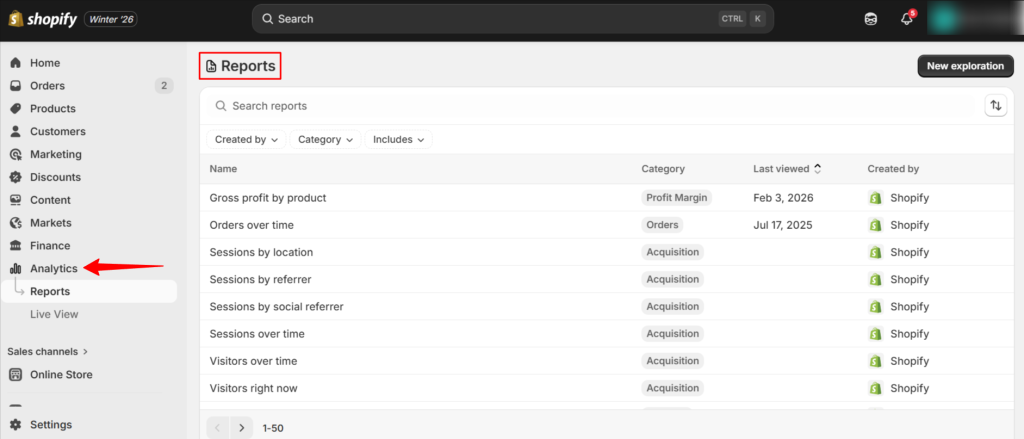
Open Shopify Analytics and find your total monthly shipping spend. Divide that by your monthly revenue. That percentage is your starting point. The Shopify dashboard gives you detailed insights into your shipping process and actual costs.
The industry benchmark sits at 8-12%. Anything above 12% means you’ve got serious room for improvement. Track your average cost per order, that’s your primary metric for optimization.
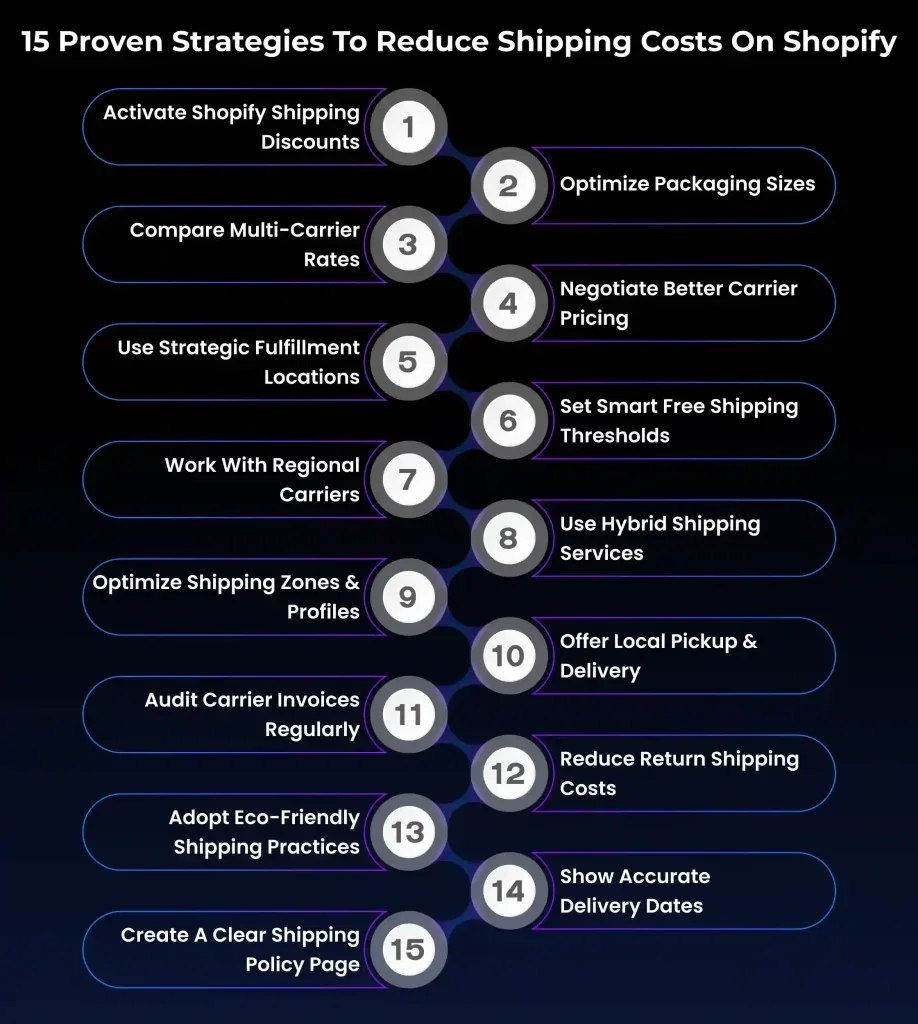
15 Proven Strategies to Reduce Shipping Costs on Shopify
Strategy 1: Use Shopify Shipping to Activate Discounted Rates
Here’s the easiest win you’ll get today: Shopify already negotiated bulk shipping rates with major carriers. When you use Shopify to buy labels, you automatically get up to 88% off retail prices. This gives you access to discounted rates without lifting a finger.
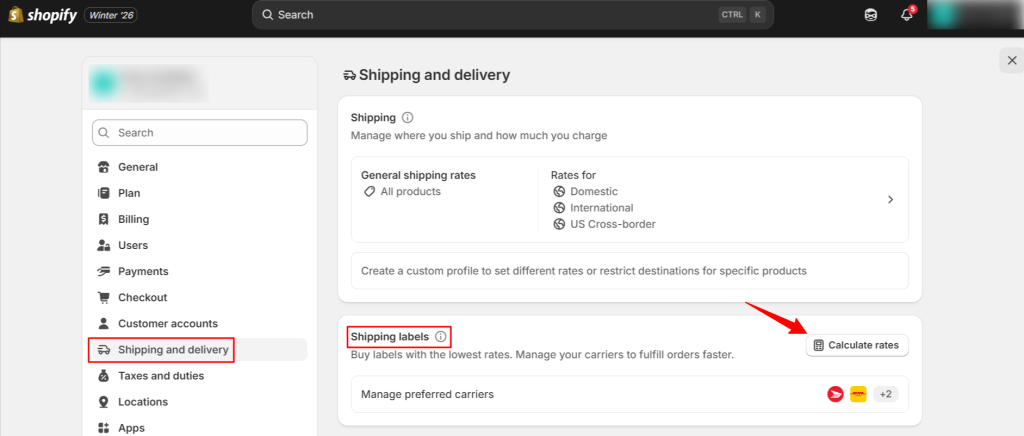
Just connect your Shopify Payments account (Settings – Shipping and Delivery – Shipping Labels), and you’re done.
The savings are real. That 2-pound box going from New York to California? Retail USPS rate: $12.50. Shopify’s rate: $3.85. That’s less than a third of the cost.
If you’re not doing this yet, stop reading and set it up now. It’s the fastest way to reduce costs without changing anything about how you operate, a great way to reduce expenses immediately.
Strategy 2: Optimize Packaging to Avoid DIM Weight Penalties
Wrong-sized boxes are costing you 20-40% more than necessary. Here’s why: carriers don’t just weigh your package, they calculate something called dimensional weight (length × width × height ÷ 139). You get charged for whichever number is higher.
So that 1-pound item in a massive 12×12×12 box? The carrier charges you for 12 pounds. Reducing packaging costs through smarter sizing fixes this instantly.
What to do:
- Audit everything you ship and settle on 3-5 standard box sizes
- Switch lightweight items to poly mailers (they weigh less and cost less)
- Stop using excessive bubble wrap and filler
- Use flat-rate boxes for heavy items going short distances, the weight doesn’t matter with these Run each box size candidate through a free DIM weight tool to confirm which option keeps you below the dimensional weight threshold before you commit to bulk ordering
One packaging audit saved a 500-order/month store $2,000 monthly. The audit itself cost $500. Do the math.
Similar to how 3PL fulfillment centers optimize packaging, you can standardize sizes to reduce costs.
Strategy 3: Implement Multi-Carrier Rate Shopping
Sticking with one carrier means you’re overpaying on roughly a third of your shipments. Different shipping carriers excel in different scenarios, and rates with carriers vary wildly based on package specs and destination.
Here’s what actually works for cheap shipping for Shopify:
- Lightweight packages (under 1 lb): USPS First Class every time. USPS shipping rates are basically unbeatable here. Nothing else comes close.
- Medium weight (2-5 lbs domestic): UPS Ground wins most often. Ground shipping is usually cheaper than air, obviously, but UPS particularly shines in this weight range.
- Heavy items (10+ lbs): FedEx Ground typically beats the competition.
- Express shipping: This one’s all over the map depending on where it’s going. No single winner.
The smart move? Let software handle it. Apps like Easyship (claims 550+ carriers and up to 91% savings), ShipStation (solid multi-channel shipping automation), or PluginHive (80+ carriers) automatically pick the cheapest carrier for every single order.
Strategy 4: Negotiate Better Rates with Carriers
Here’s something most Shopify stores don’t realize: once you hit 500+ packages a month, carriers actually want to negotiate with you. Your shipping volume matters to them.
What’s negotiable?
- Base rates – Start by asking for 10-20% off. They won’t give you the full 20%, but they’ll counter with something.
- Fuel surcharges – These quietly eat 10-15% of your shipping budget. Even getting them to drop it 1-2% saves you hundreds monthly.
- Residential delivery fees – That $4-5 per package adds up. Some carriers will waive this at volume.
- Saturday delivery – Usually costs extra, but it’s negotiable.
Here’s the email template that actually works:
‘Hi [Carrier Rep],
We ship [X] packages monthly and spend roughly $[Y] on shipping. We’re reviewing all our carrier partnerships right now and looking at our options.
I’d like to discuss volume-based discounts. Can we schedule a 15-minute call this week?
[Your Name]’
Short. Direct. Implies you’re shopping around (because you should be).
You can stack these negotiated rates on top of what Shopify already gives you. So you use Shopify shipping to cut carrier costs through their bulk discounts, then negotiate another 10-20% off on top of that.
Yeah, it takes a few weeks. A couple phone calls, maybe some back-and-forth emails. But for an extra 10-20% savings? Absolutely worth it.
And once you’ve got those better rates with carriers, they typically lock in for a year or more. Set it and forget it.
The approach to negotiate better rates with carriers is simple: demonstrate your volume, show you’re willing to switch, and let them compete for your business. This helps lower your shipping costs significantly beyond the standard discounts.
Strategy 5: Use Strategic Fulfillment Center Locations
Shipping from 2-3 locations instead of one cuts shipping costs by 30-40% while Shipping everything from one warehouse is expensive. Splitting inventory across 2-3 locations cuts shipping costs by 30-40% while making deliveries faster.
The logic: Strategic placement lets you reach 95% of the U.S. in 2 days using ground shipping, which costs 50-60% less than expedited options. This shipping strategy dramatically reduces both delivery costs and transit time.
The math works around 1,000 monthly orders. Below that, 3PL fees eat the savings.
Top Shopify-compatible 3PLs:
- AMZ Prep: 50+ warehouse locations across North America and Europe.
- ShipBob: Strong Shopify integration, analytics focus.
- ShipMonk: Good for scaling brands.
Real example: A supplement company cut shipping costs from $8.50 to $5.20 per order by splitting inventory between California and New Jersey. Strategic fulfillment addresses the geographic challenges Shopify stores face when shipping from one location As brands expand into multi-warehouse setups, understanding Shopify split shipping strategies becomes essential for controlling costs while maintaining fast delivery times.
Learning how outsourcing fulfillment to a Shopify 3PL works helps you determine shipping strategies and decide if it makes financial sense.
Strategy 6: Set Smart Free Shipping Thresholds
Free shipping boosts order value 20-35%, if you set the threshold correctly. Set it too high and nobody reaches it. Too low and you lose money. For platforms like Shopify, getting this right matters.
The formula: Your Average Order Value + 30% = Free Shipping Threshold
So if your AOV is $50, set free shipping at $65. Close enough to encourage adding items, but not so high it feels impossible. Think about your budget for shipping when deciding this number.
Setup in Shopify: Settings – Shipping and Delivery – Create new profile – Set price-based condition – Display on product and cart pages
Pro tip: Use $49 instead of $50. Prices ending in 9 feel more achievable psychologically.
This offsets costs while making your shipping fees competitive with Amazon and other big retailers. Need help writing the policy? Grab a free shipping policy template from the Shopify help center.
Strategy 7: Use Regional Carriers
National carriers like UPS and FedEx aren’t always your cheapest option. Regional carriers often beat them by 15-30% for Zone 2-4 shipments where packages travel a few hundred miles but not cross-country.
Most store owners don’t even know these shipping carriers exist:
LSO (Lone Star Overnight) covers Texas and surrounding states. If you ship heavily to the Southwest, they’ll save you money.
OnTrac dominates the Western U.S. California to Nevada? OnTrac typically wins on price.
Eastern Connection serves the Northeast corridor. Strong for New York, Pennsylvania, Massachusetts deliveries.
RoadRunner handles the Southeast. Georgia, Florida, the Carolinas. this is their territory.
The catch: regional carriers only make sense if you have concentrated customer bases in their coverage areas. Check your order data. If 40% of your shipments go to one region, a regional carrier could cut those costs significantly.
Strategy 8: Use Hybrid Shipping Services
UPS SurePost and FedEx Ground Economy save 20-40% by doing something clever: UPS or FedEx handles the long haul, then hands off to USPS for final delivery to the customer’s door. This hybrid shipping to cut carrier costs works surprisingly well.
The tradeoff: Adds 1-2 days to standard ground times.
Best for: Non-urgent items, lower-value products, or customers who picked standard shipping anyway. Choose the appropriate shipping method based on order urgency.
Turn it on in your carrier account or multi-carrier app settings.
This is criminally underused. It’s one of the easiest ways to reduce shipping costs Shopify stores can implement today, and it helps reduce shipping costs without sacrificing service quality.
Strategy 9: Create Optimized Shipping Zones and Profiles
Shopify’s shipping profiles let you charge actual shipping costs based on product type, weight, or destination. This makes your costs predictable while protecting margins.
Smart ways to use profiles:
- Put heavy items (5+ lbs) in their own profile
- Charge more for Alaska, Hawaii, and remote areas
- Use flat rates for local zones, calculated rates for distant ones
- Create product-specific profiles for oversized stuff
When creating shipping profiles, think about the types of shipping customers typically choose and offer transparent shipping options.
The impact: You stop subsidizing expensive cross-country shipments with local order revenue. You can add a shipping profile specifically for different shipping zones to optimize costs.
Strategy 10: Offer Local Pickup and Delivery
If a third of your customers live nearby, why pay carriers $8-12 to deliver packages down the street?
Local pickup and delivery make sense when 30-50% of your orders come from your city or region. Check your Shopify analytics for zip code clusters, that tells you if this strategy fits.
The advantages:
You eliminate carrier fees completely. Customers pick up their orders, and you keep the $8-12 you would’ve spent on shipping.
Same-day fulfillment becomes realistic. A customer orders at 10 AM and picks up at 3 PM. No carrier offers that speed without premium pricing.
You meet your customers face-to-face. That brief interaction during pickup creates stronger loyalty than automated email sequences.
Lower environmental impact matters to some customers. It’s a marketing benefit worth mentioning.
These options address various shipping needs without the costs associated with traditional carriers. It helps lower shipping costs on Shopify while creating upsell opportunities, customers often add items when they visit for pickup.
Setup takes about an hour using Shopify’s built-in local delivery and pickup features. Set your delivery radius and you’re ready.
Simple, practical, and immediately profitable.
Strategy 11: Audit Carrier Invoices for Overcharges
Carriers overcharge 10-15% of the time through late deliveries, wrong zone classifications, and duplicate charges. This helps reduce unnecessary expenses significantly, like money you’ve already spent that you can get back.
Automated audit tools:
- AuditShipment – Free for small stores
- Refund Retriever – Contingency pricing (they take a cut of what they recover)
- 71lbs – Comprehensive invoice auditing
They scan invoices, catch errors, and file refund claims automatically. Mid-sized stores recover $500-$2,000 monthly. These tools are essential for anyone looking for ways to reduce shipping spend.
This lowers Shopify shipping costs without changing your shipping methods at all.
Strategy 12: Reduce Return Shipping Costs
Returns cost you twice: original shipping plus return shipping. With 20-30% of ecommerce orders coming back, this expense directly impacts your shipping strategy.
Prevent returns:
- Better product photos reduce returns by 15-20%. Show multiple angles and real-world usage.
- Add detailed size charts for apparel. Most clothing returns happen because of fit issues.
- Write accurate descriptions. Overpromising guarantees returns.
- Include customer review photos for context professional shots can’t provide.
Manage returns when they happen:
- Offer store credit instead of refunds, which eliminates return shipping costs.
- Implement returnless refunds for items under $10. Shipping costs more than the product.
- Provide prepaid labels only when necessary. Offer reimbursement for customers using their own shipping.
- Analyze return reasons and fix root causes.
Cutting return rates by 15-30% helps you manage shipping costs effectively.
Strategy 13: Implement Eco-Friendly Shipping Practices
Sustainable shipping appeals to 39% of customers and often costs less. This is a great way to reduce expenses while strengthening your brand.
What saves money:
- Right-sized packaging reduces dimensional weight charges.
- Recycled materials often weigh less than standard packaging.
- Carbon-neutral shipping through Shopify’s Planet app is free or low-cost.
- Consolidating shipments reduces trips and costs.
Quick implementation:
- Add Shopify’s Planet app (five-minute setup).
- Switch to biodegradable packaging at comparable prices.
- Consolidate orders whenever your system flags opportunities.
- Communicate sustainability efforts on your shipping policy and product pages.
- Lower costs plus marketing advantages makes this worth implementing.
Strategy 14: Display Accurate Delivery Dates at Checkout
About 23% of cart abandonments happen because customers don’t know when their order will arrive. Vague estimates like ‘5-7 business days’ create uncertainty that kills conversions.
Shop Promise shows exact delivery dates at checkout. ‘Arrives by Friday, March 15’ gives customers the information they need to commit. Conversion rates typically jump 3-7% when you add specific dates.
Why it works:
Customers buy based on when they need the item. Exact dates let them decide if the timing works.
Fewer ‘where’s my order?’ support tickets. You already set clear expectations.
Quick setup:
Enable Shop Promise in Shopify settings. Set honest processing times. Add delivery estimates to product pages and checkout.
Takes about 30 minutes and works on most Shopify plan levels.
Strategy 15: Add a Shipping Policy Page
Most Shopify stores either don’t have a shipping policy or write something so vague it’s useless. Detailed policies cut support tickets by 25-40% because customers find answers themselves.
Your policy page should explain your shipping process and shipping options available in plain terms.
What belongs on this page:
Shipping cost breakdown – show what customers pay based on order value or location, not just ‘varies.’
Delivery timeframes by region – West Coast orders arrive in 2-3 days, East Coast in 4-5 days beats ships within 5-7 business days.
International details if you ship globally – customs procedures, duties, typical delays.
Return shipping procedures – who pays, how customers start returns, refund timelines.
Contact method for shipping questions – give them a way to reach you for edge cases.
Where customers should see this link:
- Footer on every page – standard location everyone checks.
- Checkout page – right when shipping questions arise.
- Product pages – catches questions before cart abandonment.
- Order confirmation emails – reference point after purchase.
The policy clarifies what impacts shipping costs and sets expectations for shipping for orders. Skip corporate language. Write like you’re explaining it to a friend.
Write this in an hour and reduce dozens of repetitive support emails monthly. Customers appreciate clarity, and your support team appreciates fewer basic questions.
Understanding Shopify Shipping Insurance
Shipping insurance protects you when packages get lost or damaged. Without it, you’re paying twice, once for the product, once for shipping, and getting nothing back.
When Insurance Makes Sense
Insure these shipments:
High-value items over $100 – the replacement cost justifies the $2-5 insurance fee.
Fragile products – breakage happens, especially during peak shipping seasons.
International shipments – longer distances and more handling points increase risk.
Peak season shipping – holiday volume leads to more lost and damaged packages.
Insurance Options
Carrier insurance: Costs $2-5 per $100 of coverage. Convenient since you buy it when printing labels, but not always the cheapest.
Third-party insurance: Services like Shipsurance and Extend often cost less than carrier insurance. Worth comparing if you ship high volumes.
Self-insurance: High-volume stores with low claim rates sometimes skip insurance and absorb occasional losses. This only works if you’ve tracked your actual loss rate and done the math.
Shopify Shipping includes up to $200 insurance automatically on eligible labels from the U.S. When you print shipping labels through Shopify, basic coverage comes standard.
Best Practice
Insure items worth more than $75-100. Below that threshold, insurance costs approach the replacement cost. Above it, insurance protects your margins from unpredictable losses.
International Shipping Cost Management
Shipping internationally opens new markets but comes with added costs and complexity. Understanding customs, duties, and regulations helps you price correctly and avoid surprises.
DDP vs. DDU
Delivered Duty Paid (DDP): You handle all customs fees upfront. Customers get packages with no surprise charges at delivery.
Delivered Duty Unpaid (DDU): Customers pay customs fees when the package arrives. Saves you money but often frustrates buyers who weren’t expecting extra costs.
Use DDP when possible. The better customer experience is worth the higher upfront cost, especially when dealing with Canada supplement regulations that can otherwise create unexpected charges for customers.
HS Codes and Customs
Get your HS (Harmonized System) codes right. Wrong codes cause customs delays and incorrect duty charges.
Find accurate codes through Shopify’s tariff lookup, your freight forwarder, or USITC.gov. The biggest mistake? Using generic codes instead of specific product codes. That guarantees delays and potential fines.
International Shipping Apps
Easyship automates customs documentation and calculates duties accurately.
DHL Express works well for fast international shipping.
Regional carriers often beat major carriers for Canada and Mexico shipments.
Shipping Data and Analytics
You need data to know what’s actually working. Track the right metrics and adjust based on what you find.
Key Metrics to Monitor
Shipping cost as % of revenue: Keep it between 8-12%. Anything above 12% needs immediate attention.
Average cost per order: Watch for increases that signal packaging problems or carrier rate hikes.
Shipping zone distribution: Know where your customers are located. This tells you if multi-location fulfillment makes sense.
Carrier performance: Track on-time delivery, damage rates, and cost by carrier. A periodic freight invoice audit can verify carrier charges and ensure invoices match contracted shipping rates.
Cart abandonment at checkout: High abandonment during shipping selection means your rates or speeds aren’t competitive.
Using Data for Decisions
Check Shopify Analytics monthly. Easyship and similar apps give you dashboards showing shipping spend, top destinations, and carrier performance in one place.
Review metrics monthly. Spot high-cost patterns. Test solutions like switching carriers or changing packaging. Measure what happens. Scale what works.
Understanding ecommerce order fulfillment optimization turns shipping data into actual cost savings.
Returns Management Best Practices
Smart returns management cuts costs while keeping customers happy.
Reducing Return Rates
Better product information prevents returns before they happen. Use high-resolution photos from multiple angles, accurate dimensions, customer review photos, and detailed size guides for clothing.
Quality control catches defects before shipping. Inspect products during packing.
Clear policies set expectations upfront about what can be returned and timeframes.
Cost-Effective Return Processing
Prepaid labels: Only provide when necessary. Let customers ship items back themselves with reimbursement as an option.
Returnless refunds: For items under $10, let customers keep the product. Return shipping costs more than the item itself.
Store credit incentives: Offer 10% bonus credit for choosing store credit over refunds. You keep the revenue and avoid return shipping costs.
Return centers: High-volume stores should partner with return processing centers that inspect, restock, or liquidate returned items efficiently.
Conclusion
Start by calculating what percentage of your revenue goes to shipping, that’s your baseline. Use a Shopify shipping cost calculator to see exactly where you stand before applying any of these strategies.
Pick three strategies this week. The quick wins like activating Shopify’s carrier discounts, right-sizing packaging, and setting smart free shipping thresholds, take minimal time but cut costs immediately.
Track results monthly. If a strategy isn’t reducing your shipping percentage, try something else.
Your order volume determines which tactics work best. Shipping 100 orders monthly? Focus on packaging and carrier discounts. Shipping 10,000? You need 3PL partnerships and direct negotiations.
Most Shopify stores cut shipping costs 30-50% using just 5-7 of these strategies. You don’t need all 15.
Review shipping costs quarterly. Carrier rates change, order volumes grow, customer locations shift. Treat shipping like any other margin, something to actively manage, not accept as fixed.
Frequently Asked Questions
How can I reduce Shopify shipping costs?
Activate Shopify’s carrier discounts (up to 88% off), optimize packaging to avoid dimensional weight fees, use multi-carrier rate shopping apps, and consider a 3PL when reaching 1,000+ monthly orders.
What is the cheapest shipping option for Shopify?
USPS First Class Mail is cheapest for packages under 1 pound. For heavier items, hybrid services like UPS SurePost or FedEx Ground Economy offer the lowest rates.
Do Shopify stores get shipping discounts?
Yes. Shopify provides up to 88% off retail rates with USPS, UPS, DHL, and Canada Post when purchasing labels through the platform.
What is DIM weight and how does it affect costs?
Dimensional weight is (Length × Width × Height) ÷ 139. Carriers charge based on whichever is higher: actual weight or DIM weight. Oversized packaging significantly increases costs. Use a DIM calculator to determine your package’s DIM weight.
When should I use a 3PL for Shopify?
Consider a 3PL when shipping 1,000+ orders monthly, need multi-location fulfillment, or want to reduce shipping costs by 30-40% through strategic warehouse placement.
How can I reduce return shipping costs?
Use better product photos and descriptions to reduce return rates by 15-20%. Offer store credit instead of refunds, implement returnless refunds for low-value items, and analyze return reasons to address root causes.
What shipping insurance should I use?
Insure high-value items (over $100), fragile products, and international shipments. Compare carrier insurance vs. third-party options like Shipsurance for better rates.

Blair Forrest is the Founder of AMZ Prep, one of North America’s fastest-growing third-party logistics and fulfillment networks, built entirely without outside capital since 2016. Under his leadership, AMZ Prep has scaled to 50+ fulfillment centers across 6 countries, processing over 8 million units monthly and powering $2 billion+ in annual GMV for more than 5,000 brands worldwide including 437, Silverts, Saltyface, Unilever, Duracell, and JBL. A recognized authority in eCommerce logistics, Amazon FBA strategy, and supply chain optimization, Blair has helped thousands of sellers and brands master their fulfillment operations from first shipment to enterprise scale. He regularly consults on FBA prep, multi-channel fulfillment, last mile delivery, international expansion, and cost reduction strategies that save brands 20–40% compared to traditional 3PL providers. Blair’s insights on Amazon logistics, 3PL operations, and eCommerce growth are widely cited across the industry. Through AMZ Prep’s content, guides, and resources, he continues to share battle-tested strategies drawn from managing one of the largest independently owned fulfillment networks in North America.

















Comments