
You just got 50 returns after a successful seasonal sale. Now what?
Those products are sitting somewhere waiting for you to inspect them, repackage them, and get them back in stock. Meanwhile, you could be making sales with that inventory.
Returns cost money. For every $1,000 in sales, you’ll lose about $165 in returns. Online shoppers return 30% of purchases compared to only 9% in physical stores.
This growing cost of e-commerce returns is one of the biggest operational challenges for e-commerce businesses today.
Here’s the reality. You’re already handling sourcing, listings, ads, and customer service. Adding hours of returns processing on top? That’s where growth stops.
A 3PL warehouse handles this entire process for you.
This blog will further walk you through what 3PL return warehouses actually do, different facility types, how claiming works, and when outsourcing makes sense. You’ll see real numbers from AMZ Prep’s network of 50+ facilities processing over 15 million returns.
What Is a 3PL Return Warehouse?
A 3PL return warehouse handles product returns for eCommerce businesses.
Think of it as reverse logistics. Regular warehouses ship products out. Return warehouses process products coming back.
Here’s what happens at AMZ Prep’s return facilities:
Customers ship back an item. We receive it at the closest facility to them. Staff scan it into our Mission Control system. Inspection happens within 12 hours. We decide if it gets restocked, refurbished, or claimed.
Good items go back in inventory within 36-48 hours on average. Damaged items trigger carrier or manufacturer claims. The customer gets refunded. You get accurate inventory counts.
All without you opening a single box.
The difference from regular warehouses is specialization. Our Toronto facility processes 8,000+ returns monthly. Warehouse staff know how to inspect quickly. Equipment is optimized for testing electronics and checking product condition. Workflows focus on speed.
At AMZ Prep specifically, we’ve learned from processing 15 million returns. Our inspection averages 12 minutes per item. We photograph damaged goods automatically. This documentation becomes critical for the $12+ million in claims we’ve recovered for sellers.
Why sellers outsource returns:
Time savings. Processing 100 returns takes 20+ hours. That’s time you could spend sourcing better products or optimizing ads. Professional return management services can take over the inspection, restocking, refund, and claims process.
Money recovery. We file claims most sellers don’t know exist. Carrier damage, manufacturer defects, Amazon FBA errors.
Faster restocking. Items sitting in your garage for a week aren’t generating sales. Our distributed network gets products back in sellable inventory in under 48 hours.
For FBA sellers specifically, Amazon discontinued FBA prep services in January 2026. This shifted more prep and returned responsibility to sellers. Working with a third-party logistics company that understands Amazon’s requirements became essential, not optional.
Types of 3PL Return Warehouses
Not all return facilities work the same. Understanding types helps you choose correctly.
Only 3PL Return Warehouse
These facilities exclusively process returns. Nothing else. No regular fulfillment. No storing new inventory. Just returns, all day.
Staff expertise reaches another level. They’ve seen every type of return scenario. Equipment includes specialized testing stations for electronics. Photography setups document damage. Workflows eliminate wasted steps.
Fashion brands with 20-30% return rates use these facilities. Electronics sellers with expensive, complex products need this expertise.
The cost is higher per return. Usually $7-12 per item versus $4-6 at hybrid facilities.
But speed justifies it. Items process 2-3x faster. For a $200 product that sells daily, getting it back in stock in 24 hours versus 5 days means capturing 4 additional sales opportunities.
When it makes sense: 200+ returns monthly, high-value items, or products requiring specialized testing.
Hybrid Facilities (Our Approach)
These handle both order fulfillment and returns under one roof.
At AMZ Prep, all 50+ of our fulfillment center locations operate this way. Your new inventory and returns flow through the same building.
The advantages compound:
Cost efficiency
Shared infrastructure means lower per-unit costs. You’re not paying for two separate facilities or warehouse space.
Operational simplicity
One partner handles everything. One system. One invoice. One point of contact.
Inventory flow optimization
A returned item gets inspected next to fresh inventory. Restocking happens immediately. No transfers between buildings.
Geographic distribution
Returns from Vancouver process in our Vancouver facility. They restock in the same warehouse shipping to Vancouver customers. This cuts 2-3 days off return-to-sale cycles.
Our Vancouver facility illustrates this. We process 6,000 outbound orders and 1,200 returns monthly there. Returns arrive, get inspected within hours, and restock in the same facility. When the next Vancouver customer orders that item, it ships immediately.
The tradeoff: During Black Friday through Christmas, outbound fulfillment takes priority. Return processing might extend from 36 to 48-60 hours. Still faster than most dedicated return facilities.
When it makes sense: 50-200 returns monthly, need both fulfillment and return services, want operational simplicity.
Multi-Client Shared Facilities
Multiple brands share one return processing center.
The economics work for smaller sellers. You pay per return with no minimums. Maybe $5-8 per item.
No monthly fees. No volume commitments. Pure pay-as-you-go.
The limitation is customization. Shared facilities use standard procedures. Your return process is the same as everyone else’s. Branding control is minimal.
When it makes sense: Under 50 returns monthly, tight budget, don’t need custom workflows.
Comparison Table
| Facility Type | Processing Speed | Best For | AMZ Prep Offers? |
|---|---|---|---|
| Returns-Only | 24-36 hours | 200+ returns/month | No – we optimize hybrid |
| Hybrid | 36-48 hours | 50-200 returns/month | Yes – all facilities |
| Multi-Client | 3-7 days | Under 50 returns/month | No – minimum volumes |
AMZ Prep focuses exclusively on hybrid facilities because our data shows they deliver the best balance. Sellers get fast processing without paying premium prices.
Geographic distribution across 50+ locations compensates for any speed gap versus dedicated return-only facilities.
The Complete Return Process at AMZ Prep
Here’s exactly what happens when a customer returns something through our network.
Return Initiation
Customers request a return through your store or Amazon. Your system generates an RMA (Return Merchandise Authorization) number.
The customer receives a prepaid label offering easy returns. It directs them to the closest AMZ Prep facility, not to your home or office.
Our system receives the return notification immediately. We know it’s coming before the package ships.
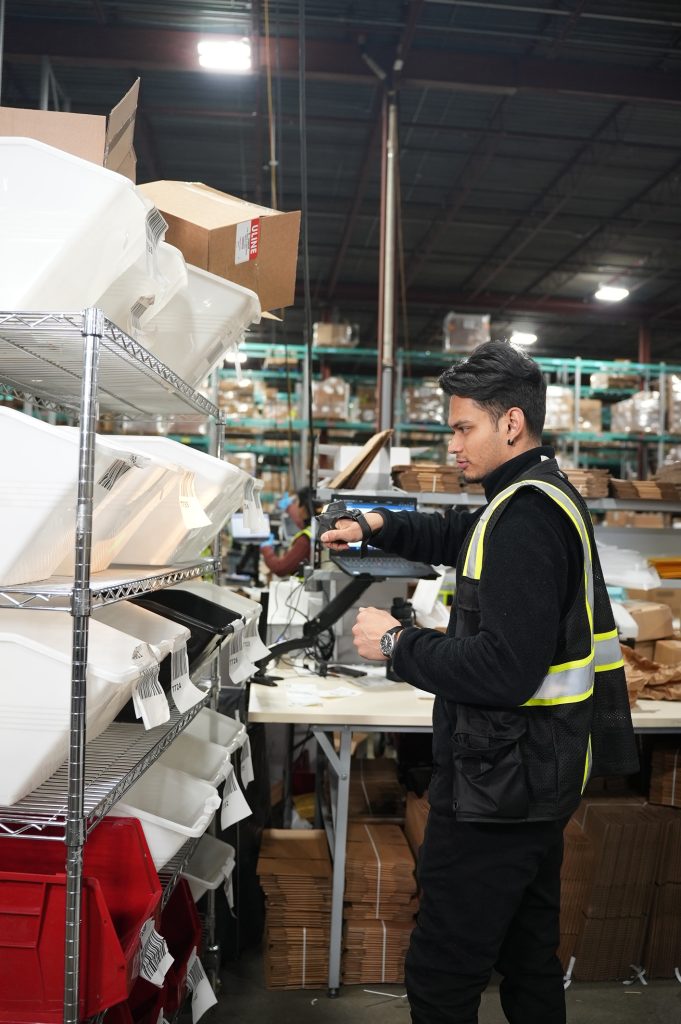
Package arrives at our receiving dock. Staff scan the tracking number.
Mission Control logs the return automatically. Inventory tracking updates. The customer gets a ‘we received your return’ notification.
Our facilities have dedicated return intake areas. This prevents mixing with new inventory shipments.
Average time from dock to logged: 2 hours during business days.
Inspection Quality Control
This is where our experience shows. We’ve developed a 3-point grading system from analyzing 15 million returns.
A-Grade Criteria:
- Product functions perfectly (we test electronics)
- Zero visible damage or wear
- All parts, cables, manuals included
- Original packaging intact and presentable
- Could ship to a customer as ‘new’
B-Grade Criteria:
- Product works but shows minor cosmetic issues
- Box is damaged but contents are fine
- Missing non-essential items (like manual)
- Requires repackaging in plain box
C-Grade Criteria:
- Product doesn’t function
- Obvious shipping damage
- Manufacturer defect visible
- Missing essential parts
- Beyond economical repair
We photograph every C-grade item from multiple angles. This documentation becomes essential for claims.
Inspection time averages 12 minutes per item. Electronics take longer (20-25 minutes) because we test functionality. Simple items like clothing take 5-7 minutes.
Disposition Routing
After grading, items automatically route based on your pre-set rules.
A-Grade Items: Clean if needed. Repackage in original box. Add back to available inventory. Update your store to show ‘in stock.’
At AMZ Prep, 68% of returns grade as A. They restock within 24-36 hours.
B-Grade Items: Repackage in plain boxes or poly bags. Create a separate SKU with ‘-OB’ suffix for ‘open box.’ Price at your specified discount (usually 10-15% off).
Or send it to refurbishment if you’ve requested that service. Or route to liquidation partners.
About 22% of returns fall here.
C-Grade Items: These enter our claims workflow. Staff check if damage happened during shipping (carrier claim). Or if it’s a manufacturer defect (supplier claim). Or if Amazon made an error (FBA reimbursement).
- Photography documentation gets attached to claim files automatically.
- Items not eligible for claims get responsibly disposed of or recycled, supporting eco-conscious business practices.
- About 10% of returns end up as C-grade.
Refund Processing
Once inspection completes, refunds or exchanges trigger automatically through our Mission Control integration.
A-grade items? The customer gets refunded within 4 hours of inspection.
B or C-grade items? Refund processes within 24 hours once disposition is confirmed.
Customer gets a notification: ‘Your return has been processed. Refund issued to the original payment method.’
This automation eliminates the manual work sellers hate.
How to Recover Lost Money Through 3PL Return Claiming
This is where professional return warehouses pay for themselves.
Last year, AMZ Prep recovered $12.4 million for sellers through claims. That’s money that would have been pure loss.
Most sellers don’t file claims because it seems complicated. It is complicated. That’s exactly why outsourcing to a 3PL makes sense.
Carrier Damage Claims
Shipping carriers break things constantly. FedEx drops boxes. UPS crushes packages. USPS loses items.
When a customer returns damaged goods that were fine when you shipped, you deserve reimbursement.
How We Handle It:
Staff identify shipping damage during inspection. They photograph the damage, original packaging, and shipping label. They note which carrier handled delivery.
Our claims team files directly with UPS, FedEx, USPS, or whoever shipped it. Each carrier has different claim forms and requirements. We know all of them.
Then we follow up. Initial claims get denied about 40% of the time. We appeal with additional documentation. We fight for your money.
Real Example:
One electronics seller had recurring issues with FedEx on a specific route. Over two months, we documented 47 damaged packages on that route.
We filed claims on all 47. Recovered $8,400. More importantly, we showed the seller which route was problematic. They switched to UPS for that destination. Damage dropped 65%.
Average carrier claim: $30-250 depending on item value. Processing time: 2-4 weeks. Success rate: 72% at AMZ Prep.
Manufacturer Defect Claims
Sometimes products arrive defective from your supplier. Not your fault. Not customer’s fault.
Your manufacturer should reimburse you.
How We Handle It:
Our inspection identifies manufacturer defects. Loose parts. Quality control failures. Items that never worked correctly.
We photograph the defect. Document the supplier. Return defective items to your manufacturer with claim documentation.
This works especially well when we see 10+ defective items of the same SKU. That signals a factory quality control problem, not isolated bad luck.
Real Example:
We helped a cosmetics brand discover their supplier was shipping expired products. By documenting expiration dates on 30+ returns, we built evidence for a factory issue.
The seller confronted their manufacturer with our documentation. Result: $23,000 credit on their next order plus the manufacturer fixing their quality control process.
Average manufacturer claim: $200-2,000 per batch. Processing time: 1-3 weeks. Success rate: 85%.
Amazon FBA Reimbursements
FBA sellers face unique claim opportunities. Amazon makes mistakes:
Items get lost in Amazon’s warehouse. Customer returns arrive empty (return fraud). Amazon staff damage inventory. Amazon disposes of items incorrectly.
Amazon reimburses you, if you file proper claims with documentation.
How We Handle It:
We track exactly what you send to FBA through our system, and an Amazon FBA reimbursement tool flags the moment Amazon’s records don’t match what we shipped.
Examples we file regularly:
Amazon reports receiving 94 units. Our records show we sent 100. We file for 6 missing units.
The customer returns an empty box. Amazon credits customers but charges you. We provide proof of what was originally shipped. Amazon reimburses.
Amazon damages items in their warehouse. We file with photos showing the item was fine when shipped to FBA.
Real Example:
One FBA seller we work with processes 500+ units weekly through our network. Amazon’s receiving process has a 2-3% discrepancy rate.
We file claims on every discrepancy. This seller recovers $3,000-5,000 monthly, $40,000+ annually just from Amazon receiving errors.
Average FBA claim: $30-500 per claim. Processing time: 2-6 weeks. Success rate: 65% (Amazon is tougher than carriers).
Professional Restocking Processes
Getting items back in stock quickly separates amateur from professional operations.
At AMZ Prep, our average turnaround time is 36 hours from dock receipt to ‘available for sale’ status.
Here’s how we do it.
Quality Standards We Use
Every returned product must pass specific criteria before restocking. These standards come from analyzing millions of returns and understanding what customers accept.
Physical Condition:
- Zero scratches visible from 3 feet away
- All components present and functional
- Packaging presentable enough for customer delivery
Functional Testing (Electronics):
- Powers on correctly
- All features work as designed
- Battery holds charge (if applicable)
- Includes all cables and accessories
Packaging Requirements:
- Original box intact, or new packaging provided
- All inserts, manuals, warranty cards included
- Shipping-ready condition
Items that don’t meet standards route to refurbishment or B-grade channels automatically. We don’t guess. The system enforces your standards.
Repackaging Workflow
Even perfect returns need attention before restocking.
Staff wipe down products. Remove dust or fingerprints. Check packaging corners for crushing.
Items with damaged original boxes get repackaged. We stock standard boxes and poly bags for this. The new packaging protects the product and looks professional.
For AMZ Prep clients selling on multiple channels like Shopify and Amazon, we adjust packaging to match each channel’s requirements. Amazon needs FNSKU labels. Shopify orders might include custom branded inserts.
SKU Management Strategy
This is critical. Not all returned goods should use the original SKU.
Our Standard Approach:
Perfect Returns: Original SKU. Sell at full price. Customers receive what they expect, a new item.
Open Box Returns: New SKU with ‘-OB’ suffix. Sell at 10-20% discount. Customers specifically look for these deals.
Refurbished Items: Separate SKU with ‘-REF’ suffix. Clearly disclosed. Sold at 25-40% discount.
Why this matters: Imagine selling a returned item at full price when the box looks used. Customers complain. You get a negative review. That review costs you future sales.
Better to discount slightly and be honest. The customer gets a deal. You get a sale. No complaints.
Our system creates these SKUs automatically during inspection. Staff scan the item, select the condition grade, and the system assigns the right SKU. This prevents pricing mistakes.
Geographic Inventory Optimization
This is where our 50+ facility network creates massive advantage.
Traditional approach: All returns go to one warehouse. Then items ship cross-country when ordered.
AMZ Prep approach: Returns process at the facility closest to where they originated. They stay there.
Example:
A customer in Seattle orders a product. Ships from our Seattle facility. Customer returns it. Goes back to Seattle facility. Gets inspected and restocked in Seattle.
The next Seattle customer orders the same item. Ships immediately from local stock. No cross-country freight. Faster delivery. Lower cost.
This localized approach cuts our restock time by 40% compared to centralized return processing.
Speed Benchmarks (AMZ Prep Network)
| Item Category | Inspection Time | Restock Time | Back In Stock |
|---|---|---|---|
| Simple (apparel, accessories) | 5-7 minutes | 18-24 hours | 24-30 hours |
| Standard (home goods, toys) | 10-15 minutes | 24-36 hours | 30-48 hours |
| Electronics | 20-25 minutes | 36-48 hours | 48-60 hours |
These are actual averages from Q4 2025 across our network. Electronics take longer due to functional testing requirements.
Peak season (January returns surge): Add 12-24 hours to these timelines. We maintain under 72 hours even during the post-holiday return wave.
When Outsourcing Returns Makes Financial Sense
Not every seller needs a 3PL return warehouse. Here’s the math.
The 50-Return Threshold
Below 50 returns monthly, managing returns in-house usually costs less.
50 returns at 20 minutes each = 16.7 hours of work. If your time is worth $40/hour, that’s $668 in opportunity cost.
Most 3PLs charge $4-7 per return. At $5 per return for 50 items = $250.
Savings: $418 monthly or $5,016 annually.
Plus you get faster restocking. Items back in stock in 2 days versus 7 days means 5 extra selling days. For fast-moving products, this generates additional sales.
When to Consider Outsourcing:
You process 50+ returns monthly. You’re spending 10+ hours weekly on returns. Your return rate exceeds 15%. You sell high-value items where fast restocking matters. You want to focus time on growth activities.
When to Handle In-House:
You get under 30 returns monthly. Your return rate is under 5%. You have dedicated staff for this already. You sell specialized items requiring expertise most 3PLs don’t have.
ROI Beyond Direct Costs
Faster restocking generates sales you’d otherwise miss. Our data shows:
A product that sells 10 units weekly at $30 profit each generates $300 weekly profit. Get it back in stock 5 days faster = $214 additional profit on that single returned item.
Scale that across 100 returns monthly = $21,400 additional annual profit from faster restocking alone.
Claims recovery adds another $3,000-10,000 annually for typical sellers.
The total return on outsourcing far exceeds the direct cost comparison. This is one of the key benefits of outsourcing to a professional logistics provider.
Choosing Your Return Warehouse Partner
Five factors determine if a logistics company will actually solve your problems or create new ones.
1. Processing Speed with Proof
Don’t accept vague claims. Ask for specific data.
‘What was your average processing time last quarter?’ They should have numbers.
At AMZ Prep, our Q4 2025 average was 38 hours from receipt to back-in-stock. We track this daily across all facilities.
Ask about peak season performance too. Some warehouses maintain speed year-round. Others slow to 7-10 days during January returns.
Request client references. Talk to sellers with similar product types and volumes. Ask about their actual experience.
2. Technology That Actually Integrates
Your return warehouse should connect seamlessly with your systems.
Must-Have Integrations:
Shopify, WooCommerce, BigCommerce (e-commerce platforms). Amazon Seller Central (for FBA sellers). Real-time inventory sync. Automatic refund triggers. Return reason tracking.
Red flag: ‘We send you a weekly spreadsheet to update.’ Manual processes create delays and errors.
AMZ Prep’s Mission Control integrates with 50+ platforms. Returns update inventory in real-time. Refunds trigger automatically. You see everything on one dashboard.
Test the integration during onboarding. Ship a return to them. Watch how quickly it updates your systems.
3. Multi-Location Network
Geography affects speed and cost more than most sellers realize.
Single-location warehouses force all returns to one place. A Seattle customer returning to a Florida warehouse adds 5-7 days of shipping time before processing even starts.
Multi-location networks keep returns local.
At AMZ Prep, we route returns to the closest facility automatically. Seattle returns go to Seattle. Toronto returns to stay in Toronto. London returns process in London. This is especially important for brands managing cross-border ecommerce shipping between the US and Canada, where customs coordination and regional fulfillment directly impact return speed and landed costs.
This cuts 3-5 days off total return cycles. It also reduces return shipping costs by 30-40%.
Ask: ‘Where are your facilities?’ and ‘How do you route returns?’
4. Claims Management Included
This is non-negotiable. Claims recovery pays for the entire service.
Confirm these capabilities:
Automatic carrier damage claim filing. Manufacturer defect claim support. Amazon FBA reimbursement claims. Photo documentation of all damage. An integrated Amazon claims management tool that handles tracking and reporting end to end.
Ask about success rates. AMZ Prep’s 72% carrier claim success rate means we recover on most valid claims.
Ask if claims filing costs extra. Some 3PLs charge $15-50 per claim filed. We include it in base pricing because good claims management is standard, not optional.
5. Transparent Complete Pricing
Know all costs upfront.
Get Answers To:
What’s your per-return fee? Any monthly minimums? Long-term storage charges for items that don’t sell? Photography fees? Special handling fees (oversized, fragile, etc.)? Claims filing fees? Contract terms and cancellation policy?
At AMZ Prep, pricing is straightforward: $4.99 per return processed. No setup fees. No monthly minimums for returns specifically. Claims filing included.
Our fulfillment pricing is similarly transparent. We believe in clear costs, not surprise fees.
How AMZ Prep Handles Returns
We’ve processed over 15 million returns across our network. Here’s what that experience taught us.
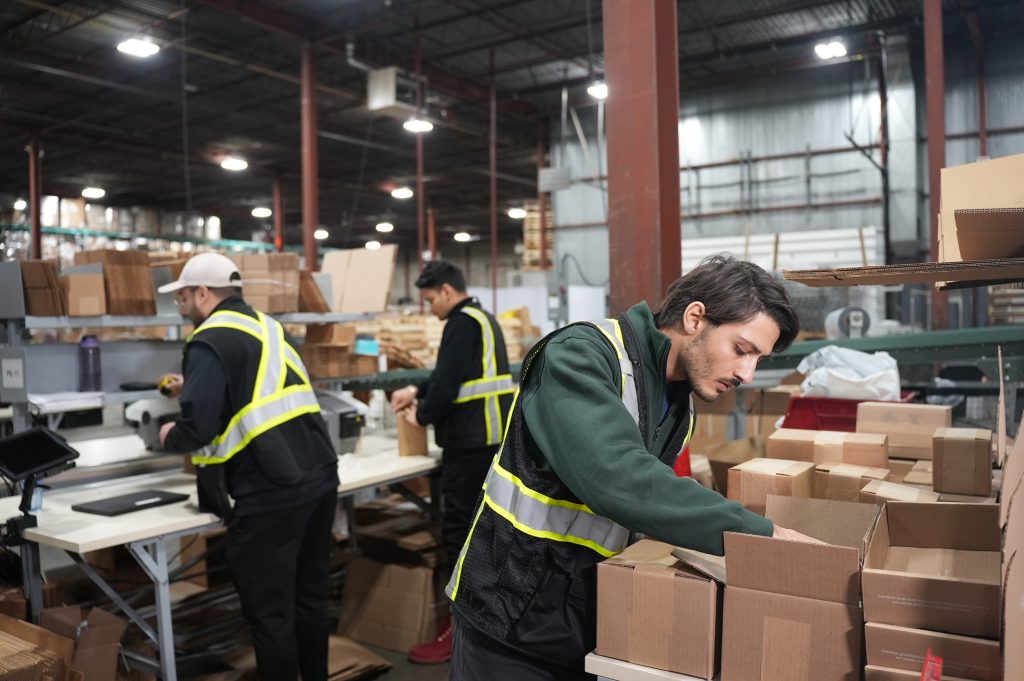
Our Network Advantage
50+ facilities across the US, Canada, UK, and Europe. Returns stay local to where they originated. This cuts processing time by 40% versus single-location warehouses.
Our Vancouver facility example: 6,000 outbound shipments and 1,200 returns monthly. Returns from the Vancouver area process there. They restock in the same building shipping to Vancouver customers.
Geographic distribution means faster, cheaper processing for everyone.
Speed That Creates Competitive Advantage
36-hour average processing time across the network. Items arrive, get inspected within 12 hours, and return to available inventory in under 48 hours.
We achieve this through specialized workflows. Staff trained exclusively on returns. Equipment optimized for inspection and testing. Systems that automate grading and routing.
During Q4 2025, we processed 180,000 returns. Average time: 38 hours. Even during January’s return surge, we maintained under 72 hours.
Claims Recovery That Pays for Everything
$12.4 million recovered for sellers in 2025. Automatic filing for carrier damage, manufacturer defects, and Amazon FBA reimbursements.
One client example: Electronics seller with shipping damage issues. We documented every damaged return. Filed 400+ claims over six months. Recovered $47,000.
More valuable than the recovery: We identified problem shipping routes. They switched carriers for those destinations. Damage dropped 65%. Future returns decreased, saving even more.
Technology Built for Returns
Mission Control platform integrates with Shopify, Amazon, WooCommerce, and 50+ platforms. Returns updated inventory in real-time. Refunds trigger automatically. Return reason tracking shows you exactly why customers return items.
We also offer 3PL logistics fulfillment services, so one partner handles both outbound shipping and return processing. Simpler operations. One system. Better data.
Pricing Designed for Growth
$4.99 per return processed. No setup fees. No monthly minimums for returns. Claims filing included.
We believe pricing should be simple. No surprise fees. No complex calculations.
Sellers report getting items back in stock 2-3x faster than their previous solutions. Many recover thousands in claims they didn’t know existed.
Understanding Return Trends and How to Reduce Return Rates
Smart sellers don’t just process your returns, they analyze return trends to minimize future issues. When you partner with a 3PL like AMZ Prep, our logistics experts help you identify patterns in reasons for returns.
Common return volumes spike around specific product defects, inaccurate descriptions, or sizing issues. By tracking these patterns through our Mission Control system, you can work with your supply chain partners to address root causes.
Offering free return shipping may seem counterintuitive, but it actually builds brand loyalty and customer experience. Studies show that easy returns increase repeat purchase rates by 40%. When customers trust your return policies, they’re more likely to buy again.
The key is making efficient returns work for your business while using data to reduce return rates over time. Our e-commerce logistics platform helps you understand which products have higher return volumes so you can make informed decisions about inventory and sourcing.
Conclusion
Returns are part of eCommerce. But they don’t have to kill your profits or consume your time.
The right 3PL return warehouse transforms a painful process into a competitive advantage. Items restock 5x faster. Professional inspection ensures quality. Claims management recovers thousands you’d otherwise lose.
At AMZ Prep, we process returns in under 48 hours across 50+ locations. We’ve recovered millions through claims sellers didn’t know existed. Our technology integrates with every major platform. And we handle both fulfillment and returns, so you work with one partner.
Returns will always happen. But with professional processing, they become manageable instead of devastating.
Frequently Asked Questions
What is the difference between a 3PL return warehouse and a regular warehouse?
Regular warehouses store new inventory and ship orders to customers. 3PL return warehouses specialize in receiving returned items, inspecting condition, processing for resale or disposal, and managing product returns through the reverse logistics process. They’re built for different workflows and requirements.
How much does a 3PL return warehouse cost?
Most charge $4-8 per return. AMZ Prep charges $4.99 per return with no setup fees or monthly minimums. Some 3PLs add extra charges for claims filing, photography, or special handling. Always request a complete fee schedule.
What is an only 3PL return warehouse?
A facility dedicated exclusively to processing returns with no regular fulfillment operations. These specialized warehouses are best for sellers with 200+ monthly returns who need maximum processing speed and specialized equipment.
How fast do 3PL return warehouses process returns?
Top facilities process in 24-48 hours. Industry average is 3-5 business days. AMZ Prep averages 36 hours across our network. Faster processing means items get back in stock quicker, generating more sales.
Can a 3PL file claims for damaged returns?
Yes. Professional 3PLs file carrier damage claims, manufacturer defect claims, and Amazon FBA reimbursements. AMZ Prep recovered $12.4 million for sellers in 2025. Claims management should be included in base pricing, not charged extra.
Do I need a 3PL if I only get a few returns?
Under 30 returns monthly, handling them yourself is usually more cost-effective. Above 50 returns monthly, outsourcing typically saves both time and money. The threshold is around 40-50 returns where economics favor outsourcing.
What happens to items that can’t be restocked?
Depends on condition. Items get refurbished and sold as open-box, returned to manufacturers for defect claims, sent to liquidation partners, recycled for parts, or properly disposed of. Professional 3PLs maximize recovery value before disposal.
Can 3PLs handle Amazon FBA returns?
Yes. Many specialize in FBA returns. They receive returns from Amazon, inspect them, file reimbursement claims for Amazon errors, and either send good items back to FBA or restock them in fulfillment warehouses.
How do I know if my 3PL is doing a good job?
Track these metrics: average processing time (should be under 48-72 hours), restocking accuracy (above 95%), claims filed and recovered monthly, refund speed, customer satisfaction with return experience. Request monthly reports showing these numbers.
Can I use a 3PL for cross-border returns between the US and Canada?
Yes. Look for 3PLs with facilities in both countries. This eliminates customs issues and speeds processing. AMZ Prep has locations across North America, so Canadian returns stay in Canada and US returns stay in the US.
Blair Forrest is the Founder of AMZ Prep, one of North America’s fastest-growing third-party logistics and fulfillment networks, built entirely without outside capital since 2016. Under his leadership, AMZ Prep has scaled to 50+ fulfillment centers across 6 countries, processing over 10 million plus units monthly and powering $2 billion+ in annual GMV for more than 5,000 brands worldwide including 437, Silverts, Saltyface, Unilever, Duracell, and JBL. A recognized authority in eCommerce logistics, Amazon FBA strategy, and supply chain optimization, Blair has helped thousands of sellers and brands master their fulfillment operations from first shipment to enterprise scale. He regularly consults on FBA prep, multi-channel fulfillment, last mile delivery, international expansion, and cost reduction strategies that save brands 20–40% compared to traditional 3PL providers. Blair’s insights on Amazon logistics, 3PL operations, and eCommerce growth are widely cited across the industry. Through AMZ Prep’s content, guides, and resources, he continues to share battle-tested strategies drawn from managing one of the largest independently owned fulfillment networks in North America.
















Comments