You move inventory. You juggle vendors, lead times, cartons, and the occasional late-night customs hold. CUSMA is one of those tools that can legitimately shave duty costs and speed clearances but only if you treat it like an operational control, not a marketing slogan. From a fulfillment lens: when HTS, origin, and documentation are right, pallets move and customers get packages. When they’re wrong, trucks wait, carriers charge demurrage, and your CS team fields angry emails. This guide is written for people who run the day-to-day, not the policy wonks. It assumes you want the wins without the headaches.
What is CUSMA (and what it isn’t)
CUSMA (Canada-United States-Mexico Agreement) (known as USMCA in the U.S. and T-MEC in Mexico) replaced NAFTA. Operationally it’s a preferential trade agreement: if your product qualifies under the rules of origin and you declare it properly, you can get reduced or zero tariff on admissible goods moving among Canada, the U.S., and Mexico.
Important nuance: CUSMA is not a blanket “free trade” pass for everything that crosses these borders. It’s a rules-based program that requires correct classification (HTS), proof of origin, and, often, specific documentation. Think of CUSMA as a doorway; HTS and origin are the keys.
HTS codes: What are they?
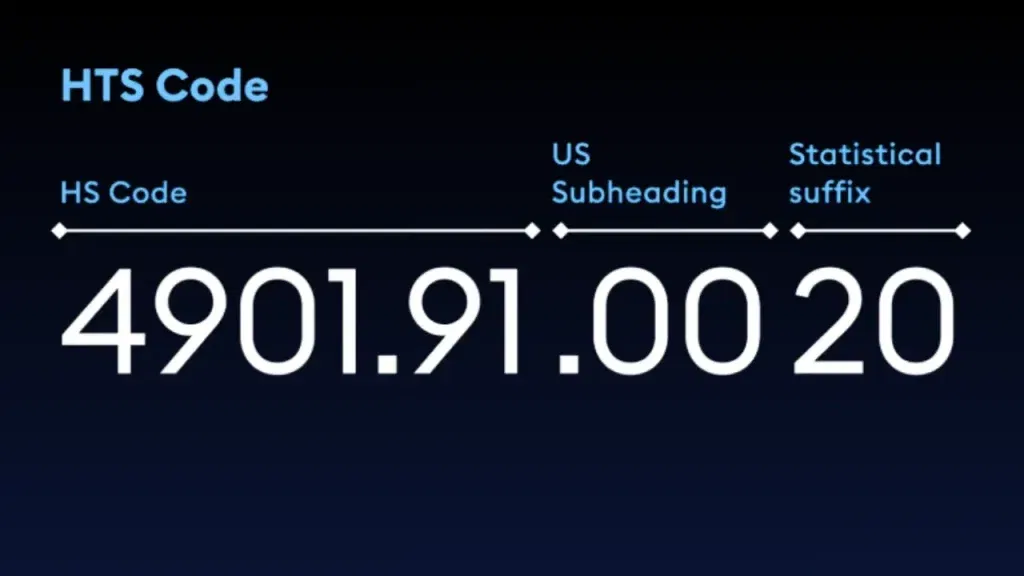
Every product crossing a border needs an HTS (Harmonized Tariff Schedule) classification. For U.S. entries this is a 10-digit number; for Canada and Mexico the structure looks similar but the exact digits and columns differ slightly. What matters for you:
- HTS is the operational key: customs uses the HTS code to decide duties, quota treatment, and which special program indicators apply.
- Consistency is non-negotiable: use the same HTS in your SKU master, your commercial invoice, your ASN (Advanced Ship Notice), and your broker instructions.
- Misclassification is costly: incorrect HTS codes can produce wrong duty calculations, triggers for inspection, and audit exposure.
Operationally, treat HTS like product metadata part of your SKU BOM. If the WMS, ERP, or ecommerce feed doesn’t have it, manual errors will cascade. If you’re importing directly from Asia, especially when shipping from China to USA, you’ll want to double-check HTS classification and CUSMA applicability
S and S+
Inside the tariff schedule you’ll see Special Program Indicators (SPIs). For CUSMA the SPIs you care about are S and S+. Why?
- S: indicates the HTS line is generally eligible for CUSMA preferential treatment.
- S+: typically marks agricultural or TRQ (tariff-rate quota) items that may be eligible but often carry additional rules.
Here’s the brutal truth: if your 10-digit HTS line doesn’t show S or S+, your shipment cannot claim CUSMA preferential duty end of story. You can still ship the product; you just won’t get the preferential tariff.
Operational tip: the importer of record (you, your US entity, or your broker) needs to include that HTS + SPI on the entry. Vendor paperwork without the SPI is insufficient.
Common misconceptions that cost time and money
You’d be surprised how often teams make these mistakes. I see them in manifests, invoices, and frantic Slack messages.
Misconception: “Free” in the duty column equals CUSMA.
- Reality: “Free” in the general duty column can mean the product has no general tariff. It does not prove CUSMA eligibility. Customs will still look for S/S+ and origin proof.
Misconception: If the goods are made in Canada/Mexico/US they automatically qualify.
- Reality: origin is determined by the rules of origin for that HTS. The country of manufacture must meet specific content or transformation tests not just the shipping point.
Misconception: supplier country of shipment = country of origin.
- Reality: the last country of substantial transformation matters, and that can be different from the supplier’s shipping address or the country where the package left the factory.
Fulfillment cost structures matter too, our breakdown of the Amazon MCF UK rate card shows how international tariffs interact with service fees.
These mistakes aren’t innocent. They slow clearance, invite audits, and can turn a $0 duty into a multi-thousand dollar problem once penalties and interest are included.
What you need a practical checklist to qualify
If you want consistent CUSMA claims that stand up in customs, make these fields & docs mandatory in your flows:
- 10-digit HTS code that includes the S or S+ indicator. Store as master data on the SKU record.
- SKU-level specification: materials, percentages, and manufacturing steps (e.g., cut/sew, assembly, coating).
- Supplier Declaration of Origin: a signed statement that ties the SKU to origin and confirms inputs.
- Certificate or self-declaration that shows how the product meets rules of origin: be ready to provide calculations (value-based or rule-based) used to determine origin.
- Commercial Invoice and Packing List with HTS + S/S+ visible.
- ASN / Advance Notice containing HTS and origin where possible.
- Retention of records: keep origin docs and calculations available for the minimum audit period in the tariff jurisdiction.
Make this checklist a required step in procurement and the receiving SOP. If a PO or ASN passes without these fields, the entry should not be claimed as CUSMA.
What happens after approval (and the fees that still bite)
When customs accepts your claim as CUSMA-compliant, the preferential duty (often zero) is allowed but that’s not the end of the costs ledger. Importers should also evaluate whether duty drawback opportunities may apply to eligible goods that are later exported.
- Administrative fees remain: MPF (Merchandise Processing Fee) in the U.S., brokers’ fees, carrier processing fees these are still chargeable. Preferential duty reduces tariff costs but not processing bills.
Fast-fashion supply chains are a good case study; our Shein shipping guide shows the pitfalls of origin rules when sourcing globally.
- Audits happen: customs can retroactively audit your claims. If you can’t substantiate origin, you’ll owe duties, interest, and possibly penalties.
- Operational hold risk: ambiguous origin or missing SPI can trigger paper reviews or physical inspections, which slow inbound velocity and cause demurrage.
Operationally, plan for the non-tariff costs and make sure your SLA and contingency buffers include potential holds and secondary reviews.
Practical controls for operations and product teams
Here are small, repeatable controls that make a disproportionate difference:
- Embed HTS + SPI in the SKU master and make it a required field in PO creation.
- Surface origin and the supplier declaration in the ASN. Make that data visible to the receiving desk and the customs entry team.
- Automate the supplier declaration via your PO or supplier portal require origin, BOM, and percent content fields to be completed before goods ship.
- Annually reconcile HTS lines: product tweaks (new glue, different trims) change classifications. Schedule a SKU audit once a year or after material changes.
- Designate an approver for origin claims. Don’t leave this to a junior buyer without compliance oversight.
- Use checklists for your brokers: pass the HTS, SPI, and supplier declaration in a consistent format to avoid rework.
Classification isn’t just about duty; packaging compliance plays a role too. For sensitive cargo, see our guide on shipping fragile items safely while meeting customs standards.
These controls reduce exceptions, speed clearance, and lower the risk profile for audit review.
Real-world SKU examples (to keep it concrete)
Apparel (example)
- Scenario: a shirt is cut and sewn in Mexico from fabric woven in Asia. The assembly occurred in Mexico but the fabric came from outside the region.
- Operational focus: confirm whether the fabric origin or the assembly step meets CUSMA rules for the shirt’s HTS line. If not, the shirt won’t qualify despite being assembled in Mexico.
Smart product strategy is key: sourcing high demand, low competition products can offset landed costs, even if some SKUs don’t qualify for CUSMA.
Electronics (example)
- Scenario: final assembly in the U.S., but critical components were imported from non-CUSMA countries.
- Operational focus: electronics often use “substantial transformation” or regional value content thresholds. Final assembly alone may not make the product originate in the U.S. you need to run the math.
Food / Agricultural (S+ example)
- Scenario: packaged specialty tea produced in Canada using leaves from Kenya.
- Operational focus: many agricultural HTS lines are S+ and may be subject to TRQs. Paperwork is stricter and quotas can be time-sensitive. Don’t assume S+ is easier; it often requires extra diligence.
These examples show why procurement, product development, and compliance must align early in the SKU lifecycle.
Two short case studies from the floor
Case study A Clothing brand
- Problem: the brand assumed all goods assembled in Mexico would be CUSMA-eligible. A sudden customs audit showed the knit fabric originated in Asia. The result: duties assessed on several shipments and a month-long delay while the brand produced supplier BOMs.
- Fix: the brand added mandatory BOM submissions before PO approval and required their contractor to sign a supplier origin declaration. They also moved HTS and SPI into the WMS so receiving could flag at the dock.
Case study B Electronics vendor
- Problem: a supplier changed a PCB supplier without informing the buyer. The new PCB changed the product’s regional value calculation and revoked CUSMA eligibility for a quarter’s shipments. The company absorbed duties for one quarter and lost margin.
- Fix: implemented an automated supplier change-notification plus an annual re-evaluation of high-value SKUs’ origin calculations.
Implementation playbook where to put this in your stack
A short roadmap to operationalize CUSMA in your tech stack and processes:
- Master data: add HTS (10-digit), SPI (S/S+), and supplier origin fields to SKU master in ERP/WMS.
- Procurement: require supplier origin declaration and BOM on PO issuance. Block PO closure until fields are complete.
- ASN & Inbound: include HTS + origin on ASN so the receiving team and broker have the info early.
- Customs entry: ensure your broker receives structured data
Conclusion
CUSMA is not paperwork for the compliance shelf. You will reduce landed costs, clear shipments faster, and lower audit risk. The payoff is real: smoother border crossings, fewer customer service headaches, and better control of your margin. Treat CUSMA like control, not an afterthought, and it will deliver durable value to your supply chain.
Frequently Asked Questions (FAQ) on CUSMA, HTS Codes, and Preferential Duty
1. What is the difference between CUSMA and USMCA?
They are the same agreement. Canada calls it CUSMA, the U.S. calls it USMCA, and Mexico calls it T-MEC.
2. Do all products automatically qualify for CUSMA?
No. Goods must meet rules of origin for their HTS code. Simply manufacturing or shipping from Canada, the U.S., or Mexico is not enough. You must prove regional content or transformation.
3. What are HTS codes and why do they matter for CUSMA?
HTS (Harmonized Tariff Schedule) codes classify your product at a 10-digit level. Customs uses HTS codes to decide duty rates, quotas. Also if product can qualify for preferential duty under CUSMA.
Wrong HTS = wrong duty.
4. What do “S” and “S+” mean in the tariff schedule?
S: The product is eligible for CUSMA preferential duty if rules of origin are met.
S+: Usually agricultural or quota-controlled items. Eligible under CUSMA but with stricter rules and sometimes quantity limits.
5. Can I still import if my product doesn’t qualify under CUSMA?
Yes. You can always import your product, but you won’t get the preferential tariff. Regular duties and fees apply.
6. What documents are required to claim CUSMA?
You’ll need:
10-digit HTS with S/S+ indicator
Supplier declaration of origin
Bill of materials (if applicable)
Certificate of origin or self-certification
Commercial invoice and packing list showing HTS + origin
7. Does CUSMA eliminate all import fees?
No. While CUSMA can reduce or eliminate tariffs, other fees like U.S. Merchandise Processing Fee (MPF), broker fees, and carrier charges still apply.
8. What happens if my CUSMA claim is audited and I can’t prove origin?
Customs will retroactively assess duties, plus interest, and may apply penalties. That’s why it’s critical to keep documentation for the required audit period.
9. How often should I re-check HTS and origin?
At least once a year. Even small changes (like switching trim or glue) can alter eligibility.
10. Where does CUSMA fit in my fulfillment operations?
It should be built into SKU master data, procurement (PO process), ASN, and customs entry instructions. Treat it as a control, not an afterthought.

Arishekar N is a Vice President (VP) of Marketing at AMZ Prep, specializing in ecommerce fulfillment and Amazon logistics strategies with a proven track record of driving growth for e-commerce businesses. He is a strategic leader with extensive expertise in marketing, e-commerce operations, SEO & advertising, and branding.
Stay updated on his latest insights by following him
















A great resource for businesses starting cross-border shipping.
Excellent overview of CUSMA benefits and requirements for sellers.
This article made the customs documentation process easier to grasp.
Very clear explanation of how to avoid costly misclassifications.
Really helpful explanation of how HTS codes and CUSMA affect cross-border shipping.
Useful info that clarified a topic that always seemed confusing.
I appreciated the examples showing how HTS codes impact costs.
Simple and practical guide for anyone dealing with Canada-US trade.
This made understanding tariff classifications so much clearer.
Great breakdown of why accurate HTS codes matter for customs and duties.