
Amazon returns are killing your profits, and you might not even realize how much money you’re losing.
Every time a customer returns something, it’s not just a product coming back – it’s your money disappearing. Amazon makes returns “free” for customers, but guess who pays for it? Sellers like you do.
Here’s the scary truth: Most Amazon sellers lose $2,000+ every month just on return costs.
The worst part? You’re probably losing money on returns that didn’t need to happen at all. This blog will guide you through the most common reasons for return on Amazon, how to prevent them, and why Amazon free return shipping can affect your profit if you’re not careful. Let’s dive in!
What are Amazon Returns?
Amazon returns are products that customers send back to Amazon after purchase for various reasons. When a customer is unsatisfied with their order, they can initiate a return through their Amazon account, and the item gets sent back through Amazon’s return system.
How Amazon Returns Work?
- Customer requests return through their account
- Amazon provides return shipping label (usually free for customers)
- Customer ships item back to Amazon fulfillment center
- Amazon processes the return and issues refund to customer
- Seller may be charged return fees depending on the reason
High-Return Product Categories
There are some Amazon categories that have high-returns. Let’s look into those categories;
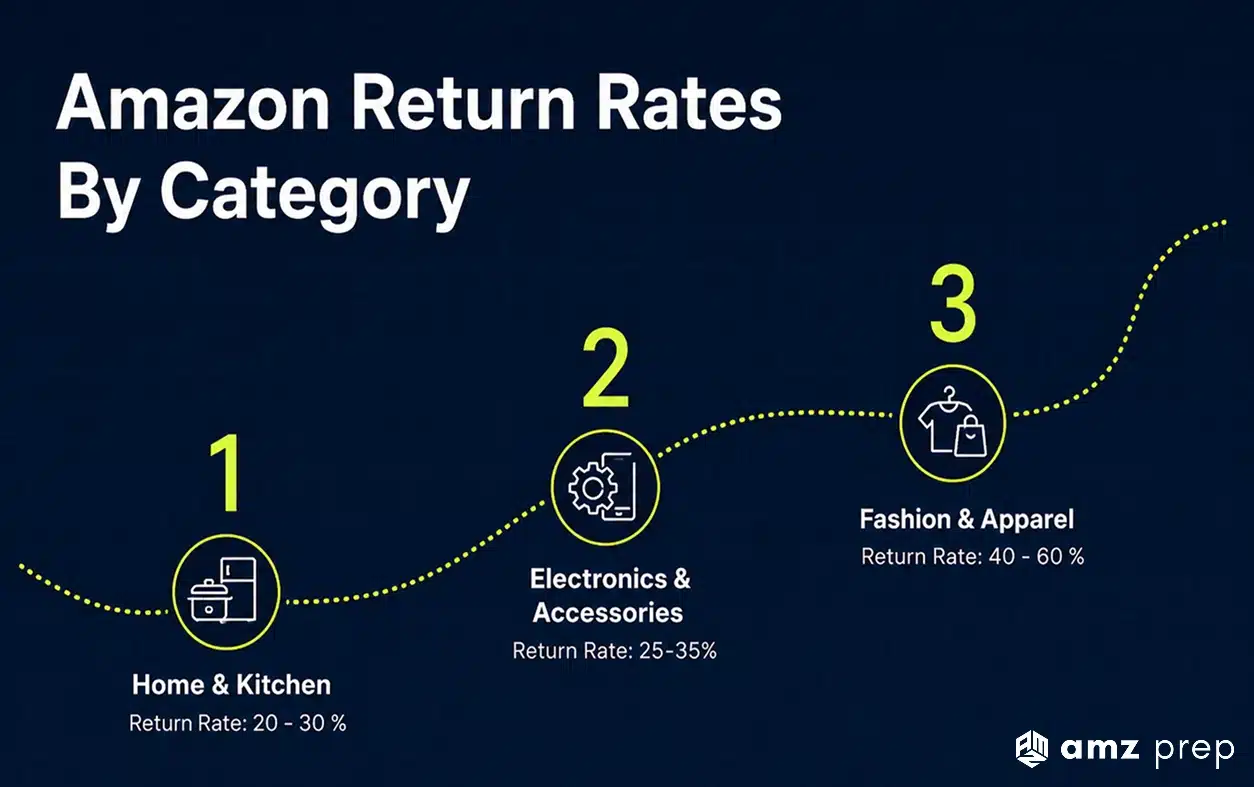
Fashion and apparel have 40-60% return rates. That’s not at all easy for a seller. More than half of clothing items get returned in some subcategories, often because customers want to return items that don’t fit properly.
Electronics and tech accessories clock in at 25-35% return rates. This is because Amazon customers find compatibility issues that you could prevent with better product descriptions.
Home and kitchen products see 20-30% returns. Usually this is because items on Amazon don’t fit the intended space or meet quality expectations of the customers.
So, which is the safest category that has low return rates? Books and media have only 5-15% return rates. This is because customers get a clear explanation and preview options that keeps the return rate low.
Did you know?
Many high-return items from these categories don’t go back on the shelf, they’re bundled and sold as Amazon return pallets through liquidation channels.
10 Amazon Return Reasons and How to Avoid Them as a Seller
Here’s a quick breakdown of the most common Amazon return reasons, why they happen, and how to stop them before they affect your brand’s growth.
1. Item Not as Described
This is the most common of all return reasons. Amazon always covers return shipping when customers claim items don’t match your descriptions.
So, why does it happen?
Your product photos don’t match reality. Your descriptions are vague or misleading. Customers make assumptions you didn’t address.
At this point, as a seller what can you do?
Write descriptions like Amazon expects – clear and detailed. Include measurements in both inches and centimeters. Take photos in natural lighting from multiple angles. Address common misconceptions directly in your listing.
At this point, you’ll have a cost savings potential of $8-25 per prevented return depending on item weight and size.
2. Wrong Size or Fit Issues
Size-related returns are Amazon’s second biggest free shipping reason. This hits fashion, shoes, and home goods most of the time, especially when customers need to return items due to poor fit.
This problem happens because you use generic size charts that don’t match your actual products. You provide no fit guidance for different body types. You give unclear dimension information for furniture and decor.
To avoid this, create custom size charts for each of your product lines. Include fit photos on different body types. Add dimension comparisons to common household items. Use A+ Content for detailed size guides.
When you do it right, you can save around $10-30 per prevented return, especially for heavy or oversized items.
Suggested Read: Shipping Large Items – From Costs to Best Practices Complete Guide
3. Product Arrived Damaged
Damaged products often come under the free return shipping category. Amazon wants to protect customers, so they assume it’s your (seller) fault until proven otherwise.
This is because you use cheap packaging materials that can’t protect your products. You choose wrong shipping box sizes that allow products to rattle around. You add no cushioning when you ship fragile items
Make sure to invest in quality packaging materials upfront. Use appropriately sized boxes with minimal empty space. Add bubble wrap or air cushions for fragile products. Consider custom packaging for your high-value items.
4. Quality Below Expectations
When customers feel your product’s quality doesn’t match the price point, Amazon will issue free return shipping for buyers.
This happens most of the time because you overpromise in your product descriptions. You use stock photos that look better than reality. You don’t set proper quality expectations for your price range.
To avoid this, set realistic quality expectations in your descriptions. Use actual product photos instead of stock images. Include close-up shots showing texture and materials. Be honest about limitations and intended use cases.
When you did everything right, you can get a lot of positive reviews and save $5-20 per prevented return.
5. Compatibility Issues
Electronics and tech accessories get hit hard with compatibility returns. Amazon always covers shipping for “doesn’t work with my device” returns, and customers often contact Amazon directly to process your return.
It happens because you provide vague compatibility information in your listings. You assume universal compatibility without testing. You don’t address common compatibility questions.
As a seller, you have to create detailed compatibility charts for all supported devices. Test compatibility claims before you list. Include “not compatible with” sections. Add installation guides for complex items to make it easy for customers.
6. Missing Parts or Accessories
Incomplete shipments always trigger free return shipping. Amazon assumes you made the packing error, and Amazon may even issue a refund immediately.
You create unclear “what’s included” sections in your listings. Your team makes packing errors at fulfillment centers. You have supplier inconsistencies in included accessories.
It is better you create detailed “what’s included” lists with photos. Use packing checklists for your team. Double-check supplier pack configurations. Include assembly instructions showing all required parts.
7. Customer Changed Mind
This one’s tricky. Amazon covers return shipping in some categories but not others. Fashion almost always gets free returns. Electronics vary by subcategory. Customers often return something they bought by mistake or ordered by mistake.
It happens when your customers make impulse purchases without proper research. They find better alternatives after buying. Most of the time, gift purchases don’t match recipient preferences, or the item arrived too late for the intended occasion.
So, you can use scarcity messaging to reduce buyer’s remorse. Include comparison charts with similar products. Create gift guides for popular items. Follow up with purchase confirmation emails highlighting key benefits.
8. Product Defects or Malfunctions
Defective products always cause free return shipping plus potential A-to-Z claims. This can seriously damage your seller metrics and affect your return eligibility.
It happens you have poor quality control at manufacturing. You do inadequate product testing before launch. You don’t monitor supplier issues properly.
It is better if you implement pre-shipment quality checks. Test samples from every production batch. Establish clear quality standards with your suppliers. Monitor return patterns for defect indicators.
9. Late or Failed Delivery
When your shipments arrive too late or get lost somewhere in the middle, Amazon covers return shipping on replacement orders that customers no longer want.
This is because you choose unreliable shipping carriers for your price point. Your poor packaging leads to shipping delays. You provide inadequate tracking information for customers.
It is better you choose reliable carriers even if they cost you slightly more. Provide tracking information within 24 hours of shipment. Set realistic delivery expectations in your listings. You can also consider Amazon FBA for consistent delivery performance.
10. Price-Related Returns
When customers find better prices elsewhere and return an item, shipping responsibility varies by category and timing. The return window and refund timelines depend on when the price change occurred.
It happens you have aggressive competitor pricing that you’re not monitoring. Price drops happen shortly after customer purchases. You lack perceived value justification at your price point.
Ensure to monitor competitor pricing weekly and adjust accordingly. Highlight unique value propositions in your listings. Bundle products to increase perceived value. Use repricing tools for different market conditions.
Understanding Amazon’s Free Return Shipping Policy
Amazon’s return system puts customer satisfaction first, but the costs fall on sellers in different ways. As of June 2024, Amazon introduced new return processing fees that directly impact your profitability based on your product’s return rate.
Amazon now charges return processing fees for products with high return rates. Here’s how it works:
- Most products: Fee applies when your return rate exceeds the category threshold
- Apparel and shoes: Fee applies to every single return (no threshold)
- Fee amount: Based on your product’s size and shipping weight ($0.50-$10+ per return)
- Calculation period: Returns tracked over 3 months after shipping
Return Rate Thresholds by Category: Each product category has a specific return rate threshold. If your products exceed this threshold, you pay processing fees for every return above that limit.
Additional Return Costs You Always Pay:
- Return shipping fees when the return is seller-related (wrong item, doesn’t match description, defective)
- Lost profit margins on returned inventory
- Restocking and processing costs
Small Protection for New Sellers:
- Products shipping under 25 units per month are exempt
- FBA New Selection program waives fees for up to 20 units per ASIN
Every return now potentially costs you money through processing fees, even if the customer changed their mind. A product with a 15% return rate could face $5-15 in processing fees per return, plus shipping costs if it’s seller-related.
The new fee structure makes return prevention more critical than ever for protecting your profit margins.
To get more information on how Amazon return works, do visit seller central.
Advanced Strategies to Prevent Product Returns
Now that you know the big 10 return reasons, let’s talk about some advanced strategies. These strategies work across all categories and return reasons to improve your customer experience. For brands handling a growing volume of returns, return management solutions can also help organize the process from return requests through inspection and disposition.
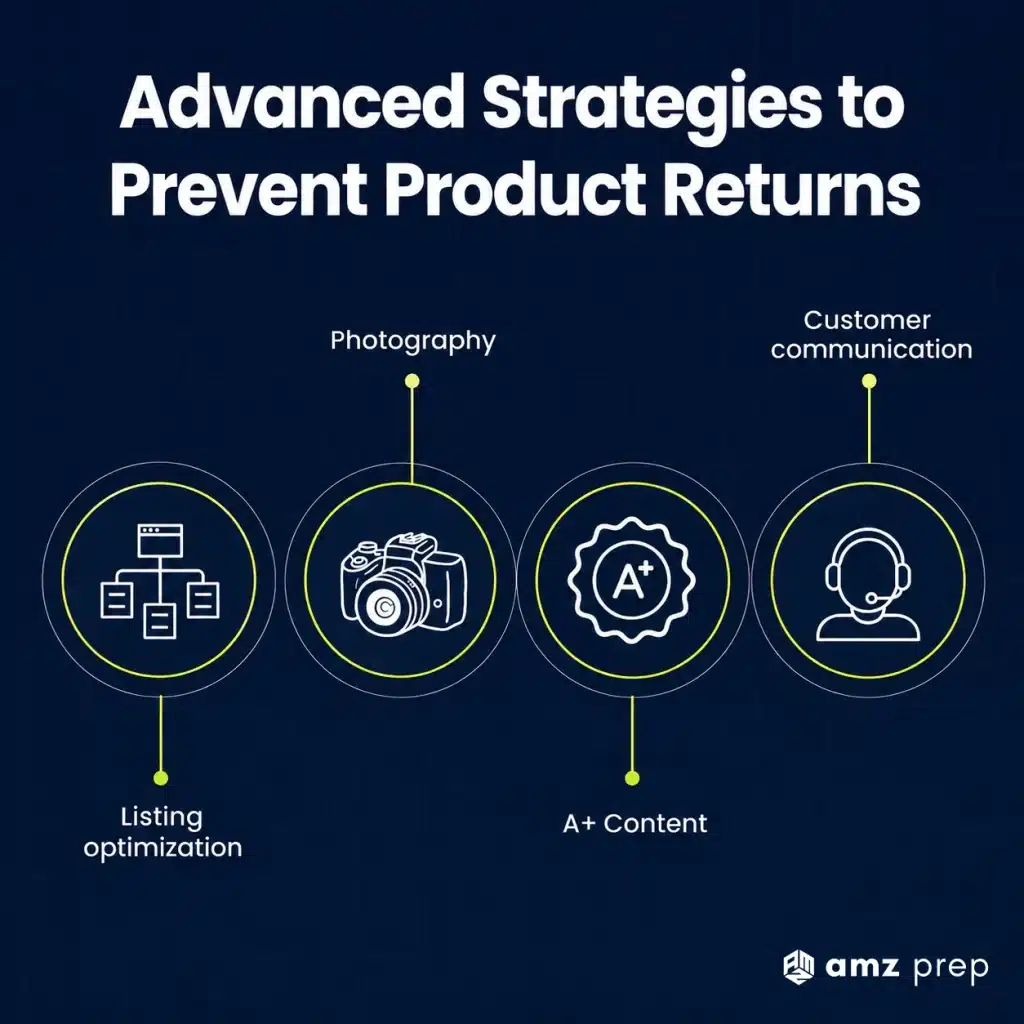
Listing optimization is the best strategy that you could use to prevent product returns. Spend extra time on your product titles. Include key specifications that prevent compatibility confusion. Use bullet points for scannable information. Address common questions before customers ask them.
Photography makes or breaks expectations. Take photos in consistent lighting conditions. Show scale with common objects for reference. Include lifestyle shots showing actual use cases. Avoid overly edited photos that don’t match reality.
A+ Content pays for itself in reduced returns. Use comparison charts to set proper expectations. Include detailed size guides and measurements. Add installation or usage instructions. Show compatible and incompatible scenarios clearly.
Customer communication prevents post-purchase confusion. Send detailed shipping confirmations with tracking info. Follow up after delivery to ensure customer satisfaction. Respond quickly to pre-purchase questions. Create FAQ sections based on common concerns.
How To Measure Your Return Prevention Success?
Track the right metrics to measure your improvement. Your overall return rate is important but not the whole story. Monitor return rates by your product category and reason. Calculate the financial impact of your prevented returns. Track the below given metrics:
- Overall return rate: Track monthly percentage
- Return rate by product category: Calculate separately for each ASIN category
- Return rate by reason: “Not as described,” “Wrong size,” “Defective,” etc.
- Financial impact: Dollar amount of prevented returns vs. prevention costs
Set realistic improvement goals for yourself. Don’t expect overnight changes. Most sellers see meaningful improvement within 30 days of delivery optimization implementation. Focus on preventing your most expensive return reasons first.
Use Amazon’s data to guide your efforts. The Business Reports section shows return reasons by your ASIN. Customer feedback reveals patterns you might miss. Order defect rates indicate systematic issues you need to address.
Calculate your return on investment for prevention efforts. Better photography might cost you $500 upfront but save $2,000 in prevented returns. Professional copywriting pays for itself within weeks for most sellers. Some of the key numbers to calculate:
- Cost per return by reason
- Prevention investment vs. savings
- Time to break-even on improvements
- Category-specific return rates
Your Action Plan: Where to Start Today
Week 1: Audit your current return patterns
Download your return reports from the past 90 days. Identify your top 3 return reasons by frequency and cost. List your highest-return ASINs for focused improvement.
Week 2: Fix your worst offenders first
Update product photos for items with “not as described” returns. Add size charts for products with fit issues. Rewrite descriptions for quality expectation problems.
Week 3: Implement your systematic improvements
Create templates for consistent listing optimization. Establish quality control checklists for your new products. Set up monitoring systems for return rate tracking.
Week 4: Monitor and adjust your strategies
Track early indicators of improvement in customer feedback. Adjust strategies based on what’s working best for you. Plan next month’s optimization priorities.
Remember, return prevention is an ongoing process for you, not a one-time fix. The sellers who consistently monitor and improve their prevention strategies see the biggest long-term success.
Conclusion
Amazon return reasons that trigger free return shipping can highly affect your seller profitability. But with the right knowledge and strategies, you can reduce these costly returns. When you understand the most common Amazon return reasons, you can adjust your listings, your inventory, and even your product design to reduce them.
And while Amazon free return shipping makes it easy for buyers to return, you have the power to prevent many of those returns from happening in the first place.Audit your returns. Learn from them. Improve your listings. And if the logistics of returns are still eating your margins, consider working with a 3PL provider that specializes in Amazon prep and return management.
Frequently Asked Questions
What are the most common reasons for Amazon returns?
The most common Amazon return reasons include “item not as described,” wrong size, damage on arrival, defective product, and buyer’s remorse.
How can Amazon sellers reduce return rates?
Amazon sellers can reduce return rates by using accurate product descriptions, size charts, clear images, quality packaging, and fast shipping.
Do Amazon sellers pay for return shipping?
If using FBA, Amazon often covers return shipping, but sellers may still pay processing and damage fees. FBM sellers may cover return costs.
Which Amazon product categories have the highest return rates?
Clothing, electronics, furniture, beauty, and toys tend to have the highest return rates due to sizing, tech issues, and buyer expectations.

Arishekar N is a Vice President (VP) of Marketing at AMZ Prep, specializing in ecommerce fulfillment and Amazon logistics strategies with a proven track record of driving growth for e-commerce businesses. He is a strategic leader with extensive expertise in marketing, e-commerce operations, SEO & advertising, and branding.
Stay updated on his latest insights by following him

















Good to know about the under-25-unit exemption. Takes some pressure off when you’re testing a new ASIN.
A lot of returns end up on liquidation pallets, not back on the shelf. That cost rarely shows up in return rate math.
A “not compatible with” section is such an easy fix for electronics. Probably saves more returns than another feature bullet.
Apparel paying a fee on every return, no threshold, is rough. Size charts are basically margin protection now.
Seller-caused vs. buyer-caused is a useful split. Does the return report break reasons out clearly by ASIN?
Very informative and detailed. The compatibility charts advice is something I hadn’t considered but will definitely implement.
Great insights on packaging and shipping reliability. Small investments there can prevent costly damage returns.
This blog really opened my eyes to how much returns can impact seller profits. Great tips on preventing them!
I appreciate the emphasis on customer communication. Follow-ups with buyers really help reduce returns and increase satisfaction.
Thanks for explaining the new Amazon return processing fees. Knowing the thresholds will help me focus my efforts better.
Clear and practical advice especially like the part on using detailed size charts to reduce fit-related returns.
This is exactly what new Amazon sellers need to read. The weekly action plan helps make it manageable.
Loved how this blog covers both reasons and solutions. It feels less overwhelming to tackle returns with these tips.
The section on product photos and honest descriptions is spot on. These small changes can save so much money.
Excellent breakdown of return reasons. Loved the advanced strategies to prevent returns, very actionable for sellers.