
As a business on Amazon’s marketplace, reverse logistics isn’t just a minor operational headache. It is a challenge that directly affects your bottom line, inventory management and customer satisfaction metrics.
No matter how great your product or service is, someone’s going to return it as they have a problem with the color, size or it may depend on the customer’s behavior. Whenever a customer returns a product it is more than a lost sale. It creates additional shipping costs, inspection requirements, inventory challenges and much more.
This blog will further walk you through with the strategies to optimize amazon reverse logistics, reasons for returns, categories with highest reverse logistics volume and much more. Let’s get started!
Reverse Logistics Process
Amazon reverse logistics refers to the process where customers return the products, and the products reach back to the business where they manage returns. This process includes:
- Return authorization and initiation
- Return shipping and tracking
- Receipt and inspection of returned items
- Decision-making about product (restock, refurbish, liquidate, etc.)
- Customer refund processing
Customers can easily return the product that they dislike at no cost. Since, no fees are charged for returning, this will create a positive customer experience. On the other hand, as a seller you will have to face a lot of challenges that come with it. The problems include;
- Return shipping costs average $10-15 per item
- Processing and inspection costs add another $5-10 per return
- Returned inventory ties up capital and warehouse space
- Only 50-60% of returned items can be resold as new
- Each return requires 15-30 minutes of total processing time
For many businesses, especially those with budget constraints, these challenges can be in between profit and loss. Let’s look into some of the reverse logistics strategies!
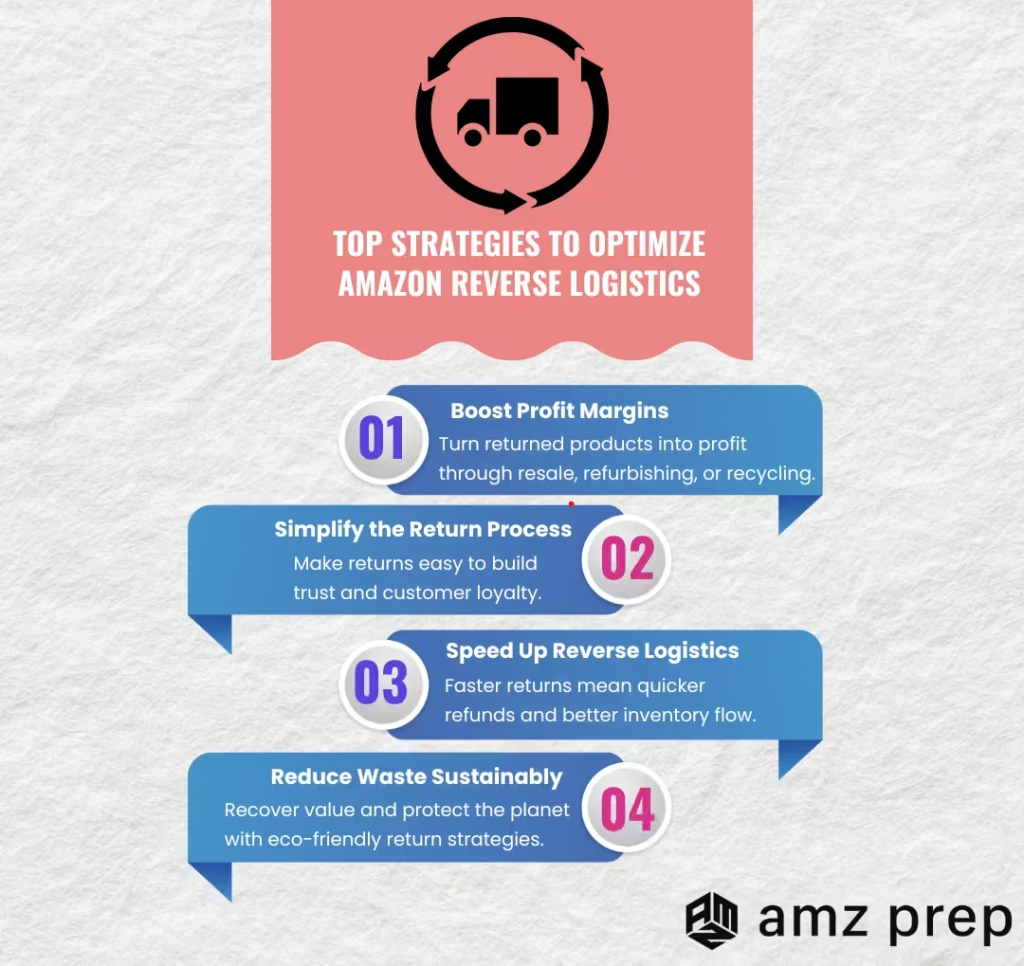
Top Strategies to Optimize Amazon Reverse Logistics
With the below given Amazon reverse logistics strategies, you can minimize losses and maximize your order value.
Improve Profit Margins Through Strategic Reverse Logistics
With the right strategy you can improve your bottom line as it helps you to gain profit from the returned products. By having a clear idea of handling returned items, you can quickly decide whether to resell, refurbish, recycle, or discard the product. These processes will directly impact your profitability.
Let’s consider: you pay the same operational costs to process returns as you do to fulfill orders. You’re still paying for labor, shipping, storage, and processing when a return comes in. But if you resell, refurbish, or repurpose that returned product, you will actually get money out of it.
If you are greatly aware of how to get profit with the return products, there is a high chance that you will increase 15% to 25% more value compared to other sellers. All you have to do is analyze why the products are returned. So, you can make improvements that will reduce the future returns and help you achieve more benefits over time.
Related Resource: Want to profit from excess or returned inventory? Check out our guide to buying and reselling Amazon return pallets to turn returns into revenue.
Enhance Customer Satisfaction Through Simplified Reverse Logistics
Since Amazon has given their customers the perks like easy returns, sellers who meet these expectations will always stay ahead of the competition.
Customers will return the products if they are not satisfied with it. For technically complex products, working with a tech support company can help resolve setup or usage issues before customers decide to return the item.
So, as a seller you must give them a smooth and hassle free return process rather than a complicated one. Using the right return management solutions can simplify this process by helping you manage return requests, inspections, refunds, and customer updates more efficiently. This will help you build brand loyalty from the moment customers make a purchase.
To improve customer satisfaction with your return process, you can provide clear, simple return instructions, offer multiple return options (drop-off, pickup, mail-in), process refunds promptly once you receive the product, keep your customers informed about the return process, and cover the return shipping costs rather than getting it from the customers.
Faster Turnaround Time for Competitive Advantage
Since most of the modern shoppers do their research about the return policies before making a purchase. So, you must speed up your reverse logistics process to make your customers feel confident buying from you.
Always remember, fast and efficient Amazon reverse logistics creates a real advantage in the marketplace. Faster return processing delivers several business benefits:
- Faster refunds improve customer satisfaction
- Quicker inspection gets sellable items back into inventory faster
- Faster processing requires less warehouse space for returns
- Speedier decisions minimize value loss on returned goods.
Minimize Waste Through Sustainable Reverse Logistics
Since reverse logistics in eCommerce is high, you must create an approach to handle the return products in both environmentally and economically. By implementing systematic Amazon reverse logistics strategies for evaluating returned products, you can:
- Identify items that can be resold with minimal processing
- Send repairable products to appropriate refurbishment channels
- Direct parts from unsalvageable items to recycling programs
- Properly dispose of waste materials according to regulations
This way you not only minimize waste but also maximize value recovery. In addition to this, sustainable reverse logistics will attract buyers who consider the environment while making choices.
Reasons for Amazon Returns
Understanding why customers return your products is a must to create effective Amazon reverse logistics strategies.
Product Quality Issues
Quality problems represent a major portion of all Amazon returns. These include manufacturing defects, inconsistent performance, or premature product failure. To avoid this, higher inspection is required during processing.
You must also implement quality control checks before sending products to FBA and track issues by supplier to prevent recurring problems. Effective reverse logistics systems use quality-related returns data to improve product specifications.
Product Not as Described
Some of the returns occur when products don’t match customer expectations based on the listing. This mismatch creates significant reverse logistics challenges while damaging seller metrics.
There is a high chance that the order defect rate will affect your account health. You may get a lot of customer service inquiries about the product, and it will lead you to higher return shipping costs.
In order to prevent this, audit product descriptions for accuracy and use high-quality photography showing products from multiple angles. These reverse logistics strategies can substantially reduce “not as described” returns.
Size, Fit and Appearance Issues
In apparel and home goods, the returns typically involve items in perfect condition that simply didn’t meet customer expectations.
As a seller, you must provide detailed size guides and fit information in listings. Size and fit returns typically have high resale value in your reverse logistics pipeline since products are usually in new condition.
Damaged in Transit
Shipping damage represents a failure in logistics rather than the product itself. These returns often result in total loss of product value while still requiring full reverse logistics processing.
Ensure to review packaging methods for fragile items and track damage patterns by carrier. Effective reverse logistics in eCommerce requires specific protocols for handling damaged items.
Read our expert guide on shipping fragile items
Buyer’s Remorse
When customers simply change their minds after purchase, it creates unique challenges for Amazon reverse logistics because the return reason is unrelated to product issues.
Create compelling post-purchase communications and develop simplified processing for like-new condition returns to minimize financial impact on your reverse logistics in the supply chain.
Technical Complexity
When customers cannot successfully set up or use products due to technical complexity, they often return functioning products rather than seeking support.
Give your customers clear setup guides and offer proactive technical support — even consider using the best dialer for cold calling to reach out directly and assist buyers. This represents one of the most cost-effective Amazon reverse logistics strategies for technical product categories.
Read our blog on Amazon Return Reasons to know about them in detail.
Categories with the Highest Reverse Logistics Volume
Below you will find the tabular column of the products that comes under the category of highest reverse logistics:
| Category | Average Return Rate | Key Return Reasons |
|---|---|---|
| Apparel & Fashion | 30-40% | Sizing issues, style preferences, “bracketing” (ordering multiple sizes) |
| Consumer Electronics | 15-25% | Technical issues, compatibility problems, buyer’s remorse, damaged during shipping |
| Home Goods & Furniture | 15-20% | Color/material mismatch, size issues, assembly difficulties |
| Shoes & Footwear | 25-35% | Sizing inconsistencies, comfort issues, style disappointment |
| Jewelry & Accessories | 18-25% | Style preferences, quality expectations, gift returns |
| Beauty & Personal Care | 15-20% | Allergic reactions, scent preferences, product efficacy |
| Toys & Baby Products | 15-22% | Safety concerns, age-appropriateness, durability issues |
Conclusion
Reverse logistics is a critical part in today’s supply chain management as it improves customer experience, recovers product value, and advances environmental responsibility. As a seller you must simplify your returns management systems so you can stand ahead of the competition.
E-commerce sellers who are looking to find a trusted partner to manage their delivery and returns can choose AMZ Prep as their 3PL fulfillment center. They streamline the return process for you and your shoppers for marketplaces, Amazon, and your eCommerce store.
Frequently Asked Questions
How does Amazon’s return process work for sellers?
Amazon’s reverse logistics automates the return process, allowing customers to initiate returns through their accounts. For FBA sellers, Amazon handles the entire process. They receive, inspect, and process returns. For FBM sellers, reverse logistics strategies involve managing their own returns, though they must adhere to Amazon’s customer-friendly policies and timelines.
How long does Amazon take to process returns?
Under Amazon’s reverse logistics processes, returns take 7-14 days from customer initiation to completion. FBA returns processing averages 3-5 business days after product reaches the Amazon warehouse. Processing time varies based on item category, condition assessment needs, and current warehouse volume.
Can Amazon sellers inspect returned items before refunds are issued?
FBA sellers cannot inspect items before refunds are processed. Amazon consolidates returns and issues refunds automatically. This reverse logistics approach prioritizes customer experience but creates challenges for sellers concerned about return fraud or condition disputes.
What happens to returned items on Amazon?
Returned items on Amazon will be sent to resale as new (if unopened/undamaged), resale as warehouse deals (if lightly used), liquidation through Amazon’s wholesale liquidation program, return to the seller’s inventory, or disposal.
Blair Forrest is the Founder of AMZ Prep, one of North America’s fastest-growing third-party logistics and fulfillment networks, built entirely without outside capital since 2016. Under his leadership, AMZ Prep has scaled to 50+ fulfillment centers across 6 countries, processing over 10 million plus units monthly and powering $2 billion+ in annual GMV for more than 5,000 brands worldwide including 437, Silverts, Saltyface, Unilever, Duracell, and JBL. A recognized authority in eCommerce logistics, Amazon FBA strategy, and supply chain optimization, Blair has helped thousands of sellers and brands master their fulfillment operations from first shipment to enterprise scale. He regularly consults on FBA prep, multi-channel fulfillment, last mile delivery, international expansion, and cost reduction strategies that save brands 20–40% compared to traditional 3PL providers. Blair’s insights on Amazon logistics, 3PL operations, and eCommerce growth are widely cited across the industry. Through AMZ Prep’s content, guides, and resources, he continues to share battle-tested strategies drawn from managing one of the largest independently owned fulfillment networks in North America.
















Comments