
October delivered one of those compressed, consequential months that every seller remembers. New ad capabilities, fulfillment model shifts, heavier compliance expectations, and an acceleration of agentic AI tools together changed not just the levers we pull, but the game itself. If you run inventory, buy ads, manage listings, or plan sourcing, the changes we saw in October force a rethink across six domains: advertising strategy, catalog & product engineering, fulfillment & cost modeling, compliance & risk, sourcing & supply chain, and organization & tooling.
Below I’ll walk through the real – the ones that show up in P&Ls, operational headaches, and strategic winners – and translate those into concrete actions you can take this week, this month, and this quarter.
Advertising: Faster, Deeper, and More Expensive – But Smarter
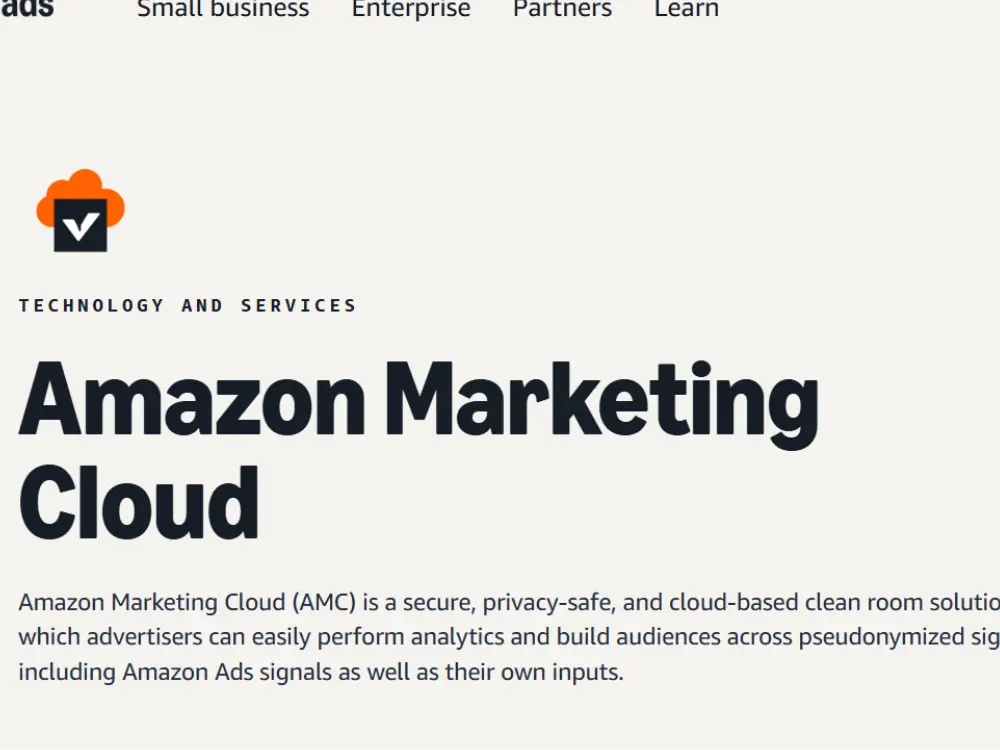
Amazon opened up Marketing Cloud access directly inside the Ads console, making deeper measurement and attribution available to advertisers without third-party partners. At the same time, placement bidding levers and new audiences (e.g., New-to-Brand and Amazon Haul) permit very aggressive bid strategies. These are not incremental – they change which buyers you can reach and how you measure them.
Source: Amazon Ads
The blunt reality
- Bidding escalation around Top-of-Search will bite. Permissive increases to placement bids (the 900% adjustments that hit Sponsored Brands and related placements) create a bidding arms race during promotions and peak windows. If you are not dynamically controlling bids by profit margins and LTV, you will bleed margin fast.
- Attribution becomes non-linear and longer. With AMC accessible to more advertisers, you’ll find that many campaigns previously labelled “low ROAS” actually drove high incremental sales over months. That undermines simple day-of sale ROAS budgeting and makes short-term cuts riskier.
- Audience sophistication widens the gap. New-to-Brand boosts and haul targeting reward disciplined brand owners who can layer lifecycle marketing (email, subscription offers, multi-pack incentives). Commoditized sellers who only optimize for instant conversion will lose share to brands keeping longer funnels.
What to do? (immediate to 90 days)
- Rebuild bid rules to include margin + LTV thresholds. If CAC approaches the first purchase LTV, tighten bids on conquest keywords; increase bids for shoppers flagged as high lifetime potential (use the new New-to-Brand and haul segments).
- Turn on AMC attribution pipelines for at least two test ASINs. Measure 30-, 90-, and 365-day incremental sales per campaign. If you’ve got limited analytics resource, prioritize a high-margin ASIN and a low-margin/high-traffic ASIN.
- Test “aggressive” top-of-search only for time-boxed deals. Use strict caps and an exit rule tied to post-deal conversion and replenishment velocity.
- Audit your creative + landing experience. Aggressive placement buys only pay off when the listing converts; use ASIN-level CJA (Customer Journey Analytics) insights to find exact breakpoints in the funnel (more on ASIN-level analytics later).
Catalog & Product Engineering
Amazon launched Virtual Multipacks (VMPs) – the ability for Amazon to create multipack ASINs that draw from existing FBA inventory without sellers having to repackage or create separate physical SKUs. This is operationally frictionless, but strategically seismic.
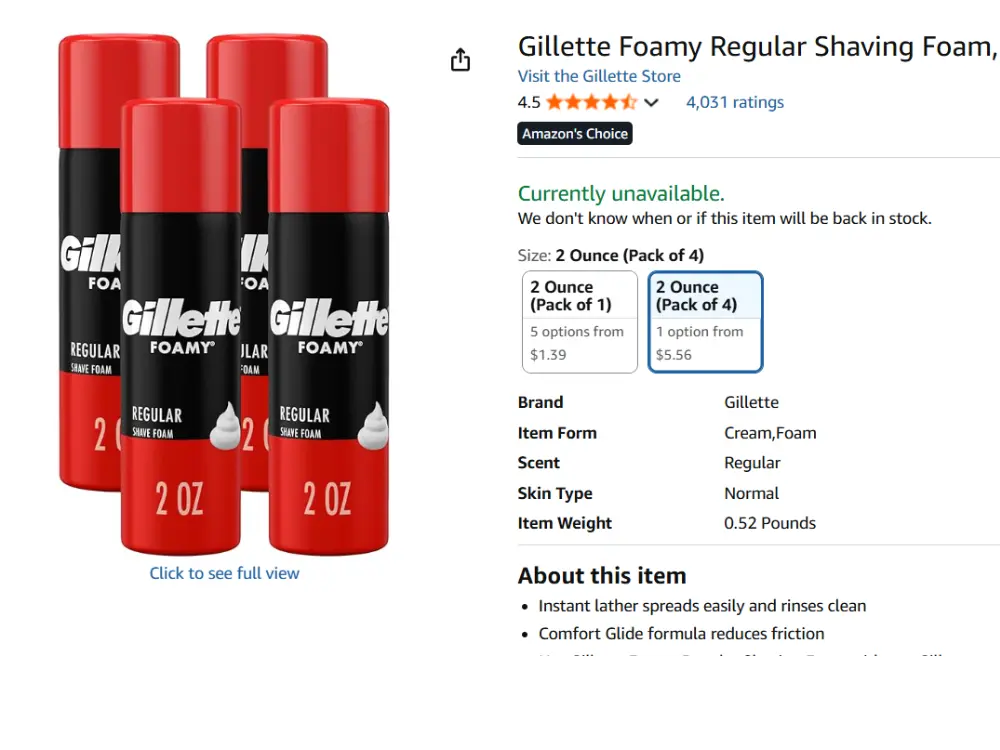
- Higher AOV without warehouse disruption. Sellers can raise average order value and cart conversion without the manual work of bundling. That accelerates margin improvement strategies with minimal ops cost.
- SKU cannibalization risk. Virtual multipacks may draw inventory away from single-unit listings, changing velocity and restock patterns. If you price multipacks incorrectly, you can unintentionally undercut per-unit profitability or trigger restock limits.
- Advertising & ranking shifts. Multipacks can combine with the advertising changes to suddenly become the favored unit in SERP placements, which impacts search visibility for single packs.
What to do?
- Model multipack economics before launch. Build a simple P&L that compares per-unit margin at single vs. multipack price points, factoring in average cart size lift and expected change in conversion rate.
- Control the rollout: Start multipacks for SKUs where:
- unit economics are healthy even with a pack discount,
- inventory is abundant, and
- cross-channel demand (retailers, DTC) won’t be starved.
- unit economics are healthy even with a pack discount,
- Align fulfillment thresholds. Track FBA levels for both single and multipacks as if they were separate SKUs – set distinct reorder points so replenishment logic doesn’t collapse.
Measure cannibalization. Use ASIN-level CJA to see whether multipack detail pages reduce single-unit conversions and quantify the net revenue effect.
Weight-Only Fees and Peak Fees Mean Rework
In the UK and EU, Amazon moved many parcel-size categories to a weight-only FBA pricing model starting October 15, 2025, and peak holiday fulfillment fees kicked in mid-October. This shifts cost dynamics for many sellers and forces tighter freight and packaging math.
Source: sellercentral-europe.amazon.com
- Good for lightweight, bad for heavy parcel SKUs. Weight-only pricing reduces fees for some small, dense items but raises costs for heavier parcel products that previously benefited from dimensional pricing.
- Peak season fee exposure. The October 15–January 14 peak window inflates fulfillment costs; mis-dated shipments (sent before Oct 15 but arriving after) can surprise sellers.
Return processing fees and international complexity. New returns fees in specific high-return categories offset margin gains from other changes; cross-border inventory placement decisions become more sensitive.
What to do?
- Recalculate every SKU’s landed unit economics. Replace the old assumptions with weight-only fees + peak surcharge; prioritize SKUs that keep margin after the new structure.
- Reschedule inbound shipments with precision. If you can control arrival windows, try to land inventory before Oct 15 to avoid peak fees – but only when demand forecasts support it.
- Change packaging where it matters. Evaluate whether a slight package redesign (reducing weight or dimensional belly) is financially justifiable this quarter.
- Use AWD and new FBA destinations strategically. Where Amazon’s network expansion helps reduce lead times or freight, run scenario analyses: sometimes cheaper inbound logistics and closer storage beat the fee structure.
For sellers managing oversized or heavier SKUs, understanding cost-efficient fulfillment is critical, our detailed guide on shipping large items through Amazon’s network outlines best practices for packaging, labeling, and routing these shipments.
The New Normal Is Tighter-and Faster
Amazon is enforcing Country of Origin declarations more strictly; bundling rules for consumables tightened; and new tax/tariff moves (notably U.S. tariff threats) made sourcing strategy more precarious. The enforcement cadence is accelerating – suppressions, pay-on-behalf enrollments, and penalties are now operational risks, not theoretical ones.
- Listing suspensions happen faster. Non-compliant COO or EPR registrations trigger suppressions or automatic enrollments. The time to remediation is short, and downstream revenue loss is immediate.
- Tariff volatility threatens margin assumptions. Big macro moves (like the announced tariffs and export controls) can suddenly make a supplier unaffordable overnight.
- More legal & tax friction for cross-border sellers. France’s EPR centralization is a single example – the pace of regulation is increasing across Europe.
What to do?
- Audit every ASIN for COO & EPR status. Build a compliance matrix with owners and deadlines. Treat missing COO as high priority – it can cause immediate listing removal.
- Create a tariff contingency plan. Have at least two alternate sourcing plans for high-risk suppliers: nearest available (Mexico/India/Vietnam), or a buffer stock strategy if switching costs are high.
- Lock in contract clauses with suppliers. Add tariff pass-through and lead time guarantees where possible; increase inventory safety buffers for critical SKUs.
- Get legal/tax counsel on pay-on-behalf enrollments and EPR. These can create cashflow and liability shifts you don’t want to absorb unknowingly.
Sourcing & Supply Chain
Tariff rhetoric and enforcement actions (plus investigations into misclassification and transshipment by actors in the ecosystem) made single-source China exposure a clear risk. Add multipack demand, weight-driven fees, and seasonal peaks – and the number of variables to manage grows fast.
Source: Reuters
- Shorter decision windows for procurement. With tariffs potentially moving quickly, long procurement cycles become liabilities rather than strengths.
- More importance on dual-sourcing and nearshoring. Sellers with flexible supplier portfolios capture margin arbitrage when tariffs or freight change.
Inventory holding cost tradeoffs change. Holding buffer stock becomes insurance against abrupt tariff or shipping shifts, but it increases storage and working capital costs.
What to do?
- Segment SKUs by sourcing risk. High-dependency SKUs need 2–3 alternate manufacturers or a stock buffer; low-risk SKUs can stay single-sourced.
- Use landed cost models that incorporate tariff scenarios. Run sensitivity analysis with 0%, 25%, 50%, and 100% tariff scenarios and update pricing cadence.
- Negotiate flexible freight terms. Options like deferred payment, rolling contracts, or monthly retainer freight capacity can give you runway when rates spike.
- Automate supplier health checks. Simple dashboards for supplier lead time, on-time %, and rework rates let you make rapid sourcing decisions.
Sellers can now reach this value-driven audience through Amazon’s “haul” feature, our Amazon Haul targeting guide breaks down how brands can build campaigns that tap into bulk-buying behavior and seasonal promotion spikes.
Analytics & AI
Amazon’s Customer Journey Analytics added ASIN-level visibility and Amazon rolled out agentic AI Seller Assistant capabilities that can recommend and in some cases act on behalf of sellers. These changes turn descriptive dashboards into diagnostic and prescriptive tools.
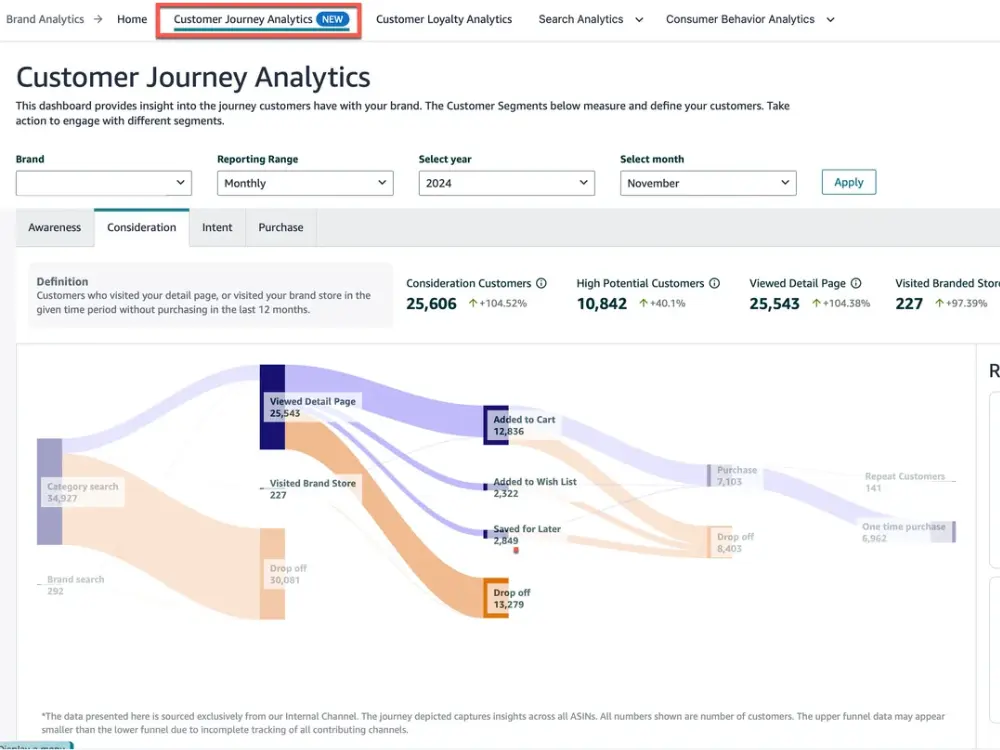
- Operational decisions move from intuition to evidence. You can now see the exact step where a product loses customers and link it to search queries and ad touchpoints. That shifts optimization from guesswork to surgical fixes.
- Automation amplifies capability but increases governance needs. Agentic AI can suggest and execute price changes, inventory moves, and advertising tweaks. That saves time – but without guardrails, it can also act against your P&L thresholds.
Competitive asymmetry widens. Teams that embed ASIN-level analytics into daily ops will iterate faster than those relying on weekly summaries.
What to do?
- Institutionalize ASIN diagnostics. Run a weekly ASIN report that flags “funnel fallouts” (high impressions, low add-to-cart) and assigns a remediation owner.
- Onboard agentic AI slowly. Start with read-only suggestions; after a 30-day performance validation, enable one low-risk automation (e.g., suggested price markdowns for aging stock).
- Define strict business rules for any AI-driven execution. Put caps on discounts, minimum inventory thresholds, and financial guardrails.
- Integrate AMC outputs with your BI. Push cross-channel attribution metrics into your ERP/BI so procurement and finance teams make decisions based on the same truth.
Many of these updates were hinted at during the Amazon Accelerate 2025 key takeaways, where the focus was squarely on predictive advertising, automation, and global marketplace scaling.
Temu, Prime Video, and the Bigger Market Forces
October’s platform changes did not happen in a vacuum. Competitors are running aggressive promotional calendars – Temu’s extended Black Friday playbook being a case in point – while Amazon is deepening content and ad plays (Prime hosting NBA games, expanded ad-supported tiers). That combination increases price pressure on sellers and fragments where ad dollars can be spent. (Context: Temu’s long campaign and Amazon’s content pushes intensified buyer choice and promotional noise.)
- Promotional noise increases customer price sensitivity. Long, discount-heavy campaigns condition buyers to wait, reduce impulse purchases, and compress margins.
- Channel strategy matters more than ever. Sellers solely dependent on Amazon ad reach will see rising CPCs; diversifying into content, DTC, and marketplace partners buys resilience.
Media rights and content deals change buyer attention. As Prime becomes a sports broadcasting hub, audiences shift and ad inventory becomes more valuable – and more expensive.
What to do?
- Rebalance promo windows. Consider mid-season proprietary sales (e.g., “member week”) to capture demand outside of platform mega-sales.
- Invest in owned channels. Grow email/subscription cohorts with ads used to acquire high-LTV customers – not just to chase first purchase conversions.
Harmonize pricing across channels. Prevent deep discounting on Amazon that erodes DTC AOV and brand perception.
Finance & Pricing
All of the above point to one unavoidable truth: unit economics are more volatile than they were six months ago. Fees, ad dynamics, tariffs, and platform-level product engineering (like multipacks) can change revenue per order with little notice.
- Shorter planning cycles for finance teams. Quarterly is fine for strategy; week-by-week is needed for execution.
- Working capital becomes more important. Buffer inventory and cash reserves let sellers buy short-term advantage (e.g., landing inventory before tariffs).
Net margin uncertainty increases. Pricing models must be dynamic and reflect scenario stress tests.
What to do?
- Move to a rolling 13-week forecast with tariff & fee stress scenarios. Build three scenarios (base, adverse, severe) and link them to reorder and advertising rules.
- Set aside a tariff contingency fund. Even 2–4% of COGS reserved for sudden duties can prevent panic repricing.
- Use dynamic pricing with margin controls. Connect margin thresholds to your repricing engine, not just rank.
Amazon’s global network expansion mirrors efficiencies seen in rapid-delivery ecosystems, a trend explored in our comparison to fast-fashion fulfillment models like SHEIN’s, which shows how speed and micro-warehousing are shaping global eCommerce expectations.
People & Organization
The platform is demanding more from sellers: analytics believers, AI-literate managers, and compliance professionals. The old organizational shape (one person owning “ads”, one owning “ops”) will not scale.

- Cross-functional squads are the new unit of work. Teams that can move product, ad, fulfilment, and finance levers together win.
- Hiring & upskilling pressure grows. You need people who understand AMC outputs and can translate ASIN-level diagnostics into product changes.
- Vendor partnerships matter more. Fulfillment partners, customs brokers, and analytics vendors can become differentiators.
What to do?
- Create a 90-day “ASIN growth squad.” Include a merchant, an ad lead, an ops lead, and a data analyst. Give them 5 priority ASINs and a performance sprint goal.
- Invest in two modern skills: AMC/SQL basics and AI governance. Short invests in learning have outsized returns this quarter.
- Rationalize vendor contracts. Make sure partners supply API access and near-real-time data – daily CSVs are no longer enough.
What to Do This Week, This Month, This Quarter
This week
- Run a COO compliance audit for all active ASINs.
- Identify 3 SKUs to toggle into Virtual Multipacks and model outcomes.
- Lock in bid safeguards for top-of-search placements (hard caps tied to margin).
- Recalculate FBA landed cost under weight-only fees for UK/EU SKUs.
This month
- Launch AMC attribution for 2 pilot campaigns and capture 30/90-day incremental metrics.
- Build multipack restock rules in WMS.
- Run a sourcing stress test under a 50% tariff scenario.
- Onboard ASIN weekly diagnostics into operational cadences.
This quarter
- Move one automation from “suggest” to “execute” in your agentic AI sandbox with strong guardrails.
- Roll out rolling 13-week financial forecasts with tariff scenarios.
- Establish cross-functional ASIN growth squads and OKRs.
With Q4 around the corner, staying ahead of the 2025 holiday shipping deadlines is crucial to avoid delivery bottlenecks and late fulfillment penalties during peak traffic.
Risks I’d Watch Like a Hawk
- Hidden cannibalization – multipacks that suck demand away from higher-margin single units.
- Agentic AI drift – automated price or promo decisions that erode margin without human review.
- Regulatory surprise – sudden tariff or compliance enforcement that wipes out margin in a market.
- Data fragmentation – if AMC + CJA + Seller Central aren’t reconciled in your BI, you’ll make bad decisions faster.
Final Take
October 2025 did more than add new options – it rewired how sellers get credit for their work and how rapidly a bad move becomes an expensive one. The winners over the next 12 months will not be those with the biggest ad budgets, the cheapest factories, or the slickest packaging alone. They will be the sellers who:
- Combine ASIN-level diagnostics with guard-railed agentic AI to iterate faster than rivals,
- Build sourcing resilience to withstand tariff shocks,
- Treat virtual multipacks and placement bids as product and media plays (not merely operational tweaks), and
- Bake volatility into their finances with scenario planning.
If there’s one practical ethos to take away: operate like a data company that happens to sell things. In October Amazon handed out better sensors and smarter actuators – now the job is to put them in the hands of disciplined teams who measure, test, and govern.

Daniel Rozario is the Lead Content Specialist at AMZ Prep, collaborating with the marketing team to produce blogs and articles on e-commerce fulfillment and logistics. He specializes in creating resources that help brands navigate inventory management, operational efficiency, and fulfillment strategy.

















Comments