
I read every line of the December activity, the Seller Central posts, the community noise, and the carrier bulletins so you don’t have to. Below is a fuller, firmer, but practical briefing – the kind I’d hand to the ops lead before a Monday standup.
I’ll tell you what changed, what matters, and what you must do. No fluff. Just the bone-and-muscle guidance you can act on.
I’ll be blunt: December was operationally heavy and financially noisy.
Amazon extended some holiday cutoffs (FBA and Seller-Fulfilled Prime to Dec 23, 2025), kept peak fees active through Jan 14, 2026, and confirmed the extended return window for purchases made Nov 1–Dec 31 (returns accepted through Jan 31, 2026).
USPS changed how postmarks are captured effective Dec 24, which weakens simple drop-off proof for FBM sellers. There were no surprise permanent fee hikes for inventory placement, but seasonal splits and peak surcharges created real margin pressure.
Amazon’s big strategic note – a $35B-plus investment pledge for India – is a longer-game structural item worth tracking.
All of this means: plan for heavier returns, expect cash-flow lag into January, and treat any default liquidation/donation settings like a live grenade – check them now.
TIMELINE – DECEMBER 2025: WHAT ACTUALLY MATTERED (AND WHY)
I’ll start where the calendar forced most teams to wake up: the dates. Know them, treat them like hard gates, and plan as if your CFO will ask for the impact within 24 hours.
| Date | Event | Why it matters to you |
|---|---|---|
| Dec 1, 2025 | Holiday extended returns activated for purchases made Nov 1–Dec 31 (returns accepted through Jan 31, 2026) | Returns shift forward into January – processing volume, storage usage, and refunds will bite Q1 cash flow. Don’t pretend returns stop on Dec 31. |
| Dec 1, 2025 (inbounds) | Practical inbound cutoff for many standard non-apparel shipments | Shipments arriving after this are likely to miss holiday delivery promises and can trigger defects. If your inbound calendar slipped, January is the recovery month – not December. |
| Dec 11–15, 2025 | Peak seller communications and cutoff reminders (Super-Saturday cadence) | This window is where demand and ad spend concentrate. Mistimed promos here cost more in fees than they return in units. |
| Dec 12–18, 2025 | Promotions visibility window (Lightning Deals, 7-day Deals, coupons) | Best shot at Prime attention. After the 18th, attention flips to returns and clearance. Schedule promotions with that binary in mind. |
| Dec 23, 2025 | Last practical FBA & Seller-Fulfilled Prime shipping cutoff for holiday delivery | Final practical day to expect holiday deliveries via Amazon fulfillment/SFP. Plan inventory and ads around this anchor. |
| Dec 24, 2025 | USPS postmark rule change effective | Drop-off timestamps become weak evidence. If you’re FBM, pickup scans and carrier electronic manifests are now your defense. |
| Dec 26–31, 2025 | Post-Christmas clearance and returns wave | This is the operational hangover: returns, price drops, and disposition decisions. Staff for it; don’t treat it as optional. |
| Jan 14, 2026 | End of peak fees window | Fees revert after this. Recalculate margins immediately for any January promos or reorders. |
| Jan 31, 2026 | Last day for extended holiday returns (for Nov 1–Dec 31 purchases) | Final day for return |
December’s USPS postmark update fundamentally changed how proof-of-shipment is evaluated for FBM sellers, for a deeper look at USPS shipping requirements and how to protect your claims, see USPS shipping proof rules for FBA and FBM.
WHAT ELSE I FOUND – THE PART THAT USUALLY COMES BACK TO HURT
You already had the headlines. This is the quieter layer underneath them-the defaults, enforcement patterns, and second-order effects that don’t show up in a banner announcement but absolutely show up in January P&Ls and reconciliation calls.
Liquidations & Donations enrollment – the silent balance-sheet killer
Amazon changed how liquidation and donation enrollment behaves earlier in the year, and by December, many sellers were operating on assumptions that were no longer true.
If you didn’t actively review and confirm your preferences, Amazon may have applied defaults on your behalf. That means aged, stranded, or unsellable units can be routed into liquidation or donation automatically-without a human pause.
This isn’t theoretical. It shows up as inventory quietly disappearing, recovery values that don’t match expectations, and long, frustrating reconciliation cycles in January.
The damage compounds because once inventory is liquidated or donated, there’s no rewind button. The only real defense is proactive review: know exactly how Amazon will dispose of your inventory before it decides for you.
Waiting until after peak is already too late for a portion of your catalog.
As traditional inventory risks intensified in December, many sellers are exploring alternate programs such as Amazon Merch On Demand opportunities and workflows to diversify revenue without warehousing exposure.
Bundling enforcement – where “creative merchandising” turns into suppression risk
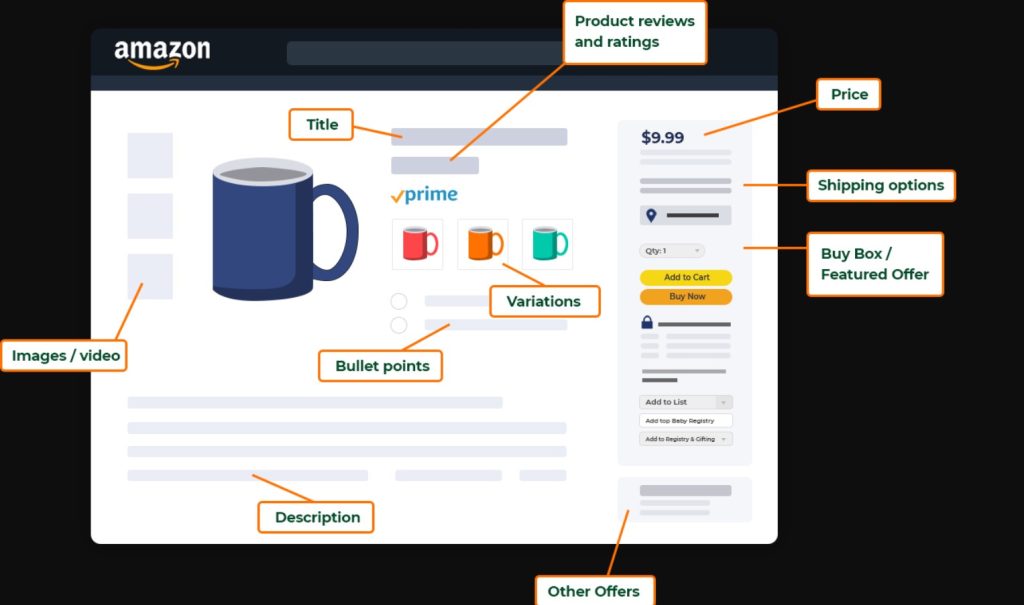
- Amazon continued tightening what it considers a legitimate bundle, and December is when enforcement tends to feel sharper. DIY gift baskets, loosely assembled kits, and “value packs” without consistent packaging or documentation are increasingly treated as compliance risks rather than merchandising ideas.
- If a bundle doesn’t have defined packaging, a stable bill of materials, and proper LOAs for branded components, it’s vulnerable. And when bundles get suppressed during peak, they don’t just lose momentum-they often fall straight into the liquidation or removal conversation once returns start stacking up. This is where a lot of sellers lose inventory value without realizing the trigger was a documentation gap, not demand.
- If bundling is part of your strategy, the bar is no longer “does this sell?” It’s “can I defend this listing cleanly if it’s reviewed?” Pre-approvals, documentation, and consistency matter more than creativity right now.
DSP keyword targeting – power tool, not a volume knob
- Amazon’s expansion of keyword-driven DSP targeting in 2025 quietly changed the ad landscape, especially around peak. This isn’t just another targeting option-it’s a way to reach shoppers contextually and mid-funnel, beyond the crowded Sponsored Products auction.
- Used well, it’s a strong complement to search ads during pre-holiday build-up and post-holiday recapture. Used poorly, it becomes an expensive awareness campaign with no accountability. The mistake some sellers made in December was treating DSP like a scaling lever instead of a precision tool.
- The veteran move here is restraint: small tests, tight caps, short evaluation windows, and brutal honesty about performance. DSP works best when you already know which SKUs convert and you’re simply extending reach-not when you’re hoping ads will solve a weak offer.
Inventory placement – unchanged on paper, heavier in practice
- On the surface, inventory placement rules didn’t materially change in December. Underneath, the lived experience did. Peak conditions meant more frequent splits across multiple fulfillment centers, layered on top of peak surcharges and tighter inbound timelines.
- For some sellers, accepting splits increased downstream freight and handling costs more than expected. For others, paying an upfront placement fee to limit FC distribution would actually have been cheaper in total landed cost. The difference wasn’t obvious unless you modelled it SKU by SKU.
- This is where intuition fails and math wins. Heavy, bulky, or slower-moving SKUs behave very differently under peak network conditions. December exposed which sellers had placement economics dialled in-and which were flying blind and paying for it quietly.
While Amazon didn’t announce major placement fee changes in December, practical routing costs rose – and savvy sellers are already looking at how to avoid Amazon placement fees to protect their margins.
THE THINGS MOST SELLERS STILL MISSED (AND PAY FOR LATER)
This is the part that doesn’t make headlines and never gets a Seller Central banner. It’s the operational fine print that quietly compounds damage if you let it drift. None of this is theoretical – I’ve watched these exact items turn strong Q4s into ugly Q1 cleanups.
Shipping Proof Quietly Changed – And Disputes Got Harder
If you run FBM at any scale, the December USPS postmark change matters more than it sounds. Old habits – dropping packages, snapping a receipt photo, assuming that’s “proof” – don’t hold the same weight anymore. Automated scan timing now dictates how late-shipment claims are judged.
What that means in practice:
If your workflow doesn’t guarantee a carrier pickup scan or early acceptance scan, expect more lost A-to-Z claims and fewer successful appeals. This shows up as account health pressure first, margin erosion second.
Where sellers stumble: they notice this only after dispute win rates fall. By then, the damage is already logged.
Removal Orders Didn’t Just Slow – They Got Expensive
Removal delays weren’t new in December, but they became far more painful because peak storage fees and extended returns stacked on top of them. Inventory that should have exited in early December often sat through month-end snapshots.
The quiet issue here isn’t the delay – it’s that many sellers never reconcile the storage fees charged after Amazon misses its own removal SLA.
Veteran move: treat delayed removals like billable errors, not bad luck. If you don’t document and escalate, Amazon assumes the charges are accepted.
Catalog Throttling Is the New Growth Ceiling
Amazon didn’t announce “catalog throttling” with fanfare, but by December it was very real. ASIN creation limits, silent suppressions, and longer approval queues slowed launches right when demand was highest.
If your Q1 strategy depends on rapid SKU testing or line extensions, December was your warning shot.
The trap: sellers keep planning growth based on old ASIN velocity assumptions. The system no longer supports that pace without stronger documentation and brand control.
Fee Stability Didn’t Mean Cost Stability
No, Amazon didn’t announce a shiny new placement fee in December. But many sellers still paid more – because real-world shipment splitting increased and peak surcharges layered in.
This is where spreadsheet math fails sellers. Sometimes paying a placement fee to control routing is cheaper. Sometimes it’s not. December punished anyone who didn’t model this SKU by SKU.
Lesson: “no fee change” does not equal “no cost change.”
DSP Got Smarter – and More Dangerous
Keyword-based DSP targeting is genuinely powerful. It finally lets you influence consideration outside the Sponsored Products bubble.
But December also showed how quickly DSP turns into unmeasured spend when used emotionally during peak. Sellers chasing volume instead of intent burned budget they’ll regret reviewing in January.
Rule of thumb: DSP is fuel, not firewood. Controlled burns only.
Liquidation & Donation Defaults Are Not Neutral
Earlier changes to liquidation and donation enrollment behavior caught up with sellers in December. If preferences weren’t explicitly confirmed, defaults applied – and defaults don’t care about your margin targets.
Aged units quietly routed to liquidation or donation show up later as “unexpected” losses in January reconciliation.
Hard truth: if you didn’t review these settings recently, you don’t actually know what Amazon is authorized to do with your inventory.
Bundling Enforcement Didn’t Pause for the Holidays
DIY bundles and gift sets faced stricter scrutiny right when sellers leaned on them most. Suppression during peak often turns into forced liquidation later – especially when documentation is weak.
Defined packaging, fixed BOMs, and LOAs aren’t bureaucracy anymore. They’re survival tools.
Official clarifications worth quoting back to leadership
- Cutoffs: Amazon’s Seller News and fulfillment reminders confirm Dec 23 as the practical last receipt day for FBA/SFP holiday delivery. Always include regional caveats – service levels differ by geography.
- Peak fees: The Oct 15 → Jan 14 peak window is real. Account-level and program-specific calls may vary (e.g., FBA vs MCF vs Buy with Prime).
- Returns: The extended returns window for holiday purchases (Nov 1–Dec 31 buys returnable through Jan 31) is baked into Seller Central guidance. That lengthens Q1 processing loads materially.
- USPS: The postmark policy change effective Dec 24 reduces the legal weight of a simple drop-off timestamp for proving on-time shipment. Carrier scans and label proof are now king.
Deep implications – what this actually changes for your P&L, operations, and risk model
Cash flow and P&L
- Delayed revenue realization: The expanded return window pushes a chunk of refunds and returns processing into January. If you were running lean on working capital, this will show as negative pressure in Q1. Forecast with a conservative 15–25% incremental return rate for holiday SKUs unless you have clear historical data to the contrary.
- Margin compression from peak fees & splits: Peak fulfillment fees combined with shipping splits and placement service charges will reduce per-unit margin. If you promoted heavy discounts without modeling peak fees, you likely decreased margin or sold at a loss on higher-weight/oversized SKUs.
Inventory & capacity
- IPI pressure: Higher returns and slow sell-through after the holidays can tank your IPI and lead to capacity restrictions. This is not theoretical – treat IPI management as critical now. Prioritize fast movers and consider removal of dead inventory.
- Forced dispositions: Liquidations/donations defaults will remove inventory from your hands with little or no payout if you ignore settings. That’s mechanical value destruction.
Operations & disputes
- FBM proof-of-ship disputes get tougher: USPS postmark changes mean drop-offs aren’t reliable evidence. Use pickup scans, electronic manifests, and carrier-provided timestamps to defend claims. If you rely on drop-off slips alone, start building better proof.
Marketing & demand generation
- Ad channel shifts: DSP keyword/multi-signal expansion gives you an extra tool for mid-funnel, contextual campaigns. That’s useful if you’re trying to recapture shoppers in a saturated Buy Box environment. But be surgical: measure ROAS per channel and stop what’s not delivering.
Compliance & listing health
- Bundle and title enforcement: New enforcement nudges (title/keyword enforcement and bundling rules) mean more listing suppressions if you’re sloppy. Keep documentation on-brand authorization, LOAs, and packaging. Expect Amazon to be unforgiving here.
Many of the structural pressures felt in December – from fee layering to capacity management – were foreshadowed in the Amazon Accelerate 2025 key takeaways, and aligning to those signals helps shape smarter Q1 planning.
PRACTICAL PLAYBOOK – PRIORITIZED, TACTICAL
This is a short order list I’d hand the ops lead – ordered by damage-control priority.
- Disposition sweep (48–72 hours)
- Pull aged inventory and returns-in-queue. For each SKU decide: Remove / Liquidate / Reprice / Donate. Treat liquidation defaults as immediate risk.
- Pull aged inventory and returns-in-queue. For each SKU decide: Remove / Liquidate / Reprice / Donate. Treat liquidation defaults as immediate risk.
- Returns triage lane (staffed through Jan 31)
- QC: restock like-new fast sellers, refurb where profitable, remove or liquidate slow items. Track per-SKU return rates and disposition outcomes.
- QC: restock like-new fast sellers, refurb where profitable, remove or liquidate slow items. Track per-SKU return rates and disposition outcomes.
- Carrier proof hardening (immediate)
- Mandate scheduled pickups with electronic scans for FBM. Archive pickup confirmations and manifests. If a carrier can provide an API export of scans, consume it.
- Mandate scheduled pickups with electronic scans for FBM. Archive pickup confirmations and manifests. If a carrier can provide an API export of scans, consume it.
- Per-SKU margin re-eval (72 hours)
- Recompute landed economics including peak fees and expected return rates. Pull or pause promotions where unit economics fail.
- Recompute landed economics including peak fees and expected return rates. Pull or pause promotions where unit economics fail.
- Bundle compliance audit (7 days)
- Remove or document any bundle without packaging/LOA/BOM. Stop advertising bundles until validated.
- Remove or document any bundle without packaging/LOA/BOM. Stop advertising bundles until validated.
- Ad reallocation (rolling)
- Shift a portion of late-season spend to DSP keyword tests for post-Xmas recapture, cap daily, and monitor 24–72 hour performance windows.
- Shift a portion of late-season spend to DSP keyword tests for post-Xmas recapture, cap daily, and monitor 24–72 hour performance windows.
- Finance & reorder guardrails (by COB this week)
- Add a returns buffer to January cashflow. Set temporary buy limits until Jan returns stabilize.
Useful tables
Cost-sensitive dates
| Date | Effect |
|---|---|
| Oct 15, 2025 | Peak fulfillment fees start – affects Q4 margins. |
| Dec 1, 2025 | Inbound cutoff for many standard non-apparel inbounds – shipments after risk of missing holiday windows. |
| Dec 23, 2025 | Last practical FBA & SFP cutoff for holiday delivery. |
| Dec 24, 2025 | USPS postmark rule change effective – tighten FBM proof processes. |
| Dec 26–31, 2025 | Clearance & returns wave – active price and disposition management needed. |
| Jan 14, 2026 | Peak fees end – reassess margins. |
| Jan 31, 2026 | Last day for extended holiday returns (Nov 1–Dec 31 purchases). |
Quick decision guide for disposition
| Inventory type | Immediate action | Risk if ignored |
|---|---|---|
| Aged / slow movers | Removal or clearance now | Auto-liquidation/donation, storage fees, IPI drop. |
| Holiday returns | QC & restock fast movers; liquidate slow items | Higher processing cost, storage, and cash-flow drag. |
| Bundles/gift sets | Audit LOA/packaging; suspend non-compliant listings | Suppression → loss of sales → possible liquidation. |
| FBM time-sensitive orders | Require pickup scans & robust tracking | Increased claim loss due to weaker USPS postmark evidence. |

RISKS & WATCHLIST – WHAT TO MONITOR DAILY
This is the map of the traps. Monitor these signals, set owners, and have an escalation path. Don’t wait for a surprise in Finance.
Daily signal list (what to watch each morning)
- Disposition Log Changes – Owner: Ops Lead
- What to check: any new automatic liquidation/donation activity, quantities, and SKUs.
- Thresholds to trigger action: any liquidation > 100 units or any SKU with > 10% of inventory auto-dispositioned.
- Immediate action: if threshold hit, pause removals, pull the SKU into a recovery review, and notify Finance.
- What to check: any new automatic liquidation/donation activity, quantities, and SKUs.
- Returns Volume & Velocity – Owner: Returns Manager
- What to check: daily returns count by SKU, % of returns vs. sales, and reason codes.
- Thresholds: daily returns > 15% of weekly sales for key SKUs or a +5 percentage point jump week-over-week.
- Immediate action: increase QC lane, route high-value SKUs to manual inspection, and flag advertising for the SKU.
- What to check: daily returns count by SKU, % of returns vs. sales, and reason codes.
- IPI & Capacity Alerts – Owner: Inventory Planner
- What to check: daily IPI, storage volume, and any inbound block notices from Amazon.
- Thresholds: IPI drop > 10 points in a week, or any Amazon capacity notification.
- Immediate action: freeze non-critical inbounds, prioritize removal/clearance, and open capacity appeal if appropriate.
- What to check: daily IPI, storage volume, and any inbound block notices from Amazon.
- Carrier Dispute Rate (FBM) – Owner: Fulfillment Ops Manager
- What to check: claims opened vs. claims won, top 10 SKUs for disputes, and time to resolution.
- Thresholds: claim win rate < 70% or dispute count growth > 20% week-over-week.
- Immediate action: escalate to Carrier Liaisons, gather pickup manifests, and pause FBM for affected SKUs until proof process is hardened.
- What to check: claims opened vs. claims won, top 10 SKUs for disputes, and time to resolution.
- DSP & Paid Channel Burn – Owner: Head of Performance Marketing
- What to check: daily ROAS by channel, spend vs. daily cap, and conversion window performance (24/48/72h).
- Thresholds: ROAS below target for 48 hours straight or spend > 120% of daily cap.
- Immediate action: pause underperforming line items, reallocate to proven channels, and run a creative/test pause.
- What to check: daily ROAS by channel, spend vs. daily cap, and conversion window performance (24/48/72h).
- Listing Suppressions & Policy Notices – Owner: Compliance Lead
- What to check: any new listing suppressions, policy enforcement emails, or brand complaints.
- Thresholds: suppression of any top 50 SKU or > 3 new suppressions in 24 hours.
- Immediate action: open immediate remediation task, document LOAs, and if needed, remove the listing to avoid customer issues.
- What to check: any new listing suppressions, policy enforcement emails, or brand complaints.
- Billing Reconciliations & Surprise Charges – Owner: Finance Ops
- What to check: daily billing look, chargebacks, or adjustments posted by Amazon overnight.
- Thresholds: any unknown adjustment > 1% of daily revenue or > $1,000.
- Immediate action: contact Amazon support with an evidence packet and halt related outbound operations if the charge signals a systemic error.
- What to check: daily billing look, chargebacks, or adjustments posted by Amazon overnight.
Escalation matrix (who gets pinged when)
- Level 1 (Ops triage): Returns Manager, Fulfillment Ops Manager, Inventory Planner – immediate 1-hour response SLA.
- Level 2 (Tactical): Head of Operations, Head of Performance Marketing, Finance Ops – 4-hour assessment and mitigation plan.
- Level 3 (Leadership): COO / CFO – same-day executive summary if loss exposure > $10k or capacity impact affects > 2% of expected revenue.
Dashboards & KPIs to have visible (at minimum)
- Live returns dashboard (by SKU, reason code, location).
- Disposition log with automated flags for liquidation/donation.
- IPI and capacity health with trend lines (7/14/30 day).
- FBM claims tracker with evidence attachments.
- DSP/paid ROAS heatmap keyed to SKU tags (holiday SKUs, clearance, high-weight).
- Daily billing variance tracker (overnight Amazon adjustments).
Suggested thresholds to automate alerts
- Auto-email Ops if returns for any SKU exceed 15% of sales in a rolling 7-day window.
- Slack alert if any SKU shows auto-disposition > 50 units in a 24-hour period.
- PagerDuty/urgent channel if IPI drops more than 10 points in any 3-day stretch.
- Performance marketing mute if DSP line item spends > 120% of daily cap and ROAS < target for 48 hours.
Templates & comms (what to say, quickly)
- Ops Alert (Slack): “ALERT: SKU [XXXXX] auto-disposed 120 units at [timestamp]. Pause removals; Ops to review within 60 min. Owner: [name].”
- Finance Escalation (email): Subject: “URGENT – Unplanned Liquidation Exposure: [SKU list]” Body: brief exposure, recommended action, next update ETA.
- Carrier Dispute Packet (support upload): include order IDs, pickup scan PDFs, manifest excerpts, tracking history and a one-line claim summary.
Final Takeaway
I’ve seen a lot of holiday seasons. The pattern is painfully familiar: a late push, a scramble to get inbounds in time, promos that look great on paper but vanish once peak fees hit, and then a January hangover of returns, chargebacks, and surprise dispositions. December 2025 was no exception – the dates and tools shifted slightly, but the hazards are the same.
If you take nothing else from this, take this: control your dispositions, harden your shipment proofs, and assume January is more expensive and slower than your balance sheet currently implies. Those three moves will protect your margins more than any late-night price cut.

Blair Forrest is the Founder of AMZ Prep, one of North America’s fastest-growing third-party logistics and fulfillment networks, built entirely without outside capital since 2016. Under his leadership, AMZ Prep has scaled to 50+ fulfillment centers across 6 countries, processing over 10 million plus units monthly and powering $2 billion+ in annual GMV for more than 5,000 brands worldwide including 437, Silverts, Saltyface, Unilever, Duracell, and JBL. A recognized authority in eCommerce logistics, Amazon FBA strategy, and supply chain optimization, Blair has helped thousands of sellers and brands master their fulfillment operations from first shipment to enterprise scale. He regularly consults on FBA prep, multi-channel fulfillment, last mile delivery, international expansion, and cost reduction strategies that save brands 20–40% compared to traditional 3PL providers. Blair’s insights on Amazon logistics, 3PL operations, and eCommerce growth are widely cited across the industry. Through AMZ Prep’s content, guides, and resources, he continues to share battle-tested strategies drawn from managing one of the largest independently owned fulfillment networks in North America.

















Comments