

Amazon is your channel for high-intent shoppers, while these channels give you customer data, better margins and protection from fee hikes or account problems.
This guide covers why it matters, the five steps to do it, and the mistakes that slow most Amazon sellers down.
Key takeaways
- Grow off Amazon by building channels you own: a DTC website, social media and an email and SMS list.
- Keep selling on Amazon, and use it to capture ready-to-buy shoppers while your own channels build the brand.
- Fulfill website orders as reliably as Amazon orders, through Amazon MCF, a 3PL or in-house.
- Amazon doesn’t allow you to market to its buyers, so build your email list from your own traffic.
- Judge results by CAC, 12-to-18-month LTV and total sales across Amazon and DTC.
Why should Amazon sellers grow off Amazon?
On Amazon, you rent your customers. Off Amazon, you own them. Four reasons make that difference matter more every year:
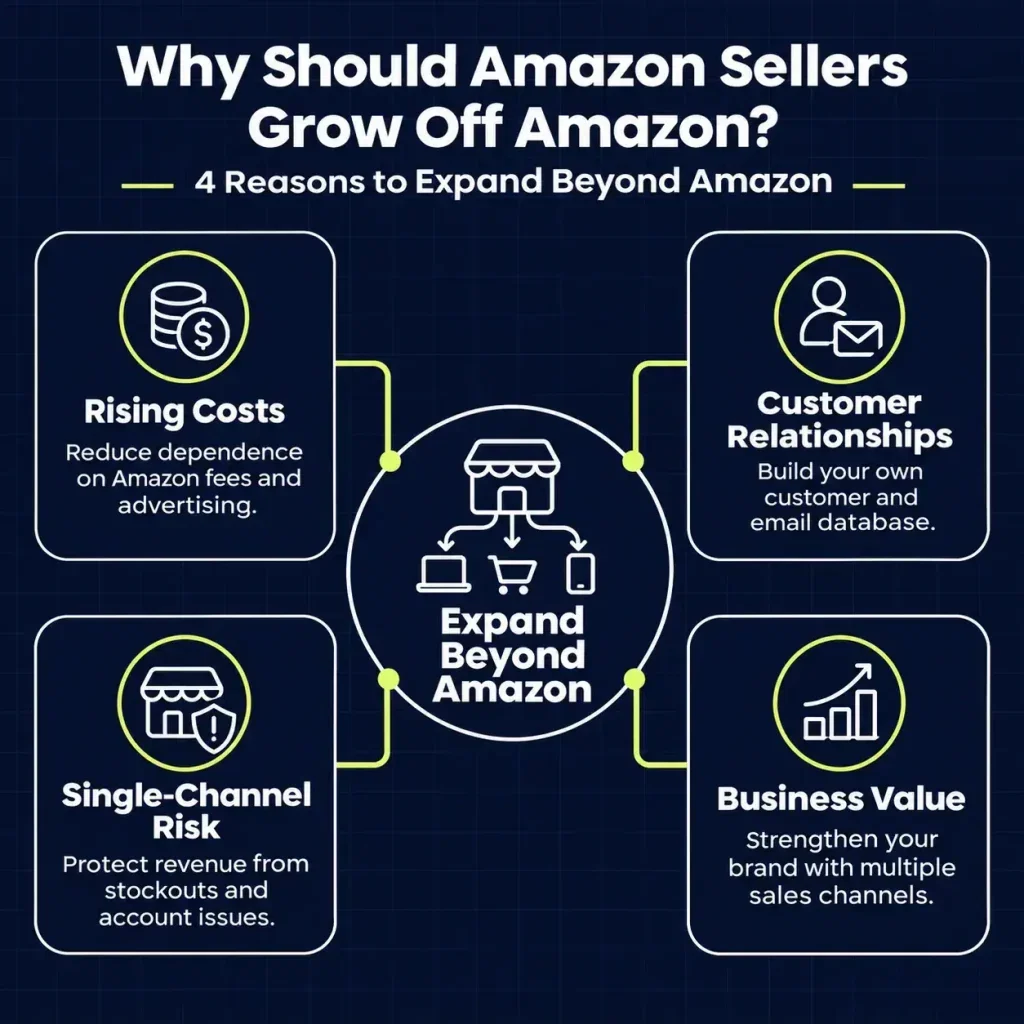
- Rising costs. Referral fees, FBA fees, storage and placement fees and advertising costs keep climbing, and each increase comes straight out of your margin.
- No customer relationship. Amazon doesn’t share buyer contact details and doesn’t let you market to its customers outside its platform. Every repeat sale can cost you another ad click.
- Single-channel risk. A suppressed listing, a stockout or a policy change can stop your revenue overnight when Amazon is your only channel.
- Lower business value. Buyers of e-commerce businesses generally pay more for brands with several sales channels and their own customer data.
None of this means leaving Amazon. It means treating Amazon as one channel in a bigger system, where it captures shoppers who are ready to buy and your own channels build the brand and bring customers back.
Step 1: Build a DTC store that converts Amazon shoppers
Your website has to earn the same trust shoppers give Amazon. Most Amazon brands start on Shopify, because it’s quick to launch and connects to most marketing and fulfillment tools.
- Start with what already sells. Lead with your Amazon best sellers, and reuse the images, A+ content and review themes that already convert.
- Show what Amazon won’t let you show. Tell your brand story, introduce the founder, compare products side by side, and explain how to use them.
- Match Amazon’s trust signals. Show clear delivery times, an easy returns policy and reviews on every product page. Eligible brands can also add Buy with Prime to show Prime delivery and checkout on their own site. AMZ Prep’s Buy with Prime guide explains how it works.
- Give people a reason to buy direct. Offer bundles, subscriptions or exclusive products that aren’t on Amazon, instead of undercutting your Amazon price.
Step 2: Set up fulfillment for every channel
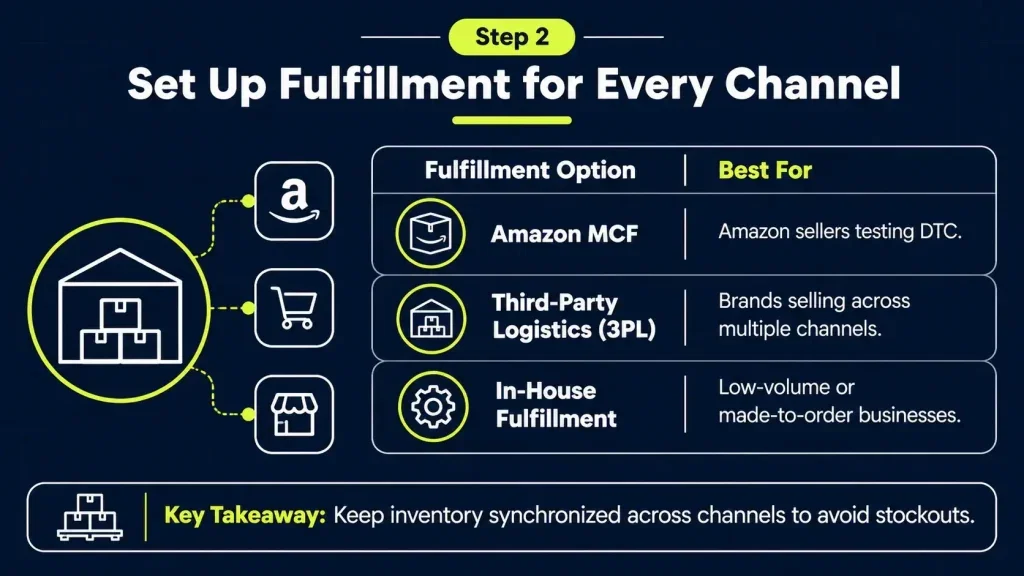
Shoppers judge your website against Prime delivery, so slow or inconsistent shipping will undo all your marketing. Pick a fulfillment setup that can handle your DTC orders as reliably as your Amazon ones.
| Option | How it works | Best for |
|---|---|---|
| Amazon Multi-Channel Fulfillment (MCF) | Amazon ships your website orders from your FBA inventory (how MCF works) | Brands that are mostly on Amazon and testing DTC |
| Third-party logistics provider (3PL) | A 3PL such as AMZ Prep stores your stock, ships orders for every channel and can prep and send inventory to FBA | Brands growing on several channels at once |
| In-house fulfillment | You store and ship orders yourself | Very low volumes or made-to-order products |
Whichever you choose, keep one view of inventory across channels. A successful DTC promotion shouldn’t cause a stockout that costs you your Amazon rankings.
Step 3: Use social media to create demand
Amazon captures demand that already exists. Social media creates new demand, by showing people a product they didn’t know they needed.
- Organic content: show the product in use, answer the questions that come up in your reviews, and share what happens behind the scenes. Post consistently on one or two platforms where your buyers spend time.
- Creators and UGC: send products to creators in your niche, then reuse their videos in your ads and on your product pages.
- Paid social: run prospecting ads to reach new audiences, plus retargeting ads to bring back people who visited your site. Send cold traffic to a product or landing page with a clear offer, not your homepage.
- Social selling: TikTok Shop and similar features let people buy without leaving the app, which suits impulse-friendly products.
Expect a halo effect: some people who see your social ads will search for you on Amazon and buy there. That still counts, so look at total sales across channels, not just website sales.
Step 4: Build an email and SMS list from day one
Your email and SMS list is the one asset Amazon can never give you. Start collecting from the day your site goes live, with a signup offer such as a first-order discount, free shipping or a useful guide.
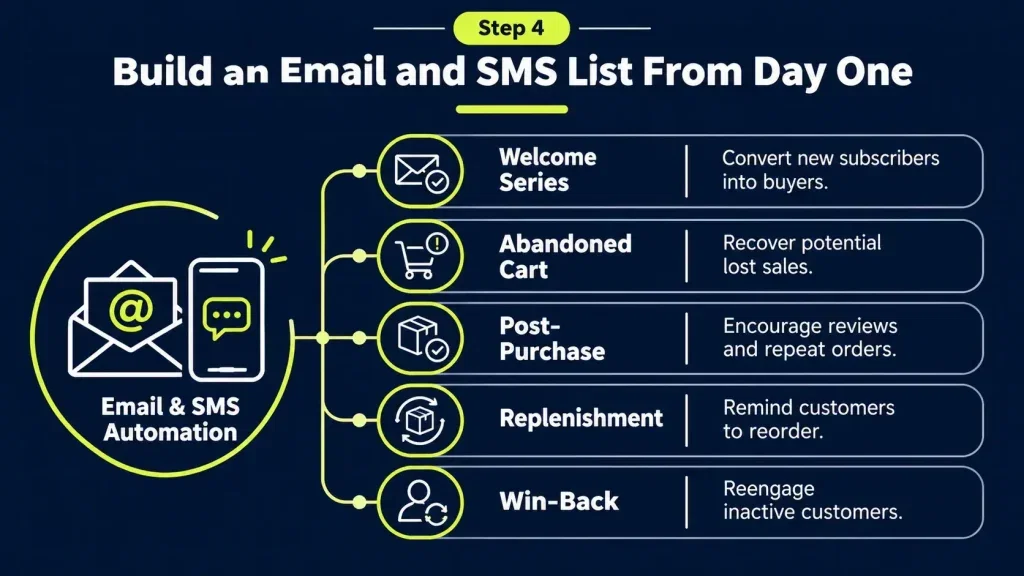
Then set up the automated flows that do most of the work:
| Flow | When it sends | What it does |
|---|---|---|
| Welcome series | After someone signs up | Introduces your brand and turns subscribers into first-time buyers |
| Abandoned cart and browse | After someone leaves without buying | Recovers sales you’d otherwise lose |
| Post-purchase | After an order | Explains how to use the product, asks for a review and suggests what to buy next |
| Replenishment | Before the product runs out | Brings in repeat orders for consumable products |
| Win-back | After a customer goes quiet | Brings lapsed customers back with a reason to return |
One rule to follow: don’t use Amazon order data or package inserts to pull Amazon buyers to your website, because Amazon’s policies don’t allow it. Build your list from your own traffic instead.
Step 5: Measure what matters
Growing off Amazon only works if you judge it by the right numbers. Track these four:
- Customer acquisition cost (CAC): everything you spend to win new customers (ads, creative, tools and agency fees), divided by the number of new customers.
- Customer lifetime value (LTV): the gross profit an average customer brings in over 12 to 18 months.
- Repeat purchase rate: the share of customers who buy again, which shows whether your email and retention work is paying off.
- Total sales across channels: your Amazon and DTC sales together, so you can see how off-Amazon marketing lifts Amazon too.
For a deeper look at running Amazon and DTC as one strategy, see BlueTuskr’s omnichannel playbook.
Common mistakes to avoid
- Launching a website with no traffic plan. A new site gets almost no visitors on its own. Plan your social ads and email before launch day.
- Pricing your website below Amazon. If Amazon finds your product cheaper elsewhere, it can remove the Buy Box from your listing. Compete on bundles and exclusives instead.
- Slow or unreliable shipping. One late order can cost you a customer you paid to acquire.
- Judging social ads on website sales alone. Part of their impact shows up as Amazon sales.
- Waiting to collect emails. Every visitor who leaves without signing up is someone you’ll pay to reach again.
Frequently asked questions
Should I stop selling on Amazon to grow DTC?
No. Amazon is still where many shoppers go when they’re ready to buy. The goal is to add channels you own, not to replace Amazon.
How long does it take to build a DTC channel?
It usually takes several months of steady work. Paid ads can bring early sales within weeks, while organic social, SEO and email build up over time.
Can I email my Amazon customers?
No. Amazon doesn’t allow you to market to its buyers outside its platform. Build your email list from your own website and social traffic.
Do I need separate inventory for my website?
Not necessarily. Amazon MCF or a 3PL can fulfill website orders from shared stock, as long as you track inventory across all channels.
How much should I spend on growing off Amazon?
Start with a test budget you can sustain for two to three months, then set your spending by what you can afford to pay for a new customer (CAC) compared with what that customer is worth over time (LTV).

Andrew Maff is the founder of BlueTuskr, a full-service e-commerce marketing agency that has helped more than 500 brands grow on their own websites, Amazon and other marketplaces. He has more than 15 years of marketing experience and hosts The E-Comm Show podcast.


Comments